A tiny bodysuit floating in a bag that is twice its width looks off immediately. So does a header that hides the product instead of framing it. That is the practical reason a childrenwear brands OPP Header Bags moq guide belongs near the start of procurement, not after the artwork is already approved.
Small Garments Make Bad Packaging Obvious Fast
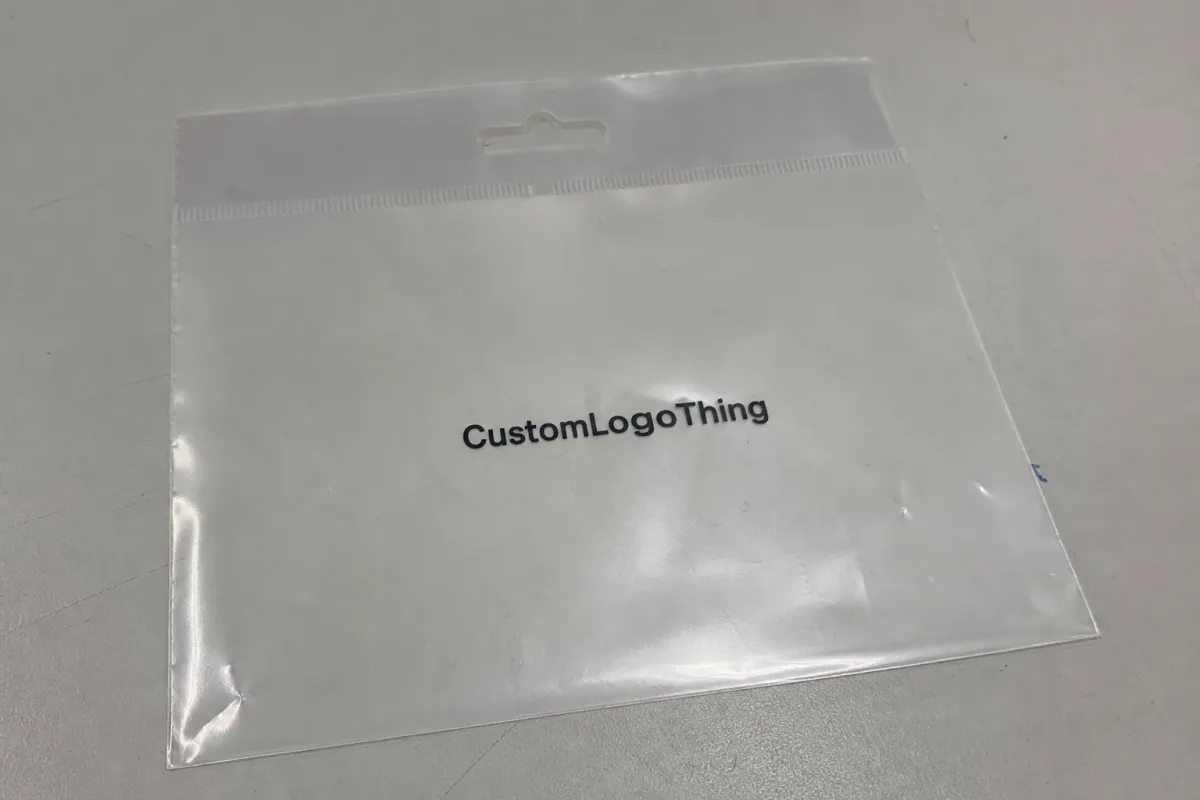
Babywear and kidswear are unforgiving categories. A romper, sock set, bib, or toddler tee may be well made, but if it arrives in cloudy packaging with too much dead space, the presentation feels tired before the customer even touches the fabric. Retail buyers notice that. Parents notice it too, especially on products meant for gifts or seasonal displays.
OPP Header Bags are more than a clear sleeve with a logo at the top. They shape shelf presence, protect the fold, speed up packing, and affect how a brand reads in a wholesale line sheet or on a store peg. For childrenwear, presentation is not decoration. It is part of the product signal.
The phrase childrenwear Brands OPP Header Bags moq guide sounds technical, but the buying question is simple: what size bag fits the garment, how much branding should sit in the header, and how many units are needed before the price stops feeling lopsided?
These bags are popular because they solve a narrow retail problem well. The clear body shows color, texture, print, and size. The header provides a place for the logo, barcode, size callout, or collection name. The bag stays light, stacks neatly, and works well for hanging display. For small apparel and accessories, that is a useful mix.
Most of the waste happens before production starts. Wrong measurements, vague artwork, changing the header after quoting, or assuming one bag size will work across three garment types all create extra cost. The film itself is rarely the problem. Poor input is.
That is why good buyers bring measurements, artwork, and a realistic quantity range before they ask for pricing. It saves time, but more than that, it forces the order into the language a factory can actually run.
What OPP Header Bags Actually Do for Childrenwear Brands
An OPP header bag is a clear polypropylene retail bag with a structured top section. Depending on the spec, the header may be printed, reinforced, punched for hanging, sealed, or designed to sit on a pegboard display. Some versions load from the top and close with an adhesive strip. Others use a flap or lip that suits faster manual packing. The structure matters because packing speed and display use are not the same thing.
For childrenwear, the retail value is easy to see. The header gives the brand a visible face. The clear body keeps the garment in view. A folded onesie can still show the color, pattern, and size sticker without hiding behind a full sleeve or paper wrap.
Common uses include:
- Baby bodysuits and onesies
- Pajama sets and sleepwear
- Rompers, leggings, and toddler tees
- Hair bows, headbands, bibs, and socks
- Underwear multipacks and soft accessory sets
- Small gift bundles or seasonal capsule pieces
Compared with poly mailers, OPP header bags are better for display but not for rough shipping. Compared with zipper bags, they look more retail-ready and usually cost less, though they are not meant for repeated opening. Compared with paper sleeves, they show the product more clearly, while paper may suit brands that want a more natural packaging story. If environmental claims matter to your channel, confirm them against the relevant certification and regional rules, not the mood of the design file. For example, FSC guidance is available at FSC.
There are tradeoffs. High-clarity gloss looks sharp but reveals scuffs more easily. Thicker film improves hand feel and stiffness, yet raises unit cost. A larger header gives more branding room but eats into visible product area. A Euro hole is common for retail pegs. A round hole can be fine for smaller accessories. Every one of those choices changes either cost, display, or packing speed.
Safety and compliance also need proper attention. For babywear and childrenwear, confirm suffocation warning requirements for the selling region, check whether ventilation holes are needed, avoid sharp die-cut corners, and keep age and size labeling easy to read. Retailers may have their own packaging rules too. Missing those is an excellent way to create repacking work later.
Buyer reality check: OPP header bags are display packaging first. They help protect clean folded garments, but they do not replace shipping cartons, inner packing, or transit testing for larger distribution programs.
Childrenwear Brands OPP Header Bags MOQ Guide: Real Order Ranges
MOQ is where expectations usually split from factory reality. A realistic childrenwear Brands OPP Header Bags moq guide should not pretend that full-color custom packaging can be ordered in tiny batches with no setup cost. Printing, cutting, punching, and packing all have fixed work attached to them.
For simple stock-size OPP header bags with basic printing, lower MOQs often start around 1,000 to 3,000 pieces. That usually fits standard dimensions, limited print colors, and a straightforward header. For fully custom sizing, custom die-cut headers, multiple size versions, or heavy print coverage, MOQs commonly move into the 5,000 to 10,000 piece range.
That spread is not arbitrary. Production needs setup. Print plates or screens may need to be made. Film widths have to match the tooling. Cutting machines need adjustment. Header punching and alignment take time. Color matching can take another round of proofing. When a buyer asks for six slightly different versions in a few hundred pieces each, the factory has to absorb all of that overhead across a tiny run. The quote reflects that whether the buyer likes it or not.
| Order Type | Typical MOQ Range | Best For | Cost Behavior |
|---|---|---|---|
| Stock size with simple logo print | 1,000-3,000 pieces | Launch tests, boutique drops, small runs | Higher cost per piece, lower inventory risk |
| Custom size with standard header | 3,000-5,000 pieces | Brands with known folded garment sizes | Moderate setup cost, better fit |
| Custom size with printed or die-cut header | 5,000-10,000 pieces | Retail programs and wholesale packaging | Better bulk pricing, more setup requirements |
| Multiple sizes or artwork versions | Often 10,000+ combined | Established brands with SKU depth | Efficient only if versions are grouped well |
SKU count changes the conversation quickly. One shared header design across newborn, infant, and toddler sizes is much easier to quote than separate artwork for every size. If the only difference is a size sticker or barcode label applied later, setup stays simpler. If each size has a different color, different copy, and a different barcode printed directly on the bag, expect more tooling, more proofing, and more opportunities for delay.
Low MOQ makes sense for a market test, a new boutique launch, influencer drops, seasonal capsule lines, or a product category that has not yet proven its size curve. Higher MOQ is better for stable reorders, wholesale programs, retail rack displays, and brands with predictable monthly fulfillment. The trick is to match quantity to actual sell-through, not to optimism.
One caution that comes up often: the lowest unit price is not the lowest risk. Ordering 10,000 bags to save a fraction of a cent each can become expensive if the garment size changes, the artwork evolves, or the sales channel shifts. Packaging that fits last season perfectly can become dead inventory with one product refresh.
Specs That Decide Fit, Finish, and Retail Shelf Appeal
Buyers get cleaner quotes when they speak in measurable specs. “Small bag for baby clothes” is too loose. “160 mm wide x 230 mm body height with 40 mm printed header, Euro hole, 35 micron OPP, adhesive flap” is the kind of detail that lets a supplier price the job properly.
Before quoting, confirm these details:
- Bag width: measured across the usable internal area
- Bag height: body height plus header height if quoted as total height
- Header height: often 30-60 mm for small apparel, depending on branding needs
- Flap length: commonly 25-50 mm if using adhesive closure
- Lip size: useful for fast manual loading
- Hang hole: Euro hole, round hole, sombrero hole, or no hole
- Adhesive position: on flap or body, permanent or resealable
- Film thickness: often 25-50 microns for lightweight apparel display
- Print colors: one spot color, two spot colors, or full-color process
- Carton packing: pieces per inner pack and export carton
For sizing, fold the garment exactly as staff will pack it. Measure width, height, and thickness. Then add clearance so the product slides in without being forced. For small babywear, that usually means 5-10 mm on width and 10-20 mm on height. Thicker pajama sets or multipacks may need more. If the fit is too tight, the fold bulges and the header starts doing visual damage rather than brand work.
The header itself should not crush the garment. Leave room for the logo, size callout, and barcode, but do not squeeze the fabric so hard that the fold becomes uneven. A clean rectangular fold reads as retail-ready. A compressed, lopsided fold does not.
Film thickness changes the feel more than many buyers expect. Light OPP around 25-30 microns can work for simple display packs and very light garments. Mid-weight film around 35-40 microns is common for apparel sets that need better structure. Thicker film around 45-50 microns feels more premium and can support heavier folded pieces, but cost rises and cartons may hold fewer bags.
Header design should follow the channel. A Euro hole fits peg displays. A round hole is simpler and cheaper for lighter packs. A reinforced header makes more sense for heavier items. A white header background improves legibility for logos and barcodes. A clear header looks cleaner, but low-contrast artwork can disappear under store lighting.
Finish options include high-clarity gloss, frosted-look film, white printed header blocks, clear headers with spot-color logos, full-bleed artwork, printed barcode boxes, and size grids. Tiny text is risky. OPP printing does not reward delicate copy. Small type can fill in, shift, or become unreadable, especially on narrow headers.
There is a point where design stops helping. A package that tries to say too much in too little space usually ends up looking busy and costs more. In childrenwear, the strongest packs are usually the simplest ones: clean fold, legible size cue, consistent logo placement, and enough clear film to show the garment.
Pricing, Unit Cost, and Quote Variables Buyers Should Expect
Pricing for custom childrenwear OPP header bags depends on size, film thickness, quantity, print coverage, print colors, header structure, adhesive strip, hang hole, packing method, and shipping route. If a supplier gives a number without asking for most of those inputs, treat it as a placeholder until the spec is locked down.
Small custom runs carry more setup cost per bag because the same artwork prep, plate work, die setup, and machine time are spread over fewer pieces. Larger runs lower the average unit cost, but only if the bags are actually used before product sizing, artwork, or packaging rules change. Low price is useful. Usable low price is better.
Print complexity moves cost faster than many buyers expect. A one-color logo on a standard white header is usually efficient. Full-bleed artwork, multiple SKUs, printed barcodes, and custom header shapes add cost and proofing risk. Sometimes the result is worth it. Sometimes the order becomes more expensive and less readable at the same time.
A serious quote should include:
- Bag dimensions, shown clearly as width x body height x header height
- Material type and film thickness
- Print method and number of print colors
- MOQ and price breaks for higher quantities
- Sample cost, if applicable
- Estimated production lead time after proof approval
- Freight estimate or shipping method
- Carton quantity and carton dimensions
- Payment terms and proof approval process
Setup charges can cover artwork cleanup, printing plates, dies, color matching, and sampling. Some are one-time charges if the layout stays unchanged. Others repeat if the size, shape, color, or print layout changes. Ask directly. The vague version of a setup fee is how surprise invoices show up later.
There are practical ways to lower cost without making the bag look cheap:
- Use standard sizes where the folded garment still fits properly
- Limit print colors to one or two spot colors
- Run one shared header design across several garment sizes
- Use barcode stickers instead of printing every barcode variation
- Avoid unnecessary film thickness for very light items
- Consolidate orders so setup is spread across more units
If two quotes are far apart, something is probably not being compared on equal terms. Maybe one quote uses thinner film. Maybe the header is not reinforced. Maybe freight is excluded. Maybe the adhesive strip is different. Cheap mystery bags are not a procurement strategy.
For larger retail or distribution programs, packaging performance also connects to transit testing. The International Safe Transit Association publishes useful resources on package testing and transport standards at ISTA. OPP header bags are not shipping cartons, but they still need to hold up inside the master case and packing line.
Process, Lead Time, and Production Steps Before Shipment
Good custom bag jobs tend to follow a plain process. That is usually a good sign. Most packaging problems are not dramatic. They are procedural.
- Submit garment dimensions, target bag size, quantity, and artwork.
- Receive a quote with specs, MOQ, pricing, and timeline.
- Approve the dieline or request a size adjustment.
- Approve the digital proof for layout, copy, barcode placement, and colors.
- Request a physical sample if fit, film feel, or print appearance needs confirmation.
- Confirm payment and final production details.
- Begin bulk production.
- Inspect, pack into cartons, and ship.
Quoting can take 1 to 3 business days when specs are complete. Sampling often takes 5 to 10 business days, depending on the print method and whether the sample is a mock-up, a hand sample, or made on the intended material. Bulk production commonly runs 2 to 5 weeks after proof approval, depending on quantity, complexity, and current capacity.
Delays usually come from the same places: missing folded garment measurements, blurry logos, late barcode files, unclear Pantone references, changing the bag size after proof approval, or splitting one order into too many versions. A logo copied from a website is not production artwork. Neither is a screenshot from a phone. Those files create more work than they save.
Digital proofs confirm layout, copy, scale, header position, barcode location, and general artwork placement. Physical samples confirm size, loading feel, film clarity, print appearance, adhesive position, hang hole strength, and how the folded garment actually sits in the bag. If the packaging is going into wholesale, retail display, or a first production run, the sample is usually worth the time.
Shipping also matters because OPP bags are light but bulky. Air freight is fast and expensive. Ocean freight is slower and cheaper. Carton dimensions can affect freight more than buyers expect because carriers charge by actual or dimensional weight. For urgent launches, ask for both air and ocean options before choosing one.
Keep a reorder buffer ahead of peak selling periods. Packaging can stop fulfillment even when finished inventory is already on the shelf. That is one of the more frustrating ways to lose sales, because the product is ready and the bag is the bottleneck.
If it helps to compare how packaging choices affect presentation across categories, the Custom Logo Things Case Studies page shows where details tend to matter most. Different products expose different weak points, but the pattern is consistent: clean specs beat assumptions.
Next Steps Before You Request a Custom Bag Quote
Before asking for a quote, gather the information that removes guesswork. A supplier can only price what is defined. “Can you quote OPP bags for kids clothes?” is a start, not a complete brief.
Use this pre-quote checklist:
- Folded garment width, height, and thickness
- Target bag size, if already known
- Preferred header height
- Desired film thickness, or a sample bag you like
- Quantity by size or SKU
- Logo files in AI, EPS, PDF, or high-resolution vector format
- Print colors, including Pantone references if needed
- Barcode or size label requirements
- Hang hole preference: Euro, round, or none
- Delivery address for freight estimate
Photograph the garment folded the way it will actually be packed. Include a ruler or measuring tape in the image. That one step removes a surprising amount of confusion and often reduces sample revisions. If the item is a pajama set, show whether the top and bottom are stacked, folded together, or banded before insertion.
Start with two or three priority SKUs for the first quote. Do not send the entire product catalog unless the size curve is already organized. Focused requests are easier to compare and usually faster to answer. Once the base structure works, extending the order into more sizes becomes much simpler.
Custom Logo Things can help with size recommendations, dieline setup, print-ready artwork review, MOQ planning, material selection, and production coordination. The cleaner buying path is straightforward: send garment dimensions and artwork, ask for standard-size options first, compare a low-MOQ test quantity against a better-value bulk quantity, approve the sample, then scale the order.
If files, ordering steps, or proof approvals are still unclear, the Custom Logo Things FAQ is a useful place to sort that out. Better questions usually produce better quotes. That is one of the few parts of procurement that never seems to go out of style.
This childrenwear brands opp header bags moq guide should help buyers ask sharper questions, get cleaner quotes, and avoid paying for packaging that almost fits. Almost is not enough.
FAQ
What is a realistic MOQ for custom OPP header bags for kids clothing?
Simple printed stock sizes may start around 1,000 to 3,000 pieces. Fully custom dimensions, custom header shapes, or several size versions often start around 5,000 to 10,000 pieces. MOQ depends on print setup, material width, cutting, punching, and how many artwork versions you need.
How do I choose the right OPP header bag size for childrenwear?
Fold the garment exactly as it will be packed, then measure width, height, and thickness. Add practical clearance so staff can load the garment quickly without stretching the bag. Leave enough header space for the logo, size, barcode, and hang hole without covering too much of the product.
Are OPP header bags safe for babywear and childrenwear packaging?
They can be suitable when designed with proper warnings, ventilation holes if required, and appropriate sizing. Avoid sharp header corners, loose small parts, and confusing age or size labeling. Brands should confirm packaging requirements for their selling region, product type, and retail channel.
What affects the price of custom childrenwear OPP header bags the most?
Bag size, film thickness, order quantity, print colors, print coverage, adhesive strip, hang hole, and Custom Die Cutting all affect price. Higher quantities usually reduce unit cost because setup is spread across more bags. Using standard sizes and fewer print colors is usually the fastest way to control cost.
How long does it take to produce custom OPP header bags for a childrenwear brand?
Quoting usually takes 1 to 3 business days if measurements and artwork are ready. Sampling commonly takes 5 to 10 business days. Bulk production often takes 2 to 5 weeks, depending on quantity, printing complexity, proof approval speed, and current production capacity.


