Electronics pom pom Beanies Bulk Order Planning looks straightforward right up until the first quote arrives and the real cost drivers show up. The logo matters, sure. But the knit gauge, cuff depth, pom style, yarn choice, and packing format usually move the price and schedule more than the artwork does. Buyers who plan around the full product spec, not just the brand mark, tend to get cleaner approvals and fewer last-minute surprises.
That matters in electronics because winter merch usually supports a practical need: field crews, warehouse staff, installers, event teams, channel partners, and retail buyers all want something warm that still feels brand-ready. A good beanie has to ship well, hold its shape, read clearly from a distance, and survive repeated wear without looking tired after the first cold snap.
Why pom pom beanies outperform standard winter giveaways
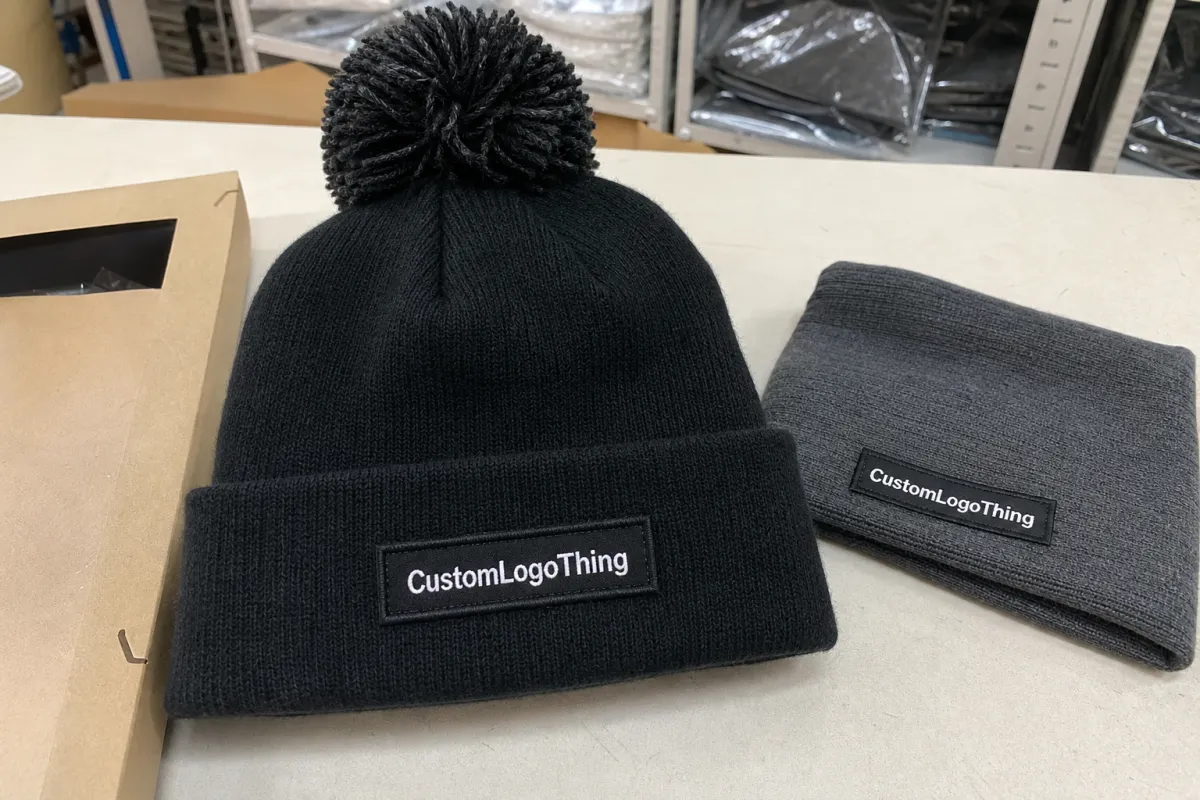
Pom Pom Beanies work because they feel like actual winter gear, not a promo item that happened to be dressed up. That extra bit of visual structure helps. A pom draws the eye, lifts the silhouette, and makes a basic knit cap look more deliberate without requiring heavy decoration.
For electronics programs, the format is practical. Beanies pack flat, stack cleanly, and take less carton space than bulkier apparel. They are easy to distribute at trade shows, bundle into service kits, fold into welcome packs, or ship as seasonal partner gifts. They also fit a wide range of head sizes without the headache of size runs, which keeps order planning simpler than most apparel categories.
There is another reason buyers keep coming back to this style: it feels giftable without becoming fragile. A plain beanie can work, but a pom pom version reads a little more premium and a little less generic. That can matter if the item is being used to signal appreciation rather than just cover a staffing need. The product still has to perform, though. Warmth, fit, logo visibility, and packaging all need to line up or the visual lift does not buy much.
The best winter merch is the kind people actually wear twice. That usually comes from product choices, not from a louder logo.
A clean beanie program starts with the item itself. Decide whether the cuff carries the mark, how much room the logo needs, and whether the pom should match the body or stand out on purpose. Those decisions affect the final look more than most teams expect.
Electronics pom pom beanies bulk order planning basics
Good planning starts with the use case. A corporate gift, a reseller bundle, a retail assortment, and an event handout all need different specs. A premium gift may justify a softer handfeel, better finishing, or a gift box. A high-volume giveaway usually needs simpler packaging and tighter cost control. A retail program may need stronger visual consistency and a more polished label or hangtag.
The first conversation should cover quantity, color split, decoration method, and delivery date. If the order is 600 units split across black, navy, and gray, say that up front. If the logo goes on the cuff in embroidery, say that too. A quote gets much more useful once the supplier is pricing the actual job instead of guessing at a simplified version of it.
Sample approval is not optional busywork. Stretch knit changes after the cuff folds, the pom is attached, and the beanie is worn once or twice. A product can look fine on paper and still fit oddly on the head. Buyers should check logo placement, cuff depth, crown shape, and the way the beanie sits after the knit relaxes. That one review step catches a lot of avoidable mistakes.
- Quantity: confirm total units and any split by color or ship-to.
- Decoration: embroidery, woven patch, or print transfer, depending on logo detail.
- Packaging: bulk carton, retail fold, polybag, or gift-ready pack-out.
- Deadline: set the in-hand date, not just the ship date.
Once those inputs are fixed, price and lead time become much easier to compare. That is the part of electronics pom pom beanies Bulk Order Planning that saves the most time later. Clear specs make honest quotes possible. Vague specs just make everyone revise the order twice.
Material, knit, and pom details buyers should lock first
Material choice affects more than softness. It changes warmth, stretch recovery, drying time, color retention, and how the beanie behaves after repeated wear. 100% acrylic is still the most common bulk choice because it is affordable, easy to knit, and usually holds color well. It also tends to be the least fussy option for large orders. Acrylic blends can feel warmer or more premium, but they usually raise the price and can narrow the care profile.
Knit gauge is one of those details buyers rarely think about until they see the sample. A tighter knit usually looks cleaner and supports sharper decoration. It can also feel a little stiffer. A looser knit is softer and more relaxed, but very fine logo details may not read as clearly. That tradeoff matters if the beanie is supposed to look retail-ready instead of casual.
Cuff depth deserves the same attention. Too shallow, and the logo has nowhere to live. Too deep, and the front of the beanie can look crowded or heavy. Crown shape matters too, especially on styles with a pom. A tall crown can make the silhouette feel oversized. A flatter crown usually looks more balanced once the beanie is worn.
The pom is not a minor add-on. Yarn poms are usually simpler, lighter, and more cost-efficient. They also match the body of the beanie more naturally. Faux fur poms push the product toward a more premium feel, but they add setup complexity, color matching pressure, and more attachment checks. Attachment method matters just as much as the look. A secure stitched mount or reinforced tie-off holds up better than something loose, especially once the product is folded, boxed, and handled in transit.
Buyers should also ask about lining and color tolerance. A fleece lining adds warmth and a different handfeel, which can help in colder regions. It also makes the beanie bulkier and less compressible. Color matching deserves realism. Pantone targets help, but yarn is not ink. Slight shade movement is normal, and the order is smoother when that is acknowledged before production starts.
For most bulk programs, the spec should be written in measurable terms:
- Shell yarn: standard acrylic, acrylic blend, or wool blend.
- Knit style: tighter gauge for cleaner detail, looser gauge for a softer feel.
- Cuff height: enough room for the logo without crowding the front panel.
- Pom type: yarn pom for straightforward bulk runs, faux fur pom for a more premium finish.
That level of detail keeps the order from drifting later. It also makes sample approval more useful, because the buyer can compare the physical piece against a real checklist instead of a vague expectation.
Cost, MOQ, and quote drivers that change unit price
Unit price usually comes down to five things: decoration method, number of colors, knit complexity, pom style, and packaging. A simple embroidered cuff on a standard acrylic body will usually price lower than a custom-knit pattern with a faux fur pom and retail folding. That is not arbitrary. Each added step means more setup, more labor, and more quality control.
MOQ follows the same logic. Standard yarn and a simple decoration method often allow a lower entry point. Add custom pom colors, specialty yarns, multiple logo locations, or printed packaging, and the minimum usually rises. A smaller order is still possible in many cases, but the per-unit cost goes up because the setup is spread across fewer pieces. A 150-piece custom run can easily cost more per unit than a 500-piece standard run.
Quotes should separate product, decoration, packaging, and freight. Anything less makes comparison messy. One supplier may include folding and polybagging while another leaves it out. One may quote ex-factory pricing while another includes delivery. The cheaper number is not always the cheaper order. Buyers need the landed cost, not the headline cost.
| Option | Typical MOQ | Unit Price Range | Best For | Notes |
|---|---|---|---|---|
| Standard acrylic, yarn pom, embroidered cuff | 100-250 pcs | $5.20-$7.40 | Internal gifts, event handouts | Easiest build and usually the fastest to approve |
| Acrylic blend, yarn pom, woven patch | 150-300 pcs | $6.80-$9.20 | Retail bundles, partner merch | More texture and a slightly higher setup cost |
| Wool blend, faux fur pom, embroidery or patch | 200-500 pcs | $8.90-$12.50 | Premium giveaways, launch kits | Higher finish level, usually a longer production window |
There are real savings opportunities, but they should be chosen with eyes open. Standard yarn colors avoid special dye work. Single-location branding usually costs less than two-sided decoration. Reorders can be cheaper too, especially if the approved spec is held cleanly in the production file. Without that record, the second run tends to wander just enough to become annoying.
Process, timeline, and lead time checkpoints
The production flow is simple on paper: spec review, artwork approval, sample production, bulk knit and finishing, inspection, shipment. The schedule gets complicated when decisions stall. On a basic run with stock yarn and one decoration method, sample turnaround may land around 3-5 business days. Bulk production often lands around 12-15 business days after approval. Custom yarn matches, faux fur poms, multiple colors, or specialty pack-outs can push that longer.
Artwork is usually where the clock starts slipping. Clean vector files help. So do clear Pantone targets for thread, patch, or print colors. If the logo size changes late, or if the placement gets moved after the sample is already underway, the job often needs another proof round. That is not a dramatic delay by itself, but it adds up fast when the item is tied to a seasonal launch or a hard event date.
Shipping needs the same discipline. A ship date is not an in-hand date. Freight mode, carton count, destination, and receiving hours all affect the final arrival. A holiday order should carry a cushion because transportation delays have a way of showing up right when nobody wants them.
For programs with retail packaging or kitted sets, it can also help to ask whether the pack-out should be checked under ISTA distribution test standards. That is not about making the beanie fancier. It is about making sure the item survives the trip in one piece. If the carton insert or sleeve uses paperboard, asking about FSC-certified paperboard is a practical move when sustainability reporting matters.
- 3-5 business days: common sample or pre-production proof window on a simple build.
- 12-15 business days: common bulk run once artwork and sample are approved.
- 5-10 extra days: often needed for custom packaging, split deliveries, or peak-season freight.
The safest planning method is boring and effective: work backward from the delivery date. Subtract freight first, then production, then sample approval, then internal review. That sequence keeps the project grounded. It also prevents the classic mistake of treating the ship date like the finish line.
What a dependable supplier controls on repeat production
Repeat production is where the weak spots show up. Color consistency is first. If navy shifts from one batch to the next, the program starts looking unmanaged even if the logo is perfect. Knit tension comes next, because it affects size, drape, and cuff behavior. A looser second lot can feel like a different product in hand.
Pom attachment deserves the same scrutiny. It should survive folding, carton pressure, and regular handling without twisting off-center or loosening. That sounds basic, but it is one of the easiest places for a winter accessory to lose polish. Stitching around the cuff and logo area matters too. Uneven seams can make the decoration look slightly wrong even when the artwork is accurate.
A dependable supplier keeps the approved spec locked in a way that future runs can follow. Yarn reference, knit pattern, pom construction, decoration placement, carton count, and pack-out instructions should all live in the job record. Without that, reorders drift. The logo creeps. The cuff changes height. The pom color gets reinterpreted. None of those errors is catastrophic on its own, but they add up fast.
The best suppliers act like the order has to survive a second run, not just one quote cycle. They send clear proofs, ask specific questions before production starts, and flag issues early enough for the buyer to fix them without blowing the schedule. That discipline is worth more than a small price cut.
If a supplier cannot explain how the approved sample is matched against the bulk run, the reorder process is probably weaker than the quote makes it look.
For recurring seasonal programs, that control matters more than shaving a few cents off the unit price. A slightly higher number is easier to defend than a rework, a delay, or a customer complaint because the second lot drifted off spec.
Next steps to move from forecast to purchase order
Once the forecast is real enough to order against, turn it into a spec sheet that somebody else could execute without guessing. Start with quantity, then color split, then decoration format, then the delivery deadline. If the order is split across regions or departments, include those ship-to details before requesting final pricing. That keeps the quote honest and avoids a second round of paperwork later.
- Confirm the core numbers: total quantity, color split, and delivery date.
- Send the artwork properly: vector logo files, Pantone targets, and logo size preference.
- Approve the sample: physical sample, fit photo set, or pre-production proof before bulk starts.
- Lock the pack-out: bulk carton, retail fold, polybag, or gift-ready packaging.
- Set the receiving plan: one location or multiple locations, with carton counts noted in advance.
The most efficient orders are usually the least dramatic ones. The buyer knows the deadline, the logo file is clean, the packaging is settled, and the supplier has enough detail to price the job correctly. That is how electronics pom pom beanies Bulk Order Planning stays on schedule and ends with a product that feels thought through instead of rushed.
FAQ
How early should electronics pom pom beanies bulk order planning start before a campaign?
Start as soon as the quantity, logo, and delivery window are known. Sampling and approval are usually the slowest parts, and they get slower if the order includes custom packaging, multiple ship-to locations, or holiday freight. A few extra weeks of buffer can save the whole schedule.
What MOQ is typical for electronics pom pom beanies in bulk orders?
MOQ depends on decoration method, number of colors, and whether the yarn or pom needs customization. A simple build can often start lower than a premium one, but the unit cost rises when the order includes special poms, extra colors, or multiple logo locations. The best quote shows those drivers clearly.
Which decoration works best on a pom pom beanie?
Embroidery and woven patches are usually the most durable choices because they hold up well on a stretch knit cuff. The right option still depends on logo detail, budget, and the look the buyer wants. Embroidery feels more direct; patches can feel more retail-oriented.
Can one bulk order mix colors or sizes?
Often yes, but each colorway may need its own setup or minimum. Mixing options works best when the split quantities are confirmed before quoting. That way the buyer sees the real cost impact instead of a blended number that hides the setup work.
What should I send for a quote on electronics pom pom beanies bulk order planning?
Send vector artwork, preferred decoration location, quantity by color, target delivery date, and any packaging instructions. Include the destination zip code or country so freight and landed cost can be calculated correctly. The tighter the spec, the less time gets wasted on revisions.

