For buyers, the book Printed Poly Mailers Artwork Proof checklist is not paperwork for the sake of paperwork. It is the last checkpoint before a mistake gets multiplied across an entire run. One off-center logo, one wrong color call, one line of legal copy too close to a seal, and a 5,000-piece order becomes a very expensive lesson.
Printed poly mailer proofing needs to be treated like production control, not design taste. Flexible film behaves differently from paper. It stretches a little. It scuffs. Seals eat into usable space. Gloss and opacity change how color reads. The proof should answer a practical question: will this file print cleanly on this specific bag, with this print method, at this scale?
What the checklist should catch
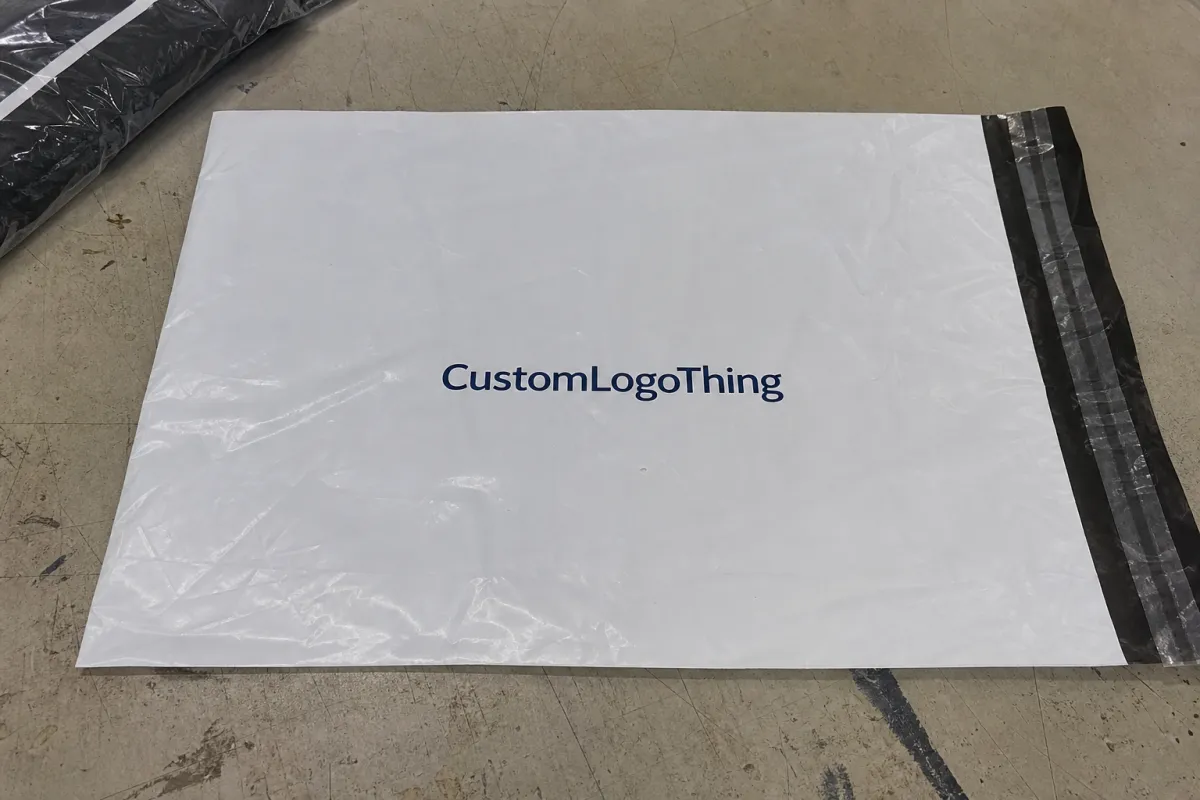
A strong checklist filters out the problems that cause the most reprints: wrong dimensions, missing bleed, unreadable type, off-center placement, and copy that sits too close to the edge, flap, or seal. Basic stuff. Still the stuff that slips through when teams rush and assume somebody else already checked it.
Printed Poly Mailers are less forgiving than a flat sheet of paper. The film can shift during conversion. The seal area removes space. A bag may be trimmed or folded in a way that changes where the artwork lands. A logo that looks centered on a screen can sit high on the finished mailer. Tiny text that reads fine in a PDF can turn muddy on translucent film or a dark substrate.
The buyer’s job is to cut ambiguity before press starts. A proof should settle four things quickly:
- Does the artwork match the exact bag size and structure?
- Is every element inside safe zones and away from seams, folds, and seals?
- Are colors specified in a way the printer can reproduce consistently?
- Will the layout still work once the bag is formed and handled?
A proof is not a mockup. It is a production agreement.
That is why the spec sheet matters as much as the artwork itself. If you are sourcing through Custom Poly Mailers, the proof defines the final bag as much as the dieline does. If the same brand system runs across cartons, inserts, and shipping bags, keep the artwork logic aligned with Custom Packaging Products so the files do not drift from one format to the next.
How the proof process works from file upload to approval
The proof flow is usually more structured than buyers expect. First comes file submission. Then prepress checks resolution, fonts, bleed, dieline fit, and obvious technical issues. After that, the printer sends a digital proof or production proof. The buyer reviews it, asks for changes if needed, and signs off only when the final version matches the spec sheet.
The early catch list is predictable. Missing bleed is common. So is logo art supplied as a low-resolution JPEG instead of vector. Copy can be too close to the edge, especially when a design was built for a carton and then forced onto flexible film.
There is a real difference between a visual proof and a production-ready proof. A visual proof shows placement and general appearance. A production-ready proof should reflect the actual dieline, print method, color expectations, and the structural limits of the bag. One can look fine on screen and still fail on press.
Internal approvals should not stop with marketing. A clean sign-off path usually includes:
- Marketing for brand accuracy and messaging
- Operations for packout, handling, and shipper compatibility
- Procurement for MOQ, price, and lead time alignment
- Compliance if there are recycling claims, return instructions, or shipping warnings
If the mailers have to survive rough handling, compare the spec against relevant transit testing expectations from groups such as ISTA. If the copy includes recycled-content or disposal language, EPA guidance is a sensible reality check. Claims need to hold up in writing, not just on the render.
Artwork variables that change the final print result
Some files are easy to print. Others look easy and behave badly. The difference usually comes down to a handful of variables buyers do not see until the proof is opened line by line. File format matters. Resolution matters. So does whether type is outlined, fonts are embedded, and images are placed correctly instead of linked and missing.
Vector artwork is the safest starting point for logos, line art, and typography that needs crisp edges. Raster art can work, but only if it is prepared at the right resolution. For mailers, 300 dpi at final size is a sensible baseline for photographic elements. Anything lower starts to risk softness once the art is enlarged or printed on flexible material.
Color handling deserves more attention than it usually gets. CMYK is common for process printing. Spot colors and Pantone references can help a brand keep a consistent look across repeat orders. The catch is simple: a Pantone call is only useful if the printer can match it under the selected print method and substrate. A deep blue on white film can read very differently on matte recycled film or on a translucent bag with a white ink underprint.
Three variables tend to affect the final result more than buyers expect:
- Print coverage: large solid areas show banding and slight variation more readily than open layouts.
- White ink: useful for opacity, but it changes color density and adds cost.
- Seam placement: a seam can split a border, barcode, or headline if the dieline was not built carefully.
Bag size, gusset depth, and seal style matter too. The same logo lockup that works on a flat 10 x 13 inch mailer may need more breathing room on a 12 x 15 plus 2 inch gusset format. A book Printed Poly Mailers Artwork Proof checklist should always be tied to the exact bag spec, not reused from a previous run without a fresh review.
One more practical issue: transparent or semi-opaque film can weaken contrast faster than a PDF suggests. Dark copy on a tinted bag needs stronger contrast than the same copy on white stock. If the design depends on fine type, ask for a second mockup before approval.
Pricing, MOQ, and unit cost drivers to compare before you order
Custom printed poly mailer pricing usually comes from a few moving parts: film cost, print setup, color count, proofing, and freight. The quote can look simple, but buyers should separate one-time charges from recurring unit cost. Otherwise, a low per-piece number can hide setup fees that make the real spend much higher than expected.
For many custom orders, MOQ starts around 5,000 to 10,000 pieces, though it changes by print method, size, and color complexity. Smaller runs usually carry a higher unit cost because fixed setup costs get spread across fewer bags. Larger runs improve the economics, assuming inventory risk is acceptable.
Material choice also matters. A standard 2.5 to 3 mil LDPE mailer is common for shipping, while co-extruded film can improve tear resistance or print appearance. Heavier film is not always better, but thinner film can show scuffing, distortion, or weak seals sooner. Buyers usually feel that tradeoff after the first real shipment, not during the quote stage.
Here is a practical comparison for quote review:
| Option | Typical MOQ | Unit Cost Impact | What It Usually Changes |
|---|---|---|---|
| 1-color print on standard LDPE mailer | 5,000-10,000 | Lower | Fewer setup steps, simpler proofing, cleaner registration |
| 2-4 color print with full coverage | 10,000+ | Moderate to higher | More ink, tighter registration, more proof scrutiny |
| Custom size or special gusset | Often 10,000+ | Higher | New tooling, revised dieline, more artwork adjustment |
| Rush production | Any | Higher | Compressed schedule, fewer revision windows, freight pressure |
| Digital short run | Lower than flexo | Higher per unit, lower setup | Useful for test launches, pilot programs, or seasonal drops |
As a rough market reference, a simple printed poly mailer can land around $0.12-$0.24 per unit at 5,000 pieces, depending on size, ink coverage, and substrate. Larger runs often improve that number, sometimes dropping into the $0.08-$0.16 range when the design is straightforward. Add white ink, custom sizing, special finishes, or extra revision rounds, and the price moves fast.
That is why the cheapest quote is not automatically the best value. A supplier that gives better prepress support or catches file issues early may save more money by preventing a reprint than a bargain quote saves on paper. Packaging math gets ugly when a mistake lands on the production floor.
Production timeline, lead time, and turnaround expectations
Once the proof is approved, the production clock starts. A normal schedule often includes prepress prep, plate or setup work, printing, curing or drying, slitting, bag making, packing, and freight booking. For many runs, buyers should expect something like 10-15 business days from approval to shipment, though the actual number depends on the print method, bag complexity, and plant load.
Lead time is not just a factory issue. Internal approval delays can add days without changing a single machine hour. If a proof sits with three departments and nobody owns the final sign-off, the schedule slips before the vendor even starts. The fastest supplier in the quote chain is not always the fastest project.
Common timeline risks include:
- Artwork revisions that reopen the proof cycle
- Unexpected stock shortages in the chosen film gauge or color
- Seasonal spikes that push a plant into a queue
- International freight delays if materials or finished goods cross borders
When you compare vendors, ask direct questions. What is the standard lead time from approval? What events trigger a delay notice? How fast can a corrected proof be reissued? Is the quoted timeline based on business days or calendar days? Those answers matter more than polished promises.
If the launch date is fixed, ask whether partial shipments are possible. Sometimes that matters more than a slightly faster full order. A split shipment can get inventory into the channel while the balance finishes in production. Not elegant. Useful, though.
Step-by-step proof review before you approve the job
This is where a disciplined book Printed Poly Mailers Artwork Proof checklist earns its keep. The review should be methodical, because one rushed sign-off can erase the savings from the whole order. I treat it as a five-pass read, not a quick glance.
- Confirm the structure. Check the exact bag size, film type, seal flap, gusset, and any special feature against the dieline or spec sheet. If the spec says 12 x 15 plus 2 inches and the proof shows a 10 x 13 layout, stop there.
- Audit placement. Look at logo location, key copy, barcode size, and safe zones. Make sure no element drifts into the seal area or too close to the trim edge.
- Review color and contrast. Confirm the color notes, Pantone references, and background choice. On dark or translucent film, readability can fall off quickly if the contrast is too soft.
- Check the text. Read every word, including legal language, recycling marks, shipping instructions, and contact details. Misspellings and outdated claims are much easier to catch here than after print.
- Lock the record. Request changes in writing, approve only the final version, and save the approved proof plus timestamp in a shared folder for reorder reference.
Review the proof on both desktop and mobile before signing off. Small text that looks fine on a monitor can be hard to parse on a phone, which is how a lot of managers now skim approvals. That second look exposes spacing problems and weak contrast fast.
For broader packaging programs, keep mailer specs aligned with the other components in the system. If the brand uses one artwork family across cartons, inserts, and shipping bags, the file controls should be just as disciplined. Otherwise the brand starts to look like three different companies with the same logo.
Common proofing mistakes that create expensive reprints
The most expensive errors are usually the ones that looked harmless in a PDF. A design can appear centered on screen and still lose balance once the bag is formed. A border can seem safe until trim loss cuts into it. A logo can be clean in the file and still print soft because the source art was copied from a website instead of pulled from a master vector file.
These are the mistakes that show up again and again:
- Ignoring bleed and trim: artwork that stops too close to the edge is vulnerable to cutting variation.
- Using the wrong dieline: generic templates can shift copy several millimeters off target.
- Trusting uncalibrated screens: monitor brightness can make colors look richer than they will print.
- Approving untested Pantone substitutions: a close match is not the same as a brand match.
- Skipping internal stakeholders: late input from compliance or operations often triggers rework after approval.
Another trap is treating a file as reusable without checking the substrate. A graphic that worked on paperboard may not hold up on film because the surface is less absorbent and more reflective. That is where buyers should push for printer-specific advice instead of assuming the art travels cleanly from one packaging format to another.
The checklist should also flag any element that could be distorted by seams, heat sealing, or bag geometry. Small barcode bars, thin borders, and hairline copy are all more fragile than they look. If the design depends on those details, it needs more scrutiny, not less.
Most reprints are not caused by one giant error. They come from three smaller assumptions stacking up: the file was “basically right,” someone else probably checked it, and the proof looked good enough. That combination is how avoidable damage gets approved.
Expert tips and next steps for a cleaner approval
The cleanest approval process is boring, and that is a compliment. One internal checklist. One owner for sign-off. One approved proof file. One saved copy of the dieline and color notes. That structure removes the ambiguity that causes last-minute debate.
Save the final approved proof with the exact date, revision number, and contact name. Keep the dieline, color callouts, and any special instructions in the same folder. When the reorder comes around, the team should not have to reconstruct decisions from old email threads. They should open one file and know exactly what was approved.
For more complex art, ask for a second mockup if the design includes any of the following:
- Tiny type under 7 pt
- Edge-to-edge backgrounds
- Transparent or semi-opaque film
- High-value brand colors that must stay consistent
- Claims or certification marks that need legal review
Before approval, gather the source artwork, compare at least two quotes, confirm MOQ and lead time, and make sure the proof mirrors the real bag spec. If the supplier offers a proof checklist, use it. If they do not, build your own and make every internal reviewer use the same version. A tidy approval trail beats a frantic cleanup later.
The final lesson is simple. The book printed poly mailers Artwork Proof Checklist is the cheapest chance to fix the order before print begins. Once ink hits film, every error is visible at scale. Catch it before then, and you protect budget, schedule, and brand consistency in one move.
FAQ
What should a printed poly mailers artwork proof checklist include?
It should cover size, dieline, bleed, safe zones, color references, logo placement, and all legal or shipping text. Add one final check for seam areas, flap placement, and anything that could be hidden or distorted in production.
How do I know if my artwork is ready for a poly mailer proof?
Your file should be high resolution or vector-based, with fonts outlined or embedded and images placed correctly. A printer-friendly file also matches the bag specs, uses the right color format, and leaves enough margin from every edge.
Why does my printed mailer proof look different from my screen file?
Screens are backlit, while plastic film reflects light and can shift how dark, bright, or muted colors appear. Proofs may also change because of substrate transparency, white ink coverage, and the exact print method used.
What affects MOQ and unit cost for custom poly mailers?
MOQ and unit cost move with bag size, print colors, setup method, and how many proof or revision rounds are needed. Larger orders usually reduce unit cost because fixed setup expenses are spread across more bags.
How long does artwork approval usually add to turnaround time?
A clean approval can keep the order moving on schedule, while revisions can add several business days depending on response speed. The biggest delay is often internal review, not the factory, so assign one owner to collect sign-off quickly.


