A toy Printed Poly Mailers Artwork Proof checklist is not a formality. It is the last serious checkpoint before print setup, and it catches the kinds of mistakes that turn into expensive, annoying rework. A logo can slide into a seal area. A barcode can sit too close to a fold. Warning copy can look fine in a design file and then blur on polyethylene film. None of that is dramatic. It is just how flexible packaging behaves.
Toy packaging makes this worse, not better. Bright character art, safety icons, age grading, barcodes, and retailer copy all compete for a limited amount of space. On a screen, the layout looks organized. On a mailer, the same layout can feel crowded once the bag is sealed, stacked, and handled by a warehouse team that is moving fast and reading even faster.
That is why the proof needs to be treated like production paperwork, not a marketing mockup. If you are comparing formats or decoration options, the product pages for Custom Poly Mailers and broader Custom Packaging Products are useful starting points. The proof is where the real decisions get locked in, though. That is the file that decides whether the bag prints cleanly or creates a headache later.
What the toy printed poly mailers artwork proof checklist should catch
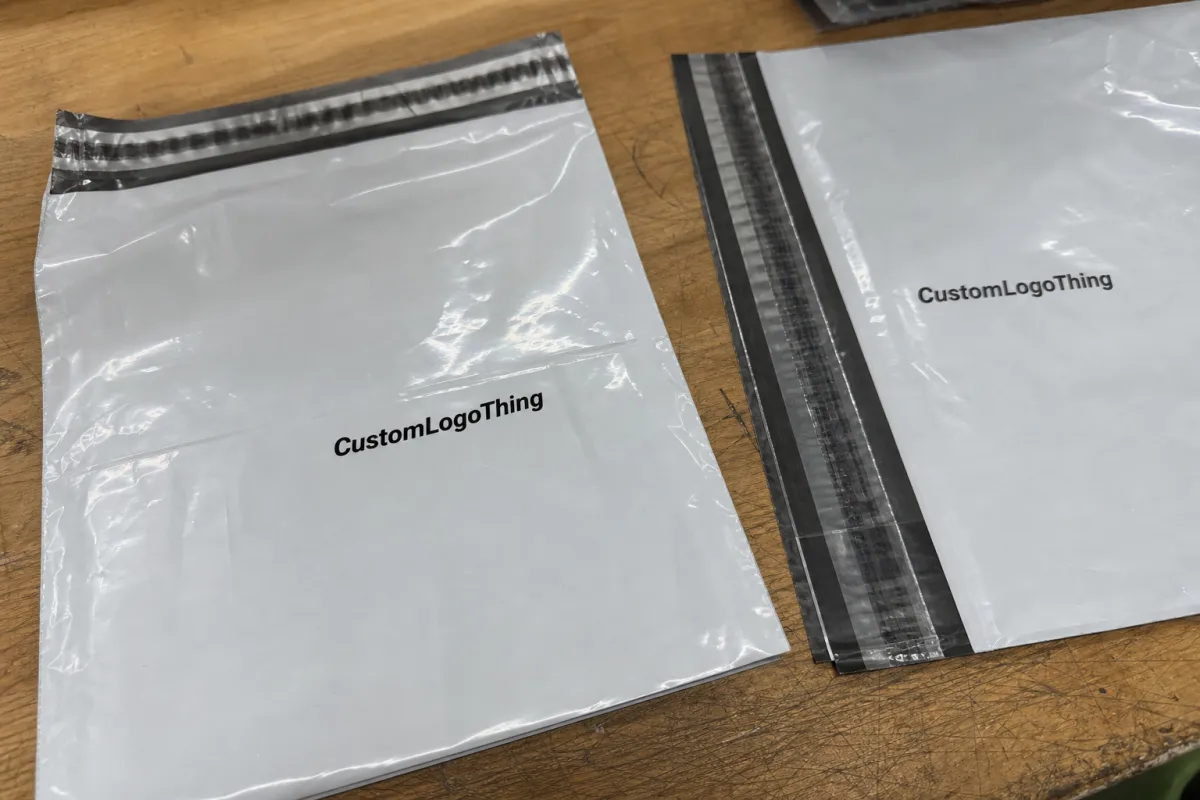
The first job of a proof is not to look polished. It is to prove that the artwork will survive actual production conditions. Poly mailers stretch a little. Heat sealing steals a few millimeters at the edge. Gloss and opacity change how color reads. A design that feels balanced in a mockup can look off once it is printed on film and cut to size.
For toy brands, the checklist needs to cover more than the logo. A typical bag may need a front-facing brand mark, a character or product image, a website line, recycling information, a barcode, a caution statement, and sometimes age grading or language tied to the retail channel. That is a lot for a flexible package that may be between 1.5 and 3 mil thick and built for shipping, not display.
- Brand color should match the intended look on film, not just the screen shade.
- Barcode placement should stay clear of seams, folds, and heavy ink blocks.
- Warnings and age copy need enough size and contrast to stay legible.
- Artwork scale must fit the actual bag dimensions, not a generic template.
- No-print zones around seals, closures, and cut edges need to be respected.
From a buyer's perspective, the value of the toy Printed Poly Mailers Artwork Proof checklist is simple: it forces the team to check the practical details before the supplier commits to plates, film, and ink. That is cheaper than finding out after the run that a character face is cut too close to the edge or that a legal line is muddy because the type was too small for the material.
Flexible packaging is unforgiving in small ways. A barcode that scans perfectly on paper may fail if it is pressed into a glossy panel or placed too close to a seam. A warning line that looks crisp at 400 percent zoom may collapse into a gray blur at real size. A good proof catches those problems while they are still just file changes.
A proof should answer one question clearly: will this mailer still look right after film stretch, sealing heat, and warehouse handling?
Proofing process and turnaround: from files to approval
The proof path is usually straightforward. The speed depends on the files. A clean, press-ready PDF with outlined fonts, labeled layers, and a matched dieline can move quickly. A layered file with missing links, unexpanded type, or uncertain dimensions slows everything down because someone has to reconstruct the intended layout before the proof can be built.
A normal workflow looks like this: the buyer submits final artwork, the supplier preflights the file, a digital proof is created, the buyer marks corrections, revisions are made, and final sign-off is captured before production starts. If the files are organized, first-round proofs often come back in 24 to 72 hours. If there are missing assets, copy questions, or size corrections, it can take several business days. Multiple SKU versions, mixed languages, and custom barcode placement push that timeline out further.
That timeline matters because proofing is rarely the only thing sitting on a launch schedule. Catalog deadlines, freight bookings, retail ship dates, and warehouse receiving windows are usually already fixed. Build in time for at least one review loop, one internal feedback pass, and one final approval window. It sounds cautious. It is also how you avoid last-minute panic when someone notices a typo or a misread color before the job goes live.
Not every revision should be treated as a small change. Moving a logo 4 mm is one thing. Changing the bag size, ink coverage, or copy structure is another. Those changes can affect print setup and sometimes require a fresh internal review. That is why the toy Printed Poly Mailers Artwork Proof checklist belongs inside the production calendar, not outside it.
If you need a quick reference while the proof is moving, the custom mailer category page at Custom Poly Mailers helps anchor the format itself, not just the design. For teams that also want to sanity-check transit performance, ISTA is worth a look because its transport test methods frame how finished mailers behave under drop, vibration, and compression. That is not proofing, but it is the same habit: check the thing before the thing costs money.
Artwork proof costs, MOQ, and pricing tradeoffs
Proofing sits inside the total buying decision whether teams want it to or not. The quote is not just unit price. It is material, print setup, revision time, proofing method, freight, and order volume. A low MOQ can look attractive, then the per-bag price creeps up because setup costs are spread across fewer pieces. Larger runs usually lower the unit cost because the fixed work gets amortized more efficiently.
For custom-printed poly mailers, a rough working range is $0.12-$0.35 per unit, depending on quantity, print coverage, film thickness, and color count. Smaller runs sit at the higher end. Heavy ink coverage, white underbase, metallic effects, or tight registration can push pricing up as well. That is not a markup problem in most cases. It just reflects a more demanding print job.
Proofing itself may be included in the quote or charged separately, and the difference is worth checking before approval. Some suppliers fold the first digital proof into the project. Others charge for extra revision loops, hard-copy proofs, or press references. That does not automatically mean the supplier is expensive. It means the quote needs to be read carefully.
| Proof option | Typical cost impact | Typical timing | Best for |
|---|---|---|---|
| Included digital proof | Often included in the quote | 1-3 business days | Clean vector art, simple one-color or two-color layouts |
| Paid revision round | $25-$100 per round is common | 1-3 business days after comments | Copy edits, barcode placement changes, small layout fixes |
| Hard-copy or press reference proof | $50-$250+ depending on setup | Several days longer than a digital proof | Color-critical launches or brand-sensitive approvals |
MOQ deserves a realistic look too. A small minimum order can help with testing or seasonal programs, but it usually means a higher price per bag. That is the tradeoff. The team gets flexibility, the supplier gets less spread on setup costs, and the proof process becomes more sensitive because there is less room to absorb mistakes. If a package is going into a retail rollout or a high-volume shipping program, the cost math often changes fast once the reorder conversation starts.
A clear quote should separate the bag cost, printing setup, proofing, and shipping. That makes it easier to see whether a price difference comes from the material itself, a revision burden, or a more complicated decoration spec. It also helps when the team compares mailers with other packaging items. If you need to cross-check other formats alongside mailers, Custom Packaging Products gives a broader view without guessing at what is driving the price.
One more practical point: FSC certification does not apply to the plastic film in a poly mailer. It can matter for paper cartons, inserts, or outer shippers around the same program, though. For that side of the package, FSC is the right authority if your brand is tracking certified paper sourcing.
Specs that make toy mailer artwork print cleanly
Part of the toy Printed Poly Mailers Artwork Proof checklist is making sure the file is built for the material. A dieline that matches the actual bag size matters more than most teams expect. If the art is set up for the wrong dimensions, the logo can appear centered in the file and still land too high or too low on the finished bag. The proof should show final trim size, bleed, safe zones, and no-print areas around seals or closures.
Poly mailers are not paper cartons. Ink behaves differently on polyethylene film, and visual contrast shifts depending on whether the bag is opaque white, tinted, or printed over a colored base. A brand color that looks bright on coated stock may read darker on film, especially if the layout uses broad solid fills. Good suppliers will usually flag that during preflight. The buyer still needs to understand the tradeoff before approval.
Here are the specs worth checking line by line:
- Dieline accuracy so the art aligns with the real bag dimensions.
- Bleed so color or image extends past trim and avoids thin white edges.
- Safe zone so text stays away from seams, edges, and folds.
- Image resolution at 300 dpi where possible, especially for logos and character art.
- Outlined fonts so type does not reflow when files are opened on another system.
- Barcode space so the code stays scannable after print.
Barcode placement is not decorative. It has to scan cleanly in warehouse use, and it should stay away from folds, glossy highlights, and dense graphic blocks. The same logic applies to warning copy. A line that looks fine in a design app can become unreadable if the type is too small or the contrast is too soft. That is why the proof should be checked at actual size, not only zoomed in on a monitor.
For toy packaging, age grading, caution language, and product identifiers deserve the same attention as the front-facing logo. If the bag is for retail sale, the artwork should also respect front-back orientation, fold lines, and the area where a seal or adhesive strip may distort the print. The cleanest proofs are usually the ones built around the bag structure instead of trying to force the structure to disappear.
One detail that gets missed often: artwork with lots of fine lines or tiny reversed type tends to suffer more on film than bold, simple layouts. That does not mean the design has to be plain. It means the proof has to prove the design can survive the substrate, the print method, and the way the bag will actually be handled.
Common proof mistakes that create reprints or delays
The expensive mistakes are usually plain. Wrong size, missing bleed, unoutlined fonts, low-resolution graphics, and artwork that runs too close to the seal line create more rework than flashy design problems ever do. If the proof is approved on the wrong dieline, the whole batch can be off even if the artwork itself looks attractive.
Color assumption causes trouble too. A buyer may approve a vivid screen shade without checking how it changes on translucent or white film. Bright colors on flexible packaging can print darker, flatter, or slightly less saturated than expected. That does not mean the printer made a mistake. It means the material changed the result, and the proof should have been reviewed with that in mind.
Crowded copy is another quiet problem. Toy mailers often carry more information than anyone wants to admit. The temptation is to shrink everything until the front looks cleaner. That usually backfires. Legal text, SKU data, and warning copy can become too dense to read once printed. In many cases, fewer words with a stronger hierarchy looks more professional than a layout packed with tiny type.
Late copy changes make schedules wobble. Safety language, barcode numbers, shipping marks, and destination details often change just as the proof is already circulating internally. Every late edit can trigger another review loop, and each loop costs time. Reprints almost always cost more than the extra hour spent checking the proof carefully the first time.
If a proof depends on hope, it is not ready. A good approval is specific enough that someone else can reprint the job from the record without guessing.
Another common problem is ignoring the bag’s physical behavior. A design can look fine if it sits flat on a desk, then shift in the real world once the bag is filled and the film pulls taut. A logo placed too close to a side seal may appear clean in the proof and still look cramped after filling. That is why the checklist needs to include the finished-use condition, not just the flat artwork view.
When buyers rush, the same errors keep repeating. The fix is not glamorous. Slow the review down enough to catch the obvious issues before production locks in. That is the whole job of the toy printed Poly Mailers Artwork Proof Checklist: stop preventable mistakes before they become budget, inventory, and timing problems.
Expert checks before you sign off on a proof
A solid approval process starts with one rule: compare the proof against the approved brief, not against memory. Open the dieline, the copy deck, the barcode file, and the color notes side by side. Then walk through the proof in a fixed order so nothing gets skipped. That sounds slow. It is still faster than chasing a reprint.
Here is the sign-off order I would use on a real job:
- Confirm the bag size and orientation.
- Check that the artwork sits inside bleed and safe zones.
- Review logo placement, type hierarchy, and image clarity at actual size.
- Verify barcode readability and warning-copy accuracy.
- Check color intent against the material choice and print method.
- Look again at seams, folds, seal areas, and closure zones.
Assign one person to own final sign-off. That sounds basic, but it prevents the classic problem where three people assume someone else approved the proof. A final PDF record should be saved with the version number, date, and any comments attached. That record matters later when a reorder comes back and the team needs to know which version was actually approved.
It also helps to review the proof at the scale the customer will see on the shelf or in the warehouse, not just as a file on a desktop. Small shifts that are invisible in a layout window can become obvious on the finished bag. If the design depends on a perfect edge kiss or a hairline gap, that is usually a sign the layout needs more margin before it goes to print.
For brands that buy regularly, a clean approval file speeds up future runs and makes the next artwork review easier. It also helps when the same design is resized for a different mailer or paired with other packaging formats. That is where a disciplined proof habit pays off more than one quick correction ever will.
My short version of the process: read the proof like a printer, not like a shopper. Shoppers forgive some design quirks. Printers do not forgive unclear files.
What should a toy printed poly mailers artwork proof include?
The proof should show the full dieline, final artwork placement, bleed, safe zones, and any no-print areas around seals or folds. It should also make barcode placement, warning copy, brand colors, and image clarity easy to verify before approval.
How long does poly mailer artwork proofing usually take?
Simple proofs can move quickly when files are print-ready, while complicated layouts or missing assets add extra review time. Each revision round can extend the schedule, so buyers should plan for approval time before they lock in launch dates.
Does proofing change the unit cost of toy mailers?
Proofing itself may be included in the quote or charged separately, depending on the supplier's process. Unit cost can rise with smaller MOQs, extra revisions, special colors, or more complex printing setup.
What file format is best for printed poly mailer artwork proofs?
A press-ready PDF is usually easiest to review, while AI or EPS files work well when fonts are outlined and linked images are handled correctly. High-resolution artwork and a clearly labeled dieline help the supplier create a cleaner proof with fewer delays.
What is the most important thing to check before approving a toy mailer proof?
Check that the artwork is the correct size, the copy is accurate, and the design stays clear away from seams, edges, and seals. Also confirm barcode readability, warning text, and the final color intent so the printed bag matches the buying brief.
How should buyers use this checklist on future orders?
Save the approved proof, the quote, and the revision notes together so the next reorder starts from a clean record instead of guesswork. That habit keeps teams consistent, reduces approval churn, and makes the next toy printed poly mailers artwork proof checklist faster to run end to end.


