Vitamin Embroidered Baseball Caps material sample guide checks matter because a cap can look right in artwork and still fail in hand. Fabric weight, panel structure, thread behavior, and fit all change how the finished piece reads, and those differences are easiest to catch before production starts. A sample shows whether the cap belongs in retail packaging, event giveaways, or a simple promotional run.
Vitamin Embroidered Baseball Caps Material Sample Guide: What It Reveals
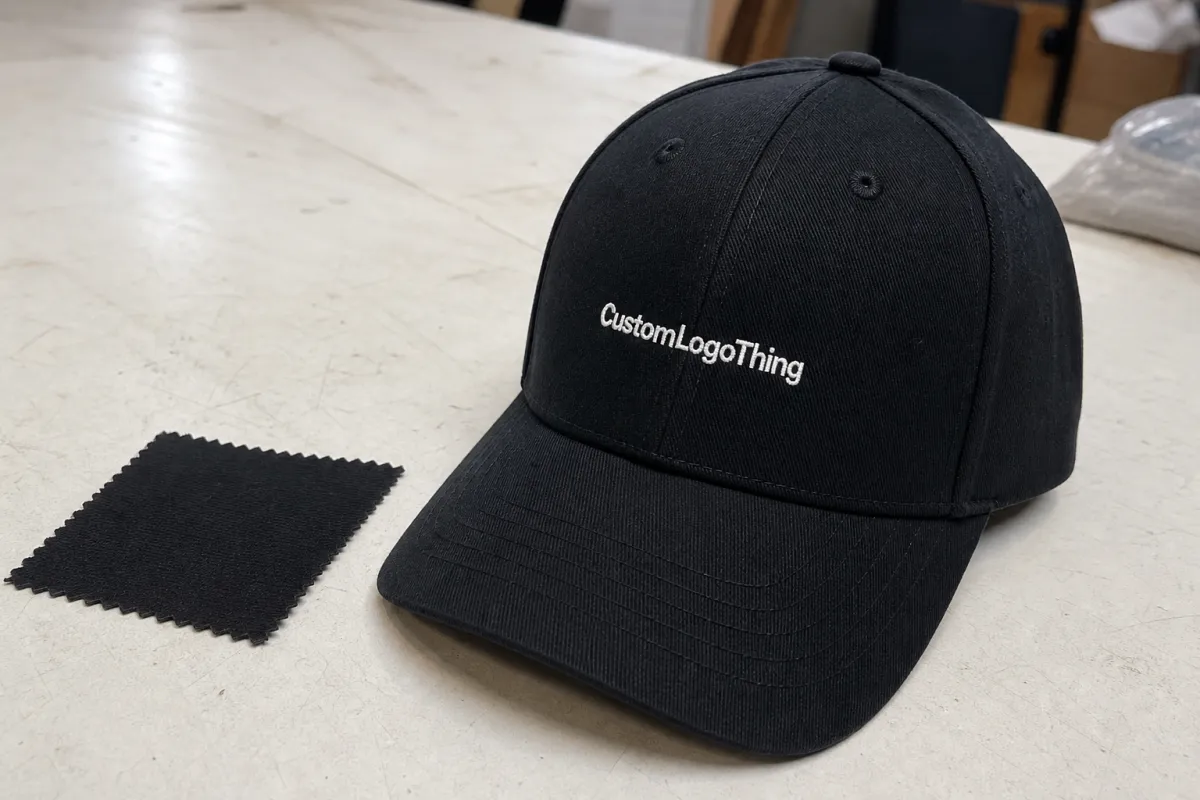
A vitamin Embroidered Baseball Caps material sample guide is more than a color check. It is the point where a concept becomes a physical product, and that is when material choices stop being theoretical. The same logo can look crisp on firm polyester twill, softer on brushed cotton, and distorted on a front panel with weak support. The sample shows which combination actually holds up.
The first thing to inspect is the relationship between the base fabric and the embroidery. Structured front panels with buckram usually support denser stitch work better than unstructured crowns. If the panel is too soft, stitches can sink; if it is too stiff, the cap may feel boxy and overbuilt. The sample reveals whether the chosen balance matches the intended market.
The cap also tells you how it wears, not just how it photographs. Some buyers need a retail-ready piece with a cleaner hand, firmer visor, and tighter finish. Others want a lighter promotional cap where price and comfort matter more than premium structure. A sample clarifies which expectation is being met before the order scales up.
Embroidery itself needs close review: stitch density, underlay, thread sheen, and how the logo follows the front panel curve. A mark can be technically accurate and still look oversized once it crosses a seam or wraps onto a curved surface. The sample is the best place to catch that problem early.
Packaging can also reflect the intended product tier. A retail-cap sample may pair better with an FSC certified insert card, kraft paper tissue, and a neat fold, while a large promo run may ship in corrugated cardboard cartons with simpler protection. The packaging should support the cap, not distract from whether the cap itself is right.
How the Sample Review Process Works From Artwork to Approval
The review usually starts with a spec sheet, logo file, size request, color references, and cap-style notes. The supplier then digitizes the artwork, selects materials, and builds a pre-production sample or close production equivalent. The most important early question is whether the sample uses final materials or a near-match, because that changes how much confidence you can place in the result.
A proper review includes both visual and physical checks. Look at the cap in daylight and indoor light because thread sheen and dark fabric absorption can change what you see. Compare the stitched piece against approved artwork, then confirm panel shape, closure type, brim curve, and crown height. If color is critical, request physical swatches or thread cards rather than relying on screens.
Documenting the review matters. Record what passed, what needs revision, and what is already locked. That note trail helps if the order moves between teams or if production starts later than expected. A short approval sheet is often enough if it covers cap body, thread color, logo placement, and packaging method.
“Approve the sample in the same light and against the same references you will use on the production line; otherwise you are judging a different object than the one you will actually receive.”
Shipping presentation can reveal how carefully the sample was handled. A good sample pack often arrives in a sturdy corrugated cardboard mailer with kraft paper wrap so the visor does not rub against the embroidery. Some buyers also ask for recycled materials, post-consumer waste inserts, or biodegradable packaging when brand standards require it. Those choices are useful, but they should never hide flaws in the cap itself.
For transit-related checks, ISTA is a helpful reference for handling, vibration, and shipment abuse. For paper-based packaging choices, FSC is a practical standard when paper sourcing needs to be traceable. These references do not design the cap, but they help you judge whether the sample arrived in a condition that reflects real shipping conditions.
Material Factors That Change Look, Feel, and Stitch Quality
Fabric choice is the biggest variable in cap appearance. Cotton twill gives a softer hand and a classic finish, while polyester twill usually holds shape better and resists wrinkling. Performance blends can add moisture management for sports or outdoor use, but they may need different stabilizer support so the embroidery does not drag the fabric.
Structure matters just as much as shell fabric. A structured cap with buckram-backed front panels supports dense embroidery and raised effects better than an unstructured cap that collapses when handled. Unstructured caps can still work well, but the design usually needs smaller artwork, lighter stitch density, and placement that stays away from seams.
Inside the cap, hidden materials affect comfort and durability. Seam tape, interfacing, sweatband construction, and the finish on the inner crown all shape wearability. A rough sweatband edge can irritate users quickly, while weak seam tape can let the cap lose shape after repeated wear. A sample should be flexed and worn before approval.
Thread and backing are easy to underestimate. Heavy thread on a light panel can create pull marks, while too little backing lets the design sink and lose edge definition. The goal is enough stabilizer to keep embroidery clean without making the front panel feel stiff or overworked.
Visor build and closure style also affect the final impression. A pre-curved visor feels more casual and ready to wear, while a flatter visor can look more retail-driven. Snapback, strapback, Velcro, and metal buckle closures each change perceived value and comfort. If the cap is meant to feel premium, the closure should match that expectation.
Step-by-Step Review: Measure, Compare, Photograph, and Revise
Start with measurements. Crown height, front panel width, visor length, visor curve, and closure range should be checked against the spec sheet rather than guessed. A cap that seems close on a desk can still sit noticeably wrong on a head, and a small placement error can make the logo look off-center even when the artwork file is correct.
Next, compare the sample under controlled conditions. Keep the approved artwork, thread references, and any physical color chips next to the cap. Move the sample between lighting conditions and note any shift in sheen, contrast, or panel color. That turns a vague impression into a specific correction.
Hand feel deserves the same attention. Flex the crown, rub the panel lightly, and check whether the embroidery catches or scratches the surface. Feel the sweatband seams, the inner taping, and the closure hardware. People notice those details quickly, even if they never name them out loud.
Photographs are useful only if they are consistent. Take front, side, back, and top views in the same light and against the same background. Capture one flat-lay image and, if possible, one image on a head form or a person. Then write revisions in plain language: move the logo 6 mm higher, reduce fill in the center leaf, tighten the visor curve, or soften the front panel.
If a revision is needed, change one variable at a time. Adjusting fabric, stitch density, and placement all at once makes it impossible to know what fixed the issue. The cleanest sample rounds are controlled and boring: they show exactly which change improved the cap.
Cost, Pricing, and MOQ Signals to Watch Before You Commit
Sample charges may look small, but they often sit outside the final unit price. A sample can be credited back later, or it can be billed separately with shipping and digitizing. Ask for the full breakdown: sample fee, artwork cleanup, embroidery programming, freight, and any revision charge if the first round misses the mark.
Pricing usually shifts with embroidery complexity, body quality, thread count, labels, and added finishing. A simple one-color logo on a stock cap costs less than a design with raised embroidery, woven labels, contrast taping, and custom packaging. MOQ affects unit price too, and the difference between 300, 1,000, and 3,000 pieces can be meaningful even when the cap style looks similar.
Here is a practical way to compare sample paths before you commit:
| Sample Option | Typical Cost Range | What You Verify | Best For |
|---|---|---|---|
| Stock cap with standard embroidery | $35-$75 | Fit, stitch clarity, basic color match | Simple promotional programs |
| Custom body with revised embroidery | $60-$120 | Fabric behavior, placement, structure, finish | Retail-ready or branded merchandise |
| Rush sample with packaging mockup | $90-$180 | Turn time, final presentation, shipping protection | Launch deadlines and event-driven orders |
That table is only a starting point. Exact thread matching, custom labels, or special closure hardware can increase setup costs. Recycled materials, FSC-certified paper components, or a branded shipper made from corrugated cardboard may also raise the sample cost slightly. In many cases, that extra spend is easier to justify than discovering a problem after bulk production starts.
The main point is to avoid chasing the lowest sample fee if it creates confusion later. A slightly more expensive sample can prevent a much larger mistake in the full order, and that is where the real cost lives.
Common Mistakes Buyers Make When Reviewing Cap Samples
The most common mistake is approving under a single light source. Thread sheen can disappear in dim office lighting and flare under daylight, especially on dark cap bodies. If the sample only looks good under one lamp, it may fail in retail or event settings.
Another mistake is focusing only on the logo. A cap is a system, not a patch. The visor shape, sweatband texture, crown collapse, closure quality, and inner seam finish all affect how the item feels in hand. A beautiful logo on a flimsy cap is still a weak result.
Buyers also skip the side-by-side comparison with the original artwork. That is risky because scale drift can happen quietly. A logo that is just a bit too large can crowd the panel edges and make the whole cap feel cramped. The eye catches that imbalance immediately.
Verbal approval without written notes causes trouble too. If one stakeholder wants a revision and another thinks the sample is approved, production can move in two directions. Keep corrections in writing, attach marked photos when possible, and make sure the approved version is clearly named.
Finally, do not ignore shipping condition. If a sample arrives crushed, bent, or stained in transit, that is not automatically a cap problem, but it is still a signal worth tracking. Ask how it was packed and whether the carton used kraft paper, tissue, or another protective layer. The way a sample ships often predicts how the bulk order will be handled.
Actionable Next Steps Before You Release the Bulk Order
Build a simple approval sheet and keep it attached to the sample record. List the fabric, crown type, closure, embroidery placement, thread colors, label style, and packaging method. If the order uses recycled materials, post-consumer waste paper, or biodegradable packaging, note that too so the final shipment matches the brief.
Request the sample format that best matches the job. For a straightforward promotional run, one physical sample may be enough. For a retail launch, ask for one physical sample plus clear photos from several angles and a note on any material substitutions. In a vitamin embroidered baseball Caps Material Sample guide review, that extra context often prevents avoidable mistakes.
Get sign-off from the people who will actually live with the cap. Merchandising notices presentation. Operations notices packing. Marketing notices color and branding. A field team notices comfort, sweatband feel, and closure performance. Those viewpoints do not overlap completely, which is exactly why they are useful.
If any detail changes after approval, resample the changed part instead of assuming the old sample still represents the final product. A small fabric change can alter stitch behavior, and a closure change can alter fit or perceived quality. Treat the sample as a controlled reference, not a loose suggestion.
For Custom Logo Things customers, the cleanest path is simple: review the sample like a buyer who has to live with the result. Use the vitamin Embroidered Baseball Caps material sample guide, confirm every correction in writing, and release the production order only when the sample matches the target spec.
What does a vitamin embroidered baseball caps material sample guide help me verify?
It helps you confirm fabric hand, embroidery clarity, placement, fit, and cap structure before production starts. It also shows whether the cap looks consistent in real lighting and whether the packaging approach matches the intended use.
How many samples should I request before approving embroidered baseball caps?
Most buyers can review one physical pre-production sample if the spec is simple and the supplier is using proven materials. Ask for a second or revised sample if the design uses unusual fabric, heavy embroidery, or exact color matching.
Can the cap material change how embroidery looks on the sample?
Yes. Heavier and more stable fabrics usually support embroidery better, while softer or stretchier materials can show pull, sink, or distortion. That is why the same artwork can look crisp on one cap body and uneven on another.
How long does sample approval and production usually take?
Timing depends on artwork readiness, material availability, and whether the sample needs revisions. A complete spec sheet, fast feedback, and clear approval notes usually shorten the timeline more than any other single factor.
What should I compare between the sample and final production run?
Compare fabric, color, stitch quality, placement, fit, closure, and finishing details like labels or packaging. Keep the signed sample notes on file so the final run can be checked against the same standard, especially if the vitamin Embroidered Baseball Caps material sample guide was used to approve the first unit.


