Bulk planning for twisted-Handle Paper Bags starts with a simple truth: the cheapest quote is rarely the cheapest order once freight, carton counts, proofing, and rework are included. A bag that stacks cleanly, carries comfortably, and prints sharply can protect margin better than a thin alternative that looks fine on paper but causes trouble at receiving or checkout.
From a packaging buyer's point of view, the job is not just to buy bags. It is to book the right bag, in the right quantity, with the right print and pack configuration, so every carton arrives ready for use. The best bulk orders are built around clear specs, realistic timelines, and a clean handoff between artwork, approval, production, and freight.
Why book twisted handle paper bags bulk order planning beats last-minute bag buys
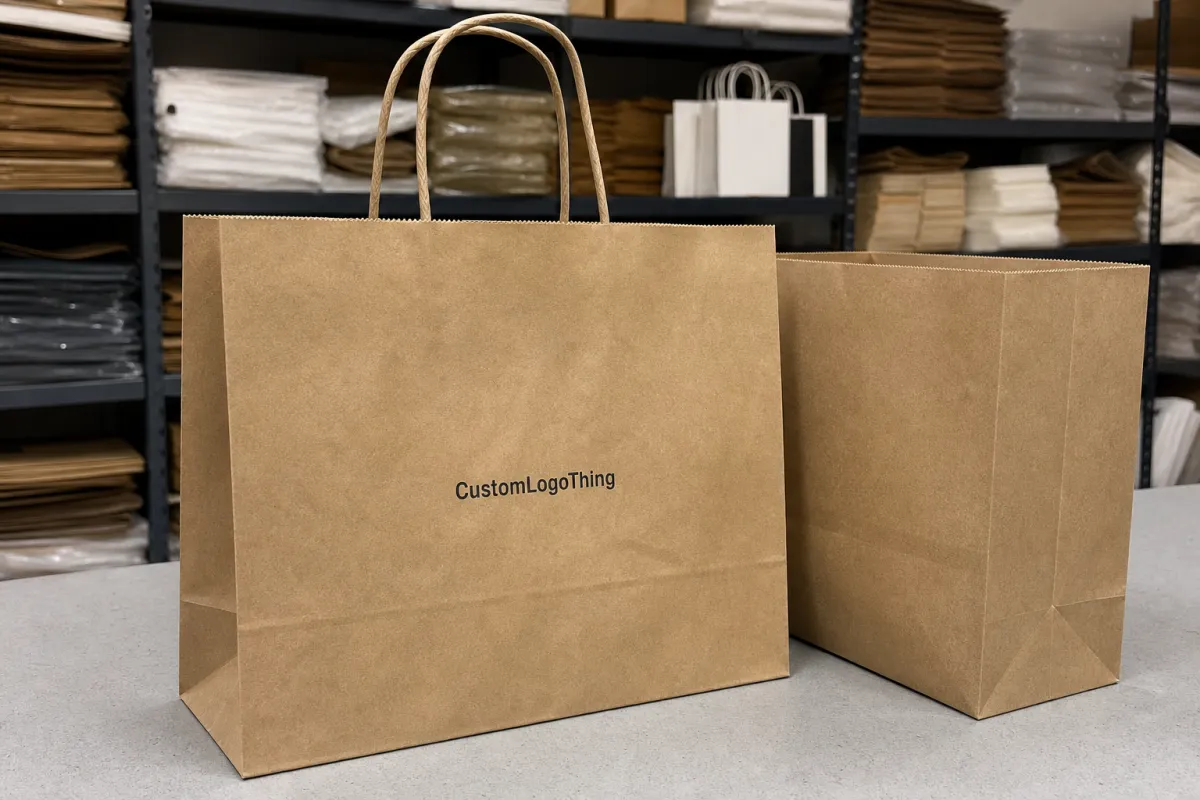
Last-minute buying usually costs more in ways that do not show up in the first quote. Rush production can raise unit price, split shipments add freight, and small specification mistakes create reprints or unusable inventory. In practice, the real job is to control the landed cost of a finished, usable bag.
Twisted-Handle Paper Bags are popular because they balance comfort, printability, and carton efficiency. The handles feel better in hand than a flat-paper alternative, the bags stack well, and they present cleanly at retail checkout when the dimensions are matched to the product. For apparel, gift, food, and specialty retail, that mix matters because the customer sees the bag as part of the brand experience.
Early planning also helps lock in the variables that change cost the most:
- Paper grade - kraft color, recycled content, and gsm all affect cost and performance.
- Print coverage - one-color logo work is easier to run than full-bleed graphics.
- Pack configuration - carton count, bundle count, and pallet pattern influence freight and storage.
- Schedule position - a clean slot on the production calendar is worth more than a rushed fix later.
That is also why larger buyers often start with a repeatable spec and adjust only what needs to change for a season, promotion, or store format. Keeping the same bag size, handle drop, and logo placement across shipments makes warehouse receiving simpler and replenishment more predictable. If you are comparing programs, our Wholesale Programs page is a good place to think through volume and repeat order structure before you request pricing.
The cheapest bag is rarely the cheapest order once freight, pack-out, and rework are counted.
If you need a quick refresher on terminology, minimums, and proofing steps, our FAQ covers the basics without the usual fluff.
Choose the right paper grade, handle style, and finish
The first design decision is the paper itself. For twisted-Handle Paper Bags, buyers usually choose between natural kraft, bleached white kraft, and recycled kraft blends. Natural kraft gives a straightforward, earthy look and hides minor scuffs well. White kraft takes print more crisply and is usually better when a brand needs brighter graphics or a cleaner retail presentation. Recycled options can fit sustainability goals, but the fiber mix should still be checked against strength and surface consistency.
Paper weight matters just as much as color. Light takeaway bags may sit in the 80-100 gsm range, while stronger retail bags often move into 120-150 gsm or higher depending on size and load. Once the bag gets wider, taller, or is meant for boxed goods, extra paper weight or reinforcement can make the difference between a good sample and a bag that actually survives daily use.
Twisted handles are efficient for bulk production because they can be inserted and glued at scale without the labor intensity of some specialty handle formats. They are a strong fit for apparel, gift, takeaway, books, and general retail packaging where buyers want a stable carry feel without pushing the price too high. If the bag needs a more polished shelf presence, a smoother kraft stock, tighter print control, and careful trim quality matter more than decorative features that do not improve function.
Finish is a practical choice, not just a visual one. A matte, low-glare bag can suit boutique retail, while a bolder print layout may work better for promotions or seasonal campaigns. Water-based inks, careful registration, and a clean fold line often do more for perceived quality than a flashy effect that is hard to control in bulk. For brands that need fiber sourcing documentation, FSC certification is a useful reference point for responsible paper supply.
Here is a simple way to compare the options:
| Bag style | Best use | Typical paper | Finish and print note |
|---|---|---|---|
| Natural kraft twisted-handle | Apparel, casual retail, giveaways | 90-140 gsm | Good for one- or two-color logos with a straightforward look |
| White kraft twisted-handle | Gift, beauty, premium retail | 100-150 gsm | Better for brighter graphics, sharper text, and seasonal artwork |
| Reinforced kraft bag | Heavier boxed goods, books, multi-item orders | 120-180 gsm | Often paired with extra patching or stronger bottom construction |
| High-coverage printed bag | Promotions, launches, brand campaigns | 100-160 gsm | Artwork planning matters more because print coverage affects cost and registration |
For transit-heavy programs, it is also worth thinking about carton durability and packing consistency. If bags will be shipped far or stored before use, a test approach aligned with ISTA methods can help separate a nice sample from a package that holds up under real distribution stress.
Bag dimensions and strength specs to confirm before approval
Dimensions are where many bulk orders go sideways. A bag can look fine in a drawing and still perform poorly if the width, gusset, height, or handle drop does not match the product it needs to carry. The key is to confirm the actual item dimensions first, then build the bag around that real load instead of around a guess.
The four numbers that matter most are width, gusset, height, and handle drop. Width and gusset determine the footprint inside the bag; height must account for the product plus enough fold-over room to close the top neatly; and handle drop needs to feel natural in hand, not too short to carry comfortably and not so long that the bag swings awkwardly at the side.
Strength is not just a paper weight problem. Reinforcement changes the way the bag behaves under load, especially at the handle attachment and bottom fold. A bag with a similar outer dimension can perform very differently if one version has stronger handle insertion, better glue coverage, or a sturdier bottom build. That is why a sample should be tested with the actual packed product, not an estimated weight rounded in the buyer's head.
It helps to compare the most common planning scenarios side by side:
| Use case | What to confirm first | Typical spec focus | Main risk if undersized |
|---|---|---|---|
| Apparel | Folded garment stack and hanger bag needs | Medium width, moderate gusset, clean print face | Wrinkling, tight opening, poor presentation |
| Gift retail | Box size and closure height | Higher print quality, balanced handle drop | Top edge shows too much of the product or looks cramped |
| Books and boxed goods | Actual weight and corner shape | Heavier paper, stronger bottom, reinforced handles | Handle pull-out, bottom stress, or side seam failure |
| Takeaway packaging | Container height and heat retention | Sturdy gusset, workable top fold, moisture tolerance | Grease staining, tipping, or hard-to-close tops |
One practical habit saves a lot of trouble: confirm the pack weight in ounces or grams, not just the product type. A few ounces may not sound like much, but on the floor those ounces can change handle strain, carton density, and the way the bag feels in the customer's hand. For buyers who need repeatable results across multiple stores or fulfillment nodes, that detail is worth treating as a specification, not an afterthought.
Cost, MOQ, and quote drivers for bulk paper bag orders
Pricing for paper bags is usually driven by the same handful of variables: bag size, paper weight, print colors, print coverage, handle reinforcement, carton pack-out, and freight method. When those inputs are stable, pricing becomes easier to compare. When they are vague, quotes can look similar while the landed cost differs a lot.
MOQ, or minimum order quantity, depends on how custom the bag is. Standard materials and a straightforward print often support lower MOQs than a highly customized build with heavier paper, special colors, or unusual packaging. Larger runs usually lower the unit cost because setup time, plate work, or machine changeovers are spread over more pieces. Still, the best MOQ is the one that fits your storage space, sell-through rate, and campaign timing. A bargain pallet that sits too long can cost more than a smaller, cleaner order.
For realistic budget planning, buyers usually want to know three things before they request a formal quote:
- Final specifications - exact size, paper color, handle style, and finish.
- Artwork details - number of colors, coverage area, logo placement, and file readiness.
- Delivery terms - ship-to location, target in-hand date, and whether freight is going to one warehouse or multiple addresses.
On a plain kraft bag order, a reasonable bulk price range can land somewhere around $0.16-$0.45 per unit depending on quantity and print complexity, while heavier, more decorative, or highly finished bags can move higher. That range is a planning tool, not a promise. Freight, split shipments, artwork cleanup, proofing, and rush scheduling can all change the final number, so compare quotes on the same assumptions.
For brands that run frequent promotions, it often pays to keep one standard bag spec and change only the artwork panel or message. That keeps production setup steady and makes reordering less expensive. If you are comparing options across seasons, use the same core dimensions and ask vendors to quote the same handle and paper choices each time.
Production steps, timeline, and lead-time checkpoints
A good production schedule starts with a clear sequence: inquiry, specification review, artwork check, proof approval, production, inspection, packing, and freight booking. Each step sounds simple, but the schedule only stays clean if the buyer answers questions quickly and keeps the order details stable after approval.
Lead time is usually shortened by three things: a clean dieline, print-ready artwork, and one shipping destination. If the art needs resizing from another packaging format, the proof cycle takes longer. If the delivery plan changes midstream, freight and carton planning may need to be redone. Most timeline risk comes from late changes rather than from the manufacturing itself.
A practical checkpoint list helps keep the order moving:
- Confirm the exact bag size, paper grade, and handle specification.
- Approve the artwork placement and spelling before production begins.
- Review the proof carefully for logo scale, barcode placement, and compliance text.
- Verify carton counts and pallet build so receiving does not become a second project.
- Lock the delivery window before the run starts, especially if store opening or campaign timing is fixed.
For many bulk orders, typical turnaround after approval is often 12-15 business days for straightforward specs, while more complex print or heavier freight can extend the window. That is a useful planning baseline, not a guarantee. Capacity, shipping distance, and the number of revisions all affect the final timeline. Treat proof approval as a real milestone, not a formality, because that is where most avoidable delays start.
One of the most common delays is a buyer approving the bag size before fully checking how the artwork sits on the front panel. That small oversight can force a reproof or a shift in print placement, and that is the kind of change that pushes a clean schedule off track. If the bags need to coordinate with a launch, a promotion, or a store opening, freeze the spec early and keep the approval chain tight.
Quality controls, freight packing, and reprint prevention
Quality control for bulk bag orders is not complicated, but it does need discipline. The main checks are print registration, color consistency, handle attachment integrity, glued seam quality, bottom build, and dimension tolerance across the run. A bag can look good on the press table and still fail if the handle patch is weak or the folds are not square.
Freight packing deserves equal attention. If the cartons are overfilled, corners crush. If the bundle count is inconsistent, receiving takes longer. If the pallet pattern is loose, handles can deform during transit. The bag itself is only part of the order. The way it is packed, stacked, and shipped determines whether it arrives ready for packing or whether your team spends time sorting damage out of the box.
Proofing is the cheapest place to catch mistakes. Typography errors, logo placement issues, color mismatches, barcode problems, and compliance text changes are much easier to correct before production than after a run is complete. That is especially true for multi-location retail programs, where a reprint can throw off not just the budget but the rollout plan.
For transit-sensitive orders, a simple test cycle can pay off quickly. Have the bag loaded with the actual product weight, stacked in the intended carton count, and checked for handle pull, side seam stress, and top opening shape. That small effort catches issues that sample photos miss. It also makes future reorders easier because the approved spec is tied to real use, not a loose estimate.
Frequently Asked Questions
How do I plan a bulk order of twisted-handle paper bags?
Start with the actual product weight, finished bag size, and required handle drop so the bag works in use, not just on a spec sheet. Then lock the quantity, artwork, and ship-to destination before requesting a quote, because pricing and timing depend on one clear version of the order. Build in time for proof approval, since late artwork changes are one of the most common causes of schedule delays.
What MOQ should I expect for custom twisted-handle paper bags?
MOQ usually depends on size, print complexity, and whether the run uses standard materials or a more customized build. Larger quantities generally reduce unit cost, but the right MOQ is the one that matches your storage space, sell-through rate, and launch timing. If you need a smaller test run, ask whether a standard spec can be adapted before moving into a fully custom configuration.
Which details affect the unit cost most on a paper bag bulk order?
Size, paper weight, and print coverage usually have the biggest impact because they change both raw material use and production efficiency. Special handling features such as extra reinforcement, more color passes, or custom packaging can raise the quote. Freight, rush timing, and split shipments can also change the landed cost, so compare quotes on the same delivery terms.
How long does production usually take after approval?
Production time depends on the spec complexity, the approval speed, and whether materials are already available for the run. A clean proof cycle shortens the schedule, while artwork revisions and size changes add time before manufacturing can begin. Ask for the timeline in stages so you know the expected proof date, production window, and shipping departure separately.
What information do I need to request an accurate quote?
Provide the bag dimensions, paper color, handle style, quantity, print colors, and any coating or finishing preferences. Attach the artwork files and state the ship-to location, because freight can materially change the final landed price. Include the target in-hand date so the supplier can confirm whether the order fits a standard schedule or needs expedited production.

