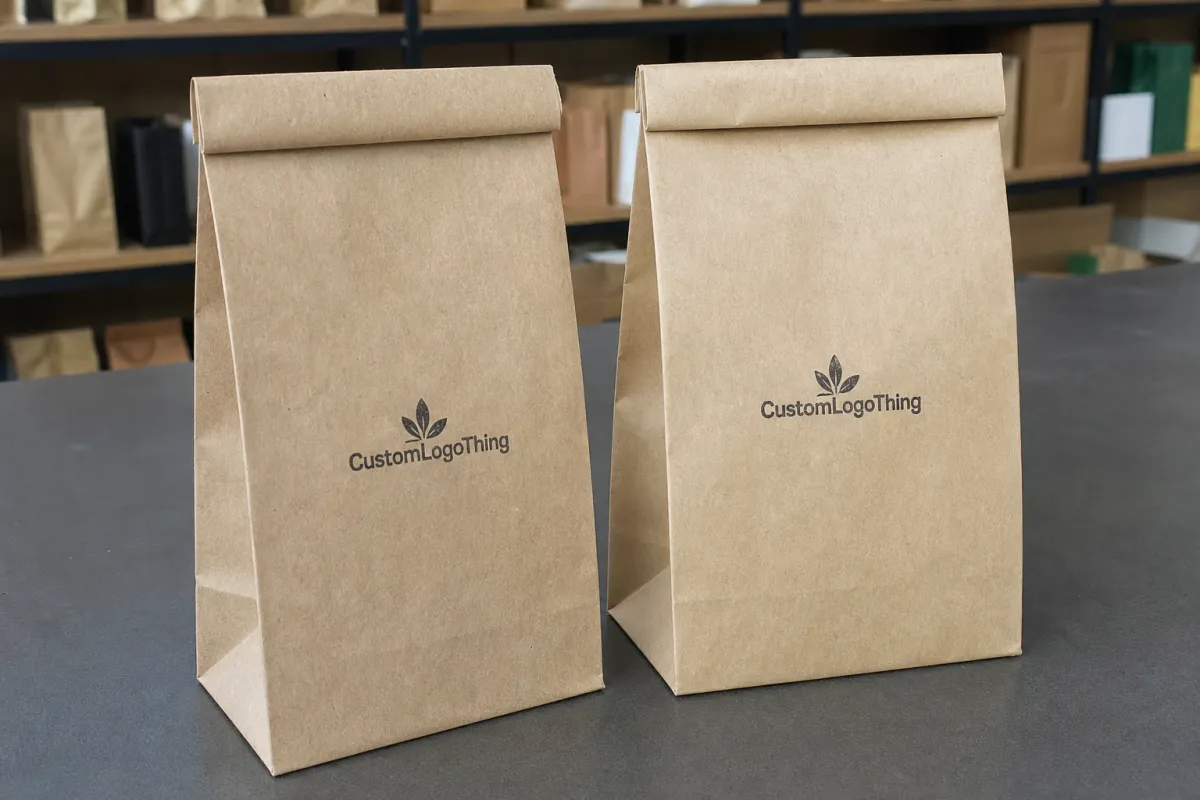
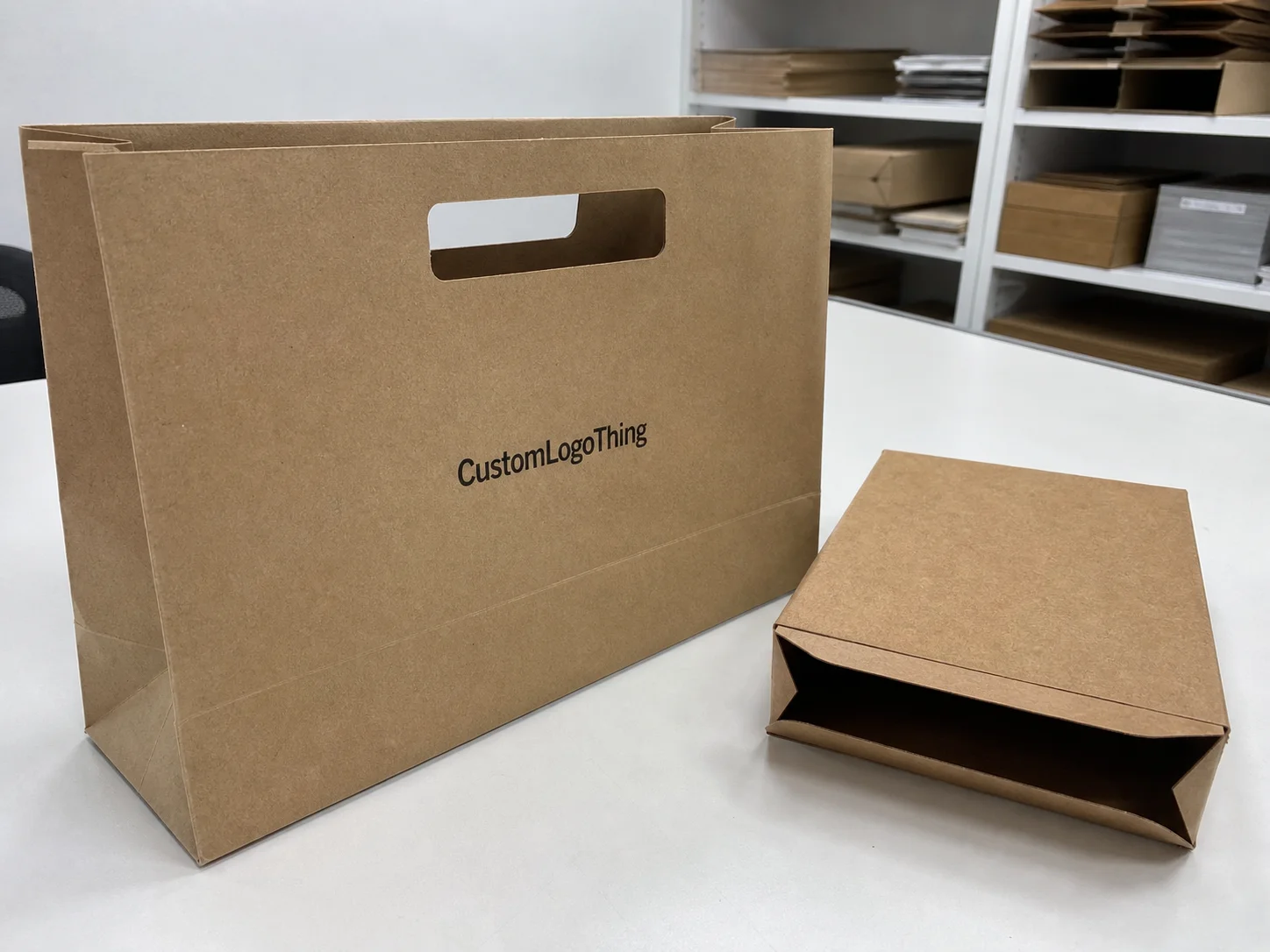
A wine club Twisted Handle Paper Bags Material sample guide is useful for one reason: it shows whether the bag can carry a bottle, not just whether it photographs well. Most packaging mistakes are quiet at the approval stage. They appear later, when a 750 ml bottle shifts inside the bag, the handle cuts into a hand, or the base starts to cave after a few steps across a tasting room.
That matters because wine club packaging has an odd job description. It needs to move glass safely, support repeat handling, and still look premium enough that the recipient does not read it as disposable filler. A digital mockup can suggest proportions. A flat swatch can hint at color. Neither can tell you how the bag behaves under weight, how the handle feels after a short walk, or whether the gusset stays square once the bottle settles.
The sample is the point where design meets physics. It is also where budgets get protected. A slightly higher sample cost is easier to absorb than a full production run that fails the first real use test. That is especially true for wine clubs, seasonal gift sets, and retail programs where the bag is part of the product experience, not just a carrier.
Why one sample can save a full wine club launch
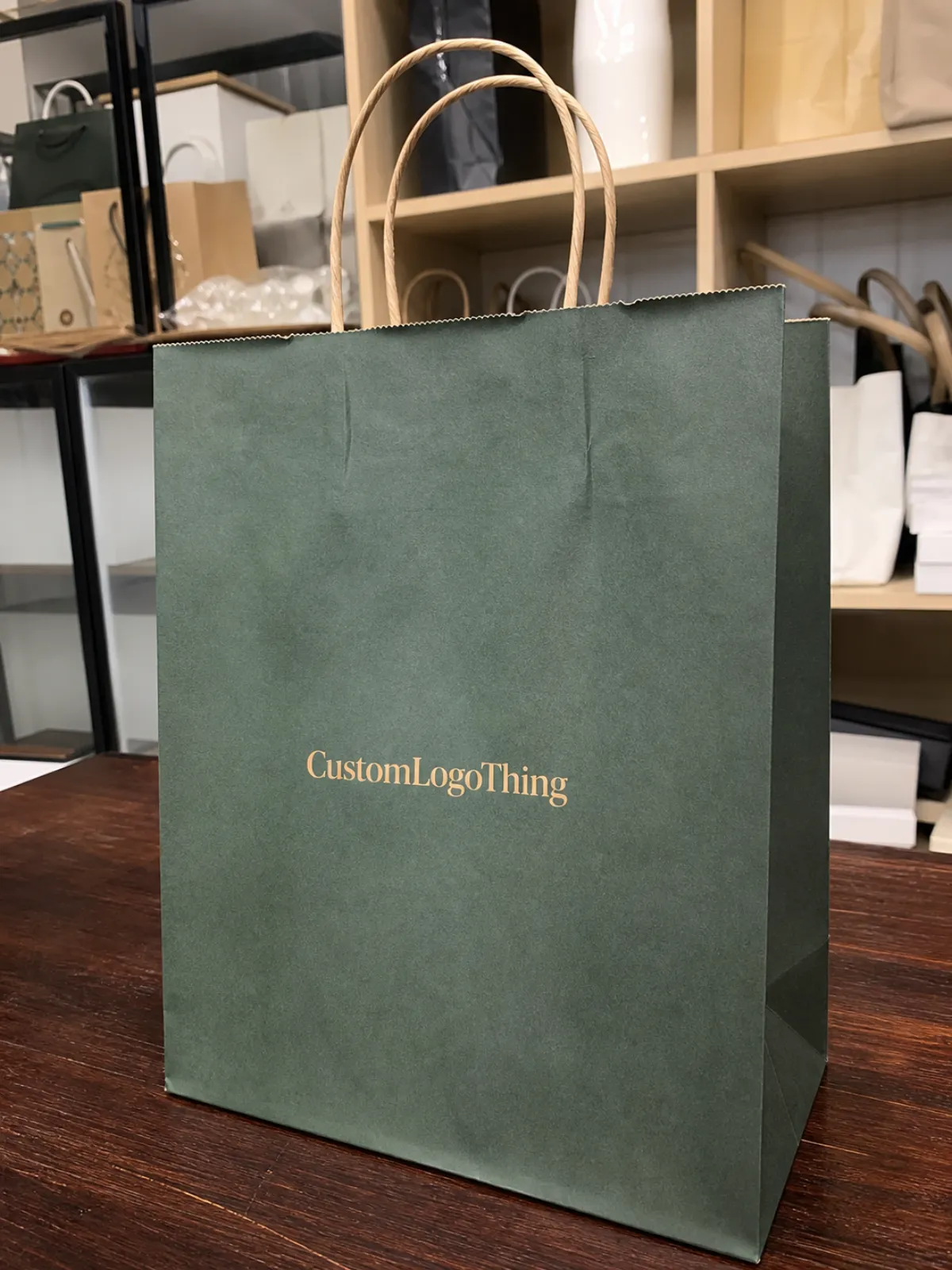
A bag that looks balanced on screen can still fail under bottle weight. This is why a wine club Twisted Handle Paper Bags material sample guide is less about aesthetics and more about performance. Paper bags are judged by load distribution, handle pull, edge finish, and the way the bottom behaves after being set down, lifted, and set down again.
The financial risk is bigger than the packaging line item. If the bag tears or bows during launch, the brand pays twice: once for the order itself and again through replacements, rushed reprints, customer complaints, or a weakened premium image. For single-bottle clubs, the damage may be limited to one bad handoff. For double-bottle sets, the failure can travel fast because the bag telegraphs fragility before the bottle even leaves the room.
"A bag that survives a photo shoot but not a bottle is not finished. It is decorated."
Wine club fulfillment adds more stress than a simple gift bag use case. There is warehouse stacking, courier movement, retail pickup, and sometimes a handoff under less-than-ideal lighting or weather. Paper stock that feels substantial in an office may feel soft after humidity exposure. Handles that seem fine in a quick test may bite into the palm after a longer carry. The sample is where those differences become visible.
Recycled content and lower-impact packaging claims complicate the picture further. Buyers often want FSC certified board, recycled kraft, or a reduced-plastic story. Those choices can be excellent, but the sample is where you see whether the sustainability story still leaves enough structure for a bottle. Clean messaging means little if the bag sags before the customer reaches the car.
What a material sample actually proves before ordering
Not all samples answer the same question. A loose stock swatch tells you about texture, shade, thickness, and coating feel. A printed flat sample shows ink behavior, color shift, and coverage. A fully assembled bag is the only one that answers the hard questions: does the base hold, does the handle attach cleanly, and does the bag still feel stable once a bottle is inside?
That distinction matters more than many buyers expect. Paper stiffness changes the perceived quality. Surface coating changes how the bag slides through the hand. A tighter caliper can make a bag feel more expensive even before printing, while a soft recycled stock can look beautiful but read as underbuilt if the handle area is weak. The artwork file does not control those outcomes by itself. Paper chemistry, coating, and conversion do.
| Sample type | What it proves | Typical cost | Best use |
|---|---|---|---|
| Loose stock swatch | Texture, thickness, base paper color, coating feel | $10-$25 | Early material selection |
| Printed flat sample | Artwork clarity, color match, finish response | $35-$75 | Print approval before assembly |
| Assembled prototype | Carry strength, handle comfort, gusset and base support | $80-$180 | Bottle test and presentation review |
| Short-run matched sample | Closest match to final production line | $150-$300 | High-stakes launches or retail programs |
For material selection, a loose swatch is enough. For bottle carry, it is not. If the bag will hold one heavy bottle, a boxed bottle, or a two-bottle set, the assembled prototype should be the minimum. A flat sheet cannot reveal whether the gusset collapses or the handle patch starts to separate when the weight shifts.
Paper type changes the reading as well. Virgin kraft tends to print more crisply and feel firmer. Recycled kraft usually brings a warmer, more textured look, but it may show fiber variation and softer contrast. Both can work. The sample tells you which tradeoff fits the brand better.
For buyers who need a sustainability reference point, FSC is a useful checkpoint for chain-of-custody claims. For transport behavior, the testing logic from ISTA is far more practical than generic packaging advice. A bag that passes a desk review and fails a movement test is still a weak bag.
Paper stock, handles, and print factors that change the result
Paper weight is usually the first comparison point, but it should not be the only one. For single-bottle wine bags, mid-weight kraft in the 150-210 gsm range is common. That range is broad enough to cover different bottle profiles, from standard 750 ml bottles to slightly heavier formats. Once the bag moves into magnum territory or two-bottle packaging, a thicker stock, stronger top fold, or reinforced base becomes less optional and more like basic engineering.
Twisted handles are popular for a reason. They look neat, cost less than rope handles, and feel more polished than plain flat handles in this category. The drawback is load sensitivity. If the paper is too light or the handle patch is too small, the handle can dig in or pull unevenly. A weak attachment point makes even a decent handle feel flimsy.
Print adds another layer of variability. CMYK, spot color, foil, and embossing all change the result. Foil brings visual punch, but it also exposes scuffing. Embossing adds depth, but it needs enough board strength to hold the impression cleanly. Matte lamination softens glare and reads quietly premium, though it can mute the natural kraft character that many wine brands want. Gloss has stronger color pop, but it shows fingerprints and abrasion faster. That tradeoff is easy to miss on a render and hard to ignore on a retail counter.
Humidity and storage conditions matter more than buyers expect. Paper can soften in damp conditions and feel stiffer after cold storage. Stacking can flatten handle loops before the bag ever reaches the customer. A sample should not be judged the minute it comes out of the carton. Leave it for a day, hold it again, then check whether the feel has changed. Paper is a responsive material; pretending otherwise leads to sloppy approvals.
Some premium programs add a bottom insert or a small corrugated reinforcement under the base. That can improve stability, but it does not excuse weak paper or poor handle attachment. If the bag depends on hidden support to survive, the structure is already doing too much with too little.
Sample production process and lead time
The best sample process is orderly and a little boring. Confirm the bottle count first. Then lock dimensions, handle type, paper stock, artwork, and finish. After that, the sample can be built and checked before shipping. If those inputs are vague, the schedule slips for no good reason.
Typical timing looks like this: stock swatches usually take 3-5 business days, printed flat samples 5-8 business days, and assembled prototypes about 7-12 business days. If the bag needs custom die lines, special handles, foil, or a paper grade that is not already in inventory, add a few more days. Shipping can add another 2-6 days depending on destination and carrier.
The delays are usually predictable. The buyer has not decided whether the bag is for one bottle or two. The bottle weight is not confirmed. The artwork changes after proofing. None of that is mysterious, and none of it helps the timeline. Clear inputs save more time than almost any production shortcut.
If speed matters, send exact dimensions, bottle weight, artwork files, paper preference, finish, and the date the sample needs to arrive. One decision-maker is better than a committee. A package can only be approved once; an internal debate can stretch forever. That is especially true for color choices, where “close enough” often becomes a moving target.
For clubs tied to release dates, sample timing should be treated as a production milestone. If the sample is late, the launch is late. The calendar does not care how good the presentation deck looks.
Cost, pricing, and MOQ for sample orders
Sample pricing usually tracks three variables: whether the bag is printed, whether it is loose or assembled, and whether the paper stock is standard or special order. A plain swatch costs the least because there is no conversion work. An assembled prototype costs more because someone has to cut, fold, glue, and inspect it before it leaves the shop.
Practical ranges are straightforward. A stock swatch set often lands around $10-$25. A printed flat sample usually falls between $35-$75. An assembled prototype commonly runs $80-$180. A more exact short-run matched sample can reach $150-$300, especially if it includes foil, embossing, or premium handles. If a quote falls far outside those bands, there should be a clear reason. Otherwise, the pricing may be padding.
MOQ works differently for samples than for production. Sample orders may have no formal minimum, but the per-unit price is higher because setup is spread across very few pieces. That is normal. It is also cheaper than discovering a weakness after a bulk order lands. A $120 sample that prevents a bad 2,000-piece run is a bargain, not an expense.
Ask about whether the sample fee can be credited back into production. Some suppliers do this, some do not. Also ask whether recycled board, FSC certified material, foil, or specialty handles change the minimum order or the lead time. They often do. The honest quote is the one that includes the friction, not the one that hides it.
To get a useful quote, include dimensions, bottle count, target weight, finish, handle type, quantity, artwork files, and destination. Add the end use too: retail handoff, club shipment, event gifting, or tasting room service. Each one changes the spec in a different way.
Step-by-step comparison guide for choosing the right bag
Start with the load. One bottle or two? Standard weight or heavy glass? Hand carry or packed into a larger shipper? Those answers matter more than the first color sample someone liked in a meeting.
Then compare bags with the same size and different structural variables. That means one paper weight against another, or one finish against another, not five changes at once. If every sample changes dimensions, handle type, and print coverage, the test becomes noise. It is impossible to isolate the reason one option performs better.
- Define the load. Use the actual bottle weight and dimensions, not a vague description of “standard wine.”
- Hold the handle. Carry the sample for a few minutes and see whether the grip feels sharp, soft, or uneven.
- Test the base. Fill the bag, set it down, and confirm it stays upright without folding inward.
- Inspect print and finish. Check color, alignment, coating sheen, and readability under warm and cool light.
- Score separately. Rate durability, presentation, and unit cost on different lines so one strong feature does not hide a weak one.
Photograph the sample next to the actual bottle it will carry. Notes get fuzzy. Photos do not. Keep a simple record of what passed and what failed: base stability, handle comfort, seam quality, and appearance after a short carry. That creates a paper trail for the next reorder, which is far more useful than memory.
Do not pick the cheapest option by reflex. A low unit price means little if the bag tears, wrinkles, or makes the wine program feel thin. Packaging is a small line item that can create a large impression. That asymmetry is what makes sample testing so valuable.
Common mistakes buyers make before approving production
The most common error is judging by color alone. Color matters, but it is only one variable. A wine club bag exists to carry glass and hold up under repeated handling. If it looks beautiful and fails the load test, the design is still wrong.
Another frequent mistake is approving a single-bottle sample for a two-bottle use case. The load path changes, the base stress changes, and the handles pull harder on the top fold. That sounds obvious until the order is already moving. A two-bottle set needs its own test, especially if the bottles are wider or heavier than average.
Lighting causes more confusion than many buyers admit. A matte finish can look elegant in one room and flat in another. A gloss coat can seem high-end under soft light and harsh under bright retail LEDs. Check the sample where customers will actually see it. Office lighting is a poor stand-in for a tasting room, warehouse, or event floor.
Some buyers also skip the boring details: glue seams, handle knots, gusset reinforcement, and base alignment. Those small features decide whether the bag survives use. If the sample shows sloppy glue or uneven handle placement, assume the production run will repeat the problem unless the issue is called out and corrected.
For brands using biodegradable packaging language, the sample should also be checked for structural honesty. Heavy plastic coatings, hidden reinforcements, or layered constructions can complicate the story quickly. Customers notice when the claim and the construction do not align. So do retailers.
Expert tips and next steps before you place the order
Request one standard sample and one upgraded version. That creates a direct durability comparison instead of a guess disguised as a preference. In many projects, the better-performing bag is not the prettiest one, and the prettier one is not always worth the extra cost.
Ask for the paper code, gsm, handle specification, finish, and lead time to be labeled on each sample. That small detail matters later when three nearly identical bags are sitting in a drawer and nobody remembers which one held up under bottle weight.
Test the sample in the same places it will be used. A bag can perform one way in an office and another way under warehouse stacking, event lighting, or a tasting room handoff. Temperature, humidity, and how long the bag sits before use all affect the result. Paper has a memory, and not a flattering one.
For wine clubs, the safest ordering pattern is usually simple: verify structure first, then refine the surface. Strong paper and a reliable handle matter more than a dramatic finish. Once the bag carries the bottle properly, the print, coating, and branding can do their job. That hierarchy saves budget and reduces rework.
Use this wine club Twisted Handle Paper Bags material sample guide to lock the spec sheet, compare options without guesswork, and approve production only after the sample passes weight, print, and handling checks. That approach protects the launch and keeps the packaging aligned with the wine inside it.
What paper weight works best for wine club twisted handle paper bag samples?
Single-bottle bags often sit in the 150-210 gsm range, but the right choice depends on the bottle’s actual weight and the amount of repeated handling expected. Heavier glass, boxed inserts, and two-bottle sets usually need thicker stock or a reinforced base. If possible, test the sample with the exact bottle that will be used in production.
Do I need a finished sample or is a swatch enough for twisted-handle wine bags?
A swatch is useful for texture, color, and coating feel. A finished sample is the better choice when the bag will carry glass or needs to pass a presentation test. A swatch cannot show handle pull, gusset strength, or whether the base stays square after loading.
How long does a custom sample usually take to produce?
Stock swatches may take 3-5 business days, printed flat samples often take 5-8 business days, and assembled prototypes usually need about 7-12 business days. Custom die lines, specialty handles, or non-stock paper can extend that timeline. Shipping time needs to be added on top of production time.
How should pricing and MOQ affect my sample order decision?
Sample pricing should be judged against the cost of a wrong bulk order, not against the cheapest possible quote. MOQ matters because a low unit price can hide setup waste if the bag fails in use. Ask whether sample fees can be credited to production, since that can improve the total math.
What should I send to get an accurate quote for these paper bags?
Send exact dimensions, bottle count, target weight, artwork files, finish choice, handle type, quantity, and destination. Add the intended use as well, such as retail handoff, club shipment, or event gifting. The more precise the brief, the less the quote depends on assumptions.