Boutique Paper Bags Low MOQ Custom Order for Brands
Boutique paper bags Low MOQ Custom Order sounds narrow until you run the numbers. A new label does not need a warehouse full of bags to look established, and a seasonal launch does not need five thousand units sitting in cartons while the campaign has already moved on. It needs a bag that carries well, photographs well, and does not trap cash in slow-moving inventory.
That is the real tension in packaging. Buyers often focus on the first quote, then discover the bag is a little too large for the product, the handle feels cheap, or the finish added cost without improving the shelf impact. Low-MOQ custom work keeps the mistake smaller. It gives you room to test packaging design at retail scale, check print quality in natural light, and adjust the spec before the next order becomes routine. The bag stays useful, and the unit cost stays honest.
Independent fashion labels, beauty brands, gift shops, event merch teams, and multi-location retailers all use the same idea for different reasons. The product changes; the economics do not. If you also source Custom Packaging Products or place mixed orders through Wholesale Programs, the same rule applies: pick the right structure first, then make the branding look sharp. That is how package branding feels deliberate instead of crowded.
I have seen small brands spend more on storage than on the actual print run. It happens more than people admit. A bag is not just a bag once it sits at checkout; it is part of the sale, part of the handoff, and part of the memory. A shirt in a thin, awkward bag feels less finished. A candle in a sloppy bag feels cheaper than it was. The packaging can kinda change the perceived value in one glance.
Boutique Paper Bags Low MOQ Custom Order: The Smart Small-Run Use Case
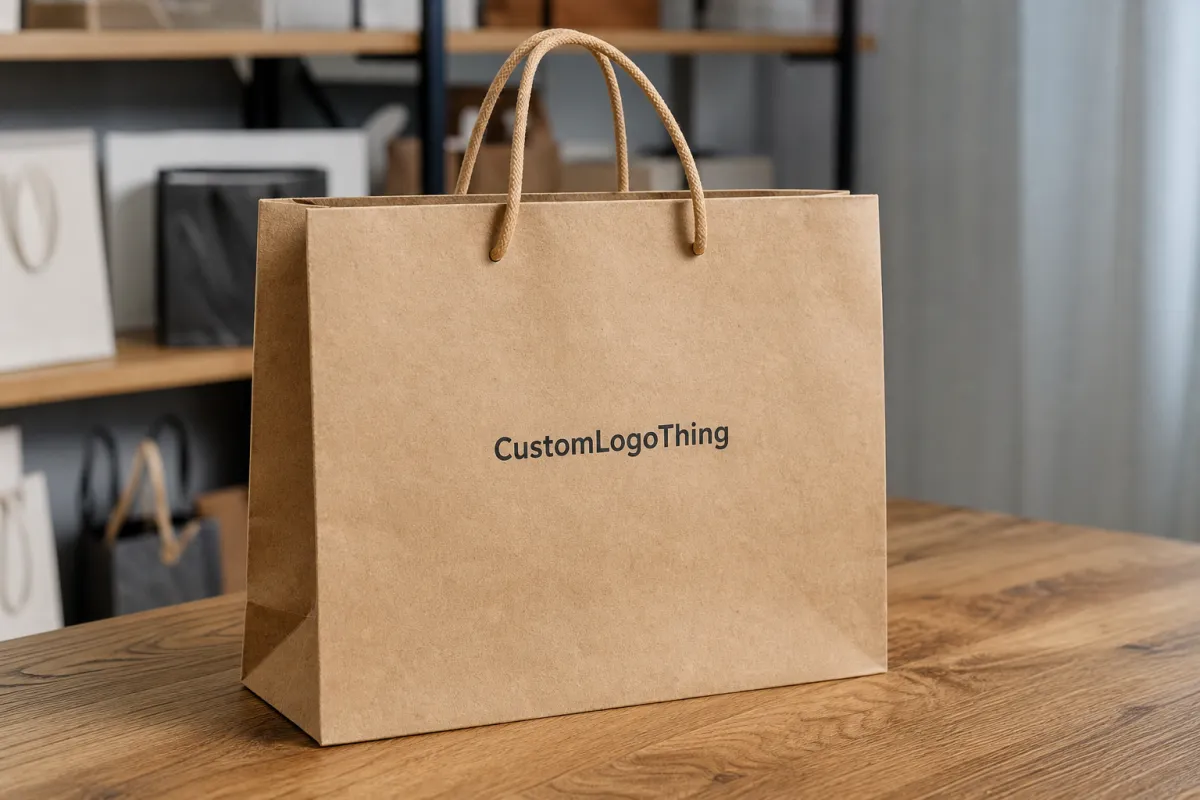
Not every brand needs 5,000 bags in one color, with one logo, and one handle spec. A store opening might need 300 pieces. A holiday capsule might need 500. A first production run might need 1,000, just enough to cover demand while the brand learns what customers actually buy. Boutique paper bags Low MOQ Custom Order fits those realities better than a large blanket purchase.
Small runs cut the cost of mistakes. If the bag feels oversized in hand, you can shrink it. If the logo disappears against kraft stock, you can push the contrast higher. If one store wants black and another wants ivory, you do not need a mountain of backup bags in the storeroom. Dead stock is not a bargain just because the factory price looked attractive.
There is also a timing advantage. Fast-moving brands do not stay still long enough for rigid packaging plans to hold up. A launch gets refined, a seasonal colorway changes, a retailer updates the shelf set, and the bag has to follow. Low MOQ creates room for that kind of movement without forcing a full reset.
The brands that get the most value from Boutique paper bags low MOQ custom order usually fall into a few groups:
- Independent apparel labels that want a polished carry bag without a warehouse commitment.
- Beauty and fragrance brands that need retail packaging with a giftable feel.
- Gift shops and specialty stores that reorder by season instead of by container load.
- Pop-ups and event merch sellers that need short lead times and a strong first impression.
- Multi-location retailers that want the same branded packaging across several counters.
The biggest mistake is treating the bag as a spare part. It is part of the brand system. If your boxes, inserts, and carrier bags all speak different visual languages, customers feel that inconsistency even if they cannot explain it. The same logic applies to Custom Printed Boxes for e-commerce. Strong packaging usually looks quiet because the decisions were made before production, not after the first sample landed on the desk.
Brands sometimes ask for more decoration because they are afraid simple means plain. That is not always true. A small run with one clear logo and a good handle can look more expensive than a crowded bag with three finish effects and a muddy print file. The first run should answer one question well: does the bag do its job in the brand environment?
Boutique Paper Bags Low MOQ Custom Order Specs That Control Fit and Finish
The spec controls almost everything buyers care about: how the bag carries, how the print reads, how the brand feels in hand, and how much the order costs. Size, paper stock, handle type, and finish do not operate independently. Change one and the quote shifts. Change three and you are in a different price band entirely.
Size first, then style
Product dimensions should set the bag, not the other way around. A flat-folded shirt or small accessory might fit well in an 8 x 4 x 10 inch bag. Folded knitwear or boxed beauty sets usually need something closer to 10 x 5 x 13 inches. Larger gift bundles may push toward 12 x 4 x 16 inches or beyond.
Height and width matter, but they are not the full story. Gusset depth changes the way the bag sits. Handle drop changes the way it carries. A bag can look fine on a spec sheet and still feel awkward if the handles are too short or the base is too narrow. That is the sort of mistake that looks minor in procurement and obvious at the cash wrap.
One practical test I use is simple: if the product looks like it is fighting the bag during placement, the size is wrong. The bag should frame the item, not squeeze it or swallow it. That sounds obvious, but you would be surprised how often it gets missed when the team is trying to match a price point.
Paper stock by use case
Kraft paper gives a natural, boutique-friendly appearance. It suits clothing, candles, handmade goods, and brands that want warmth instead of gloss. Coated paper gives a cleaner print surface and richer color accuracy, which matters when the logo carries most of the visual weight. Heavier art paper or board adds structure and makes the bag feel more deliberate, especially if the brand wants a smoother surface for fine detail.
For low-MOQ custom bag work, stock often lands somewhere between 150 gsm and 250 gsm, depending on the bag size and the handle style. Lighter stock can work for smaller gift bags or lighter contents. Heavier stock makes more sense when the bag needs to stand upright, carry more weight, or support a sharper branded packaging presentation.
If sustainability matters, ask for FSC-certified paper and verify the chain-of-custody claim with FSC. Many buyers ask for eco-friendly packaging, then stop at the word eco. The paper spec should be real, not decorative. If the supplier cannot say what the stock is, where it came from, and how it was certified, that is a warning sign.
Handle and construction choices
Twisted paper handles are common because they work and usually keep the quote manageable. Rope handles bring a more premium feel and hold up well for fashion and gifting. Ribbon handles push the bag toward luxury presentation, although they also increase cost and can add setup complexity. Reinforced tops, folded rims, and base inserts affect both durability and appearance, so they deserve attention early rather than after the proof stage.
For most boutique paper bags low MOQ custom order jobs, simpler construction tends to win. Twisted handles and a clean fold are usually easier to justify than multiple decorative upgrades if the goal is to keep the order quote-friendly. Special finishes can wait until the design proves itself. A good first run should stay focused on the basics: structure, print clarity, and carry comfort.
Finish options that make sense
Matte lamination gives the bag a softer retail look. Gloss makes color pop more strongly, though it shows fingerprints more easily. Foil stamping, embossing, spot UV, and soft-touch finishes all lift perceived value, and all of them raise cost. They also tend to slow production. On low MOQ, the smartest choice is often the least theatrical one. Clean print. Crisp cuts. Good paper. Solid handle attachment. Those basics outperform a lot of noisy premium extras.
Color is where many projects drift. A buyer might say the logo is just black, then discover that the black has to match across paper stock, print method, and coating. Paper absorbs ink differently from board. Coated surfaces behave differently again. That is how a simple color becomes a labor issue. If the brand has a strict identity system, ask for a print proof and not just a digital mockup.
"A low MOQ is only affordable if the spec stays disciplined. Change the handles, the finish, and the artwork all at once, and the quote stops behaving like a small-run order."
| Spec Level | Best For | Typical MOQ | Typical Unit Cost | Notes |
|---|---|---|---|---|
| Simple kraft logo bag | Apparel, gifts, pop-ups | 300-1,000 pcs | $0.18-$0.40 | Usually one-color print and twisted handles |
| Coated boutique bag | Beauty, retail, premium gifting | 500-2,000 pcs | $0.45-$0.95 | Better color control, often with lamination |
| Luxury finish bag | High-end launches, events | 1,000+ pcs | $0.90-$2.50 | Foil, embossing, ribbon handles, or soft-touch |
Those numbers are not fixed law. They are the shape of the market. Quantity, print colors, paper weight, handle type, and finish all move the price. The same bag can be sensible at 1,000 pieces and awkward at 250 pieces. That is why the full spec matters more than the headline quote.
Cost, Pricing & MOQ for Boutique Paper Bags
There is no single rate for boutique paper bags low MOQ custom order. Anyone promising one is selling a fantasy. The price shifts with bag size, paper weight, print count, handle style, finish, and quantity. Freight and sampling can matter too, especially when a launch date is fixed or the bags need to reach several stores at once.
MOQ is where the math turns visible. Lower quantities push setup cost into each bag. A 300-piece order often looks expensive beside a 3,000-piece order even when the physical bag is nearly the same. The bag did not become worse. The fixed costs were simply divided by fewer units. That is why low MOQ is a buying strategy, not a magic discount.
Common extra costs buyers forget include:
- Dieline setup and artwork adjustment
- Printing plates or digital setup charges
- Sampling or pre-production proofs
- Special packaging for shipping or store distribution
- Color matching requests or Pantone-specific adjustments
Freight deserves attention earlier than most teams give it. Bags are light, but they still occupy space, and volume matters once cartons leave the factory. If the order is moving cross-country or across borders, the shipping cost can turn a cheap unit price into a mediocre landed cost. Sometimes the quote that looks higher is actually better once you count the cartons, pallet pattern, and delivery terms.
If shipping will be rough, ask how cartons are packed and tested. Store-to-store distribution, cross-country freight, and export routes punish weak packaging. For teams that want to think in terms of transport damage rather than just print quality, the testing logic used in ISTA methods is a useful reference point. A bag with a crushed corner is still a damaged bag, even if the logo printed perfectly.
Compare quotes only after every variable matches. Same size. Same paper. Same print count. Same handle. Same finish. Same delivery terms. A clean apples-to-apples comparison usually reveals that one quote is actually for a simpler bag than the one you imagined. That gap causes disputes later, especially when the order is approved quickly.
First runs should stay clean. One core size. One logo treatment. One standard handle. A stripped-down test gives you the best ratio of price to presentation. If the launch earns its keep, foil or embossing can arrive on the next run. A test order does not need to dress like a gala.
Process and Turnaround for Custom Paper Bag Orders
The production process stays manageable when the customer arrives with clear information. It gets messy when artwork is late, the size changes after quoting, or the finish is upgraded midstream. A strong boutique paper bags low MOQ custom order usually moves through a simple sequence:
- Inquiry and basic spec review
- Quote based on size, stock, print, handle, and finish
- Dieline confirmation and artwork placement
- Proof approval or sample check
- Production run
- Packing, carton labeling, and shipment
Proof approval is where schedules tend to slip. The machine is rarely the real problem. The proof is. Missing bleed, a logo too close to the edge, a handle position that feels off, or one more revision after the mockup arrives can move the date. That is normal in packaging work, but it still affects the calendar.
Standard low-MOQ runs often land around 12-15 business days after final proof approval. Simple one-color jobs can move faster. Multi-color print, foil, embossing, custom handles, and unusual dimensions usually add time because each step needs extra setup and inspection. Rush work is possible only when the spec is simple and the artwork is final. Speed and high customization do not travel well together.
Packing deserves more attention than it usually gets. If the bags are heading to multiple stores, ask for carton counts, carton dimensions, and pallet notes before production starts. That keeps 800 bags from arriving in boxes that do not fit the stockroom shelf. For multi-location retailers, logistics is not a side detail. It determines whether the packaging is useful on day one.
A paper bag should also sit comfortably beside the rest of the brand system. If your shelf program already uses custom printed boxes, keep the color logic and logo rules aligned. A store that uses one tone for boxes, another for bags, and a third for inserts starts to look accidental. Strong retail packaging usually looks calm for a reason: the system was designed before the order was placed.
One more practical point: sample approval should not be rushed. A physical sample catches things a render cannot, especially paper texture, handle feel, and how the bag stands on a counter. If your team is making a launch decision from a screen alone, you are making a guess, not a packaging choice.
Why Choose Us for Boutique Paper Bags
People do not buy paper bags because they admire paper. They buy the presentation, the carry experience, and the brand signal. The parts customers notice at retail matter most: straight handles, clean folds, stable bottoms, accurate print placement, and color that stays consistent across the run. That list sounds plain. Plain production is often what customers actually want.
Low MOQ does not mean bargain-bin quality. It means the order is sized to the real need. The production standard should stay high whether the run is 300 pieces or 3,000, because a small run still has to do real work for the brand. A weak bag makes the brand look weaker. Packaging has a strange habit of translating quality into perception very quickly.
Support matters, especially for first-time buyers. A lot of customers know the logo and the deadline but not much else. That is fine. We can help with dielines, artwork setup, material selection, and quote matching so the order is based on actual specs rather than guesswork. For common questions, our FAQ is built to stay useful instead of decorative.
Repeat ordering should stay simple. Once a spec is approved, it should not become a scavenger hunt six weeks later. Saved dimensions, clear file naming, and material notes make reorders faster and reduce avoidable mistakes. That matters for brands that alternate between paper bags, inserts, and custom printed boxes across seasons or product drops.
When comparing vendors, the real question is not who gave the cheapest line on the spreadsheet. It is who understood the job.
- Does the supplier check artwork against the dieline before production?
- Do they give you the MOQ at the exact spec level you asked for?
- Do they explain how finish choices change the unit cost?
- Do they give a realistic production timeline instead of a sales pitch?
If the answers are yes, the supplier understands packaging design rather than just a price list. That distinction matters more than a glossy brochure or a fast reply.
Next Steps for a Boutique Paper Bags Order
Strong quotes start with good inputs. The cleaner the brief, the fewer surprises later. Before you request a boutique paper bags low MOQ custom order, gather these details:
- Product dimensions or the item that will go inside the bag
- Target bag size, if you already have one
- Quantity needed for the first run
- Logo file and print colors
- Paper stock preference, if any
- Handle style and finish preference
- Delivery date and destination
If the exact size is still unknown, send the product dimensions and let the bag be recommended from there. That is normal. Many first-time buyers are bridging the gap between a launch plan and a packaging decision. The goal is not to guess harder. The goal is to specify the bag that actually works in hand, on shelf, and at checkout.
The smartest first-run strategy is usually restrained: one core size, one clear logo treatment, and no decorative extras unless the launch truly needs them. That keeps the quote readable and the reorder path straightforward. If the bag proves itself in store, foil, embossing, or a higher-end handle can wait for the next round.
Ask for three things together: quote, dieline, and sample or mockup review. That combination catches problems early, before production locks them in. It also gives you a real read on cost, timing, and finish instead of a rough promise from a spreadsheet. For a low-MOQ order, that kind of clarity is worth more than a lower number with holes in it.
The final takeaway is simple: match the bag to the product, not to the fantasy of scale. If you keep the spec disciplined, the order stays readable, the branding stays consistent, and the first run becomes a useful test instead of expensive storage. That is the point of boutique paper bags low MOQ custom order — buying just enough bag, with just enough precision, to support the brand without overcommitting cash.
FAQ
What is the typical MOQ for boutique paper bags custom order jobs?
MOQ depends on the exact spec. Simple bags with one-color print and standard handles usually allow lower quantities than foil, embossing, or custom handle builds. Ask for the MOQ at the exact bag size, paper stock, and finish you want. A generic MOQ number is often useless because it changes the minute the spec changes.
Can I order boutique paper bags low MOQ with only a logo print?
Yes. A logo-only print is one of the easiest ways to keep setup simple and control the quote. For a first run, one-color artwork on a standard size is usually the cleanest starting point. It gives you the branded packaging effect without stacking cost into every unit.
Which paper stock is best for boutique shopping bags?
Kraft paper works well if you want a natural, retail-friendly look. Coated or heavier art paper is better if you want sharper print, richer color, or a more polished boutique feel. The best choice depends on the product, the brand style, and how much carry strength you need.
How long does a boutique paper bags low MOQ custom order take?
Lead time depends mostly on proof approval speed, finish selection, and factory workload. Standard low-MOQ runs are usually faster than foil, special handle, or custom-size jobs that need extra setup. If you want the quickest path, keep the artwork final and the spec straightforward.
What should I prepare before requesting a quote for custom paper bags?
Have your logo file, bag dimensions, quantity, print colors, finish, handle style, and delivery deadline ready. If you do not know the exact size, send the product dimensions and the supplier can recommend the right dieline. That is the cleanest way to move from idea to usable retail packaging without wasting time.

