If you are preparing a Boutique Paper Bags quote request, specify the finished bag like a product brief, not a rough idea. Size, board weight, handle type, print coverage, and finishing all change the build and the cost.
A clear request saves time, exposes the real cost drivers, and makes it easier to compare a simple kraft bag with a laminated presentation piece. The goal is to define the right bag for the job.
Why a boutique paper bags quote request costs more than plain carry bags
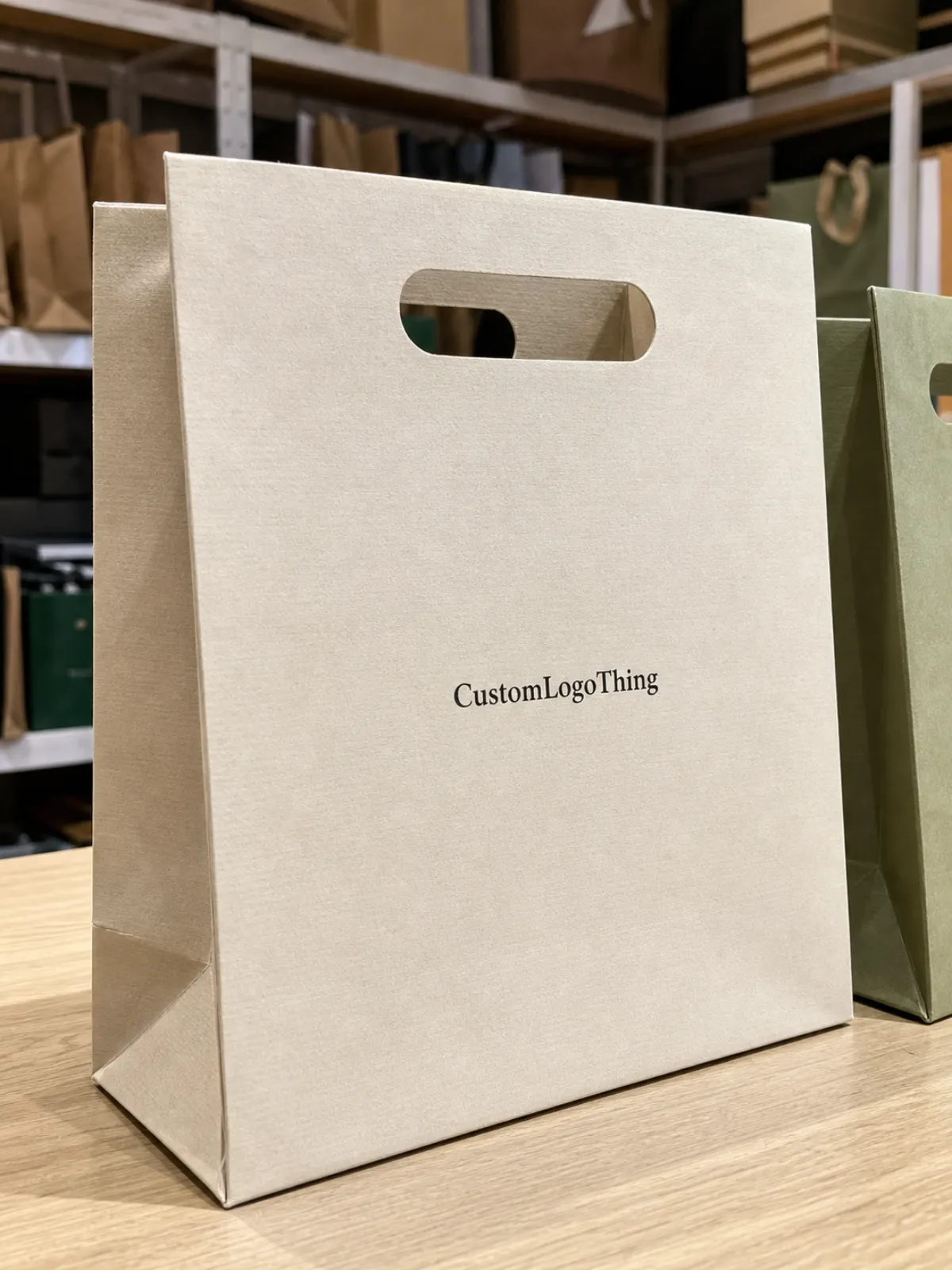
Premium paper bags are priced on more than sheet count. A plain carry bag can use a basic substrate, simple handles, and light printing. Boutique packaging usually asks for cleaner board, stronger reinforcement, tighter color control, and more finishing steps. Each one changes material yield, setup time, labor, and inspection.
A small swap can shift the whole structure. Twisted paper handles are inexpensive and practical. Cotton rope costs more but feels sturdier and reads as more premium the second someone picks it up. The same goes for stock. A lighter kraft can work for gifts and soft goods, while a heavier coated board keeps sharper walls, carries more weight, and gives the logo a smoother surface.
That is why a complete Boutique Paper Bags quote request matters. It lets the supplier price the actual build instead of guessing at a generic retail bag.
There is a practical side too. Bags that resist scuffing, stay upright, and keep their shape are less likely to fail in store or arrive looking tired. For many programs, the real value is repeat usability and brand consistency across locations. If the bag is part of the customer experience, the quote should treat it that way.
Paper, handles, and finishes that fit premium retail
Paper choice sets the tone first. Kraft paper gives a natural, grounded look and works well for boutiques that want a quieter, more organic feel. White paperboard or coated stocks create a cleaner field for logos, solid color blocks, and sharper artwork. Laminated coated stock feels more refined in hand and usually prints more crisply, but it also adds weight and cost.
Handle selection matters more than many buyers expect. Twisted paper handles are common on value and mid-range retail bags. Rope handles feel stronger and more premium, especially with grommets or reinforced top folds. Ribbon handles are usually reserved for gift packaging, jewelry, or launch programs where presentation matters as much as carry strength. Die-cut handles keep the silhouette clean, but they need reinforcement if the bag will hold anything beyond lightweight apparel or small boxes.
Finishes change the whole impression. Matte lamination softens glare and helps colors look controlled. Gloss lamination makes graphics pop and works well for photographic art or high-contrast branding. Foil stamping, embossing, debossing, and spot UV all add texture in different ways. Used well, they sharpen the brand; used badly, they just add cost.
- Matte or gloss lamination for surface protection and color control.
- Foil stamping for metallic accents on logos, borders, or monograms.
- Embossing or debossing for a tactile, understated premium effect.
- Bottom boards and top reinforcements for better load support and shape retention.
- Gusset construction for more internal volume and better standing profile.
If responsible sourcing matters, ask whether the paper can be supplied with FSC certification. If the bags will ship in master cartons, it is also worth thinking about carton strength and distribution testing in the spirit of ISTA methods. Not every program needs formal lab testing, but the packing spec should still reflect real-world handling.
Specs to confirm before you request pricing
The fastest route to a clean quote starts with the finished bag size. That means the actual dimensions the customer will hold, not a rough template or flat cut guess. A medium boutique bag might be 8 x 4 x 10 in. A larger apparel bag could be 10 x 5 x 13 in. The right size depends on the box, garment fold, or gift set that goes inside.
Before you send a Boutique Paper Bags quote request, lock down the basics:
- Quantity and any tiered volume targets.
- Finished size, including width, gusset, and height.
- Paper weight or board grade, such as lighter kraft for simple retail use or heavier coated stock for a more rigid feel.
- Handle type and handle drop, because comfort and carry length affect both structure and cost.
- Print details, including one-color, multi-color, PMS matching, bleed area, and whether the artwork wraps onto the gussets.
- Finish, such as lamination, foil, embossing, debossing, or spot UV.
- Load target, because a bag meant for boxed candles should not be built like a featherweight apparel bag.
Artwork needs the same discipline. A supplier should know whether the design is a single logo hit, a full-coverage pattern, or a two-panel layout that has to align across the front and sides. If exact PMS matching matters, say it early. If only a flat reference file exists, say that too.
Shipping terms belong in the first request as well. Include the delivery destination, carton count, inner wrapping requirements, and whether pallets are needed. Freight can move landed cost more than buyers expect, especially on larger bags that pack efficiently but still eat cube on a truck. A quote without destination and packing assumptions is only half a quote.
A useful quote reads like a build sheet: size, stock, handles, print, finish, packing, and destination. If those pieces are clear, the pricing usually is too.
Pricing, MOQ, and unit cost drivers
Most boutique bag pricing comes down to how setup cost is spread across the run. Die-line prep, printing plates, color calibration, handle attachment, lamination, and finishing all happen before the first sellable bag lands in a carton. That is why a 1,000-piece order can look expensive next to a 10,000-piece order, even if the bag design barely changes.
MOQ changes by structure and decoration method. A straightforward kraft bag with a simple one-color print may have a lower minimum than a laminated bag with foil, custom handles, or unusual board. Specialty paper, color-sensitive artwork, and layered finishing can all push the minimum up because they need more material coordination and machine setup. If a supplier offers a low MOQ on a heavily finished bag, ask what is included and what is not.
The ranges below are illustrative for mid-sized boutique orders, often around 5,000 pieces. Final numbers depend on size, print coverage, stock choice, and shipping distance.
| Option | Typical build | Indicative unit cost | Best use |
|---|---|---|---|
| Value boutique bag | Kraft stock, twisted paper handles, 1-color print, no lamination | $0.38-$0.62 | Gift shops, simple retail, seasonal promos |
| Mid-premium tote | White coated board, matte lamination, rope or ribbon handles, 1-2 color print | $0.78-$1.35 | Apparel, cosmetics, premium accessories |
| High-finish presentation bag | Heavier coated stock, foil or embossing, reinforced top, custom handles | $1.20-$2.10 | Launch kits, luxury retail, VIP gifting |
When comparing bids, ask for tiered pricing at more than one quantity break, plus tooling notes, sample charges, and freight terms. That gives you the landed cost instead of a base unit price that looks good only because shipping or setup is hidden elsewhere.
Artwork also affects cost more than people expect. Full-bleed graphics, metallic accents, and multi-step finishing can each add labor in different parts of the run. Two bags with the same size can still price very differently if one is a single-color kraft print and the other needs lamination, foil, and precise registration.
One honest caveat: these figures move with paper market swings, handle sourcing, labor intensity, and freight. A quote is only reliable for the spec in front of you. Change the spec and the number changes with it.
Production steps and timeline from proof to delivery
Most custom bag projects follow the same path: quote review, dieline confirmation, artwork check, proof approval, production, inspection, and shipment. The sequence is simple enough. The problem is that each step protects the next one. If the dieline is wrong, the print area shifts. If the proof is rushed, the handle placement can land off by enough to matter.
The fastest projects usually start with print-ready files and a clearly approved spec sheet. That lets the supplier move from pricing into production planning without repeated clarification. A straightforward boutique paper bag job may move from proof approval to finished production in roughly 10-15 business days. More complex work with foil, embossing, specialty handles, or heavier board can stretch closer to 15-20 business days. Shipping is separate and depends on destination, mode, and season.
Where do delays usually appear? Specialty finishes are one common spot. Handle sourcing is another, especially if the order uses ribbon, rope, or custom color matching. Material availability can also affect lead time, particularly when the paper grade is not a stock item. During busy retail periods, press time and packing schedules tighten fast.
For launches, store openings, and campaign drops, build in a buffer. Extra days can absorb minor artwork corrections or transit delays without turning receiving into a fire drill. The strongest schedules are the ones that assume at least one proof cycle, not the ones that hope for a perfect first pass.
Ask for a digital mockup for layout checks, a pre-production proof if the run is large or the finish is expensive, and a final carton count before shipment. Those checkpoints keep the order honest and make it easier to align operations, merchandising, and finance on what is coming.
What a reliable boutique bag supplier should prove
A dependable supplier does not just send a number. They explain the build. That means clear dielines, realistic material suggestions, practical print guidance, and honest feedback if a requested finish would push the bag beyond budget or beyond its intended use. If a vendor cannot explain why one stock is better than another, the quote may be incomplete even if the price looks attractive.
Quality control should be visible too. Look for checks on print registration, handle attachment strength, glue consistency, corner alignment, and carton packing. A bag can look fine on screen and still fail on the line if the handle pull is weak or the bottom board shifts. Boutique bags are judged in hand, not in a mockup deck.
Two more things matter for trust: clear communication on shortages or substitutions, and a plain reprint policy if something goes wrong. Retail launches are unforgiving. If a shipment is short by a few hundred bags, or if the paper shade shifts unexpectedly, the store team feels it immediately.
Repeat business is where supplier quality really shows. A strong partner should be able to keep the same structure available across seasons, match color as closely as the process allows, and support reorders without rebuilding the bag from scratch. If every reorder starts from zero, that is a warning sign.
For programs that need to think about transit stresses, ask how the bags pack into master cartons and whether the supplier understands shipping behavior in the same practical way that ISTA procedures approach distribution. Not every bag needs formal lab testing, but every bag does need to survive a truck ride without arriving bent, crushed, or half-open.
Send these details for a faster, cleaner quote
A vague message that says “Paper Bag Quote” usually gets a vague response. That is not the supplier being difficult. It is the nature of an incomplete brief. The more precise the request, the easier it is to compare options and keep the project on schedule.
Use this checklist for a stronger boutique Paper Bags Quote request:
- Finished size: width, gusset, and height.
- Quantity: one run and any future reorder target.
- Paper stock or board weight.
- Handle style and handle drop.
- Print colors, PMS needs, and bleed requirements.
- Finish: matte, gloss, foil, embossing, debossing, or spot UV.
- Packing needs: carton count, inner wrapping, palletizing, if any.
- Delivery ZIP or postal code and target date.
Include artwork files, a logo reference, and sample photos of bags you like or dislike. That visual reference is often the quickest way to determine whether the project is aiming for value, mid-premium, or true presentation packaging. If the team needs to compare options, ask for at least two paths: one cost-controlled and one more finished.
What should I include in a boutique paper bags quote request?
Include finished size, quantity, paper stock, handle style, print colors, finish, and delivery destination. Add artwork files or a logo reference so the supplier can confirm print setup and decoration limits. If you need a budget option, premium option, or rush option, say that up front so the quote matches the buying goal.
How does MOQ affect boutique paper bag pricing?
MOQ matters because setup, tooling, and press adjustments are spread across the total order quantity. Smaller runs usually carry a higher unit cost, while larger runs lower the per-bag price. Special finishes or custom handles can raise MOQ because they require more sourcing and production coordination.
Which specs matter most for a premium paper bag quote?
Finished dimensions, board weight, handle type, and print coverage have the biggest impact on price and performance. Reinforcement details, such as bottom boards or top folds, also affect durability and manufacturing time. Color matching and special finishes should be confirmed early because they can change both setup and lead time.
Can I get a sample before placing the full order?
Many suppliers can provide a digital proof first, which is the fastest way to confirm layout and artwork placement. Physical samples are useful when you need to check feel, handle strength, or finish quality before mass production. Ask whether the sample cost is credited back on the order, since that varies by supplier and project size.
How long does boutique paper bag production usually take?
Lead time depends on stock availability, printing complexity, finish type, and how quickly proofs are approved. Straightforward orders usually move faster than jobs with foil, lamination, or custom handle sourcing. Shipping time is separate from production time, so confirm both before you set a store launch or campaign date.

