A missing warning line on a header bag can turn a seasonal launch into a reprint, a delayed floor reset, or an awkward correction at checkout. That is the practical reason the boutique retailers OPP Header Bags warning label guide matters. It is not a branding accessory. It is a packaging control point that keeps the bag legible, usable, and ready for retail handling.
Boutique buyers feel packaging mistakes faster than larger chains. They usually have fewer SKUs, tighter reorder windows, and less space to absorb artwork errors. One wrong font size or one missed copy line can affect an entire run. For small-volume retail packaging, the right guide should tell you what to print, where to print it, and what to verify before the purchase order goes out.
Why Boutique Retailers Need a Header Bags Warning Label Guide
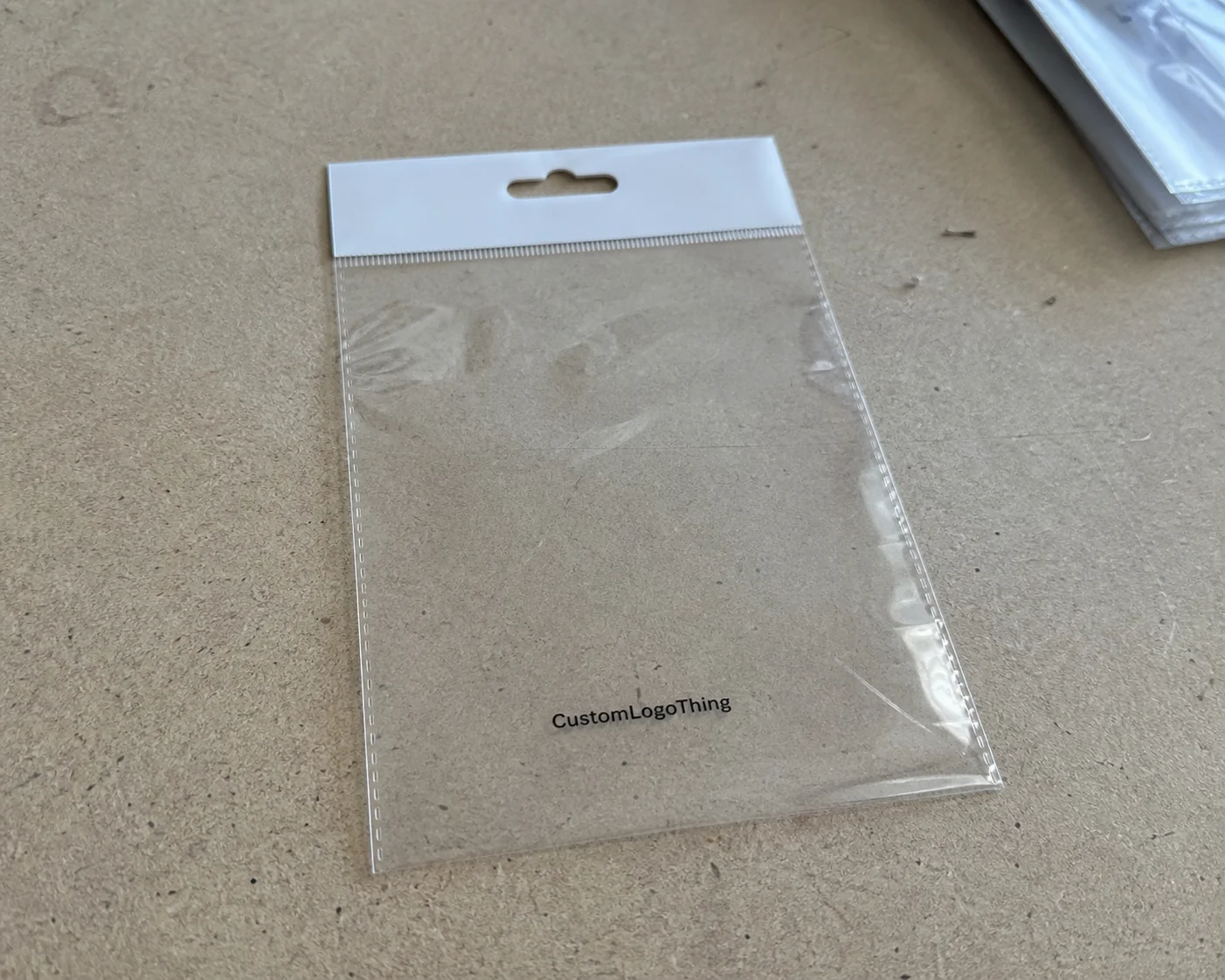
On the sales floor, packaging has to do more than look tidy. A header bag needs to identify the product, hang correctly, survive handling, and carry warning copy that can be read without effort. If that copy is missing or buried, the bag may still be physically usable, but it is no longer fully ready for store use. That distinction matters because the cost of correcting it climbs fast once cartons are packed and the launch date is fixed.
Smaller retailers are exposed in a different way than large chains. A chain can shift inventory between stores or absorb an error across a wider base. A boutique may order 2,000 or 5,000 bags for one line, and if the warning text is wrong, the whole run can become dead inventory. That is why the boutique retailers opp header Bags Warning Label guide should be practical instead of heavy on legal language. Buyers need a usable packaging framework, not a wall of vague compliance terms.
The label itself has a specific job: it is a risk-control layer. It helps the product move through buyers, store staff, and, where relevant, inspectors without friction. In practice, the most useful guide answers four questions quickly:
- What warning copy belongs on the bag?
- Where should it sit so it stays readable?
- How will the chosen material and print method affect durability?
- Who signs off before production starts?
That level of detail is usually enough. Not theory. A clear path from spec to shelf.
“The cheapest packaging is the one you do not have to reprint.” That line comes up often in packaging buying conversations, and it is especially true with short-run header bags, where one proof mistake can erase any savings from a low unit price.
For buyers who already work with hang tags or insert cards, it helps to see warning copy as part of the same packaging system, alongside Custom Labels & Tags. Those components should reinforce one another instead of competing for attention.
How Warning Labels Change the Bag Spec and Shelf Readiness
Warning copy is usually printed on the header card, the bag body, or a separate applied label. Placement matters because customers do not read packaging in a vacuum. They handle it, stack it, hang it, and sometimes fold it under a display lip. A warning that looks fine in a PDF can become hard to read once the bag is clipped to a hook, partly hidden by the header seal, or compressed in a master carton.
The best location is the one that survives real handling. If the warning sits too close to a fold line or heat-seal zone, the text may distort. If it sits too low, product fill can hide it. If it sits on a transparent panel without enough contrast, it can disappear under store lighting. From a buyer’s point of view, shelf readiness means the packaging still looks intentional after staff have opened cartons, filled bags, and moved them through the sales floor.
The warning label also changes the visual hierarchy. Every square inch on a header bag has a job. Brand mark, product name, size callout, promotional message, barcode, and warning copy all compete for space. Once warning text is added, the artwork often needs a stricter hierarchy so the bag does not feel crowded. Clear compliance language can read as more professional than tiny text squeezed into the margin. Crowded packaging tends to look improvised. Clear packaging looks planned.
Transparent windows create another tradeoff. They help customers see the product, but they reduce the amount of solid surface available for text. If the bag uses a clear film front and a printed header, the warning may need to move to the back panel or onto a high-contrast label patch. In some cases, a fully custom print layout is cleaner than trying to bolt warning copy onto an already tight design.
From a retail operations standpoint, the strongest packaging is the one that works at every touchpoint: receiving, stocking, display, and checkout. If one of those breaks, the bag may still meet the design brief, but it will not perform like a finished retail pack.
Materials, Adhesives, and Print Factors That Affect Compliance
Material choice controls more than appearance. It affects how the warning text reads, how long it stays legible, and whether the bag feels appropriate for the product category. A 1.5 mil film behaves differently from a 2.0 mil or 2.5 mil structure. Softer films can wrinkle more at the header. Gloss surfaces reflect more light, which can reduce readability. Matte or lightly textured surfaces often improve contrast, but they may change ink adhesion and the way fine lines hold up in transit.
If the warning is printed separately rather than inline, adhesive strength becomes part of the spec. A label that looks perfect on day one but lifts at the corner after carton rubbing is a problem, even if the artwork itself is correct. Heat-seal behavior matters too. If the label sits near a seal edge, heat exposure can distort the adhesive bond. That is why the label, the substrate, and the application method should be treated as one system rather than three separate decisions.
Durability should be tested against real handling, not just a clean desk. Ask whether the copy remains legible after rubbing, moderate humidity, shipping compression, and repeated contact with fingertips. If the bags move through a distribution center, they should also survive carton shifts and pallet vibration. For products that need transport validation, many packaging teams use ISTA protocols as a reference point for distribution testing, and ASTM methods for material characterization when the spec needs a tighter technical anchor. For environmental and material questions, the EPA and FSC are useful reference points as well: EPA packaging guidance and FSC certification information.
Print contrast is another detail that gets overlooked. Low-contrast warnings are a common failure mode. Dark gray on navy, metallic ink on silver, or a small font laid over a busy pattern can all become unreadable once the bag is folded or displayed under warm retail lighting. If the warning copy matters, give it space. Use a font size that stays readable at arm’s length, not only at proof scale. In many cases, 7 pt is too small for comfort on a retail bag unless the copy is extremely short and the print method is exceptionally clean.
Here is a practical comparison of common options:
| Option | Typical Use | Approx. Unit Cost | Strengths | Tradeoffs |
|---|---|---|---|---|
| Stock header bag + applied warning label | Small runs, fast starts | $0.18-$0.30 | Low setup, flexible copy changes | Extra application step, label durability must be checked |
| Short-run custom printed bag | Moderate boutique launches | $0.24-$0.42 | Cleaner presentation, fewer manual steps | Higher artwork and plate/setup burden |
| Fully custom structure and print | Established lines, repeat programs | $0.30-$0.60+ | Best fit for brand control and shelf impact | Higher MOQ and longer lead time |
The right answer depends on how often the warning copy changes. If the copy is stable, printing it directly can be efficient. If it shifts by product line or jurisdiction, a separate label can save time and reduce scrap.
Process and Timeline: From Artwork to First Production Run
A clean production run starts with clean inputs. The fastest projects are the ones where the buyer has already gathered bag dimensions, material spec, artwork files, warning copy, and pack-out expectations before asking for a quote. Once those are clear, the converter can quote accurately and flag issues before they become schedule problems.
The sequence is usually straightforward:
- Spec gathering.
- Copy review.
- Artwork setup.
- Proof approval.
- Sample or digital confirmation.
- Final run scheduling.
Most delays happen in the middle, not the end. Buyers often send a draft warning line before the product details are finalized. Then the bag dimensions change. Then the retail pack changes from one bag per poly bundle to a different carton count. Each change can trigger a new proof. That is not a disaster, but it does extend the calendar. For boutique orders, a realistic lead time is often 12-15 business days from proof approval for simpler custom work, with longer windows if artwork revisions, sampling, or special materials are involved.
Stakeholder approvals matter more than most teams expect. One person should own final copy review, especially for the warning text. Another should own production signoff. If those responsibilities are blurred, the order can stall while people check with marketing, operations, or a store manager who was never briefed on the packaging spec. The cleanest process is the one where the buyer knows who has final authority before the proof arrives.
There is also a difference between a proof that looks good and a proof that is production-ready. Ask for the exact placement of the warning line, not just a polished mockup. Verify bleed, safe area, font size, and line breaks. If the bag has a hang hole or header fold, confirm that nothing important gets clipped. That check takes minutes. Reprinting takes much longer.
Cost, MOQ, and Unit Pricing for Small Retail Runs
Small retail runs cost more per unit, and that is not a flaw in the quote. It is a reflection of setup, waste, and scheduling overhead spread across fewer pieces. The main drivers are print method, bag size, film gauge, warning-copy complexity, and whether the warning is printed inline or applied separately. A simple one-color warning on a stock bag may keep costs modest. A multi-color branded bag with compliance text, a window, and a special finish will move the price up quickly.
MOQ should be read in practical terms, not as an abstract production number. A higher MOQ locks up more inventory, but a lower MOQ often carries a higher unit price. For boutiques testing a new product line, that tradeoff can be worth it. If the line underperforms, 3,000 bags are easier to absorb than 15,000. If the line performs well, the lower MOQ lets the buyer validate demand before scaling.
There is no single right answer. The best pricing structure depends on the business model. A retailer with stable repeat demand may prefer custom printed bags because the savings add up over multiple reorders. A boutique with seasonal assortments may prefer stock bags plus applied labels, because the copy can change without scrapping inventory. In other words, the cheapest solution on paper is not always the cheapest one in practice.
Hidden cost drivers deserve attention early:
- Artwork revisions after the first proof.
- Special inks, foil, or metallic accents.
- Carton pack changes or custom bundle counts.
- Rush scheduling or partial shipments.
- Extra sample rounds for signoff.
Buyers often underestimate the cost of small changes. Moving a warning line by half an inch may sound trivial, but if it forces a new plate, new tooling, or a revised production slot, the invoice changes with it. The better approach is to stabilize the spec before quoting and keep version control tight.
One useful rule of thumb: if the warning copy is likely to change within the next few months, use a format that tolerates change. If it is stable, pay for the cleaner, more integrated version. That is the real decision behind the boutique retailers OPP Header Bags Warning Label guide; not just what the bag looks like, but how much future flexibility the buyer needs.
Common Mistakes Boutique Buyers Make With Warning Copy
The most common mistake is copying another retailer’s label verbatim. It looks efficient. It is not. The language may not match the actual bag material, the product type, or the jurisdiction the retailer sells into. In some cases, the copied wording is too broad. In others, it is too narrow. Either way, the buyer inherits someone else’s assumptions without knowing whether those assumptions apply.
Another frequent error is burying warning text inside the design. The brand team wants a polished look, so the copy gets pushed into a low-contrast corner or placed across a busy pattern. That may pass a casual glance in the studio. It does not work once the bag is folded, hung, or seen under mixed store lighting. If the warning cannot be read quickly, it has already failed its job.
Retail packaging also needs to match the actual structure. Buyers sometimes approve language for one bag configuration, then switch to another bag style without revisiting the copy. That creates a mismatch between the packaging claim and the physical pack. If the bag has a different closure, different fill method, or different presentation format, the warning text may need to be checked again before production.
Then there is the rushed proof. A 10-minute review would catch most expensive mistakes: wrong unit count, off-center copy, clipped line breaks, a missing line, or a font that becomes too small after resizing. The pressure point is usually speed. Teams want the bags on the floor, so they approve the proof before everyone who should review it has actually reviewed it. That is how reprints happen.
Here is the short version of what a better proof checklist should cover:
- Exact warning text.
- Placement relative to folds, seals, and hang holes.
- Font size and contrast.
- Bag dimensions and print side.
- Pack count and carton configuration.
- Reorder assumptions for the next run.
The strongest buyers are not the ones who know every packaging rule. They are the ones who verify the details that can actually go wrong.
Next Steps: Spec the Bag, Verify Claims, and Lock Reorders
If you are preparing a new order, start with a single clean spec sheet. Include bag dimensions, film thickness, material type, warning copy, estimated annual volume, and the way the bags will be packed for receipt and display. That gives the supplier enough information to quote accurately and prevents the usual back-and-forth that stretches a simple order into a long one.
Then set an internal approval workflow. One person should own final copy. Another should own production details. If those roles are not assigned, the order can get stuck in review loops, especially when marketing and operations both think the other team is signing off. A simple workflow saves more time than a more complicated design ever will.
Ask for a sample or digital proof and check it under real lighting, not just on a monitor. Look at the bag from arm’s length. Check the warning line after the bag is hung, folded, and packed. If it only works in ideal conditions, it is not ready. The goal is not aesthetic perfection; it is dependable retail performance.
Once the first run is approved, save the exact spec, proof version, and final signoff trail. That makes reorders easier and reduces the chance that a future buyer recreates an old mistake. For boutiques, that continuity matters. It protects timing, preserves margin, and keeps the packaging consistent across seasons.
If you need a simple decision framework, use this: specify the bag, verify the claims, test the proof, and lock the reorder path. That is the practical core of the boutique retailers opp header bags warning label guide, and it is usually enough to keep the packaging moving without avoidable delays.
What should boutique retailers include in a header bags warning label guide?
The guide should cover warning text, label placement, bag materials, and proof approval steps. It should also identify who reviews the compliance language before the order is released, plus a reorder checklist so the same errors do not repeat on the next run.
Do boutique retailers need different warning label copy for every product line?
Not always, but the copy should match the actual product, material, and any jurisdiction-specific rules that apply. If the bag structure or retail use changes, the warning language may need a fresh review. A reusable template only works when the underlying spec is truly the same.
How much do custom header bags with warning labels usually cost?
Cost depends on print method, quantity, bag size, and whether the warning is printed inline or applied separately. Small runs usually carry a higher unit cost, but they can reduce inventory exposure for boutiques. Artwork revisions and rush scheduling are common add-ons that buyers should budget for early.
What is the typical timeline for ordering warning label header bags?
Expect time for artwork setup, proofing, revisions, and production scheduling before the first shipment leaves. Simple runs move faster when copy is final and the buyer approves proofs quickly. Complex custom jobs take longer, especially when sample review or special materials are involved.
Can warning labels be printed directly on header bags instead of added separately?
Yes, if the bag material, print method, and artwork layout support durable, readable copy. Separate labels can be useful when compliance text changes often or when the base bag is held in stock. The best option depends on cost, lead time, and how much flexibility the retailer needs.


