Private Label Buyer OPP Header Bags Wholesale Order Planning
Private Label Buyer OPP Header Bags wholesale order planning gets expensive when the spec is still vague at the quote stage. A missing header height, an unconfirmed hang slot, or artwork that has not been sized to the actual bag can turn a straightforward order into a round of corrections that burns time and budget. The product may still be simple, but the planning is not.
Header bags are popular for a reason. They create a retail-ready presentation without moving into a carton-heavy format, and they keep the product visible while leaving room for branding, barcodes, and basic product information. For small accessories, impulse items, samples, stationery, hardware, and cosmetic add-ons, that combination is hard to beat. The bag does not need to be dramatic. It needs to hang cleanly, stay readable, and survive handling from packing line to peg hook.
The practical question is never just, "Can the bag be made?" It is whether the bag can be made at the right cost, with the right finish, in time for the launch window, and without forcing the buyer to absorb avoidable revisions. That is where a disciplined spec sheet pays off. The difference between a clean order and a messy one is usually a few decisions made early rather than a clever fix at the end.
Private Label Buyer OPP Header Bags Wholesale Order Planning Basics
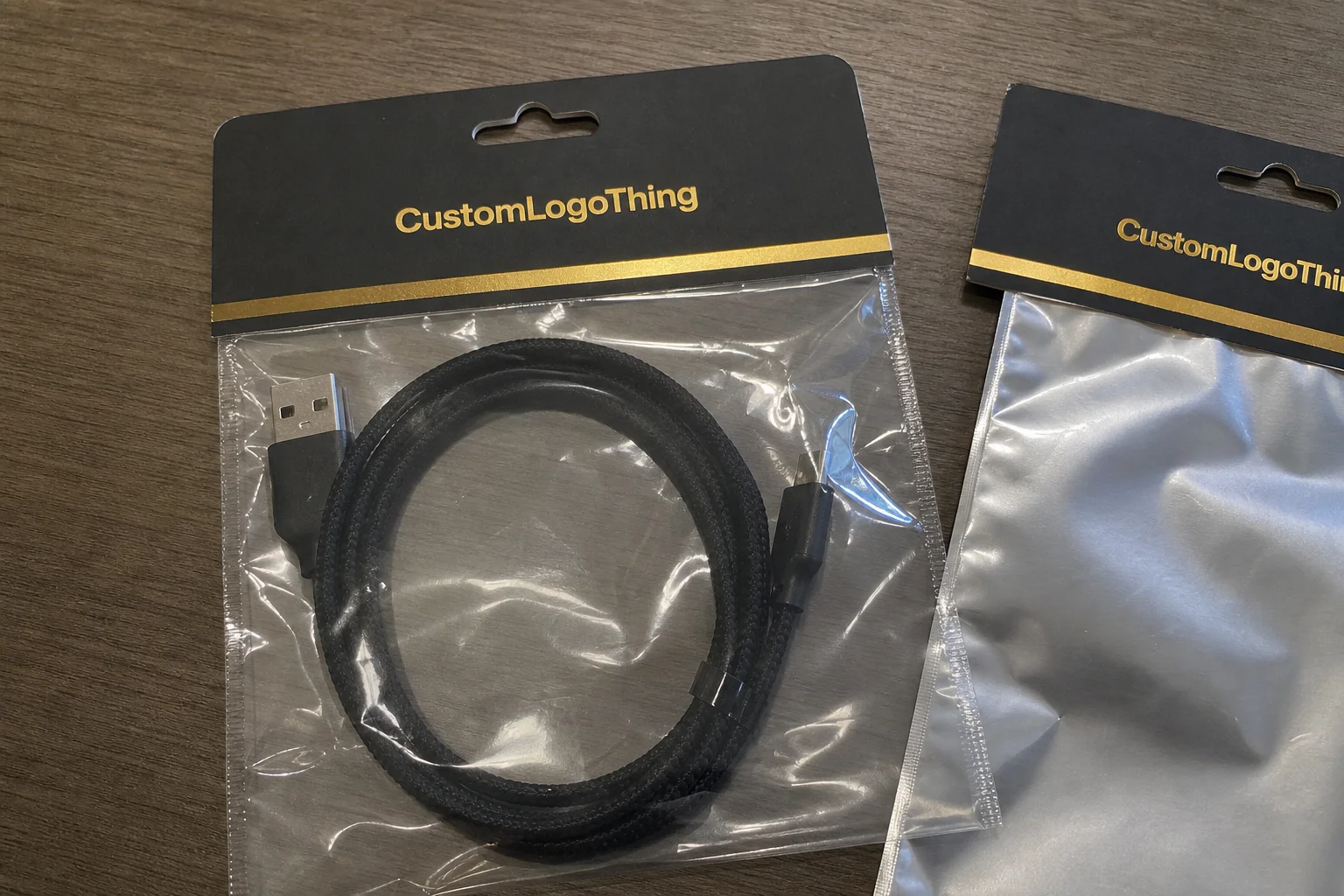
The first rule is simple: treat the bag as a retail component, not a commodity line item. A buyer who starts with the product dimensions, the merchandising method, and the retail channel usually gets a quote that resembles reality. A buyer who asks for "a clear bag with a header" and fills in the details later usually gets a price that has to be rebuilt after the proof.
OPP header bags sit in a useful middle ground. They are lighter than cartons, cleaner than loose poly packs, and easier to merchandise than unsupported bundles. That makes them a good fit for products that need a neat hanging presentation but do not justify rigid packaging. The shelf effect is bigger than the material cost suggests. A wrinkled bag, a crooked header, or a barcode hidden by product movement can make even a good product look unfinished.
There is also a handling advantage that buyers sometimes miss. A well-sized header bag reduces the amount of work needed at receiving, on the packing line, and on the retail floor. If the bag hangs true and the print remains readable, staff spend less time adjusting units and remerchandising damaged packs. That is a small gain per unit, but in wholesale programs small gains compound quickly.
“The cheapest bag is rarely the cheapest program once rework, relabeling, and shelf handling are counted.”
Channel matters more than decoration. A pack for a peg wall needs hang strength and clean top alignment. A pack going through distribution needs better stacking behavior and tougher seal performance. A sample pack may care more about presentation and cost. The same format can serve all three, but only if the buyer defines the use case before the order is placed.
Choosing the Right OPP Film, Header Style, and Closure
OPP is chosen because it is clear, glossy, and stiff enough to present the contents without sagging. That visual clarity matters more than many buyers expect. Retail buyers notice distorted edges and cloudy film quickly, even if they do not say so directly. A clean-looking bag can make a private label item feel more established than its unit cost would suggest.
Film gauge is one of the first variables that changes both performance and price. A 30 to 40 micron OPP film can work for light items, sample packs, and products with smooth edges. Heavier contents, sharp components, or shipments that will be stacked tightly usually need thicker film and a better seal area. Thin film saves money until it does not. Once bags arrive scuffed, creased, or split at the edge, the savings disappear.
Header style needs the same level of attention. A standard top-seal header is the simplest and often the least expensive option. Reinforced hang tabs are better if the bag will live on a hook for weeks. A euro-slot punch is useful when the retailer has fixture standards or the product needs a more consistent hanging point. If the bag is designed for repeated opening, a resealable closure can help, but that change affects cost, sealing method, and print layout. A closure chosen late in the process can force artwork to move, which is how simple projects become slow ones.
Open-end fill bags are common when the pack is loaded by hand and sealed afterward. They work well for kitting, inserts, and small parts. Heat-seal compatibility matters when the buyer wants a tighter finish after filling. For lighter products that need easy opening, a flap closure may be enough. The correct answer depends on how the item is packed, how the consumer opens it, and whether the retailer has any tamper-evidence expectations. Those choices should be settled before sampling, not after the proof is already approved.
For transit behavior, buyers often use ISTA standards as a reference point even when the package itself is not formally lab tested. That is useful because it frames the conversation around drop resistance, vibration, and carton handling rather than vague statements about quality. It is a vocabulary for asking better questions, not a substitute for a real test plan.
Specifications That Actually Change Performance on the Shelf
Good Private Label Buyer opp header bags wholesale order planning depends on locking the non-negotiables early. There are only a handful of specifications that really shape the result, but those details influence fit, appearance, and production yield.
- Width and length: The product should fit without compressing the contents or leaving the pack looking underfilled.
- Header height: This controls how much room exists for brand marks, copy, and the hang feature.
- Film gauge: Thicker film usually adds stiffness and puncture resistance, but it raises cost.
- Seal width: Too narrow and the bag can look fragile; too wide and the printable area shrinks.
- Print coverage: Spot print, one-color branding, and fuller coverage behave differently in press setup and registration.
Artwork placement is where many projects drift. A barcode too close to a curve or seal line can be hard to scan. A logo that sits too low can disappear once the product settles into the bag. Leave a clear zone around the hang slot so the header does not tear during handling. Keep human-readable copy away from folds and edges. These are small layout choices, but they can decide whether the pack reads cleanly on shelf or looks improvised.
There are also quality details that matter more in practice than in spec sheets. Seal strength should be consistent from carton to carton. Bag squareness matters because a skewed header looks cheap on a peg wall. Static control can help when the film attracts dust or clings during packing. Scuff resistance becomes relevant once the units travel in mixed cartons and rub against each other. None of those checks are glamorous. They are the difference between a pack that ships and a pack that gets sorted out by hand.
Buyers should also distinguish between dimensions that can flex and dimensions that cannot. Width and hang-slot location are usually fixed. A slight change in seal margin may be acceptable if the product still fits and the artwork remains readable. A buyer who understands that difference approves faster and avoids unnecessary redraws. That matters because proof cycles are often delayed by minor adjustments that do not change the retail outcome.
If the package includes a paper insert or hang card, it is worth asking about FSC chain-of-custody expectations. That is not always required, but it becomes relevant quickly in retail programs that make sourcing claims or need traceability for printed components. It is easier to confirm that before production than to untangle it after the run is complete.
Cost, MOQ, and Quote Drivers Buyers Should Model
A quote for header bags is only useful if the buyer understands what is included. Unit price alone does not tell the full story. Setup, print plates, proofing, freight terms, carton configuration, and overage allowances can change the real landed cost enough to make one supplier look cheaper than another on paper while costing more in the warehouse.
| Spec profile | Typical MOQ | Indicative unit price | Best fit |
|---|---|---|---|
| Clear OPP header bag, no print | 5,000 pieces | $0.08-$0.14 | Fast replenishment and simple private label kits |
| One-color print with standard hang slot | 10,000 pieces | $0.12-$0.22 | Balanced shelf impact and controlled spend |
| Two-color print with custom header height | 10,000-20,000 pieces | $0.16-$0.30 | Stronger branding and a more tailored retail look |
| Heavier gauge, reinforced tab, special packing | 25,000+ pieces | $0.18-$0.34 | Heavier product loads or tougher retail handling |
Those numbers are directional. They shift with bag size, film grade, print coverage, packing format, and whether the supplier is building from a standard template or a fully custom spec. Comparing quotes without normalizing those variables is how procurement teams end up comparing unrelated offers.
The biggest price drivers are predictable.
- Film thickness: More material means more cost.
- Print colors: Each additional color adds setup time and registration risk.
- Header complexity: Reinforced tabs, euro slots, and custom dies increase processing time.
- Order volume: Higher runs usually lower the per-bag price.
- Packing format: Mixed-SKU packing and special carton counts raise labor.
The hidden costs are usually the ones that frustrate buyers later. Artwork revisions after approval can trigger a new proof round. Rush fees can wipe out any savings from a lower factory quote. Late spec changes can hold up material sourcing. Freight can be the biggest surprise if the quote does not state whether it is factory, FOB, or delivered. A low unit price is useful only if the rest of the order math is honest.
A practical rule helps here: if the supplier cannot quote the same specification twice and stay in the same range, the brief is still too loose. Packaging pricing should have some tolerance, but not enough drift to change the sourcing decision from one request to the next.
Process, Timeline, and Production Steps From Proof to Shipment
Once the spec is fixed, the order should move through a predictable sequence. Good suppliers do not improvise this. They confirm the dimensions, review artwork, issue a proof, lock approval, prepare film and tooling, run production, inspect cartons, and ship. Each step protects the next one. Skipping a step usually does not save time. It just moves the delay downstream.
- Inquiry and spec confirmation: Size, gauge, header style, print coverage, quantity, and ship date are locked first.
- Artwork review: Dielines, barcode placement, copy, and color references are checked before the proof is released.
- Proof approval: The buyer confirms layout and color notes in writing.
- Material sourcing and setup: Film, plates, and tooling are prepared for the run.
- Production and inspection: Samples, in-line checks, and carton-level inspection catch drift early.
- Shipment: Finished cartons are packed to the agreed count and sent with the agreed documents.
For simple orders, a realistic proof-to-ship window is often 12 to 15 business days after proof approval. More custom work extends that. Extra print colors, unusual hang features, larger volumes, or special packing instructions can add days. The biggest delay is often not machine time. It is waiting on artwork corrections, missing files, or a color approval that keeps sending the job back into prepress.
That is why timeline control starts with file control. Use a final dieline, one named artwork version, and a clear color reference. If the launch date is fixed, count backward from the receiving date, not from the production estimate. Transit time, receiving time, and warehouse prep all need room. A plan that only covers the factory side is not a full plan.
“Approval discipline shortens the schedule more reliably than any rush fee ever will.”
Sample handling deserves the same seriousness. A preproduction sample is not a formality. It shows whether the barcode area is readable, whether the header hangs cleanly, whether the product settles as expected, and whether the seal area looks stable once the pack is filled. A quick approval on a weak sample is still a weak decision. A buyer who checks the sample carefully usually avoids the larger cost of correcting the run later.
What Buyers Should Verify Before Choosing a Supplier
The supplier choice should reduce risk, not only price. In wholesale header bag programs, the strongest supplier is usually the one that can show repeatability: material documentation, recent samples, and a clear method for keeping reorders aligned with the approved spec. If size, slot placement, or print color drifts on the second order, the buyer has not really bought a repeatable program.
Ask how the production sample is compared to the approved sample. Ask how carton counts are verified. Ask what happens if the proof and final print differ by a visible margin. Ask whether the quote includes overage allowances, damaged-unit policy, and freight terms. Precise answers are more useful than broad claims about quality. In packaging, vagueness usually means extra work later.
Communication is part of quality control. A supplier that translates the brief into a precise quote is usually safer than one that responds quickly but leaves out tolerances, packing details, or shipping assumptions. Many procurement problems come from ambiguity rather than bad intent. The order looked clear to the buyer and incomplete to the supplier. That gap costs time.
Compliance matters as well, especially for food-adjacent, child-sensitive, or regulated retail channels. The bag may not be the regulated item, but the final pack still needs the right documentation trail. If the supplier cannot explain how they support that trail, the buyer should not assume it exists. Good packaging programs are built on paperwork as much as on film.
Repeat orders should feel boring in the best sense. The approved file should let the buyer reorder without rebuilding the same decisions every cycle. The master spec should record size, gauge, header style, print method, carton count, and any note that changed during approval. If that file is not kept clean, the team pays for the same clarifications more than once.
Next Steps for a Clean Order Brief and Faster Approval
If the goal is faster approval, the answer is not a shorter email. It is a cleaner brief. Start with the finished product dimensions, target quantity, print file status, hang style, and required ship date. Add carton count, barcode requirements, and whether the pack will be hung, boxed, or both before it reaches the retailer. Those details shape the quote more than most buyers expect.
- Lock the spec sheet: Size, gauge, header height, closure, and print coverage should be fixed before quoting.
- Separate the pricing: Unit price, setup, freight, and extra charges should appear on separate lines.
- Approve the artwork once: Final art, barcode placement, and color references should be signed off before production.
- Keep the master file: Reorders move faster when the approved spec is easy to retrieve.
This matters most in private label programs with recurring SKUs. The packaging logic often stays the same even when the product assortment changes. A buyer who archives the approved file can cut down on repeated clarification. A buyer who does not ends up re-answering the same questions every cycle and often pays for the same revisions again.
There is also a structural lesson here. Header bags are low-cost components, but they sit at the intersection of merchandising, packing, compliance, and logistics. That makes them deceptively sensitive to small errors. A one-line change to the hang slot or a quiet shift in gauge can ripple through the rest of the order. The cleanest programs are not the ones with the most features. They are the ones where every feature has a reason.
In practice, that is the best way to approach private label buyer opp header bags wholesale order planning: write the spec once, verify the sample carefully, and keep the approval trail tight enough that the reorder looks like the first order, only faster.
What information do I need for private label OPP header bags wholesale order planning?
Provide the finished bag size, film gauge, header style, artwork files, and target quantity. Add barcode placement, hanging method, and carton pack preference so the quote reflects the real production setup. Include the target ship date as well, because lead time changes once the schedule is tied to a launch window.
How does MOQ affect custom header bag pricing for private label buyers?
Lower quantities usually carry a higher per-unit cost because setup and prepress are spread across fewer bags. Custom printing, special headers, and multiple SKUs can raise the MOQ or increase the quote. If storage space allows it, a larger repeat order often gives the cleanest unit-cost result.
What drives the biggest cost changes in OPP header bag quotes?
Material thickness, print complexity, and header design are the main variables. Rush timing, artwork revisions, and special packing instructions can add avoidable cost. Freight terms also matter, so compare the delivered number rather than only the factory price.
How long does the process usually take from proof to shipment?
Simple orders move faster, while custom specs need more time for proofing and production setup. Artwork approval is the most common bottleneck, especially when colors or layout are not final. Plan around your launch date, not only the quoted production time, so receiving and stock prep are covered.
Can I reorder the same private label header bag spec without redoing everything?
Yes, if the approved spec, artwork, and material details are saved accurately. Repeat orders are faster when you keep a master file with size, gauge, header, and packing notes. A good supplier should be able to pull the prior spec and shorten the quote-to-production cycle.


