If you sell subscription kits, sample packs, or monthly bundles, the subscription brands opp Header Bags Warning Label guide usually gets ignored until something goes wrong. Then the bag looks fine, the warning copy is missing or too small, and customer service gets the fallout.
OPP Header Bags are common because they are clear, light, and economical at scale. But warning labels are functional, not decorative. They need to stay readable through kitting, packing, shipping, and sometimes retail display. That means the bag structure, label method, and adhesive choice all have to work together.
For buyers, the goal is simple: reduce relabeling labor, limit returns, and avoid compliance headaches. That starts with choosing the right header bag size, film gauge, and warning-label format before artwork is approved and the order is placed.
Why subscription brands keep getting warning-label packaging wrong
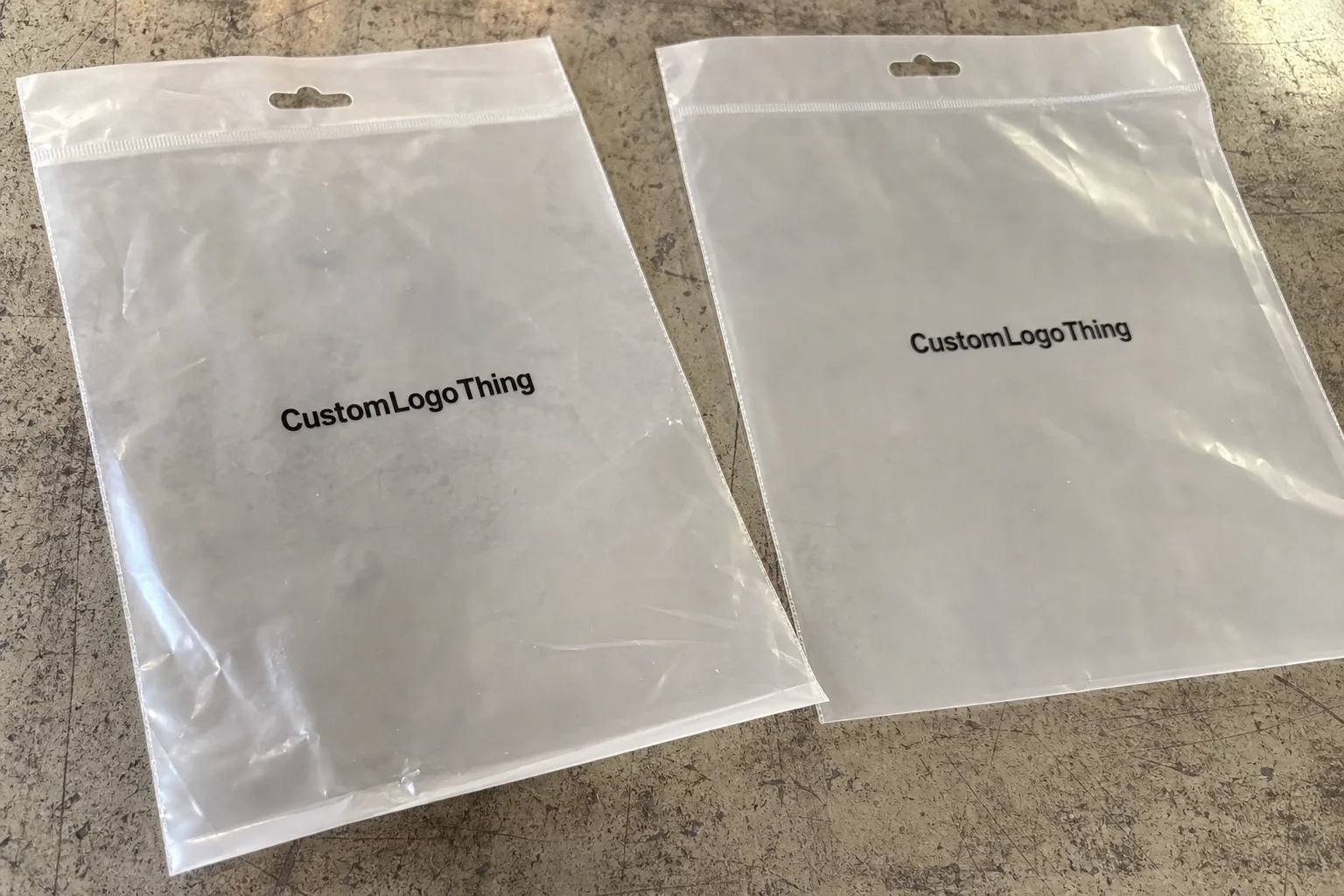
The most common failure is basic. A brand approves a clean mockup, but the required warning label is absent, too small, or added late. Once the bags are filled and folded, the label curls, peels, or gets hidden in transit. Then the first complaint arrives and the cleanup starts.
Subscription packaging is handled more often than one-off retail packaging. It gets picked, stacked, sorted, and shipped in batches. A label that survives a flat mockup may still fail after a few hours on a fulfillment line. That is where a small packaging mistake turns into avoidable cost.
OPP stands for oriented polypropylene. In practical terms, it is a clear plastic film with good gloss and enough stiffness for lightweight products. The header is the sealed top section, often used for branding, hanging, or label placement. The header matters because it gives you a flatter, more controlled zone for required copy.
The buying decision is not just about appearance. Bag size, film thickness, and label method directly affect labor, readability, and rework. If you have to relabel thousands of units by hand, the quote gets expensive fast.
How OPP header bags and warning labels work together
An OPP header bag has three practical parts: the clear body film, the sealed header, and the opening or hang feature if the design includes one. Some versions use a euro slot or hang hole. Others are heat-sealed pouches with a reinforced top. The header creates visual separation, which helps because warning copy needs a clean field, not a busy product area full of graphics and glare.
There are four common ways brands handle warning information:
- Pre-printed labels applied after bag conversion
- Adhesive decals for quick application
- Hang tags tied or stapled to the bag
- Direct print on the header area
Each option has a different tradeoff. Pre-printed labels work well when the warning text is stable and the design needs to look tidy. Stick-on labels are better when you need fast changes or multiple SKUs. Direct print is cleaner at scale, but it only makes sense when the warning copy is settled and the volume justifies setup. Hang tags help when the bag surface is tricky, though they add labor and another component to manage.
Subscription brands also deal with mixed bundles. One box might contain a standard SKU, a promo insert, and a seasonal item. Warning language may vary by bundle, ingredient, or state-specific requirement. If the packaging plan ignores that, the pack line ends up improvising. That is how expensive mistakes get made.
Surface texture matters too. OPP is usually smooth, but recycled-content blends, coatings, or matte finished header areas can reduce adhesive performance. Cold storage, moisture, and friction from auto-pack equipment can also affect hold. The adhesive spec matters as much as the graphic design.
“If the label can’t survive the trip, it’s not a warning label. It’s a decorative suggestion.”
Key specs, compliance needs, and design factors to check
Start with film thickness. For OPP Header Bags, common ranges are around 1.2 mil to 2.0 mil, depending on product weight and the amount of stiffness you want. Thinner film is cheaper and lighter. Thicker film handles better and resists tearing more effectively. If the bag will hold sharp edges, inserts, or multi-item kits, do not chase savings with ultra-thin film.
Bag size and header height matter more than most first-time buyers expect. A small header may work for a short product name and a simple warning icon. Dense warning text, multilingual copy, or barcode space needs more room. If the header is too short, the label gets crowded or the text becomes hard to read. That is bad for compliance review and warehouse use.
Seal strength is another practical variable. A weak top seal can fail during fulfillment or shipping, especially if the bag is handled repeatedly. Heat-seal width, film quality, and machine settings all influence performance. If you are ordering custom printed header bags, ask what seal type is used and whether the bag has been tested at the expected fill weight.
Compliance is where buyers need to stay sharp. The manufacturer can print and build the bag, but the brand still owns the warning language. That includes size, placement, contrast, and whether the text is correct for the market. For packaging standards and testing references, buyers often work with guidance from the Institute of Packaging Professionals and transport test protocols such as ISTA.
Design details are not decoration. They affect whether the warning gets read in seconds or ignored because it looks like tiny legal wallpaper.
- Text size: keep it readable after filling and folding
- Contrast: black on white is still the safest default
- Icon use: useful when space is tight, but not a substitute for copy
- Barcode space: keep it separate from warning content
- Multilingual copy: plan for it early if your market requires it
One more factor buyers overlook is temperature. If your product sits in a cool warehouse or ships through humid conditions, standard adhesive may not hold as well as a low-temperature or high-tack option. Ask for a recommendation based on the actual shipping environment, not just a generic material spec.
For sustainability claims, keep the language accurate. If you are using recycled-content or paper-based components elsewhere in the kit, do not assume every component follows the same rule set. The FSC site is useful when checking paper sourcing, but it does not answer plastic-film questions.
Process and timeline: from artwork approval to production steps
The workflow is straightforward, which is exactly why it still gets mishandled. First comes spec discussion: bag size, header height, print area, label method, and quantity. Then you confirm dimensions or the dieline. After that, artwork is prepared, proofed, sampled, approved, and moved into production. Skip a step and you usually pay later in delay or rework.
Low-resolution art is the classic problem. So is unclear warning copy. Last-minute size changes also cause trouble because they affect label placement and text fit. A label that looks fine on a screen mockup may become cramped once it is mapped to real dimensions. Screen inches are not packaging inches.
Lead times vary by complexity. A simple stock-style build with a standard label method can move in roughly 10-15 business days after proof approval. Fully custom print, special adhesives, or multi-SKU label sets often land more in the 15-25 business day range, sometimes longer if samples or revisions pile up. If the order needs rushed freight, add cost.
Subscription brands should plan around replenishment cycles. If the monthly ship date is fixed, packaging has to arrive before the packing line starts rushing. That means ordering early enough to absorb one proof round, one sample round, and one correction without risking stockouts.
For warning-label-sensitive jobs, a press proof or physical sample is worth the time. A sample lets you check font size, placement, adhesion, and how the bag looks once it is filled. Skipping sample approval is how a small design issue becomes a labor problem.
Cost and pricing: what actually drives unit cost
Unit cost on OPP header bags is driven by five things: bag dimensions, film thickness, print coverage, label type, and volume. Larger bags and thicker film increase material cost. Custom printing adds setup. Special label application adds labor. Quantity spreads fixed costs across more units, which is why small orders usually feel expensive per piece.
Here is a practical view of how pricing often behaves for a subscription run:
| Option | Typical use | Relative unit cost | Pros | Tradeoffs |
|---|---|---|---|---|
| Stock OPP bag + stick-on warning label | Short runs, changing copy, multiple SKUs | Low to medium | Flexible, fast to update | Manual application labor, alignment risk |
| Custom printed header bag | Stable branding and stable warning text | Medium | Cleaner look, less manual work | Higher setup, harder to change later |
| Direct-printed warning area | High-volume repeat orders | Low at scale | Best consistency, less rework | More upfront setup, less flexible |
| Hang tag label | Special compliance needs or difficult bag surfaces | Medium to high | Easy to update, avoids adhesive issues | Extra labor and extra parts to manage |
For a sense of range, a lower-volume custom order might price higher per unit because setup is spread over only a few thousand pieces. Larger runs usually improve the math. A buyer might see something like $0.06-$0.14 for basic stock-style bagging with applied labels, while custom printed builds can land higher depending on coverage, thickness, and volume. Those numbers are ranges, not promises.
Hidden costs matter more than people admit. Proof rounds, split shipments, rush fees, and manual label application labor can quietly eat margin. If a label has to be applied by hand to every unit, do the labor math before you celebrate the lower packaging quote.
As a rule, if the warning text changes often, keep the base bag flexible and use an external label method. If the warning copy is stable and the order repeats, print it in. That is usually the best balance between cost control and process sanity.
For broader packaging planning, the product and use case matter more than the lowest bid. If you want a reference point for label and tag options, see Custom Labels & Tags. If you are comparing packaging outcomes across categories, the Case Studies page is useful for seeing how specs translate into real jobs.
Common mistakes subscription brands make with warning labels
First mistake: using a label that is too small. It looks acceptable on a screen, then the bag is filled, folded, and handled a few times, and the copy is tiny enough to annoy everyone. If the warning needs to be read quickly, oversize it a little. The cost difference is usually smaller than the cost of fixing it later.
Second mistake: placing the label on a seam, curved corner, or high-friction area. Those spots are where labels wrinkle or peel. A label should sit on the flattest, cleanest area available, usually the header. If the bag design does not allow that, the structure needs to change, not the label size.
Third mistake: assuming one generic warning works for every SKU or market. That usually gets expensive. Some bundles need different copy. Some products need state-specific or country-specific wording. Some fulfillment partners also have their own packing rules. Build a master spec sheet so everyone knows which version is final.
Fourth mistake: ordering too late. A rushed schedule does not improve artwork. It just reduces the time available to catch errors. If the warning label is compliance-sensitive, rushing the order is a reliable way to make a simple problem more expensive.
Fifth mistake: ignoring how the bag will be packed, stacked, and shipped. If bags rub against each other in transit or get compressed in a mailer, the label has to survive that friction. If it cannot, the customer sees scuffed edges or peeled corners before opening the package.
Expert tips for cleaner labeling and next-step buying decisions
Test on a filled sample, not an empty bag. Empty-bag mockups lie. A label that looks centered on a flat bag may shift once the product is inside. Fill weight changes tension, fold lines appear, and adhesive behavior changes. Real samples are the only honest version.
If your warning copy is dense, choose a slightly taller header area. Extra room helps with line spacing, icon placement, and barcode separation. It also makes the design feel less cramped, which matters when the package is seen before it is discarded.
Ask for material and adhesive recommendations based on actual shipping conditions. Mention warehouse temperature, moisture exposure, fulfillment speed, and whether the bags are handled by machine or by hand. A good supplier should be able to suggest a label stock or adhesive type that fits the job.
Keep a master spec sheet. Final warning text. Final dimensions. Film thickness. Finish. Label position. Proof number. If you reorder monthly, that sheet saves time and prevents small changes from creeping in until the packaging no longer matches the approved version.
- Confirm the copy before artwork starts
- Define the bag size and header height early
- Choose the label method based on change frequency
- Request samples before the full run
- Lock the reorder spec so future batches stay consistent
If you are building a repeatable packaging system, the best outcome is boring. Consistent sizes, clear warning copy, predictable labeling, and a reorder path that does not require a fire drill every month. That is the real value in the subscription brands opp header bags warning label guide: making the bag easy to produce correctly every time.
What should subscription brands check before ordering OPP header bags with warning labels?
Confirm the exact warning text, size, and placement before production. Check whether the label will be adhesive, printed, or applied as a tag. Verify bag dimensions, header height, and shipping conditions so the label stays readable after packing and transit.
Are printed warning labels better than stick-on labels for subscription packaging?
Printed labels are cleaner and more consistent when the warning text never changes. Stick-on labels work better when SKUs, regulations, or messaging change often. The best choice usually depends on volume, lead time, and how frequently you reorder.
How does MOQ affect pricing for OPP header bags and warning labels?
Higher MOQ usually lowers unit cost because setup costs are spread across more bags. Lower MOQ is useful for testing, but the per-bag price is typically higher. If repeat orders are likely, compare first-run cost against long-term reorder pricing before you commit.
How long does production usually take for custom OPP header bags with warning labels?
Simple orders often move faster than fully custom print jobs. Artwork changes, proof rounds, and sample approval can extend the schedule. Plan early if the bags support a monthly subscription ship date or a seasonal launch.
What is the biggest mistake brands make with warning labels on header bags?
They approve artwork on screen but never test it on a filled physical sample. That leads to tiny text, bad placement, and labels that peel during shipping. A real sample catches those problems before the full run costs real money.


