Brand embroidered logo Hats Unit Cost is one of those numbers that looks simple until the quote arrives. Two caps can share the same blank body, the same logo, and the same order size, yet land in very different price bands. The reason is rarely mysterious: stitch count, placement, cap construction, and setup work all move the total.
That matters because hats are usually bought for a reason beyond covering a head. They support resale margin, staff identity, event visibility, and the visual discipline of a brand that wants every touchpoint to feel intentional. A cap can be a low-ticket item, but the wrong spec turns it into an expensive lesson.
Buyers who get the cleanest pricing usually think like production people for a few minutes. They separate the blank from the decoration. They look at quantity breaks instead of a single unit price. They ask what the factory is actually stitching, not just what the mockup shows. That approach does not just lower risk; it usually produces a more honest quote.
Why the Same Hat Can Price Very Differently
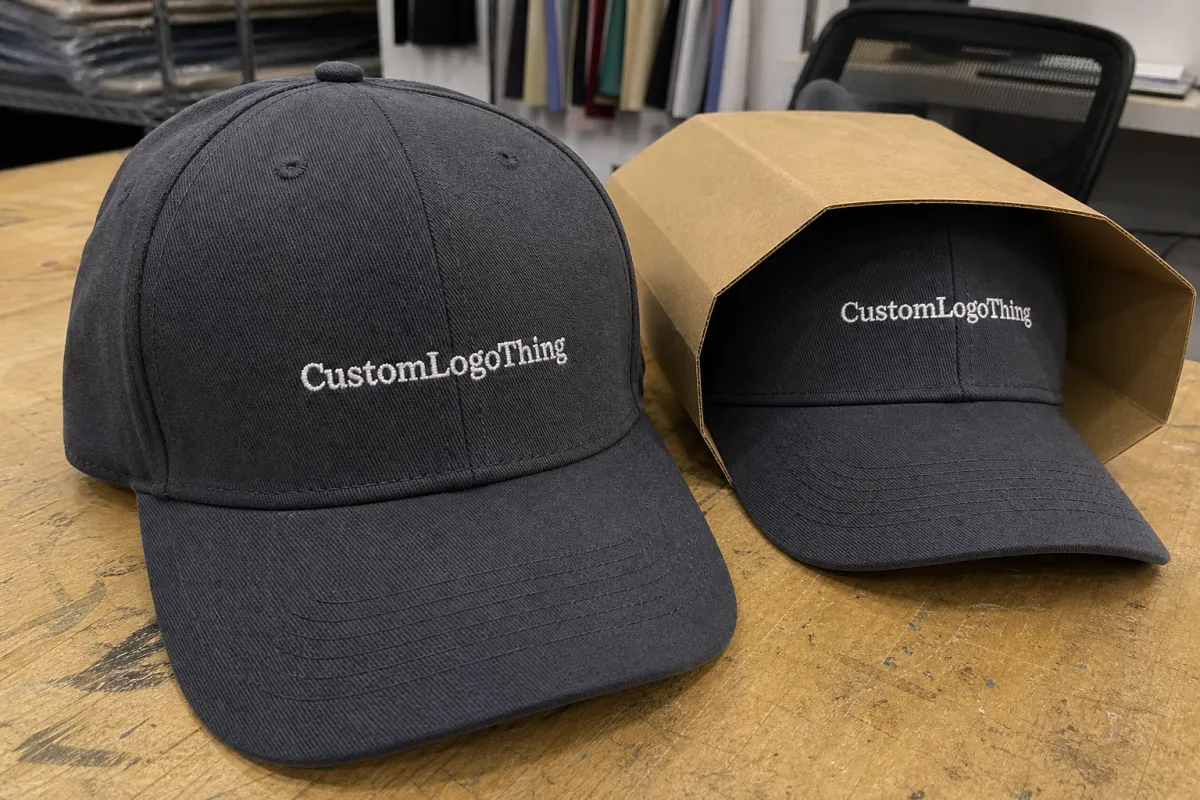
The blank cap is only one part of the math. A $2.10 cotton twill hat can cost less overall than a $1.60 promo cap if the cheaper blank needs more cleanup, more thread changes, or a bigger stitch file. Decoration labor tends to outpace blank cost once the logo becomes dense or detailed. That is why brand Embroidered Logo Hats Unit Cost often tracks the artwork more closely than the hat body itself.
Stitch count is one of the clearest drivers. A simple one-color front mark at roughly 5,000 stitches is a different job from a multi-color logo with tiny text, tight curves, and layered fills that pushes toward 10,000 stitches or more. Add 3D puff embroidery and the machine work changes again. Puff requires foam, more setup attention, and a logo that can tolerate stronger visual edges. The result is a bolder finish, but not a cheaper one.
Logo scale matters too. A design that looks fine at two inches wide may become crowded at three and a half inches wide if the type is too small or the outlines are too thin. Good digitizing adjusts for that. Poor digitizing simply transfers the art into thread and hopes the fabric behaves. It rarely does.
The order purpose changes the acceptable level of finish. Internal team hats can usually tolerate simpler decoration and stock colors. Retail merch is less forgiving. If the hat is sitting on a shelf next to higher-end apparel, the logo needs clean edges, stable alignment, and enough visual weight to read from a few feet away. The buyer is not just purchasing decoration; they are buying first impression.
One of the most common mistakes is asking for premium presentation on a budget spec. That is where quotes feel "high" even when they are reasonable. A cap with a complex logo, two placements, and custom thread colors is not comparable to a basic single-hit promo run, even if the photos look similar. The mockup hides the labor.
Typical variables that move price:
- Cap style - dad hat, trucker, five-panel, structured six-panel, or performance cap.
- Logo complexity - stitch count, small text, fills, outlines, and tight curves.
- Thread colors - one-color embroidery is usually cheaper than multi-color work.
- Placement - front-only is simpler than front plus side or back hits.
- Digitizing time - artwork that needs cleanup, spacing fixes, or simplification adds prep.
Two hats can look close in a rendering and still land in different price brackets. One is built for efficient production. The other asks the factory to wrestle the logo into shape.
Hat Styles, Materials, and Embroidery Placement That Matter
Most buyers compare five core cap types: dad hats, trucker hats, five-panel caps, structured six-panels, and performance styles built for sweat management. Each behaves differently under embroidery. Soft, low-profile hats drape more and can give the logo a relaxed look. Structured caps hold the crown shape better and usually make a front mark read cleaner at a normal viewing distance.
Materials affect stitch behavior just as much as style does. Cotton twill is forgiving, but it can pucker if the design is dense and the backing is not selected properly. Mesh-backed truckers introduce a contrast: the front panel may take embroidery well, while the mesh sides are better left alone unless the design is small and deliberate. Polyester blends often produce a sharper look, though tension and heat control need to be tighter. Performance fabrics add another layer of caution because the buyer is balancing branding against breathability and comfort.
Placement changes the cost structure in a very practical way. A centered front logo is the simplest setup. Add a side hit or a back mark near the closure and the cap becomes two or three separate decoration jobs. That means extra hooping, extra checks, and more room for error. If a brand wants a 3D puff front plus a small flat embroidery on the side, the quote should reflect both operations.
Fit and finish also shape how the hat reads in use. A high crown gives the logo more vertical space. A lower crown feels more casual and may compress the design slightly. Closure style matters if the cap will be photographed, sold at retail, or issued as a uniform piece. Snapbacks, strapbacks, and fitted performance closures each send a different signal. The cheapest choice is not always the right one if the cap has to support a specific brand image.
Practical comparison: for large event giveaways, a stock trucker with a clean one-color front mark often gives the best value. For retail merch, a structured six-panel usually offers a sharper silhouette and a more premium look. The unit cost can be higher, but the perceived value is usually higher too.
Embroidery Specs Buyers Should Verify Before Ordering
Before approving a quote, confirm the basics: stitch count, logo size in inches, thread color count, panel type, and exact embroidery location. Those details sound small. They are not. A logo scaled from 2.25 inches wide to 3.5 inches wide can add thousands of stitches, and that change ripples directly into brand Embroidered Logo Hats unit cost.
Digitizing quality deserves its own check. A crisp vector file does not automatically translate into a crisp embroidery file. The art often needs spacing adjustments, lettering cleanup, and compensation for thread pull. Good digitizing respects the way thread behaves on fabric. It keeps small text legible, corners from collapsing, and outlines from becoming lumpy after the machine finishes.
There is also a difference between "the logo fits" and "the logo works." A design can physically fit on a crown and still read poorly because the stitch density is too high, the smallest letters are too tight, or the edge treatment makes the mark distort on a curved surface. Buyers who want a reliable result should ask for a proof that shows actual size, placement, and color blocking, not just a decorative mockup.
Special finishes can improve the feel of the cap, but they are not free. 3D puff embroidery adds height and a stronger streetwear look. Tonal thread creates a quieter, more retail-forward appearance. Contrast stitching can add texture. Branded sweatbands, custom inside tape, and woven labels move the product closer to a finished merchandise piece. Each feature adds either setup, material, or labor.
Durability questions are worth asking before the order is locked. How well does the thread hold after handling and washing? Does the embroidery sit flat on the chosen panel, or does the fabric need extra stabilization? Will the back closure stay aligned after packing and shipping? These are the checks that separate a useful cap program from a batch of one-off samples that only looked good on screen.
A low number is not always a good quote. The better quote is the one that still delivers the logo, fit, and finish the brand actually needs.
To keep the quote accurate, send a clean order package:
- Vector artwork in AI, EPS, or PDF format.
- Preferred cap style, color, and closure type.
- Target logo size and placement.
- Thread color references, including PMS notes if available.
- Quantity range and in-hands date.
- End use: staff wear, resale, events, or a promo kit.
That list removes most of the guesswork. It also keeps the quote anchored to the real job instead of a generic version of it.
Brand embroidered logo hats unit cost: MOQ, Setup, and Quote Drivers
Here is the part most buyers want upfront: unit cost usually falls as quantity rises, but not in a perfectly straight line. Setup charges, digitizing, and complex decoration keep smaller orders from dropping as quickly as people expect. A run of 48 or 72 hats carries a much larger share of the fixed work per piece than 250 or 500 hats do. That is why brand embroidered logo hats unit cost can feel steep on a short run and reasonable on a longer one.
MOQ depends on blank availability and decoration complexity. Stock caps with simple embroidery often run at lower minimums. Premium blanks, custom colors, special fabrics, or multi-location decoration usually need a higher quantity to be efficient. That is not a tactic to force bigger orders. It is a reflection of how sourcing and machine time work together.
| Option | Typical MOQ | Typical Unit Cost at 250 pcs | Best For |
|---|---|---|---|
| Stock dad hat, one-color front embroidery | 48-100 pcs | $4.90-$7.25 | Staff wear, giveaways, basic merch |
| Structured six-panel, multi-color front logo | 100-144 pcs | $6.40-$9.10 | Retail programs, brand launches |
| Trucker hat, front logo plus side mark | 100-250 pcs | $7.10-$10.40 | Event merch, field teams, uniforms |
| Performance cap with premium finish | 144-250 pcs | $8.25-$12.60 | Activewear, outdoor teams, higher-retention programs |
Those are planning ranges, not promises. Still, they show the basic shape of the market. The more complex the cap body and decoration, the higher the landed cost tends to be. Blank price matters, but setup, thread changes, and proofing often matter more than buyers expect.
The cleanest way to compare quotes is to separate each component: blank cap price, embroidery cost, setup or digitizing, proofing, packaging, and freight. A quote that looks $0.75 cheaper on paper can become more expensive once the hidden items are included. That happens often enough to be a real procurement problem.
Repeat orders usually improve the economics. The art file is already digitized. Thread matching is already known. The cap body has already been approved. If the buyer stays with stock colors and avoids unnecessary changes, the second run is usually easier to price and easier to produce. Consolidated freight can help too, especially if the program ships in waves.
One more practical point: ask whether the quote includes corrections if the proof needs a small revision, and whether carton packing or polybagging is counted separately. Those items do not sound dramatic, but they affect accuracy and receiving time. A low quote that leaves out shipping or packing is not a low quote for long.
Pricing rule of thumb: simple logos reward volume; complicated logos reward clarity. If the art can be simplified without losing recognition, the unit cost often improves. If the logo must stay complex, the buyer should budget accordingly and avoid pretending it is a basic run.
Production Steps, Proofing, and Turnaround From Art to Ship Date
The production path is predictable, but every step has consequences. First comes art review. Then digitizing. Then a mockup or proof. After approval, the machines run, quality control checks the output, and the finished hats are packed for shipment. Skip the proof stage and the risk of a misplaced logo or unreadable text rises fast.
Proofing is not paperwork. It is the place where small failures get caught before they become expensive. Fine lines that close up, thread colors that read differently on fabric, and logos that sit too low on the panel are all easier to fix before stitching begins. Once production starts, a correction can mean lost time, rework, and delayed delivery.
Turnaround depends on order size, cap style, current capacity, and shipping method. Straightforward stock-cap orders with approved art are often completed in about 10 to 15 business days. More complex runs, custom materials, or multiple decoration locations can stretch that to 15 to 25 business days. Freight time sits on top of that. Buyers working toward a launch date should plan backward and leave room for proof changes.
Delays usually come from a short list of avoidable problems: late artwork, missing color references, last-minute logo edits, or an unclear in-hands deadline. A project moves faster when one person owns approvals and the art is locked early. That sounds basic, but it is where many cap programs lose time.
Packaging can affect the schedule too. If the hats need folding cartons, branded polybags, or kit inserts, the packing spec should be set before production starts. Hat crowns crush differently than flat products, so the packing method should match the final use. A retail-ready item can tolerate a different pack style than a giveaway run tossed into a mailer.
For buyers thinking about transport risk, standards from ISTA are useful for framing drop, vibration, and compression concerns before shipment leaves the floor. If the program includes paper inserts or hang tags, FSC-certified paper is a sensible option for buyers who want a cleaner materials story without changing the cap itself.
The most reliable schedule is the simplest one: stock cap, one logo, one proof, one destination. Add custom trims or specialty thread and the timeline grows. That is normal. What causes trouble is expecting the same lead time from a basic event run and a fully branded retail product.
Why Buyers Reorder Cap Programs for Consistency
First orders prove the process works. Reorders prove the process is controlled. Buyers come back when thread matching stays stable, sizing remains consistent, and artwork files are organized well enough to make the next run faster. That is the real value of a cap program: fewer surprises, less back-and-forth, and a branded item that behaves the same way from one shipment to the next.
Quality control should be visible in the output, not hidden in a vague promise. Logo placement checks, stitch inspection, thread color verification, and carton-level packing accuracy all matter before the shipment leaves the floor. A small defect rate is not the story. The story is whether the defect gets caught before it reaches the buyer’s warehouse, retail shelf, or event table.
Procurement teams tend to remember the suppliers who stay consistent. A low quote is useful only if the second order looks like the first one. If the thread shade holds, the logo lands in the same position, and the closure type stays the same, the buyer avoids time-consuming reapproval cycles and the brand avoids visible variation.
That consistency matters across several use cases. Staff uniforms need a dependable look. Retail merch needs clean presentation. Onboarding kits need a strong first impression. Event giveaways need enough polish to reflect well on the brand, even if the item is inexpensive. Small changes in embroidery density or fabric tone can alter how the cap is perceived.
There is also a packaging side to repeat business. Caps shipped in polybags, sleeves, or cartons should be documented with the same care as the embroidery file. If the packing method changes from one reorder to the next, the buyer may see a very different product on arrival even if the embroidery itself is unchanged. That is why stable specs matter more than clever selling language.
For long-term programs, the target is not simply to buy hats. The target is to create a repeatable branded item that looks and behaves the same on order one and order ten. That is what makes the unit cost meaningful rather than accidental.
Next Steps to Lock Pricing and Start Your Order
Send the logo file first, then add the cap style, quantity range, color target, deadline, and intended use. That is enough to start a serious quote. If the placement and size are already decided, the estimate will be tighter and the revision cycle shorter.
The fastest way to pin down an accurate quote is simple: choose the hat body, confirm the embroidery size, compare MOQ options, and check shipping timing against the in-hands date. Buyers who make those decisions early usually avoid the most common cost surprises. That matters when the order has to land before a launch, a trade show, or a seasonal deadline.
One contact person helps. One artwork file helps. One target delivery window helps. A backup color option helps too, because stock availability can change the production plan quickly. These are small controls, but they reduce friction and keep the order moving.
Practical order sequence:
- Choose the hat body and color family.
- Approve the logo size and placement.
- Confirm thread colors and decoration style.
- Review the proof and finalize quantity.
- Lock shipping terms and production timing.
Do that, and the number you see is much closer to the number you pay. More importantly, the hat arrives looking like the brand intended. That protects margin, supports recognition, and keeps the product aligned with the rest of the program. For any buyer comparing brand embroidered logo hats unit cost, the real goal is not the lowest sticker price. It is the best balance of decoration quality, quantity, and production control.
FAQ
What affects brand embroidered logo hats unit cost the most?
Stitch count, logo size, and the number of embroidery locations usually move price more than the blank cap itself. Quantity breaks, setup charges, and specialty finishes like 3D puff or custom labels also change the final quote.
What is a typical MOQ for embroidered logo hats?
MOQ depends on the cap style, decoration complexity, and whether the order uses stock materials or custom components. Simple stock caps often support lower minimums, while premium or highly customized runs usually need higher quantities to stay efficient.
How long does production usually take for embroidered hats?
Timeline depends on artwork approval, factory capacity, and whether the order needs a proof revision. Simple stock-cap orders are usually faster than custom runs with specialty fabrics, multiple decoration points, or detailed thread matching.
Can I mix cap colors or logo placements in one order?
Mixing colors is often possible, but stock availability and MOQ can limit the options. Multiple placements can be done too, though extra setup usually raises cost and may require separate approval for each location.
What file do you need for an embroidery quote?
Vector artwork is best, especially AI, EPS, or PDF files with clean shapes and readable text. Include the hat style, logo size, thread color targets, quantity, and delivery date so the quote reflects the actual order.


