Brand Five Panel Caps Lead Time: What Buyers Need to Plan For
A five panel cap can look simple, but the schedule behind it rarely is. A blank body may move quickly, yet once you add artwork approval, trim sourcing, decoration setup, packing, and freight booking, the calendar starts to stretch. That is why brand Five Panel Caps lead time is usually longer than buyers expect from the sewing window alone.
The practical timeline starts before production and ends after inspection and transit. A reorder with a locked spec can move fast. A first run with new artwork, a different closure, or custom packaging usually needs more back-and-forth. Buyers who understand those differences can compare quotes more accurately and avoid dates that only look realistic on paper.
Buyer rule of thumb: if the spec is still changing, the lead time is still moving.
Why brand five panel caps lead time can surprise buyers
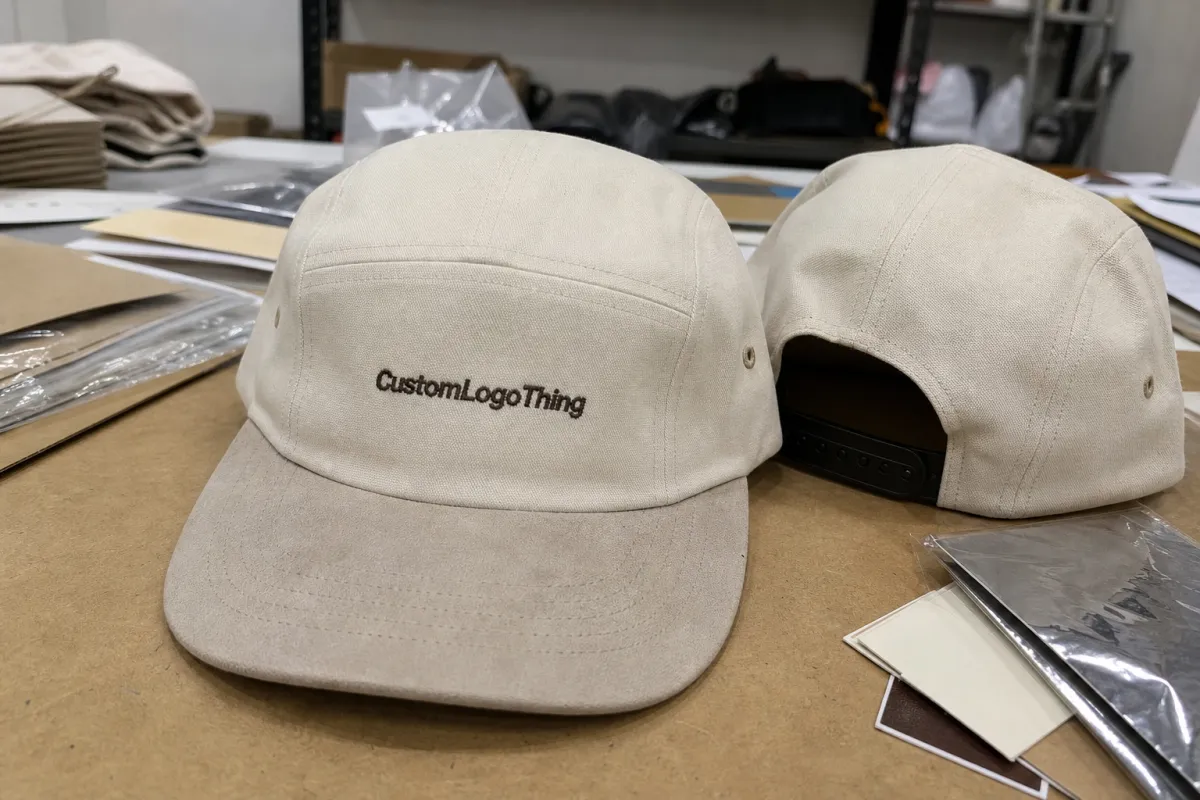
The five panel shape hides a lot of decisions. Buyers may focus on the logo, but production teams also need panel fabric, brim shape, crown structure, closure style, sweatband type, stitch count, and decoration method. Each choice can change the route through production and affect how quickly the order can start.
Embroidery needs digitizing. A woven label needs a separate approval and an attachment step. A patch may involve another supplier. Packaging can add more time if the order needs polybags, size stickers, barcode labels, or inserts. None of those steps is complicated on its own, but together they explain why turnaround is often longer than expected.
Material choice matters too. Cotton twill is common because it takes embroidery well. Washed cotton can show more variation in color and finish. Nylon and ripstop can support a sportier look, while recycled blends may have tighter availability or color-matching limits. Those are not pros and cons in the abstract; they are production variables that affect the quote and the calendar.
How the ordering process sets the timeline
The usual path is quote, artwork review, proof or sample, approval, purchase order, production, inspection, and freight booking. That sequence sounds orderly, but the pauses matter more than the order itself. A missing Pantone reference, a logo placement note without measurements, or an unclear construction spec can stop a job for days while details are confirmed.
Approvals often control the schedule more than sewing does. If the proof is waiting on internal sign-off, the line cannot start. That risk is higher with embroidery because digitizing usually happens before production. If artwork changes after the proof is approved, the setup may need to be redone, which can reset the clock.
Reorders are faster because the supplier already knows the construction, logo placement, and often the trim library. The order stays fast only if the buyer avoids changes. A new back closure, a different label position, or a switched patch construction can turn a repeat run into a fresh development cycle.
A realistic timeline should be split into separate blocks: proofing, production, and freight. A quote that says ten business days may only refer to sewing. It may not include art revision, sourcing, packing, or shipping. If the launch date is fixed, each block needs its own buffer.
| Order type | Typical setup | Indicative production window | Common price impact |
|---|---|---|---|
| Blank stock five panel cap | No decoration, standard closure | About 7-12 business days | Lowest unit cost |
| Embroidered logo cap | Digitizing plus one decoration location | About 10-16 business days | Moderate setup and labor |
| Woven label and embroidery | Two branded elements, more checks | About 12-18 business days | Higher than embroidery alone |
| Patch, custom packaging, and special trim | Multiple suppliers and extra inspection | About 18-28 business days | Highest setup and handling cost |
Packaging and transit standards matter as soon as the order leaves the factory. Many teams look to Packaging School and packaging resources for carton and material references, while ISTA shipping test standards help define how much abuse a shipper should survive before goods reach distribution. Those references do not speed up production, but they reduce surprises after production ends.
Cost and pricing levers that change the quote
Pricing on Five Panel Caps is shaped by the shell fabric, decoration method, quantity, trim selection, and setup burden. A one-color front embroidery mark is a different job from a large multi-color logo. A woven patch is different again, especially if it needs a specific border, shape, or backing.
MOQ matters because setup cost has to be spread across the run. A 200-piece order can carry the same digitizing and approval work as a 2,000-piece order, which is why smaller runs often cost more per cap. The lower the quantity, the less room there is to absorb labor and setup.
Typical adders are easy to underestimate. More thread colors, higher stitch density, and multiple logo placements increase machine time. A custom label adds artwork approval and attachment labor. Premium sweatbands, contrast underbrims, and specialty closures raise material cost even if they barely change the cap’s appearance in a mockup.
Digitizing is another line item buyers often forget. A simple logo may be inexpensive to convert, while fine lines, gradients, or small text can take more time to stitch cleanly on a small front panel. The fee itself is usually modest, but the real issue is whether the artwork needs to be simplified to work on the cap. In some cases, a patch or print route is more efficient than embroidery.
Rush service can shorten the calendar, but it usually adds cost. Faster freight, split shipments, overtime labor, and rework from late artwork changes can cost more than the decoration method itself. The better comparison is total landed cost, not unit price alone.
Production factors that stretch or compress lead time
Material availability is the first variable to check. If the exact fabric, thread color, patch stock, or closure is not already on hand, the schedule depends on sourcing instead of sewing. That is why two suppliers can quote very different timelines for what looks like the same cap.
Decoration method changes the pace as well. Clean embroidery is often efficient because the machine path is repeatable. Applique, layered patch work, and heat-applied elements create more handling and inspection steps. If the design sits on a curved front panel and needs exact placement, quality control slows down because the team has to verify consistency.
Domestic and offshore production behave differently. A local supplier may offer shorter transit and easier communication, but smaller capacity. An offshore supplier may provide better pricing or broader trim access, but the freight leg is longer and holiday interruptions can be more disruptive. Buyers who only compare sewing days can miss the real bottleneck.
Quality control can also extend the timeline when the program requires tight brand standards. Exact logo placement, color matching across fabrics and trims, and consistent stitching density all take time to verify. For retail drops, sponsorships, or staff uniforms, those checks are part of the product, not an afterthought.
Sustainability requirements can add sourcing steps too. Recycled fabrics, FSC-certified paper inserts, or lower-impact packaging are all workable, but they should be built into the calendar early because certified materials are not always stocked in every color or quantity.
Step-by-step planning moves that keep orders on schedule
Lock the spec before requesting a quote. Panel count, crown height, brim shape, closure type, decoration method, thread colors, label placement, and target quantity should already be written down. If the buyer is still choosing between structured and unstructured, the schedule cannot be estimated cleanly.
Set internal approval deadlines earlier than supplier deadlines. Marketing teams often need time to compare logo scale, thread colors, and packaging copy. The problem starts when those review loops happen after the factory has already promised a start date.
Use proofs and samples with intent. For a first order, a sample can be worth the extra time because it confirms fit, panel shape, and logo balance before production begins. For a reorder, a final proof may be enough if the spec has already been validated. The right path depends on risk.
Build the calendar backward from the real deadline, not the preferred one. Count proof time, production time, freight time, and a contingency window for revisions or carrier delays. If sea freight is involved, the cushion should be larger. If the order is traveling through peak season, the cushion should be larger still.
- Spec lock: confirm the full construction and decoration plan.
- Proof lock: approve artwork, placement, and colors.
- Production start: verify the factory slot and materials.
- Shipping confirmation: confirm carton count, carrier, and destination.
Carton count, packing method, and delivery destination deserve the same attention as the logo. A split shipment to multiple warehouses can change both the schedule and the freight cost. Buyers who know that detail up front can plan earlier and avoid last-minute rework.
Common mistakes that quietly add days or weeks
Changing artwork after proof approval is the fastest way to damage the schedule. In embroidery, that may mean the digitized file needs to be revised. In patch work, it may mean a new mold or print file. Either way, the order is no longer moving on the original path.
Color language causes more delays than most buyers expect. “Close enough” works in conversation, not in production. Use Pantone references where possible, especially for repeat programs. If the cap body, label, and packaging all carry branded color, keep those references together in one file.
MOQ mistakes also create friction. A very small order may not attract the most efficient line time, while a very large order may require a different production window altogether. Adding too many custom elements at once is another common problem. Multiple patches, specialty closures, custom interior branding, and retail packaging can all be done, but the bottleneck should be identified before the order starts.
Shipping assumptions are the last trap. A Friday production finish does not guarantee a Monday or Tuesday delivery. Carrier cutoffs, holiday closures, and port delays can erase a lot of confidence very quickly. The better plan is to book freight before the factory completion date, not after the caps are already waiting in cartons.
Expert tips for faster five panel cap reorders and launches
Keep a master spec file for every repeat order. It should hold the exact construction details, logo files, thread colors, patch dimensions, packaging notes, and approval history. The point is continuity. The next merch manager or buyer should be able to place the reorder without reconstructing the job from email threads and old PDFs.
Save approved artwork in one place and use clear version control. Include the file name, date, size, and placement notes. If the supplier can reuse approved files, there is less room for confusion and fewer chances of a subtle redesign slipping into production.
Ask what can be pre-booked. Fabric, trim, line time, and freight space may all be candidates. Pre-booking matters most during busy seasons, when the same factory line is running several headwear programs at once. A supplier with a confirmed repeat spec may be able to reserve more efficiently than one starting from scratch.
Use a launch checklist with four gates: spec lock, proof lock, production start, and shipping confirmation. If one gate slips, the cause of the delay is visible immediately. That makes future forecasting better and gives the team a clearer read on where time is being lost.
For buyers comparing vendors, ask for production days and transit days as separate numbers. Ask whether the quote includes sampling, packing standards, and any decoration setup fees. Some quotes only cover the cap body. Others include more of the program. The same brand Five Panel Caps lead time can sound shorter or longer depending on what was bundled into the estimate.
What buyers should remember
A branded five panel cap is a small item, but the schedule behind it is rarely small. The fastest programs are built on a locked spec, fast approvals, available materials, and a realistic freight plan. The slowest ones usually have changing artwork, unclear trim choices, and a deadline that assumes every step will go perfectly.
The practical meaning of lead time is simple: it is the sum of approvals, decoration setup, material availability, inspection, packaging, and transit. Buyers who separate those pieces get better dates and cleaner budgets. For retail drops, event programs, or staff orders, that distinction matters as much as the invoice does.
What is a realistic lead time for a first order of branded five panel caps?
First orders usually take longer because the supplier has to review artwork, confirm the construction, and often create a proof or sample. A realistic schedule depends on decoration method, quantity, and shipping mode, so ask for production and transit estimates separately.
Why does the turnaround for custom five panel caps change between quotes?
Quotes vary because one supplier may include sampling while another only prices production. Decoration complexity, MOQ, trim selection, and current factory load all affect timing. Compare the scope of the quote before comparing the number of days.
Can rush production shorten the turnaround on branded five panel caps?
Yes, but only if the factory has open capacity and the materials are already available. Rush service usually costs more and may limit decoration or packaging options. It still depends on fast approvals from the buyer side.
How does MOQ affect pricing and lead time for five panel caps?
Lower quantities usually raise the unit price because setup and decoration costs are spread across fewer pieces. Smaller runs may also be harder to schedule efficiently. If the order is small, ask whether a reorder-friendly spec can lower future cost and shorten the next cycle.
What should I send to get an accurate quote for five panel caps?
Send the target quantity, logo files, panel color breakdown, closure type, decoration method, delivery deadline, and any packaging requirements. Include whether you need a sample, special labels, or split shipping. The clearer the brief, the more dependable the timeline will be.

