For buyers comparing Apparel Five Panel Caps unit cost, the first question is rarely style. It is whether the build can be simplified enough to protect margin without making the cap feel generic or flimsy. A five-panel cap gives you a useful starting point: fewer seam intersections, a broad front panel for decoration, and less sewing complexity than more segmented silhouettes. Those small differences matter once the order leaves the sample room and turns into hundreds or thousands of units.
The smartest quote is the one that shows where the money goes. Fabric, decoration, closures, sampling, packaging, and freight do not behave the same way. If those parts are separated early, buyers can trade features with eyes open instead of asking for a vague “best price” and hoping the result holds up.
Why Five-Panel Caps Can Cut Sew Time and Waste
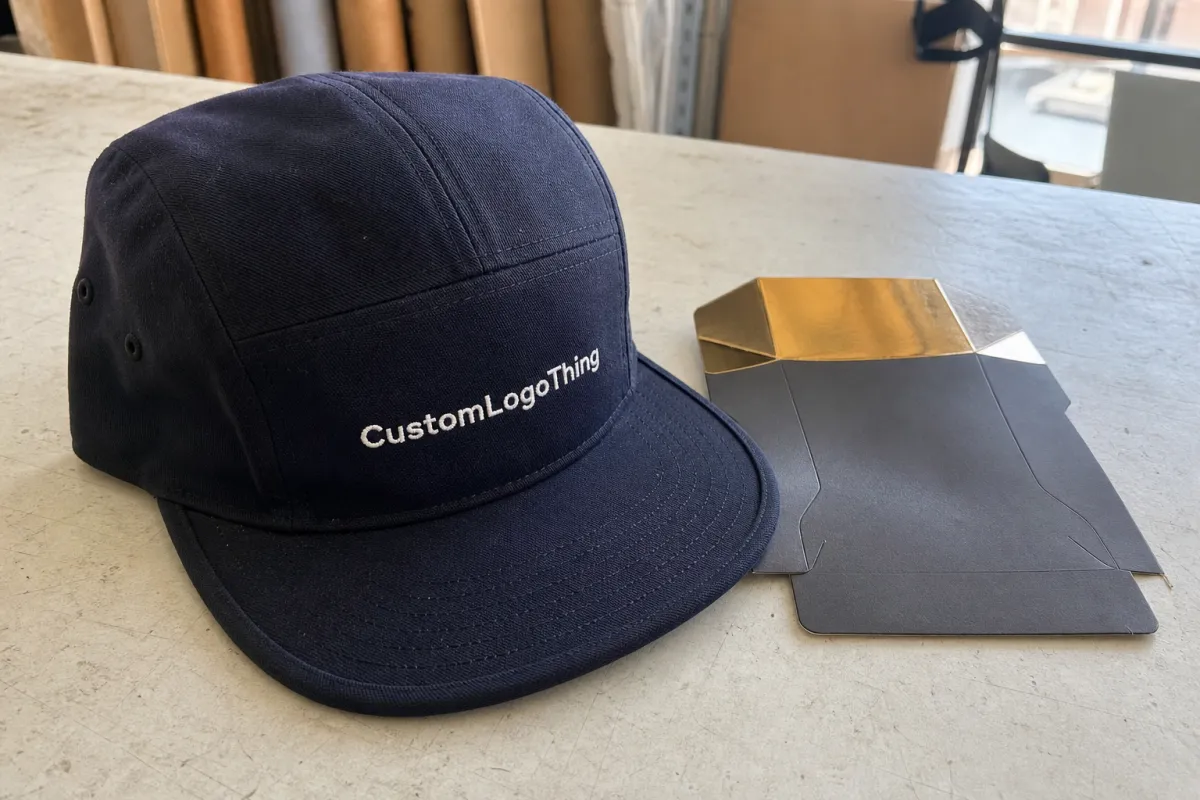
A five-panel cap uses one front panel, two side panels, and two rear panels. That sounds simple because it is. The commercial effect is broader than the silhouette suggests. Fewer seam intersections usually mean fewer alignment checks, less handling on the sewing line, and a cleaner front area for logos, woven patches, or embroidery. On a 300-piece run, the savings can look modest. On 3,000 units, even a small reduction in labor time starts to move the quote.
The front panel is also easier to work with from a branding standpoint. It is wider and flatter than the front of many six-panel caps, which helps when the logo is large, centered, or requires a patch with clean edges. That can reduce artwork compromises. It can also reduce the number of rejected samples when the design has to fit a specific retail layout.
Still, five-panel caps are not automatically the cheapest option in every situation. A structured six-panel cap can be more efficient if the buyer wants a firmer crown, heavier front buckram, or a standard athletic profile that the factory already runs at scale. Some programs need that extra structure because the cap has to keep its shape after repeated wear or rough packing. The right choice is the silhouette that matches the target shelf price and the customer expectation, not the one with the fewest obvious parts.
In practice, the most cost-efficient five-panel order usually starts with a restrained spec sheet: standard cotton twill, one-color embroidery, a simple snapback, and no decorative extras that force extra handling. Add specialty fabric, custom inner tape, molded patches, or a more complex closure, and the labor advantage narrows quickly.
Build Options That Change the Product You Are Pricing
Fabric choice affects feel, appearance, and the unit number on the quote. Cotton twill is the common baseline because factories know how to cut and sew it, and it behaves predictably in bulk. Washed cotton gives a softer hand and a more casual finish, but that wash can add cost and sometimes creates color variation from lot to lot. Nylon is lighter and works well for performance or outdoor positioning. Ripstop gives the cap a more technical look and better tear resistance. Blends can improve shape stability or control shrink, although the outcome depends on the actual fiber ratio and finishing.
The crown structure matters just as much. A structured crown includes reinforcement in the front panel so the cap stays upright. That usually supports better logo presentation, but it adds material and labor. An unstructured crown feels softer, packs flatter, and usually reads more relaxed. Crown height changes the commercial look too: a shallow profile can feel more fashion-led, while a higher crown can feel promotional. The visor also changes cost slightly. A flat visor or lightly pre-curved visor is common. A heavily curved visor, contrast undervisor, or extra row of stitching adds steps.
- Cotton twill: dependable baseline fabric and usually the most predictable starting point for bulk pricing.
- Washed cotton: softer hand and a more casual look, but often a little more expensive.
- Nylon or ripstop: lighter weight and more technical in appearance, useful for activewear or outdoor accounts.
- Blends: helpful when the buyer wants better shape retention or lower shrink risk.
Decoration is where quotes begin to separate. Flat embroidery is often the best value for a simple logo because setup is straightforward and the result is durable. Woven patches work better for fine linework or multi-color art that would be inefficient to stitch directly. Printed graphics can be cost-effective in low-volume runs if the artwork is flat and the fabric accepts the print system cleanly. Sewn labels are economical for small branding marks. 3D puff embroidery can lift perceived value without forcing a premium build, although it adds some complexity to stitch planning.
Closures are not a minor line item. A plastic snapback is usually the most price-friendly because it is fast to assemble and easy to adjust across buyers. Strapbacks, metal buckles, and fabric-and-slide closures can suit fashion or premium retail positioning, but they usually add labor. Sweatbands matter as well. Standard polyester sweatbands are common. Cotton sweatbands and branded jacquard sweatbands can raise both material cost and sewing time.
Packaging is often omitted from the first quote, which is a problem. A basic polybag is inexpensive. If the customer expects hangtags, size stickers, insert cards, carton labels, or retail-ready packing, those items need to be priced from the start. For programs with sustainability targets, buyers may want to check whether cartons or inserts can be FSC-certified. The FSC standard is not a decoration issue, but it can affect packaging decisions and reporting.
From a packaging standpoint, it helps to separate “cap spec” from “pack-out spec.” The cap can stay simple while the packaging is highly customized. That keeps the price discussion honest and avoids mixing product cost with retail presentation cost.
“The cheapest-looking quote is often the most expensive order once revisions, packaging, and freight are added back in.”
Specs Buyers Should Lock Before Requesting a Quote
A factory can only quote cleanly when the spec is complete. The most common mistake is sending a logo and a color name, then expecting the supplier to fill in everything else. That creates back-and-forth. Back-and-forth costs time, and time is where many cap orders quietly lose margin.
- Panel proportions: confirm five-panel layout, panel widths, seam direction, and front-panel height.
- Visor style: flat, lightly curved, or fully curved; note any contrast undervisor request.
- Structure: structured or unstructured, plus any front reinforcement requirement.
- Stitch density: important for embroidery appearance and for comparing one supplier’s quote to another’s.
- Eyelets: embroidered eyelets or sewn eyelets, with color matching if needed.
- Sweatband: material, width, branding, and whether moisture management is required.
- Closure: snapback, strapback, buckle, hook-and-loop, or fitted size run.
Color control can swing the quote more than many buyers expect. If a brand needs strict PMS matching, the factory may need extra dye control, more approval time, and sometimes a minimum fabric order. Thread matching works the same way. A specific thread shade may exist, but if the supplier has to source it separately, setup charges rise and the schedule stretches. Patch materials can behave the same way. Embroidered patches are usually straightforward. PVC, molded rubber, and metal badge styles often introduce tooling fees.
Artwork readiness is another pricing trigger. Vector files reduce uncertainty. Raster art that needs cleanup, tracing, or digitizing adds setup work before the factory reaches sample sewing. The same is true for stitch maps, patch borders, and tiny type inside a logo. If the design is not production-ready, the price should reflect that work instead of hiding it inside a padded bulk number.
Ask about placement rules too. A centered front logo is simple. A logo placed off-center, repeated on the side, or split across multiple surfaces changes the embroidery path and the approval process. Small placement changes can alter both labor and lead time.
For buyers who want a supplier benchmark, public packaging and transit standards such as ISTA for transport testing and the educational resources at packaging.org can help frame the questions. Those references are not cap-specific rules, but they help procurement teams think more clearly about cartons, handling, and shipping risk.
Apparel Five Panel Caps Unit Cost, MOQ, and Pricing Breakpoints
Most quotes for apparel five panel Caps Unit Cost follow the same pattern: base cap price, decoration, setup charges, sampling, packaging, and freight. The problem is that many buyers focus only on the unit line price. The real number is landed cost per piece, which includes everything needed to put the cap in the customer’s hands.
MOQ changes the picture quickly. A 300-piece run usually carries a higher cost per piece than a 1,000-piece run because the same setup effort is spread over fewer units. A 5,000-piece order can unlock better bulk pricing, but only if the spec stays controlled. If the build gets too complex, the discount can disappear into extra labor and packaging upgrades.
| Order Size | Typical Spec | Estimated Cost per Piece | Best Fit |
|---|---|---|---|
| 250-500 pcs | Cotton twill, 1-color embroidery, snapback | $4.20-$7.50 | Small brand drops, pilots, event programs |
| 1,000 pcs | Standard fabric, 1-2 color decoration, basic packaging | $2.10-$4.10 | Core retail tests, team programs, reseller orders |
| 3,000 pcs | Better fabric consistency, woven patch or embroidery | $1.65-$3.20 | Scaled promotions, brand launches, wider distribution |
| 5,000+ pcs | Optimized spec, stable fabric, simple pack-out | $1.40-$2.75 | High-volume retail, licensed programs, large campaigns |
These are working ranges, not promises. Soft-touch fabric, dense embroidery, contrast stitching, or custom inner tape can move the order upward. Extra thread colors, side embroidery, brushed brass buckles, and specialty stitching can do the same. On the other hand, buyers can often reduce the number by choosing a standard shell fabric, keeping decoration to one area, and simplifying packaging.
Two fees deserve special attention. First, setup charges, which can cover digitizing, screen prep, pattern work, or proof prep. Second, tooling fees, which appear when the decoration method requires a mold or custom hardware. If a quote hides those costs inside a low-looking unit price, compare it carefully against a more transparent offer. The hidden-fee quote can become the more expensive one very quickly.
Freight changes the landed number more than many procurement teams expect. Ocean freight is usually cheaper per unit, but it extends the schedule and increases planning pressure. Air freight moves fast, but it can erase most of the savings from a low factory quote. A cap order that looks efficient on paper can become marginal once shipping and domestic receiving costs are added.
One practical rule: if the supplier’s MOQ is set per color, per logo, or per decoration method, ask for the math in writing. That simple question prevents expensive misunderstandings.
Production Steps, Sample Approval, and Lead Time
A clean order usually moves through the same sequence: brief, mockup, sample, approval, bulk production, inspection, and shipment. A buyer who understands that sequence can manage timing instead of reacting to it. The first delay point is usually the mockup, because unclear art or incomplete specs force revisions. The second delay point is sample approval, because color notes, placement comments, and decoration corrections often arrive in separate rounds.
For planning purposes, a sample can often take about 5-10 business days, depending on the decoration method and whether the factory already has the fabric in stock. Bulk production is often around 12-20 business days after approval for straightforward orders, though more complex builds can take longer. If the supplier is waiting on specialty fabric, custom trims, or a new patch process, the clock starts later than buyers expect.
Where do schedules slip most often? Slow art approval. Missing color confirmation. Late packaging decisions. Stock gaps in fabric or closures. Those are ordinary problems, not rare ones. The buyer who sends a complete RFQ and answers quickly usually gets a better schedule than the buyer who asks for “urgent” after the process is already in motion.
Shipping deserves its own place in the schedule. An order can finish production on time and still miss the delivery window because freight mode was chosen too late. Ocean freight may be ideal for a planned retail program. Air freight may be necessary for a launch or event date. If the caps ship in cartons with retail packaging, ask whether the carton spec has been reviewed against transit handling expectations. Standard programs often refer to ISTA profiles or ASTM transit concepts when the shipment is sensitive to compression, drop, or moisture exposure.
From a buyer’s perspective, the best production plan leaves room for one revision without creating chaos. That is another reason a clear spec sheet is valuable: it shortens the approval loop and protects the delivery date.
What a Manufacturer-Direct Quote Should Include
Manufacturer-direct pricing should be easy to compare. If it is not, the quote is incomplete. Strong quotes separate the order into clear line items so the buyer can see what changes the total. That usually means the supplier identifies the cap base, decoration, setup, sampling, packaging, and freight separately. If one supplier bundles those items and another separates them, the buyer is not comparing like with like.
Proofing options reduce risk in different ways. A digital mockup is fast, but it only shows the concept. A photo sample gives better visual confirmation. A pre-production sample is more useful when the order has complex fabric or decoration. A shipped physical sample is the safest choice when the buyer needs to verify handfeel, color, or packaging before bulk starts. Each option has a cost, but the cost of approving the wrong thing is usually higher.
Quality control should also be visible in the quote. Ask how the factory checks stitch count, decoration placement, sizing, and carton packing before dispatch. Ask what measurement tolerance they use for the crown and visor. Ask whether there is a final inspection step and what happens if the sample approval language and the bulk output do not match. These are normal procurement questions for any branded product.
A clear quote does three things well: it tells you the actual cost per piece, it shows what creates the MOQ, and it makes the approval path visible before the purchase order is issued.
There are warning signs too. Vague MOQ language. No timeline. No revision policy. No mention of packaging. A quote that says “all included” without defining what is included. Those are signs the supplier may still be filling in the numbers. For a transactional order, that is not enough.
Another common mistake is asking for the lowest possible quote and then adding details later. That almost always backfires. The factory reprices the job, and the new number is usually less friendly than the first one would have been with the full spec in place.
Next Steps to Lock the Order and Reduce Risk
If the goal is a fast, accurate quote, send a complete RFQ package. Include quantity, target delivery date, cap color, fabric preference, decoration method, closure style, packaging requirements, and destination port or delivery address. If the brand has a target retail price, include that as well. It helps the supplier work backward from margin instead of guessing.
- Send the exact quantity split: total units, color breakdown, and whether the MOQ applies per color or per design.
- Attach the artwork correctly: vector file, placement notes, thread or patch references, and any PMS targets.
- Ask for two paths: one preferred spec and one lower-cost alternate so you can compare tradeoffs immediately.
- Confirm sample rules: revision limit, approval method, and whether the sample fee is credited back on bulk.
- Lock freight terms: incoterms, carton count, and whether packing is retail-ready or bulk packed.
That last point matters because the lowest factory quote is not always the best commercial answer. A slightly higher unit price can still win if it shortens lead time, reduces sample churn, or avoids hidden setup charges. Buyers who track apparel Five Panel Caps unit cost properly tend to make better margin decisions, and they do it faster.
If you want a quote that is worth comparing, confirm the exact inputs, send the full spec sheet, and ask for the apparel Five Panel Caps Unit cost in both the preferred build and a leaner alternate build.
What drives apparel five panel caps unit cost up or down?
Fabric choice, decoration method, and order quantity usually have the biggest impact on price. Extra colors, specialty closures, and packaging upgrades can move the quote faster than buyers expect. Rush timing and shipping method can change the landed unit cost even if the factory price stays flat.
What MOQ should I expect for custom five panel caps?
MOQ varies by supplier, decoration method, and whether the cap is blank or fully custom. Embroidered and patch-decorated runs often start at a practical production minimum rather than a strict retail-style quantity. Ask whether the MOQ applies per color, per design, or per decoration type so the quote is read correctly.
How do samples affect five panel cap pricing?
Some suppliers charge a sample fee that is separate from bulk pricing. If digitizing, mold work, or special materials are needed, the sample can cost more than a standard proof. A paid sample can still save money by preventing bulk mistakes and rework.
Which decoration method gives the best value on five panel caps?
Simple embroidery is often the best balance of durability, setup speed, and perceived value. Woven patches can be efficient for detailed logos, while print may be better for low-volume graphic work. The best value depends on artwork complexity, order size, and the look the buyer needs.
What should I send to get an accurate quote for five panel caps?
Send your quantity, deadline, cap color, fabric preference, closure type, and decoration method. Include artwork files, placement instructions, packaging needs, and any target sample date. The more complete the spec sheet, the faster the supplier can return a firm quote instead of a placeholder.


