Brand Flat Bill Snapbacks Unit Cost: What Buyers Actually Pay
If you are pricing brand Flat Bill Snapbacks unit cost, do not start with the blank cap. The finished hat is built from the shell, decoration method, setup work, packaging, and freight. Miss one of those pieces and the quote can look low while the landed cost rises later.
Flat Bill Snapbacks are popular because they give logos a large, clean surface and hold shape well in photos, retail, and promo programs. That flexibility also means the same silhouette can cost very different amounts depending on quantity, decoration, and how exact the spec has to be.
The number that matters is the landed cost per unit after decoration, labeling, freight, and any special packing. A $4.20 blank with $2.10 in embroidery, $0.45 in labeling, $1.35 in freight, and $0.30 in carton handling is not a $4.20 hat. It is a different product decision entirely.
“The blank is rarely the expensive part. The expensive part is comparing quotes that do not describe the same finished product.”
Brand flat bill snapbacks unit cost: what changes the number
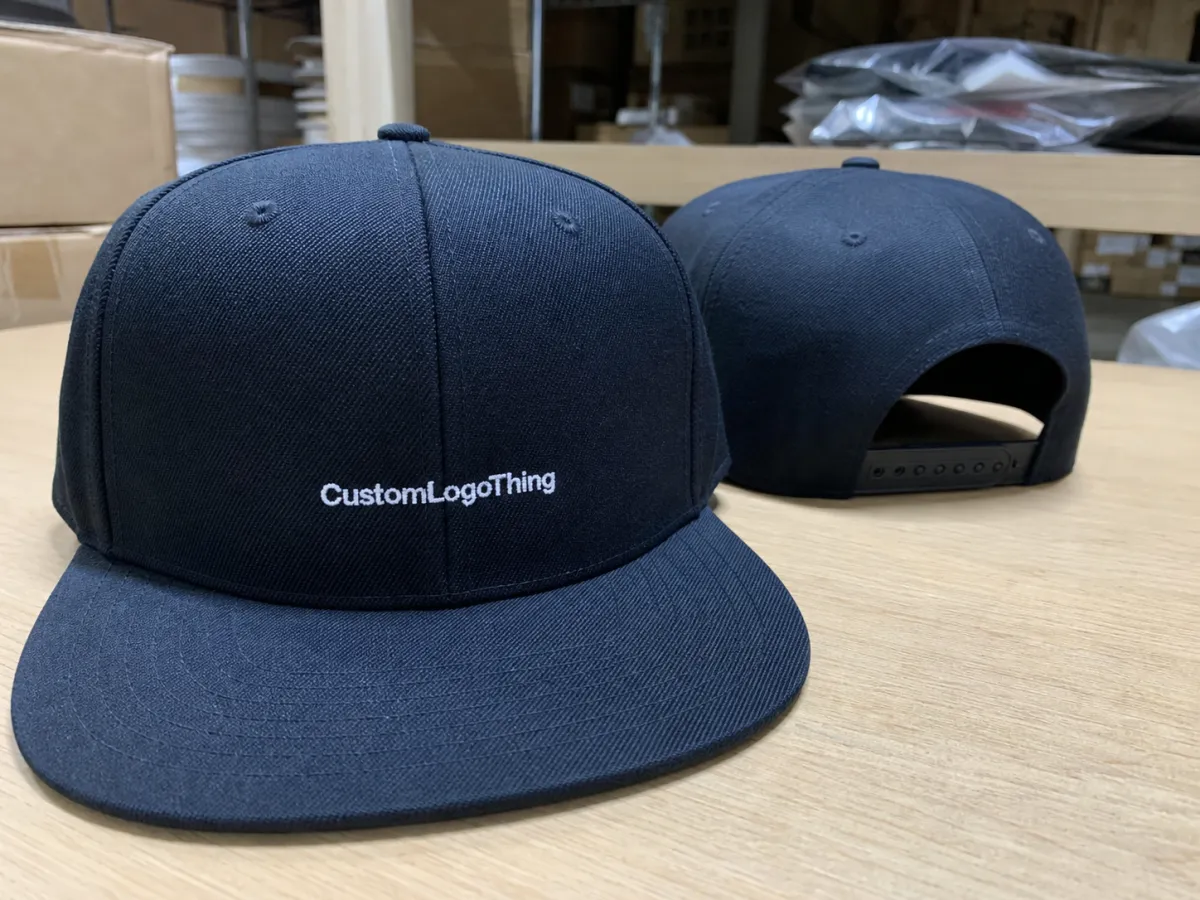
The phrase brand flat bill snapbacks unit cost sounds simple, but the pricing stack behind it is not. Blank cap cost is only one layer. Decoration labor, digitizing, patch setup, thread count, color matching, QC, packaging, and freight all move the final number.
Order quantity is the clearest breakpoint. A 50-piece order often carries nearly the same proofing and setup time as a much larger run, so the unit cost looks high even when the factory is pricing normally. At 500 pieces, those fixed steps spread out and the unit price usually drops.
Decoration complexity changes the math fast. One front logo in one thread color is straightforward. Front embroidery plus a side hit, a back mark, or a dense multi-color crest is not. Stitch count matters because it affects machine time and operator attention, so ask for that number instead of settling for “embroidered logo.”
Material choice also shifts both price and perception. Cotton twill feels classic and works well with embroidery. Polyester can improve color consistency. Wool-blend fronts lean traditional. Mesh panels move the cap toward sport or workwear. Each fabric affects how the hat takes thread, ink, or patches.
Packaging and shipping can change the quote more than buyers expect. Polybags are cheap. Hang tags, tissue, individual boxes, and special inserts add handling time and cost. A slightly cheaper unit price can disappear once cartons are packed, labeled, and shipped.
Decoration choices that change the final hat
Decoration is the main reason two flat bill snapbacks with the same base shell can land at very different prices. The method changes labor, setup, appearance, and failure risk. The right choice depends on whether the goal is retail polish, promo volume, or something in between.
Embroidery is still the default for a reason. It is durable, familiar, and usually the cleanest route for one-location front hits. The price rises with stitch count and color changes, so a simple wordmark often stays efficient while a dense icon or crest pushes the cost up.
Woven patches are useful when the artwork has fine lines or small details that embroidery would blur. They give a crisp look and can feel more premium, but they add a separate manufacturing step and attachment labor. That is still worth it if it protects the logo.
PVC patches create a bolder, more dimensional look. They read well from a distance and hold contrast, but they are not the right fit for every brand identity. They can also introduce tooling or mold costs, which are easier to absorb on larger runs than on small ones.
Printed labels and heat-applied graphics are lighter visually and often help when the budget is tighter or the art is minimal. Mixed builds can look polished, but every added layer adds labor, inspection, and another chance for error. Extra complexity should earn its place.
| Decoration method | Typical look | Cost pressure | Durability | Best fit |
|---|---|---|---|---|
| Embroidery | Classic, built-in, familiar | Low to moderate; rises with stitch count and color changes | High | Retail basics, team merch, standard branded runs |
| Woven patch | Clean detail, sharp edges | Moderate; patch setup adds a separate step | High | Detailed logos, sharper brand presentation |
| PVC patch | Bold, dimensional, modern | Moderate to high; tooling can raise the entry cost | High | Streetwear, high-contrast branding, statement pieces |
| Printed label | Light, minimal, flat | Usually lower on simple graphics | Moderate | Promo programs, budget-conscious campaigns |
| Mixed build | Most layered, most premium-looking | Highest labor and QC load | High if managed well | Retail collections, higher-margin launches |
If the logo is simple, single-location embroidery often gives the best balance of price and presentation. If the art is detailed, a patch can protect clarity better than forcing a dense sewout that turns the design into texture. That choice affects not just looks but also the chance of rework.
Specs to confirm before you approve samples
Samples are where hidden assumptions finally surface. A cap can look correct in a mockup and still feel wrong in hand because the crown sits too high, the bill is curved more than expected, or the closure feels flimsy. Before approval, make the spec sheet do the work.
Crown height changes the silhouette more than many buyers expect. A higher crown feels sharper and gives logos more vertical space. A lower crown feels closer to workwear or sport. Neither is wrong, but they do not communicate the same thing.
Bill shape also matters. Flat bill snapbacks should look intentional, not half-flattened. If the visor curves too much, the style changes. If it is too stiff without enough structure, the cap can feel awkward. A good sample confirms both appearance and how the brim holds up after packing.
Structured vs. unstructured affects both decoration quality and consistency. Structured crowns support embroidery better and keep the front panel clean for photography. Unstructured caps feel softer, but they do not hold the same visual authority.
Closure style affects cost and comfort. Standard plastic snaps are usually the most economical and common. Metal hardware, specialty straps, or custom closures raise the price and can raise the defect risk as well.
Fabric and color need real samples because thread, dye, patch backing, and printed labels do not behave the same way. Pantone references help, but they do not erase material differences. Check the inside of the hat too: sweatband softness, seam finishing, and label placement all affect perceived quality.
If the order needs inserts or paper components, FSC-certified stock is a practical standard to request. The chain-of-custody system is straightforward to verify through FSC standards and certification. For packaging reduction, the EPA’s guidance on source reduction is also useful: EPA source reduction guidance.
Pricing, MOQ, and quote breakpoints that matter
MOQ is a pricing signal, not just a factory rule. Lower quantities usually carry heavier setup burden per unit, especially when the build needs digitizing, patch tooling, or separate attachment work. The better question is how the price changes at each breakpoint.
For flat bill snapbacks, common breakpoints are around 50, 100, 300, 500, and 1,000-plus units. A 50-piece run has nearly the same proofing and setup load as a bigger order, which is why the unit price feels steep. At 500 pieces, the same prep is diluted more effectively.
Setup fees should always be visible. Embroidery digitizing may land around $20-$60 depending on artwork complexity and file cleanup. Patch tooling or mold prep can cost more, especially for PVC. Label setup is usually smaller, but it still belongs on the quote.
| Quantity | Embroidery-only | Patch build | Mixed-decoration build | What usually changes |
|---|---|---|---|---|
| 50 pcs | $8.50-$15.00 | $10.50-$18.00 | $14.00-$24.00 | Setup dominates; freight has a bigger impact |
| 100 pcs | $6.75-$11.50 | $8.50-$14.50 | $11.00-$18.00 | Setup starts to soften, but not disappear |
| 300 pcs | $4.75-$8.25 | $6.25-$10.50 | $8.50-$14.00 | Material and labor separate more clearly |
| 500 pcs | $4.10-$7.10 | $5.40-$9.20 | $7.50-$12.50 | Better spread on setup and packing |
| 1,000+ pcs | $3.50-$6.00 | $4.80-$8.00 | $6.50-$10.50 | Volume helps, but freight still matters |
Those ranges assume a standard retail-style snapback with one main decoration zone, ordinary packaging, and no unusual trim. Add multiple placements, specialty closures, heavier fabric, or unusually detailed art and the range shifts upward.
Freight can erase a savings advantage fast. A quote that is $0.40 cheaper per unit may become more expensive once cartons are packed poorly or the shipping mode changes. Compare unit cost, setup, MOQ, packing style, and freight together.
Process, production steps, and turnaround from proof to ship
Good production has a sequence. The fewer surprises inside that sequence, the more predictable the schedule and the less likely the budget is to drift.
- Spec review - confirm crown style, bill shape, closure, fabric, color count, and decoration method.
- Digital proof - review placement, size, stitch direction, thread colors, patch border, or label position.
- Sample or preproduction approval - sign off on the exact build before bulk starts.
- Bulk production - blanks are decorated, trimmed, inspected, and packed.
- Quality control - check stitching, alignment, color consistency, and closure function.
- Packing and shipment - cartons are counted, labeled, and booked for freight.
Under normal conditions, proofing can take one to three business days if the artwork is clean and the spec sheet is complete. Bulk production commonly lands in the 10-20 business day range, though that shifts with factory load, blank availability, and the number of revisions requested after proof. Rush orders are possible on some programs, but the price rises.
Approval timing matters. Once the proof is signed off, changes are not free. Swap the closure, move the logo, revise the color count, or request a different packaging format and the schedule may reset. That is the cost of interrupting a fixed production run.
Shipping mode is part of the timeline. Air freight is faster and more expensive. Ocean freight is cheaper and slower, and it needs more planning. If the hats are going into retail cartons or display-ready packing, test the carton spec against the transit method. The International Safe Transit Association publishes useful package-performance standards here: ISTA testing standards.
For buyers trying to control brand flat bill snapbacks unit cost, the real schedule risk is often back-and-forth, not sewing speed. Missing dimensions, unclear art files, and vague notes like “make it pop more” create delay or rework. Tight specs reduce that friction.
How to compare suppliers without paying for avoidable mistakes
Price matters, but price alone is a weak buying tool. Two suppliers can quote similar numbers and still deliver very different results. One may be strong on stitching but weak on packing. Another may be fast but loose on shade consistency.
Ask for photos of recent flat bill snapback work, not catalog imagery. Real production photos show edge quality, logo placement, crown shape, and what the cap looks like after decoration. If a supplier cannot show recent work, you are being asked to trust a render instead of a result.
Ask how defects are handled. Ask whether they rework, replace, or credit. Ask how they define a defect, especially on logo placement and color matching. Ask whether there is a tolerance range for stitch alignment and crown dimensions. If the answers are vague, the buying risk is not vague.
Reorder consistency matters more than many first-time buyers expect. The first batch may look strong, but the real test is whether the second and third orders match the first one closely enough that the line looks like one product family. Thread colors, patch backing, label placement, and crown profile should stay steady.
Sometimes the higher quote is the cheaper one. Clearer proofing, better QC, and tighter packing can reduce reships and dead stock. The savings may not show up in the first invoice, but they do show up later in fewer complaints, fewer replacements, and less discounting.
Next steps: send the right details and get a clean quote
If you want a useful quote, send the details that move the number: quantity, logo file, decoration method, color count, closure style, fabric preference, target delivery date, and ship-to location. Leave out the destination and freight is only a guess. Leave out the logo file and the proof will probably require corrections.
Ask for two pricing paths. One should match the spec you really want. The other should be a cost-down version that helps you compare tradeoffs. That makes it easier to see whether a material change, a simpler decoration method, or a different packaging choice can improve brand flat bill snapbacks unit cost without hurting the overall look.
Also ask for sample timing and approval deadlines before the order is placed. A slightly nicer quote means little if the hats miss the retail window or arrive after the event. The smartest buying move is usually the least dramatic one: lock the spec, compare landed cost, understand the setup fee, and approve only when the sample matches the intended build.
What affects brand flat bill snapbacks unit cost the most?
Setup fees, decoration complexity, and order quantity usually move the number more than the blank cap itself. Freight also matters, so compare landed cost rather than stopping at the base unit price.
What MOQ should I expect for custom flat bill snapbacks?
MOQ depends on decoration method, blank availability, and whether the design needs special components. Simple embroidery usually allows lower minimums than patch-heavy or fully custom builds.
Is embroidery cheaper than patches for branded flat bill snapbacks?
Single-location embroidery is often cheaper on small to mid-size runs because it is direct to produce. Patches can cost more upfront, but they may be the better choice for detailed artwork or a more premium finish.
How long is the usual turnaround on snapback orders?
Proofing often takes a few days if the specs are clear and the artwork is ready. Bulk production is commonly measured in weeks, not days, and shipping time adds on top of that.
What details do I need for an accurate flat bill snapback quote?
Send quantity, artwork, decoration method, color count, closure style, fabric preference, target delivery date, and ship-to location. If you want a useful quote, ask for setup charges and sample timing up front.


