Most buyers assume Unstructured Dad Hats unit cost should be almost boring: choose a cap, add a logo, receive a price. Then the quote arrives and the numbers look less friendly than the product. The cap shape is rarely the problem. Fabric choice, closure style, decoration method, setup work, and shipping tend to do the real damage.
That mismatch is why a hat that feels visually simple can still carry a meaningful price spread. A soft crown with a curved brim sounds straightforward. In production, it is not always that tidy. Washed cotton behaves differently from chino twill. A leather patch is not the same as a small embroidered mark. A metal buckle adds a different kind of labor than a fabric strap. Each decision changes the bill, sometimes by cents and sometimes by dollars.
The useful way to think about Unstructured Dad Hats is this: you are not buying a shape. You are buying a stack of choices that happen to wear a shape. The cleaner the spec, the cleaner the quote. The vaguer the spec, the more likely the order gets padded with caution, revision time, or the cost of somebody else having to make assumptions.
Why a simple dad hat can still quote higher than expected
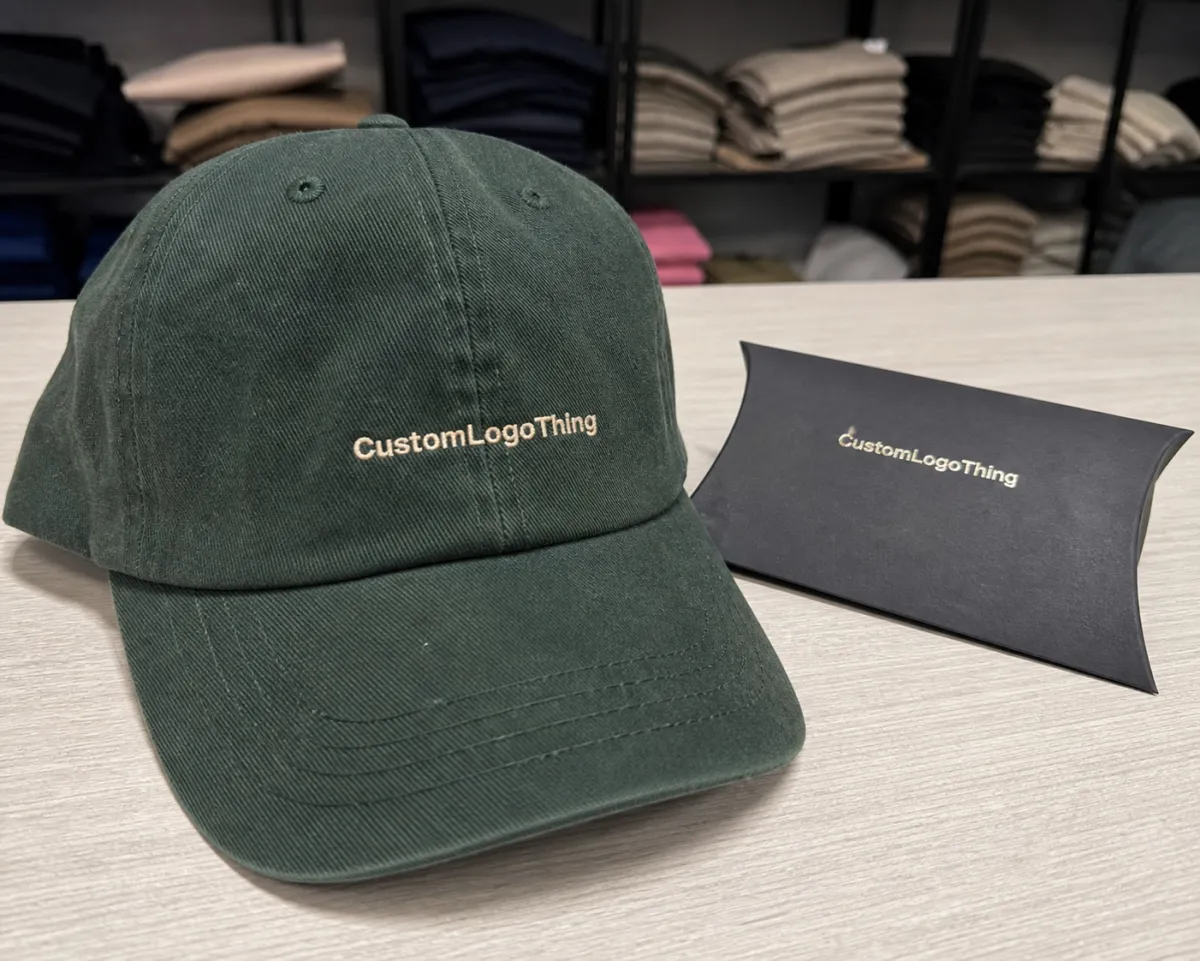
Two hats can look nearly identical online and still price several dollars apart. One may use standard cotton twill, one front embroidery, and a plain strap-back closure. Another may use washed cotton, a denser thread count, a branded metal buckle, and a patch that needs separate tooling. Same broad style. Different production path.
That is the first trap for buyers. They shop by appearance, but factories price by construction. Low-profile, unstructured caps can even be a little more finicky than stiff structured hats because the crown has less internal support. Stitch tension, sweatband finish, and panel consistency matter more than people expect. If the crown collapses awkwardly or the brim sits unevenly, the hat reads cheap immediately.
Three things tend to move the number fastest:
- Fabric: cotton twill, chino twill, brushed cotton, and washed cotton do not sit in the same cost band.
- Decoration: flat embroidery, 3D puff, woven patches, leather patches, and transfer printing all carry different labor and setup.
- Packaging and freight: a modest hat can become expensive if it needs retail-ready packing or a rushed shipping method.
The cleanest comparison is the one built on identical specs. Same mockup, same closure, same fabric, same logo placement, same quantity. Anything less is not a real comparison. It is a guess dressed up as sourcing.
What you are actually buying in an unstructured dad hat build
An unstructured dad hat is usually a soft-crown, low-profile cap with a curved brim and an easy fit. The appeal is casual, but the construction still has to be controlled. Without enough consistency in the shell, the crown can wrinkle in odd places, the front panel can buckle after wear, and embroidery can distort the look instead of improving it.
Fabric is the first real decision. Cotton twill is the baseline for many buyers because it is familiar, durable enough for everyday use, and usually cost-effective at scale. Chino twill has a slightly cleaner face and often feels a touch more retail-ready. Brushed cotton softens the hand-feel. Washed cotton gives the relaxed, broken-in look many brands want, but washing adds an extra process step and can push unit cost upward.
Decoration matters just as much. Flat embroidery is efficient for simple logos and text. 3D puff can look sharper on bold marks, but it increases machine time and material usage. Woven patches handle detailed artwork well, though they add a manufacturing step before the patch ever reaches the cap. Leather patches read premium and can work beautifully for minimal branding, but they are not cheap simply because the logo is small. Small does not mean simple.
Then there is trim. A better sweatband, cleaner inner taping, balanced eyelets, and a well-finished closure improve both appearance and durability. These are the details that separate a hat that holds its shape from one that feels disposable after a few wears. For promo orders, some of that can be trimmed back. For retail, leaving the trim too bare usually hurts perceived value more than it saves.
One practical rule helps avoid bad quotes: lock the spec before pricing. If one supplier is quoting washed cotton with a buckle and another is quoting standard twill with a strap, the numbers are not competing. They are describing different products.
Unstructured Dad Hats Unit Cost: Specs That Move The Number
If there is one useful lens for Unstructured Dad Hats unit cost, it is this: the cap silhouette is only one variable, and usually not the most expensive one. The bigger swings come from material weight, decoration complexity, closure style, and the amount of setup work required before production can even begin.
Below are the most common levers, stripped down to the practical effect they have on pricing:
- Material weight: heavier twill typically costs more than lighter cotton, especially in small runs.
- Stitch count: dense embroidery takes longer on machine time and pushes labor higher.
- Thread colors: more colors often mean more handling, more approvals, and more chances for delay.
- Decoration size: a large front logo is not the same as a small, simple mark.
- Closure style: strap-back, buckle, snap, and metal hardware all affect assembly time and material cost.
Artwork complexity is another quiet cost driver. A clean one-color logo with thick lines is easy to digitize and easier to produce. Tiny type, thin outlines, gradients, or multiple placements usually create more prep work and more risk during production. If a design has to be simplified before it can be embroidered, that revision is part of the job cost. It does not vanish just because it is inconvenient to talk about.
| Option | Typical added cost per hat | What drives the price | Best use case |
|---|---|---|---|
| Flat embroidery | $0.60-$1.80 | Stitch count, logo size, thread colors | Simple branded hats and promo runs |
| 3D puff embroidery | $1.25-$2.95 | Extra material, machine time, larger lettering | Bolder retail-style front logos |
| Woven patch | $0.90-$2.25 | Patch production, attachment labor, finish quality | Detailed logos and cleaner edges |
| Leather patch | $1.10-$2.75 | Patch sourcing, cutting, application, edge finish | Premium casual branding |
| Printed transfer | $0.70-$1.70 | Film prep, heat application, durability requirements | Small runs and color-heavy art |
Some charges happen once. Some are spread across the order. Some hit every single piece. Digitizing for embroidery is usually a setup fee, often around $25-$75 depending on how much cleanup the artwork needs. Patch tooling can run roughly $40-$120, sometimes higher if the design is detailed or requires a sample revision. Those numbers do not disappear; they simply get divided across the order, which is why small runs feel the cost most aggressively.
Packaging can add another layer. Hang tags, belly bands, polybags, and inserts all require material and handling. If paperboard is involved, asking for FSC-certified sourcing through fsc.org is a reasonable check. If the hats are going into custom cartons or retailer-facing packouts, transit guidance from ista.org can help protect the order once it leaves production.
A supplier quote should separate the hat body, the decoration, the setup fee, and any extra packout work. If everything is bundled into one number, it becomes harder to see where the money is going and harder to know what will repeat on a reorder. That is where low quotes start getting slippery.
Pricing, MOQ, and how per-hat cost drops as quantity rises
MOQ changes the economics quickly. A small order carries the same setup burden as a larger one, but those fixed costs are spread across fewer hats. That is why low-MOQ pricing often feels disproportionately high. The factory is not punishing the buyer; it is just trying to recover the work required to start the job.
For unstructured dad Hats Unit Cost, the rough price bands usually behave like this:
- 50-99 pieces: highest cost per piece, especially with embroidery or patch work.
- 100-299 pieces: more manageable, but setup still carries real weight.
- 300-999 pieces: often the best balance between price and flexibility.
- 1,000+ pieces: stronger bulk pricing, provided the spec is stable and the art is final.
A blank unstructured dad hat might land around $1.70-$3.60 depending on fabric, closure, and quantity. Add standard embroidery and many orders move into the $3.10-$6.50 range at moderate volume. Patch-heavy builds, premium trims, or special packaging can push beyond that. The exact number depends less on the hat shape than on how much labor is attached to the build.
The cheapest quote is often the one with the most compromises hiding inside it. Thin fabric, loose stitching, weak front panels, or a decoration method that cannot reproduce the art clearly all create downstream costs. Returns, rework, and brand damage are expensive in ways that do not show up on the invoice.
A quote should tell you what you are buying, not make you decode the factory's mood.
For a sane comparison, ask suppliers to break pricing into clear parts:
- Blank hat cost
- Decoration cost
- Setup charges
- Sample or pre-production proof cost
- Shipping or freight
- Packaging upgrades, if any
That split makes it obvious whether a lower headline number is real or just missing pieces. It also makes the reorder conversation easier later, because the repeat cost usually drops once the spec is locked and the tooling already exists.
Production steps and turnaround from artwork to delivery
The production timeline starts long before the first hat is sewn. The normal path is simple enough: artwork review, mockup approval, proof or sample stage, production, quality check, and shipping. Miss one step, and the schedule slips. Most often, the delay comes from artwork that was not prepared for production in the first place.
Simple embroidery on a standard cotton twill cap is usually faster than a layered patch build or a custom packaged order. A clean order can often move through production in about 12-18 business days after proof approval, with shipping time added afterward. Patch work, washed fabrics, specialty labels, or elaborate packouts can add several days. Rush options exist in some cases, but they usually cost more and narrow the decoration choices.
Revision cycles are where projects slow down. A changed thread color here, a moved logo there, a different closure, a new box style. Each adjustment forces the factory back into the approval loop and can increase both setup costs and lead time. Tight approvals are less glamorous than creative back-and-forth, but they are far better for keeping an order on schedule.
A realistic timeline should include:
- Production days, not just the date the order is placed
- Transit time to the destination
- A small buffer for artwork corrections or rework
- Extra room for holiday congestion or freight disruption
Packaging details matter here too. If the order includes inserts, hang tags, or retail-ready wrapping, confirm whether those materials are already in stock or need to be produced. If cartons need to survive more than one handling point, transit testing standards from organizations like the Institute of Packaging Professionals and ISTA are useful because they reflect what happens after the boxes leave the plant, which is where weak packouts usually reveal themselves.
In practice, the fastest order is rarely the fanciest one. It is the one with locked art, a fixed spec, and fewer moving parts. That is also the order most likely to come in at the expected price.
Why our quotes stay clean instead of getting padded later
Buyers do not need glossy language. They need a quote that still makes sense after approval. Clean quoting starts with a narrow spec and an honest mockup. Crown style, closure, embroidery placement, patch dimensions, and packaging need to be agreed before production starts. Once those pieces are stable, the quote is much less likely to drift.
The reason is straightforward. Even a small change in placement or size can alter machine time and alter the unit cost. A front logo that looks modest on a screen can still take longer to stitch if the density is high or the lines are tight. That extra labor shows up somewhere. If it is not shown early, it often appears later as an explanation fee in disguise.
Documentation matters for repeat programs. Once a build has been properly approved, a reorder becomes easier to price and faster to produce. The production team does not need to guess which version was approved, and the buyer does not need to re-litigate the brand standard each time. That kind of boring consistency saves time, and boring is a good quality in procurement.
There are practical benefits to keeping the quote clean:
- Fewer emails: most questions are answered in the spec sheet.
- Fewer assumptions: everyone sees the same size, placement, and trim.
- Fewer price swings: setup work is identified early instead of hidden later.
- Faster reorders: the approved build becomes the reference point.
For smaller brands, that means fewer unpleasant surprises. For procurement teams, it means less back-and-forth and fewer chances to approve a price that changes after the mockup is signed off. Either way, the goal stays the same: a quote that reflects the actual build, not a nice-looking estimate that falls apart under production pressure.
That is still the heart of Unstructured Dad Hats unit cost. If the quote is clean, the cost is easier to defend. If it is vague, the savings usually evaporate between proof approval and delivery.
What to send next for a fast, accurate quote
Fast quotes come from complete specs. Quantity is obvious. Hat color is obvious. The details people forget are the ones that usually move the price the most: decoration method, artwork quality, delivery location, and packaging choice.
Send these details first:
- Quantity and target MOQ
- Hat color and whether a washed or standard finish is preferred
- Decoration method: embroidery, patch, printed transfer, or a mix
- Logo file in a usable format
- Placement and approximate size
- Delivery ZIP or country so freight can be estimated correctly
- Deadline and budget ceiling, if either one is fixed
If the visual direction matters, send reference photos. That helps with vintage wash, thread color selection, patch edges, and overall finish. It also limits the drift that happens when a buyer says “similar” and the supplier hears “close enough to guess.” In apparel sourcing, those are not the same thing.
The most efficient path is usually simple: choose the build, lock the logo, confirm the quantity, and ask for the unit cost with setup charges shown separately. That gives a real basis for comparing suppliers and deciding whether the order should be simplified, upgraded, or moved to a higher MOQ for better bulk pricing.
FAQ
What is the typical unstructured dad hats unit cost at low MOQ?
Small runs usually cost more per piece because the same setup work is spread across fewer hats. At low MOQ, the blank cap plus decoration often lands higher than buyers expect, especially with embroidery, patch work, or custom packaging. Shipping and sample charges can also shift the landed cost enough to change the buying decision.
Does embroidery raise the cost more than a patch on unstructured dad hats?
Not automatically. It depends on stitch count, logo size, and how detailed the art is. Flat embroidery is often the most efficient choice for simple marks. Woven, leather, or sewn patches can add material and labor even when the design looks simple on a screen. The cheaper method is usually the one with less complexity, not the one that looks most premium in the mockup.
How does MOQ affect unstructured dad hats pricing?
Higher MOQ usually lowers the unit cost because setup gets shared across more pieces. Very small runs carry the steepest premium. If budget control matters, quantity is one of the strongest levers available. It is not dramatic, but it is effective.
What specs reduce unstructured dad hats unit cost without hurting quality?
Keep to one strong logo placement instead of multiple placements. Limit thread colors. Choose standard fabric and a simple closure before adding premium trim or packaging. Those choices usually protect quality while keeping the quote in a more workable range.
What details do you need to quote unstructured dad hats accurately?
Send the exact quantity, hat color, decoration method, logo file, placement, and delivery location. If you have a deadline or budget ceiling, include that as well. The more complete the spec, the less guessing, and the less chance the final quote changes after approval.
Bottom line: the cleanest unstructured dad hats unit cost comes from a locked spec, a clear decoration plan, and a quote that shows the numbers instead of hiding them. That is the difference between a useful buying decision and a pretty price that falls apart later.


