Brand Trucker Caps Unit Cost: Order Smarter, Buy Better
Two trucker caps can look almost identical in a product photo and still sit in very different price bands. That gap usually comes from the parts most buyers do not see at first glance: panel structure, mesh quality, embroidery density, closure type, and how much handwork the order needs before it ships. For that reason, brand trucker Caps Unit Cost should be judged from the spec sheet, not the mockup alone.
A buyer who knows how the cap is built usually gets a cleaner quote and fewer surprises during sampling. That matters because the cap is doing more than covering a head. It is carrying brand identity, sitting inside a retail margin structure, and sometimes arriving as part of a broader merchandise program where packaging, labeling, and carton count all matter. A sharp logo helps, but the build underneath it often moves the price more than the artwork does.
There is also a simple truth in sourcing: the cheapest-looking sample is not always the cheapest order. A cap that saves a few cents on the blank can lose that advantage if it needs extra correction, rework, or replacement later. A better frame of reference is total landed value: blank, decoration, packaging, freight, and the time required to approve the run.
Why small spec changes move cost fast
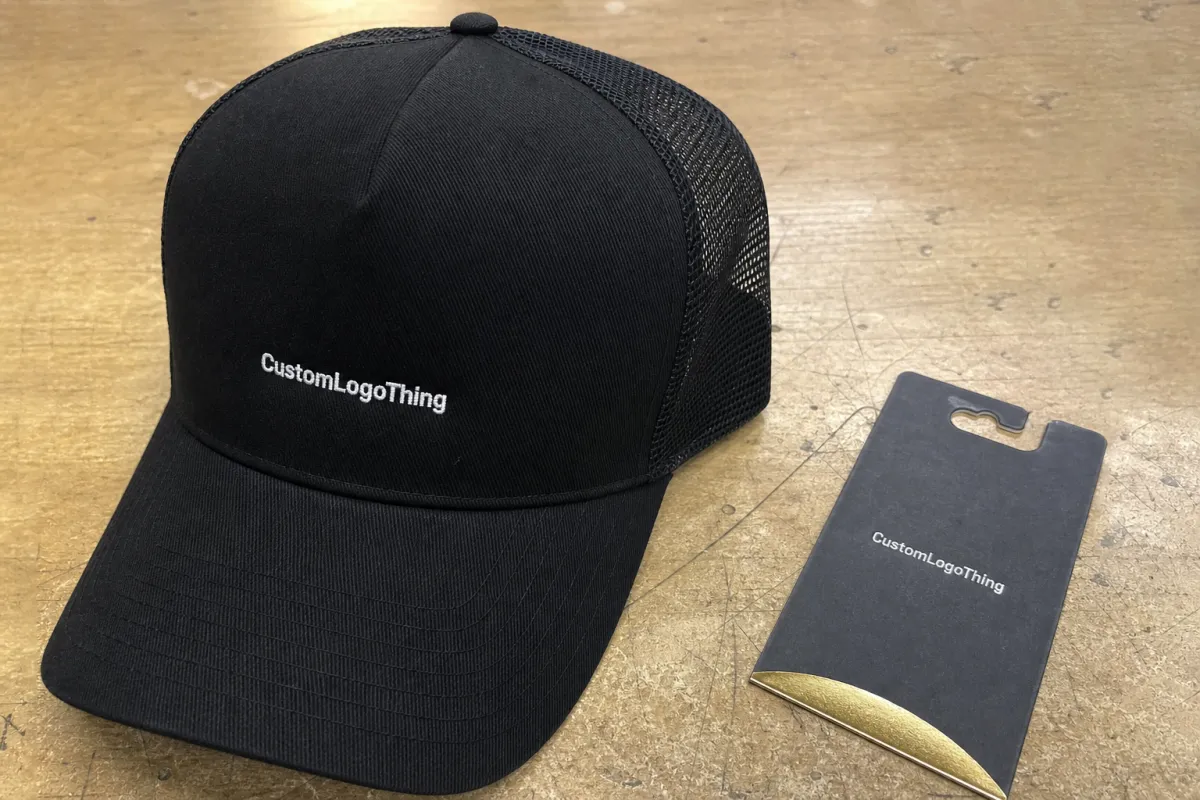
A trucker cap is a small item, but it is built from several separate decisions. Change one, and the cost moves. Change three, and the quote can shift enough to change the entire buying strategy. A six-panel cap with a structured front, standard mesh back, and plastic snap closure usually lands lower than a version with a reinforced front, dense embroidery, a woven patch, and retail packaging. None of those upgrades sounds dramatic by itself. Together, they add setup time, stitching time, inspection time, and packing labor.
Brand trucker caps unit cost is often driven more by decoration and construction than by the logo concept. That surprises buyers who are comparing two front designs that look similar in a digital proof. A simple direct embroidery logo may be efficient for a bold mark with limited detail. A woven patch can handle finer type, but it adds patch production and attachment work. A full-color print can keep details readable, yet it may introduce different setup steps or a higher rejection risk if the artwork is too small for the available panel area.
Even minor physical changes matter. Crown height affects the silhouette. Mesh gauge affects airflow and hand feel. The sweatband affects comfort and wearability. Brim curve changes the profile. The closure changes assembly time and fit consistency. These are not cosmetic footnotes. They decide whether the cap feels like a low-cost promo item or a retail-ready piece that people will wear more than once.
Buyers often compare a cap by decoration method first, but the blank body sets the floor. Cotton twill fronts feel softer and can present a more natural finish. Polyester fronts often hold shape well and can handle production more predictably. Foam fronts are common in vintage-style truckers and usually help cost, yet they do not behave the same way as a denser woven front. Mixed-fabric constructions are common because they balance appearance, breathability, and price.
| Decoration choice | Typical impact on unit cost | Best use case |
|---|---|---|
| Flat embroidery patch | Lower to moderate add-on, often $0.20-$0.60 per unit at volume | Simple logos, clean retail looks, repeat orders |
| Direct front embroidery | Moderate, often $0.35-$0.90 per unit depending on stitch count | Traditional brand marks and bold visual branding |
| Woven patch | Moderate to higher, often $0.40-$1.00 per unit | Fine details, small type, crisp edges |
| Multi-placement decoration package | Higher, often $0.75-$1.50+ per unit when several placements are added | Retail programs, premium promos, stronger brand recognition |
The practical takeaway is blunt: a buyer should not ask only, “How much is the cap?” The better question is, “What is the exact build, and what does each layer of the build cost?” That distinction matters for resale, event merchandise, team programs, and membership gifts alike.
Trucker cap build choices that affect fit, feel, and durability
The cap body controls more of the end-user experience than many buyers expect. Front panels carry the logo and determine how the cap presents itself in a mirror or on a shelf. Mesh back panels affect airflow. The brim shapes the look. The closure controls fit. If one of those elements is out of balance, the cap can feel cheap even if the decoration is clean.
Structured fronts are usually chosen for a sharper, more stable shape. They hold the logo area better and give embroidery a flatter surface. Unstructured fronts feel more casual and sometimes more comfortable out of the box, but they can collapse slightly when the cap is not being worn. Neither option is automatically better. The right choice depends on whether the cap is meant to support a polished retail display, a promotional drop, or a laid-back lifestyle look.
Comfort issues show up fast in this category. A scratchy sweatband, stiff mesh, or loose snap closure can ruin an otherwise acceptable order. That is why experienced buyers pay attention to the inside of the cap as much as the outside. The wearer feels the stitching, the band, and the crown every time the hat goes on. If those details are inconsistent, repeat wear usually drops.
Decoration placement also changes the economics. Front placement gives the most visibility. Side embroidery adds a secondary brand cue without overwhelming the cap. Back placement works well for sponsor names, event details, or multi-brand programs. Small text and fine lines tend to perform better on woven patches than on dense embroidery, especially when the available space is limited. A large, blocky logo can be stitched directly with good results and lower complexity.
For quality control, the useful checks are not glamorous. Look at panel symmetry. Check whether the visor curve matches across the run. Compare the thread tension on the first sample and the final piece. Confirm that the snap closure adjusts smoothly and that the crown sits consistently from cap to cap. Those small checks tell you more about production control than a glossy render ever will.
Materials and stitch count also affect durability. A tighter embroidery fill can look premium, but if it is overbuilt on a thin front panel, the fabric may pucker. A lighter stitch count can preserve fabric hand feel, though it may not read well from a distance. That is why the best spec is not the densest one. It is the one that fits the cap body and the use case.
“The right cap spec is usually the one that survives production with the least drama. Fancy details are useful only if they still look clean after packing, shipping, and a few weeks of wear.”
Core specifications to lock before requesting a quote
A useful quote starts with a useful brief. If the supplier has to guess at quantity, decoration area, or delivery window, the first price is likely to be vague too. The more complete the request, the faster the quote becomes usable. That also reduces the risk of a price jump later when the missing details finally surface.
The minimum spec set should include quantity, cap style, fabric, panel count, closure type, logo placement, decoration size, and target ship date. If the order needs polybags, hangtags, size stickers, retail boxing, or carton marks, those details belong in the request as well. Packaging is not an afterthought in apparel sourcing. It changes labor, carton counts, storage needs, and final unit cost.
Artwork preparation matters just as much. Clean vector files, Pantone references, and a measured decoration area shorten the approval cycle. A low-resolution image often forces a redraw, which adds time and sometimes adds cost. If several people need to approve the proof, one person should still own the final decision. A loose approval chain is one of the easiest ways to lose a week on a simple cap order.
These items usually speed up a quote and reduce revisions:
- Logo file: AI, EPS, or vector PDF is usually preferred.
- Decoration size: Width and height in inches or millimeters.
- Color references: Pantone numbers or a physical color target.
- Packing method: Bulk packed, polybagged, tagged, or retail boxed.
- Delivery window: A date range instead of a vague rush request.
This is where disciplined buyers protect margin. A clear brief makes it easier to compare one quote with another line by line. It also exposes hidden charges early. A quote that looks low can become expensive once digitizing, sampling, extra packing, or freight are added back in. That is why the same cap body can appear cheap on paper and costly in the real order.
One more practical point: if the cap is going into a broader merchandise line, the cap specs should be checked against the rest of the collection. Matching black can still differ from black. A front panel that reads slightly warmer than a shirt or hoodie can make the whole set feel less controlled. That kind of mismatch is easy to miss until the order arrives in cartons.
Brand trucker caps unit cost: pricing, MOQ, and volume breaks
Most cap quotes follow the same logic. Start with the body cost. Add decoration. Add setup. Add packaging. Add freight. The order quantity determines how much of the fixed work gets spread across each piece. That is why the same style can look materially cheaper at 1,000 pieces than at 200 pieces.
MOQ has a direct effect on the unit price. A lower run usually carries a higher per-piece cost because the setup work is being divided among fewer caps. At higher volume, fixed costs spread out, and the unit price often improves. That is not a sales tactic. It is a production reality. The same pattern appears with special closures, custom colors, and complex patches. The more unique the component, the more the buyer pays to prepare it.
Volume breaks matter most when the cap is likely to repeat. A first order of 300 units may sit in one price band, while 1,000 or 3,000 units can unlock better economics. If a style has a good chance of becoming a recurring item, it is smart to ask for tiered pricing before the first order is placed. That gives procurement a realistic view of future replenishment costs instead of forcing a second round of negotiation later.
For a clean comparison, request the quote in pieces rather than one blended number. Ask for the blank cap, decoration, sample or setup work, packing, and freight to be shown separately. That format does two things. First, it reveals where the money is going. Second, it makes it easier to compare different suppliers without being fooled by a lower headline price that hides expensive extras.
- What exactly is included in the per-piece price?
- Is the sample fee credited on production?
- Are digitizing, tooling, or plate charges separate?
- Is freight included or billed later?
- Does the price change if packaging changes?
Those five questions are usually enough to expose hidden costs before they spread through the budget. They also help you avoid comparing a bare-bones quote with an all-in offer. A slightly higher quote can be the better value if it includes setup, packing, and reliable delivery terms. A lower quote can turn expensive once the missing line items are added back in.
For reference, many buyers see basic Branded Trucker Caps in a wide range, often from roughly $2 to $6 per unit at moderate volumes, depending on the body, decoration, and packing. More detailed retail builds can move above that quickly. The exact number matters less than the structure behind it. If you know why the price sits where it does, you can judge whether the order is priced fairly for the intended use.
Production steps and timeline from artwork approval to shipment
Most orders move through the same sequence: spec review, quote confirmation, artwork proof, sample or pre-production approval, main production, inspection, packing, and dispatch. The path is straightforward. The delays usually are not. They happen when an approval is incomplete, the artwork changes after proofing, or the buyer needs to resolve a detail that was never locked at the start.
Artwork changes cause the most friction. If the logo size changes after the proof is issued, the decoration layout may need to be redone. If the color reference is not confirmed, the supplier may stop and wait. If three people are asked to approve one proof, the process often stretches out and the ship date slips. Production schedules are built around clear decisions, not open-ended discussion.
Simple stock-cap runs can move fairly quickly. A standard trucker cap with a straightforward logo and bulk packing often takes around 12 to 15 business days after proof approval, depending on factory workload and the shipping lane. More complex orders take longer. Woven patches, multiple placements, custom labels, and retail packaging all add checkpoints. Each checkpoint is another chance for delay if the inputs are not locked.
A useful way to think about the schedule is by stage:
- Proof stage: Confirm layout, colors, and placement.
- Sample stage: Review feel, fit, and decoration quality.
- Run stage: Monitor color consistency and stitch control.
- Pack-out stage: Confirm counts, labels, and carton marks.
Shipping can change the economics as much as decoration does. A quote that looks attractive on the production line may rise once expedited freight is added. If the caps need to arrive for a launch date, event, or retail drop, build in buffer time before the delivery window closes. Delays at the end of production often cost more than careful planning at the beginning.
Packaging quality should be checked with the same discipline as the cap itself. If caps are polybagged, the bag size should fit the cap without crushing the crown. If hangtags are used, the placement should not damage the mesh or snag the stitching. If cartons are labeled for store distribution, the marks should match the receiving system. A well-made cap can still create problems if the pack-out is careless.
For programs that need stronger distribution control, the quality approach should reflect common handling and transit testing principles, including those used in ISTA-related packaging practices. That does not mean every cap order needs a formal lab test. It does mean the buyer should think beyond the sewing table and inspect how the product survives the trip.
How to compare suppliers without sacrificing consistency
Price matters. Consistency matters more once the first order lands. A low quote that comes with color drift, stitch inconsistency, or packing mistakes can cost more in rework and lost confidence than a slightly higher offer that ships cleanly. Buyers who plan to reorder should care about repeatability as much as the first shipment.
Ask for samples that reflect the real cap body, not only a digital mockup. Feel the crown. Inspect the mesh. Open and close the snap. Study the logo edge and the stitch density. If the supplier cannot explain how they manage fabric, thread, and finish, that is a warning sign. A serious supplier should be able to describe tradeoffs plainly and show where the quality controls sit in the process.
Color control deserves extra attention. A small shade shift in the front panel or patch can change how the cap reads next to shirts, drinkware, or outerwear in the same program. If there are multiple colorways, ask how the supplier keeps shades stable across the run and across repeat production. For many buyers, that question is more valuable than asking for a lower price by a few cents.
If sustainability claims are part of the program, ask for documentation rather than assumptions. FSC-related sourcing may apply to paper cartons or hangtags, recycled content may apply to packaging, and some programs require chain-of-custody records. Those details should be verified, not implied. A cap order does not need a complicated environmental story, but unsupported claims create risk fast.
Suppliers that ask more questions up front are often the better ones. It can feel slower at first because they want artwork specs, delivery targets, packing details, and expected reorder volume before they price the job. That is usually a positive sign. It means they are trying to protect the order from hidden costs and avoid surprises during production.
For repeat programs, the second-order test is the one that matters. Did the new run match the first one in color, fit, logo placement, and packing? If not, the supplier may be acceptable for one-off promos but weak for ongoing brand work. If yes, the relationship is doing its job.
Next steps for a clean quote and faster approval
If the goal is a cleaner quote, gather the final quantity, cap construction, logo size, packing requirement, and target delivery date before the request goes out. That one step shortens the back-and-forth and makes brand trucker caps unit cost easier to judge against the whole job, not just the cap blank.
Then ask for a written breakdown that separates body cost, decoration, sampling, packing, and freight. That structure is useful because it shows where one offer is truly stronger and where another simply hides the extras. If you are comparing multiple suppliers, keep the spec identical across all of them. A different embroidery size or a different packing method can distort the result more than most buyers realize.
A disciplined approval path usually looks like this:
- Review the quote against the spec sheet.
- Approve the artwork proof with one decision-maker.
- Confirm the sample or pre-production sample.
- Sign off on packaging and carton marking.
- Release the order only after every detail is aligned.
That sequence keeps the project moving without making it sloppy. It also gives the supplier a stable target, which supports better fit, better packing, and fewer corrections on the floor. If the caps are for resale, event distribution, or a brand merchandise line, that discipline protects both margin and perception.
The cleanest orders tend to share the same traits: clear specs, limited decision-makers, realistic timelines, and honest expectations about what the budget can support. A sharper brief will usually do more for cost control than a round of last-minute haggling ever will. In this category, the best pricing often comes from clarity rather than pressure.
FAQ
What affects brand trucker caps unit cost the most?
Material choice, decoration method, and order quantity usually have the biggest impact. Simple bodies with modest embroidery stay closer to budget pricing, while woven patches, multiple placements, and retail packaging push the number up. A complete spec sheet is the fastest way to see which parts are driving the quote.
How does MOQ change the unit price for branded trucker caps?
Lower quantities usually carry a higher unit price because setup costs are spread across fewer pieces. Higher volumes often unlock better pricing tiers and more efficient production runs. MOQ also affects which decoration methods and packaging options make sense for the order.
Do samples increase trucker cap pricing before production?
Most custom samples add cost because they require materials, setup, and manual approval work. Some suppliers credit the sample fee back on a larger production run, but not all do. A sample can prevent a much more expensive mistake later, especially if fit or logo placement is critical.
Which decoration method gives the best value for branded trucker caps?
The best value depends on the artwork and the intended use. Direct embroidery works well for clean logos with limited detail, while woven patches handle fine text and smaller shapes better. Ask for a side-by-side quote so you can compare appearance, durability, and cost on the same spec.
How can I get a faster quote for custom trucker caps?
Send the quantity, cap style, logo file, decoration size, and delivery target in one message. Add packing requirements if you need bulk bags, tags, or retail boxing. Clear inputs reduce follow-up questions and speed up both pricing and proofing.


