Order Embroidered Baseball Caps Unit Cost Without Guesswork
Embroidered Baseball Caps unit cost is shaped by more than the blank cap. Setup, digitizing, stitch count, placement, and order quantity all move the number. A 25-piece run can feel expensive because fixed work is spread across fewer caps, while a larger replenishment order often looks much better.
Buyers usually start with blank pricing and miss the parts that actually affect the invoice: digitizing, machine setup, thread changes, inspection, and packing. Once those pieces are clear, the quote becomes easier to compare and easier to budget.
There is also a quality issue tied to cost. A clean logo with efficient stitch paths usually runs better and looks better on a curved crown. A crowded design with tiny text may need simplification before it can be produced cleanly. The lowest quote is not always the safest order.
Why unit cost drops faster than most buyers expect
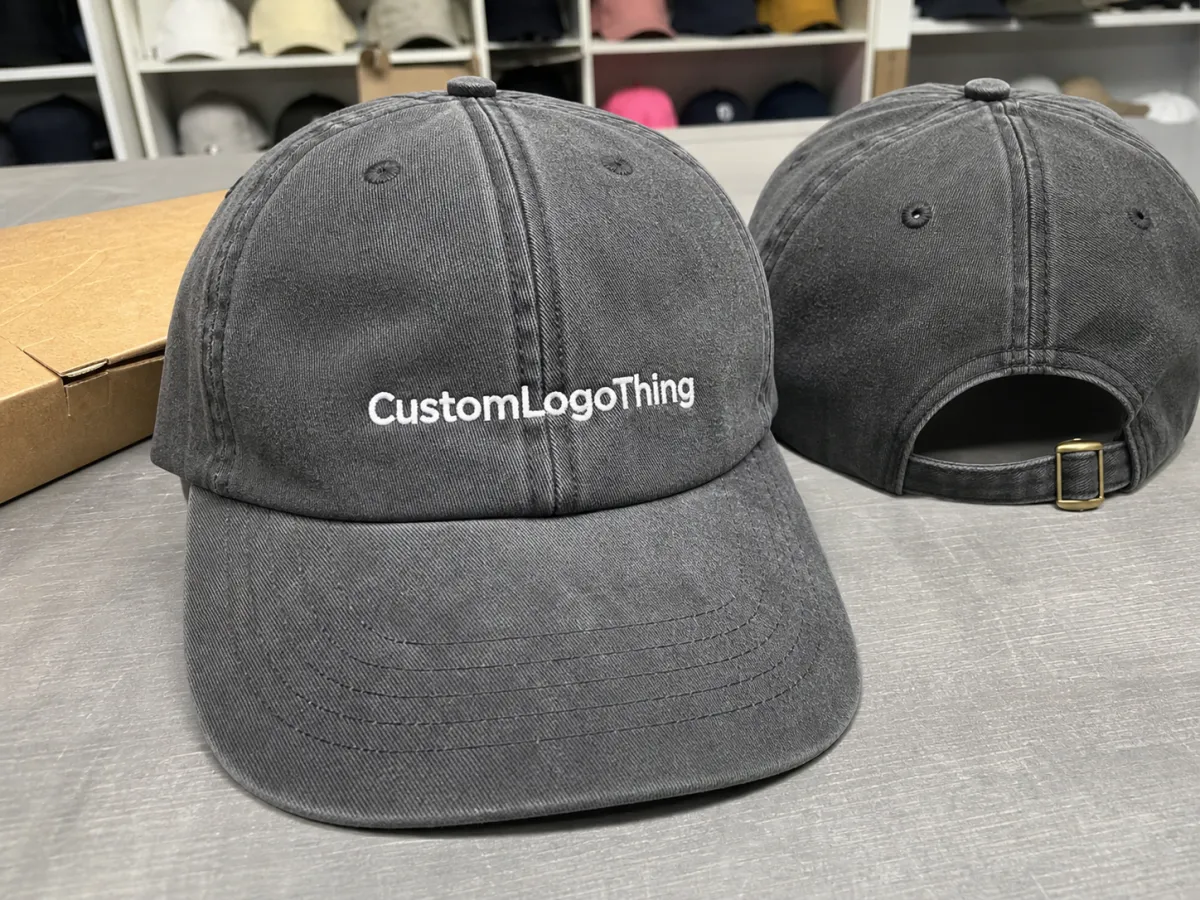
Embroidery pricing usually has two layers. The first is fixed or semi-fixed work: digitizing the artwork, checking stitch paths, and preparing the file. The second is the running cost: cap, labor, thread, supervision, and packing. Small orders absorb the fixed cost badly. Larger runs spread it out.
A one-location logo on 25 caps can price very differently from the same logo on 250 caps. As a planning range, a small run may land around $8.50 to $14 per cap, while a larger tier might fall closer to $4.50 to $8.00 per cap. Those are not promises, but they show how fast the unit cost can move once setup is diluted.
Stitch count matters too. A logo with 4,000 to 6,000 stitches usually runs faster and cleaner than one with 10,000 to 14,000 stitches. More stitches mean more machine time, more thread movement, and more chances for detail to misbehave. Tiny type, hairline outlines, and crowded icons often need simplification.
A simple logo on a better blank often gives more value than a complex logo on the cheapest cap. Blank savings are usually smaller than the cost of extra revisions or slow production. For buyers, the useful question is not just “what is the cap price,” but “what design and order structure create the least friction.”
A buyer who chooses the quantity, decoration size, and cap body with production in mind usually gets a better price than the buyer chasing the lowest blank cap and hoping the embroidery part will sort itself out.
The cap styles and decoration choices that change the order
Cap construction has a direct effect on the quote. Structured six-panel caps usually give the cleanest front surface because the front panel holds shape. Unstructured Dad Hats are softer and more relaxed, but they can pucker more easily under dense stitching. Five-panel caps work well for bold front branding because the front face reads flatter and wider.
| Cap option | Typical blank cost | Cost impact | Best fit |
|---|---|---|---|
| Structured six-panel snapback | $2.50-$5.50 | Usually efficient for front embroidery | Retail merch, events, broad audience orders |
| Unstructured dad hat | $2.75-$6.00 | More sensitive to logo size and stitch density | Lifestyle brands, softer look, low-profile fit |
| Five-panel cap | $2.80-$6.25 | Good for larger front marks, often clean on simple art | Bold branding, streetwear, flat-front designs |
| Strapback or adjustable closure | $3.00-$6.75 | Can add handling cost depending on closure type | General distribution, mixed head sizes |
Decoration placement matters just as much as cap style. Front-only embroidery is usually the lowest-labor option. Add a side hit and the cost rises. Add a back hit and it rises again. Each extra location typically adds about $0.50 to $1.50 per cap, though dense artwork or tight placement can push that higher.
The type of embroidery changes the math too:
- Front-only embroidery keeps labor lower and usually gives the best cost per piece.
- 3D puff embroidery adds texture and visual impact, but it limits fine detail and can raise the price.
- Patch-style embroidery works for complex artwork or distressed looks, though patch production adds its own setup.
- Tonal thread can look refined, but subtle color does not reduce machine time.
Small text is where many mockups fail. Letters below about 4 to 5 mm high often lose clarity once stitched on a curved panel. Thin outlines can disappear, and taglines can collapse into a blur. If the artwork depends on tiny copy, expect simplification or extra revision time.
Specs buyers must lock before requesting a quote
Quotes wander when the spec sheet is vague. A serious request should include cap style, fabric, color, decoration location, logo size, thread count, and quantity. If the request only says “embroidered cap quote,” the answer will be broad and hard to use for budgeting.
Artwork quality is a major hidden variable. Vector files such as AI, EPS, and editable PDF are the cleanest starting point. If the logo arrives as a JPG or PNG, the digitizer has to rebuild edges, spacing, and small details by hand. That is workable, but it can add revision time and setup cost.
Fit should be specified as clearly as decoration. Crown height changes the profile on the head. Low-profile caps sit closer and feel more casual. Mid-profile caps are more universal. Closure type matters too, because snapbacks, strapbacks, and fitted caps wear and pack differently. If the order is for a mixed group, say so early.
For a quote that reflects reality, these are the details worth locking before pricing:
- Cap style and closure type
- Fabric choice: cotton twill, brushed cotton, polyester, or performance blend
- Cap color and any contrast details
- Decoration location and approximate logo size
- Thread-color count and any exact PMS match requirement
- Quantity target and acceptable quantity range
- Packaging need: bulk-packed, polybagged, or retail-ready
- Sample requirement: mockup only, sew-out, or pre-production sample
Labeling and pack-out can change the total more than buyers expect. Woven labels, barcode stickers, retail inserts, and folding instructions all add labor. If the caps are going into a store program, a sales kit, or a resale channel, the packing spec matters almost as much as the stitch file.
How embroidered baseball caps unit cost is built
The cost structure usually comes from four buckets: digitizing or setup, blank cap cost, embroidery labor, and packing or finishing. Some suppliers call the first bucket tooling. Others call it digitizing. Same practical idea: it is the work required to make the art runnable on the machine.
| Cost element | Typical range | What drives it |
|---|---|---|
| Digitizing / setup | $35-$120 one time | Logo complexity, stitch count, revision rounds |
| Blank cap | $2.50-$7.00 each | Style, fabric, closure, brand tier, stock availability |
| Embroidery labor | $1.75-$5.00 each | Placement count, stitch density, thread changes |
| Packing / finishing | $0.15-$0.75 each | Bulk pack, polybag, folding, labels, inserts |
| Rush handling | 10%-30% uplift or flat fee | Capacity, proof speed, stock levels, schedule pressure |
Minimum order quantity is where fixed cost shows its teeth. A 25-piece run is possible, but the unit cost will usually be higher than a 100- or 250-piece run because the setup fee lands on fewer caps. A $60 setup charge adds $2.40 per piece on 25 caps, but only 24 cents per piece on 250 caps.
Pricing often improves around familiar thresholds: 50, 100, 250, and 500 units. The exact breakpoints vary by supplier and blank availability, but the pattern is consistent. More units mean better machine efficiency and less setup burden per cap. If the order stays with one placement, one or two thread colors, and a standard cap body, the unit cost usually lands in a more manageable range.
There are a few common traps. Freight that is not included makes a quote look better than it is. Sample charges that are omitted can surprise the buyer later. Rush fees sometimes appear only after proof approval. A quote that does not say whether freight is included is incomplete, even if the number looks attractive.
If the caps are shipping in retail cartons or kitted packs, transit protection should be part of the build, not an afterthought. A crushed brim or bent front panel can erase the value of a clean sew-out. Ask how the caps are packed and whether the packaging will hold shape during handling.
Process, proofing, and turnaround from artwork to shipment
The production workflow should be straightforward: inquiry, artwork review, digitizing, quote confirmation, mockup or sew-out approval, production, inspection, and shipment. Each stage catches a different kind of error. Skip one and the job usually pays for it later.
Lead time depends on stock, proof speed, and complexity. A simple in-stock order with a clean one-location logo can often move in about 12 to 15 business days after proof approval. More detailed orders, special-order cap bodies, or projects that need sample revisions often need 15 to 20 business days. Rush jobs can be faster, but only if the blanks are available and the artwork is production-ready.
Normal turnaround leaves room to catch issues in digitizing, placement, or packing. Rush timing reduces that room. That works for a straightforward logo on a stocked cap. It is a poor fit for multi-location embroidery, tight color matching, or retail pack requirements. Speed and complexity can coexist, but they usually cost more.
The quality-control checkpoints are simple:
- Logo placement matches the approved mockup and sits where it should.
- Thread match is close to the agreed color reference, allowing for normal dye-lot variation.
- Cap fit is consistent across the size or closure type ordered.
- Stitch clarity holds on letters, outlines, and any small detail.
- Pack count matches the purchase order before shipment leaves the floor.
If the caps are headed to retail or distribution, carton specs, inserts, and shipping protection need to be part of the conversation early. For fiber-based cartons, FSC is the common reference buyers recognize for responsible sourcing: fsc.org. That does not change the embroidery itself, but it can help with sourcing notes on file.
Production looks strongest when the proofing stage does its job. If the mockup is accurate, the sew-out is approved quickly, and the packing instructions are complete, the rest tends to move predictably.
Why buyers keep reordering from our cap program
Repeat orders are built on consistency. If stitch quality, thread color, and placement stay stable from one run to the next, the buyer stops rechecking every detail. That saves time and keeps Embroidered Baseball Caps unit cost from drifting between rounds. A reorder is often cheaper than the first run because the artwork, thread map, and production notes already exist.
Useful quotes are specific. They should identify the blank cap, decoration location, setup cost, run cost, and any packing or freight assumption. Helpful artwork feedback matters too. If the logo should be simplified for thread, say it early. If a tagline is too small to embroider cleanly, say it before the mockup is approved.
The operational pieces that matter most are not flashy:
- Digitizing review keeps stitch paths efficient and avoids bloated files.
- Placement checks reduce off-center logos and uneven hits.
- Inspection catches loose threads, thread breaks, and packing errors before shipment.
- Reorder records preserve approved specs so the next run starts from the same baseline.
That matters most for uniforms, branded merchandise, and reseller inventory. Those buyers do not need a new explanation every time they reorder. They need the same cap, the same logo size, and the same result.
What to send for an accurate quote fast
The fastest way to get a realistic price is to send a complete request. Include the logo file, cap style, quantity range, target delivery date, and any brand rules. If there is a budget ceiling, state it. Leaving it out does not improve the number; it just forces the quote to guess.
To make pricing comparable, send these items:
- Decoration location: front only, front plus side, or front plus back
- Thread-color count and any exact-match requirement
- Cap construction: structured, unstructured, five-panel, or six-panel
- Packing need: bulk, polybagged, or retail-ready
- Shipping destination and whether the price should be landed or freight separate
- Target use: event giveaway, retail, team wear, or resale
If you need to hold a specific Embroidered Baseball Caps unit cost, say the number directly. “We need this around $6 landed” is more useful than “we need it cheap.” That gives the supplier something concrete to work against. The easiest cost reductions usually come from removing unnecessary extras: a second placement, extra thread colors, or a cap body that is nicer than the project requires.
When the design is still undecided, ask for a few cap constructions side by side. A structured snapback, an unstructured dad hat, and a five-panel option will usually reveal the price difference quickly. Approve the mockup, confirm sample terms if needed, and revise the request if the first pass misses the budget.
FAQ
What affects embroidered baseball caps unit cost the most?
Quantity usually has the biggest effect because setup charges get spread over more caps. Stitch count, logo size, and thread-color count can move the price more than the blank cap itself. Extra placements like a side or back logo add labor quickly, and that pushes the cost per piece higher.
What is included in a standard embroidered cap quote?
A useful quote should show blank cap cost, digitizing or setup, embroidery labor, and any packing or finishing charges. It should also state MOQ, sample terms, and whether freight is included or billed separately. If those items are missing, the quote is not detailed enough to compare with others.
What MOQ should I expect for embroidered baseball caps?
MOQ depends on the cap style, decoration complexity, and whether the blanks are in stock. Smaller runs are possible, but the unit cost is usually higher because fixed setup charges are spread over fewer pieces. If the order needs a low MOQ, keep the design simple and the embroidery to one location.
How long does production take after artwork approval?
Timing depends on stock availability, proof approval speed, and how complex the embroidery is. Simple orders can move in about 12 to 15 business days after approval, while more detailed jobs often need 15 to 20 business days. Rush production may be possible, but it usually costs more and leaves less room for correction.
How can I lower embroidered baseball caps unit cost without hurting quality?
Use one embroidery placement, simplify the logo, and keep the thread-color count low. Order within a higher quantity tier if the caps will be used repeatedly. Choose a cap style that is already in stock and avoid changing specs after the quote is issued.
Pricing stays sane when the cap style is chosen with the decoration method in mind, the artwork is prepared properly, and the order is built around how embroidery actually runs. Clean specs reduce guesswork. Efficient artwork reduces labor. Clear approvals keep the final number close to the one that was quoted.

