Buyer Fit Snapshot
| Best fit | Branded Cardboard Boxes Wholesale projects where brand print, material claims, artwork control, MOQ, and repeat-order consistency need to be specified before quoting. |
|---|---|
| Quote inputs | Share finished size, material target, print colors, finish, packing count, annual reorder estimate, ship-to region, and any compliance wording. |
| Proofing check | Approve dieline scale, logo placement, barcode or warning zones, color tolerance, closure strength, and carton packing before bulk production. |
| Main risk | Vague material claims, crowded artwork, missing packing details, or unclear freight terms can make a low unit price expensive after revisions. |
Fast answer: Branded Cardboard Boxes Wholesale: Pricing & Specs should be specified like a repeatable production item. The safest quote records material, print method, finish, artwork proof, packing count, and reorder notes in one written spec.
Production checks before approval
Compare the actual filled-product size with the drawing, then confirm tolerance on folds, seals, hang holes, label areas, and retail display edges. Reserve space for logos, QR codes, warning copy, and material claims before decorative graphics fill the panel.
Quote comparison points
Review material grade, print process, finish, sampling route, tooling charges, carton quantity, and freight assumptions side by side. A quote is only useful when the supplier can repeat the same color, closure quality, and packing count on the next order.
Branded Cardboard Boxes Wholesale: Pricing & Specs
Branded Cardboard Boxes Wholesale are not background material. They are the first thing a buyer touches, the shell that keeps a product alive in transit, and, in many cases, the last physical trace a customer takes home. A sharp box raises perceived value before the product is even opened. A crushed corner or oversized carton does the opposite. The item inside can be excellent and still feel a little cheap if the packaging looks like it lost a fight with the delivery truck.
That makes branded cardboard boxes wholesale a business decision, not a decorative one. Retail, ecommerce, subscription programs, and gift packaging all use the box to do different jobs. Some need shelf presence. Some need shipping strength. Some need the unboxing experience to carry a brand story without saying too much. Custom cardboard packaging and Corrugated Mailer Boxes solve different problems, which is why the wrong spec wastes money fast. The right one can make a modest product feel considered, which is often the difference between a one-time order and a repeat customer.
I have seen this play out in real packaging reviews: a cosmetics line with a four-color carton that looked polished on screen, then felt oddly forgettable in hand, while a one-color kraft mailer with clean typography looked more confident and sold better at the shelf edge. Packaging has a strange habit of changing the conversation before the product does. That is not marketing fluff. It is the quiet economics of expectation.
This is the practical version: cost drivers, material choices, structural tradeoffs, and the places where buyers usually overspend. No theater. Just the parts that shape a good run of branded cardboard boxes wholesale.
Branded Cardboard Boxes Wholesale: The First Impression That Sells
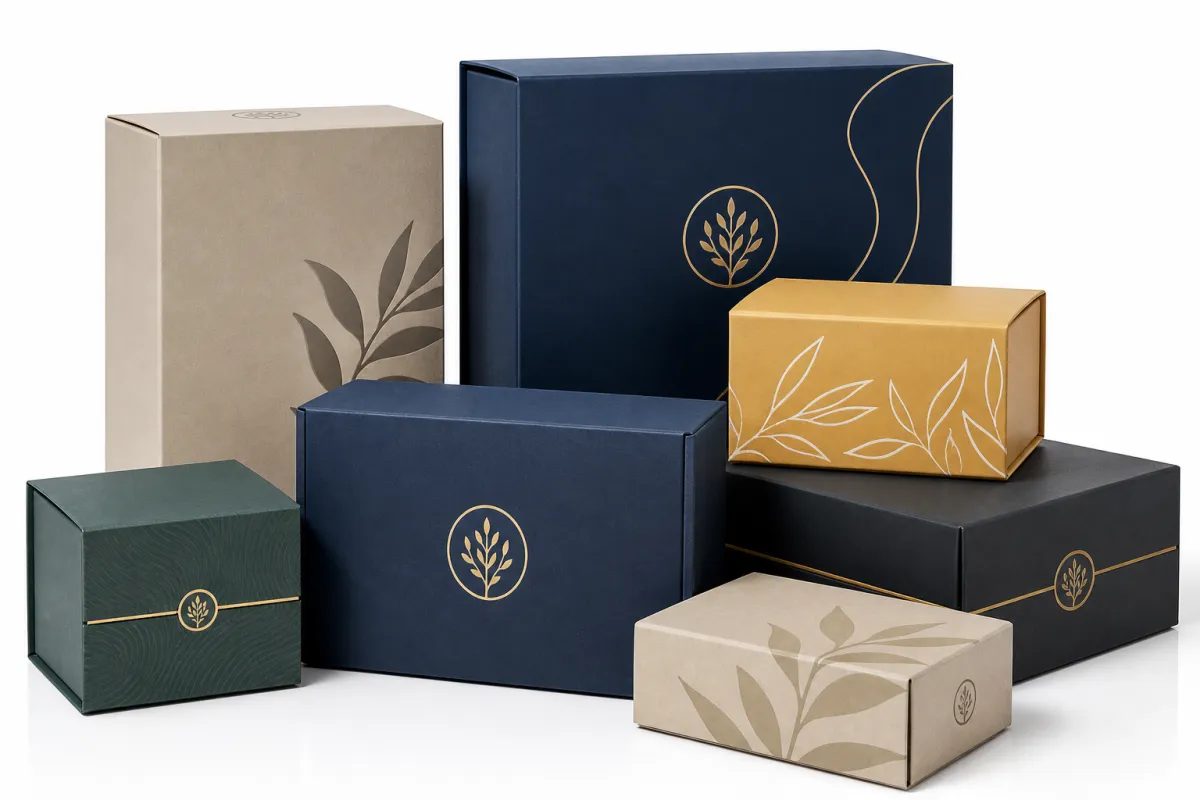
People judge the package before they judge the product. In ecommerce, that judgment happens on a porch or at a desk. In retail, it happens on a shelf within seconds. Branded cardboard boxes wholesale give brands a way to control that first read. The box can signal quality, care, and consistency before a single line of copy is read. That matters because packaging is not only functional; it changes expectation. A clean, well-proportioned box can make a product feel more expensive than it is. A sloppy one can make a premium item feel strangely ordinary.
The effect is more than cosmetic. Better packaging lowers perceived risk. A customer who sees straight print, crisp edges, and a box that fits the product tends to feel that the brand knows what it is doing. That feeling carries into repeat purchase behavior. People remember packaging that opens neatly, protects the item, and looks like it was chosen rather than improvised. They remember the bad ones too. Nobody forgets a box that arrives dented, half-crushed, and a little too large for the product it was carrying.
Branded cardboard boxes wholesale can also elevate lower-cost goods. A single-color logo on a properly sized mailer often outperforms a crowded design full of effects and claims. Less noise usually means more credibility. The box does not need to shout. It needs to fit, protect, and present the brand with enough restraint that the product still feels like the star.
A box earns trust in seconds. Strong structure does the heavy lifting; print only gets credit when the structure already works.
One of the easiest mistakes is to chase finishes before confirming the build. Buyers get excited about foil, spot UV, and inside print, then discover that the product is too heavy for the chosen board or that the internal dimensions were never tested. The result is predictable. Beautiful packaging that fails in transit is still a failed package. Packaging should support the margin, not threaten it.
That is why a good box spec starts with the product, not the artwork. If the item has a sharp corner, a delicate closure, or a long shipping route, the design has to account for that early. Otherwise, the box becomes a costume on top of a structural problem. Pretty for the photo. Bad for the warehouse.
For buyers comparing options, Case Studies can show how different brands balance appearance and practicality. If the packaging system needs more than one component, Custom Packaging Products makes it easier to compare the box with inserts, labels, and related pieces that affect the final presentation.
Branded cardboard boxes wholesale work best when the use case is clear from the start. Shipping fragile goods is not the same as building a retail display box. A monthly subscription kit has a different goal from a premium gift set. The box spec should follow the job, not the other way around.
Box Styles, Print Options, And Finishes That Actually Work
Several box formats can be used for branded cardboard boxes wholesale, and each one behaves differently once a product is inside. Mailer boxes remain the most common choice for ecommerce because they hold shape well, stack cleanly, and deliver a strong unboxing effect. Tuck end boxes are a better fit for lightweight retail goods. Folding cartons work well for shelf presentation and smaller products. Branded Shipping Cartons make sense when transit strength matters more than display. Rigid-style cardboard boxes live at the premium end of the scale, where presentation usually outweighs freight cost.
Mailer boxes are often the safest starting point for branded cardboard boxes wholesale when both structure and presentation matter. They resist crushing better than thinner paperboard cartons and can carry branding on the outer panels and inside flaps. Corrugated mailer boxes are especially useful when the order needs to move through a warehouse, a courier network, and a customer unboxing all at once. Tuck end cartons are useful when the product is light, the shelf needs to look tidy, and the budget is under pressure. Rigid boxes are a different category. They feel expensive because they are expensive. That can be a smart move for gifts, launches, and prestige items. It is a poor choice if the box has to stay economical.
Print decisions are where buyers often overcomplicate the job. A one-color logo on kraft or white board can look more confident than a noisy full-color box with too many callouts competing for attention. CMYK makes sense when the artwork depends on photography, gradients, or detailed illustration. Inside print can raise the unboxing experience, though it adds setup and ink cost. If the product does not justify the extra spend, the budget is usually better spent on stronger board, cleaner die cutting, or a tighter fit.
Finishes change both the feel and the cost profile. Matte lamination reads calm and polished. Gloss is brighter and more reflective. Embossing adds texture, but it can be wasted if the logo is too small or the board is too thin. Foil stamping works best when used with restraint, especially on a logo or a single focal mark. Overdone foil can push a box into the wrong visual territory, especially for practical wholesale packaging where trust and clarity matter more than flash.
Brand consistency matters just as much as finish selection. Logo placement should be deliberate, not random. Negative space should be used with intent. Message hierarchy should stay simple: brand first, product or category second, support copy third. If the layout has to explain too much, it is probably trying to do the work of three surfaces at once. Strong branded cardboard boxes wholesale usually look calm because the structure, print, and typography are already doing enough.
There is also a small production reality that gets missed. A finish that looks beautiful in a mockup may expose flaws in the die line or show scuffing more easily once the box starts moving through fulfillment. Matte black, for example, can look very sharp and also show handling marks faster than people expect. That does not mean avoid it. It means choose with open eyes.
Common Box Formats And Where They Fit
- Mailer boxes: Best for ecommerce, subscription kits, and products that need a branded unboxing moment.
- Tuck end cartons: Good for lightweight retail goods, cosmetics, accessories, and lower-friction shelf displays.
- Rigid-style boxes: Best for premium gifts, electronics, sets, and higher-value presentation packaging.
- Shipping cartons with branding: Useful when transit strength matters more than display value.
For buyers who want a broader look at structure choices, Custom Shipping Boxes are worth comparing against retail-style cartons. They can reduce damage and freight waste when the product is bulky or heavy. For an industry reference on packaging terminology and process, the Packaging Machinery Manufacturers Institute offers useful context. On the sustainability side, FSC remains a practical standard for responsible fiber sourcing.
Materials, Sizes, And Structural Specs For Branded Boxes
Material choice changes everything about branded cardboard boxes wholesale. Single-wall corrugated is the workhorse for shipping and mailers because it balances strength, weight, and cost. Double-wall corrugated steps in when the product is heavier, the route is rougher, or the stack load is higher. Paperboard is thinner and cleaner for display packaging, but it is a different animal from corrugated. Rigid board wrapped in printed paper sits in yet another class. It makes sense when presentation justifies the cost, and not before.
Flute type matters more than many buyers expect. E-flute is thinner and gives a cleaner print surface, which is why it often appears in premium mailers and retail-style shipping boxes. B-flute and C-flute offer more cushioning and crush resistance. Board grade matters too. A 32 ECT board may be enough for lighter parcels. Forty-four ECT or double-wall constructions are better for heavier loads or rougher shipping environments. There is no universal best board. There is only the board that fits the load, the route, and the handling conditions.
Size mistakes are expensive. A box that is a little too large creates extra freight volume, increases void fill, and gives the product room to move. That movement leads to dents, scuffing, and complaints. A box that is too tight slows packing and puts stress on the material. For branded cardboard boxes wholesale, internal dimensions matter more than outside dimensions. Buyers should always provide the finished product size, the thickness of any insert, and the clearance needed for a safe fit.
Before requesting a quote, gather the details that actually affect production: product dimensions, product weight, shipping method, destination, print area, insert requirements, and whether the closure needs to be a standard tuck or a stronger lock design. Fragile goods should be called out early. So should stacking requirements if the boxes will live in a warehouse. Those facts change the board spec, the structure, and sometimes the pallet plan.
Sustainability now belongs in the spec sheet, not in a side conversation. Recycled content, recyclable construction, and right-sized packaging all reduce waste. That does not mean the word “eco” should be used as a vague badge. The box still has to survive transport. The goal is enough material, not a random excess of it. According to the EPA, containers and packaging make up the largest share of municipal solid waste in the United States, which is one reason right-sizing matters more than ever. For brands working toward procurement or ESG targets, FSC-certified fiber and recycled corrugated content can be a sensible baseline if the structure still protects the product.
From a buyer’s point of view, branded cardboard boxes wholesale should be chosen the way any production part is chosen: performance first, cost second, appearance third. Reverse that order and the budget usually becomes harder to control than it should be. That sounds a little blunt, but the numbers are gonna care either way.
Branded Cardboard Boxes Wholesale Pricing, MOQ, And Cost Drivers
Pricing for branded cardboard boxes wholesale depends on five variables more than anything else: size, material, print coverage, finish complexity, and quantity. Add inserts and the number moves again. Add freight and it moves again. The box itself is only one part of the cost stack. Buyers who focus on a single unit price without looking at setup charges often get a surprise at the end. Never a pleasant one. Procurement teams know that kind of surprise by heart.
At a practical level, low-ink branded cardboard boxes wholesale sit near the lower end of the cost range because setup is simpler and the print pass is faster. Once full coverage ink, inside print, embossing, foil, or custom inserts enter the picture, the unit cost rises. That is normal. More surfaces take more work. Fancy finishes do not appear by magic, and the press does not become cheaper just because the artwork looks clean.
MOQ is tied to setup economics. A supplier has to pay for tooling, die cutting, proofing, press setup, and production calibration before the first usable unit leaves the line. Very small runs carry more cost per box because those fixed costs are spread across fewer pieces. Higher volume spreads the setup burden, which is why the unit price drops as quantity rises. Branded cardboard boxes wholesale are built around that logic. If someone offers tiny quantities at the same price as a large run, the math is missing somewhere.
Here is a practical pricing snapshot for branded cardboard boxes wholesale at roughly 5,000 units. These are directional ranges, not fixed market law. Size, board grade, ink coverage, and finish details can move the numbers quickly.
| Box Style | Typical Use | Estimated Unit Price at 5,000 Units | MOQ Notes | Best Fit |
|---|---|---|---|---|
| Mailer box, one-color print | Ecommerce, subscription, direct-to-consumer orders | $0.42-$0.95 | Often the easiest entry point for branded cardboard boxes wholesale | Brands that want structure and clean branding without heavy finishes |
| Folding carton, CMYK print | Retail goods, cosmetics, small accessories | $0.18-$0.48 | Lower material cost, but print detail can raise setup needs | Lightweight products with shelf visibility |
| Tuck end carton, matte finish | Supplements, personal care, consumer goods | $0.24-$0.62 | Good for moderate MOQs and repeat replenishment | Brands that want a tidy retail look |
| Rigid-style presentation box | Gift sets, premium launches, high-value items | $2.20-$6.00 | Higher setup and material requirements, usually less forgiving on small runs | Premium presentation and display-led packaging |
| Branded shipping carton, reinforced | Bulkier ecommerce items, heavy goods, transit-first packaging | $0.55-$1.20 | Board grade and size have a bigger impact than the logo itself | Products that need shipping strength before shelf appeal |
These ranges matter because they reveal the tradeoff that gets missed most often. A lightweight folding carton can look inexpensive at first, but if the product needs inserts or extra protection, the gap narrows quickly. A rigid box can create a strong first impression, yet it may cost several times more than a mailer. That is a sensible investment for the right product. It is wasted money when the box is carrying more prestige than the item inside can justify.
Some costs stay hidden until the estimate is read carefully. Dieline setup may be billed separately for a custom structure. Proofing can be included or charged. Samples might be free, discounted, or full price depending on the supplier and the complexity of the project. Plate charges can apply with certain print methods. Freight can become a major line item on oversized shipments. Inserts, partitions, and foam or paperboard components add both material and labor. None of that is mysterious. It is just easy to forget when the focus is pinned to a single unit price.
The cleanest way to compare branded cardboard boxes wholesale is to ask for three quote tiers: a basic build, a mid-tier build, and a premium build with the same outside dimensions. The difference becomes obvious fast. One version may add only a little. Another may jump for a finish no customer will notice. Side-by-side comparison removes guesswork and keeps approval meetings shorter.
Quote comparison kills bad assumptions. If the premium version is only a little higher, the upgrade may be worth it. If the price climbs for a detail nobody sees, the answer is easy.
If your team places recurring orders, a structured buying program helps. Wholesale Programs make replenishment easier, keep the spec tighter, and reduce the odds that someone reorders the wrong board grade six months later. That kind of mistake does not look dramatic from the outside. It still drains margin.
One more pricing note: if a supplier cannot explain what is driving the quote, treat that as a signal rather than a nuisance. Clear cost separation is usually the difference between a controlled program and a series of small overruns that pile up over time. Nobody wants a packaging line item that keeps growing teeth.
What Should You Know Before Ordering Branded Cardboard Boxes Wholesale?
The ordering process for branded cardboard boxes wholesale should feel orderly. It usually starts with product specs, then a quote, then artwork review, then structural confirmation, then proof or sample approval, then production, then shipment. If a supplier cannot explain that sequence clearly, the project will probably get tangled later. Packaging production is not a mystery. Most problems come from missing information or late changes.
The fastest way to move an order is to send the right details upfront. Box dimensions. Product weight. Quantity. Print colors. Finish requirements. Shipping destination. If the box needs an insert, include the insert dimensions too. Editable artwork files help. If all you have is a logo, say that plainly. The more a supplier has to infer, the slower the quote and proof cycle becomes.
Sampling deserves real attention. A sample or proof is not a delay for its own sake. It is the step that catches dimension issues, print placement mistakes, and lock-tab problems before 5,000 units are already sitting on a pallet. For branded cardboard boxes wholesale, skipping approval is how simple projects turn into expensive lessons. A good proof costs a lot less than a warehouse full of unusable packaging.
Production timing depends on the complexity of the box. Simple branded mailers with clear specs and approved artwork can often move through production in about 12 to 15 business days after proof approval. More involved custom structures, premium finishes, or inserts may need 15 to 25 business days, and specialized materials can push that longer if the line is busy. Freight time is separate. Sea and ground transit do not care about your launch date.
What slows orders down? Late artwork changes. Missing dieline approval. Unclear shipping instructions. Incorrect Pantone references. Overlooked insert thickness. Last-minute requests for extra finish effects. Each one is avoidable. None of them is dramatic. All of them costs time.
One practical rule helps when the calendar is tight: ask for the least risky build that still meets the brand requirement. A one-color logo, a standard board grade, and a clean die-cut layout usually move faster than a box trying to do everything at once. Branded cardboard boxes wholesale are easier to deliver on schedule when the spec is disciplined.
If the timeline is especially tight, a plain structure with a strong print system can be smarter than a complicated structure with weak planning. That tradeoff does not always feel glamorous, but it keeps launches from sliding. The box that arrives on time and survives shipping usually beats the beautiful sample that missed its window.
Why Choose Us For Branded Cardboard Boxes Wholesale
We keep the process practical. No design theater. No pretending every box needs a luxury treatment. If you need branded cardboard boxes wholesale that fit the product, the budget, and the shipping method, the focus stays on the parts that actually matter: structure, print quality, and repeatability. That is the job of a packaging supplier.
Our goal is to help you avoid the usual mistakes. Too much box for the product. Not enough protection. Artwork that looks polished on screen and fails on the dieline. Paying for finishes that do not change the result. Anyone who has spent time around packaging knows how quickly those problems become rework. Anyone who has not usually learns the hard way.
Clear quoting is part of that. Buyers should not have to decode an estimate line by line. The numbers should show what changes the price: size, board, print coverage, finish, inserts, and quantity. That makes branded cardboard boxes wholesale easier to compare and easier to approve internally. Procurement likes clarity. Finance does too. Operations usually likes it most of all.
Consistency matters as well. A good packaging run is not impressive because one sample looks nice. It is impressive because the 200th box looks like the first one. That takes stable specs, careful proofing, and production discipline. It also takes a supplier who knows how to manage repeat orders without quietly changing the build. Small shifts in board grade or scoring can create real downstream problems.
We also respect the balance between branding and budget. Some suppliers push the most expensive option because it is easier for them. That is expensive for you and lazy for everyone else. A better partner can explain where a premium detail is worth it and where a simpler choice will do the same job. Branded cardboard boxes wholesale should support the product, not bully the margin.
If you want to see how those decisions play out in real projects, Case Studies can show the difference between a basic shipping build and a display-first carton. That comparison is usually more useful than a glossy brochure with no numbers in it.
There is also the sustainability question. Many buyers now need recyclable boards, FSC-certified fiber, or right-sized packaging to reduce waste. That is sensible, and it does not require giving up strength. The right material spec can still protect the product. It just needs to be chosen carefully instead of being used as a marketing label with no performance behind it.
In practice, the best supplier is the one that tells you when a simpler box is the smarter box. That kind of honesty is not flashy. It saves money, and it keeps the line from turning into a guessing game.
Next Steps: Build Your Quote And Lock Your Spec
If you are ready to price branded cardboard boxes wholesale, start by gathering the basics: product dimensions, product weight, target quantity, brand assets, shipping requirements, and any insert or finish needs. The list looks simple because it is simple. The problem is that one missing detail can make the quote vague, which usually slows everything else down.
Compare at least two box styles before the spec is locked. A lightweight branded mailer and a sturdier retail-style carton can produce very different unit costs, freight charges, and damage rates. Sometimes the cheaper box becomes the expensive choice because it needs more padding or creates more returns. Sometimes the premium-looking box is too much for the product. Side-by-side quotes are the easiest way to see the difference.
Order a sample or proof if the package has a premium presentation promise, a fragile product, or tight fit tolerances. That is especially true for branded cardboard boxes wholesale with custom inserts, deep print coverage, or special finishes. A proof costs far less than fixing a bad run after production. People usually learn that once and remember it forever.
Here is the clean sequence that keeps things moving:
- Send product specs and quantity.
- Review the quote and compare configuration options.
- Approve the structure or sample.
- Confirm artwork and finish details.
- Move into production and shipping.
If your packaging system is still being refined, it can help to review Custom Packaging Products alongside the box quote. Some brands save money by adjusting the insert, label, or outer shipper instead of forcing every function into one box. Smart packaging is usually a system, not a single object.
Branded cardboard boxes wholesale work best when the spec is tight, the artwork is ready, and the buyer knows the budget range before the first press run. That is the real formula. Not hype. Not guesswork. Just clear decisions made early enough to avoid expensive corrections later.
The best takeaway is simple: lock the internal dimensions first, choose the board around the shipping route, and ask for basic, mid-tier, and premium quotes before approving artwork. That sequence keeps the spec honest, and it keeps branded cardboard boxes wholesale from turning into a costly guessing game.
FAQ
What do I need to request branded cardboard boxes wholesale pricing?
Send the box dimensions, product weight, quantity, print coverage, and finish requirements. Also note whether the box is for shipping, retail display, or subscription packaging. If you already have artwork files, include them early so the quote reflects the actual production setup for branded cardboard boxes wholesale.
What is the usual MOQ for branded cardboard boxes wholesale?
MOQ depends on the box style, print method, and material, not just the supplier. Simple builds usually allow lower MOQs than premium or highly customized structures. Larger quantities usually reduce the unit price because setup costs are spread across more branded cardboard boxes wholesale units.
How much do branded cardboard boxes wholesale cost per unit?
Unit cost changes with size, board grade, print coverage, finishes, and quantity. Basic branded boxes can be cost-efficient at volume, while premium finishes push pricing up fast. The cleanest way to compare cost is to ask for multiple quote tiers with the same box size for branded cardboard boxes wholesale.
How long does production take for branded cardboard boxes wholesale orders?
Lead time depends on artwork approval, sampling, material availability, and production load. Simple runs move faster than custom structures with special finishes or inserts. Fast approvals matter more than people like to admit; delays usually come from missing details, not the machine, especially with branded cardboard boxes wholesale.
Can I get branded cardboard boxes wholesale with eco-friendly materials?
Yes, many projects can use recycled content, recyclable board, or right-sized packaging designs. Eco-friendly does not have to mean flimsy. The structure still needs to protect the product. Ask for material options early so sustainability targets do not conflict with shipping strength in branded cardboard boxes wholesale.