Buyer Fit Snapshot
| Best fit | Branded Shipping Cartons Supplier projects where brand print, material claims, artwork control, MOQ, and repeat-order consistency need to be specified before quoting. |
|---|---|
| Quote inputs | Share finished size, material target, print colors, finish, packing count, annual reorder estimate, ship-to region, and any compliance wording. |
| Proofing check | Approve dieline scale, logo placement, barcode or warning zones, color tolerance, closure strength, and carton packing before bulk production. |
| Main risk | Vague material claims, crowded artwork, missing packing details, or unclear freight terms can make a low unit price expensive after revisions. |
Fast answer: Branded Shipping Cartons Supplier: Board, Finish, Dieline, and Unit Cost should be specified like a repeatable production item. The safest quote records material, print method, finish, artwork proof, packing count, and reorder notes in one written spec.
Production checks before approval
Compare the actual filled-product size with the drawing, then confirm tolerance on folds, seals, hang holes, label areas, and retail display edges. Reserve space for logos, QR codes, warning copy, and material claims before decorative graphics fill the panel.
Quote comparison points
Review material grade, print process, finish, sampling route, tooling charges, carton quantity, and freight assumptions side by side. A quote is only useful when the supplier can repeat the same color, closure quality, and packing count on the next order.
A Branded Shipping Cartons supplier does more than print a logo on a box. The right one protects the product, cuts down freight damage, and makes the first physical impression feel deliberate instead of accidental. That matters because the carton usually arrives before the product does. The box is already talking about your brand before anyone lifts the lid.
I've sat through enough packaging reviews to know the hard part is not finding someone who can make a box. Plenty of people can do that. The real job is finding a branded shipping cartons supplier who understands transit packaging, dimensional weight, print limits, and the messy reality of fulfillment. A carton has to survive the carrier, the warehouse, and the customer's patience. Pretty is fine. Surviving is better.
If you are buying for ecommerce, wholesale, or subscription shipments, the supplier has to think like an operations partner, not a print shop with a fancy website. That distinction sounds small. It is not. It changes everything from board selection to lead time.
What a Branded Shipping Cartons Supplier Actually Does
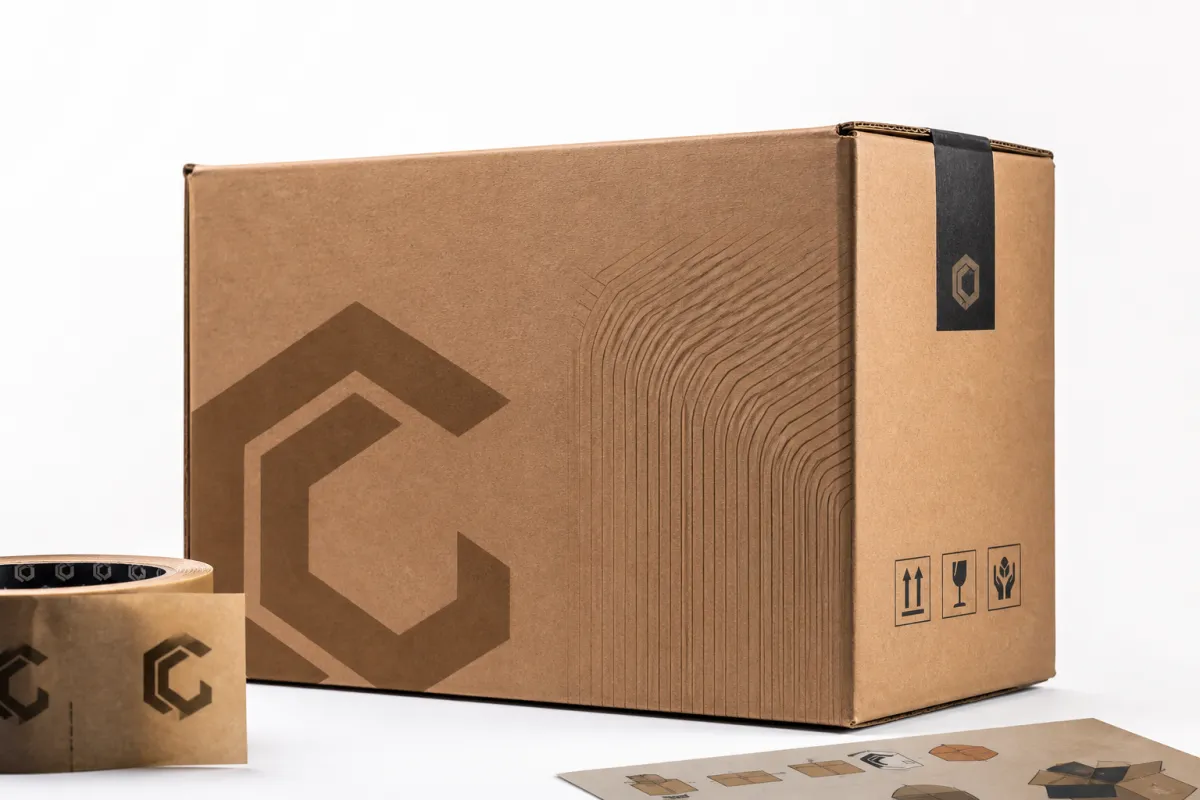
A branded shipping cartons supplier turns a plain corrugated shell into a branded delivery asset. That is the job in one sentence. The supplier is not just a printer, and not just a box broker. A good branded shipping cartons supplier sits between structural packaging design, print production, and shipping logistics so the carton does two things at once: protect the product and carry the brand.
That role is different from a general corrugated box vendor, who may only deal in standard sizes and basic board grades. It is different again from a broker, who may collect quotes but never tell you whether the carton is actually suited to ecommerce shipping. A branded shipping cartons supplier should be able to recommend board strength, flute choice, print method, and finishing based on how the cartons will move through your operation. If they cannot talk about those details, they are selling boxes, not packaging judgment.
“Branded” does not mean a logo slapped on one face and called a day. A branded shipping cartons supplier may work on logo placement, one-color or multi-color coverage, inside panel printing, QR codes, handling icons, messages, and inserts. Some buyers want the clean version: a mark, a return address panel, and nothing loud. Others want an interior reveal, a pattern, or copy that makes the unboxing feel more premium. Both approaches can work. The point is that the carton should fit the brand, not the supplier's favorite template.
Branded shipping cartons show up in all sorts of places. Ecommerce brands use them for direct-to-consumer orders. Subscription businesses use them for recurring shipments. Wholesale operations use them for retailer replenishment. Some companies use them in internal distribution because the carton is still visible to employees, retailers, and end recipients. A branded shipping cartons supplier should know how to support each use case without forcing the same structure onto everything like a hammer looking for a nail.
The part many buyers miss is simple: a branded shipping cartons supplier is solving two problems at once. The carton has to hold up in transit, and it has to communicate clearly. If either side fails, the package loses value. A beautiful carton that collapses in a parcel network is a bad decision. A strong plain carton protects the product, but it may waste one of the few brand touchpoints you get for free. The best result usually lands in the middle. Enough print to feel on-brand. Enough structure to handle real shipping abuse.
A carton that survives transit and still looks intentional at the door is doing its job. Everything else is decoration.
From a packaging buyer's point of view, that is why the branded shipping cartons supplier conversation should start with product dimensions, packed weight, shipping method, and damage history. Not with color preferences. Those matter later. First, the carton needs to work. Everything else hangs off that.
I know that sounds unglamorous. It is. But packaging usually works best when nobody has to think about it twice.
How the Process Works With a Branded Shipping Cartons Supplier
The workflow sounds straightforward until the brief gets vague. A solid branded shipping cartons supplier begins by collecting the essentials: product size, packed weight, shipping channel, monthly or annual volume, storage limits, and what the carton needs to say. That information drives every other decision. If the item is fragile, the supplier may suggest heavier board or inserts. If the carton is for lightweight ecommerce shipping, the goal may be tighter sizing and lower dimensional weight. Same category, different answer.
After the brief comes the structural recommendation. The supplier should confirm the carton style, the board grade, the flute, and any inserts or dividers. Dielines matter here. The artwork has to fit the structure, not get shoved onto the box after the fact like an apology. If a logo sits too close to a score line, the print can fold badly. If a panel is too small, the message looks cramped. That step is where a lot of jobs go sideways, and it is usually because someone skipped the layout check.
Artwork setup comes next. Usually, the design team or your internal brand team provides the files, and the supplier maps them onto the dieline. This is where corrugated board reveals its limits. Line weights need enough thickness. Small text can fill in. Dark solids may look uneven on rougher surfaces. A careful branded shipping cartons supplier will ask for vector artwork, outlined fonts, and print-safe color builds before anything moves forward. If they don't, they are probably guessing.
Proofing usually happens in a few formats. A digital mockup is fast and inexpensive, and it is useful for layout approval. A physical sample costs more, but it shows board feel, folding behavior, and print appearance on the actual substrate. A pre-production sample is the one you want before large runs, especially if the design is dense or the carton needs to stack cleanly in the warehouse. A branded shipping cartons supplier that skips sample planning is asking you to gamble with inventory. That is not a fun hobby.
Timeline expectations should be clear from the start. Simple repeat jobs can often move in roughly 7-12 business days after approval, depending on the supplier's schedule and freight distance. New custom cartons usually take 12-20 business days or more, especially if there are multiple proof rounds, special coatings, or insert tooling. If artwork arrives incomplete, add time. If the carton has to support a launch date, the branded shipping cartons supplier should know that upfront so production slots and transit times can be built around it instead of guessed at later.
Quality control should happen during production, not after delivery. The supplier should check print registration, color consistency, board caliper, glue integrity, and finish uniformity. If the order is large enough, random pull checks should happen during the run. On the buyer side, you want cartons that feel consistent from the first bundle to the last. No one wants the first thousand boxes looking sharp and the rest looking like they were printed during a power flicker.
In my experience, the best suppliers also tell you when a design is trying to do too much. That's a good thing. It saves money and headaches before the run starts.
For brands that need more than cartons, it helps to think about the broader packaging system. A branded shipping cartons supplier often works best alongside other Custom Packaging Products, especially if your team also needs mailers, retail-ready cartons, or void-fill strategies that fit different SKU sizes.
Cost and Pricing Factors in a Branded Shipping Cartons Supplier Quote
Pricing gets messy because buyers compare quotes that are not really comparable. A branded shipping cartons supplier can quote the same outer size as another supplier and still end up at a very different price because board grade, flute type, print method, and freight terms all change the number. The lowest line item is not always the cheapest carton once damage, reprints, and shipping are counted.
Size is usually the biggest price driver. Larger cartons use more board, which pushes up material cost and freight cost. After size, board grade matters a lot. A stronger E-flute or double-wall structure costs more than a lighter single-wall option, but it can save money if your current cartons crush in transit. A branded shipping cartons supplier should explain that tradeoff instead of just dropping a quote in your inbox and hoping you do not ask questions.
Print coverage changes pricing fast too. A small one-color logo on one panel is very different from full-coverage print across multiple faces. Interior print adds another step. Specialty coatings, soft-touch finishes, and water resistance treatments all push cost upward. Inserts, dividers, and custom die-cuts can turn a modest carton job into a more complex one. None of that is bad. It just needs to be priced honestly by the branded shipping cartons supplier.
Volume is another major lever. Higher quantities usually lower unit cost because setup and tooling get spread across more cartons. That said, large runs only make sense if the design is stable. If you are still changing dimensions, branding, or messaging every few weeks, a giant order turns into warehouse clutter. A good branded shipping cartons supplier will tell you that the volume break only matters if your demand forecast is real.
Buyers also miss the hidden costs. Tooling, plates, sample fees, rush charges, freight, and repackaging can all show up after the quote if the supplier is not upfront. With some branded shipping cartons supplier quotes, the printed box looks cheap until the add-ons arrive. Then the “cheap” option becomes the expensive one. Packaging has a way of doing that.
Here is a practical way to compare carton print routes. These ranges are broad, because actual pricing depends on carton size, board grade, order volume, region, and freight, but they are good enough to keep budgeting grounded in reality.
| Print / Build Option | Typical MOQ | Approx. Unit Cost Range | Best Fit | Main Tradeoff |
|---|---|---|---|---|
| Digital direct print | 500-2,000 units | $0.55-$1.20 | Short runs, multiple SKUs, fast launches | Higher unit cost at scale |
| Flexographic print | 2,500-20,000 units | $0.18-$0.48 | Stable designs, repeat ordering, ecommerce shipping | Less detail than premium print methods |
| Litho-lamination | 1,000-10,000 units | $0.95-$2.40 | Retail-facing cartons, premium branding | Higher cost and more production steps |
| Unprinted stock carton with label | 100+ | $0.12-$0.35 | Early-stage testing, budget control | Weak brand presence and limited consistency |
The real decision is not just unit cost. It is landed cost. A branded shipping cartons supplier should help you compare print route, freight, damage rates, and inventory risk together. If a slightly stronger carton reduces breakage by even a few percentage points, the math can favor the more expensive box quickly. Package protection usually pays for itself long before anyone notices the carton in a spreadsheet.
For some brands, the smartest move is to start with a tighter structure and moderate print coverage, then move into more elaborate packaging once sales stabilize. That tends to be more sensible than chasing premium finishes before the fulfillment process is steady. A branded shipping cartons supplier with experience should support that kind of staged rollout instead of pushing everything at once.
Key Factors to Compare in a Branded Shipping Cartons Supplier
Materials come first. If the carton fails in transit, the branding does not matter. Compare board grade, flute profile, caliper, and compression strength before you talk about color. For shipping heavier items, ask about Edge Crush Test values and stacking performance. For lighter ecommerce shipping, ask whether the carton can be right-sized to cut waste without making the packout too tight. A reliable branded shipping cartons supplier should talk in those terms without sounding annoyed that you asked.
Print method is the next major comparison point. Flexographic printing is often the workhorse for larger runs because it keeps cost down and holds up well on corrugated stock. Digital printing is more flexible for small batches or multiple versions. Litho-lam can give a cleaner finish and stronger shelf appeal, but it adds process complexity. A branded shipping cartons supplier should be able to tell you which route fits your volume and image requirements. If they insist one method fits everything, that is a red flag dressed up as confidence.
MOQ, or minimum order quantity, matters more than many buyers expect. A low MOQ sounds friendly, but it can also mean higher unit cost or limited material options. A high MOQ can reduce price, but it may create storage pressure and cash flow pain. The best branded shipping cartons supplier is not the one with the lowest threshold. It is the one whose MOQ matches your actual demand curve. Inventory that sits too long is just expensive cardboard with ambition.
Color control is another major issue. If your brand uses a specific red, black, or metallic accent, ask how the supplier manages color consistency from run to run. Corrugated printing can vary based on ink, absorbency, humidity, and board surface. A branded shipping cartons supplier should explain tolerances honestly. You do not need a perfect art print. You need repeatable cartons that do not drift wildly every time you reorder.
Sustainability claims deserve a hard look. Recycled content, recyclability, and FSC certification are useful, but the claims should be backed by actual specs. FSC information can be checked through FSC, and transit performance concepts are worth reviewing through the test frameworks used by groups like ISTA. If a branded shipping cartons supplier says a carton is eco-friendly, ask what that means in material terms. Recycled liner? Recyclable structure? Water-based inks? Right-sized design that lowers material use? Those are measurable. Vague green language is not.
Good suppliers also understand consistency across SKUs. If you sell three products in different sizes, the supplier should know how to keep brand alignment without forcing every carton into the same structure. That may mean a family of carton sizes with shared artwork logic. It may also mean using one structure for standard orders and another for oversized shipments. A branded shipping cartons supplier that keeps that system clean saves you from a warehouse full of random packaging styles.
For reference and broader packaging context, buyer teams often review the packaging industry through resources like the Case Studies page and compare formats against the company's other carton or mailer lines, including Custom Shipping Boxes and, in some workflows, Custom Poly Mailers for lightweight items that do not need corrugated protection.
Step-by-Step: Choosing a Branded Shipping Cartons Supplier
Start with a real packaging brief. Not a wish list. A useful brief should include product dimensions, packed dimensions, weight, shipping method, monthly or annual volume, current damage rate, brand goals, and any warehouse constraints. If you already know the pallet pattern or storage limits, include those too. The better the brief, the faster a branded shipping cartons supplier can tell you what will actually work.
Next, shortlist suppliers based on carton expertise. A polished website does not tell you whether the team understands structural engineering or just likes strong photography. Ask whether the branded shipping cartons supplier has experience with your carton type, your quantity range, and your print expectations. A vendor who mostly handles Retail Display Boxes may not be the best match for bulk transit cartons. Different packaging problems need different habits.
Then request apples-to-apples quotes. Use the same dimensions, board grade, print coverage, finish, insert needs, and delivery terms for every supplier. If one quote includes freight and another does not, you are not comparing prices. You are comparing half a price to a full one, which is a classic way packaging budgets disappear. A good branded shipping cartons supplier will appreciate clear spec parity because it lets the real differences show.
After that, approve samples in real conditions. Do not just admire them on a desk. Put the sample through handling, stacking, and transit testing. Drop it. Compress it. Leave it in a slightly damp area if moisture is part of your shipping environment. The best buying teams test a sample the same way it will be used. A branded shipping cartons supplier should not be offended by testing. If anything, they should expect it.
Testing standards matter more than people think. For transit packaging, many teams use concepts from ISTA procedures or ASTM-style thinking around shock, compression, and distribution stress. You do not need to turn your packaging room into a lab. You do need to know whether the carton can tolerate the real trip. A branded shipping cartons supplier that speaks comfortably about this is usually more credible than one that just repeats “durable” a few times and hopes it sounds technical.
Finally, lock in a timeline that covers more than the factory run. Include artwork revisions, sample approval, production, finishing, packing, transit, and any inbound receiving time. If a launch date is tied to the carton, build slack into the schedule. A branded shipping cartons supplier can move quickly, but only if your side is ready too. Delays are often caused by missing artwork, not slow machines.
Use the quote process to ask practical questions:
- What board grade and flute are included?
- What print method is being quoted?
- Are tooling, plates, and samples included?
- What is the realistic lead time from proof approval?
- How is freight charged and who owns the shipment once it leaves?
- Can the branded shipping cartons supplier scale this spec if volume grows?
If you are building a broader packaging program, compare carton options against the rest of your lineup on the Custom Packaging Products page. That helps keep structures, visuals, and fulfillment behavior aligned instead of treating each SKU like a one-off science project.
Common Mistakes When Buying From a Branded Shipping Cartons Supplier
The most common mistake is using product dimensions instead of packed dimensions. Those are not the same thing. A carton sized to the naked product often ends up too tight once dunnage, inserts, and handling clearance are added. Or it ends up too loose and burns material, freight, and dimensional weight. A branded shipping cartons supplier should ask for packed dimensions, not just product size. If they do not, you should.
Another mistake is treating the carton like a marketing piece only. Branding matters, but so does crush resistance, score quality, and carrier abuse. A carton can look beautiful and still fail if the board is too weak or the insert design is poor. A branded shipping cartons supplier with decent instincts will push back if the box is being designed like a poster. Boxes are shipping materials first.
Artwork approval from a screen is another trap. What looks crisp on a laptop may not hold up on corrugated board. Thin lines can disappear. Small type can blur. Dark fills can look uneven. Bleed allowances matter. A careful branded shipping cartons supplier will show you how the art translates to the substrate so you are not discovering problems after 20,000 units are printed. That is an expensive way to learn about line weight.
Waiting too long to order is a self-inflicted wound. Rush fees, partial shipments, and last-minute substitutes happen because the buyer left no room for sampling or freight delays. A branded shipping cartons supplier can sometimes save the schedule, but the result may be more expensive or less ideal than the original spec. Planning ahead usually beats panic, which is a pleasant change from most packaging timelines.
Choosing the cheapest quote without checking board specs is another classic. One carton may be cheaper because it uses lighter material, less print, or a thinner finish that cannot tolerate transit packaging stress. The quote can look great until breakage and reprints show up. A branded shipping cartons supplier should help you compare the total cost, not just the line item on the invoice.
One more mistake: ignoring warehouse handling. The best box on paper can still become annoying if it is awkward to pack, hard to fold, or slow to assemble. Order fulfillment teams care about seconds. A branded shipping cartons supplier should think about pack speed and storage footprint as much as the customer-facing side. Otherwise, the carton creates friction where you wanted efficiency.
Expert Tips for Working With a Branded Shipping Cartons Supplier
Standardize carton sizes wherever you can. Fewer SKUs usually mean better pricing, simpler storage, and less chaos in order fulfillment. If three products can fit into one thoughtfully designed shipping carton family, that is often better than maintaining a separate box for every item. A branded shipping cartons supplier can help consolidate formats without making everything look generic.
Design for both the shelf and the warehouse. That sounds obvious, but plenty of brands forget it. A carton that looks sharp in unboxing photos still has to move through a fulfillment center, survive pallet stacking, and maybe ride in a hot truck for a day. A branded shipping cartons supplier should balance appearance with structural reality. The best carton is the one that gets opened, not repaired.
Ask for a spec sheet, not just a quote. The spec sheet should include dimensions, board grade, flute type, print method, tolerances, finish, carton style, shipping assumptions, and any test standard used. That document becomes your reference when reordering or comparing alternatives. A branded shipping cartons supplier who documents clearly saves future headaches. Packaging teams love paperwork right up until they need it.
Run a sample before committing to the full order, especially if the board, print coverage, or insert design is new. A sample run can expose folding issues, color shifts, and fit problems that would be expensive to fix later. If the carton is going to support premium branding or a launch, the sample is cheap insurance. A branded shipping cartons supplier should support that logic without acting surprised.
Plan your re-order before stock gets tight. Packaging shortages are not glamorous. They are stressful, expensive, and usually avoidable. Put a reorder point in place based on lead time and usage rate. If your branded shipping cartons supplier needs 3 weeks from approval to delivery, do not wait until you have 4 days of stock left. That is not planning. That is hoping.
Use the carton as part of the broader packaging system, not a one-off object. If your business also needs lightweight options, consider whether some orders are better suited to Custom Poly Mailers while heavier or fragile orders stay in corrugated. The smartest packaging programs usually blend formats instead of trying to force one material to solve everything.
Brand consistency still matters too. Keep messaging, typography, and logo placement aligned across carton sizes so the customer experience feels coherent. A strong branded shipping cartons supplier will help preserve that consistency even when the structural specs change from SKU to SKU.
There is also a practical side to sustainability that gets ignored far too often. Right-sizing cartons can reduce material use, lower freight cost, and improve package protection at the same time. That is better than slapping a green label on a box and calling it a strategy. A branded shipping cartons supplier that understands this will usually help you save money and reduce waste without turning the conversation into a marketing sermon.
For teams looking at proof points and broader delivery formats, reviewing Case Studies can help you see how different packaging choices behave in real programs. It is a faster way to learn than discovering every mistake yourself.
FAQ
What should I ask a branded shipping cartons supplier before placing an order?
Ask about board grade, flute type, print method, MOQ, lead time, sample options, freight cost, and whether artwork setup is handled in-house. Also ask how they test package protection and whether they can show sample cartons from similar order fulfillment situations. A branded shipping cartons supplier should be able to answer without dodging the basics.
How long does a branded shipping cartons supplier usually take to deliver?
Repeat orders can move faster, especially if the structure and artwork are already approved. New custom jobs usually take longer because they need structural setup, proofing, and production planning. A realistic timeline should include artwork prep, proof approval, production, packing, and transit. A branded shipping cartons supplier that promises only the factory run time is leaving out half the process.
Why do branded shipping cartons supplier quotes vary so much?
Prices change based on carton size, board type, print coverage, finish, quantity, tooling, and freight. One branded shipping cartons supplier may quote a low box price but charge separately for setup, samples, or shipping, so compare the full landed cost. That is usually where the real difference shows up.
Can a branded shipping cartons supplier help with eco-friendly packaging?
Yes, if they offer recycled content, right-sized designs, and print methods that fit your sustainability goals. Ask for exact material specs instead of vague green claims, because “eco-friendly” is not a packaging standard. A competent branded shipping cartons supplier should be able to point to the actual material and construction details that support the claim.
How do I know if a branded shipping cartons supplier is good for ecommerce?
Look for experience with transit-tested cartons, consistent print quality, and sizing that reduces void fill and damage rates. A strong ecommerce partner understands shipping materials, stacking strength, and how the unboxing experience affects repeat orders. If the branded shipping cartons supplier also understands dimensional weight and fulfillment speed, that is a very good sign.
Buying cartons is not glamorous, and that is exactly why people get sloppy with it. A good branded shipping cartons supplier helps you protect the product, keep shipping efficient, and make the customer's first physical brand touchpoint feel deliberate. If you get the structure, print, and timing right, the carton stops being a box and starts doing real work for the business.
The practical takeaway is simple: start with packed dimensions, shipping method, board grade, and a sample you can test in real conditions. If a branded shipping cartons supplier cannot explain those four things clearly, keep looking. That kind of clarity usually tells you more than a glossy quote ever will.