Buyer Fit Snapshot
| Best fit | Branded Carton Inserts for Boxes projects where brand print, material claims, artwork control, MOQ, and repeat-order consistency need to be specified before quoting. |
|---|---|
| Quote inputs | Share finished size, material target, print colors, finish, packing count, annual reorder estimate, ship-to region, and any compliance wording. |
| Proofing check | Approve dieline scale, logo placement, barcode or warning zones, color tolerance, closure strength, and carton packing before bulk production. |
| Main risk | Vague material claims, crowded artwork, missing packing details, or unclear freight terms can make a low unit price expensive after revisions. |
Fast answer: Branded Carton Inserts for Boxes: Design, Cost & Fit should be specified like a repeatable production item. The safest quote records material, print method, finish, artwork proof, packing count, and reorder notes in one written spec.
Production checks before approval
Compare the actual filled-product size with the drawing, then confirm tolerance on folds, seals, hang holes, label areas, and retail display edges. Reserve space for logos, QR codes, warning copy, and material claims before decorative graphics fill the panel.
Quote comparison points
Review material grade, print process, finish, sampling route, tooling charges, carton quantity, and freight assumptions side by side. A quote is only useful when the supplier can repeat the same color, closure quality, and packing count on the next order.
Branded Carton Inserts for boxes do far more than sit inside a mailer or rigid carton and wait to be noticed. They hold the product in place, protect finishes from abrasion, and shape the first impression the instant the lid opens. In packaging reviews I have sat through, returns often begin with something small: a loose cavity, a corner that rubs, a bottle that arrives shifted half an inch off-center. The fix is usually quieter than the problem. Branded carton inserts for boxes turn a shipping container into a controlled reveal, using only a few millimeters of structure and print to change how the whole package behaves.
For a packaging buyer, the useful question is not whether Branded Carton Inserts for boxes look attractive. The sharper question is whether they handle three jobs at once: protection, presentation, and pack-out speed. If an insert keeps a product centered, helps staff pack faster, and makes the unboxing feel deliberate, it earns its place in the bill of materials. If it only adds ink and board, the spec is probably wrong.
That trade-off sounds simple on paper. In production, it rarely is. A carton insert that saves two seconds per unit can matter more than a decorative outer sleeve, especially on a run of 20,000 units where labor starts behaving like a slow leak. The opposite is also true: a beautiful insert that slows the line or damages the product during assembly is an expensive mistake dressed up as branding.
Branded carton inserts for boxes: why a small detail changes everything
Most shoppers see the outer box first. Packaging teams see the motion inside it. A product that shifts just a few millimeters during transit can pick up edge wear, press against a lid, or arrive with a presentation that feels off even when the item itself is still intact. Branded carton inserts for boxes solve that problem by stabilizing the product, guiding the opening sequence, and showing that the brand planned the experience instead of leaving it to chance.
A plain carton with loose fill may protect a product on paper, but it rarely creates a controlled unboxing. Branded carton inserts for boxes can frame the item so the customer sees it exactly as intended, with accessories in their own spaces and no wasted motion. That detail matters more than many teams expect. A buyer opening a premium skincare set, a tech accessory kit, or a limited-run gift pack is not comparing board calipers in their head. They are reacting to how the package behaves in real time.
I have seen brands spend more on the outer carton after the fact because the inside was never designed well enough to do its share of the work. A better insert can take over some of the burden that foam, void fill, and oversized cartons usually carry. It does not need to be loud. It needs to hold, present, and finish the story cleanly. Branded carton inserts for boxes work best when the outer carton and the inner structure feel like one engineered system rather than two unrelated pieces.
“The best insert is the one the customer barely thinks about, because the product sits perfectly and the opening sequence feels natural.”
That quiet precision is part of the value. A fit tolerance shift of 2 to 4 mm can decide whether a product settles securely or rattles in transit. Small? Absolutely. Insignificant? Not remotely. Packaging often lives or dies in the details that never show up in a glossy mockup.
There is a museum-like logic to it. Curators use mounts to control sightlines and movement; packaging engineers do something similar, only with vibration, drop forces, and warehouse handling in the mix. The comparison is useful because both disciplines are about restraint. You notice the object, not the support.
For teams comparing options, branded carton inserts for boxes are often the point where brand experience becomes measurable. The insert affects pack time, ship damage, and the customer’s first ten seconds with the product. That is not decorative work. That is operational design with a direct commercial effect.
How branded carton inserts for boxes work
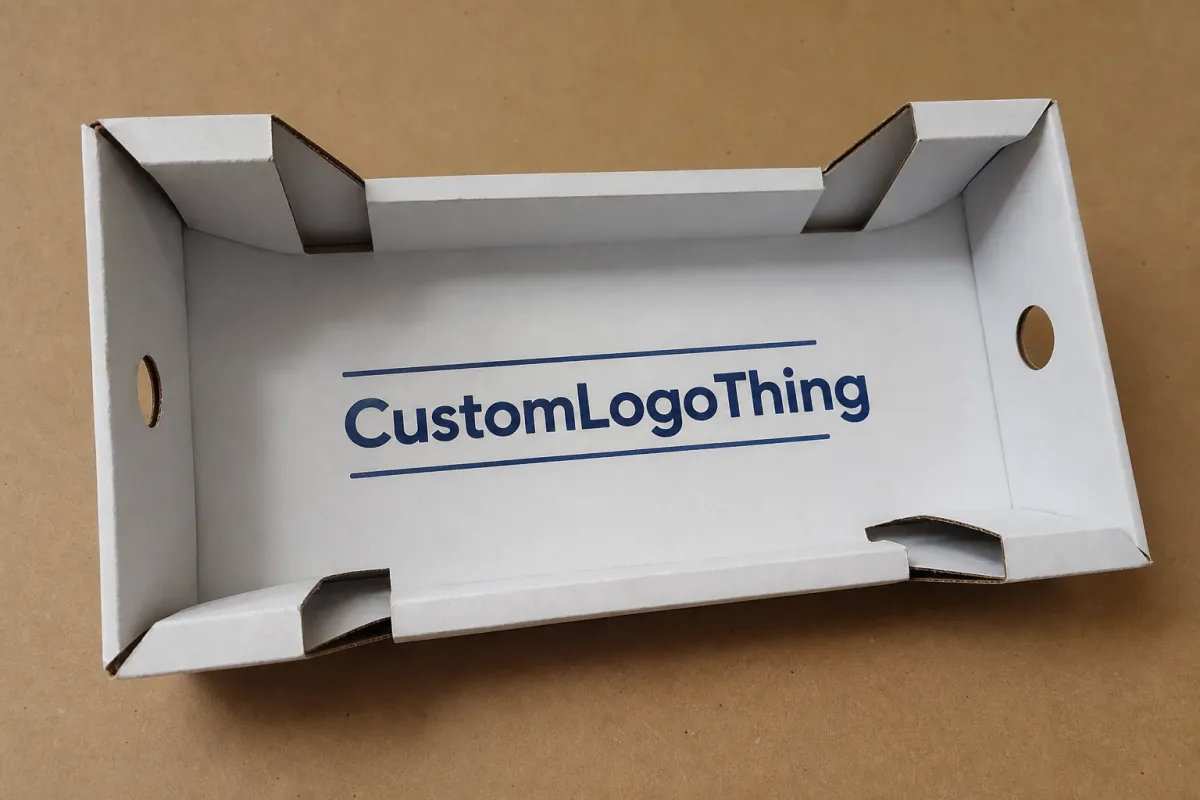
At the most basic level, branded carton inserts for boxes create a fixed home for each product component. They use friction, cutouts, folds, and compartments to keep movement under control. That can mean a folded paperboard tray, a partitioned divider set, a sleeve with a window opening, or a custom die-cut board that locks around a bottle, device, or multi-piece kit.
Different products fail in different ways, which is why the format matters. A glass dropper bottle needs vertical restraint and edge protection. A cable set needs compartments so it does not knot itself around other parts. A gift set may need a layered reveal, where the top insert hides accessories and the lower level carries the main product. Branded carton inserts for boxes can be built for all of those scenarios, but the insert has to match the product’s real behavior, not only the dimensions on a spec sheet.
Branding shows up in several places. Some teams print the interior face so the customer sees a message the moment the carton opens. Others use colored board, spot varnish, foil hits, or a subtle embossed mark on the pull tab. QR codes can live on a hidden flap for setup instructions, refill guidance, or warranty registration. In premium programs, the inside of the insert becomes part of the reveal, with branded carton inserts for boxes doing the work of both structure and storytelling.
The outer carton and the insert should act like one package. If the box looks polished but the insert feels awkward, the mismatch shows up immediately. If the insert is too loose, the product drifts. If it is too tight, staff struggle to pack it and the item may still pick up wear during insertion. Good branded carton inserts for boxes sit in the narrow middle: secure enough to hold, forgiving enough to assemble at scale.
Common formats include:
- Folding cartons for lighter retail products, cosmetics, and small accessories.
- Tray-and-lid inserts for layered presentation and repeatable pack-out.
- Sleeves for nested products, literature sets, or promotional kits.
- Partitions for bottles, jars, and multi-piece assortments.
- Custom die-cut boards for products with unusual geometry or delicate protrusions.
For teams comparing structural routes, real examples make the trade-offs easier to see. Case Studies can show how a structure translates into an actual shipping and presentation outcome, while Custom Packaging Products helps connect an insert format to the wider packaging system around it.
Design factors that shape the result
The design brief for branded carton inserts for boxes begins with the product, not the carton. That sounds obvious until you see how often the step is rushed. Measure the item at its widest, tallest, and most fragile points. Include accessories, closures, cables, and anything that changes how the product sits in the pack. Weight matters too. A 100 g cosmetic compact behaves very differently from a 900 g glass candle jar under vibration and compression.
Material choice is where the trade-offs become visible. SBS paperboard is common for clean print, crisp scoring, and premium branding. Recycled board can fit sustainability targets or lower-ink designs, though surface finish often varies more. Corrugated board brings more compression strength and better protection for heavier items, but the print surface is less refined unless the construction is lined. Branded carton inserts for boxes often use 14pt to 24pt paperboard for lighter products and E-flute or B-flute corrugated structures when strength matters more than finesse.
Finish changes both feel and performance. Matte coatings cut glare and can make text easier to read. Soft-touch lamination adds a velvety feel, though it raises cost and can complicate recycling. Aqueous coating often lands in the middle because it supports scuff resistance without the same complexity as heavy lamination. Embossing or foil can lift a premium line, but if every panel gets treated the insert starts to feel crowded instead of refined. The strongest branded carton inserts for boxes usually reserve premium effects for one or two focal points.
Fit tolerance separates decent inserts from reliable ones. A well-drawn dieline still has to account for board thickness, fold memory, and real production variation. If a cavity is drawn too tightly, operators slow down and may deform the pack during assembly. If it is too loose, the product drifts. In many programs, a 1 to 2 mm adjustment changes both pack speed and transit performance. That is why branded carton inserts for boxes should always be checked against the actual sample product, not only against CAD dimensions.
Assembly method matters just as much as material. Some inserts are auto-locking and pop into shape in seconds. Others require hand folding, tab insertion, or gluing. For low-volume luxury programs, hand assembly can be acceptable. For anything moving through contract packing lines, the insert needs to be intuitive. Once staff are handling hundreds or thousands of units, even a 3-second delay per pack becomes expensive.
There is also a sustainability lens. FSC-certified board can support responsible sourcing claims when the chain of custody is in place, and the FSC standard gives buyers a clearer reference point for fiber origin. For transit testing and performance validation, many packaging teams look to ISTA procedures, especially when they want to know how branded carton inserts for boxes behave under vibration, drop, and compression conditions. For end-of-life guidance, the EPA’s packaging and recycling resources at EPA recycling guidance offer a practical baseline.
Branded carton inserts for boxes also need to match the route to market. A product sold direct-to-consumer may need a stronger presentation because the box is part of the brand touchpoint. A wholesale pack may care more about speed, stackability, and fewer loose components. Same category, different priorities. No single insert spec works everywhere, and that is exactly why the brief matters.
One practical detail gets missed often: print direction. If the insert is mirrored, upside down, or hidden once packed, the branding does not earn its keep. I have seen teams approve a beautiful inside panel that was never visible in the finished pack. That mistake is costly because it is invisible until boxes come off the line.
Cost and pricing: what drives the unit cost
Pricing for branded carton inserts for boxes rarely comes down to one line item. It is a stack of decisions. Material grade, ink coverage, die complexity, finishing, assembly, and quantity all push the number up or down. A simple one-color insert on standard board can be efficient at scale, while a multi-compartment structure with foil, soft-touch, and hand assembly can climb quickly.
MOQ is one of the strongest levers. Smaller runs usually carry higher unit costs because setup, die cutting, print calibration, and sample approvals are spread across fewer pieces. A run of 1,000 branded carton inserts for boxes may cost materially more per unit than a run of 10,000, even if the design is identical. That is not mystery pricing; fixed costs simply have less volume to absorb them.
A cleaner comparison starts with identical variables. Ask for the same size, the same print spec, the same pack format, and the same delivery condition. Otherwise, the quotes do not really match. One supplier may quote inserts flat-packed, another may quote pre-folded and glued units, and a third may build freight into the price. That is how pricing gets muddy fast.
| Insert option | Typical use | Relative cost pressure | Strengths | Trade-offs |
|---|---|---|---|---|
| SBS paperboard, printed interior | Cosmetics, accessories, gift sets | Low to moderate | Sharp print, clean folds, premium appearance | Less compression strength for heavier items |
| Recycled board insert | Sustainable retail programs, simple formats | Low to moderate | Good fiber story, often easier to position as eco-conscious | Surface consistency can vary more than virgin board |
| Corrugated insert | Heavier goods, shipping-first packs, fragile items | Moderate | Better cushioning and stacking strength | Less refined print feel unless laminated or lined |
| Multi-compartment custom insert | Kits, bundles, premium launches | Moderate to high | Organizes multiple parts, improves unboxing control | More tooling, more setup, slower packing if overcomplicated |
| Special finish insert | High-end retail, limited runs | High | Strong tactile and visual impact | Can raise cost and complicate recyclability |
As a rough planning range, straightforward branded carton inserts for boxes in a standard board spec might sit in a low single-digit cent increase at very high volume, while custom multi-part inserts can move into the teens or beyond at smaller quantities. For a 5,000-piece run, a well-defined insert with moderate print coverage might land around $0.18 to $0.28 per unit, depending on structure and finishing. Add more pockets, tighter registration, premium lamination, or manual assembly, and the price can rise fast. These are planning figures rather than promises, but they work well in early budget conversations.
Tooling should be separated from unit cost whenever possible. If a custom die or cutting rule is needed, that cost should be visible on the quote. The same applies to samples, print proofs, and freight. A clean quote breaks out tooling, unit Cost, and Shipping, so branded carton inserts for boxes can be compared on a fair basis. If a supplier hides all of that inside one number, the quote may look attractive until the revisions start.
One more point deserves attention: changes after approval are expensive. If artwork changes after plates or dies are set, or if the cavity size changes after the sample is approved, the budget moves. Sometimes a lot. The cheapest insert is usually the one specified clearly the first time.
Labor deserves a line in the conversation as well. A design that saves one hand motion per pack can matter more than a half-cent reduction in board cost. That sounds small until you run the math across a full quarter of output. On a 50,000-unit program, even modest assembly savings can outweigh a slightly cheaper substrate.
Process, timeline, and production steps
The production flow for branded carton inserts for boxes is fairly predictable, provided the brief is clean. It usually starts with dimensions, product photos, and pack-out instructions. From there, the structural concept is drafted, the dieline is reviewed, artwork is mapped, and a sample is produced. Once the sample is approved, production moves into cutting, printing, finishing, folding, and packing. The last step sounds dull. It is not. Poor packing at this stage can undo good design.
Delays tend to surface in the same few places. The first is late product changes. If the product size shifts by even a few millimeters after the insert is engineered, the fit can fail. The second is artwork approval. If branded carton inserts for boxes rely on interior messaging, QR codes, or print alignment with the outer box, unfinished artwork slows everything down. The third is sampling. Some projects need one cycle. Others need two or three because the first version shows a fold issue, a tolerance problem, or a visual mismatch.
A realistic timeline depends on structure and finish. A simple insert with standard board and repeat artwork may move from approved dieline to production in roughly 10 to 15 business days, assuming the sample is already signed off. More complex branded carton inserts for boxes can take 15 to 25 business days or longer if they require new tooling, specialty material sourcing, or extensive proofing. Add freight, customs, or regional peak seasons, and the calendar stretches further.
For planning, it helps to think in checkpoints rather than one fixed due date:
- Brief and measurement capture: 1 to 3 days if the product data is ready.
- Structural concept and dieline: 2 to 5 business days for a straightforward project.
- Sample build and review: usually 3 to 7 business days.
- Final artwork and prepress: 2 to 5 business days, depending on revisions.
- Production and packing: often 7 to 15 business days for standard runs.
That model is simple, but it is useful. It shows where branded carton inserts for boxes can absorb a delay and where they cannot. If a launch is tied to a holiday window, a trade show, or a retailer ship date, extra time belongs in the sampling step. Most supply problems do not come from printing alone. They come from waiting too long to approve a sample that still needs adjustment.
Shipping format matters too. Flat-packed inserts save freight and warehouse space. Pre-assembled formats can save labor but increase shipping volume. With branded carton inserts for boxes, the shipping format can change the total landed cost more than a small board-price difference ever will.
One overlooked timing issue is compression testing. If you plan to validate the pack, the test window has to sit before final approval, not after pallets are already booked. A one-day delay in test scheduling can turn into a week if the lab queue is full, which is why experienced teams build test time into the master schedule from the beginning.
Common mistakes with branded carton inserts for boxes
The most common error is designing around the outer carton first and the product second. That sequence is backwards. If the insert is sized to a box that looks good on paper but does not account for how the product actually sits, the result is a loose pack, a forced pack, or a redesign. Branded carton inserts for boxes should start with the item’s profile and then work outward.
Overbranding is another frequent miss. Yes, the insert is a branding surface. No, every inch does not need to be filled. Too much copy, too many icons, or too many effects can make the pack feel busy and reduce legibility. The unboxing moment should feel edited. If the product launch has a premium angle, restraint usually reads as confidence. Branded carton inserts for boxes are stronger when the message is precise rather than crowded.
Testing gets skipped more often than it should. A sample can look perfect on a desk and fail under vibration, stacking, or repeated handling. Drop tests, compression checks, and ship testing are not only for large operations. They are useful even for smaller brands because they show how the insert behaves in reality. If you need a standard reference, ISTA test profiles are a sensible place to start, especially when the package will move through parcel networks and mixed handling conditions.
Assembly complexity hides in plain sight. A clever structure that takes too long to fold or explain can create production bottlenecks. If the insert needs special orientation, adhesive timing, or several manual steps, the pack-out line slows down and the labor cost climbs. Branded carton inserts for boxes should help operations, not force the team to write a new training manual.
Spec drift is the last trap, and it is expensive. A buyer approves a quote for 18pt board, then the artwork team asks for heavier lamination, then the product team adds an accessory, then the carton size changes. By the time production starts, the insert is no longer the one that was quoted. That is how budget overruns happen. Keep the spec locked before the order is released.
There is one more problem that shows up only after launch: assuming every SKU needs the same insert logic. A skin-care serum, a refill pouch, and a holiday gift bundle may share a logo, but they do not share the same handling risk. Standardize the parts of the system that should stay consistent. Customize only the parts that affect movement, protection, or presentation.
“A good insert should feel invisible to operations and obvious to the customer.”
That balance matters. If branded carton inserts for boxes are designed well, the packing line barely notices them and the customer absolutely does. If they are designed poorly, everybody notices for the wrong reason.
Expert tips and actionable next steps
Start with a checklist, not a mood board. Exact product dimensions, weight, accessory count, fragile points, pack sequence, and shipping method should be on the table before a structure is drawn. Branded carton inserts for boxes work best when the brief captures how the product will actually be loaded and shipped. A beautiful insert that does not match the pack-out reality only creates rework.
Ask for a structural sample before final art approval. That one step catches more problems than many teams expect. You can test opening sequence, product centering, print placement, and whether the insert slows packing. If you are choosing between two versions, place the actual product in both, then shake the carton, tilt it, and open it repeatedly. Small differences become obvious fast.
When you request pricing, ask for a side-by-side quote that separates tooling, sample costs, unit cost, and freight. That is the only way to see the true budget for branded carton inserts for boxes. If the supplier can quote the same quantity and the same delivery condition across all options, the comparison gets much cleaner. If they cannot, you are not comparing the same thing.
Trade-offs matter more than ideals. A premium tactile finish may improve perception but add cost and reduce recyclability. A simpler recycled board may lower both footprint and price but reduce compression strength. The right answer depends on what the product needs most. There is no universal winner here, and pretending there is usually leads to a poor spec.
Here is a practical rollout plan that works well for many packaging teams:
- Approve one sample built around the real product.
- Run one shipment through the normal distribution channel.
- Check returned units, damage claims, and pack time.
- Adjust the dieline if needed.
- Scale branded carton inserts for boxes across the full line only after the test run holds up.
That sequence keeps risk manageable. It is especially useful for launches with multiple SKUs, because not every size needs the same insert logic. A 2-piece kit and a 6-piece kit can share a visual language while using different structures. The smartest branded carton inserts for boxes standardize where possible and customize only where it matters.
For brands that want packaging to support a broader system, examine how the insert sits alongside the outer carton, mailer, and internal messaging. A coordinated package does not need to be expensive. It needs to be deliberate. When branded carton inserts for boxes are treated as a decision tool rather than a decorative afterthought, they pay off in fewer damage claims, better unboxing, and a cleaner production process.
The most practical next move is simple: lock the product dimensions, define the pack sequence, and test a sample under real handling conditions before you approve the final print. That one step removes more risk than any sales pitch about premium packaging ever will.
Branded carton inserts for boxes are not a tiny finishing touch. They are a structural choice, a brand cue, and a cost decision all at once. Plan them carefully, and they can improve protection, speed up packing, and raise perceived value without forcing the outer package to do all the work.
Frequently Asked Questions
What products are best suited to branded carton inserts for boxes?
Fragile items, premium gift products, and multi-piece kits benefit most because the insert stops movement and organizes the contents. Products with small accessories, cables, or add-ons are easier to pack cleanly when each component has a dedicated pocket or cutout. If the unboxing matters as much as the shipping protection, branded carton inserts for boxes usually add more value than a plain filler solution.
Are branded carton inserts for boxes expensive to produce?
They can be cost-efficient at scale, but price rises with custom tooling, premium materials, and complex print or finishing. The smallest runs usually carry the highest unit cost because setup and sampling are spread across fewer pieces. A simpler structure, fewer colors, and standardized dimensions are the fastest ways to control price without losing the branded look.
How do I choose the right material for carton inserts?
Use lighter paperboard for cosmetics, accessories, or retail goods that need presentation more than compression strength. Choose stronger board or corrugated material when the product is heavier, sharper, or likely to ship long distances. Match the material to the packing method; if staff assemble the insert by hand, the board needs to be sturdy but still easy to fold.
What is the typical turnaround for branded carton inserts for boxes?
Simple, repeatable designs move faster because they need fewer proof cycles and less structural testing. Custom shapes, specialty finishes, and artwork corrections extend the schedule because each change affects dieline approval and production setup. Build time for sampling and shipping into the plan so launch dates do not depend on a single perfect production run.
Can branded carton inserts for boxes be recycled?
Often yes, if the insert uses a single material or a recyclable board with minimal mixed components. Recycling becomes harder when foil, heavy lamination, magnets, or glued inserts are added, so material choice matters early. If sustainability is a priority, ask the supplier to confirm fiber content, coating type, and end-of-life guidance before ordering.