Buyer Fit Snapshot
| Best fit | Branded Corrugated Inserts with Logo projects where brand print, material claims, artwork control, MOQ, and repeat-order consistency need to be specified before quoting. |
|---|---|
| Quote inputs | Share finished size, material target, print colors, finish, packing count, annual reorder estimate, ship-to region, and any compliance wording. |
| Proofing check | Approve dieline scale, logo placement, barcode or warning zones, color tolerance, closure strength, and carton packing before bulk production. |
| Main risk | Vague material claims, crowded artwork, missing packing details, or unclear freight terms can make a low unit price expensive after revisions. |
Fast answer: Branded Corrugated Inserts with Logo: Material, Print, Proofing, and Reorder Risk should be specified like a repeatable production item. The safest quote records material, print method, finish, artwork proof, packing count, and reorder notes in one written spec.
Production checks before approval
Compare the actual filled-product size with the drawing, then confirm tolerance on folds, seals, hang holes, label areas, and retail display edges. Reserve space for logos, QR codes, warning copy, and material claims before decorative graphics fill the panel.
Quote comparison points
Review material grade, print process, finish, sampling route, tooling charges, carton quantity, and freight assumptions side by side. A quote is only useful when the supplier can repeat the same color, closure quality, and packing count on the next order.
When a product lands in perfect shape but still shifts around inside the carton, the packaging has only done half the job. That loose, rattling feel is exactly where branded corrugated Inserts With Logo earn their keep: they lock the item in place, tighten up the unboxing, and make the pack feel designed instead of improvised.
For brands shipping fragile goods, subscription kits, cosmetics, electronics, or retail-ready bundles, Branded Corrugated Inserts with logo do a lot more than limit damage. They change the first few seconds of the customer experience. The inside of the box feels crisp, intentional, and a little more premium, which is often the difference between packaging That Gets Noticed and packaging that gets tossed aside. I have seen jobs where the outer carton was plain, even plain enough to disappear, yet the insert inside carried the whole impression.
One detail gets missed more often than it should: the insert is not just something sitting below the product. It is part of the structure, part of the merchandising, and often the first thing a customer handles after opening the shipper. That means branded corrugated inserts with logo have to do two jobs at once. They need to secure the product tightly enough to protect it, and they need to present the brand with enough restraint that the package feels deliberate from the first second.
What branded corrugated inserts with logo really are
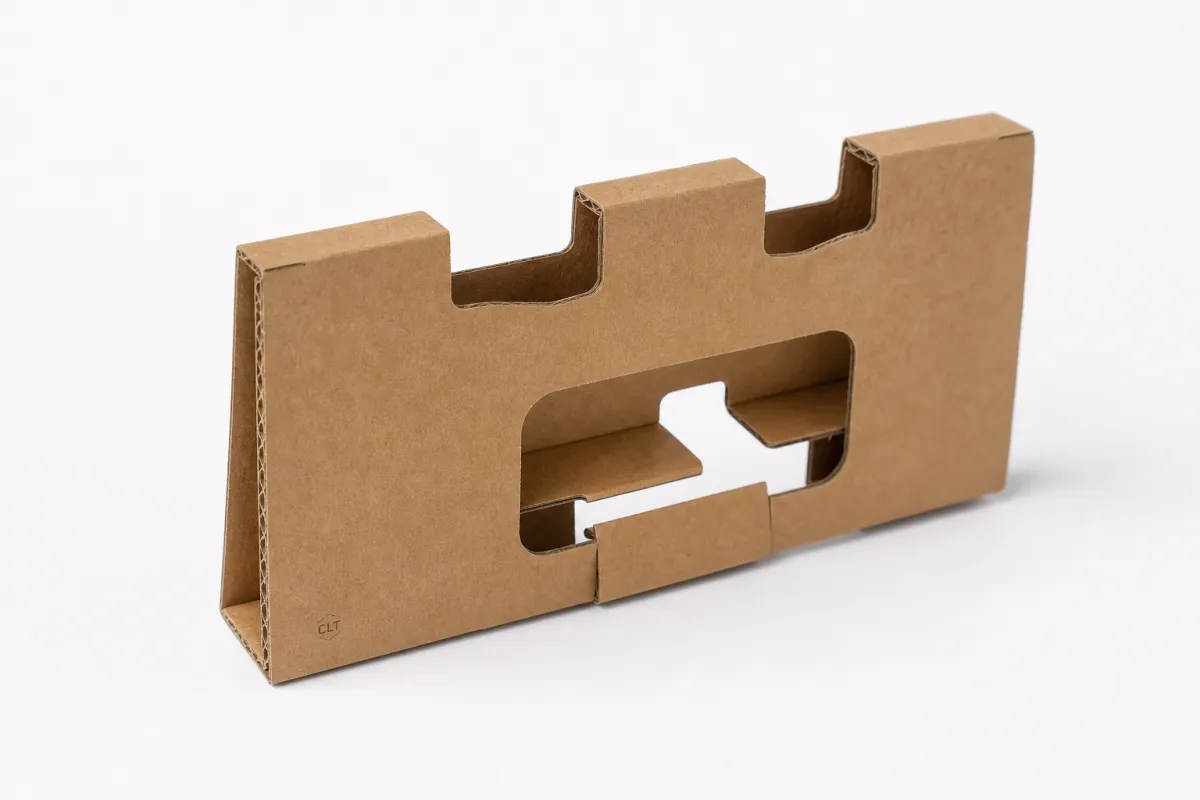
In plain terms, branded corrugated inserts with logo are custom-cut corrugated components built to hold a product steady inside a carton, mailer, or retail shipper. They are usually made from single-wall board, often E-flute for cleaner print or B-flute for extra cushion and compression resistance, though heavier applications can move to double-wall board. The insert may be a single cradle, a nested tray, a partition, a multi-layer pad, or a mix of shapes built around one SKU or a related group of products.
The logo can appear in a few different ways. A simple one-color flexographic print on a kraft surface is common. Digital print works well for shorter runs or more complex graphics. Some brands use die-cut reveals so the logo appears only when the box opens in a certain sequence. Others keep the branding subtle and place it where the customer sees it only after removing the top layer. Whatever the approach, branded corrugated inserts with logo should feel like part of the structure rather than decoration added at the end.
A box can survive the trip and still disappoint the customer if the insert feels generic, noisy, or awkward to remove.
The strongest designs do not treat branding and protection as competing goals. A good insert guides the opening flow. It creates a pause, then a reveal. It also sends a practical message about the product inside: the brand cared enough to engineer the details. That matters more than a loud graphic ever will. The strongest branded corrugated inserts with logo make the product feel premium without turning pack-out into a headache.
There is a tactile side to this that people underestimate. The first hand contact inside a box sticks in memory. If the product lifts cleanly, the insert stays flat, and the logo lands in the right place, the package feels structured and confident. If the insert bends, flakes, or rattles, the whole experience drops a notch. That is why branded corrugated inserts with logo sit in such a useful middle ground between plain protection and fully decorated retail packaging.
How branded corrugated inserts with logo work inside the package
The mechanics are straightforward, and that straightforwardness is the point. branded corrugated inserts with logo create friction, spacing, and compression points so a product cannot drift during handling or transit. The insert keeps the item centered, resists side-to-side movement, and absorbs part of the vibration that would otherwise travel directly to the product. In practice, that means less scuffing, fewer corner dents, and fewer complaints about rattling or broken components.
Logo placement then becomes a structural choice, not just a graphic one. A visible face might carry the brand mark in one color. A hidden interior surface may hold a small printed line that appears only when the top layer lifts. A die-cut window can frame the product and reveal part of the logo at the same time. Even the direction of the board grain can matter if the opening motion is meant to feel smooth. That is why branded corrugated inserts with logo often look simple from the outside but are built from a sequence of small choices.
Common insert styles
- Full cradle inserts support one item with cutouts or pockets and are a strong fit for bottles, devices, and fragile gift sets.
- Side rails keep products aligned along the edges and work well for flat bundles, sleeves, or long rectangular items.
- Partitions divide a carton into multiple cells, which is useful for multi-SKU kits and glass or ceramic sets.
- Layered pads build cushioning through stacked sheets and are often used where weight control and simple assembly matter.
The right style depends on how the product moves under real handling, not just how it sits in a CAD drawing. A bottle that looks steady in the render may wobble if the neck is too tall and the base pocket is too shallow. A device that seems safe may still rub against a flap edge if the clearance is too tight. That is where branded corrugated inserts with logo earn their value. They do not just hold the product; they define the opening sequence.
From a packaging buyer's point of view, the best moment is when the customer opens the carton and immediately understands where the item lives, how to lift it, and where the brand wants attention to land. That experience is never random. It happens because the insert, the print, and the box dimensions were designed together. branded corrugated inserts with logo work best when they are part of that same system.
Key factors that shape fit, durability, and branding
Start with dimensions. If the product is off by even a few millimeters, the insert can shift from snug to sloppy or from protective to overly compressive. That is especially true for glossy finishes, coated cartons, and items with hard corners that show rub marks quickly. For branded corrugated inserts with logo, fit is not only about preventing breakage; it is about avoiding the tiny movements that make a product look cheaper than it is.
Board choice comes next. E-flute is often selected when brands want cleaner print and a flatter surface, while B-flute gives more crush resistance and is often preferred for heavier shipments. Single-wall board may be enough for lightweight kits, but stacked retail bundles or heavier bottles may need stronger board grades or a double-wall construction. You will also see 32 ECT and 44 ECT board specs in the mix, especially where stacking strength matters. The wrong board can make branded corrugated inserts with logo look fine in the sample and weak on the line.
Printing is another lever. Flexographic printing is efficient for steady repeat runs and simple logos. Digital printing is attractive for shorter runs, many SKUs, or artwork changes that would make plate setup too expensive. A full flood print can look impressive, but it raises material and ink coverage costs. A smaller one-color mark may deliver the same brand effect with far less complexity. For branded corrugated inserts with logo, the print method should match the volume, the artwork, and the finish the customer expects.
Sustainability matters too, though it works best as a practical decision rather than a slogan. Many buyers want recyclable fiber-based packaging, and that is a fair expectation. The better question is whether the insert is right-sized and whether it lowers product damage enough to avoid waste elsewhere in the supply chain. That is where standards and material sourcing help. If you want a baseline for transport testing, ISTA publishes widely used methods for package simulation. For sourcing guidance, FSC provides a familiar framework for certified fiber. Both matter because branded corrugated inserts with logo should perform in the real world, not just on a spec sheet.
Brand discipline matters just as much. Heavy graphics, too many lines of text, and awkward logo placement can crowd out the structure itself. A product insert is not a mini poster. The best versions use the printed surface to guide the eye and reinforce the brand, then let the form do the hard work. That balance separates effective branded corrugated inserts with logo from packaging that looks busy on screen and confused in hand.
Process and timeline: from sample to shipment
The production path usually starts with exact product measurements, not estimates. Length, width, height, corner radius, weight, and any fragile protrusions all matter. After that, the structural concept gets sketched, a dieline is created, and the team checks how the insert will load into the carton. Only then does the artwork go onto the board. That order matters because branded corrugated inserts with logo fail more often from poor fit than from weak graphics.
- Measure the product and identify where movement, pressure, or scuffing is most likely.
- Choose the structure based on whether the product needs a cradle, divider, tray, pad, or combination.
- Build the dieline so the insert can be cut, folded, and assembled without crowding the package.
- Review the prototype with the real product, not a placeholder block or a guess based on screen dimensions.
- Approve artwork only after the logo placement works in the actual opening sequence.
- Run production and inspect the first output for cut quality, print registration, and board performance.
Delays usually show up in a few predictable places. Missing dimensions lead to rework. Late artwork approval pushes the schedule. A prototype that looks acceptable on screen may reveal a different problem once the real product is dropped into it. If the board grade is too light, the team may need to revise the structure before production can move forward. That is why branded corrugated inserts with logo benefit from a disciplined approval chain instead of a long email thread.
Lead time depends on complexity, but a simple single-SKU insert can move from proof approval to production in roughly 10 to 12 business days, with prototype sampling sometimes arriving in 3 to 5 business days. A more complex build with multiple cutouts, print revisions, or several SKU variations can run 15 to 20 business days or longer. Freight time sits on top of that. If the launch date is fixed, branded corrugated inserts with logo need to be approved early enough that production does not become the last thing holding the product back.
The safest planning habit is simple: confirm product specs, package dimensions, artwork files, and approval owners before requesting final quotes. That one step prevents a lot of back-and-forth. It also makes it easier to compare vendors on real terms, not on assumptions. For many teams, the difference between a stressful rollout and a controlled one is whether branded corrugated inserts with logo were treated as a design project or as a scramble.
Cost and pricing: what drives branded corrugated inserts with logo unit cost and MOQ
Cost usually comes down to five things: board grade, print coverage, die complexity, order quantity, and whether the insert serves one SKU or several. Setup costs are real, especially if the design needs custom tooling or print plates. Smaller runs spread those setup costs across fewer pieces, which raises unit price. Larger runs do the opposite. That is why branded corrugated inserts with logo can look inexpensive at one quantity and much pricier at another, even if the structure barely changes.
MOQ, or minimum order quantity, is where many buying conversations get practical fast. Low quantities may be possible, but they often raise the per-unit cost because the same setup work has to be recovered over fewer inserts. If a program will repeat, it is usually worth asking what the unit price looks like at 1,000, 2,500, and 5,000 pieces. With branded corrugated inserts with logo, the useful number is not only the quote at one run; it is the cost curve as volume changes.
| Insert style | Best for | Typical unit cost at 5,000 units | Setup impact | Notes |
|---|---|---|---|---|
| Simple one-color logo on E-flute | Cosmetics, small electronics, light retail kits | $0.12-$0.22 | Low | Good for clean branding and efficient assembly |
| Cradle with die-cut windows | Premium kits and fragile display products | $0.24-$0.38 | Moderate | Improves reveal and product visibility |
| Partition grid or multi-cavity insert | Bottle sets, glassware, mixed-SKU bundles | $0.30-$0.55 | Moderate to high | Useful where each item needs its own pocket |
| Layered pad or tray hybrid | Flat bundles, subscription kits, accessory packs | $0.18-$0.32 | Low to moderate | Often chosen for simple build speed and stable fill |
Those ranges are not a promise; they are a practical planning band. Board choice, logo coverage, and the number of cut lines can push the quote up or down. A simple one-color logo may only need modest tooling, while multi-color graphics or highly detailed cutouts can add cost quickly. In most cases, the larger hidden expense is not the insert itself. It is the damage, return, or replacement cost if the structure is too weak. That is why branded corrugated inserts with logo should be priced against the whole package outcome, not just the line item.
Another detail worth checking is whether the insert has to fit one product or several. A family of SKUs sounds efficient, but the geometry can force extra clearance, which means more board and a less snug fit. That can affect both material cost and presentation quality. When buyers compare quotes, the smartest question is often whether this version of branded corrugated inserts with logo protects the product while still keeping the package line fast and the customer experience clean.
One more commercial truth: the lowest quote is not always the best value. If the cheaper option adds 15 seconds of pack time per unit, or causes even a small uptick in damage claims, the real cost changes fast. A slightly higher-priced insert can be the better business move if it reduces labor, improves consistency, and supports retail readiness. That is especially true for branded corrugated inserts with logo, where presentation and protection are both part of the value equation.
Common mistakes when ordering corrugated inserts
The most common error is designing around the carton first and the product second. The box dimensions may look neat, but if the insert does not account for product weight, finish, or fragile points, the package will still fail in transit. I see this a lot with multi-piece kits: the board layout looks tidy, yet the items still drift. Branded corrugated inserts with logo cannot fix a poor fit after the fact.
Another mistake is overbranding the insert so heavily that the structure becomes awkward. Too many graphics can force the logo into the wrong panel or crowd out the cut lines that make the insert functional. There is a sweet spot here. A strong logo, placed well, often does more than a busy surface full of decoration. The best branded corrugated inserts with logo are readable, restrained, and clearly built around the product.
Skipping samples is the third trap. A render can hide issues that show up instantly in a prototype: a flap that catches, a cutout that tears, or a pocket that is just a little too shallow. Testing should include actual product weight, basic vibration, and a drop check aligned with the shipment profile. For teams that need a formal reference, ISTA and common ASTM transport methods are a useful starting point. Once real handling enters the picture, branded corrugated inserts with logo either prove themselves or they do not.
Expert tips and next steps for a cleaner rollout
Start with one hero SKU. That keeps the first build manageable and makes it easier to learn what the product actually needs in the box. Once the first run is stable, the same logic can be extended to the rest of the line. That pilot approach is often the fastest way to make branded corrugated inserts with logo commercially practical instead of overbuilt.
Ask for a sample and test it with real weights, not a guessed fill. Check how the product lifts out, where the logo appears in the opening sequence, and whether the insert bends when the carton is carried one-handed. That last part sounds minor, but it matters. A package can survive the warehouse and still feel awkward in a living room or retail back room. The strongest branded corrugated inserts with logo hold up in both places.
Launch checklist
- Confirm product dimensions, weight, and fragile points before quote requests.
- Choose the flute and board grade based on strength, print quality, and stacking load.
- Define logo position, color count, and whether the artwork should be visible on opening or hidden until reveal.
- Set the quantity range so you understand how MOQ affects unit cost.
- Name the approval owner for structure, artwork, and final sample sign-off.
That checklist sounds basic, but it prevents most of the expensive mistakes. It also makes it easier to compare two or three packaging concepts without getting lost in subjective opinions about which one looks better. The better question is which one protects the product, supports the brand, and keeps the packing operation fast enough to scale. That is the standard I use for branded corrugated inserts with logo, and it is usually the same standard a good packaging buyer ends up using too.
If the project is moving toward launch, compare the sample, the cost curve, and the time to approval side by side. Then choose the version that balances structure, appearance, and repeatability. That is how branded corrugated inserts with logo become a packaging asset instead of a decorative expense.
What are branded corrugated inserts with logo used for?
They hold products in place, reduce movement, and lower the risk of shipping damage. They also create a branded opening moment, which can make a box feel more premium and organized. They are common in cosmetics, electronics, subscription kits, and fragile retail products.
How do I choose the right corrugated insert style for my product?
Start with the product's dimensions, weight, and most fragile points. Match the insert style to the package job: cradle, partition, tray, or layered pad. Request a sample so you can test fit, removal ease, and movement inside the shipper.
What affects the cost of branded corrugated inserts with logo?
Material grade, print method, die complexity, and quantity all change unit cost. Smaller runs usually cost more per piece because setup is spread across fewer inserts. Full-surface branding and custom cutouts usually add more cost than a simple logo placement.
What is the typical lead time for custom corrugated inserts?
Simple designs move faster than inserts with multiple revisions, print approvals, or complex die cuts. Lead time usually depends on how quickly dimensions, artwork, and samples are approved. Ask the supplier to separate design time, sampling time, and production time so the schedule is clear.
Can branded corrugated inserts with logo be made sustainably?
Yes, many can be made with recyclable corrugated board and minimal ink coverage. Sustainability improves when the insert is right-sized, avoids excess material, and reduces product damage. The best option balances recyclability with real-world protection, not just a green label.
For packaging teams trying to make the numbers and the presentation line up, branded corrugated inserts with logo usually win when the structure is sensible, the artwork is disciplined, and the packaging plan is built around the real product. That is the practical test. If branded corrugated inserts with logo protect the item, support the opening moment, and keep the operation efficient, they are doing their job. If they miss any one of those, the design needs another pass before launch, not after.


