Buyer Fit Snapshot
| Best fit | Branded Folding Boxes with Foil projects where brand print, material claims, artwork control, MOQ, and repeat-order consistency need to be specified before quoting. |
|---|---|
| Quote inputs | Share finished size, material target, print colors, finish, packing count, annual reorder estimate, ship-to region, and any compliance wording. |
| Proofing check | Approve dieline scale, logo placement, barcode or warning zones, color tolerance, closure strength, and carton packing before bulk production. |
| Main risk | Vague material claims, crowded artwork, missing packing details, or unclear freight terms can make a low unit price expensive after revisions. |
Fast answer: Branded Folding Boxes with Foil: Design, Cost, Timing should be specified like a repeatable production item. The safest quote records material, print method, finish, artwork proof, packing count, and reorder notes in one written spec.
Production checks before approval
Compare the actual filled-product size with the drawing, then confirm tolerance on folds, seals, hang holes, label areas, and retail display edges. Reserve space for logos, QR codes, warning copy, and material claims before decorative graphics fill the panel.
Quote comparison points
Review material grade, print process, finish, sampling route, tooling charges, carton quantity, and freight assumptions side by side. A quote is only useful when the supplier can repeat the same color, closure quality, and packing count on the next order.
Branded Folding Boxes with Foil: Design, Cost, Timing
A plain folding carton can sit beside Branded Folding Boxes with foil and lose the sale in a few seconds. That metallic flash changes how a package feels before a shopper reads a claim, checks a barcode, or even lifts the box off the shelf. In packaging work, that is not decoration for decoration’s sake. It is a visual cue that tells people, almost instantly, that the product inside may deserve a closer look.
The questions that usually matter are practical: how should branded folding boxes with foil support the product, what will they cost, and what has to happen so the launch does not slip at the last minute. Those answers live in the structure, the finish choice, the file setup, the sample stage, and the little timing issues that quietly cause the biggest headaches.
Why Branded Folding Boxes with Foil Win Attention Fast
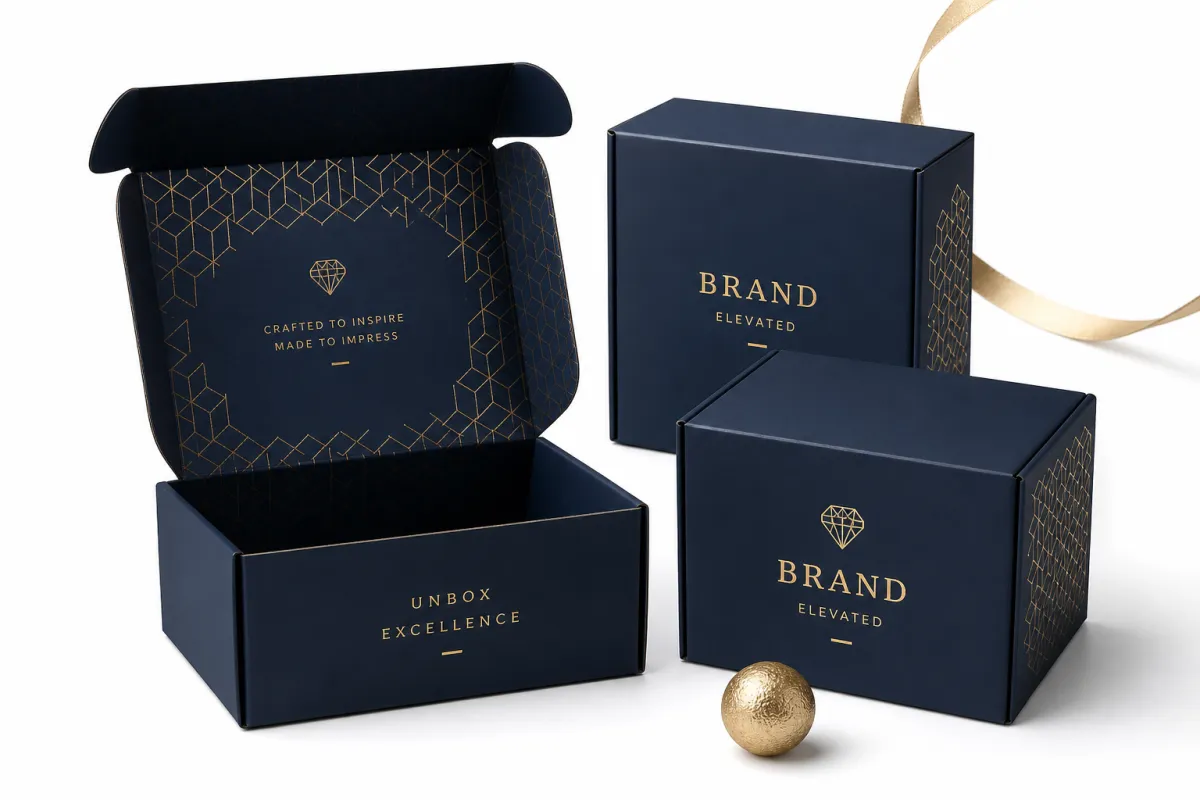
Picture a retail shelf with two nearly identical cartons. One is a matte printed box with clean graphics. The other is branded folding boxes with foil with a bright logo hit on the front panel and a small glint on the top flap. Which one gets picked up first? In most categories, the foil-accented version wins because the eye notices contrast before it processes words. Shine pulls attention almost immediately, and that split second matters when a shopper is scanning a crowded shelf.
Packaging does more than hold a product. It signals value. A customer may never ask how many sheets of board were used, yet they do notice whether the box feels intentional or generic. Branded folding boxes with foil suggest that someone cared about the presentation. Even a small, well-placed foil mark can make the carton feel sharper, more giftable, and less commodity-like. In categories where products compete side by side, that added distinction can be worth more than the difference in print cost.
Put simply, branded folding boxes with foil are Printed Folding Cartons enhanced with metallic, colored, or holographic foil accents. The structure is still a standard paperboard carton, usually a tuck-end or specialty folding style, but one or more brand elements receive a reflective finish. The result catches light differently and often photographs better, which helps in retail displays, ecommerce listings, and social content too.
That visual lift matters most in categories where the customer is comparing similar products in a hurry. Cosmetics, supplements, candles, specialty foods, and premium personal care all benefit because the shopper is often choosing between items that promise nearly the same result. In those spaces, branded folding boxes with foil do more than look polished. They create a quick read of quality. The box says there is something worth noticing here before the copy gets a chance to explain why.
My rule is simple: let foil earn its keep. If the art still works in one color, the foil is probably supporting the package instead of carrying it.
There is also a practical reason buyers add foil. It lets a brand create hierarchy without flooding the carton with more ink. A logo, seal, product name, or top-flap accent can do more work than another block of color. Used well, branded folding boxes with foil create contrast without clutter. Used carelessly, they become shiny noise. The difference usually comes down to design discipline, not budget alone.
At the production level, the first decision should be what foil is supposed to accomplish. Is it the hero of the box? Is it a secondary accent? Is it only there to lift a logo and frame a message? That answer should guide everything that follows. If the goal is a premium retail impression, branded folding boxes with foil can be one of the most efficient ways to raise shelf appeal. If the goal is to add shine everywhere, the package usually becomes more expensive and less effective at the same time.
How Branded Folding Boxes with Foil Are Made
The production sequence for branded folding boxes with foil begins long before the press runs. First comes the dieline, which defines the exact carton dimensions, folds, glue areas, and panel placement. Artwork is then built around that structure, usually with separate layers for print, foil, embossing, and any special finishes. Clean file setup saves real time because it reduces confusion during proofing and keeps the foil where it belongs.
After artwork approval, the print side of the job moves into prepress and plate or file preparation. The board is then printed, often on SBS, C1S, or coated paperboard in the 14 pt to 24 pt range depending on the product and the stiffness needed. From there, the foil process starts. That can happen as a separate stamping step or inline, depending on the chosen method. Once the decoration is finished, the sheets are die-cut, stripped, folded, glued, and packed for shipment. Branded folding boxes with foil may look simple on the shelf, but they usually pass through several controlled stages before that final flat stack is ready.
Three foil approaches show up most often, and they are not interchangeable. Hot foil stamping uses heat and pressure to transfer foil from a carrier film onto the board. It gives the crispest metallic result and remains the standard for many premium folding cartons. Cold foil applies foil through adhesive and UV curing, often inline on press, which can speed production and handle larger coverage areas well. Foil-like metallic inks are the least reflective of the three, but they can work when a client wants shimmer without the cost of true foil. For branded folding boxes with foil, knowing which method is being priced matters; the finish may look similar in a mockup, yet the tooling, labor, and final effect are very different.
Structure matters too. Straight tuck end and reverse tuck end cartons are common for retail display because they are efficient to make and easy to fill. Auto-lock bottoms help when the product is heavier or when the buyer wants faster hand assembly. Sleeve-and-tray formats can be elegant for giftable items. Branded folding boxes with foil work especially well on these structures because the flat panels give the foil enough uninterrupted space to read clearly. Small cartons can still use foil, but the layout has to stay restrained or the effect can feel cramped.
Registration is where quality becomes visible. If the foil sits near fine text, thin rules, or sharp logo edges, the press operator needs enough tolerance to place it cleanly. Tiny misalignment can make the whole package feel off even when the rest of the print looks excellent. On branded folding boxes with foil, I usually recommend keeping foil text larger than you would on a plain printed carton and avoiding hairline strokes. A logo mark can tolerate minor variation; a 4-point serif tagline usually cannot.
The material under the foil matters as much as the foil itself. A soft-touch laminate can create a velvety contrast around a bright metallic stamp. A matte coated board can make the foil appear sharper. A rough uncoated stock may flatten the shine and soften the edge quality. For brands sourcing responsibly, this is also the right moment to check board certifications and chain-of-custody documentation with suppliers. If the carton needs a sustainability story, look at FSC certification early rather than trying to retrofit it after print files are done.
Distribution testing should not be treated as an afterthought. If the carton must survive parcel shipping, retail handling, or repeated stacking, the packaging spec should be reviewed against recognized distribution tests. The ISTA protocols are useful reference points because they reflect the real-world abuse a folding carton may face before it reaches a shelf. That does not mean every carton needs the highest level of testing, but it does mean branded folding boxes with foil should be evaluated in the context of how they will actually travel.
For buyers who want to compare structural ideas before committing to a run, our Custom Packaging Products page is a useful place to start, and our Case Studies show how finish choices change the final impression. Those examples are not abstract. They help you judge whether a foil accent belongs on the face panel, the top flap, or the closure area instead.
Design Factors That Affect Look and Cost
Design is where branded folding boxes with foil either become elegant or turn into expensive noise. The biggest variable is substrate. A smooth, coated board usually gives a cleaner metallic edge than a textured stock because the foil sits more evenly on the surface. Thickness matters too. A carton around 18 pt to 24 pt has enough body for a premium feel, but if the board is too heavy for the fold style, the panel may crack or create pressure at the crease. In practice, the best stock is the one that supports the finish and the product, not the one that simply feels thick in hand.
Foil coverage is the second major cost driver. A small logo hit on the front panel is not the same project as full-panel foil across the face, side, and top flap. The more area you cover, the more tooling, setup, and press time you consume. Branded folding boxes with foil often create the strongest value when the foil is concentrated in one or two focal zones. A seal, a product name, or a brand mark may be enough. Full coverage can look luxurious, but it can also push the unit cost into a range that no longer matches the product margin.
Color strategy changes the result as well. Foil works differently as a highlight than as the main event. Gold, silver, copper, rose-gold, and holographic foils all read differently under store lighting. A warm gold can support a heritage or beauty narrative. Silver can look cleaner and more technical. Holographic foil tends to feel more youthful or energetic, but it can overwhelm a restrained layout if the rest of the carton is already busy. With branded folding boxes with foil, the smartest layouts often use foil as an accent that creates contrast against a matte field rather than trying to replace the whole design language.
Other finishes can deepen the effect, but they also add complexity. Soft-touch coating gives a muted, tactile base. Spot UV creates glossy contrast around the foil. Embossing pushes the foil upward and makes the brand mark feel physically present. Window cutouts reveal the product itself, which can help for food, candles, or color cosmetics. Each addition can improve shelf appeal, yet every extra step increases setup time and the chance of production variation. The question is not whether these finishes are attractive. The question is whether they help the carton do its job better than a more restrained design would.
Artwork detail is another hidden cost center. Fine-line ornaments, tiny reversed type, and decorative border treatments look polished on screen, but they can create real trouble on press. If the foil area is too intricate, the die may not hold the shape cleanly or the operator may need extra setup to keep placement accurate. Branded folding boxes with foil work best when the art file respects the process. Think bold, clear shapes. Think readable spacing. Think in terms of what can be stamped consistently, not only what can be drawn in Illustrator.
There is a reason many buyers ask for a sample before approving the full run. A digital proof can tell you placement and layout, but it cannot fully communicate how foil reacts to light, coating, or board texture. That is why a production sample or press proof is so valuable when the foil is central to the brand story. If the finish is a small accent, a proof may be enough. If the entire perception of the carton depends on the shine, then seeing branded folding boxes with foil in physical form is usually worth the extra time.
One more design point matters more than people expect: white space. Foil needs room to breathe. A cluttered face panel reduces contrast, which makes the shine feel less intentional and more decorative. A clean field, on the other hand, makes the metallic element look precise. For that reason, many of the strongest branded folding boxes with foil use only one major foil destination on the front and a secondary touch on a top flap or side panel. The package feels premium without becoming overdesigned.
Cost and Pricing for Branded Folding Boxes with Foil
Pricing for branded folding boxes with foil starts with the obvious variables: quantity, box size, board stock, foil area, number of ink colors, and whether the carton needs any additional finishing pass. A 5,000-piece run usually prices very differently from a 25,000-piece run because fixed setup costs spread out over more units. That is why unit pricing can fall sharply as volume rises. The first thousand pieces often absorb a disproportionate share of tooling, make-ready, and proofing costs, while larger orders gain efficiency from longer production runs.
Hidden costs show up in less obvious places. Custom foil dies, revised dielines, multiple proof rounds, special coatings, and freight all affect the final number. If the artwork changes after proofing, the job may need another plate or another die, which quickly adds cost. Branded folding boxes with foil also require a more disciplined approval process than basic printed cartons because the finish has to line up with the design intent. In practical terms, time spent fixing files before production is cheaper than paying for a second run or a rush correction.
Here is a simple pricing framework I use when a client wants a rough comparison. It is not a quote, because real numbers depend on box size, stock, and run length, but it gives a useful sense of where money goes.
| Option | Typical Use | Approx. Unit Cost at 5,000 pcs | What Drives the Price |
|---|---|---|---|
| Standard printed folding carton | High-volume retail or utility packaging | $0.18-$0.32 | Board, print coverage, die-cutting, folding |
| Printed carton with small foil accent | Cosmetics, supplements, candles, premium food | $0.24-$0.42 | Foil die, extra press step, tighter registration |
| Premium carton with foil plus emboss or spot UV | Giftable products, launch editions, prestige SKUs | $0.38-$0.75 | Multiple finishes, more setup, sample approvals |
| High-detail foil coverage with specialty stock | Limited editions or high-margin hero products | $0.60-$1.20+ | Large foil area, special board, slower production |
The pattern above is straightforward: branded folding boxes with foil are not expensive because foil is magical. They are expensive because foil adds labor, setup, and control. A small logo foil can be a modest increment over a standard carton. Full-panel foil, by contrast, can move the project into a much higher tier because every square inch increases the chance of registration issues and extra press handling.
Quantity changes the math dramatically. At lower volumes, the setup charge is spread across fewer boxes, so the unit price rises. At higher volumes, the same tooling and press setup cost gets diluted. A 1,000-piece run of branded folding boxes with foil may feel very costly per box, while a 10,000-piece run can look far more reasonable if the same artwork and tooling are reused. That is why some brands treat foil cartons as a launch investment and then improve margins on repeat orders.
Box size also matters. A small lip balm carton with a tiny foil mark is a different economy from a large supplement box with several decorated panels. More surface area means more print coverage, more board usage, and usually more opportunities for misregistration. If the product margin is tight, the best return often comes from concentrating foil where the consumer first looks: front panel, logo, or top flap. In many cases, branded folding boxes with foil deliver the strongest return when the decoration is selective rather than all-consuming.
Think of foil like a spotlight. You can aim it. You do not need to flood the whole room.
For brands comparing premium options against margin targets, it helps to ask three direct questions: Does the foil improve pickup rate? Does it raise perceived value enough to justify the unit cost? Does the finish help the product photograph better for online sales? If the answer to all three is yes, then branded folding boxes with foil often pay for themselves through stronger conversion and a better shelf story. If the answer is only that it looks nice, the budget may be better used on a clearer print hierarchy or a stronger board spec.
Process and Timeline for Branded Folding Boxes with Foil
A realistic timeline for branded folding boxes with foil starts with the brief and ends with fulfillment, not with the first proof. The earliest stage is discovery: dimensions, product weight, retail channel, finish goals, and budget. From there, the designer or packaging supplier reviews the dieline, checks panel logic, and confirms where the foil should sit. If the artwork is already prepared, prepress may move quickly. If the carton is custom, expect a round of layout refinement before any production file is approved.
After the design is locked, proofing begins. This can include a digital proof, a flat mockup, and, for more finish-sensitive jobs, a physical sample. That sample stage matters because branded folding boxes with foil can look very different in hand than they do on a monitor. A press proof may reveal that the foil is too tight to the fold, that the board finish softens the shine, or that the logo needs more space. Catching those issues before the full run is always cheaper than fixing them afterward.
For a first-time custom carton, a common planning window is roughly 12 to 15 business days from proof approval to production completion, but that range can extend when foil tooling, large quantities, or complex finishes are involved. If the project includes multiple revisions, add buffer time. If it is a repeat order using the same materials and die, the schedule can often move faster. Branded folding boxes with foil are usually not slow because the process is exotic; they are slow when approvals stall or file corrections arrive late.
From a buyer’s standpoint, the biggest time trap is assuming every approval can happen in one afternoon. Packaging rarely works that way. The carton has to clear design, operations, marketing, and sometimes regulatory review. If there are claims on the box, someone needs to verify them. If the foil area sits near a barcode or ingredient panel, someone needs to confirm legibility. The more stakeholders involved, the more likely a delay will appear. That is not a defect in the process; it is simply how branded folding boxes with foil are managed when they carry real commercial responsibility.
Here is a practical planning list that can shorten the front end of the job:
- Send finished dimensions, target quantity, and product weight up front.
- Provide the desired board feel, finish style, and retail use case.
- Keep foil layers separate from print layers in the artwork file.
- Use the correct dieline version and label every revision clearly.
- Confirm whether the project needs a sample, press proof, or both.
- Align launch timing with photography, ecommerce, retailer onboarding, and freight lead time.
Repeat orders are where the process gets easier. Once the die, foil tooling, and artwork are established, the production team does not need to rebuild the job from scratch. That can shorten lead time and reduce error risk. Many brands use this to their advantage by launching branded folding boxes with foil for a hero SKU, then reordering the same carton for seasonal colors or limited editions without changing the core structure.
For products that must reach a store shelf by a hard date, the schedule should include a buffer for shipping and receiving. A carton can be “done” in production terms and still miss the launch if freight is late or the warehouse is not ready to receive it. That is why seasoned buyers treat branded folding boxes with foil as part of the launch plan, not as a last-minute visual upgrade.
Common Mistakes With Branded Folding Boxes with Foil
The most common mistake is overusing foil. A carton can only carry so much shimmer before the effect becomes noisy. If every panel has a metallic element, the eye loses hierarchy. Branded folding boxes with foil work best when the foil marks something important, not everything important. One logo, one seal, one title, or one top-flap accent often beats three competing reflective zones. A foil-heavy carton can get kinda loud in a hurry.
File setup is the second major failure point. Missing bleed, non-vector foil shapes, thin reversed text, and artwork that ignores the dieline are classic problems. The foil area should be drawn as a dedicated spot layer with clear naming, and the designer should avoid tiny details that will not stamp cleanly. On branded folding boxes with foil, the difference between a clean premium look and a frustrating reprint can come down to a few millimeters in the file.
Wrong board choice creates another set of issues. A rough surface may make the foil appear broken or cloudy. A coating that is too slick can interfere with adhesion. A board that is too stiff for the fold style may crack at the score, especially if the foil crosses the crease. None of these problems are dramatic in isolation, but together they can make a carton feel cheap even when the design is strong. That is why material and finish need to be chosen together, not separately.
Approving a proof too quickly is also risky. If the foil placement is even slightly off, the problem may only show when the cartons are stacked or closed. Logos too close to the edge can trim badly. Fine copy may disappear. The folds themselves can shift how the eye reads the front panel. With branded folding boxes with foil, you want to inspect placement, not just color. A proof that looks close enough on a screen may be unacceptable in hand.
Underestimating lead time is the mistake that creates the most expensive pressure. Rush decisions often force simplified finishes, higher freight costs, or smaller quantities than the brand actually needs. That means the final box may be less polished than planned, and the unit cost may still be higher than a properly scheduled order. If the launch is seasonal or tied to a retail reset, build in extra time. Branded folding boxes with foil are best when they are planned like production items, not like graphic afterthoughts.
One less obvious mistake is forgetting the product story. Foil can make a box feel luxurious, but if the product is positioned as eco-forward, clinical, or minimalist, the wrong metallic treatment may send mixed signals. The best carton is the one that reinforces the promise inside. A restrained silver accent can feel precise and modern. A heavy gold field might feel too ornate. That choice should be intentional. The strongest branded folding boxes with foil usually fit the brand voice as well as they fit the shelf.
Expert Tips and Next Steps for a Better Box Launch
If the foil effect matters to the brand story, start small and be deliberate. One focal point is usually enough to elevate the carton. A logo hit, a seal, or a simple top-flap treatment can make branded folding boxes with foil feel premium without loading the design with extra cost. Once the base version works, you can always explore a second treatment on a future run.
Ask for a physical sample whenever possible. A mockup is not just a formality. It lets you see how the foil behaves with the selected board, coating, and print coverage. For products that live or die by shelf appeal, that step is often the difference between a decent box and a genuinely persuasive one. If you are comparing concepts, ask for two or three finish combinations. Seeing a matte carton next to a foil-accented version can clarify the choice faster than a spreadsheet can.
From a buying perspective, the smartest launch checklist is short but disciplined:
- Confirm dimensions and product fit.
- Approve the dieline before artwork begins.
- Separate print layers and foil layers in the file.
- Decide whether emboss, spot UV, or coating should support the foil.
- Request a quote with quantity tiers so you can compare volume breaks.
- Lock the schedule before photography, ecommerce, and freight are booked.
That sequence sounds simple, and in many projects it is. The trouble usually starts when a step gets skipped and the team tries to patch the result later. When buyers treat branded folding boxes with foil as a strategy instead of a decorative add-on, the packaging tends to do more commercial work. It looks better on shelf. It often photographs better online. It can also support a higher price point if the product itself is positioned correctly.
Honestly, that is the real value here. Foil is not valuable because it sparkles. It is valuable because it can sharpen hierarchy, reinforce quality, and make a carton easier to choose in a crowded environment. For brands that need packaging to carry part of the selling job, branded folding boxes with foil can be one of the most practical premium moves available. The trick is using the effect with restraint, correct timing, and a production plan that respects the material.
If you are ready to move from concept to quotation, review the box format, confirm the dieline, and decide exactly where the foil should do the most work before you send files to production. That one decision tends to save the most time, control the budget, and keep branded folding boxes with foil looking intentional instead of overdone.
Are branded folding boxes with foil more expensive than standard printed boxes?
Yes, but the premium depends on foil area, quantity, and finishing complexity. A small logo hit usually adds far less cost than full-panel foil or multiple decorative effects. In many jobs, branded folding boxes with foil make the most financial sense when the foil is used as a focal point rather than spread across every surface.
What products work best for branded folding boxes with foil?
Products sold on shelves or in unboxing-driven categories usually benefit most, such as cosmetics, supplements, candles, and specialty foods. Branded folding boxes with foil are especially effective when the product competes in a crowded retail environment and needs a fast visual separation from nearby cartons. Premium or giftable items usually see the strongest return.
How long does it take to produce branded folding boxes with foil?
The timeline depends on artwork approval, proofing, tooling, and order size. Simple repeat jobs can move faster than first-time custom projects that require dieline changes or sample approvals. For new branded folding boxes with foil, it is smart to leave extra time for proof review and any finish adjustments before production starts.
What file setup is best for branded folding boxes with foil artwork?
Use a clean dieline, correct bleed, and separate layers for foil areas and print areas. Keep foil text and details large enough to stamp cleanly, since very thin lines can lose sharpness. Confirm spot-color naming and placement instructions before sending files to production so branded folding boxes with foil do not stall at prepress.
Can branded folding boxes with foil use other finishes too?
Yes, foil is often paired with embossing, spot UV, soft-touch coating, or matte lamination. The right combination can make the box feel more premium, but each added finish increases complexity and cost. The strongest branded folding boxes with foil usually use complementary effects that support the design instead of competing with it.


