Buyer Fit Snapshot
| Best fit | Compare Folding Cartons vs Sleeves projects where brand print, material claims, artwork control, MOQ, and repeat-order consistency need to be specified before quoting. |
|---|---|
| Quote inputs | Share finished size, material target, print colors, finish, packing count, annual reorder estimate, ship-to region, and any compliance wording. |
| Proofing check | Approve dieline scale, logo placement, barcode or warning zones, color tolerance, closure strength, and carton packing before bulk production. |
| Main risk | Vague material claims, crowded artwork, missing packing details, or unclear freight terms can make a low unit price expensive after revisions. |
Fast answer: Compare Folding Cartons vs Sleeves: Board, Finish, Dieline, and Unit Cost should be specified like a repeatable production item. The safest quote records material, print method, finish, artwork proof, packing count, and reorder notes in one written spec.
Production checks before approval
Compare the actual filled-product size with the drawing, then confirm tolerance on folds, seals, hang holes, label areas, and retail display edges. Reserve space for logos, QR codes, warning copy, and material claims before decorative graphics fill the panel.
Quote comparison points
Review material grade, print process, finish, sampling route, tooling charges, carton quantity, and freight assumptions side by side. A quote is only useful when the supplier can repeat the same color, closure quality, and packing count on the next order.
If you need to compare folding cartons vs sleeves, start with the job the package has to do, not the way it looks in a mockup. A lower-cost look does not always mean a lower-cost pack, and a stripped-down structure does not always mean less work on the line. The right choice usually comes down to product protection, print requirements, and how much the primary container already handles on its own.
From a packaging buyer’s point of view, compare folding cartons vs sleeves is really a question about structure before style. A folding carton gives the product a full shell, more printable area, and room for inserts or partitions. A sleeve is a wrap or band that adds branding, visibility, and sometimes tamper indication without fully enclosing the item. That small difference becomes very real once shipping, shelf presence, and packout speed enter the picture.
I tend to judge this choice the way it gets judged on a production floor: with the actual product in hand. If you need to compare folding cartons vs sleeves for a launch, do not stop at artwork comps. Place both formats around a real SKU, check the fill sequence, check the shelf face, and check whether one version creates extra handling that was never part of the original quote. That is where the truth usually shows up.
Quick Answer: Compare Folding Cartons vs Sleeves in Real Use
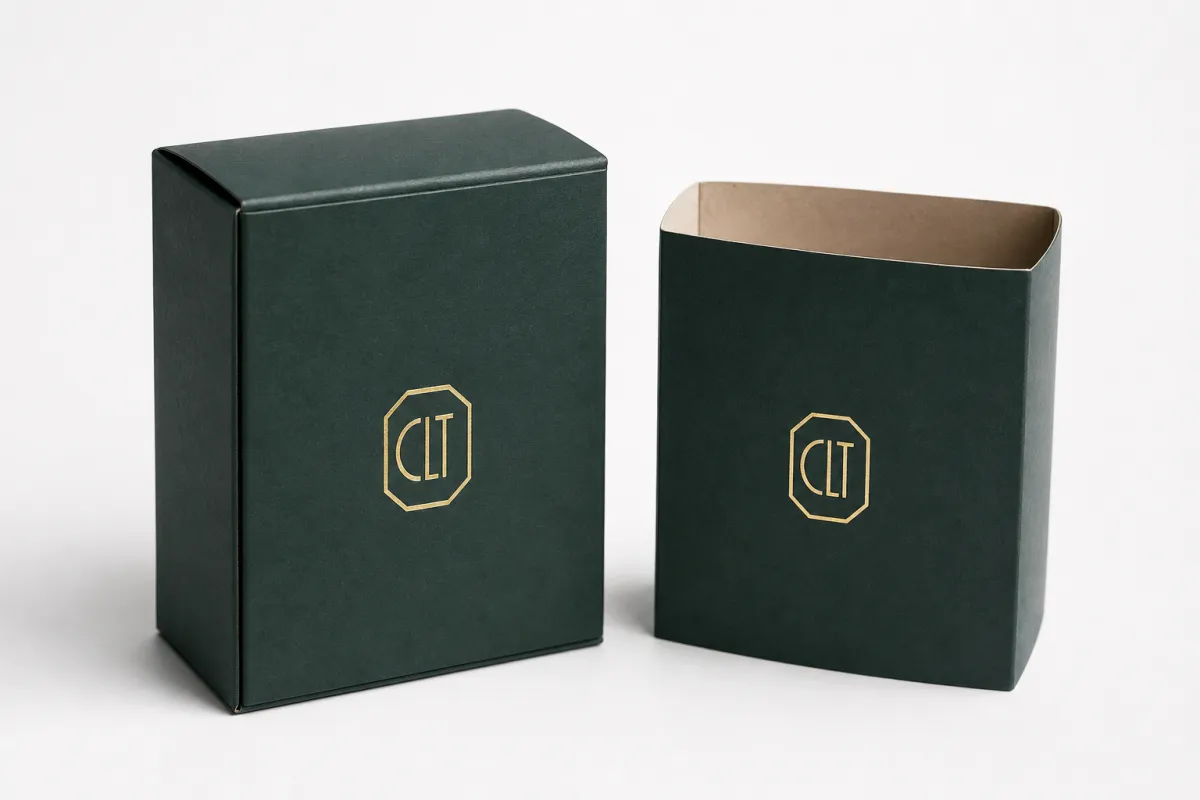
The fastest way to compare folding cartons vs sleeves is to look at the role each format plays. A folding carton is a complete package shell. It supports the item, protects corners and surfaces, gives you multiple printable panels, and usually makes the product feel finished the moment the customer picks it up. A sleeve works as a band, wrap, or partial cover. It brands, identifies, and sometimes seals, but it depends on the primary container or tray beneath it.
That difference changes the whole decision. Fragile products, loose components, multi-piece kits, and items that shift in transit usually call for a carton. Products that already live in a rigid jar, bottle, clamshell, or tray often work well with a sleeve because the container stays visible while the brand still gets a strong front panel. So when buyers compare folding cartons vs sleeves, they are really deciding how much structure the secondary pack needs to provide.
Retail messaging is another major divide. A folding carton gives you space for ingredients, directions, warnings, and regulatory copy with room to read. A sleeve gives you less room, so the message has to be tighter and the hierarchy has to work harder. That is not a weakness; it is the tradeoff. When you compare folding cartons vs sleeves, the sleeve often wins on visual restraint, while the carton wins on storytelling and protection.
My quick rule is simple. Choose a folding carton when structure, protection, and inside messaging matter most. Choose a sleeve when the product already has a primary container or tray and you want branding with less board coverage. If the choice still feels uncertain, compare folding cartons vs sleeves with one real sample of each. Theory is useful, but the practical answer usually shows up in hand.
One more caution: do not let appearance make the decision for you. A sleeve can look elegant and minimal, yet if it needs an insert, a separate tray, or a tight fit that slows the line, that elegant option can get expensive fast. A folding carton can look more substantial, but if it removes extra packing steps, it may deliver the better total package. I have watched teams chase a cleaner render and end up with a slower packout, and that kind of surprise is a pain nobody needs.
Top Options Compared: Compare Folding Cartons vs Sleeves Side by Side
When I compare folding cartons vs sleeves side by side, protection and structure come first. Folding cartons usually perform better because they create a full enclosure that helps with stacking, corner protection, and shelf integrity. They also support inserts, partitions, and locking styles that keep products from rattling around. Sleeves depend on the shape of what sits underneath, so the package only performs as well as the primary container or tray.
Print space is the next major difference. A folding carton gives you multiple printable panels, which means more room for claims, compliance notes, instructions, and visual storytelling. A sleeve produces a sharper first impression because the front panel carries most of the message, but the copy has to be edited with care. When buyers compare folding cartons vs sleeves, they often find that the sleeve feels more premium in a restrained layout, while the carton feels more complete and more informative.
Shelf behavior matters more than many teams expect. A carton presents a strong face, holds its shape well, and signals value in categories where the box itself is part of the appeal. A sleeve keeps the container visible, which works well when the bottle, jar, or tray is the hero. That is why compare folding cartons vs sleeves is not just a design call; it is a merchandising call too.
Assembly and packout are where the realities get hard to ignore. Folding cartons can arrive flat, but they still need folding, gluing, locking, or machine setup before they become a finished package. Sleeves are often faster to apply if the fit is already proven and the product flow stays steady. If the sleeve requires exact placement or manual application, though, the labor can wipe out the expected speed gain. So when you compare folding cartons vs sleeves, include labor in the math, not only material.
Sustainability claims deserve a careful look. Either format can be efficient depending on board grade, size optimization, print coverage, and how many components are actually in the system. I have seen buyers assume the lighter-looking choice is the greener one, then discover that a sleeve plus tray plus insert uses more total material than a well-sized carton. If you compare folding cartons vs sleeves honestly, the better environmental choice is often the one with fewer parts and less wasted space.
| Feature | Folding Cartons | Sleeves |
|---|---|---|
| Protection | Higher, because the pack surrounds the product | Depends on the primary container or tray |
| Print space | Multiple panels for claims, compliance, and branding | Limited, so the message must stay focused |
| Typical use | Loose, fragile, or multi-piece products | Rigid containers, trays, clamshells, bottles |
| Assembly | May require folding, gluing, or machine setup | Often faster if fit and placement are stable |
| Visual style | Structured, finished, more box-like | Minimal, visible, less enclosed |
Detailed Reviews: When Folding Cartons Win, When Sleeves Win
Folding cartons usually win in categories where the package has to carry more than a brand mark. Cosmetics, nutraceuticals, small electronics, pharmacy items, and specialty food products often need structure, inserts, and a clean presentation that protects the item through distribution. If you compare folding cartons vs sleeves in those categories, the carton often earns its place because it supports the product and the message at the same time.
Sleeves shine when the primary pack is already doing most of the work. Jar-and-lid sets, bottle families, trays, clamshells, bars, and gift-ready kits can all benefit from a sleeve because the wrap adds branding without hiding the container. That can make the product feel open and direct on shelf. For some brands, that transparency matters more than a full box. If you compare folding cartons vs sleeves for a premium beverage or a well-designed jar, the sleeve may feel more modern simply because less of the package covers the product.
Design flexibility changes too. A carton can support interior printing, custom inserts, spot UV, soft-touch lamination, and a wide range of die-cut features such as thumb notches, tuck flaps, and display windows. A sleeve is more focused. It works best when the design is disciplined and the underlying container already provides structure or visual interest. That discipline is part of the appeal. Some brands prefer sleeves because they force the artwork to be clearer. If you compare folding cartons vs sleeves from a design standpoint, the carton gives you more room to tell a story, while the sleeve pushes you to edit harder.
A sleeve works only if the primary pack already handles the heavy lifting. If the product needs support, separation, or protection, the carton usually earns its place.
The most common failures are easy to predict. Cartons can be overbuilt for simple items, especially if the buyer wants a premium look without checking whether the extra board and assembly are actually needed. Sleeves can feel loose, weak, or underwhelming if the fit is not dialed in, the board is too light, or the printed design is trying to do more than the format can support. I have seen more than one team compare folding cartons vs sleeves and choose the sleeve because it looked sleek in a render, only to discover that the product moved too much or the wrap shifted during packing. That sounds obvious after the fact, but it is easy to miss in a sample review.
Standards and testing help ground the decision. If the package is going into distribution, talk through transport testing such as ISTA methods, and if the product is fragile, think about carton strength and shipping durability rather than just retail appearance. The packaging community has useful reference points at ISTA and packaging.org, especially if you want to compare format choices with real handling conditions in mind. That lens is far better than guessing from a mockup.
From a buyer’s point of view, the cleanest rule is this: compare folding cartons vs sleeves against the product’s actual handling risk. If the product can survive shipping and shelf handling inside a primary container, a sleeve may be enough. If the package itself has to do serious protecting, the carton is usually the safer and more dependable call.
Cost, Pricing, MOQ, and Unit Cost Differences
Unit cost is where a lot of packaging conversations drift off course. When people compare folding cartons vs sleeves, they often start with board price and stop too soon. Real quoting depends on board grade, print coverage, coatings, die cutting, folding, gluing, insert work, and whether the package can be packed automatically or needs manual labor. A light sleeve can absolutely cost less, but it can also become more expensive if it needs tight tolerances or hand application.
Sleeves look simple on paper, yet the setup can be tricky. If a sleeve has to slide over a container with very little tolerance, fit testing becomes critical and rework can add cost quickly. Specialty finishes such as foil, embossing, or soft-touch coating can narrow the cost gap as well. So when you compare folding cartons vs sleeves, remember that the format is only one part of the quote. The finishing plan and the packout method can move the number more than the shape itself.
There are situations where folding cartons save money at scale. If the carton replaces a tray, a label, an insert, or a separate display component, the higher material count can still produce a better total package cost because the operation becomes simpler. I have seen buyers compare folding cartons vs sleeves and assume the sleeve is automatically leaner, only to learn that the carton consolidates three jobs into one structure. That matters on a busy line, and it matters even more if labor is tight.
Minimum order quantity tends to follow the complexity of the job. Low-volume packaging may favor whichever structure has the least tooling risk and the least handwork. Standard carton styles like straight tuck end, reverse tuck end, or lock-bottom boxes can be efficient, while a custom sleeve with special cutouts or a tight register can behave like a more expensive run than expected. When you compare folding cartons vs sleeves, ask how many SKUs will be running, how many make-ready steps are needed, and whether the design will be shared across product families.
| Planning Factor | Folding Cartons | Sleeves |
|---|---|---|
| Typical planning range at 5,000 units | $0.18-$0.42 each, depending on board, print, and finish | $0.12-$0.34 each for simple wraps; more if tolerance or finishing is complex |
| Setup sensitivity | Moderate to high, depending on structure and gluing | Moderate, but fit and placement can raise the risk |
| Labor impact | Can be automated or semi-automated | Can be very efficient, or labor-heavy if applied by hand |
| Best cost driver | Consolidating protection and messaging in one pack | Using an existing primary container efficiently |
Ask for a side-by-side quote that uses the same assumptions for both formats: board spec, finish, assembly method, die count, sample allowance, and freight. That is the only fair way to compare folding cartons vs sleeves without letting a low advertised piece price hide the real spend. I also like to see whether the sleeve or carton is intended for manual or machine application, because that one line can change the total economics more than most buyers expect.
Process, Timeline, and Production Steps for Each Format
If you want to compare folding cartons vs sleeves in a way that helps scheduling, trace the actual production path. For a folding carton, the work usually starts with structure approval and dieline confirmation, then moves into artwork, proofing, print, finishing, die cutting, folding, gluing, and final packing. Each step sounds routine, yet every step can absorb time if artwork changes, dimensions shift, or coating choices change late in the process.
Sleeves can move faster when the structure is simple and the fit is already proven. The catch is that sleeve work depends heavily on exact dimensions, because a wrap that is even slightly loose or tight can create problems on the packing line. If you compare folding cartons vs sleeves for a launch with a fixed product size, the sleeve may feel easier; if the final container is still being tuned, the carton often tolerates change better because it leaves more room in the structure.
Delays usually show up in the same places: late artwork changes, unclear dimensional data, the wrong board thickness, extra sample rounds, or finish choices approved too early. Production timing is not just press time. It is also the time required to assemble, inspect, and pack the finished pieces. So when you compare folding cartons vs sleeves, include the labor path as well. A fast print run can still end up slow if application is manual or fit issues create stoppages. That is the kind of detail that looks small in an estimate and turns into a headache on the floor.
For commercial buyers, I always recommend a sample window before artwork lock. Confirm the final product dimensions, the closure style, the packout direction, and the handling method before anyone signs off on print. That one habit saves more launches than almost anything else. If you need to compare folding cartons vs sleeves on a schedule, ask the converter how much time is needed for structure proofing, press approval, and any post-press assembly. The answer is usually more useful than the promised ship date.
Documentation has a place here too. If the product is going into a regulated or retail-heavy channel, keep the dimensional sheet, material spec, and application method in one place. That makes it easier to revisit the choice later if the format needs to be adapted for another SKU, another retail chain, or a different packout line. A tidy planning file is not glamorous, but it prevents chaos and keeps people from guessing six weeks later.
One practical note: if the package is expected to pass distribution or vibration testing, ask whether the chosen format has already been reviewed against the transit profile you expect. Standards such as ASTM D4169 and ISTA procedures are not decoration; they help you judge whether the structure is working in the real world, not just on the mockup table. That is one more reason to compare folding cartons vs sleeves with a line-minded eye as well as a design-minded one.
How to Choose Between Folding Cartons and Sleeves
The best way to compare folding cartons vs sleeves is to begin with the product itself. Fragile items, loose components, kits, and products with sharp corners usually push the choice toward a folding carton because the package has to contain and support more than a single rigid object. A sleeve works better when the product is already housed in a container that is stable, sealed, and easy to identify from the outside.
Packaging copy matters next. If you need a lot of regulatory text, usage instructions, ingredient detail, or multilingual information, the carton gives you breathing room. If the hero is the bottle, jar, tin, or tray, a sleeve may preserve that visual priority while still giving the brand a strong face. That is why many buyers compare folding cartons vs sleeves and end up choosing based on content density, not only on appearance.
Handling deserves equal weight. Shipping conditions, shelf stacking, anti-tamper expectations, and distribution roughness should matter more than aesthetics. A beautiful package that crushes, scuffs, or shifts during transit is not a premium package; it is a problem with nicer graphics. When you compare folding cartons vs sleeves, ask what happens between the packing bench and the customer’s hand.
Manufacturing reality should sit in the same conversation. If your line already packs a primary container efficiently, a sleeve can be a smart add-on. If the product needs containment, partitioning, or extra protection, a carton may reduce downstream problems and rework. That is the reason I keep coming back to the same advice: compare folding cartons vs sleeves on the actual packout flow, not on a render. The render is helpful, sure, but it is not gonna tell you if the line will stall.
- Choose a folding carton if the product needs enclosure, support, or more print area.
- Choose a sleeve if the primary container already protects the product and the sleeve is mainly branding.
- Check line fit before signing off, especially if the sleeve is tight or the carton has an insert.
- Compare total cost, including labor, finish, freight, and assembly, not only board price.
- Test shelf behavior with a sample pack, because display presence changes more than buyers expect.
The final checklist fits on one page: compare structure, print area, speed, cost, and customer experience together. If you weight only one factor, like a lower material count or a cleaner look, you can end up with the wrong package. If you compare folding cartons vs sleeves through the full buying lens, the right choice is usually obvious once the product, the line, and the retail channel are all in the same room.
Our Recommendation and Next Steps for Your Packout
My recommendation is straightforward. Use a folding carton when the package has to protect the product, carry more information, or create a stronger premium impression from first touch to final unboxing. When I compare folding cartons vs sleeves on those jobs, the carton usually wins because it reduces uncertainty and gives the brand more control over how the item reaches the shelf.
Use a sleeve when the product already has a container or tray and the goal is to add branding, shelf impact, or a cleaner visual frame without overpacking the item. That is often the better answer for rigid jars, bottles, bars, and retail sets where visibility matters. If you compare folding cartons vs sleeves in a category like that, the sleeve often feels lighter, more modern, and easier to live with on the line.
Do not debate it in the abstract. Ask for two real prototypes built around the same SKU, the same graphics, and the same handling requirements. Put the carton sample and the sleeve sample through the packout workflow, then look at how each one behaves in hand, on shelf, and in shipment. I have seen more clear decisions come from that exercise than from a week of email threads. If you want to compare folding cartons vs sleeves properly, prototypes are the fastest path to a sensible answer.
When you request the production quote, ask for board grade, finish, fit tolerance, assembly method, and likely lead time. That gives you the full value picture instead of a shallow piece-price comparison. If the numbers are close, the format that reduces packing trouble usually deserves the order. If you compare folding cartons vs sleeves only on price, you can miss the hidden cost of a slow line or a flimsy shelf impression.
Here is the practical close: define the product, confirm dimensions, request samples, review cost and turnaround, then choose the structure that supports the launch rather than the one that only looks tidy on paper. That is the real job. If you need to compare folding cartons vs sleeves again later for a new SKU, keep the same checklist, because the best format is the one that fits the product, the process, and the customer experience together.
That sounds simple, and honestly it kind of is. The trick is staying disciplined long enough to let the real details speak. Once you do that, the choice stops being a style debate and becomes a practical packaging decision.
Are folding cartons or sleeves cheaper for small runs?
Small runs often favor the format with the simplest setup and the least manual assembly, but that is not always the sleeve. If a sleeve needs tight fitting, special finishing, or hand application, the total cost can climb fast. Ask for a quote that includes board, print, finish, and labor so the real unit cost is visible.
Which protects the product better: folding cartons or sleeves?
Folding cartons usually protect better because they surround the item and can support inserts or dividers. Sleeves work best when the primary container already provides protection and the sleeve only needs to add branding or tamper indication. For fragile, loose, or multi-piece products, the carton is usually the safer choice.
Do sleeves have a faster turnaround than folding cartons?
Sometimes, but only if the sleeve design is simple and the fit is already proven. Cartons can move quickly too when the structure is standard and the finishing is straightforward. The biggest timeline risk is usually artwork approval, sample revisions, and unclear dimensions, not the format alone.
Can sleeves work for premium retail packaging?
Yes, especially when the product container itself is attractive and the sleeve acts like a clean branding layer. Sleeves feel premium when the print, board, and fit are precise, but they can look underbuilt if the product needs more structure. They are a strong fit for modern, minimal presentations where visibility matters.
How do I decide between a carton and a sleeve for my SKU?
Start with the product shape, shipping risk, and whether you need full enclosure or just a branded wrap. Then compare cost, assembly time, print space, and shelf impact on the same product sample. If you still hesitate, request both options as prototypes and compare the real packout experience side by side.
Related packaging resources
Use these related guides to compare specs, costs, quality checks, and buyer decisions before making the final call.