Buyer Fit Snapshot
| Best fit | Branded Kraft Labels for Boxes projects where brand print, material claims, artwork control, MOQ, and repeat-order consistency need to be specified before quoting. |
|---|---|
| Quote inputs | Share finished size, material target, print colors, finish, packing count, annual reorder estimate, ship-to region, and any compliance wording. |
| Proofing check | Approve dieline scale, logo placement, barcode or warning zones, color tolerance, closure strength, and carton packing before bulk production. |
| Main risk | Vague material claims, crowded artwork, missing packing details, or unclear freight terms can make a low unit price expensive after revisions. |
Fast answer: Branded Kraft Labels for Boxes: Material, Adhesive, Artwork, and MOQ should be specified like a repeatable production item. The safest quote records material, print method, finish, artwork proof, packing count, and reorder notes in one written spec.
Production checks before approval
Compare the actual filled-product size with the drawing, then confirm tolerance on folds, seals, hang holes, label areas, and retail display edges. Reserve space for logos, QR codes, warning copy, and material claims before decorative graphics fill the panel.
Quote comparison points
Review material grade, print process, finish, sampling route, tooling charges, carton quantity, and freight assumptions side by side. A quote is only useful when the supplier can repeat the same color, closure quality, and packing count on the next order.
Branded kraft labels for boxes can turn a plain mailer into something that feels deliberate, organized, and worth opening. The carton itself may still be simple recycled corrugate, but the label changes the read instantly by adding structure, hierarchy, and a clear brand cue that keeps the package from looking like a generic shipping box pulled at random from a stockroom.
I have seen that shift matter most for brands that are still finding their footing. A startup sending 200 orders a month does not always need a fully custom carton, and honestly, that is probably not the smartest spend anyway. Branded kraft labels for boxes let the package carry a strong identity without locking the business into a big inventory commitment, which is a pretty practical way to get moving.
Handled well, branded kraft labels for boxes create a handmade, sustainable impression that still feels intentional. Handled poorly, they read like a rushed office label on a shipping box. That difference is the whole point. Labels do not perform magic, though they do improve unboxing, help organize product lines, and make even a modest carton feel ready for retail, shipping, or gifting.
There is a buyer-side advantage too. If you need to test demand, introduce a new SKU, or run promotional packaging for a short window, branded kraft labels for boxes let you move without overcommitting. Inventory mistakes get expensive quickly, and custom packaging is one of those places where brands can spend real money chasing a look they are not ready to support at scale.
A plain kraft box is not the issue. A box with no visual hierarchy is the issue. Branded kraft labels for boxes solve that faster than most packaging redesigns, and they usually do it at a fraction of the cost.
For a brand that is still learning what it needs, that flexibility is the real value. You can adjust the layout, change the copy, swap the finish, or scale the quantity without tearing up the whole packaging system. That kind of room to breathe is often what keeps a product launch from feeling boxed in, if you will.
For examples of how packaging changes customer perception, our Case Studies page is worth a look. It shows the difference between a box that ships and a box that gets remembered.
How branded kraft labels for boxes work across box types and finishes
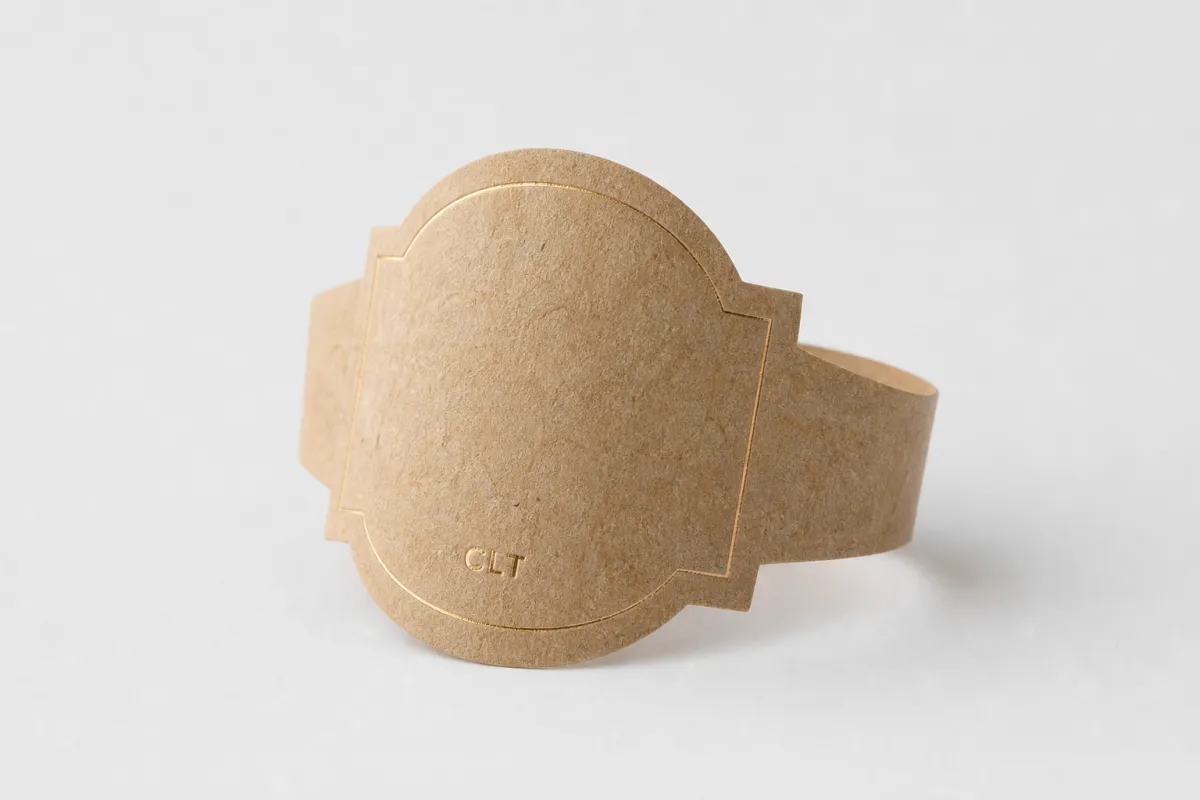
Branded kraft labels for boxes behave differently depending on the surface beneath them. That sounds obvious, but plenty of brands only learn it after a label curls on one carton while sticking perfectly to another. Corrugated boxes, rigid mailers, recycled cartons, and textured kraft faces each create slightly different adhesion and visual results.
On smooth mailers, branded kraft labels for boxes usually apply cleanly and look crisp right away. On rougher corrugated surfaces, the label has to bridge tiny ridges, so adhesive choice matters more than the artwork. If the stock is too stiff or the adhesive is too weak, the edges can lift. If the surface is dusty or heavily recycled, the bond may look fine at first and fail after handling or vibration in transit.
The main production decision usually comes down to direct print or applied label. Direct print works well for large, stable volumes where the box size, artwork, and quantity remain consistent. It can look polished, though it leaves less room for change. Applied branded kraft labels for boxes fit launch batches, variable information, and brands that need room to adjust. One label can serve multiple box sizes if the design system is planned with care.
Applied labels also give more control over finish and placement. Round corners, custom die-cuts, and vertical panel labels can all create a stronger focal point. Labels can also sit beside stamped logos, tissue wrap, or insert cards without forcing everything into a single print run. That flexibility makes branded kraft labels for boxes especially useful for packaging systems that evolve quickly.
The label design itself has a job to do. Leave enough margin around the logo so the edges do not feel cramped. Use strong contrast if the kraft surface is brown or tan. Keep the focal point obvious. A crowded label on a textured carton can disappear visually, and then the branding effort ends up hiding in plain sight.
Placement matters too. On a smaller mailer, a centered label often feels cleanest. On a wider corrugated face, a top-left placement can work if the logo and product name stay balanced. What does not work is a label floating awkwardly in the middle of a huge blank panel with no relationship to the box edges. That is how branded kraft labels for boxes start looking accidental.
If you are comparing label formats, the right answer depends on texture, run size, and how the box is handled. Our Custom Labels & Tags page is a useful starting point if you want to match substrate and use case before ordering.
Cost, pricing, MOQ, and quote factors for branded kraft labels for boxes
Pricing for branded kraft labels for boxes usually comes down to five things: size, material, print complexity, die-cut shape, and quantity. That is the short version. The longer version is that each choice affects waste, setup time, and press efficiency, which is why the same label can look inexpensive in one quote and unexpectedly costly in another.
Lower MOQ orders almost always cost more per label. That is not a trick. It is basic setup math. If you order 250 pieces, the printer still has to review the files, prep the stock, run the job, trim or finish it, and pack it. If you order 5,000, those fixed steps get spread across far more units, and the unit cost drops. For branded kraft labels for boxes, that difference can be the line between a sensible test run and a quote that stings.
A practical way to read the numbers is this: a simple 2 x 3 inch kraft paper label with one-color print may land in the rough range of $0.18-$0.40 each at a short run, then fall to about $0.06-$0.14 each at a larger run of 5,000 pieces. Add a textured stock, custom die-cut, or more involved print work, and the price moves up. Branded kraft labels for boxes do not become expensive because they are labels. They become expensive when they are asked to do too much with too little volume.
| Order Size | Simple Kraft Paper Label | Textured or Premium Paper Label | Water-Resistant Label | Best Fit |
|---|---|---|---|---|
| 250-500 | $0.20-$0.45 | $0.28-$0.55 | $0.32-$0.65 | Launch tests, pop-ups, sample packs |
| 1,000-2,500 | $0.10-$0.22 | $0.14-$0.30 | $0.18-$0.36 | Early product runs, seasonal drops |
| 5,000+ | $0.06-$0.14 | $0.08-$0.18 | $0.10-$0.24 | Repeat fulfillment, stable SKUs |
Those ranges assume a modest label size, standard digital or flexo-style production, and reasonable artwork. If you need foil, white ink, specialty varnish, or an irregular shape, the cost climbs. Clean, press-ready artwork and a tidy quantity often keep the quote easier to manage. That is one reason branded kraft labels for boxes reward good preparation more than many buyers expect.
Several quote details matter more than people realize:
- Exact dimensions: “small” is not enough. A 2 x 2 inch label costs differently from a 3 x 4 inch label.
- Substrate: uncoated kraft paper, coated paper, recycled paper, and synthetic stock each behave differently.
- Finish: matte, gloss, soft-touch, or uncoated changes both the look and the price.
- Artwork readiness: clean vector files reduce revision time and keep the job moving.
- Application method: roll, sheet, or individual cut changes how the labels are packed and used.
- Shipping speed: rush jobs usually cost more, because time pressure never arrives politely.
For brands building a packaging budget, a useful rule is this: if the box itself stays plain and the label carries the brand, spend enough on the label to avoid looking cheap. That does not mean overbuilding it. It means Choosing the Right balance of stock, shape, and print coverage so branded kraft labels for boxes look confident instead of apologetic.
If you are comparing packaging options beyond labels, our Custom Packaging Products page can help you decide whether labels, inserts, or a broader box program makes more sense for your volume.
Production process, timeline, and lead time for branded kraft labels for boxes
The production path for branded kraft labels for boxes is fairly direct, but only if the artwork and specs arrive clean. Most delays happen before the press starts moving. A supplier receives the brief, checks dimensions, reviews the artwork, confirms the stock, prepares a proof, and waits for approval. That can feel slow, though it is usually the only reliable way to avoid waste.
A typical run begins with a spec check. The printer wants the label size, quantity, substrate, finish, adhesive type, and whether the labels will ship as rolls or sheets. Artwork prep follows. If the logo is low resolution, the dieline is missing, or the typography is tiny, the proof stage turns into a back-and-forth cycle. Branded kraft labels for boxes are not hard to make, but bad files can make them behave that way.
Once the proof is approved, production time may run from about 7-12 business days for a small digital job to 12-18 business days for larger or more complex orders. Very small sample batches can move sooner, though finishing still takes time. Rush options exist, and they usually raise the price. That is the tradeoff: speed costs money, and pretending otherwise usually frustrates everyone involved.
For parcel testing, it helps to think beyond the print proof. If the box is going through heavy fulfillment, stacking, or courier handling, standards such as ISTA transit test methods are a useful reference point. The label may be small, but it still has to survive the same friction, temperature swings, and pressure that the box does. Branded kraft labels for boxes can look perfect on a proof and still perform poorly if the adhesive choice ignores the actual shipping environment.
Here is the sequence I would expect in a normal run:
- Confirm box size, label size, and surface texture.
- Choose stock, adhesive, and finish.
- Prepare artwork with proper bleed, safe area, and vector logos.
- Review the proof and correct any color or layout issues.
- Approve production and lock the quantity.
- Allow for printing, finishing, and shipping time.
Build buffer time into the plan. That part is not glamorous, yet it saves trouble later. If inventory lands before labels arrive, the pack line sits idle. If labels arrive first and the box design changes, the order becomes dated stock. For branded kraft labels for boxes, the safer path is to schedule packaging ahead of product fulfillment by at least one production window.
Key factors that decide whether the label looks premium or sloppy
Four variables decide the final appearance more than anything else: texture, opacity, adhesive, and contrast. Miss one of them, and branded kraft labels for boxes can move from sharp to forgettable in a hurry.
Texture is the first concern. A lightly textured paper label on a raw kraft box usually looks natural and considered. A heavily textured label on an already rough carton can start to feel busy. That is not always a mistake, though it needs intention. If the box itself is rough, a cleaner label stock often gives better visual control. If the box is smooth, a more tactile label can add warmth without making the design noisy.
Opacity matters because kraft backgrounds rarely behave like neutral paper. Brown stock can swallow weak ink, especially if the design leans on pale colors or small type. Strong black, deep green, charcoal, and rich burgundy often hold better on brown surfaces than soft gray or dusty beige. White ink can look excellent, but only if the print method and budget support it. Otherwise, branded kraft labels for boxes may read like a whisper in a crowded room.
Adhesive is the unglamorous part that saves the day. A permanent acrylic adhesive often performs well for standard shipping boxes, while higher-tack options may be needed for dusty, recycled, or cold-storage cartons. If a package will sit in humid conditions, a basic removable adhesive is usually the wrong choice. That shortcut is how labels begin lifting at the corners in transit, which is the last moment you want them to fail.
On the sustainability side, paper choice matters. If you want a more responsible paper story, ask for FSC-certified stock and confirm whether the label construction fits the recycling stream you expect. FSC shares clear certification guidance at fsc.org, and it helps to check the details before assuming every “eco” claim means the same thing. Branded kraft labels for boxes can support a greener packaging narrative, though only if the paper, adhesive, and finish all align with that story.
Size and placement are the last pieces. Here are a few practical ranges:
- 2 x 2 inches: good for logo marks, seals, or short product names.
- 2 x 3 inches: useful for compact branding on mailers and smaller cartons.
- 3 x 4 inches: a strong middle ground for a logo, tagline, or small QR code.
- 4 x 6 inches: better for larger panels, product naming, or multi-line layouts.
Leave breathing room around the edges. On a typical corrugated face, placing the label 6-10 mm away from folds or seams can reduce lift and keep the edges clean. If you crowd the border, the box feels cramped. If you make the label too small, it disappears. The goal is balance, not decoration for decoration’s sake. Good branded kraft labels for boxes look like they belong on the carton.
Common mistakes brands make with branded kraft labels for boxes
The biggest mistake is simple: the label is too small to do the job. It may look fine on a screen, yet once it lands on a box, gets stacked in a warehouse, or shows up in a customer photo, the brand mark can feel timid. Branded kraft labels for boxes need enough visual weight to hold their place in real conditions, not just in a mockup.
Weak artwork prep causes another common problem. Tiny text, too many elements, thin linework, and low-contrast colors all get harder to read on kraft stock. A polished brand system on white paper can fall apart on brown corrugate because the background steals the contrast. If the label needs to carry the logo and a secondary message, keep the hierarchy clean. A label is not a billboard. It is a small piece of packaging that has to communicate fast.
Brands also under-test adhesion. That happens often with Recycled Corrugated Boxes, which may carry dust, fibers, or subtle surface variation from run to run. A label that sticks well on one batch can behave differently on another. Test the exact box material you plan to ship. Do not rely on a paper sample. Do not rely on a quick assumption. Branded kraft labels for boxes live or die on the real surface, not the sample sitting in the meeting room.
Application planning is another quiet failure point. If your fulfillment team applies labels by hand, the format matters. Rolls are often faster for repeated packing, while sheets can work for very short runs or low-volume assembly. If the team has to peel each label one by one during a busy packing day, the bottleneck appears quickly. That is not a design issue. That is a production planning issue, and it tends to show up only after the labels arrive.
Here is the blunt version: if you expect the package to travel, handle, stack, or sit in cold storage, test those conditions before you approve the full run. A quick bench test can include pressure, abrasion, and a few temperature changes. If the label survives that, the odds of good real-world performance improve. If it fails, branded kraft labels for boxes need a spec change before you spend money on the wrong batch.
For brands that want to compare practical label performance across real packaging jobs, our Case Studies page is useful because it shows how different packaging choices behave after launch, not just during planning.
Expert tips and next steps for ordering branded kraft labels for boxes
The smartest starting point is a box audit. Measure the exact face area, note any seams or folds, and decide where the label should land before you pick a size. That sounds basic because it is, and basic work is what saves money. Branded kraft labels for boxes work best when the box dimensions and label dimensions were chosen together instead of guessed separately.
Request a sample or a short run next. That is not a sign of hesitation. It is a sign of competence. You want to test color, adhesion, readability, and placement before committing to a larger order. If the brand color prints muddy on kraft, you will catch it early. If the adhesive is too aggressive or too weak, you will know before the packing team spends hours wrestling the edges. A sample run costs far less than reprinting a bad batch of branded kraft labels for boxes.
Then build a simple checklist:
- Artwork: final logo files, fonts outlined, bleed included.
- Quantity: enough for the current production cycle plus a buffer.
- Material: kraft paper, recycled paper, coated paper, or synthetic stock.
- Finish: matte, gloss, uncoated, or soft-touch if appropriate.
- Adhesive: permanent, high-tack, or specialty if the surface demands it.
- Application: roll, sheet, hand-applied, or dispenser-fed.
- Timeline: proof date, approval date, production window, ship date.
If the packaging sits inside a wider brand system, keep the label aligned with inserts, tissue, tapes, and outer cartons. Consistency is what makes a simple package feel expensive without actually becoming expensive. That is the trick. A label on its own helps, but a connected system does more. If you need options beyond labels, our Custom Packaging Products page can help you map the rest of the package.
There is another design move that buyers overlook: simplify the shape before you complicate the artwork. A clean rectangle with rounded corners often looks more polished than an intricate die-cut shape, especially on a kraft surface. Save the more elaborate geometry for a case where the brand story truly needs it. Otherwise, the box ends up doing visual gymnastics for no gain.
Final ordering advice: ask your supplier how the labels will be packed, what the minimum order quantity really is, whether proof revisions are included, and how shipping works for short runs. Those details affect the total spend more than many buyers expect. A quote can look attractive until rush charges, reproofing, or special packing enter the picture. Branded kraft labels for boxes are one of those packaging items where clarity up front saves cash later. If you want the straightforward path, start with Custom Labels & Tags, confirm the box size, and move in stages instead of gambling on a large first order.
Frequently Asked Questions
Are branded kraft labels for boxes recyclable?
Usually yes, if the label stock and adhesive are designed for paper recycling and the box itself is clean. Heavy coatings, metallic finishes, and some aggressive adhesives can complicate sorting. The exact construction matters more than the marketing language, so confirm the spec with your supplier Before You Order branded kraft labels for boxes.
What adhesive works best for branded kraft labels for boxes?
A strong permanent adhesive is usually the best starting point for shipping cartons that will be stacked, rubbed, or handled a lot. For textured or recycled kraft surfaces, test the exact box material before you commit. Cold storage, humidity, and dusty corrugate can call for a higher-tack adhesive on branded kraft labels for boxes.
How many branded kraft labels for boxes should I order first?
Start with a short run if you are testing size, placement, or a new product line. If you already know your volume, order enough for one production cycle plus a small buffer for spoilage and replacements. The best first order is usually the smallest quantity that still gives you useful unit pricing for branded kraft labels for boxes.
Do branded kraft labels for boxes work on mailers and corrugated boxes?
Yes, though the surface matters more than the box name. Smooth mailers usually give easier application, while rough corrugated surfaces need stronger adhesion and careful pressure during application. Always test the exact box style you plan to ship when using branded kraft labels for boxes.
What affects the price of branded kraft labels for boxes the most?
Quantity, size, material, finish, and die-cut complexity usually drive the biggest price swings. Rush turnaround, proof revisions, and special adhesives can also push the quote higher. If you want a better unit cost, simplify the shape and increase the order quantity for branded kraft labels for boxes.
Used with the right stock, adhesive, size, and application plan, branded kraft labels for boxes are one of the cleanest ways to make a plain carton feel intentional without overbuying packaging you do not need yet.
What usually works best is a small, practical sequence: pick the box first, measure the visible panel, choose a label size that leaves breathing room, and test the actual adhesive on the actual carton before you place the full order. Do that, and branded kraft labels for boxes stop being a guess and start being a dependable part of the packaging system.


