Buyer Fit Snapshot
| Best fit | Branded Padded Mailer Factory Audit Questions for Cosmetics projects where brand print, material claims, artwork control, MOQ, and repeat-order consistency need to be specified before quoting. |
|---|---|
| Quote inputs | Share finished size, material target, print colors, finish, packing count, annual reorder estimate, ship-to region, and any compliance wording. |
| Proofing check | Approve dieline scale, logo placement, barcode or warning zones, color tolerance, closure strength, and carton packing before bulk production. |
| Main risk | Vague material claims, crowded artwork, missing packing details, or unclear freight terms can make a low unit price expensive after revisions. |
Fast answer: Branded Padded Mailer Factory Audit Questions for Cosmetics should be specified like a repeatable production item. The safest quote records material, print method, finish, artwork proof, packing count, and reorder notes in one written spec.
Production checks before approval
Compare the actual filled-product size with the drawing, then confirm tolerance on folds, seals, hang holes, label areas, and retail display edges. Reserve space for logos, QR codes, warning copy, and material claims before decorative graphics fill the panel.
Quote comparison points
Review material grade, print process, finish, sampling route, tooling charges, carton quantity, and freight assumptions side by side. A quote is only useful when the supplier can repeat the same color, closure quality, and packing count on the next order.
The first thing your customer handles is usually not the serum bottle, compact, or lip oil. It is the shipper. That is exactly why Branded Padded Mailers for Cosmetics brands factory audit questions deserve far more attention than they usually get, because one crushed corner, one split seal, or one loose cap can turn a premium order into a refund request in less than a minute.
Cosmetics packaging sits in an awkward middle ground. It needs to look expensive, photograph well, and still survive parcel systems built around compression, conveyor drops, vibration, weather changes, and rushed handling. A printed padded mailer can look polished in a mockup. Real transit is rude. What seems like a simple outer pack is actually a performance package made up of print surface, protective structure, closure system, and barrier properties working at the same time.
If one piece underperforms, the brand pays twice. First in damage. Then in perception.
Beauty teams run into this fast with influencer seeding, subscription shipments, launch drops, and direct-to-consumer replenishment orders. A dented carton sitting in a warehouse is annoying. A smudged, half-collapsed package appearing on TikTok or Instagram is worse, because the audience reads the whole brand through that one package. Customers may not know the substrate or film spec. They absolutely know whether it feels cheap, flimsy, overprinted, or inconsistent.
That is why factory audits matter. The right audit questions tell you whether a supplier can repeat what they promise across 5,000 units, 50,000 units, and the reorder six months later. Not one polished sample. Not one attractive PDF. A repeatable production system.
If you are comparing suppliers, our Custom Packaging Products page and Custom Poly Mailers section can help you review common format options, but the real decision is made long before the purchase order is placed. Quality consistency, lead time stability, landed cost, and reorder reliability usually show up first in the questions you ask during the audit.
Why branded padded mailers matter more than most brands think
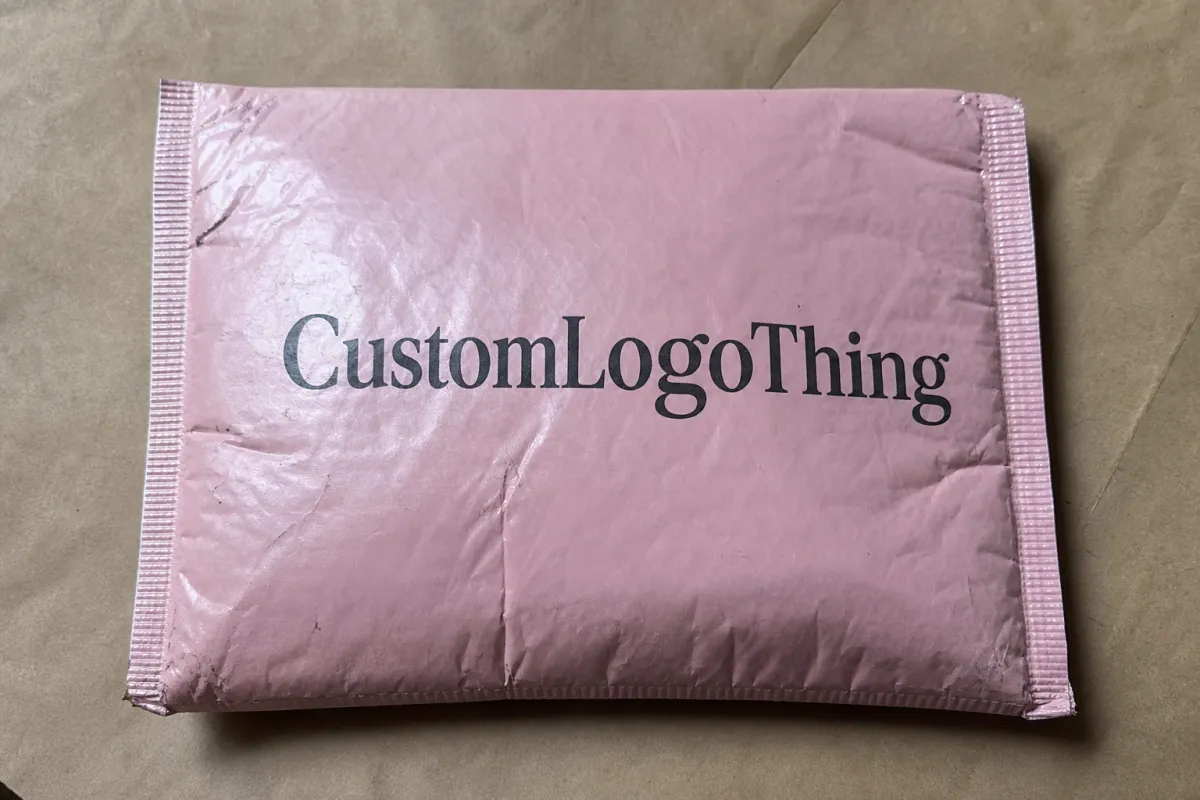
Most cosmetics founders spend most of their attention on the primary package. Fair enough. That is where product aesthetics, formula positioning, and shelf appeal all collide. But for e-commerce orders, the outer mailer becomes the first trust signal. Before the customer pumps the cleanser or swatches the blush, they are already judging the brand by the condition of a package that may have spent days moving through trucks, conveyor belts, bins, and doorsteps.
A plain damaged shipper sends one message. A damaged branded shipper sends a louder one. It suggests the brand cared about appearance but missed the basics on protection, and customers notice that contradiction fast.
Beauty products are especially exposed to these failures because the products themselves often involve glass bottles, rigid carton corners, metallic finishes, pumps, caps, mirrors, and formulas that cannot leak quietly. Even when a mailer does not fully rupture, it can still distort enough to loosen a closure, scuff a carton, or make a filled product look handled badly. A black mailer with poor rub resistance can arrive looking dusty and worn. A white logo on recycled film can shift from crisp to muddy if opacity drifts from batch to batch.
That difference matters more for prestige and masstige brands than people like to admit. If a customer spends $48 on a moisturizer or $72 on a treatment kit, the package does not get graded like a commodity shipper. It gets read like a brand statement.
Social sharing pours fuel on the problem. Unboxing videos reduce brand judgment to a few seconds. Crushed corners, wrinkled adhesive, off-color print, and cheap-feeling film all show up before ingredients, efficacy claims, or texture ever get a chance. For premium cosmetics, that is brutal. Presentation is not separate from product quality in the customer's mind. It is part of product quality.
From a buyer's perspective, a branded padded mailer is not disposable freight packaging. It is a brand asset with measurable performance consequences. Saving one or two cents per unit can disappear very quickly if transit damage climbs by even 1% or 2%. Add replacement freight, customer service time, reverse logistics, influencer resends, and wasted paid seeding, and the low quote stops looking clever.
Important: In cosmetics fulfillment, the best mailer is rarely the prettiest sample on the table. It is the one that keeps print quality, seal strength, dimensions, and cushioning performance stable across repeat production runs.
The audit is where that claim gets tested. You are not really asking, “Can you make this?” You are asking, “Can you make this repeatedly, on time, at the agreed spec, with controls that still work after the sample stage is over?” Those are very different questions, and a surprising number of suppliers are only good at the first one.
How branded padded mailers work in cosmetics fulfillment
A branded padded mailer usually combines five functional elements: the outer face material, the print layer, the internal cushioning, the closure system, and any security or tamper features. Each one affects the others. Change the structure, and print may behave differently. Change the print coverage, and drying or rub resistance can shift. Change the padding, and dimensions, packing speed, or freight class may move with it.
Core structure
The outer face may be coextruded poly film, kraft paper, or a laminated hybrid, depending on the performance and brand look you need. Poly generally handles moisture better and usually delivers strong print vibrancy. Paper can create a more tactile and natural presentation, but it may show rub, fiber lift, or humidity sensitivity unless the specification is controlled tightly. Internal cushioning may be traditional bubble, paper padding, honeycomb structures, or engineered air-cell formats. Cosmetics brands usually need balance rather than brute force: enough protection to control movement and corner stress without turning a lightweight order into an oversized parcel.
Closure performance deserves more scrutiny than it gets. A mailer can look excellent and still fail because the peel-and-seal strip loses tack in cold weather, wrinkles during closing, or bonds inconsistently when operators are packing quickly. For smaller beauty orders, closure widths around 10mm to 15mm are common, but the actual result depends on adhesive chemistry, substrate compatibility, dwell time, and line conditions.
Performance shifts with product type
Not every cosmetic shipment stresses a mailer in the same way. A lip gloss trio packed in folding cartons behaves differently from a glass dropper bottle. Flat palettes create concentrated corner pressure. Cylindrical bottles roll and focus impact on one area. Pumps, droppers, and caps create protrusions that can telegraph force through the pack. A 100ml body oil in glass may need a heavier construction or secondary retention inside the mailer, while sheet masks in cartons may care more about scuff resistance and neat presentation than crush performance.
Shipping lane matters too. A mailer that performs well in short regional transit may behave very differently in cross-country courier networks, humid climates, or export lanes with longer dwell times.
Temperature shifts are not minor. Heat can soften adhesives and change how packed units stack. Cold can make some films stiffer and more brittle in hand. Paper-based structures may absorb moisture, lose crispness, or show surface wear faster in humid environments. If a supplier only discusses packaging in room-temperature terms, the conversation is incomplete.
Branding methods and finish choices
Printing method affects both appearance and unit economics. Flexographic printing often suits larger runs and simpler spot-color jobs. Digital printing can make more sense for shorter runs, seasonal campaigns, or SKU variations with frequent artwork changes, although the per-unit price is often higher at scale. Pantone matching, white underprint requirements, finish choices, and total ink coverage all influence consistency and cost.
For beauty brands, color drift is not some harmless technical footnote. It is visible. A soft blush tone that runs too gray or too warm across batches can make the whole brand system look inconsistent. Some suppliers control color with spectrophotometers and documented tolerances. Others mostly rely on visual checks under whatever light happens to be available. Those are not equal control systems, no matter how polished the sales pitch sounds.
Factory capability ties all of this together. The supplier that can control substrate variation, adhesive application, print registration, line speed, and seal pressure will usually deliver a better customer outcome than the supplier with the lowest headline quote. If you want broader context on repeatable packaging performance, our Case Studies and FAQ pages are useful starting points, but the audit is still where a buyer learns what is real.
Branded padded mailers for cosmetics brands factory audit questions
This is the section that actually drives the sourcing decision. Good branded Padded Mailers for Cosmetics brands factory audit questions should force precise answers, not glossy language. If the supplier keeps answering with vague phrases such as “high quality,” “close match,” or “no problem,” that is already data. Just not the comforting kind.
Raw materials and sourcing
Start with the raw inputs. Ask what film grade, paper stock, or laminate structure they use. Ask whether gauge, basis weight, and padding thickness are controlled lot by lot. If the supplier makes recycled-content claims, request the documentation and clarify whether the percentage refers to post-consumer or post-industrial content. Those are different claims, and marketing teams routinely blur them unless someone slows the conversation down.
For paper-faced mailers, ask about fiber certification and chain-of-custody options. FSC certification can matter for brand messaging, but only if the claim is used correctly and backed by valid paperwork. For adhesives, ask whether the factory qualifies more than one adhesive source and whether alternates have actually been performance-tested on the same structure. “We have backup suppliers” sounds good until you learn the backup material has never been validated on your format.
Print control and artwork handling
Print failures often begin before the press starts. Ask how artwork is preflighted, who approves color standards, whether press proofs are available, how plates are stored for flexographic work, and what reprint tolerances are considered acceptable. A serious supplier should be able to explain the process in sequence: file review, proof approval, press setup, first-article signoff, in-line checks, and release approval.
Ask direct questions:
- What color tolerance do you hold for brand-critical shades?
- How do you measure and control white ink opacity on dark substrates?
- What is your acceptable range for print registration drift?
- How are worn plates, damaged cylinders, or digital calibration issues identified and removed from production?
- Can you provide retained control samples from previous repeat runs?
If every answer boils down to “we match closely,” keep pushing. “Closely” is not a specification. It is a dodge.
Physical protection and package integrity
Cosmetics shipping risks are fairly predictable: puncture, seal pop, corner crush, compression, abrasion, and leakage spread. Ask what tests the factory uses to evaluate puncture resistance, burst performance, seal integrity, and drop survival. Depending on the product type and shipping channel, ISTA transit simulation may be relevant, especially for direct-to-consumer shipments. You can review standards context through ISTA.
Also ask whether the factory has performance data by product weight range and pack style. A supplier that has only tested empty mailers is not giving you the full picture. Cosmetics buyers need to know how the pack behaves with actual loads: cartons, jars, glass bottles, pump tops, kits, and mixed orders.
I have seen beauty brands approve a mailer based on a lightweight sample pack, only to find that the same construction wrinkles badly once a glass bottle and secondary carton are packed together. That is not a hypothetical scenario. It happens because too many evaluations stop at “looks good” instead of “behaves well under realistic load.”
Quality control and traceability
Good factories inspect more than finished goods. Ask about incoming material checks, in-process quality control, and final sampling plans before shipment. A credible supplier should be able to show what gets checked, how often, and by whom. Incoming film thickness may be verified by micrometer, print color checked against the approved master at startup and set intervals, and seal strength spot-tested by shift or batch.
Traceability is where serious suppliers separate themselves from factories that improvise after a problem shows up. Can the factory trace a bad batch by date, machine, operator, and raw material lot? Can they quarantine the affected units quickly? If not, defect investigations get slow, expensive, and messy. For cosmetics brands working around launch calendars or replenishment windows, that delay can mean stockouts, missed drops, emergency resourcing, or a rushed air shipment nobody wanted to pay for.
| Audit Area | Question to Ask | Strong Answer Looks Like | Red Flag |
|---|---|---|---|
| Material control | How do you verify film gauge or paper weight? | Documented incoming inspection with lot-by-lot records | “We trust our supplier” |
| Print consistency | What tolerance do you hold on critical colors? | Defined standard, proofing workflow, retained samples, measurement method | No measurable tolerance |
| Seal integrity | How is adhesive performance checked? | Routine testing by batch or shift with documented results | Visual check only |
| Defect handling | What happens if a batch fails inspection? | Containment, root-cause review, rework or scrap protocol, release control | Case-by-case with no written system |
| Traceability | Can you trace finished units to raw material lots? | Yes, through batch coding and production records | Only shipment-level records |
The best Branded Padded Mailers for Cosmetics brands factory audit questions do not just confirm capability. They expose where capability gets thin, where quality depends on one experienced operator, and where the supplier is relying on habit instead of documented control.
Factory audit process and timeline: what happens step by step
A padded mailer audit usually follows a familiar sequence, even if different suppliers wrap it in different presentation styles. Knowing the order helps you spot where delays are likely and where a factory may be overpromising.
Step one: document review
Start with the paperwork. Request material specifications, print process details, test reports, quality procedures, certification documents, and sample records before the site visit or remote audit call. This step tells you a lot about the supplier's discipline. If it takes a week to produce a basic spec sheet or they keep sending partial files, expect the same friction later during artwork changes, approvals, and urgent reorders.
Step two: facility walkthrough
During the walkthrough, focus on process flow rather than presentation. Where are raw materials stored? Are printed rolls protected from dust, pressure damage, and mix-ups? Are rejected goods clearly quarantined? How are printing plates, cylinders, or digital files controlled? A polished lobby means nothing. Clear line-clearance procedures mean something.
Ask to see the actual equipment likely to run your order, not just the newest machine on the floor. This is a common sourcing trap. A factory may technically have impressive capability, but your order tier may actually be assigned to an older line, a subcontract partner, or a lower-priority production window.
Step three: sample evaluation and pilot confirmation
After the facility review, move into structured sample validation. That should include visual review, dimensional checks, seal evaluation, print comparison against approved artwork, and ideally tests with packed product. Plain structure samples may turn around in roughly 5 to 10 business days. Custom printed samples often take 10 to 15 business days, depending on tooling, queue, and artwork readiness.
For many cosmetics brands, a pilot run is the smarter move before full-scale production. A pilot of 500 to 2,000 units can uncover closing issues, barcode scan problems, scuffing during pack-out, dimensional inconsistency, and actual transit performance before you commit to 20,000 or 50,000 pieces.
That pilot also gives operations teams something the sample room cannot: real packing feedback. If the liner peels awkwardly, if the flap catches, if the mailer stores badly on the line, or if packers need extra tape to feel safe, those details affect cost whether finance notices them immediately or not.
Step four: corrective actions and approval
If the audit surfaces problems, the factory should issue corrective actions with owners, deadlines, and closure evidence. That is not paperwork for its own sake. It is the difference between a temporary promise and an actual process change. Without that follow-through, the audit is mostly theater. Nicely formatted theater, maybe. Still theater.
Lead times vary by structure and region, but a realistic planning window for custom Branded Padded Mailers often looks like this: 3 to 7 business days for document exchange and initial review, 5 to 15 business days for sample work, 12 to 20 business days for production after proof approval, plus transit time based on shipping mode. Tooling, material shortages, or holiday congestion can stretch that further.
Delays usually cluster around a few predictable choke points: artwork revisions after proof signoff, first-pass color mismatch, unexpected substrate substitutions, inspection scheduling gaps, or slow approvals on the brand side. The brands that move fastest generally send a clear specification pack from the start, covering dimensions, material preferences, thickness range, print references, defect thresholds, and test expectations. That prep saves time because fewer assumptions survive into production.
Cost and pricing questions that expose hidden savings
Price comparison gets distorted very easily in custom packaging. One supplier quotes $0.22 per unit. Another quotes $0.18. That sounds straightforward until you realize the structure, print coverage, padding type, closure design, packing assumptions, and freight terms are not aligned. At that point, the comparison is mostly fiction.
Ask every supplier for the same cost breakdown: unit price, minimum order quantity, sample charges, tooling or plate costs, shipping configuration to your warehouse or co-packer, freight assumptions, and payment terms. Also ask how long the quote remains valid. Resin markets move. Paper markets move. Freight moves whenever it feels like causing problems. A quote valid for seven days is not the same thing as one held for 30 or 60 days.
Typical cost drivers
For many custom cosmetic mailers, price changes most with order quantity, print complexity, and structure selection. A basic one- or two-color flexo-printed padded mailer at moderate volume may land somewhere around $0.18 to $0.28 per unit for 5,000 pieces, depending on size, region, and material. More coverage, premium finishes, thicker padding, or lower-volume digital printing can push that upward. Short runs may carry a noticeably higher unit price but still reduce total risk if you are testing a launch and trying to avoid dead inventory.
Tooling fees are another place buyers get caught. Some flexographic suppliers charge separate plate or cylinder costs. Digital suppliers may avoid those setup fees but charge more per piece. Neither model is automatically better. The answer depends on your forecast, artwork stability, SKU count, and how often marketing decides the “final” design was apparently not final.
| Option | Best Fit | Typical Unit Economics | Tradeoff |
|---|---|---|---|
| Short-run digital print | Seasonal drops, influencer kits, test launches | Higher per unit, lower setup cost | Less economical at scale |
| Flexographic print | Stable designs, repeat-volume orders | Lower per unit at higher quantities | Plate costs and longer setup |
| Paper-based padded mailer | Natural brand aesthetic, certain sustainability goals | Varies by structure and basis weight | Moisture and rub performance may be less forgiving |
| Poly padded mailer | Moisture resistance, strong print, mixed shipping lanes | Often cost-efficient in volume | Recycled-content and end-of-life claims need careful validation |
Hidden costs that matter more than pennies
The cheapest quote can become the most expensive option once you count reprints, scrap, transit damage, replacement freight, overages, customer service time, and delayed launch activity. A 2% damage rate on a premium cosmetics order is not a rounding error. It can wipe out unit-price savings almost immediately.
Ask about repeat-order pricing as well. Some factories reduce pricing once artwork is standardized, tooling is paid, or annual volume clears a threshold such as 25,000 or 50,000 units. Others only maintain pricing if reorders happen within a set window. Payment terms matter too. Net terms can help cash flow more than a marginally lower price attached to a strict deposit schedule.
The purpose of branded padded mailers for cosmetics brands factory audit questions is not to bully a supplier over fractions of a cent. The purpose is to uncover total cost early enough to choose intelligently.
Sometimes the right supplier is not the cheapest or the fastest. It is the one with the cleanest documentation, the most stable repeatability, and the fewest expensive surprises hiding behind a decent sample.
Common mistakes cosmetics brands make during audit and sourcing
The biggest mistake is confusing a beautiful sample with a reliable production system. Samples are easy to optimize. Routine production is where discipline shows up. A supplier can hand-build a prototype, assign its best operator to a short run, or print under ideal conditions that do not reflect everyday throughput. The buyer's job is to audit the normal process, not the hero sample.
Vague specifications cause the next big mess. “Premium feel” is not a spec. Neither is “strong adhesive” or “high-quality print.” Buyers need measurable criteria: dimensions, material type, thickness range, padding style, closure format, color references, registration tolerance, rub-resistance expectations, and defect limits. If those points are undefined, arguments later become subjective and difficult to resolve.
Brands also underestimate how often a sample differs from the production conditions they will actually receive. The sample may use a heavier film, slower print speed, extra drying time, or tighter inspection than the standard run. Ask directly whether the sample came from the same line type, material family, and process settings that would be used for volume production. That one question can save weeks of frustration.
Compliance and sustainability claims create another blind spot. Teams sometimes leave verification until after supplier selection, then discover that recycled-content statements are loosely worded or chain-of-custody claims cannot be used in marketing the way they assumed. Review those documents during the audit, not after the purchase order is approved.
Communication sounds like a soft issue right up until it starts costing money. If a factory responds slowly, answers only half the question, or struggles to track revisions during the audit stage, expect the same behavior during a rush reorder or color correction. Cosmetics calendars are not forgiving. Product launches, retail windows, and PR mailings do not pause because someone lost the latest artwork file.
One practical rule: if a supplier cannot explain its defect-handling process in a few concrete steps, assume the process is weak until the evidence says otherwise.
Another common mistake is skipping shipping tests because the opening order feels small. That can backfire badly. Even a limited run can create outsized brand damage if it reaches creators, retailers, or early loyal customers in rough condition. A few documented transit checks up front usually cost less than one ugly replacement cycle.
There is also a less glamorous mistake that buyers rarely discuss openly: internal misalignment. Marketing may want a softer finish, operations may want faster pack-out, and procurement may want the lowest MOQ. If nobody resolves those priorities before the supplier search starts, the project drifts and the audit loses focus.
Expert tips and next steps for choosing the right supplier
If you are down to a shortlist, ask for a pilot run and judge the supplier against real fulfillment feedback, not sample-room charm. Track pack-out speed, closure usability, scuffing after handling, dimensional consistency, and customer-facing damage. Numbers beat impressions. Even a small trial can show whether the original specification is too light, too loose, or simply more expensive than it needs to be.
A simple scorecard helps. Rate each supplier across five areas: quality consistency, responsiveness, pricing transparency, sustainability documentation, and turnaround speed. Weight those categories based on your business model. A prestige skincare line shipping glass should usually rank protection and traceability high. A trend-driven cosmetics brand running frequent launches may care more about agility and short-run print flexibility.
Questions that sharpen the final decision
- Can you share photos or video of the actual line likely to run my order?
- What percentage of your output is similar to this mailer structure, size, and print complexity?
- How do you handle urgent reorders if demand spikes beyond forecast?
- What is your standard timeline for defect escalation and corrective action?
- Can you retain control samples and batch records for future comparison?
Document your acceptance criteria before commercial negotiation is finalized. That order matters. Once the factory knows exactly what success looks like, quotes tend to become more honest and fewer assumptions slip through. Write the specification so another team member could inspect incoming goods six months later and reach the same conclusion you would.
It also helps to send the exact same specification sheet to every shortlisted supplier. Not a reworded version. The same one. Include dimensions, print files, target quantities, delivery destination, required dates, and test expectations. Apples-to-apples comparison is rare in packaging unless the buyer forces it.
Brands still building internal packaging knowledge should use this stage to align marketing, operations, and fulfillment. Marketing will care about finish and color. Operations will care about MOQ, lead time, and damage rates. Fulfillment will care about ease of packing, storage footprint, and closure consistency. A mailer that looks great but adds two seconds per order in a large campaign is not just a packaging issue. It becomes a labor-cost issue.
If you need one practical takeaway, use this sequence: shortlist two or three suppliers, issue the same brief to each, compare full landed-cost quotes, verify documentation, request pilot samples with actual product loads, and audit the top candidates against repeatability rather than presentation. That process is not flashy. It works.
Done properly, branded padded mailers for cosmetics brands factory audit questions give you more than a supplier checklist. They give you a cleaner launch path, fewer expensive surprises, and a packaging system that protects both product and brand value from warehouse shelf to customer doorstep.
FAQ
What should I ask a factory about branded padded mailers for cosmetics brands?
Ask about material thickness, seal strength, print method, padding type, and whether the mailers have been tested with actual cosmetic products rather than empty packs alone. You should also request quality-control details, sample approval steps, traceability records, and a clear explanation of how the factory handles defects, rejected lots, and corrective actions.
How do I compare quotes for branded padded mailer factory audits?
Compare the same specification across every supplier: MOQ, unit cost, tooling, sample charges, freight assumptions, packing method, and payment terms. Then check for hidden costs such as reprints, waste allowances, overages, extra inspection fees, or price limits tied to short quote-validity periods.
What timeline should I expect for branded padded mailer production?
Plan for the full sequence, not only manufacturing time. That usually includes artwork review, proof approval, sample turnaround, production scheduling, in-process quality checks, final inspection, and shipping. Many orders move in roughly 3 to 6 weeks total, although custom print complexity, tooling needs, raw material availability, and transit mode can extend that window.
How do I know if a factory can handle premium cosmetics packaging?
Check whether the supplier can hold color consistency, protect fragile products, and keep defect rates controlled across repeat runs rather than only on one sample. Ask for retained sample evidence, actual production photos, QC documentation, and examples of similar mailer structures used for beauty or personal care fulfillment.
What is the biggest mistake when auditing a padded mailer supplier?
Focusing on the sample instead of the production system behind it. One attractive prototype proves very little by itself. You need evidence of repeatability, traceability, inspection discipline, realistic transit testing, and defect control if you want stable quality after the purchase order is placed.


