Buyer Fit Snapshot
| Best fit | Branded Padded Mailers for Jewelry projects where brand print, material claims, artwork control, MOQ, and repeat-order consistency need to be specified before quoting. |
|---|---|
| Quote inputs | Share finished size, material target, print colors, finish, packing count, annual reorder estimate, ship-to region, and any compliance wording. |
| Proofing check | Approve dieline scale, logo placement, barcode or warning zones, color tolerance, closure strength, and carton packing before bulk production. |
| Main risk | Vague material claims, crowded artwork, missing packing details, or unclear freight terms can make a low unit price expensive after revisions. |
Fast answer: Branded Padded Mailers for Jewelry: Sustainable Options should be specified like a repeatable production item. The safest quote records material, print method, finish, artwork proof, packing count, and reorder notes in one written spec.
Production checks before approval
Compare the actual filled-product size with the drawing, then confirm tolerance on folds, seals, hang holes, label areas, and retail display edges. Reserve space for logos, QR codes, warning copy, and material claims before decorative graphics fill the panel.
Quote comparison points
Review material grade, print process, finish, sampling route, tooling charges, carton quantity, and freight assumptions side by side. A quote is only useful when the supplier can repeat the same color, closure quality, and packing count on the next order.
Branded Padded Mailers for Jewelry Packaging: Sustainable Material Options
A $40 necklace and a $4 mailer can travel the same route and still leave two very different impressions. That is the real job of Branded Padded Mailers for jewelry packaging sustainable material options: protect the product, support the brand, and do it without creating a pile of waste or a pile of returns.
Jewelry is a small category with oversized expectations. Customers notice scuffs on a box, a bent card, a tangled chain, or a mailer that feels flimsy before they even see the piece. The package has to hold the item still, survive shipping abuse, and make the order feel deliberate instead of rushed. That is not a cosmetic detail. It is part of the product.
Sustainability makes the decision harder, not easier. Buyers want recyclable materials, less plastic, cleaner sourcing, and packaging that does not feel wasteful. Fair enough. But jewelry still needs cushioning, a clean print surface, and a structure that does not collapse the first time it gets squeezed in transit. A pretty green claim is useless if the package fails and creates more waste through damage or replacement shipments.
A mailer that looks premium but fails in transit costs twice. A mailer that protects perfectly but looks generic leaves brand value sitting on the table.
What Branded Padded Mailers Mean for Jewelry Packaging
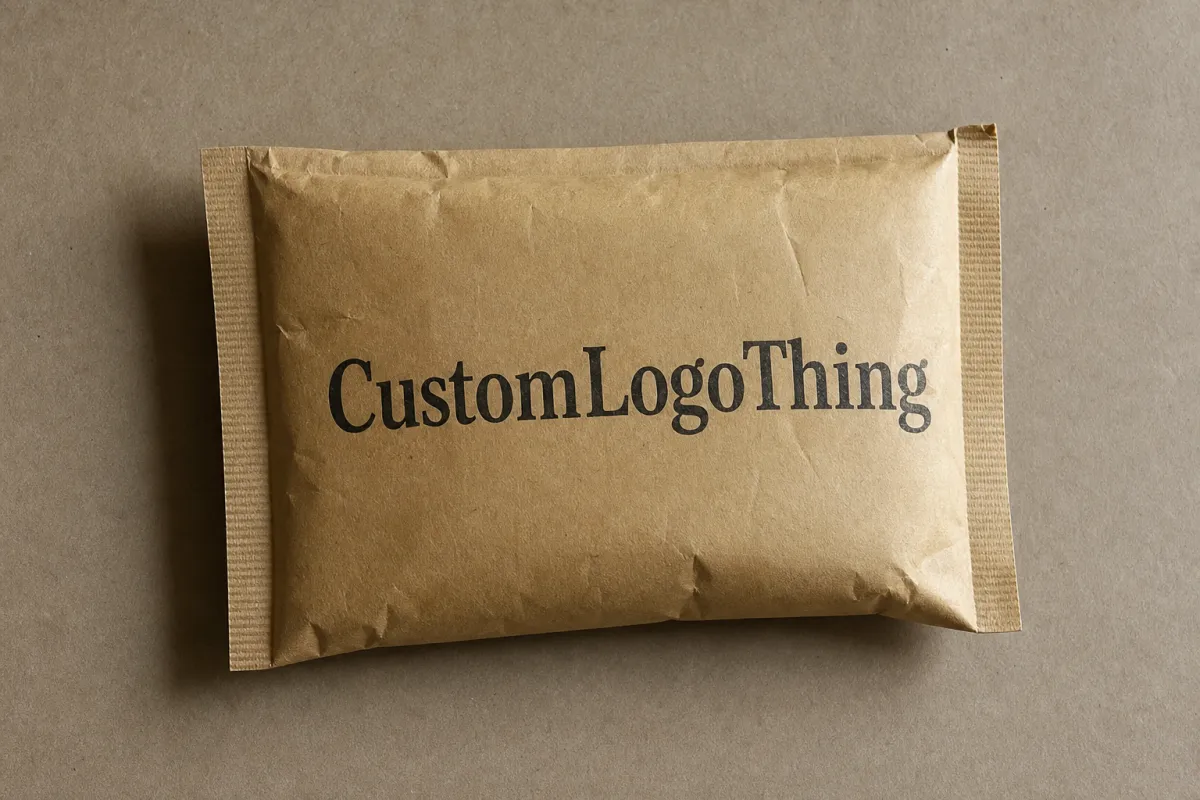
Branded Padded Mailers are lightweight shipping envelopes with built-in cushioning and a printable outer face. They sit between plain shipping supplies and full retail packaging. The outside carries the logo, color, and message. The inside absorbs impact and keeps the contents from sliding around too much. For jewelry brands, that balance matters because the product is small, fragile, and often high-value relative to its size.
The logic is simple. If the item deserves careful handling, it probably deserves better than a bare envelope. Jewelry orders are usually light, but they are sensitive to pressure, abrasion, and movement. A polished pendant can scuff against a hard insert. A bracelet can mark a pouch if it rattles. Earrings can arrive crooked if the card shifts inside the package. A good mailer keeps the item steady and still feels like it belongs to the brand.
That makes these mailers closer to product packaging than many teams first assume. A branded padded mailer can carry the same visual discipline you expect from retail packaging or custom printed boxes, only with less weight and usually lower freight cost. For direct-to-consumer jewelry brands, that often means less storage space, fewer shipping headaches, and a more polished first impression at the door.
The sustainability side needs an honest look. A single-material kraft mailer is easier to explain than a glossy laminated pouch with foam and metallic film. Still, protection cannot be ignored. A mailer that is too thin undermines the sustainability story when it creates returns, breakage, or replacement shipments. In practice, the better option is rarely the one with the loudest green language. It is the one that reduces waste across the full order cycle.
Brands building a broader branded packaging system should keep the mailer aligned with the rest of the kit. If the line already uses tissue, inserts, boxes, or outer cartons made from kraft paper or corrugated cardboard, the mailer should not feel like it came from another supplier on another planet. Good package branding is consistency across the experience, not just a logo on one side of an envelope. If you want to compare related structures, Custom Packaging Products shows how different formats fit together.
Typical paper builds for this category are straightforward: a 120gsm to 140gsm recycled kraft face stock, a paper bubble or honeycomb cushion layer around 2mm to 3mm thick, water-based inks, and a starch-based or low-tack adhesive closure. For jewelry sets that need a little more structure inside, brands often add a 350gsm C1S artboard insert or card. That keeps earring cards flat and stops small pieces from wandering around like they missed the memo.
The short version: a branded padded mailer is one part of a larger packaging system. It should protect the jewelry, support the brand, and keep cost under control. Not glamorous. Still important.
How Branded Padded Mailers Protect Jewelry in Transit
Protection starts with construction. Most padded mailers have four basic parts: the outer face stock, the cushioning layer, the closure area, and the print surface. Each one affects how the package behaves. A heavier face stock resists scuffs better and usually prints more cleanly. A thicker cushion absorbs compression and softer impacts. The closure keeps the contents from drifting loose. The print surface decides how much branding you can fit before the envelope starts looking crowded.
Fit matters more than raw thickness. That gets missed all the time. A mailer that is thick but oversized can let a jewelry box or pouch slide around, which creates corner wear and scratches. A thinner mailer with the right dimensions often performs better because the product has less room to move. For jewelry, snug usually beats bulky.
The inner format changes the risk profile too. A ring in a rigid box behaves differently from an earring card or a necklace in a soft pouch. Rings need crush resistance and a snug fit. Earrings need the card or insert to stay flat. Necklaces need protection from tangling, which usually means a pouch, tie, or board insert before they ever reach the mailer. Heavier sets may need an extra board layer or a small inner carton so pressure does not mark the contents.
That is why packaging design and product packaging have to work together. The mailer should not carry every burden on its own. If the jewelry is delicate, a small inner box is often better than trying to force the mailer to act like a rigid carton. In some programs, a slim outer mailer protects a Custom Poly Mailers-style shipping setup, while the jewelry sits in a paperboard box or insert system inside. That combination can outperform an overbuilt single layer.
For example, a 6x9-inch mailer with a 2mm paper cushion may be enough for a pair of earrings in a 350gsm C1S artboard card. The same mailer can be too loose for a chunky bracelet set unless the inner pack is tightened with tissue, a folded insert, or a smaller secondary carton. The package is only as strong as the spacing inside it. Empty air is not a plan.
Branding choices matter here as well. Print placement should avoid the edges that crease most often. Ink systems need to work on the chosen substrate without smearing during handling. A matte finish hides fingerprints better than a glossy one, especially if the package gets touched a few times before the customer opens it. For a premium launch, the surface should arrive clean, flat, and easy to open. People notice that fast.
Testing is worth doing properly. A basic sample check can include a desk-height drop test, a compression test with stacked cartons, and a shake test to see whether the jewelry shifts. For more formal validation, packaging teams often use methods aligned with ISTA standards or ASTM-style distribution testing. The goal is not paperwork for its own sake. It is catching the small failures before they become replacement orders.
Protection is not only about breakage. It also shapes perception. A wrinkled, dusty, or badly fitted mailer makes the order feel cheap even when the jewelry itself is excellent. The envelope is part of the product story, and for jewelry, that story starts before the box or pouch is opened.
Key Factors in Sustainable Material Options for Branded Padded Mailers for Jewelry Packaging
This part gets messy fast. “Sustainable” can mean different things depending on the substrate, the closure, the ink, and the local recycling system. A mailer can use recycled content and still be hard to recycle if it has incompatible layers. It can be paper-based and still fail the sustainability test if the coating or adhesive turns it into a mixed-material object. Buyers need to look past the label and ask what happens after the package is used.
Recycled kraft paper with paper cushioning is the most straightforward option. It gives a familiar look, prints well in one or two colors, and is easy for many customers to understand. That is one reason kraft keeps showing up in eco-minded jewelry programs. It feels calm, simple, and honest. If the line leans minimalist, a matte kraft finish works well with branded tissue or a small insert card without looking overdone.
FSC-certified paper is another practical route. FSC certification does not magically make a package recyclable, but it does support responsible fiber sourcing and chain-of-custody transparency. For brands that need to document sourcing claims, that can matter a lot. The standards and certification framework are available at FSC. That kind of documentation helps when a buyer has to explain a material choice to marketing, procurement, or a retail partner who wants proof, not adjectives.
Post-consumer recycled content is another specification worth tracking closely. A mailer with 60% PCR fiber is not the same as one with 20%, and those numbers should appear in supplier documentation. Higher recycled content can change the surface texture and print response versus virgin stock. That does not make it worse. It means the artwork needs a little more tolerance for natural variation. Bold graphics and strong contrast usually hold up better on recycled paper than delicate tone-on-tone designs.
Plastic-based or hybrid constructions still have a place. That may sound backwards in a sustainability discussion, but not every jewelry program ships under the same conditions. Long transit lanes, humid routes, and rough handling can justify a hybrid structure if the alternative is repeated damage. Some brands choose a paper outer with a thin protective lining or a reinforced closure because the cost of returns is higher than the material premium. Sustainability is not only the substrate. It is the total waste picture.
Keep these terms separate:
- Recycled means the material includes recovered fiber or content from post-consumer or pre-consumer sources.
- Recyclable means the material can be accepted in some recycling streams, which depends on local infrastructure.
- Compostable means the material can break down under defined composting conditions, not just in a backyard pile.
- Biodegradable is the loosest term and usually the least useful without a clear standard behind it.
That distinction matters because a polished sustainability claim is not the same as a real disposal path. The EPA has repeatedly pointed out that local recycling rules vary, so a package that looks recyclable on paper may not be accepted everywhere. That is why packaging teams increasingly ask for a substrate breakdown, adhesive specification, and coating description before approving artwork.
Inks and closures deserve attention too. Water-based inks are often the cleanest fit for kraft and paper mailers. Low-migration coatings can matter when the jewelry includes leather, coated metals, or delicate finishes that should not contact residue. Closure strips should stay simple and avoid adding unnecessary mixed materials. A small adhesive choice can make the package easier to sort, easier to recycle, or at least easier to explain.
When you compare supplier options, ask for proof instead of slogans. Useful documents include recycled-content statements, FSC certificates, and a note on whether the package is curbside recyclable in your main market. If a supplier cannot say exactly how the material behaves, that is not a small gap. It is a warning sign. Sustainable packaging earns trust when the evidence is specific.
Cost, Pricing, MOQ, and Unit Cost Trade-Offs
Price is never just the price. For branded mailers, the real cost depends on size, material, print coverage, finish, tooling, and volume. A larger envelope uses more fiber. A heavier face stock raises material cost. Full-bleed color adds ink usage and can change setup time. Special finishes such as soft-touch, spot gloss, foil, or debossing can push the price up fast, especially at lower volumes.
MOQ, or minimum order quantity, is not just a vendor hurdle. It is a planning variable. A smaller brand may be better off ordering 1,000 to 2,500 units for a launch, even if the per-unit price is higher, because the risk of overstock is lower. If the artwork changes, the product line shifts, or the logo evolves, a huge inventory commitment can get expensive in a hurry. The lowest unit price is not always the smartest business choice.
For a real-world reference, a 5,000-piece run of a standard 6x9-inch or 7x10-inch recycled kraft padded mailer with one-color branding often lands around $0.15-$0.24 per unit, depending on size and print coverage. Add a second color, heavier cushion stock, or a larger format, and the same job can move into the $0.26-$0.40 range. Soft-touch coating, foil, or a custom die-cut shape can push it higher. Fancy is expensive. That is not a secret. It is math.
For orientation, these ranges are common in small-to-mid-volume custom runs, though every supplier quotes differently based on spec and region:
| Mailer option | Best use case | Typical MOQ | Typical unit cost at 5,000 pcs | Notes |
|---|---|---|---|---|
| Recycled kraft padded mailer | Light jewelry, pouches, slim boxes | 1,000-3,000 | $0.15-$0.24 | One-color print, clear eco story, good for simple unboxing |
| FSC-certified paper mailer with paper cushioning | Premium direct-to-consumer jewelry | 2,000-5,000 | $0.22-$0.34 | Good balance of presentation and fiber sourcing, especially for matte branding |
| PCR-heavy hybrid mailer | Longer shipping lanes or higher abrasion risk | 3,000-8,000 | $0.24-$0.38 | Better physical protection in some conditions, but end-of-life claims need careful wording |
| Custom mailer with premium finish | Launches, influencer kits, high-value collections | 5,000+ | $0.28-$0.55 | High visual impact, but finish choices can raise cost quickly |
Those numbers swing a lot with volume. A quote for 10,000 units can look very different from a quote for 2,000 because setup, freight, and production efficiency get spread across more pieces. That is why tiered pricing at realistic volume bands beats a single number every time. A good supplier should be able to show what changes at 1,000, 5,000, and 10,000 units.
Stock versus custom is another useful comparison. Stock mailers save time and usually reduce setup cost, which helps during product testing. Custom versions strengthen package branding and can raise the perceived value of the jewelry. At scale, custom can also reduce the need for extra stickers or insert cards. That is not guaranteed, but it happens often enough to be worth serious consideration.
For landed cost, buyers should count more than the purchase order price. Freight, warehousing, sample charges, and the cost of damage all matter. A mailer that saves eight cents but increases return rates is not cheaper. The better way to compare options is total cost of ownership: unit price, shipping cost, storage space, rejection rate, and replacement shipments. That is the level where packaging turns into an actual business decision instead of a shopping exercise.
If you want to see how the same strategy changes across formats, review the broader Case Studies library and compare how packaging programs balance appearance with unit economics. Those examples usually tell a more honest story than a generic quote sheet because they show how a material choice behaves after launch, not just on paper.
One practical note: the lowest quote often hides the most expensive part of the process. If the print quality is inconsistent, the closure fails, or the mailer fits poorly, operations pays for it later. That cost shows up as rework, returns, or customer service time. In packaging, a few cents saved up front can disappear fast somewhere else.
Process and Timeline: From Quote to Delivery
A good mailer program follows a clean path. First comes discovery: what jewelry is being shipped, how it is boxed or sleeved, and what the brand wants the package to say. Then the supplier recommends a dieline, material, closure type, and print method. After that comes artwork setup, proofing, sampling, production, inspection, and shipment. The project should feel structured. If it feels improvised, something is off.
Timelines depend on how many variables are in play. A simple print on a standard-size kraft mailer can move fairly quickly once artwork is final. A custom size, premium finish, or specialty paper adds time. If the supplier needs a sample round before approval, that creates another step, but it usually pays for itself. Catching a fit problem during sampling is much cheaper than discovering it after 5,000 units are already in the warehouse.
As a rough planning guide, many teams see 3 to 7 business days for initial sampling, 3 to 5 business days for proof adjustments, and often 12 to 15 business days from proof approval to production completion on standard custom mailers. Specialty finishes, extra revisions, or overseas freight can extend the schedule into the 18 to 25 business day range before transit. That means the launch calendar should run backward from receiving, not forward from the first quote. If marketing says the campaign goes live on a certain date, operations needs the mailers in hand before fulfillment begins, not on the same day.
What speeds the process up?
- Final artwork with correctly sized dielines.
- Standard dimensions instead of a brand-new custom format.
- One clear print concept instead of a stack of revisions.
- A single sample approval round.
- Quick signoff from branding, ops, and procurement.
What slows it down?
- Artwork changes after proofing has already started.
- Specialty paper stocks that need sourcing.
- Complex closures or unusual structural changes.
- Import steps, customs checks, or freight delays.
- Internal lag from too many approvers.
A clear spec sheet saves time. It should list dimensions, material, thickness or basis weight, print colors, finish, closure type, recycled-content target, and any testing requirements. A good purchasing team also names who approves each stage. That cuts down confusion when a proof lands or a sample needs a fast decision.
If speed matters, standardize the format. If presentation matters, simplify the print. If both matter, reduce the number of variables instead of watering down the concept. A supplier brief with clear dimensions, target volume, and a simple visual direction is usually the fastest path. That is especially true when a program is being built with a partner like Custom Logo Things, where the brief needs to do real work instead of pretending the team can read minds.
Step-by-Step Guide to Choosing the Right Mailer
Start with the jewelry, not the mailer. Measure the actual boxes, pouches, cards, inserts, and any fragile add-ons. Weight matters, but outer dimensions and empty space matter too. A thin bracelet pouch and a rigid ring box are not the same shipping object. If the product moves, the mailer is too loose or the inner pack is incomplete.
Next, define the role of the mailer. Is it mostly shipping protection? Is it the premium outer layer that adds to the unboxing moment? Or is it doing both? The answer changes the spec. If the goal is protection only, the format can stay simpler. If the goal is presentation, print coverage, stock feel, and closure quality matter more. A mailer that has to ship well and brand well should be chosen with both jobs in mind.
Then rank the priorities. Most jewelry brands can sort their needs in this order:
- Sustainability claim and material transparency.
- Protection and fit.
- Print quality and package branding.
- Budget and landed cost.
- Lead time and supplier reliability.
That ranking keeps the discussion honest. It is easy to start with the prettiest sample or the lowest quote. Better to start with the business requirement. A biodegradable-looking package that fails a closure test is not a win. A premium finish on an oversized mailer can look expensive while creating waste. The right answer protects the product and fits the brand without overbuilding.
Request samples before you commit. Then test them with the actual jewelry, not with empty air. Put the real ring box, bracelet pouch, or earring card inside, seal the mailer, and see what happens when it gets handled roughly. Check the edges for scuffs. Check whether the closure holds after one press. Check whether the print stays legible on recycled paper. Check whether the package feels flimsy in hand.
If the team is comparing formats, it helps to look at the whole system instead of one piece at a time. A mailer should sit with inserts, labels, and shipping cartons in a way that feels intentional. If the jewelry already ships in a branded box, the mailer should support that instead of fighting it. If the outer box is plain, the mailer may need to do more visual work. Either way, the system should feel like it belongs together.
A useful supplier brief usually includes these details:
- Exact product dimensions and weights.
- Desired material preference, such as recycled kraft or FSC-certified paper.
- Target print colors and finish.
- Expected monthly volume and reorder pattern.
- Testing needs, including drop or compression checks.
- Required documentation for recycled content or certification.
That level of detail cuts down on back-and-forth. It also increases the odds that the first samples are close to what you actually need. The sharper the brief, the less guesswork the supplier has to fill in.
Common Mistakes Jewelry Brands Make With Mailers
The first mistake is over-specifying the package. Some brands choose a mailer that is thicker, larger, or more decorative than the product needs. That adds cost, weight, and sometimes environmental impact without improving protection in any meaningful way. If the jewelry is already protected by a box or insert, the mailer should not become a second box unless the use case really calls for it.
The second mistake is picking an eco mailer that sounds right but behaves badly. Mixed-material packages can confuse recycling. A glossy film over paper can look premium and still reduce curbside recyclability. A compostable claim without a clear standard can sound impressive and still be hard to verify. The smarter move is to ask what the package is made of, how it is meant to be disposed of, and whether that matches the claim on the surface.
The third mistake is ignoring movement inside the mailer. Jewelry that shifts during transit creates exactly the problems buyers want to avoid: bent earring cards, tangled chains, crushed corners, and abrasive marks on polished surfaces. A snug fit, a board insert, or a small inner box usually solves more problems than a heavier outer envelope ever will.
The fourth mistake is assuming recycled paper prints exactly like virgin stock. It usually does not. Color can shift. Ink can absorb differently. Fine details can soften. That does not make recycled material a bad choice. It means the artwork has to be chosen for the substrate. Bold type, stronger contrast, and cleaner layouts usually perform better on kraft paper than fragile gradients or ultra-thin lines.
The fifth mistake is skipping the pilot run. A pilot gives operations and fulfillment a chance to spot issues before the full order lands. It is the easiest way to catch closure problems, stock handling issues, pack-out confusion, or fit mismatches. The pilot can be small, even a few hundred units, but it should be treated like a real test, not a formality.
There is also a human mistake: not involving the people who actually pack the orders. The fulfillment team knows whether the mailer is easy to fold, seal, label, and store. If they say the adhesive is awkward or the pack sequence is slow, listen. Packaging that looks great in a meeting but frustrates the warehouse will always cost more than it should.
The lesson is simple. Judge the package by how it behaves in real handling, not by how it reads in a proposal.
Expert Tips and Next Steps for a Smarter Launch
Start with one best-selling SKU and one or two mailer options. That keeps the test clean. A small pilot on a real order stream tells you more than a long debate in a spreadsheet. Watch damage rate, customer feedback, and how the package feels during pack-out. If the selected mailer handles the most common order well, the rest of the line usually gets easier.
Ask for documentation before you approve the order. A serious supplier should be able to provide recycled-content claims, FSC or chain-of-custody paperwork if relevant, material descriptions, and sample photos. If the supplier can share transit-test results or packaging test notes, even better. Those details help separate a polished sales pitch from a package that has actually been thought through.
Build a scorecard. It does not need to be complicated. Three to five metrics are enough:
- Unit cost at your target volume.
- Damage rate or return rate on real orders.
- Pack-out speed in the fulfillment area.
- Customer feedback on opening and presentation.
- Reorder lead time and supply reliability.
That scorecard turns packaging into a business tool instead of a subjective debate. A mailer that costs a little more but reduces returns may be the better buy. A mailer that looks fantastic but slows down pack-out may not be worth the premium. Packaging teams usually learn that the best option is the one that performs steadily over time, not the one that gets the loudest reaction in a sample meeting.
Coordinate the mailer with the rest of the package system. Labels, inserts, tissue, thank-you cards, and sealing methods should feel like part of the same family. That is where packaging design stops being decoration and becomes discipline. The jewelry should not arrive in a mailer that feels disconnected from the rest of the brand.
If the program will grow into a larger branded system, think ahead about how the mailer sits beside box programs, filler, and shipping cartons. That is one reason some brands move from early stock formats to coordinated solutions once order volume settles. They want the package to feel less improvised and more like a proper retail packaging system, even when the item ships through e-commerce.
When the specs are ready, approve the sheet, order a small sample batch, and inspect the first shipment carefully before scaling. That sequence keeps risk manageable and gives the team room to adjust. It also helps you judge whether the package really fits the brand, the product, and the customer experience.
Done well, Branded Padded Mailers become a quiet advantage. They reduce friction in fulfillment, improve first impressions, and help a jewelry line look thoughtful without spending on unnecessary layers. For brands comparing branded Padded Mailers for Jewelry Packaging sustainable material options, the strongest results usually come from clear specs, honest testing, and a willingness to choose the structure that solves the real problem instead of the imaginary one.
What sustainable material options work best for branded padded mailers for jewelry packaging?
Recycled kraft with paper padding is usually the simplest starting point for light to medium protection. A common build is 120gsm to 140gsm kraft face stock with a 2mm to 3mm paper cushion and water-based print. If moisture resistance or abrasion is a bigger concern, PCR-heavy or hybrid structures can make sense, but they need closer review because the end-of-life path is less straightforward. Before approving artwork, verify the recycled-content claim, the FSC status if it applies, and whether the mailer is actually recyclable in your main markets.
Are paper padded mailers strong enough for necklaces and earrings?
Yes, if the jewelry is already secured in a box, card, pouch, or insert so it does not slide around. The fit matters more than extra bulk. A snug mailer with proper internal support often performs better than a larger, heavier envelope. For example, earrings on a 350gsm C1S artboard card usually travel better when the card is held flat inside the mailer instead of floating loose. Real-product testing is the best way to confirm it, especially with a simple drop and compression check.
How much MOQ should I expect for custom branded padded mailers?
MOQ depends on the size, print complexity, and material choice. Many small brands start with 1,000 to 3,000 units for simpler custom runs, while more complex or premium versions may start higher. If you are ordering around 5,000 pieces, the pricing usually gets more comfortable, and the unit cost often drops into a more workable range. The smartest approach is to ask for tiered pricing across several volume bands so you can compare risk and cost side by side.
How long does the process and timeline usually take for custom mailers?
Plan for artwork setup, proofing, sample approval, production, and shipping. A straightforward custom order may move in a few weeks, but the production window is often 12 to 15 business days from proof approval for standard builds. Specialty materials, multiple revisions, or overseas freight can extend the schedule. The safest method is to build the launch backward from the warehouse receiving date rather than from the order date.
What is the best way to balance cost and premium presentation?
Spend on fit, tactile stock, and closure quality first. Those details affect both protection and perception. A clean print on a well-chosen paper stock often looks more premium than a package with too many decorative extras. If you track damage and returns against unit price, you can judge actual value instead of reacting to the lowest quote. In many jewelry programs, a simpler outer mailer paired with a better insert or inner card gives a stronger result than a flashy envelope that does the job badly.