Buyer Fit Snapshot
| Best fit | Branded Poly Mailers for Direct Mail projects where brand print, material claims, artwork control, MOQ, and repeat-order consistency need to be specified before quoting. |
|---|---|
| Quote inputs | Share finished size, material target, print colors, finish, packing count, annual reorder estimate, ship-to region, and any compliance wording. |
| Proofing check | Approve dieline scale, logo placement, barcode or warning zones, color tolerance, closure strength, and carton packing before bulk production. |
| Main risk | Vague material claims, crowded artwork, missing packing details, or unclear freight terms can make a low unit price expensive after revisions. |
Fast answer: Branded Poly Mailers for Direct Mail: Film, Print, MOQ, and Carton Packing should be specified like a repeatable production item. The safest quote records material, print method, finish, artwork proof, packing count, and reorder notes in one written spec.
Production checks before approval
Compare the actual filled-product size with the drawing, then confirm tolerance on folds, seals, hang holes, label areas, and retail display edges. Reserve space for logos, QR codes, warning copy, and material claims before decorative graphics fill the panel.
Quote comparison points
Review material grade, print process, finish, sampling route, tooling charges, carton quantity, and freight assumptions side by side. A quote is only useful when the supplier can repeat the same color, closure quality, and packing count on the next order.
Branded Poly Mailers for Direct Mail: A Practical Guide
Branded Poly Mailers for direct mail can look modest on a spreadsheet. Then one lands in a recipient's hands and the whole thing changes. The outside gets seen before the offer inside. That means the mailer is not just a container. It is the first image, the first cue, and sometimes the only branded surface a person notices before deciding whether to open it now or toss it onto the counter for later.
Direct mail competes with a pretty unglamorous pile of daily life: utility bills, shipping notices, catalogues, appointment reminders, and the occasional plain envelope that disappears into the nearest stack of paper. A well-built mailer can rise above that noise without turning into a gimmick. Branded poly Mailers for Direct mail sit in that useful middle ground. They protect inserts, signal that someone planned the piece, and turn routine fulfillment into something that looks deliberate from mailbox to desk.
For Custom Logo Things, the real question is not whether branding belongs on the outside. It is how much branding belongs there, which film can carry it cleanly, what quantity makes sense, and how much time the campaign has before speed starts costing more than it saves.
What branded poly mailers for direct mail do differently
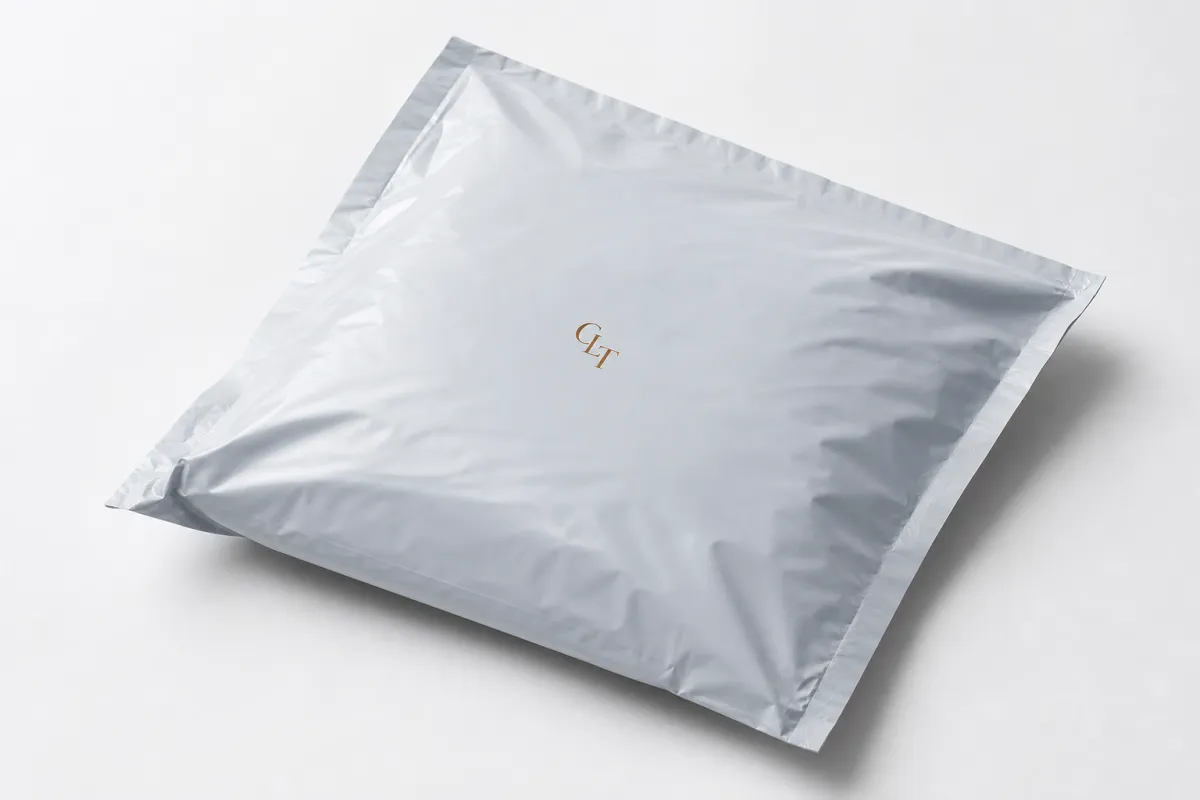
The quickest way to understand branded poly mailers for direct mail is to compare them with a plain mailer. A plain mailer protects the contents and does very little else. A branded version still protects the contents, but it also acts as a recognition cue, a visual promise, and a small piece of traveling media. That extra job changes the way the campaign feels before the recipient reaches the insert.
That difference matters far beyond looks. When a recipient sees a sharp logo, a strong color block, or a message tied to the campaign, they often assume the contents were chosen with more care. In retention programs, welcome kits, membership drops, and B2B account outreach, that assumption can help build trust before the copy inside even gets a word in.
Branded poly mailers for direct mail also pull the piece out of the generic. Generic is not always wrong, but it tends to vanish into the background. A mailer with an intentional outer layer feels like part of a system rather than a random shipment. That can sharpen curiosity and, in some cases, improve response quality because the package carries the recipient from mailbox to opening without a visual dead end.
“The outside is not a wrapper. It is the first advertisement the recipient actually touches.”
The point gets even clearer when the mailer holds more than one item. Inserts, postcards, samples, and welcome materials all compete for attention after the seal breaks, so the exterior has to set expectations. A plain bag can still do the job. A printed one gives you more control over what the recipient thinks is coming next.
There is a practical benefit too. In multi-piece campaigns, especially those sent in waves, external brand marks help fulfillment teams and recipients identify the right package faster. That sounds small until you have a list of segmented mailers moving through a warehouse. Small operational clues save time, cut confusion, and make branded poly mailers for direct mail easier to manage once personalization enters the picture.
If your team is still deciding how much to customize, the smartest first pass is to review the broader mix of Custom Packaging Products and narrow the field by campaign purpose. Sometimes the right answer is a simple printed mailer. Sometimes it is a restrained outer design paired with a stronger insert card. The packaging should earn its place in the media plan, not just occupy it.
How branded poly mailers for direct mail work in the mail stream
To see how branded poly mailers for direct mail behave in practice, follow the piece from the packing table to the mailbox. The process starts with the insert pack: one item, three items, or a small kit made up of a card, a sample, and a response prompt. The bag gets sealed, labeled, and sorted with the rest of the campaign. After that it moves through transport, handling, and final delivery, where the recipient sees the branding and decides whether to open it right away or leave it on the counter for later.
The journey looks ordinary on paper. It is not. Every step makes a different demand on the mailer. The film has to resist seam tears. The seal has to stay closed during stacking and transit. The print has to hold up after friction, compression, and the occasional scrape against another parcel. Thin bags telegraph the contents or feel flimsy in hand. Overbuilt bags raise costs for protection the campaign may never need.
Print area matters as much as the material itself. A large logo can look excellent on a 3 mil or 4 mil film. Dense artwork on a low-opacity bag can turn muddy once the insert shows through. That is why branded poly mailers for direct mail need to be designed as packaging first and art second. The image has to live on the material, not just in the mockup.
Postal logic shapes the layout too. Address panels, barcode placement, and any compliance markings need room to breathe. A mailer can be expressive and still remain scannable. Crowd the address or bury the delivery info under the design, and the package may look polished while creating operational headaches. The strongest branded poly mailers for direct mail support the campaign without interfering with logistics.
Use case changes the formula. Acquisition mail usually benefits from bolder branding because the package has to create recognition quickly. Retention mail often works better with quieter colors and a more premium finish because the audience already knows the company. Sample programs need stronger film and tighter seals. Account-based outreach tends to reward personalization and a more controlled layout. Each version of branded poly mailers for direct mail is doing a slightly different job.
At a technical level, the variables stay fairly consistent:
- Thickness: usually selected in the 2.5 mil to 4 mil range, depending on the weight and shape of the contents.
- Opacity: important when the insert should stay hidden or when color coverage needs to look solid.
- Closure style: self-seal, tamper-evident, or peel-and-seal options each behave differently during pack-out.
- Surface finish: matte, gloss, or soft-touch effects can change how premium the mailer feels in hand.
For transit checks and rough handling, many teams model their pack-out against standard transport thinking used in ISTA testing. For paper components in the kit, FSC sourcing can matter if sustainability claims are part of the story. The labels are not decoration; they help the buyer make decisions with fewer assumptions. See ISTA testing guidance and FSC certification resources for the kinds of standards buyers often use as checkpoints.
Branded poly mailers for direct mail also behave differently in the mail stream because they can act like a moving ad. A parcel that lands face-up in a stack or slides across a warehouse floor is still advertising the campaign. That is a strange thought, but it is true. The package keeps speaking after it leaves the packing bench.
Key factors that shape performance, branding, and durability
Most buyers start with color, then discover the material was the real decision all along. For branded poly mailers for direct mail, the film grade, gauge, seal strength, and opacity determine whether the package feels dependable or disposable. A mailer can look strong in the proof and still fail if the seams split under load or the adhesive softens during a hot run through transit. That is why the spec sheet matters more than the mockup at approval time.
Film choice usually comes down to the contents and the handling pattern. A light insert pack can often live comfortably in a thinner film. Thicker sample kits or multi-piece packs need more resistance. The difference between 2.5 mil and 3 mil sounds small until you hold both in your hand. One hangs a little differently. One resists puncture a little better. One gives a recipient more confidence on first touch. Branded poly mailers for direct mail should feel built for the job, not borrowed from a generic shipping line.
Design decisions carry equal weight. A high-contrast logo reads well at a distance. A full-bleed background can look premium, but only if the print is clean and the closure edge does not chop the composition in half. A playful campaign may need stronger color. A B2B piece may work better with restraint and a cleaner hierarchy. The best packaging design is rarely the loudest one. It is the one that matches the audience and the message without second-guessing either.
Size selection is where budgets quietly leak. A mailer that runs too large lets inserts slide, looks underfilled, and sometimes needs extra stabilization. A mailer that is too tight stresses the seal and risks creasing the contents. A proper fit reduces waste, improves presentation, and lowers the chance that the whole package feels improvised. With branded poly mailers for direct mail, size is not a technical footnote. It is part of the brand impression.
A few branding elements consistently improve performance without turning the mailer into clutter:
- QR codes: useful when the mailer has a single landing page or redemption flow.
- Personalized copy: effective for account-based outreach and segmented retention programs.
- Campaign-specific messaging: good for launches, event invitations, and limited-time offers.
- Tamper-evident features: helpful when the contents need to arrive visibly intact.
That last point matters more than many teams expect. A tamper-evident closure does not just protect the contents; it signals that the contents are meant to arrive complete and untouched. In direct mail, small signals like that can change how carefully a recipient handles the piece. Branded poly mailers for direct mail perform best when the protection story and the visual story say the same thing.
If the campaign includes multiple inserts, I usually advise testing the finished pack before ordering at scale. Put the actual items into the actual bag and close it the way the fulfillment team will close it. Then look at it in natural light, under warehouse lighting, and at arm's length. A design that behaves on the artboard can read very differently once the bag is under tension. That is normal. It is also where a lot of expensive mistakes get caught early.
For buyers who want a practical reference point, Custom Poly Mailers are usually the fastest way to compare thickness, print coverage, and closure options before choosing a production spec. That comparison is especially useful when branded poly mailers for direct mail need to support shipping and marketing in the same piece.
Cost and pricing: what branded poly mailers for direct mail really cost
Pricing for branded poly mailers for direct mail is usually built from material, print complexity, quantity, size, closure style, and freight. Buyers often focus only on unit cost. That is understandable. It also misses the structure beneath the number. A larger mailer with simple one-color printing can cost less than a smaller bag with a complicated layout, specialty film, or variable messaging. Print coverage and setup often create the biggest swing.
At lower quantities, setup cost can dominate the unit price. At higher quantities, that setup gets spread across more pieces and the per-unit number drops. The less obvious part is that total spend can still rise if the campaign needs multiple SKUs, different sizes, or separate versions for testing. A procurement team may save a few cents on one run and spend more overall because the job has been split into too many variants. Branded poly mailers for direct mail reward clarity in the spec sheet.
For a useful planning range, many buyers see the following for standard direct mail runs, assuming common film weights and moderate print coverage. Freight and exact artwork details can move these numbers up or down.
| Option | Typical unit price at 5,000 pcs | Typical unit price at 25,000 pcs | Best fit |
|---|---|---|---|
| Plain unprinted poly mailer, standard seal | $0.10-$0.18 | $0.06-$0.12 | Basic fulfillment, low branding need |
| One-color branded mailer, 2.5-3 mil film | $0.18-$0.28 | $0.11-$0.20 | Simple campaigns, efficient production |
| Full-color branded mailer, 3-4 mil film | $0.28-$0.45 | $0.16-$0.30 | Retail, subscription, welcome kits, higher visual impact |
| Premium mailer with special closure or tamper-evident features | $0.35-$0.60 | $0.22-$0.40 | High-value inserts, samples, security-sensitive kits |
Those figures are not universal, and anyone who presents them that way is flattening a messy job into fake certainty. They are still useful for budget conversations because they show the cost ladder clearly. Branded poly mailers for direct mail do not have to be expensive to work well, yet the difference between a lower-cost and a higher-cost version can be easy to justify if the stronger option improves open behavior, recall, or perceived value.
MOQ decisions deserve just as much attention. Smaller runs reduce inventory risk and keep pilot programs flexible. Larger runs usually improve economics and make recurring campaigns easier to schedule. If the mailer supports monthly outreach, annual member kits, or repeat acquisition drops, a larger order can stabilize pricing and cut down on repeat approvals. If the campaign is exploratory, a smaller run protects the budget while the team learns how the audience responds.
Here is the part many teams skip: compare package cost against response potential, not against the cheapest possible bag. If a better outer impression nudges conversion even a little, the extra cents per unit can pay back quickly. Branded poly mailers for direct mail should be judged as part of the offer economics, not as a separate purchasing line with no downstream effect.
Freight is often the hidden variable on smaller runs. A compact order can still get expensive if the cartons are heavy, the shipment is expedited, or the delivery window is tight. On larger orders, freight becomes a smaller percentage of total spend, but it still belongs in the budget model. Good pricing conversations cover the mailer, the packing, and the shipment in one view.
Process and timeline for branded poly mailers for direct mail
Most timing problems with branded poly mailers for direct mail start before production even begins. The brief is vague, the artwork is still moving, or the insert count keeps changing. Once that happens, proofing drags, production gets squeezed, and the shipping window becomes the thing everyone starts watching. A good timeline does more than count business days. It makes room for how people actually make decisions.
The production path usually looks like this:
- Brief and sizing: confirm insert dimensions, target quantity, print coverage, and closure type.
- Artwork submission: supply press-ready files, color targets, and any variable text.
- Proof review: check layout, legibility, barcode placement, and branding details.
- Approval: sign off on the final proof before manufacturing begins.
- Manufacturing: print, cut, seal, and package the order.
- Freight and receipt: move the finished goods into the fulfillment or mailing workflow.
For standard runs, a realistic window from proof approval to shipment is often 12 to 20 business days, depending on quantity and print setup. Rush jobs can move faster, but they leave less room for quality checks and can increase the chance of color issues, registration problems, or packaging inconsistency. Branded poly mailers for direct mail should be scheduled like a core campaign asset, not like a last-minute add-on.
Artwork readiness usually drives the schedule more than anything else. If the file is final, the size is approved, and the closure style is already chosen, the job tends to move predictably. If the team is still arguing over a slogan, refining a logo, or revising a QR landing page, that debate eventually shows up in the calendar. Settling those decisions early is cheaper than asking production to absorb the delay.
When I talk to buyers about timeline, I recommend building in three buffers. The first is internal approval time, because stakeholders rarely review at the same speed. The second is sample or physical proof time, especially if the mailer carries high-value inserts. The third is assembly time, because the printed bag often arrives before the campaign team is fully ready to pack it. With branded poly mailers for direct mail, those buffers are not slack. They are insurance against a messy launch.
A simple launch calendar might look like this:
- Week 1: finalize dimensions, confirm insert count, and send artwork.
- Week 2: review proof, correct any barcode or layout issues, and approve.
- Weeks 3-4: production and inbound freight.
- Week 5: pack-out, postal prep, and launch.
That kind of planning may look conservative, but it keeps the campaign from turning into a scramble. If a team insists on compressing the schedule, the usual tradeoffs are familiar: higher freight cost, less time for QC, fewer revisions, and a greater chance that the mailer arrives with something small but irritating wrong. The more customized the piece, the more that risk matters. Branded poly mailers for direct mail reward calm scheduling.
If you want to see how packaging decisions play out in real programs, the most useful internal reference is often a set of prior campaign results. Our Case Studies page helps teams compare structure, print approach, and fulfillment impact before they commit to a new run. That kind of comparison is especially helpful for branded poly mailers for direct mail because the right choice is usually visible only after comparing more than one real example.
Common mistakes when using branded poly mailers for direct mail
The most common mistake is overdesigning the outside and underthinking the job. A mailer can look visually strong and still fail if the insert is awkward, the seal is weak, or the package feels disconnected from the offer. Branded poly mailers for direct mail are supposed to support the message, not compete with it. If the outside is louder than the reason for the piece, the package starts working against itself.
Size mismatch shows up constantly. Teams choose a bag based on flat insert dimensions, then ignore the reality of folded cards, sample thickness, and the tolerances created during pack-out. That is how a piece ends up either bulging too much or floating around inside a shell that feels oversized. Both outcomes make the package look less considered. A tight, accurate fit usually looks more premium and travels better.
Weak seals are another easy-to-miss problem. If the closure cannot survive stacking or gentle flexing, the mailer loses credibility before it reaches the recipient. That is why I always ask whether the adhesive matches the actual handling pattern. Is the bag being packed cold or warm? Is it sitting in a warehouse? Is it moving through a dense mailing environment? Branded poly mailers for direct mail need the closure system to match the real route, not an idealized one.
Timing causes its own damage. Teams often underestimate proof cycles, postal review, and the time required to assemble inserts once the printed mailers arrive. That is how a launch date gets locked before the supply chain is ready. The campaign then ships late or ships with compromises. Neither choice is attractive. Mapping the schedule backward from the drop date usually exposes where the risk is hiding.
Compliance and data issues can create the most frustrating delays. Address placement needs to remain legible. Barcodes have to scan cleanly. Campaign claims on the outside should match the audience and the offer. A design that works for one list may be wrong for another, especially if the audience expects a different tone or level of formality. With branded poly mailers for direct mail, the outer surface carries both brand and logistics, so careless layout can damage both.
Here are the mistakes I see most often:
- Choosing a film that is too thin for the insert weight.
- Using print coverage that hides the branding hierarchy.
- Ignoring the space needed for addresses and postal markings.
- Ordering too late for a physical proof or sample check.
- Picking a size that forces excess void space or overstuffing.
One overlooked issue is message drift. A team may create a clever outer package and then insert a different tone inside the mailer. The recipient gets two voices instead of one, and the brand feels less coherent. That problem does not always show up in production logs, but it can show up in response rates. Branded poly mailers for direct mail work best when the outer and inner messages feel like one conversation.
If the objective is simple delivery and nothing more, plain packaging can still be the smarter choice. Once the goal includes response, trust, or stronger recall, the outside deserves the same level of planning as the insert. That is the difference between a package that merely arrives and a package that actually performs.
Expert tips and next steps for a stronger mail campaign
The best results with branded poly mailers for direct mail usually come from a simple rule: define the campaign goal first, then build the bag around that goal. If the objective is acquisition, the mailer should probably grab attention harder. If the goal is retention, a cleaner and more premium look may work better. If the campaign is tied to samples, durability and seal strength move higher on the list. The package should not be a generic container with a logo on top. It should fit the job.
Before approving a production run, ask for a physical sample. Hold it. Load it. Seal it. Look at the branding under real lighting, not just on a screen. Check whether the closure feels right, whether the film feels appropriate, and whether the outer design still reads clearly once the mailer is in hand. That step sounds basic, but it catches a surprising number of errors. Branded poly mailers for direct mail are too visible to approve by guesswork.
I also recommend building a small comparison sheet before the quote goes out. Keep the columns simple: size, film thickness, print method, MOQ, turnaround, and unit cost. Add one column for expected handling risk if the inserts are fragile or high-value. That makes the tradeoffs visible to everyone in the room, especially when different stakeholders care about different things. Marketing may favor impact, operations may favor simplicity, and finance may favor the lowest spend. A comparison sheet keeps the conversation anchored to facts.
There is a habit in some teams to treat packaging as the final step. In practice, it is one of the first decisions that shapes the campaign's tone. That is why branded poly mailers for direct mail deserve the same discipline you would give to offer strategy or audience segmentation. The outer format influences opening behavior, perceived value, and the confidence the recipient feels about the contents.
For teams ready to move, the next steps are straightforward:
- Finalize the finished insert dimensions and quantity.
- Choose the right film thickness and closure style.
- Confirm artwork hierarchy, barcode placement, and message copy.
- Request a quote with freight included.
- Approve a physical proof before the run starts.
- Schedule pack-out with enough time for assembly and delivery.
That sequence keeps the project moving without forcing the team to guess where the risks are hiding. It also gives you a cleaner path if you need to compare options against a wider packaging set, including Custom Packaging Products or a more focused Custom Poly Mailers specification. In direct mail, specificity usually wins.
Branded poly mailers for direct mail are not just packaging. They are a practical branding surface, a protection layer, and a cue that tells the recipient how much attention the sender paid to the piece. Choose the Right size, the right film, the right print treatment, and the right timeline, and the mailer stops behaving like a cost line. It starts behaving like part of the offer.
For Custom Logo Things, the strongest direct mail programs are the ones where branded poly mailers for direct mail fit the campaign instead of distracting from it. That usually means clear specs, realistic pricing, enough lead time, and a design that respects both the mailbox and the message inside.
Frequently asked questions
Are branded poly mailers for direct mail better than plain mailers?
Usually, yes, if the goal includes stronger first impressions, better recall, or a more polished campaign feel. Branded mailers give the outer package a job beyond basic protection, which can help the piece stand out before it is opened. Plain mailers still make sense for simple fulfillment or lower-touch shipments, but branded poly mailers for direct mail offer more room to shape the recipient's response.
What size should branded poly mailers for direct mail be?
The best size fits the finished insert pack with minimal void space while still allowing safe sealing and handling. The decision should be based on the thickest assembled pack, not just the flat dimensions of one insert. If the mailer is too large, the contents can shift and look underpacked. If it is too small, the seal gets stressed. That is why branded poly mailers for direct mail should be sized from the actual pack-out.
How long do branded poly mailers for direct mail usually take to produce?
Timeline depends on artwork readiness, proof revisions, quantity, and print complexity. A straightforward order often moves faster when the artwork is final and the size is already approved. More custom jobs take longer, especially when the team wants a physical proof or needs multiple revision rounds. Rush options exist in some cases, but they usually narrow flexibility and increase pressure on the schedule. For branded poly mailers for direct mail, the safest approach is to plan early.
What affects the cost of branded poly mailers for direct mail the most?
Quantity usually has the biggest effect on unit price because setup cost gets spread across more pieces. After that, film thickness, print coverage, special closures, and freight can move the number materially. A mailer with simple branding and standard film may stay close to the low end of the range, while a premium version with more print coverage or tamper-evident features can cost more. With branded poly mailers for direct mail, the real cost picture includes both production and delivery.
Can branded poly mailers for direct mail support response tracking?
Yes. Many teams add QR codes, unique URLs, or personalized prompts to connect the mailer to a landing page or redemption flow. Tracking works best when the outer design and the offer message point to one clear action. If the package asks the recipient to do too many things, response tends to blur. A focused design makes branded poly mailers for direct mail easier to measure and easier to improve on the next run.


