Buyer Fit Snapshot
| Best fit | Branded Poly Mailers for Promo Kits projects where brand print, material claims, artwork control, MOQ, and repeat-order consistency need to be specified before quoting. |
|---|---|
| Quote inputs | Share finished size, material target, print colors, finish, packing count, annual reorder estimate, ship-to region, and any compliance wording. |
| Proofing check | Approve dieline scale, logo placement, barcode or warning zones, color tolerance, closure strength, and carton packing before bulk production. |
| Main risk | Vague material claims, crowded artwork, missing packing details, or unclear freight terms can make a low unit price expensive after revisions. |
Fast answer: Branded Poly Mailers for Promo Kits: Film, Print, MOQ, and Carton Packing should be specified like a repeatable production item. The safest quote records material, print method, finish, artwork proof, packing count, and reorder notes in one written spec.
Production checks before approval
Compare the actual filled-product size with the drawing, then confirm tolerance on folds, seals, hang holes, label areas, and retail display edges. Reserve space for logos, QR codes, warning copy, and material claims before decorative graphics fill the panel.
Quote comparison points
Review material grade, print process, finish, sampling route, tooling charges, carton quantity, and freight assumptions side by side. A quote is only useful when the supplier can repeat the same color, closure quality, and packing count on the next order.
Branded Poly Mailers for promo kits can look like a minor packaging decision, but they shape the first physical impression, protect the contents, and often decide whether the whole kit feels deliberate or thrown together. The outer package speaks before the flap opens. If that first signal is clean and coordinated, the rest of the kit gets a little more grace.
That matters for apparel bundles, onboarding kits, event giveaways, influencer drops, and launch packages where the outer package is part of the message. Branded Poly Mailers for promo kits are not just a shipping shell; they are a lightweight, highly visible branding surface that can sharpen presentation without adding much weight or operational friction. In other words, they do a lot of quiet work.
If you are comparing formats, it helps to think beyond a single mailer and look at the full packout. Our Custom Packaging Products page is a useful place to compare mailers, inserts, and related materials, while Custom Poly Mailers gives you a product-level starting point for spec planning.
Why branded poly mailers for promo kits change the first impression
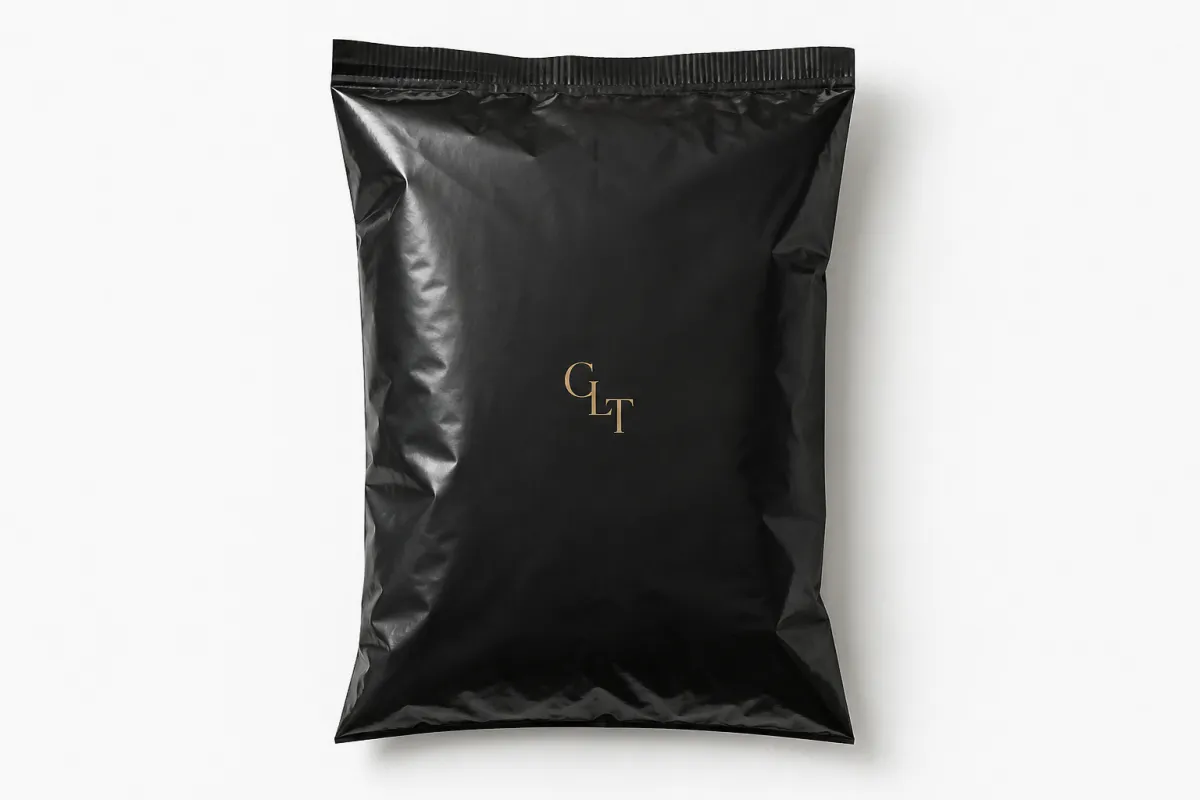
The part buyers often underestimate is how quickly Branded Poly Mailers for promo kits become the first branded surface a recipient sees, even before the contents come into view. That outer layer is doing several jobs at once: it signals the campaign theme, sets expectations, and tells the person holding it whether the package feels coordinated or improvised. I have seen a plain printed mailer turn a modest kit into something that feels planned, while a bare bag with a shipping label can make a stronger kit look like bulk freight. Same contents, different story.
There is also a psychological effect that gets missed in budget meetings. A promo kit wrapped in a clean printed mailer feels closer to a gift than a shipment, even if the contents are practical things like a hoodie, a sample pack, a notebook, or an onboarding card set. The outer package frames the experience. That is why Branded Poly Mailers for promo kits work so well for launches, internal culture boxes, and event mailings where perception matters just as much as delivery.
From a packaging buyer's point of view, the best-fit use cases are easy to spot. Apparel bundles stay flatter and cleaner in a soft mailer than in oversized cartons. Influencer drops often need quick packing and a polished reveal without pushing freight costs too high. Onboarding kits benefit because the outer package already feels organized before the recipient opens the first flap. Event giveaways, seasonal kits, and product launch packs all gain the same advantage: branded poly mailers for promo kits help the outside match the intent inside.
"The outer package is not decoration. It is part of the message, and in promo kit work that message starts the moment the mailer lands in someone's hands."
Another reason these mailers perform well is that they sit at a strong intersection of cost and presentation. A corrugated shipper can be excellent for fragile content, but it adds weight and often feels more industrial than a brand team wants for a promotional send. A printed mailer, by contrast, can be light, easy to handle, and still look polished enough for a premium campaign. That balance is why branded poly mailers for promo kits keep showing up in fulfillment plans for both small brand teams and high-volume marketing programs.
There is no single best look. Some projects work with a bold logo and one accent color. Others need a full-coverage graphic that turns the mailer into a moving billboard. The right choice depends on the audience, the contents, and how much of the package will be seen before opening. What stays constant is the role of branded poly mailers for promo kits as both a branding tool and a practical shipping container. That dual job is the whole point.
How branded poly mailers for promo kits work in packing and shipping
A standard poly mailer is a lightweight film bag, usually made from co-extruded polyethylene, with side seams, a seal flap, and a printable outer surface. Most use a peel-and-seal adhesive closure, though some orders call for a second adhesive strip if the kit may be returned or reused. For branded poly mailers for promo kits, the structure matters because the print has to survive handling, the seams have to stay closed, and the bag has to fit the contents without ballooning or wrinkling badly.
The packout flow is straightforward, which is one reason operations teams like it. The contents get staged, the kit is assembled, the item set is inserted, the top flap is closed, and a shipping label is applied. After that, the package moves into sortation or outbound pickup like any other parcel. That simplicity is a real advantage for branded poly mailers for promo kits because the team does not need to build a rigid carton, tuck in excess void fill, or spend extra time dressing the outside with stickers one by one.
Printed mailers behave differently from plain mailers with a separate label or logo sticker. A printed surface gives you consistent placement, consistent color, and a cleaner visual field. Stickers can work, but they depend on manual application and they can shift, wrinkle, or peel if the mailer flexes a lot in transit. For branded poly mailers for promo kits, printed graphics usually win on speed and presentation because the branding is already part of the package instead of being added later.
There are also practical shipping advantages. Poly film is naturally moisture resistant, so light rain, damp loading docks, and normal parcel handling are less risky than they would be with a paper-based outer wrap. The package stays light, which matters when you are mailing thousands of kits and trying to keep postage under control. In many campaigns, branded poly mailers for promo kits shave enough weight and packing time to justify the custom print without forcing a major change in the fulfillment line.
If the kit needs a cleaner sustainability story, the material mix deserves attention. Some programs pair the mailer with FSC-certified paper inserts or a paper card that carries the campaign message without complicating the shipper itself. Others choose recycled-content film or a mono-material structure where available. The packaging choice should be honest about what it can and cannot do. Branded poly mailers for promo kits are not the right answer for every product, but for many apparel and marketing sends they are a practical, efficient fit.
For teams that care about transit testing, the parcel world often looks to protocols from ISTA, especially when the kit will travel farther than a local drop. That does not mean every mailer needs a formal lab program, but it does mean the packout should be judged against real handling, compression, and drop stress instead of only how it looks on a bench. A package that survives the aisle cart and the conveyor is worth more than a pretty mockup.
Cost, pricing, and MOQ for branded poly mailers
Price is usually the first question, and with branded poly mailers for promo kits the honest answer is that the number depends on size, film thickness, print coverage, color count, and total quantity. A simple one-color mailer in a standard size can be surprisingly economical at volume, while a larger bag with full-coverage artwork and heavier film will move into a different range. For a buyer comparing quotes, the useful question is not just what it costs, but what exactly is included in that cost.
MOQ, or minimum order quantity, matters because setup costs have to be spread across the run. If you are ordering only a few hundred units, the unit price will usually be higher because prepress, plates, setup, and waste are divided across fewer pieces. Once you reach a more efficient production quantity, the per-unit cost often drops in a visible way. That is especially true with branded poly mailers for promo kits, where the print setup is a real part of the job, not a small add-on.
As a practical rule, a quote should include the finished size, film gauge, print method, number of colors, whether the artwork is front-only or front and back, closure style, and the delivery destination. Without those details, one vendor may quote a light-duty stock mailer while another quotes a thicker custom-printed bag, and the numbers will not compare cleanly. With branded poly mailers for promo kits, clarity saves more time than aggressive price shopping ever will.
| Option | Best Use | Typical Features | Illustrative Unit Cost at 5,000 Units |
|---|---|---|---|
| Standard printed mailer | Event giveaways, light apparel, onboarding kits | 2.5-3 mil film, one- or two-color print, peel-and-seal closure | $0.18-$0.30 |
| Mid-weight custom mailer | Influencer drops, mixed promo kits, folded apparel sets | 3-4 mil film, larger print area, stronger seal, better opacity | $0.28-$0.45 |
| Premium heavy-duty mailer | Heavier apparel, larger launch kits, higher handling risk | 4-6 mil film, higher tear resistance, wider adhesive flap, richer coverage | $0.40-$0.75 |
Those numbers are illustrative, not a promise, because artwork and logistics can change the math quickly. Still, they are useful for planning. If a campaign has a firm budget, the fastest savings usually come from choosing a standard mailer size, simplifying the artwork to fewer colors, and ordering enough quantity that setup does not get repeated for a second small run. Branded poly mailers for promo kits reward planning ahead. They punish improvisation, which is maybe rude, but true.
There is also a hidden cost in avoiding a proper spec. A mailer that is too large can force extra packing time, create wrinkles, and make the kit look loose. A mailer that is too small can reject the contents entirely or damage them during insertion. Either mistake turns into waste. A good quote should help you pick the right fit, not just the cheapest line item. That is why the best branded poly mailers for promo kits conversations feel more like spec reviews than price-only calls.
If your team wants to compare packaging choices beyond a single mailer, you can use our Case Studies page to see how different kits were assembled and where the cost went. That kind of side-by-side thinking often makes the cheapest quote look less attractive if it creates more labor or more rework.
Production steps and timeline: from artwork approval to delivery
The production flow for branded poly mailers for promo kits usually starts with a dieline review. That means confirming the finished dimensions, seal flap location, print panels, and bleed zones before the artwork is locked. Once the layout is set, the prepress team checks image resolution, color separations, and type safety so the design prints cleanly on film rather than looking fuzzy or crowded. A proper proof here prevents a lot of pain later.
After artwork setup comes proof approval. This can be a digital proof, a plate proof, or a sample depending on the job size and print method. The fastest projects are the ones where the team has already decided on size and artwork format before the proof stage begins. In my experience, many delays happen because someone discovers too late that the kit is thicker than expected or the logo file was too low resolution for the chosen print method. Branded poly mailers for promo kits do not forgive sloppy prep.
Lead time depends on the production method and the shipping lane. A small run with a simple print may move faster than a large multi-color order, and a local freight lane will move faster than a cross-country delivery. Seasonal volume also matters, especially before trade shows, holiday campaigns, or major product launches when the packaging schedule gets crowded. For many projects, a realistic planning window is often 12-15 business days after proof approval, with more time needed for larger runs or complex graphics. That is not a hard rule, but it is a practical starting point for branded poly mailers for promo kits.
Here is the part buyers sometimes miss: the mailer may be the last thing to print, but it should be one of the first things to spec. If the box, insert card, and apparel sizes are still unsettled, the bag size can drift, and that creates a chain reaction in production. The cleaner the inputs, the cleaner the timeline. A well-managed branded poly mailers for promo kits order is usually the result of stable information, not luck. Nobody wants a freight desk fire drill two days before launch.
For paper components in the kit, FSC-certified stock is worth considering because it gives the insert portion a cleaner sourcing story. You can review certification basics at FSC. That is not a substitute for good packaging design, but it helps when a marketing team wants the whole kit to feel more intentional from the outside in.
Choosing the right specs for branded poly mailers for promo kits
Choosing the right size starts with the thickest version of the kit, not the flattest sample on your desk. That sounds obvious, but it is where a lot of orders go wrong. Folded apparel can vary by size, insert stacks can change by campaign, and a small change in the number of brochures or stickers can alter the finished thickness more than people expect. For branded poly mailers for promo kits, fit should be based on the real packed-out kit, not the best-case version.
Film thickness matters because it affects both feel and durability. Lighter film can work for flat, low-risk kits, while thicker film is better for heavier apparel or anything that may get handled a lot in transit. Tear resistance, seal strength, and opacity all matter too. A mailer that looks good but shows the contents through a thin film can weaken the premium effect. On the other hand, branded poly mailers for promo kits that are too thick for the job can add cost without giving any real benefit. The goal is balance, not armor plating.
Artwork placement deserves more attention than most buyers give it. Logos should be scaled so they still read after the mailer is folded, stacked, and scanned. Important text should stay clear of the seam and seal areas. Bleed needs to be accounted for if the design runs close to the edge. If the background is dark, a light logo often holds better visually; if the graphic is busy, a simpler panel can keep the package from feeling cluttered. The best branded poly mailers for promo kits make the branding obvious without making the package hard to read.
It helps to do one physical packout before you place the full order. Put the actual inserts, apparel, or samples inside the chosen size, close the flap, add a label, and carry it around for a minute. Does it slide? Does it bulge? Does the seal feel secure? That one test often tells you more than a mockup ever will. I have seen branded poly mailers for promo kits go from good on screen to wrong in hand because nobody tested the real thickness. A laptop mockup will lie to you; the box in your hands usually will not.
If you want to compare packaging formats as you finalize specs, our Custom Packaging Products page and Custom Poly Mailers listing are useful references. They make it easier to compare structure, closure style, and presentation before you commit to one path.
For transit-minded teams, think in terms of the forces the package will face: stacking, drops, vibration, and edge abrasion. A common reference point in packaging testing is the family of ISTA methods, including parcel-shipment simulations for small packages. If a campaign has a long shipping path or multiple handling points, that kind of thinking keeps branded poly mailers for promo kits from becoming a nice-looking risk.
Common mistakes that hurt promo kit presentation and protection
The most common mistake is ordering a mailer that is too large. A big bag can make the contents shift, wrinkle the artwork, and feel less premium the moment it lands. It also looks less controlled on a conveyor or in a tote because the kit has room to move. Branded poly mailers for promo kits work best when the contents sit snugly without being crushed.
Another mistake is overly busy artwork. If the graphics are too small, too detailed, or too close to the edge, the print can lose clarity and the approval process can get bogged down with changes. A cleaner layout often performs better than an ambitious one. The package has a short life in the hand, so the design should read quickly. That is especially true for branded poly mailers for promo kits used in event fulfillment, where the recipient may only glance at the outer bag before opening it.
Skipping a sample packout is a classic way to waste time and money. Without a test, you do not know if the contents slide around, if the adhesive flap is strong enough, or if the mailer looks uneven once the label goes on. You can avoid a lot of trouble by packing one real unit before approving the final art. A lot of weak branded poly mailers for promo kits orders could have been saved by one forty-minute test and a better ruler.
There are also details that sound minor until they create trouble in fulfillment. Closure quality matters if the team is sealing hundreds or thousands of units in a day. If there is a return strip or a double-seal requirement, that needs to be specified early. Surface finish matters if labels need to adhere cleanly and if scuffs will be visible by the time the package reaches the recipient. Even how the mailer handles after a little freight friction matters, because promo kit packaging rarely arrives in perfect condition. The goal is not perfection; it is controlled, presentable arrival.
- Too much empty space can make the kit feel underfilled and sloppy.
- Too little space can stress seams and damage inserts during sealing.
- Weak artwork hierarchy can bury the logo and flatten the brand message.
- No sample packout can lead to reorders, delays, and extra labor.
These problems are preventable, which is why a good spec review matters so much. In a busy promo schedule, the easiest mistakes are the ones that seem small at the start. A few millimeters in size, a slightly stronger film, or a simpler print layout can make the difference between a package that feels polished and one that feels hurried. That is the boring truth, and the boring truth usually saves money.
Expert tips and next steps for a smoother promo kit rollout
If I were setting up branded poly mailers for promo kits for a new campaign, I would start with a simple spec sheet. It should list the finished dimensions, estimated quantity, artwork files, closure type, packing contents, and delivery destination. That one sheet keeps quotes comparable and reduces the back-and-forth that usually slows everything down. It also helps the packaging supplier tell you whether the film gauge or size needs to change before anything goes to press.
Next, I would ask for either a digital proof or one physical sample, depending on the complexity of the design. A proof confirms artwork placement, but a sample confirms the actual feel of the mailer, the opacity, and the fit of the kit. Those are not the same thing. For branded poly mailers for promo kits, the tactile part matters because the recipient will judge the package in hand, not on a screen.
Then I would build in extra time. Not because the order has to be slow, but because revisions, shipping, and packout checks always take longer than people think. If the mailer will support multiple events or a recurring drop, I would also hold back a small safety stock so a late campaign does not force a rushed reprint. The best branded poly mailers for promo kits programs have a little breathing room built in from the beginning.
Here is a practical checklist that helps keep the process moving:
- Confirm the packed kit dimensions with a real sample.
- Choose the film gauge based on weight, handling, and opacity.
- Keep the artwork bold enough to read after folding and labeling.
- Approve one proof before production starts.
- Allow time for packing tests, transit, and final delivery.
- Save the final spec so reorders stay consistent.
That checklist is simple on purpose. Promo kit packaging works best when the process is clear and the decisions are grounded in the actual contents, not in assumptions. Branded poly mailers for promo kits can do a lot: they protect, they present, they streamline fulfillment, and they keep the campaign visually consistent from the first touch to the final reveal. If you treat them as part of the message instead of a generic shipping bag, the whole kit gets stronger.
And if the job calls for a broader packaging plan, it is worth comparing the mailer to the rest of the system rather than thinking about it in isolation. A clean packout, a sensible mailer size, and a clear print plan are usually what separate an average send from one that feels intentionally branded. That is the real advantage of branded poly mailers for promo kits: they make a practical shipping choice look and behave like part of the campaign itself. Pick the size from the packed sample, choose the lightest film that still survives transit, and approve a physical packout before the full run. That is the move that keeps a promo kit from arriving as a bundle of stuff and turns it into a branded moment.
Frequently Asked Questions
What size branded poly mailers work best for promo kits?
Choose the size around the thickest packed version of the kit, not the thinnest sample. Leave enough room for inserts to lie flat without sliding around, but do not oversize the bag so much that the contents move freely. A physical packout is the best way to confirm that branded poly mailers for promo kits will seal cleanly and still look neat after labeling.
Are branded poly mailers for promo kits expensive?
They are usually priced by size, film thickness, print coverage, and order quantity. The unit cost often drops as you move from very small runs to a more efficient production quantity. Keeping artwork simple and choosing a standard format can reduce cost without stripping away the impact, which is why branded poly mailers for promo kits are often more affordable than buyers first expect.
How long do promo kit mailer orders usually take?
Timing depends on artwork approval, print method, order size, and shipping distance. The fastest projects are the ones that start with finalized dimensions and clean artwork files. Build in extra time for proofing and a sample packout if the kit includes multiple inserts or apparel, because branded poly mailers for promo kits tend to move best when the spec is settled early.
Can branded poly mailers protect inserts and apparel?
Yes, they offer good basic protection from dust, handling, and light moisture during transit. For heavier or more delicate contents, choose stronger film and a secure closure. If the contents are fragile, consider whether the mailer needs a rigid insert, an inner pouch, or a different packaging structure, because branded poly mailers for promo kits are not the right answer for every product mix.
What should I send for an accurate quote on branded poly mailers?
Share the finished size, estimated quantity, artwork files, and preferred print coverage. Note the contents of the promo kit so the supplier can recommend the right film strength and closure. Include your target ship date and destination as well, because branded poly mailers for promo kits are quoted more accurately when the timing and freight details are clear from the start.


