Buyer Fit Snapshot
| Best fit | Branded Poly Mailers for Warehouse Teams Explained projects where brand print, material claims, artwork control, MOQ, and repeat-order consistency need to be specified before quoting. |
|---|---|
| Quote inputs | Share finished size, material target, print colors, finish, packing count, annual reorder estimate, ship-to region, and any compliance wording. |
| Proofing check | Approve dieline scale, logo placement, barcode or warning zones, color tolerance, closure strength, and carton packing before bulk production. |
| Main risk | Vague material claims, crowded artwork, missing packing details, or unclear freight terms can make a low unit price expensive after revisions. |
Fast answer: Branded Poly Mailers for Warehouse Teams Explained should be specified like a repeatable production item. The safest quote records material, print method, finish, artwork proof, packing count, and reorder notes in one written spec.
Production checks before approval
Compare the actual filled-product size with the drawing, then confirm tolerance on folds, seals, hang holes, label areas, and retail display edges. Reserve space for logos, QR codes, warning copy, and material claims before decorative graphics fill the panel.
Quote comparison points
Review material grade, print process, finish, sampling route, tooling charges, carton quantity, and freight assumptions side by side. A quote is only useful when the supplier can repeat the same color, closure quality, and packing count on the next order.
Branded Poly Mailers for Warehouse Teams Explained
On a crowded packing bench, identical-looking mailers can eat seconds in a way managers rarely see on paper. I have watched a line with four packers lose nearly an hour across a busy shift simply because everyone had to pause, compare, and confirm the right bag before sealing. A few seconds here, a few seconds there, and suddenly the outbound table feels slower than the dashboard says it should. Branded Poly Mailers for warehouse teams cut down that friction by giving the eye a clear signal at the exact moment it matters. The result is not magic. It is just fewer small hesitations.
The value is practical, not decorative. Branded Poly Mailers for warehouse teams can help with internal sorting, make the right bag easier to spot, and give the customer a cleaner handoff without forcing the operation to rebuild its shipping process. A logo, color block, or channel-specific print can support speed, consistency, protection, and presentation in the same piece of packaging. Few items on a warehouse floor pull that off, and fewer still do it without adding another layer of complexity.
Branded Poly Mailers for Warehouse Teams: Why They Change the Packing Line
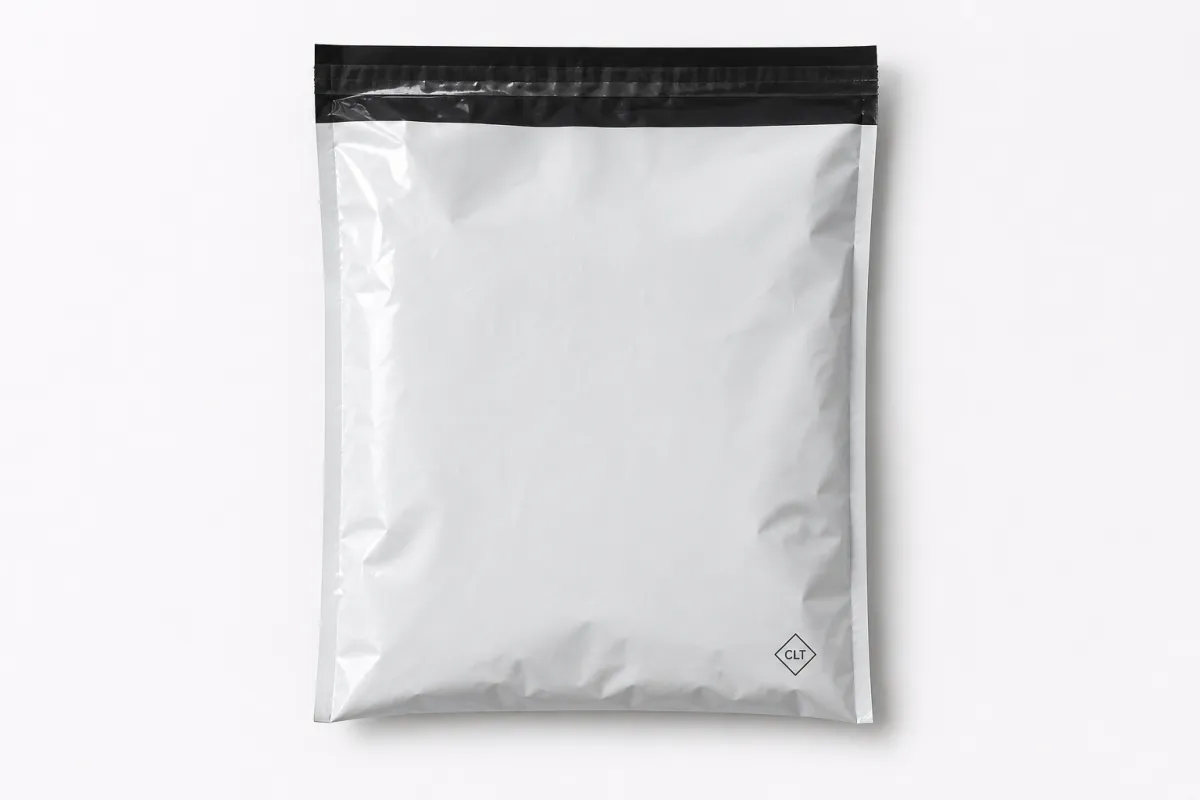
A warehouse line lives on small decisions. If every order looks nearly identical on the shelf, the packer has to pause, compare, and confirm before sealing the bag. That pause may last only a few seconds, yet across 300, 800, or 2,000 parcels a day it turns into real labor. Even a conservative five-second savings per order becomes more than 40 minutes across 500 packages. Branded poly mailers for warehouse teams add one more visual cue at the packing station, so the right bag is easier to grab and the team spends less time second-guessing.
For buyers, the appeal is wider than the logo itself. Branded poly mailers for warehouse teams can support internal organization when several product lines, subscription programs, or sales channels move through the same facility. A bright print for one channel, a dark print for another, or a simple logo lockup can make the rack easier to read at a glance. That matters on mixed-SKU days, during seasonal spikes, and anywhere a wrong pick creates rework that spreads to the rest of the shift.
A poly mailer is a lightweight shipping pouch made from polyethylene film, usually LDPE or a co-extruded blend, with a pressure-sensitive adhesive closure. Some are plain. Others carry a logo, a repeat pattern, or a full-wrap design. The material stays simple, but the effect at the packing table can be surprisingly strong because the mailer does two jobs at once: it protects the item and it speaks for the brand.
The core promise of branded poly mailers for warehouse teams is straightforward. You can improve packing flow and customer presentation without rebuilding the shipping operation from scratch. A good mailer should fit the current rhythm of pick, pack, seal, and handoff. It should not demand a new machine, a new training system, or a different lane layout. The best version simply makes the existing process cleaner.
Choice still matters. Size, film thickness, print coverage, adhesive strength, and storage footprint all affect how the bag behaves in real life. A mailer can look polished in a mockup and still feel awkward on the line if it is too tight for the product, too slick for gloved hands, or too fragile for sharp edges. The strongest packaging choice is the one that works during a Tuesday morning rush, not just the one that looks good in a photo.
Custom Poly Mailers are often the starting point for teams that want to compare film weights, print styles, and closure options before committing to a larger run. If you want to see how that category fits into a broader packaging lineup, the wider range of Custom Packaging Products can help teams coordinate mailers, labels, inserts, and ship-ready presentation in one place.
How Branded Poly Mailers for Warehouse Teams Work in Daily Operations
Picture the mailer moving through the building. It arrives in a case, lands on a rack or cart, gets pulled by a packer, receives the product, and then goes to staging. Each step can speed the team up or slow it down. Branded poly mailers for warehouse teams save motion when the printed design makes the right bag obvious, but they create friction if the artwork hides useful visual cues or if the stack resists separation one bag at a time.
Material construction matters more than most people expect. Many mailers use an outer polyethylene layer, an inner layer that gives the bag body, and a seal strip with a pressure-sensitive adhesive. Better versions may include a tear notch, side gussets, or a co-extruded film structure that improves puncture resistance. In practice, branded poly mailers for warehouse teams feel smooth and predictable when the film is balanced. They feel flimsy when the gauge is too thin, and they feel stiff when the material is overbuilt for the product.
Printing changes how the bag behaves on the line. Flexographic printing is common for larger runs, while digital and other short-run methods can fit smaller quantities or frequent artwork changes. Logo placement matters because mailers are often folded, stacked, or scanned before packing. A brand mark placed too close to a fold line can disappear in the rack. A centered panel stays visible even when the stack is only partly open. That is one reason branded poly mailers for warehouse teams should be designed with the warehouse in mind, not only the marketing team.
Workflow fit matters just as much. Batch picking, zone picking, and kitting all depend on quick visual recognition. If a team packs apparel on one side of the floor and accessories on the other, a printed bag can lower the odds of a mix-up. branded poly mailers for warehouse teams also pair well with labels and inserts, giving the operation a tidy outbound package without adding extra layers that nobody asked for.
A mailer that is easy to identify on the rack often saves more money than a prettier mailer ever will.
I have seen that play out in facilities that looked efficient on paper but were oddly messy at the bench. Once the packs were separated by color or channel, the packers stopped hunting for the right pouch. The line got quieter, too. Not silent, of course. Just less fussy. If the seal is touchy, packers are gonna invent a workaround, and that usually means tape, rework, or both.
There is a customer-side effect too. The same mailer that keeps a warehouse organized becomes the first physical impression when the order lands on a doorstep. That does not mean every parcel needs heavy artwork or full-coverage ink. It means the shipping pouch should look intentional. For many brands, that alone makes the order feel more polished and more trustworthy.
Key Factors to Compare Before You Order
Size comes first, and it should be based on the finished packed item, not the flat dimensions of the product alone. A mailer that fits a folded shirt on paper can become too tight once tissue, inserts, or a hang tag are added. Branded poly mailers for warehouse teams work best when the bag closes cleanly without overstretching the seam or leaving so much empty space that the parcel looks oversized.
Film thickness is next. For lighter apparel and soft goods, a common range is about 2.0 to 2.5 mil. For items with corners, bundled accessories, or more handling, many teams move closer to 3.0 mil or even 3.5 mil. That difference is not just about durability; it changes how the mailer feeds from the stack, how it tears, and how it resists punctures in transit. A 3.0 mil bag is roughly 50 percent thicker than a 2.0 mil bag, which sounds modest until you watch a sharp zipper or box corner nick the film. Branded poly mailers for warehouse teams should be specified with the real product mix in mind, because the same bag can feel excellent for one SKU and weak for another.
Closure performance deserves close attention. A pressure-sensitive adhesive strip should seal consistently, even when the room is warm, dusty, or moving quickly. If the seal is weak, packers may press twice, add tape, or reject the bag. If it is too aggressive, the bag can be hard to position correctly on first contact. The best option seals cleanly the first time and holds through sortation and delivery handling. In quality checks, many teams also look for performance that aligns with common transit-validation practices, such as the test approach described by the ISTA test methods.
Branding details matter more than they seem. A small logo can look elegant, but it may disappear when the mailer is stacked. Full coverage can feel premium, but it can also add cost, extend production, and make the bag harder to identify on the line. For branded poly mailers for warehouse teams, the right balance is usually a print that is bold enough for internal recognition and clean enough for customer presentation. That balance is rarely identical across brands.
Sustainability questions should stay practical. Teams should ask how much plastic is actually needed per order, whether a lighter gauge still protects the item, and whether the film can be reduced without increasing damage claims. Many buyers also check whether the material fits local recycling rules, because a packaging choice that looks eco-friendly in a meeting can become confusing in the real world. The packaging industry keeps pushing for better material efficiency, and trade-group guidance on source reduction is a useful reference point. The goal is to avoid overpackaging while still protecting the product, because waste shows up in both cost and customer perception.
| Mailer option | Typical gauge | Best use | Approx. unit cost at 5,000 pieces |
|---|---|---|---|
| Plain poly mailer | 2.0-2.5 mil | Low-visibility shipping, basic apparel, cost-sensitive programs | $0.08-$0.14 |
| Single-color branded mailer | 2.5-3.0 mil | Most warehouse teams, simple logo use, moderate product protection | $0.12-$0.22 |
| Full-coverage branded mailer | 3.0-3.5 mil | Premium presentation, higher handling, stronger shelf presence | $0.18-$0.35 |
The numbers above are a working range, not a quote. Print coverage, film structure, freight, and setup can move pricing quickly. Even so, they give teams a useful starting point before requesting samples. For many buyers, branded poly mailers for warehouse teams become easier to judge once they compare a plain option, a moderate branded version, and a more premium finish side by side.
Branded Poly Mailers for Warehouse Teams: Cost, Pricing, and MOQ Basics
Pricing usually shifts with quantity, artwork complexity, film specification, and the number of print colors. A larger run usually lowers unit cost because setup is spread across more pieces, but that does not make it the best choice in every case. branded poly mailers for warehouse teams need to fit the operation, and the operation includes storage space, cash flow, and how often the team can realistically reorder.
MOQ means minimum order quantity, and it matters because packaging suppliers often need a certain volume to justify production setup. Depending on the print method and bag style, MOQs may land anywhere from 3,000 to 10,000 pieces, and sometimes higher for complex jobs. That can sound steep, but for high-volume warehouses it often makes sense because the mailer becomes a standard consumable rather than a one-off purchase. If the quantity is too large, though, the warehouse can end up tying up cash and floor space in boxes that sit too long. That is why branded poly mailers for warehouse teams should be planned against monthly volume, not just a one-time discount.
Hidden costs deserve a place in the conversation before anyone signs off. Setup fees, plate charges, color matching, freight, and proof revisions can all change the real landed cost. If the supplier quotes a very low piece price, the first invoice may still land higher than expected once those extras are added. A fair comparison looks at total cost per usable mailer, not just the headline number. In purchasing terms, branded poly mailers for warehouse teams should be judged on landed cost, reject rate, and the labor needed to use them.
Cheap mailers can become expensive in a warehouse. A thin film that bursts, a seal that lifts, or a size that forces repacking eats labor fast. Even a few cents of extra material can be worth it if the team avoids rework, replacement shipments, and customer complaints. Supervisors know this from experience: the bag that saves money on paper is not always the bag that saves money on the line. For that reason, branded poly mailers for warehouse teams are often a case where value matters more than the lowest sticker price.
Budget planning gets easier when the team writes down three numbers first: monthly mailer usage, storage capacity, and the acceptable reorder window. If a warehouse uses 8,000 bags per month and wants a 45-day supply, the order size starts to make sense quickly. If the same warehouse uses 1,500 per month, a large MOQ may be impractical. The right package supports the operation instead of crowding it.
Process, Timeline, and Lead Time: From Quote to Receiving Inventory
The path from quote to delivery is simple on paper, but the details decide how smooth it feels in practice. Most orders start with a brief that covers size, gauge, print coverage, quantity, closure style, and any special handling notes. From there, the supplier creates a proof, the buyer reviews artwork, revisions are made if needed, and production begins once the proof is approved. Branded poly mailers for warehouse teams often move quickly when the spec is clear and the artwork is ready, but they can stall when the proof process drifts.
Artwork approval is the step that most often slows things down. A small logo shift, a color correction, or a barcode placement question can seem minor, yet it can delay the whole run if it appears after production prep starts. That is why buyers should review both visual appearance and functional placement. Is the logo visible when the bag is stacked? Does the seam cut through the artwork? Will a printed instruction or channel marker still read clearly after folding? These are the questions that keep branded poly mailers for warehouse teams from becoming a design-only purchase.
Lead time depends on order size, print method, and the supplier's production calendar. A common range for custom mailers is roughly 12 to 18 business days after proof approval, with extra time during peak seasons or for more complex prints. Freight time sits on top of that. For some operations, that means a total window of three to five weeks from brief to receipt. That is not unusual for custom packaging, but it is long enough to cause trouble if the warehouse waits until stock is nearly gone.
Buffer time helps. Sample review, internal sign-off, and shipping transit all belong in the plan. If the project supports a launch, a campaign, or a seasonal product change, the schedule should be even more conservative. Branded poly mailers for warehouse teams are easier to adopt when the boxes arrive before the pressure arrives. Rushing narrows options, and narrow options often lead to a compromise the team has to live with for months.
A smart timeline protects the operation in another way too: it helps align packaging arrival with inventory readiness. There is little value in filling a corner of the warehouse with printed mailers if the product they are meant to ship is not yet on site. Planning the mailer into the inventory calendar keeps the rollout tidy and avoids unnecessary handling.
Step-by-Step Guide to Choosing the Right Mailer
Start with the order profile. What does the warehouse ship most often? Are most orders flat apparel, small boxed accessories, or mixed bundles with inserts and return materials? The answer drives the mailer choice more than the brand logo does. Branded poly mailers for warehouse teams should match the real product mix, because a mailer that fits the average case but fails on the larger cases creates more frustration than value.
Next, test real products in real sizes. A sample mailed flat on a desk does not tell the whole story. Put the actual product inside, add tissue or an insert if one is used, then seal it the way the packer would on the line. Watch the seam, the fold, the stretch, and the way the adhesive grabs. This is where many teams discover that the "perfect" bag on paper is either too tight or too loose. Branded poly mailers for warehouse teams become much easier to evaluate once the warehouse sees how they behave with the actual order mix.
Get feedback from the people who use them every day. Packers notice grip, stackability, seal feel, and whether the printed surface helps them move faster or slows them down. Supervisors notice rework and throughput. Shipping leads notice damage, scuffs, and how often bags are rejected before they leave the dock. Those observations matter more than a polished mockup. If a mailer makes the line feel calmer and more obvious, it is probably doing real work. If it slows the team down, it is probably too clever for its own good. That is especially true for branded poly mailers for warehouse teams, where function has to lead design.
Request samples or a short pilot run before placing the full order. Then check the results after a few handling cycles. Are the seams holding? Is the print still clear after rubbing against other bags? Does the adhesive keep its hold in a warm packing room? A pilot also gives you a chance to compare plain, lightly branded, and more heavily branded options side by side. In many cases, the simplest version wins because it is easier for the team to use while still delivering the brand impression the buyer wants. That is the point of branded poly mailers for warehouse teams: controlled improvement, not unnecessary complexity.
If the team handles multiple order types, consider whether one mailer can handle all of them or whether two sizes will reduce errors and waste. Standardizing to a small set of sizes often helps the warehouse more than chasing a perfect one-size-fits-all solution. You can also combine the mailer with a clear insert card, a return label, or a channel-specific sticker if that helps the packing process feel more disciplined.
For teams looking at broader packaging planning, it can help to compare sample mailers against the rest of the ship-ready stack, from cartons to labels to inserts. A quick look through Case Studies can also show how other operations have approached packaging choices without overcomplicating their workflow.
Common Mistakes and Expert Tips for a Cleaner Rollout
The most common mistake is ordering the wrong size. A mailer that looks close on a spec sheet can still fail once the product is packed, folded, and sealed. Another frequent issue is underestimating product thickness. Soft goods compress, but not enough to save a bag that is genuinely too small. Branded poly mailers for warehouse teams should be chosen with the thickest typical order in mind, not just the nicest-looking sample.
Overcomplicated artwork causes trouble too. A design can be attractive and still be hard to use if it hides handling cues, interferes with the pack line, or takes too long to approve. Warehouse teams do not need a busy graphic on every square inch. They need a bag that is easy to identify, easy to seal, and clear in transit. In practice, branded poly mailers for warehouse teams often perform best with a simple logo, a strong color block, and enough blank space to keep the bag readable.
Weak film or weak adhesive is another avoidable mistake. If the product has sharp corners, a lightweight mailer may split. If the seal does not hold, the team may start adding tape, which slows the line and makes the package feel improvised. Better to specify the right gauge up front than to pay for repacking later. This is one reason experienced buyers do not chase the lowest quote on branded poly mailers for warehouse teams without checking the actual material spec.
A few habits make rollout smoother:
- Standardize a small set of sizes so the team learns the difference quickly.
- Label storage locations clearly so the right mailer is easy to grab during peak shifts.
- Train packers on which products belong in which mailer size.
- Track pack time, seal failures, and rework for the first few weeks after launch.
- Keep one or two sample bags on hand for visual reference and troubleshooting.
Those habits sound simple because they are simple, and simple systems are easier to maintain. If the rollout includes more than one branded format, the warehouse should also agree on when to use each style. A little discipline at launch prevents confusion later. That is especially true for branded poly mailers for warehouse teams, where the packaging itself becomes part of the workflow language.
Measuring a few key KPIs after launch is worth the effort. Pack time per order, damage rate, seal failure rate, and rework frequency tell you whether the new bag is helping or just looking better. If those numbers improve, the packaging choice is paying for itself in daily operations. If they do not, the team can refine the spec before the next run.
Next Steps for Rolling Out Branded Poly Mailers
Before ordering, create a short internal checklist. List the current order types, target sizes, expected monthly volume, budget ceiling, and any special shipping constraints that matter to the warehouse. That gives the purchasing team a clear brief and keeps the conversation focused on the real use case. Branded poly mailers for warehouse teams are easier to source when the spec is written from the floor up rather than from the logo down.
Then request quotes from a few suppliers using the same spec sheet. That makes the comparison fair. Ask each supplier to quote unit price, MOQ, setup Cost, Lead Time, and freight separately. If one offer looks much cheaper, check whether the gauge, adhesive, or print method is also different. A fair comparison should show whether the savings are real or only on the surface. For buyers comparing options across a broader packaging program, Custom Packaging Products can help frame the mailer as one piece of a larger outbound system.
Ask for samples that match the products the warehouse ships most often, not just a generic bag. Then have packers test them under real working conditions. The goal is not to admire the sample; the goal is to see whether the bag supports the packing rhythm. If the team can use it without slowing down, then the design is moving in the right direction. That is the sort of practical test that makes branded poly mailers for warehouse teams worth the investment.
Plan storage and replenishment before the boxes arrive. Decide where the new mailers live, who monitors usage, and when to reorder before inventory gets tight. A clean replenishment plan prevents panic buying, rushed substitutions, and the awkward moment when a warehouse has product ready but no suitable shipping pouch. That is a real operational risk, and it is easy to avoid with a little planning.
Use the first production run as a controlled rollout. Watch the numbers, listen to the packing team, and adjust the spec if needed. Maybe the next run needs a slightly heavier film. Maybe the logo can move for better visibility. Maybe the size can tighten to reduce empty space. Small improvements like those make a large difference over time. For most operations, branded poly mailers for warehouse teams pay off fastest when the rollout is treated as a working system, not a one-time purchase.
If you want a broader look at how packaging choices support fulfillment, compare the mailer spec against the rest of the shipping workflow, review supplier samples, and measure the real order mix instead of relying on assumptions. Start with one pilot size, one artwork layout, and a short tracking window for pack time and seal failures. That is the cleanest way to see whether branded poly mailers for warehouse teams are actually doing their job.
Are branded poly mailers for warehouse teams better than plain mailers?
They are often better when the warehouse wants faster visual identification, more consistent packing, and a more polished customer handoff. Plain mailers can still work well for low-volume or highly cost-sensitive operations, but they do not add the same sorting or branding benefits. The best choice depends on order volume, product type, and whether the mailer needs to support both internal workflow and customer presentation.
What size should I choose for branded poly mailers for warehouse teams?
Choose the smallest size that comfortably fits the product after it is packed, sealed, and checked for seam stress. If the item varies in thickness, test the mailer with the largest typical version so the warehouse does not end up with bags that are too tight. A good size should close cleanly, protect the contents, and avoid excessive empty space that can make the package look oversized.
How much do branded poly mailers for warehouse teams usually cost?
Unit cost usually depends on quantity, film thickness, print coverage, and whether the order includes setup or color-matching charges. Larger orders usually lower the per-piece price, but storage space and cash flow still matter when comparing options. The best comparison looks at total landed cost, not just the bag price, because freight and setup can change the real budget.
What is the typical lead time for branded poly mailers for warehouse teams?
Lead time depends on proof approval, production method, order size, and shipping distance. If artwork is not finalized quickly, the schedule can slip even when manufacturing capacity is available. The safest plan is to build in extra time for samples, internal review, and freight so the warehouse is not forced into a rushed decision.
What mistakes should warehouse teams avoid with branded poly mailers?
The biggest mistakes are choosing the wrong size, under-specifying film strength, and approving artwork without testing how the mailer performs in real packing conditions. Teams also run into trouble when they skip pilot testing or forget to plan where the mailers will be stored and replenished. A simple test run with the actual products can prevent a lot of waste, rework, and frustration later.
For warehouse operators, the real value of branded poly mailers for warehouse teams is not just that they look better on the doorstep. It is that they help the line move with less hesitation, fewer mistakes, and a more consistent handoff from pack bench to carrier. When the size is right, the seal is reliable, and the print supports the workflow, branded poly mailers for warehouse teams become a practical tool rather than a decorative extra. That is the takeaway: start with fit, test with live orders, and let the packaging earn its place on the floor.


