Buyer Fit Snapshot
| Best fit | Printed Barrier Pouches with Cmyk projects where brand print, material claims, artwork control, MOQ, and repeat-order consistency need to be specified before quoting. |
|---|---|
| Quote inputs | Share finished size, material target, print colors, finish, packing count, annual reorder estimate, ship-to region, and any compliance wording. |
| Proofing check | Approve dieline scale, logo placement, barcode or warning zones, color tolerance, closure strength, and carton packing before bulk production. |
| Main risk | Vague material claims, crowded artwork, missing packing details, or unclear freight terms can make a low unit price expensive after revisions. |
Fast answer: Printed Barrier Pouches with Cmyk: Film, Print, MOQ, and Carton Packing should be specified like a repeatable production item. The safest quote records material, print method, finish, artwork proof, packing count, and reorder notes in one written spec.
Production checks before approval
Compare the actual filled-product size with the drawing, then confirm tolerance on folds, seals, hang holes, label areas, and retail display edges. Reserve space for logos, QR codes, warning copy, and material claims before decorative graphics fill the panel.
Quote comparison points
Review material grade, print process, finish, sampling route, tooling charges, carton quantity, and freight assumptions side by side. A quote is only useful when the supplier can repeat the same color, closure quality, and packing count on the next order.
Printed Barrier Pouches with CMYK: Cost, Lead Time, and Sourcing Notes
A pouch can protect a product for months, sometimes longer, but the package still has to earn its spot on the shelf. If the seal is weak or the artwork looks muddy, the whole thing feels off. I have seen launch teams spend weeks debating a color shift that nobody notices in a spreadsheet, then miss the one thing shoppers do notice: whether the bag looks purposeful. That is why printed barrier pouches with cmyk matter so much. They block oxygen, moisture, and light while carrying full-color branding in a format that is compact, practical, and easier to move than rigid packaging.
Printed barrier pouches with cmyk combine two jobs that packaging used to split apart. The barrier layer protects freshness, aroma, and shelf life. The CMYK print layer handles branding, ingredients, compliance text, and shelf appeal. Coffee, pet treats, dry snacks, wellness powders, and specialty foods all benefit from that pairing because the product has to stay stable and sell at the same time. One without the other is a half-finished answer.
Buyers usually wrestle with the same question: how do you get a premium presentation without paying for more structure than the product actually needs? How do you keep the color consistent, the seal dependable, and the landed cost within reason? Those are not abstract questions. They are the daily math behind any sourcing decision involving printed barrier pouches with cmyk.
Printed Barrier Pouches with CMYK: A Practical Overview
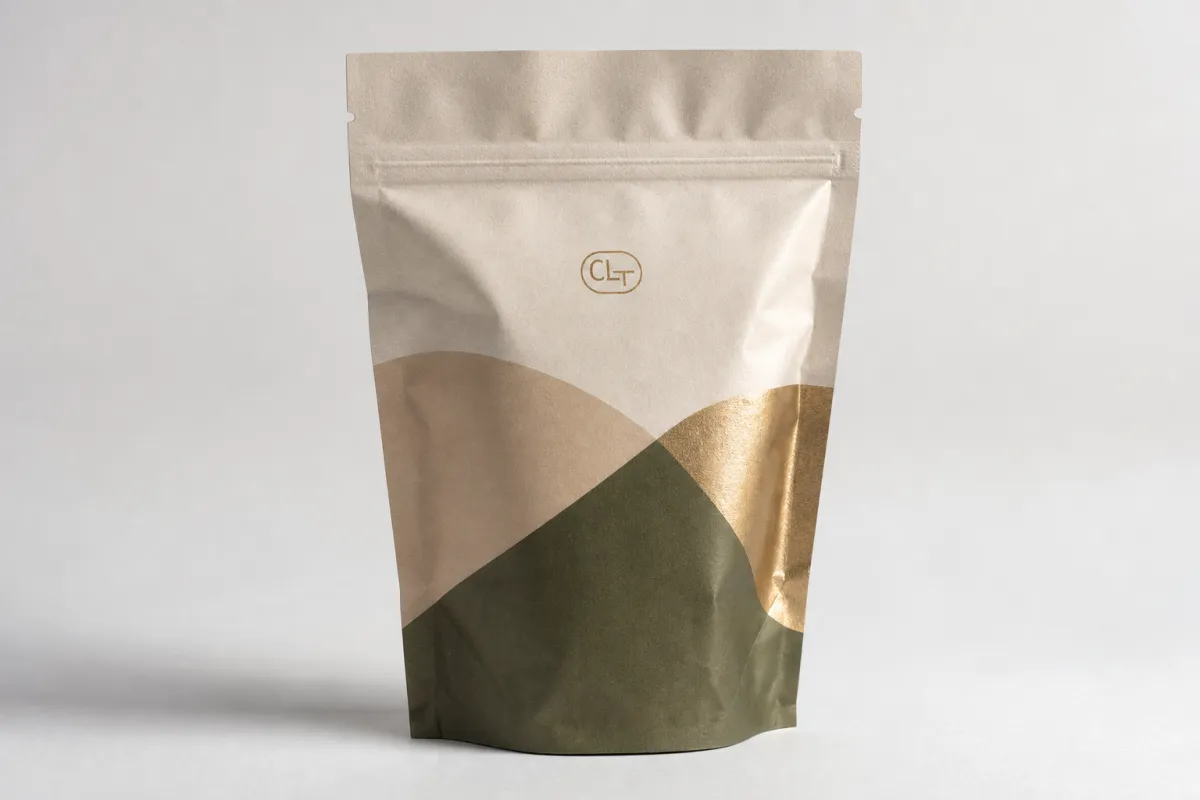
Picture a snack brand that has outgrown plain stock bags. The product is fine, but the packaging now has to do more than hold it. It needs to look retail-ready, carry regulated information cleanly, and still protect the contents from air and humidity. In that kind of project, printed barrier pouches with cmyk are often simpler than adding labels one by one or moving into cartons that do not add much functional value. The bag ends up doing the work of several components at once.
The structure carries the load. A high-barrier film or laminate reduces oxygen transmission rate (OTR), moisture ingress, and sometimes light exposure that can flatten flavor or fade product color. CMYK handles the printed face. For many brands, that pairing is the sweet spot: one package that protects the contents and still looks like it was designed on purpose, not assembled in a rush.
These pouches also move well through the supply chain. They are light, flat before filling, and far cheaper to ship than many rigid formats. A case of pouches takes up far less cube than a case of boxes, which affects freight, warehouse planning, and how much inventory a team can keep on hand without turning the back room into a maze. A brand can also shift flavors, scents, or formula variants without changing the entire package format. The artwork moves around, the pouch architecture stays in place.
Printed barrier pouches with cmyk can work for small runs and larger campaigns alike. Smaller orders often fit digital printing because there is no plate cost and artwork changes are faster. Bigger orders often move toward flexographic or gravure production, where setup costs are spread over more units. Seasonal flavors and launch tests tend to sit in the middle, and that is where buyers have to weigh speed against unit cost with a clear head.
The biggest sourcing mistake is treating the pouch as a print-only purchase. It is not. It is a protection system first and a branding surface second. If the barrier is wrong, the color does not matter much. If the print is weak, the package may still function, but shelf impact takes a hit. Good procurement starts with both pieces of the spec together.
I have watched teams spend energy perfecting a white background while overlooking the barrier film under it. That gets kinda expensive if the product itself is moisture-sensitive or aroma-sensitive. A pouch can look polished in a render and still fail in a warehouse if the film selection is off by even a small margin.
“A pouch should still look right after shipping, stacking, and handling, not just in the approval PDF.”
For buyers who want a wider technical frame, the Flexible Packaging Association is a useful reference at packaging.org, and the ISTA testing framework is helpful when distribution damage is part of the risk. Both are practical starting points before finalizing printed barrier pouches with cmyk.
How Printed Barrier Pouches with CMYK Work in the Process
Production usually starts with artwork separation. CMYK stands for cyan, magenta, yellow, and black, and those four inks build the image through tiny overprinted dots. In flexible packaging, the artwork has to be prepared with the substrate in mind because a design that looks balanced on a monitor can shift once it lands on metallic film, matte laminate, or a clear window. That difference catches people out more often than they expect.
Most buyers know offset printing, and the color-planning mindset is similar even if the job runs through digital or flexographic equipment. The goal stays the same: control color, hold registration, and keep the final print clean enough that the brand feels consistent from one run to the next. With printed barrier pouches with cmyk, that consistency matters even more because the pouch often acts as the product’s main billboard.
Once the art is approved, the print surface gets prepared. That can mean a printable film, a laminated web, or a structure with a white base layer beneath the CMYK artwork. The barrier layer may sit inside the laminate and do the real protection work, while the printed surface faces outward for shelf presence. Reverse-printed structures place the image behind a clear protective film, which can improve scuff resistance and give the pouch a more premium feel.
Color shifts more than many buyers expect. Gloss makes CMYK colors read brighter and a little deeper. Matte softens the look and cuts glare under store lighting. Metallic substrates can push some colors toward stronger saturation while also warming or cooling others depending on ink build and white ink coverage. If a logo color has to stay locked, a spot color may need to sit beside CMYK rather than inside it. A deep red or precise blue can drift farther than a brand team wants if the job relies on process color alone.
Finishing adds another layer of control. Clear overlaminate, matte varnish, soft-touch coating, and spot UV can alter the final look enough to move the package toward a premium lane. A coffee pouch with soft-touch finish feels very different in hand from a glossy snack pouch, even if the barrier structure is similar. The finish changes how the package reads on shelf and how it feels when someone picks it up. That tactile piece is not fluff; it shapes first impressions fast.
Conversion comes last, but it is never a minor step. The web gets cut and formed into the pouch shape, then zippers, tear notches, gussets, hang holes, or one-way degassing valves are added if the design calls for them. Each feature changes both function and appearance. A zipper changes the top seal zone. A gusset changes how the pouch stands. A window changes barrier coverage and can narrow artwork placement. Printed barrier pouches with cmyk work best when those features are planned from the start, not bolted on after the design is locked.
One technical detail is worth pushing harder than most buyer checklists do: ask for actual performance targets, not just words like “high barrier.” If the product is oxygen-sensitive, ask for OTR. If it is moisture-sensitive, ask for water vapor transmission rate (WVTR). Those numbers give you a real basis for comparing materials instead of guessing from a supplier’s adjective.
Printed Barrier Pouches with CMYK: Cost, MOQ, and Quote Drivers
Price is rarely one number. With printed barrier pouches with cmyk, the quote depends on the pouch structure, the size, the print method, the quantity, the finish, and the extra features that turn a plain pouch into a retail package. A buyer comparing two supplier quotes without checking those details can end up comparing different products that only look similar on paper. That mistake shows up a lot, and it is easy to make.
The main cost drivers are straightforward once they are listed. Material construction comes first, because a basic PET/PE pouch is usually cheaper than a metallized or high-barrier laminate. Print setup comes next, because digital printing can reduce tooling cost while flexographic printing often becomes more efficient at scale. Then come finish details such as matte lamination, soft-touch film, or clear windows. After that, the add-ons start stacking up: zippers, valves, tear notches, child-resistant closures, and special seal requirements. Each one pushes the total a little higher.
MOQ matters because setup cost gets spread across the run. A 5,000-piece order can look expensive on a per-unit basis, while a 25,000-piece order may bring the unit cost down in a way that makes more sense for a launch. That is one reason buyers should ask for pricing at two or three quantities. A single MOQ number does not always show the real cost curve for printed barrier pouches with cmyk.
Freight and proofing belong in total landed cost too. A low unit price can stop looking attractive if the shipping method is expensive or if multiple proof rounds slow the launch. Testing can add cost as well, especially if the product needs seal strength checks, drop testing, or transit validation. For shipping and distribution planning, ISTA testing methods are a sensible reference point, because a pouch that looks perfect in a sample box still has to survive pallet movement, warehouse handling, and retail transport.
| Option | Typical Use | Approx. Unit Cost at 5,000 Pieces | Barrier / Print Notes |
|---|---|---|---|
| Stock pouch + label | Very short runs, fast launch tests | $0.14-$0.26 | Lower setup cost, but label alignment and shelf finish can vary |
| Custom printed PET/PE pouch | Snack, dry goods, general retail use | $0.18-$0.32 | Good value for many printed barrier pouches with cmyk projects, moderate barrier |
| Metallized high-barrier pouch | Coffee, supplements, aroma-sensitive goods | $0.22-$0.40 | Stronger barrier, richer shelf look, more material cost |
| Premium matte or soft-touch pouch with zipper | Brand-forward retail lines | $0.28-$0.50 | Better tactile finish, higher print finishing cost, often stronger shelf presence |
Those figures are planning figures, not a promise. They are still useful because they keep the conversation honest. A small step up from a basic laminate to a higher-barrier film can save money later if the product stays fresher, generates fewer complaints, or avoids replacement orders. The cheapest pouch is not always the lowest-cost choice once spoilage, shrinkage, and returns enter the picture.
A useful quote request should include the finished size, fill weight, pouch style, closure style, product type, artwork status, required barrier target, and delivery destination. If the supplier knows whether the item is a dry snack, coffee, powder, pet treat, or supplement, the recommendation becomes more accurate. The same holds for compliance needs. A food pouch lives under different expectations than a beauty pouch or a dietary supplement pack.
One more detail gets overlooked constantly: CMYK artwork does not behave the same on every substrate. Large solids can show banding if the print method is not chosen well. Fine type can blur if the conversion process is not tight enough. Heavy coverage areas may need careful drying or curing to avoid scuffing. That is why the quote should cover not just price, but the print method, film thickness, and finish, because printed barrier pouches with cmyk are a technical purchase as much as a visual one.
Choosing Materials, Barrier Levels, and Print Specs
The right pouch starts with the product, not the artwork. Dry snacks, powders, coffee, frozen items, pet treats, and supplements all ask for different levels of barrier and seal performance. A low-moisture cracker does not need the same structure as a coffee blend that must hold aroma, or a supplement powder that has to resist clumping in humid storage. That is the core reason printed barrier pouches with cmyk should be specified around product behavior first.
For many food and wellness applications, a PET/PE laminate works well because it balances printability, seal strength, and reasonable barrier performance. Metallized films add more oxygen and moisture resistance, which helps with aroma retention and shelf life. Products that are sensitive to light may need a more opaque structure. Some designs need a white ink underlayer so the CMYK artwork stays vibrant on clear or metallic film.
CMYK alone is enough for a lot of designs, but not every design. A logo color that has to stay locked may need a spot color to support it. That matters for brands with a strict visual identity. A deep red, a precise blue, or a specific black can drift more than the art team expects if it is built only from process color. On more complex graphics, a hybrid approach often works best: CMYK for the image, spot color for the brand anchor, and a controlled finish for the final feel.
Finish decisions are not decoration. They shape how the pouch reads under store lighting, how fingerprints show up, and how well the print holds up during handling. Gloss finish brightens color and makes images feel more vivid. Matte lowers glare and can make the package feel more restrained or more upscale. Soft-touch adds tactile depth that works well for specialty products, though it can raise cost. In some categories, a premium finish pays for itself because the package looks closer to the product’s retail price.
The material and spec choices often separate into four practical lanes:
- High aroma sensitivity: choose stronger barrier materials and check seal integrity carefully.
- High brand visibility: prioritize print clarity, white ink control, and finish quality.
- Frequent handling: ask for scuff resistance and a finish that holds up in warehouse movement.
- Resealable products: test zipper placement and reclose performance before full production.
Functional features can change the spec more than the artwork does. A degassing valve is common for coffee because it lets gas escape without letting oxygen rush in. A tear notch makes the pouch easier to open, but it has to sit where the seal can tolerate it. A window can show the product, yet it may weaken barrier performance if the product needs full protection. Child-resistant closures may be needed in some categories, and those closures usually add cost, tooling, and lead time.
The buyer’s rule is blunt: the best-looking pouch is not always the best-performing pouch. A pouch that looks elegant but fails in storage is the wrong pouch. A pouch that performs beautifully but hides the brand is also the wrong pouch. The strongest sourcing decision for printed barrier pouches with cmyk comes from balancing the two sides of the spec until they point toward the same result.
I have seen more than one launch stall because the team approved the artwork before confirming the seal zone. That tends to show up later, usually on the production floor, where the fix costs time and tempers. Nobody likes that moment, but it is avoidable.
Turnaround, Lead Time, and Production Steps
Lead time stretches when one step slows another. The sequence looks tidy on paper: artwork prep, file review, proofing, material scheduling, printing, lamination if needed, pouch conversion, inspection, and shipping. In real production, each step can be smooth or messy depending on how complete the buyer’s input is at the beginning. That is why printed barrier pouches with cmyk move faster when the spec is fully defined before a quote goes out.
Unclear artwork is one of the biggest delays. If the supplier has to chase missing bleeds, low-resolution images, or a nutrition panel that still needs legal review, the project pauses until the file is corrected. Proof changes can take time too, especially when color expectations are not documented. A buyer who approves a proof quickly but inconsistently can create more delay than a buyer who asks the right questions once and waits for a solid answer.
Material availability matters more than many teams expect. A specialty film, a metallized layer, or a particular zipper style may require extra sourcing time. Custom tooling can add another step, especially for unusual pouch shapes or gusset dimensions. Short-run digital printing may move faster on setup, while larger flexographic print jobs may need more preparation but lower cost per unit. Both routes work, but they do not move at the same speed.
A realistic planning range for printed barrier pouches with cmyk is often 12-20 business days from final proof approval to production completion for standard structures, with freight added on top. Samples or pilot runs can arrive earlier, but that does not mean the full order will follow the same clock. Sample approval, production, and transit are three separate timelines, and they should be treated that way.
Buying teams can keep the schedule moving with a few habits that sound boring and save real money:
- Send print-ready files instead of rough layouts.
- Confirm the dieline before design work gets too far along.
- Decide whether CMYK alone is enough or whether a spot color is needed for brand accuracy.
- Review the proof with operations and marketing at the same time.
- Approve the final file only after checking size, copy, seal zones, and barcode placement.
That last point is easy to skip and expensive to skip. A barcode too close to a seal or gusset can scan badly after conversion. A logo that looks centered on a flat proof may shift once the pouch is filled. A zipper can pull the eye upward and change how the front panel reads. None of those issues is dramatic by itself, yet they can turn a good printed barrier pouches with cmyk job into a frustrating one if the launch date is fixed and the packaging team has no cushion.
For seasonal launches, a buffer in the calendar is not slack. It is insurance against proof revisions, freight delays, and the one unexpected issue that always appears late. If the pouch sits inside a larger rollout, a little schedule slack can keep pressure from spilling into sales, operations, and customer service.
Common Mistakes When Ordering Printed Barrier Pouches with CMYK
The most common mistake is approving color on a screen and assuming the real pouch will match perfectly. Monitors are backlit. Films are reflective. Inks behave differently on each substrate. A proof can be close, but a physical sample is still the best way to judge whether printed barrier pouches with cmyk will hold the right color and contrast on the actual material.
Another mistake is choosing a pouch only because it looks attractive. If the barrier rating is too low, moisture can creep in, flavor can fade, and the product may lose texture sooner than planned. Seal failure can hide until the pouch is filled and shipped. A package can pass a quick visual check and still fail in the field if the seal width, heat settings, or film pairing are not right. That part is not glamorous, but it is the part that protects the product.
Artwork errors create their own headaches. Missing bleed can leave a thin white edge after trimming. Low-resolution images can soften badly on a larger pouch. Text too close to the seal area can disappear or distort. Special effects built for another print method may not translate cleanly into a CMYK workflow. A file that looks fine on a desktop can still be wrong for production.
Fill behavior matters more than many buyers realize. Powders settle differently than snacks. Granola shifts differently than coffee beans. A pouch that looks properly filled in a sample photo may look underfilled or lopsided on the actual line. Zipper placement can also affect how the front panel reads after filling, especially when the product has uneven volume or a wide headspace. If the fill pattern is not tested, the finished pack can look heavier on one side or too empty at the top.
Quote comparison causes trouble too. Buyers should avoid comparing prices unless the structure, film thickness, print method, and freight assumptions truly match. A lower quote for a lighter film may look good until the pouch feels too weak in handling. A quote that excludes freight may be cheaper on paper and more expensive at receiving. A digital print quote and a flexographic print quote only mean the same thing if run size, artwork complexity, and finish are aligned. Otherwise, the numbers are not describing the same package.
In plain terms, printed barrier pouches with cmyk are easy to buy badly if the buyer focuses on one feature and ignores the rest. The safer approach is to treat print, barrier, fill behavior, and logistics as one system.
Expert Tips and Next Steps for Sourcing
The smartest sourcing move is plain enough: build a one-page spec sheet before asking for prices. That sheet should include finished size, fill weight, pouch style, closure style, material target, artwork file status, barrier needs, and the shipping destination. Once that is set, suppliers can quote the same package instead of a string of different interpretations. That saves time and makes printed barrier pouches with cmyk far easier to compare.
Samples are worth the effort whenever color accuracy, seal integrity, or shelf presentation matters. A proof run can show whether the artwork sits correctly on the substrate, whether white ink is needed under the design, and whether the finish supports the brand tone. If the product is sensitive or the launch matters, a short proof cycle beats a large order built on guesswork.
Comparing total value rather than unit cost alone usually leads to better decisions. A slightly more expensive pouch can be the better buy if it protects the product longer, looks better under store lights, and reduces customer complaints. Better seals and cleaner print can save money after launch even when the purchase order looks higher up front. That is one reason printed barrier pouches with cmyk deserve a full review from both marketing and operations before final sign-off.
The sourcing path below keeps the process grounded:
- Shortlist two or three suppliers with the right pouch capability.
- Request like-for-like quotes using the same size, material, and finish.
- Review proof files with design, operations, and compliance together.
- Ask for a physical sample if color or barrier performance matters.
- Validate the finished pouch with product testing and transit testing before launch.
That sequence reduces the chance that a polished mockup hides a production issue. The more a buyer treats the pouch as a working part of packaging instead of a print surface alone, the better the final result usually is. From a packaging buyer’s point of view, printed barrier pouches with cmyk are worth the effort only if they satisfy both the shelf and the supply chain.
My honest take is direct: the best pouch is the one that protects the product, holds its color, and stays economical at the quantity you actually need. If those three pieces line up, printed barrier pouches with cmyk become a dependable choice for food, wellness, coffee, and specialty retail lines.
If you are planning a launch, start with the product spec, define the barrier target, lock the art to the dieline, and compare suppliers only after those pieces are fixed. That order usually leads to fewer revisions, a cleaner result, and a package that does its job from the first shipment onward.
FAQ
Are printed barrier pouches with CMYK suitable for food products?
Yes, if the pouch structure matches the product’s barrier needs and the seals are reliable. The material should be chosen for moisture, oxygen, and light protection before artwork is finalized, because strong graphics do not make up for a weak barrier.
Do printed barrier pouches with CMYK cost more than plain stock pouches?
Usually yes. Custom print setup, materials, and conversion add cost, especially on smaller orders. The unit price can become much more competitive at higher quantities, which is why MOQ has such a strong effect on total cost.
How long is the lead time for printed barrier pouches with CMYK?
Lead time depends on artwork approval, material availability, pouch features, and order size. A realistic schedule separates proofing time, production time, and transit time so the launch plan does not assume all three happen at once.
Can printed barrier pouches with CMYK match brand colors exactly?
They can get very close, but the final result depends on substrate, finish, and print limitations. A physical proof is the best way to confirm color before full production, especially if the package uses a metallic film, a matte finish, or a special underlayer.
What should I send to get an accurate quote for printed barrier pouches with CMYK?
Send the finished size, fill weight, pouch style, closure features, target product, and the artwork file. Include quantity, delivery location, and any barrier or compliance requirements so the quote is truly comparable across suppliers.
Related packaging resources
Use these related guides to compare specs, costs, quality checks, and buyer decisions before making the final call.


