Buyer Fit Snapshot
| Best fit | Branded Rigid Boxes for Ecommerce projects where brand print, material claims, artwork control, MOQ, and repeat-order consistency need to be specified before quoting. |
|---|---|
| Quote inputs | Share finished size, material target, print colors, finish, packing count, annual reorder estimate, ship-to region, and any compliance wording. |
| Proofing check | Approve dieline scale, logo placement, barcode or warning zones, color tolerance, closure strength, and carton packing before bulk production. |
| Main risk | Vague material claims, crowded artwork, missing packing details, or unclear freight terms can make a low unit price expensive after revisions. |
Fast answer: Branded Rigid Boxes for Ecommerce: Board, Finish, Dieline, and Unit Cost should be specified like a repeatable production item. The safest quote records material, print method, finish, artwork proof, packing count, and reorder notes in one written spec.
Production checks before approval
Compare the actual filled-product size with the drawing, then confirm tolerance on folds, seals, hang holes, label areas, and retail display edges. Reserve space for logos, QR codes, warning copy, and material claims before decorative graphics fill the panel.
Quote comparison points
Review material grade, print process, finish, sampling route, tooling charges, carton quantity, and freight assumptions side by side. A quote is only useful when the supplier can repeat the same color, closure quality, and packing count on the next order.
Branded Rigid Boxes for Ecommerce: A Practical Guide
Branded Rigid Boxes for ecommerce are often the first real-world touchpoint a customer gets with a product. The website sells the promise. The box delivers the proof. That box has to survive sorting centers, delivery trucks, porch drops, and a customer opening it with too much excitement and not enough patience.
The difference between a rigid box and a folding carton sounds simple on paper. In practice, it changes the whole experience. A rigid box uses dense chipboard wrapped in printed or specialty paper, so it keeps its shape, feels substantial in the hand, and makes the unboxing feel intentional instead of disposable. That is why branded rigid Boxes for Ecommerce are not just packaging decoration. They carry the product, protect it, and signal what kind of brand is on the other side of the lid.
That split job is the whole point. A box that looks expensive but crushes in transit creates a mess. A box that protects well but looks bland wastes a chance to raise perceived value. The better branded rigid Boxes for Ecommerce do both jobs without making fulfillment miserable. Strong enough for shipping. Clean enough for the reveal. Simple enough that the pack line does not start muttering.
Why branded rigid boxes for ecommerce grab attention fast
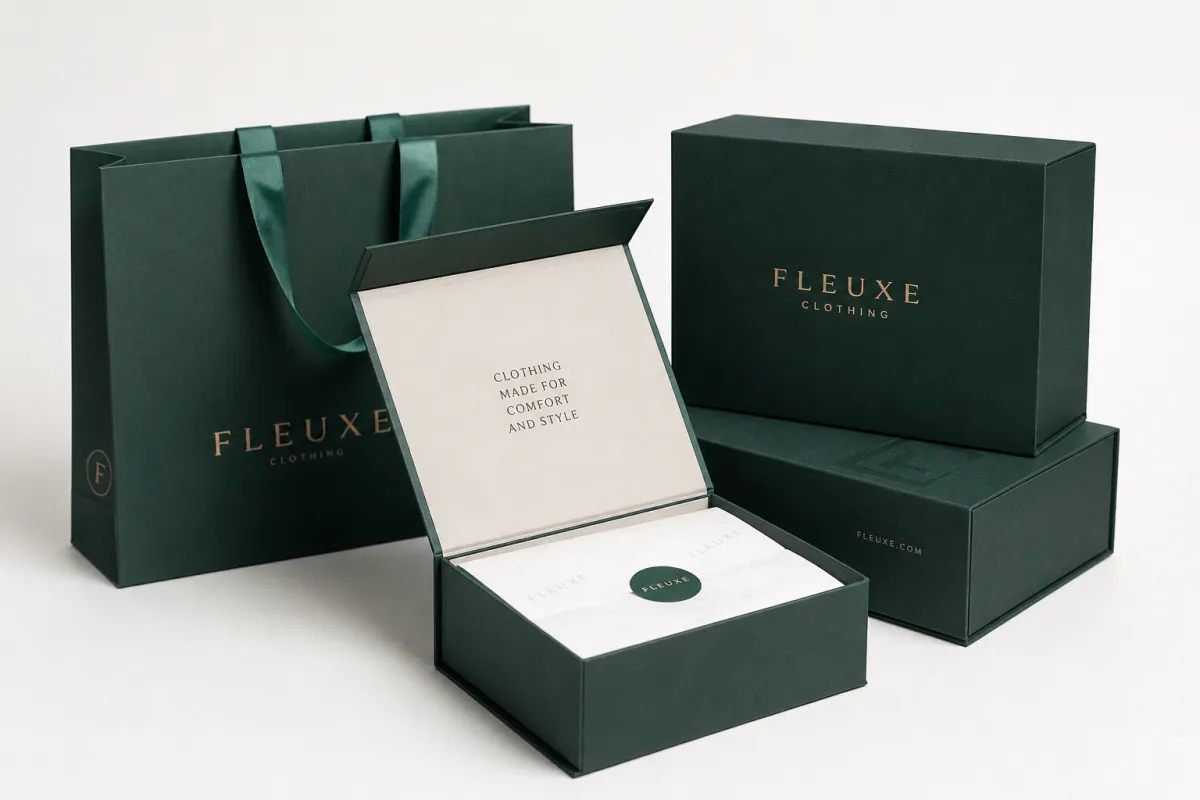
Most customers do not know the jargon. They do notice weight, stiffness, sharp edges, and the way a lid opens. Branded Rigid Boxes for ecommerce send those signals fast. The customer lifts the package and instantly feels the difference between a thin mailer and a box that was built with intention. That first impression is not just visual. It changes whether the box gets kept, photographed, reused, or tossed into recycling without ceremony.
That matters because unboxing is part of the product experience now. A rigid box can turn a regular delivery into something the customer wants to show someone else. Social posts are not guaranteed, but packaging that looks polished and feels sturdy usually gets more attention than packaging that screams, “I was the cheapest option.” I have seen brands keep the same product and improve response just by switching to branded rigid boxes for ecommerce. The item did not change. The perceived value did.
There is a practical side too. Fragile, high-value, and giftable products need more than a shell around them. They need structure. The box has to hold its shape, keep inserts in place, and stop surfaces from rubbing together in transit. In that sense, branded rigid boxes for ecommerce are a structural choice first and a visual one second. Pretty is nice. Surviving shipping is nicer.
The other part people miss is logistics. A folding carton can work fine on a shelf. Ecommerce does not live on a shelf. It lives inside parcel networks, transfer points, and warehouse workflows. Branded rigid boxes for ecommerce should be planned as part of that system, not as a final cosmetic layer slapped on after operations has already done the hard work.
- Perceived value: Dense board and a wrapped exterior make the product feel more premium before the customer opens it.
- Protection: Rigid walls help the product stay centered and reduce shape loss during transit.
- Brand memory: Customers remember boxes they keep on a desk, shelf, or vanity, which extends the life of the impression.
If the goal is to make the opening moment feel intentional, branded rigid boxes for ecommerce usually beat a plain mailer without much effort. That does not mean every SKU deserves one. It means the packaging should fit the item, the margin, and the customer experience you are actually selling.
How branded rigid boxes for ecommerce are built
Branded rigid boxes for ecommerce usually come from three main parts: a stiff board body, a wrapped outer layer, and an interior insert that keeps the product from wandering around like it pays rent. The board is often chipboard or paperboard in the 1.5 mm to 3 mm range. Exact thickness depends on box size, product weight, and how much abuse the package is expected to take before it reaches the customer. The wrap can be printed art paper, specialty paper, or a laminated sheet, depending on the look and the budget.
The real quality comes from how those layers work together. The chipboard gives the box its shape. The wrap carries the color, graphics, and finish. The insert keeps the product from sliding, tilting, or rubbing the walls. Branded rigid boxes for ecommerce feel premium because the structure is coordinated. One strong material alone does not do the trick.
Common box styles show up again and again in ecommerce programs:
- Two-piece telescope: A base and lid that stack neatly and are easy for customers to understand.
- Book-style magnetic closure: A hinged opening that feels upscale, but adds magnets, alignment work, and more labor.
- Drawer style: A sleeve and tray format that creates a strong reveal and works well for kits or accessory sets.
- Shoulder-neck style: A more structured presentation box where the inner shoulder helps control lid fit and opening depth.
Inserts do more work than most teams expect. If the product moves around, the experience falls apart fast. Scuffed surfaces, crooked placement, and crushed tissue all make the package feel rushed. Well-built branded rigid boxes for ecommerce use paperboard inserts, molded pulp, EVA foam, or custom-cut corrugated parts to center the product and protect delicate finishes. For cosmetics, electronics accessories, candles, and small gifts, the insert often decides whether the box feels tidy or sloppy.
There is also a difference between a gift-style box and a shipping-ready system. Many branded rigid boxes for ecommerce are not meant to handle parcel abuse on their own. They go inside a corrugated shipper so the presentation box stays clean and square. The outer carton can be plain or branded. The rigid box handles the reveal. The shipper handles the bruising part of the trip. A rare case of letting each component do its own job. Fancy.
For teams comparing formats, that separation helps. A premium box inside a stronger shipper usually beats forcing one package to do everything. It also gives fulfillment more control over how the product arrives.
Key design factors that affect performance and perception
Size comes first, and it matters more than people like to admit. Branded rigid boxes for ecommerce should fit the product and insert closely enough to prevent movement, but there still needs to be enough clearance for easy opening, closing, and packing. Too much room and the item rattles. Too little room and the insert bows, the lid fights back, or the pack team slows down because every box needs extra handling.
Logo placement and visual hierarchy come next. On a rigid box, the customer usually sees the lid first, then the front edge, then the sides if the box is photographed or displayed. That means the most important mark should live where it gets seen without effort. Clean type, controlled contrast, and a little breathing room usually look stronger than a crowded design. With branded rigid boxes for ecommerce, restraint often reads as confidence.
Finish choices can help or hurt, depending on how they are used. Soft-touch coating gives a smooth, velvety feel and can make the box feel expensive right away. Matte lamination stays quieter and usually photographs well. Gloss lamination creates shine, but it can also show fingerprints and scuffs more easily. Foil stamping, embossing, debossing, and spot UV can all add depth, but every finish should have a job. If it does not support the product tier, the tactile feel, or the brand message, it is just expensive noise.
For branded rigid boxes for ecommerce, I usually think about value in four layers:
- Structural value: Does the box hold the product safely and consistently?
- Visual value: Does the print and finish match the price point?
- Operational value: Can the fulfillment team pack it without dragging down throughput?
- Customer value: Will the customer feel the box was worth keeping?
Sustainability deserves a straight answer, not a marketing slogan. A rigid box is not the lowest-material option by default. Recycled board, FSC-certified paper wraps, and reduced-plastic closures can all help, but material efficiency matters just as much. In some cases, a smart folding carton with a corrugated shipper uses less fiber than a heavy presentation box. In other cases, branded rigid boxes for ecommerce make sense because the item is premium, fragile, or likely to be gifted. If you need to verify forestry claims, ask for documentation tied to supply chain and chain-of-custody standards from FSC instead of trusting vague words on a spec sheet.
Color control deserves attention too. Metallic papers, deep blacks, and solid fills can look incredible on a sample and then drift across a long run if the supplier has not locked down the print method. Proofing should always include the actual substrate, not just a digital file. If the artwork uses large solid areas, ask how the press will handle ink coverage, drying, and rub resistance before approving branded rigid boxes for ecommerce at scale.
Cost and pricing for branded rigid boxes for ecommerce
Pricing for branded rigid boxes for ecommerce comes from a stack of variables, and the stack gets tall fast. Box dimensions matter because bigger boards use more material and more wrap labor. Board thickness matters because heavier chipboard raises both material cost and handling effort. Wrap stock matters because specialty papers, textured sheets, and laminated printed wraps do not sit at the same price point. Add print coverage, foils, embossing, magnets, and custom inserts, and the number moves again.
Quantity is the biggest lever. Setup costs get spread across the run, so larger orders usually bring down the per-unit price. Smaller pilot runs and seasonal tests almost always cost more per box because the same planning and tooling still have to happen. For branded rigid boxes for ecommerce, a quote for 1,000 units and a quote for 10,000 units can feel like two different projects even when the box design is identical.
There are also indirect costs buyers forget to ask about. Sampling, prototype revisions, freight from the converter, storage if the boxes arrive early, and labor for assembly all affect the real cost. If a box arrives flat and needs manual folding or insert loading before it can move into fulfillment, that labor belongs in the budget. Branded rigid boxes for ecommerce should be priced as a system, not as an empty shell with a nice picture.
Here is a comparison many teams use when deciding how far to push the packaging:
| Build option | Typical use | Indicative unit cost | Notes |
|---|---|---|---|
| Plain rigid box with simple wrap | Starter kits, accessories, lower-complexity launches | $1.20-$2.50 at 5,000 units | Solid structure, moderate print demand, minimal finishing |
| Custom printed rigid box with insert | Cosmetics, gift sets, premium subscription items | $1.80-$4.50 at 5,000 units | Higher design value, better product retention, more assembly steps |
| Rigid box with foil, embossing, or magnetic closure | High-end gifting, hero products, VIP bundles | $3.50-$7.50 at 5,000 units | Stronger shelf impact, but finish and labor costs rise quickly |
| Rigid box plus corrugated outer shipper | Direct-to-consumer orders shipped through parcel networks | Adds $0.40-$1.20 to the packout | Often the safest option for branded rigid boxes for ecommerce |
Those ranges are only a starting point because artwork coverage, paper selection, insert design, and geography all change the final number. A fully lined drawer box with custom foam and foil can price very differently from a two-piece lid-and-base box with a single-color logo. The smarter move is to ask for a line-item quote so you can see where the money goes. That makes it easier to decide whether to simplify the finish, reduce insert complexity, or keep the premium details only where they actually matter.
Cost should also be compared against business value. If branded rigid boxes for ecommerce help a high-margin product feel giftable, improve repeat purchase rates, cut damage returns, or support a higher average order value, the packaging may pay back in ways a simple line item will never show. The trick is to separate branding theater from actual performance.
For direct-to-consumer programs, I would also ask how the packaging affects packing speed. If one design takes twice as long to assemble as another, the labor cost can eat the savings from a lower print quote. Sometimes the box that looks a little less dramatic is the one that makes more money. Hard truth. Useful truth.
Process and timeline: from concept to delivery
The process starts with the product, not the artwork. Before branded rigid boxes for ecommerce can be drawn, the supplier needs finished dimensions, product weight, insert requirements, and the way the box will ship. A good brief includes the exact item size, the orientation of the product inside the box, whether tissue or protective wrap is used, and whether the premium box sits inside another carton. Vague measurements slow everything down. Precise ones save money and time.
Once the brief is clear, the structural team builds the dieline and box style. That is the moment the packaging starts behaving like a physical object instead of a concept on a deck. Artwork gets mapped onto the structure, and proofing begins. This is where projects usually lose time. Approvals sit untouched, someone notices the logo is too close to a fold, or the insert gets finalized after the artwork round has already started. For branded rigid boxes for ecommerce, those delays can push a launch back by days or weeks.
Testing should happen in the middle of the process, not after everyone has already celebrated. If the box will move through parcel networks, ask whether it should be checked against a known distribution profile such as the ones used by ISTA. Many teams use ISTA 3A or a similar drop-and-vibration profile for small parcel shipments, which gives the packaging team a more honest picture of how the structure behaves. If the product is heavy, fragile, or unusually valuable, more testing or a more conservative shipper may be the right call. Not glamorous. Much cheaper than refunding broken inventory.
The best branded rigid boxes for ecommerce protect the product, pack at a steady pace, and still feel special when the lid comes off.
A simple program may move from brief to proof to production with few revisions. A more custom one, especially with specialty finishes or bespoke inserts, usually needs more time. Here is a practical way to think about the timeline:
- Measurement and brief: 1-3 business days if the product data is ready.
- Dieline and structural review: 2-5 business days depending on box complexity.
- Artwork proofing: 2-5 business days, longer if legal or brand teams need to review.
- Sample or prototype approval: 3-10 business days plus shipping time.
- Production: often 10-20 business days for custom rigid work, depending on finish and quantity.
- Freight and receiving: add transit time, especially if boxes are moving internationally.
Even a strong schedule can slide if the approval chain is unclear. I have seen projects stall because nobody knew whether operations, marketing, or procurement had final sign-off. The fix is not complicated. Decide early who approves structure, who approves artwork, who approves budget, and who signs off on shipping specs. Then branded rigid boxes for ecommerce move through the pipeline once instead of circling back for sport.
Common mistakes when ordering rigid boxes for ecommerce
The first mistake is measuring only the product and not the full packed item. Once you add inserts, tissue, a ribbon pull, a protective sleeve, or any kind of closure, the packed footprint changes. If branded rigid boxes for ecommerce are sized from the bare product alone, the first production run can end up too tight or too loose. That usually shows up late, right when fulfillment is trying to hit a launch date and nobody wants another surprise.
The second mistake is choosing finishes that look great on a sample but behave badly at scale. Soft-touch can feel excellent, but it may show scuffing during daily packing. Heavy black coverage can look elegant, but fingerprints and rub marks can become obvious under warehouse lights. Foils and spot UV can raise the perceived value, but if they get used everywhere, the design starts looking busy instead of premium. With branded rigid boxes for ecommerce, the sample should be judged for both appearance and production behavior.
Skipping transit testing is another expensive oversight. A rigid box is stronger than a folding carton, yes, but that does not mean it can ignore parcel handling. Drops, vibration, compression, and temperature swings still matter. If the box is going into direct-to-consumer shipping, test the full pack-out, not just the empty shell. Product, insert, closures, outer shipper, everything the customer will actually get.
Common mistakes usually follow the same pattern:
- Too much complexity: Decorative features that slow assembly without adding clear value.
- Too little testing: A premium design that fails after the first rough shipment.
- Too much guesswork: Launching branded rigid boxes for ecommerce without a measured prototype.
- Too little planning for returns or reuse: A box that looks great once but is awkward to store or close again.
Assembly labor deserves its own warning. A magnetic flap, nested insert, and multi-part closure can look elegant on a table, but if the build takes too long for the pack line, the design becomes a bottleneck. Fulfillment teams feel that pain immediately. In a busy warehouse, thirty extra seconds per order is not small. Branded rigid boxes for ecommerce should always be checked against pack speed, not just the mockup.
The last mistake is ignoring what happens after delivery. Will customers reuse the box for storage? Will they photograph it? Will they flatten it and recycle it? Will it survive a return shipment? Those questions sound minor, but they change how the customer experiences the brand after the first open. Packaging does not stop at delivery. It keeps living in closets, drawers, and social feeds long after the label is gone.
Next steps for a better packaging rollout
The smartest next step is a packaging audit. Compare the current shipper, the target unboxing experience, and the product lines that would benefit most from branded rigid boxes for ecommerce. Not every SKU needs the same treatment. A hero product, a gift set, a subscription kit, or a fragile item may be the best place to start because the payoff is easier to see and measure.
After that, choose one pilot program. I usually recommend one hero SKU or one gifting line rather than trying to switch every package at once. A pilot gives the team room to review structure, print quality, insert fit, assembly time, and customer response before expanding the program. If the sample is wrong, correcting it is far cheaper when only one line is involved.
Once you have a direction, ask for three things together: a sample, a formal quote, and a prototype built from real product measurements. Then review the result with operations, marketing, and customer service in the same room if possible. That simple step helps branded rigid boxes for ecommerce succeed because each team sees the issue from a different angle. Operations notices pack speed. Marketing notices brand fidelity. Customer service notices the complaints you are about to create if something is off.
If you want a deeper look at how packaging programs get built in practice, review the examples in our Case Studies and explore the structural range in our Custom Packaging Products. Those pages can help narrow the box style before you commit to a larger run.
A basic scorecard helps too. Track damage rate, pack time per unit, customer comments, repeat purchase behavior, and how often the packaging gets shared or kept. That is the cleanest way to tell whether branded rigid boxes for ecommerce are paying off in the real world instead of just looking good in a sample room. If the packaging improves brand perception but slows the line too much, you will see it. If it reduces damage and drives more praise, you will see that too.
Here is the simplest way to frame the rollout: define the goal, test the build, validate the budget, and then scale with confidence. Branded rigid boxes for ecommerce work best when they are treated like a planned packaging system, not a pretty afterthought. Done well, they protect the product, strengthen the brand, and give customers a reason to remember the delivery long after the box is opened.
What products work best with branded rigid boxes for ecommerce?
Premium SKUs, gift sets, subscription kits, cosmetics, accessories, and fragile items usually benefit the most from branded rigid boxes for ecommerce. They work especially well when the opening moment matters as much as the item itself, or when the brand wants the package to feel like part of the purchase instead of a disposable shell. They are less efficient for very low-margin products unless the packaging helps support a higher price point or a stronger gifting position.
How much do branded rigid boxes for ecommerce usually cost?
Price depends on box size, board thickness, wrap stock, print coverage, inserts, and finish choices like foil, embossing, or soft-touch lamination. Quantity is a major driver because setup costs are spread over the run, so larger volumes usually bring the per-unit cost down. For branded rigid boxes for ecommerce, a line-item quote is the best way to see where the money goes and where the design can be simplified without hurting the final look.
Are branded rigid boxes for ecommerce strong enough for shipping?
They are sturdy, but many branded rigid boxes for ecommerce still ship inside a corrugated outer carton for better transit protection. The rigid box itself should protect the product and preserve the presentation, while the outer shipper handles the roughest part of the journey. If the rigid box is meant to ship on its own, the structure, closure, and insert design need to be engineered for that use and tested under realistic handling conditions.
How long does it take to produce branded rigid boxes for ecommerce?
The timeline usually includes measurement, dieline setup, artwork proofing, sample approval, production, and shipping. Simple programs may move fairly quickly, while branded rigid boxes for ecommerce with custom inserts or specialty finishes often need more time for checking and revision. Build in extra room before launch so the packaging can be reviewed with real product samples, and leave space for testing if the shipment will move through parcel networks.
What should I send when requesting a quote for branded rigid boxes for ecommerce?
Send finished product dimensions, product weight, quantity, and whether the box will ship inside another carton. Add artwork files, finish expectations, insert needs, and any brand standards that affect color or logo placement. It also helps to include the shipping destination and the target launch date so the supplier can quote realistic lead time and freight. The better the brief, the better the quote, and the easier it is to compare options for branded rigid boxes for ecommerce without guessing.
If you want branded rigid boxes for ecommerce to earn their place in the budget, keep the focus on fit, finish, and packout, not just appearance. The brands that get the strongest results usually treat the box like a working part of the supply chain, measure it carefully, test it honestly, and choose upgrades with a clear reason behind each one. That is the useful takeaway: pick the product that deserves the upgrade, build the box around real shipping conditions, and do not let pretty details outrun performance. Otherwise you are just paying extra to be disappointed.