Buyer Fit Snapshot
| Best fit | Branded Shipping Cartons with Logo projects where brand print, material claims, artwork control, MOQ, and repeat-order consistency need to be specified before quoting. |
|---|---|
| Quote inputs | Share finished size, material target, print colors, finish, packing count, annual reorder estimate, ship-to region, and any compliance wording. |
| Proofing check | Approve dieline scale, logo placement, barcode or warning zones, color tolerance, closure strength, and carton packing before bulk production. |
| Main risk | Vague material claims, crowded artwork, missing packing details, or unclear freight terms can make a low unit price expensive after revisions. |
Fast answer: Branded Shipping Cartons with Logo: Board, Finish, Dieline, and Unit Cost should be specified like a repeatable production item. The safest quote records material, print method, finish, artwork proof, packing count, and reorder notes in one written spec.
Production checks before approval
Compare the actual filled-product size with the drawing, then confirm tolerance on folds, seals, hang holes, label areas, and retail display edges. Reserve space for logos, QR codes, warning copy, and material claims before decorative graphics fill the panel.
Quote comparison points
Review material grade, print process, finish, sampling route, tooling charges, carton quantity, and freight assumptions side by side. A quote is only useful when the supplier can repeat the same color, closure quality, and packing count on the next order.
Branded Shipping Cartons With Logo: Sustainable Guide
Branded Shipping Cartons with logo are not there to turn every delivery into a parade float. They work when the carton fits the product, survives transit, and gives you a clean brand moment without padding the package with pointless weight, filler, or freight charges. That is the part a lot of teams miss. They obsess over the print, then act surprised when damages, dimensional weight, and packing time all get worse.
The smarter move is usually not a fancier carton. It is the right carton size, the right board strength, and the right print treatment. That is where Branded Shipping Cartons with logo actually pull their weight: better protection, less material waste, and a delivery experience that feels intentional without pretending the box is luxury gift wrap. Transit packaging should do its job. If it also looks sharp, good. If it only looks sharp, you bought an expensive problem.
I have seen brands spend big on print and then save a few cents on board grade. That trade-off rarely ends well. A box that looks great on a mockup but tears in the carrier network is not branding. It is a returns problem with a logo on it.
What Are Branded Shipping Cartons With Logo?
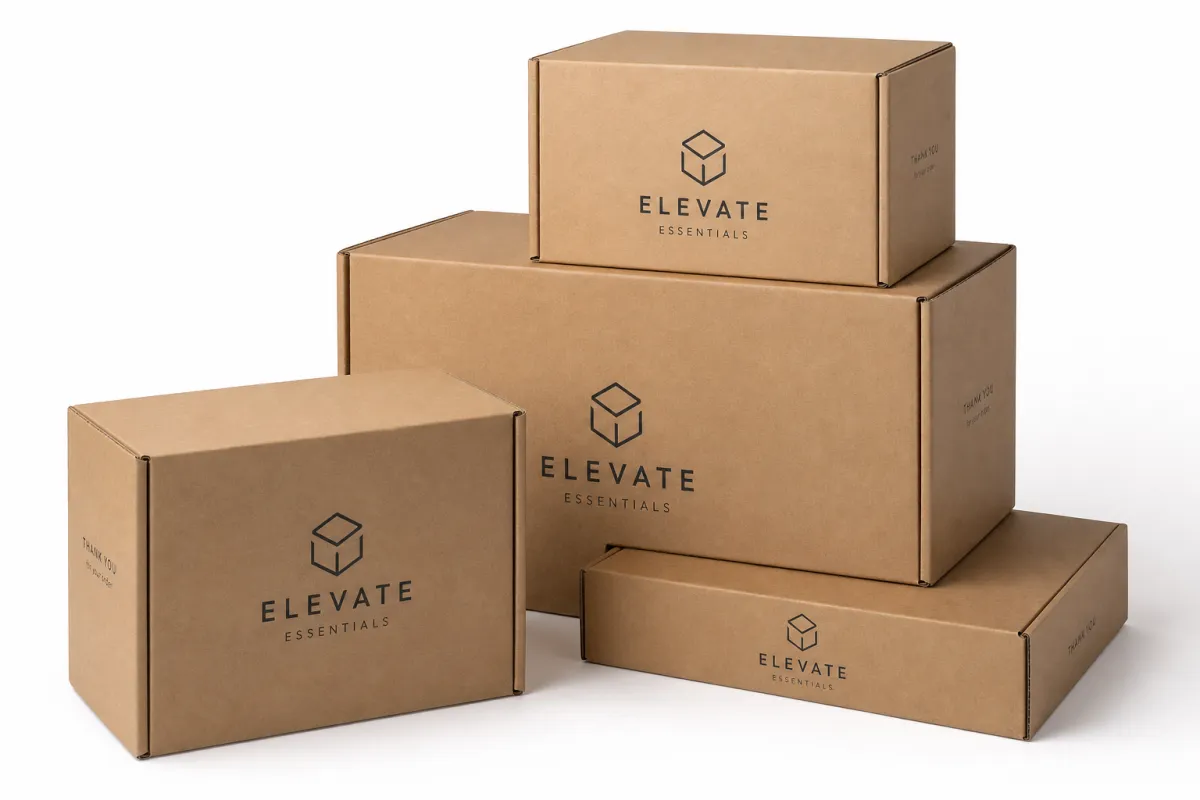
Branded shipping cartons with logo are corrugated mailers or shippers printed with a brand mark, a simple graphic, a short message, or a repeat pattern. They are built to protect products through order fulfillment and ecommerce shipping, then open cleanly on the customer side without needing a second package to carry the load. That sounds basic because it is. Packaging usually falls apart when people overthink the outside and underthink the structure.
The practical distinction matters. A retail carton is made to sit on a shelf and sell a product. A shipping carton is made to survive handling, stack pressure, conveyor travel, and carrier abuse. Branded shipping cartons with logo belong in the second category first. If they happen to look good, fine. If they look good but collapse under pressure, you just paid extra for failure.
From a sustainable packaging angle, branded shipping cartons with logo can cut waste in a few real ways. Right-sizing reduces void fill. Better board selection can remove the need for extra inserts. Cleaner print choices can avoid heavy coatings and plastic laminates. None of that is flashy. It is just better packaging math. Boring packaging decisions are often the profitable ones, which is inconvenient for people who want a dramatic slide deck.
The other split to understand is shipping cartons versus presentation boxes. A rigid gift box wrapped in premium paper is not the same thing as a corrugated shipper. If you are deciding between formats, start with the product, not the branding idea. Heavier or breakable products often belong in Custom Shipping Boxes, while lighter ecommerce items may fit better in Custom Poly Mailers. Pick the transit structure first. Then add the branding.
The tradeoff is simple. You can make branded shipping cartons with logo look premium, but if the carton costs too much, ships oversized, or wastes board, it stops being a smart packaging decision. A carton should earn its space. It should not just decorate it.
Quick rule: if the box is doing more to impress the internal team than protect the product in transit, it is probably overbuilt.
How Branded Shipping Cartons With Logo Work
At the structural level, branded shipping cartons with logo are still corrugated board. The liner, flute profile, and board grade do most of the work. Common specs include single-wall B flute or E flute for lighter retail shipments, and double-wall grades for heavier, stackable loads. If you are shipping glass, ceramics, supplements, or anything with impact sensitivity, board strength matters far more than artwork ever will.
Corrugated performance is usually discussed through crush resistance, stacking strength, and test standards like ASTM D642 or box compression testing. That is not packaging jargon for decoration. It tells you whether branded shipping cartons with logo will hold up in a pallet stack, in a carrier trailer, or on a warehouse floor where boxes get bumped, dropped, and ignored in equal measure. For teams that want a practical benchmark, ISTA test procedures are a decent place to start: ISTA packaging test guidance.
The branding itself is usually applied in one of three ways. Flexographic printing is common for larger runs and simple artwork, especially one-color logos or repeat patterns on kraft. Digital printing works well for shorter runs, many SKUs, or designs that need more detail without paying for plates. Spot-color printing sits in the middle when you want a clean, controlled look without full coverage. Branded shipping cartons with logo do not need every square inch printed. In fact, overprinting often looks less premium than a restrained design.
In the supply chain, these cartons have a pretty unromantic job. They are packed at the fulfillment stage, moved by carriers, stacked in transit, and opened by the customer, often with zero extra marketing touchpoints. That is why branded shipping cartons with logo should be judged like transit packaging first. The box either speeds packing, protects the product, and gives the customer a clean brand read, or it does not. The logo is one piece of the system, not the whole system.
Sustainable choices can still perform well. Recycled kraft liners, FSC-certified fiber, water-based inks, and minimal coatings are all common options. If fiber sourcing matters to your brand, ask for FSC chain-of-custody documentation and avoid mixed-material finishes that complicate recycling. The FSC site is a useful reference point for understanding certified fiber claims and paperwork.
Branded shipping cartons with logo also work best when the print placement respects the carton structure. A logo buried in a seam, panel fold, or barcode zone is wasted money. A logo placed on the visible top panel, with enough quiet space around it, usually does more for recognition than a loud all-over design. That is a boring lesson, but boring lessons are what save money and speed assembly.
One more practical point: the inside of the carton matters too. If the product slides around, the outside branding cannot rescue a damaged shipment. A good carton design considers flute strength, glue joints, closure method, insert fit, and how the item sits after the last piece of tape goes down. Pretty outside. Solid inside. That is the whole game.
Cost Factors for Branded Shipping Cartons With Logo
Pricing for branded shipping cartons with logo is driven by a handful of controllable inputs: board grade, box style, print coverage, number of colors, order quantity, and finishing choices. If you know those pieces, you can usually predict the quote range fairly well. If you do not, every quote feels random, which is how buyers end up comparing the wrong specs and calling it procurement.
Small runs cost more per unit because setup, plate charges, die costs, and press time get spread over fewer boxes. Larger volumes lower the per-unit number, but only if your forecast is real. Ordering 20,000 cartons to save a few cents and then storing half of them for two years is not smart buying. It is warehouse clutter with a nicer label.
Print coverage matters more than most people expect. A simple one-color logo in a small area can be very cost effective. Full-surface printing, tight registration, heavy ink coverage, and specialty coatings all add cost. Branded shipping cartons with logo do not become more useful just because the artwork is louder. Too much ink can also make the box harder to recycle and more expensive to produce, without improving recognition much at delivery.
Here is a practical way to think about budget bands for common projects. These are broad ranges, because real pricing depends on carton size, lead time, board quality, and region, but they are close enough to keep you out of fantasy budgeting:
| Option | Typical Unit Cost | Best For | Notes |
|---|---|---|---|
| 1-color flexo on kraft corrugated | $0.35-$0.95 at 5,000+ pcs | Simple branded shipping cartons with logo for standard ecommerce shipping | Good balance of cost, speed, and recyclability |
| Digital print on shorter run boxes | $0.90-$2.50 each | Launches, seasonal runs, many SKUs, or fast artwork changes | Good for flexibility; higher unit cost on small quantities |
| Full-coverage custom print with upgraded board | $1.50-$4.00+ each | Premium unboxing, fragile goods, higher-value products | Looks polished, but costs rise quickly if dimensions are large |
| Stock carton with branded label or stamp | $0.20-$0.70 each | Budget-conscious programs or testing a new design | Cheapest way to test demand before committing to custom tooling |
That table is only half the story. Freight changes the math fast. Oversized cartons increase dimensional weight, and dimensional weight can make a supposedly cheap box the expensive option by the time it ships out of your warehouse. Add void fill, extra tape, and damage replacements, and the “cheap” carton starts acting very expensive. Branded shipping cartons with logo should be evaluated on landed cost, not unit price alone.
The right spending level depends on product risk. If the carton carries fragile glass, premium cosmetics, or high-value electronics, a stronger board and cleaner print are worth the upgrade. If the carton is just protecting folded apparel, a simple printed mailer may be enough. Spend more where the box protects revenue. Keep it simpler where it mainly carries identity.
For teams comparing packaging formats, it often helps to review broader options through Custom Packaging Products before locking into one carton spec. Some brands discover that a smaller box, a different flute, or a mailer format solves the problem more cheaply than adding print decoration to the wrong structure.
Short version: branded shipping cartons with logo are usually cheaper than a return, but only if the box is sized and specified correctly the first time.
Branded Shipping Cartons With Logo: Process and Timeline
The production workflow is straightforward, but the details are where projects slow down. Start with product dimensions, not a vague box guess. Then choose the carton style, approve artwork, create a proof, review a sample, and only then move into full production. Branded shipping cartons with logo move fastest when the measurements are real and the design team is not guessing at bleed, panel orientation, or barcode space.
Lead times vary by structure. Stock carton modifications can sometimes move in roughly 7-12 business days after approval. Fully Custom Branded Shipping cartons with logo, especially if they need a new die line, new plates, or a first-article sample, often sit closer to 12-20 business days before shipping, sometimes longer if the project includes multiple proof rounds. If you are planning a launch, do not schedule the packaging like it will magically arrive early. It usually will not.
The biggest delay is rarely press time. It is approval time. A buyer sends unclear dimensions. A designer submits a beautiful mockup that ignores the seam. Someone realizes the barcode needs a safe zone. Then another round of revisions starts. That is how a simple carton turns into a week of back-and-forth. Branded shipping cartons with logo are easy to make once the spec is right. Getting the spec right is the actual work.
“If the box moves, nothing else matters.”
Sampling is the cheapest insurance policy in the process. A carton that looks perfect on screen can fail in real life because the flute is too soft, the print lands too close to a fold, or the assembly takes too long on the fulfillment line. A physical sample tells you whether the carton packs in under a minute, whether the product rattles, and whether the print still looks crisp on kraft stock rather than on a glowing monitor. That is why branded shipping cartons with logo should be sampled before volume, not after.
If you want a cleaner planning framework, set the timeline backward from launch day. Give yourself time for brief creation, artwork, proofing, sampling, production, inbound freight, and one contingency week. That extra buffer is not wasted time. It is how you avoid launch-day panic and expensive air freight because the cartons are sitting in the wrong place.
Branded shipping cartons with logo should also be reviewed in the context of the rest of the fulfillment system. If the box is too complicated to fold, or the print makes it harder to orient the product quickly, you may save on appearance and lose on labor. A few extra seconds per carton becomes real labor cost after thousands of shipments. Small delays scale faster than most people expect.
One simple rule helps here: if fulfillment staff hate the box, the box probably needs another round of revision. Packaging is supposed to support operations, not stage a tiny rebellion in the warehouse.
Step-by-Step: Ordering Sustainable Shipping Cartons
- Audit the current shipper. Measure the product, weigh it, record breakage, and note how much filler you are using now. If you do not know the current waste, you cannot improve it. Branded shipping cartons with logo should solve a real packaging problem, not create a prettier one.
- Choose the right carton format. Decide whether you need a mailer, a regular slotted container, a die-cut box, or a custom insert system. The right format depends on package protection, assembly speed, and how the carton will move through order fulfillment. For very light items, branded shipping cartons with logo may not even be the best structure if a mailer does the same job with less shipping material.
- Select the material and print method. Recycled kraft, white-lined corrugated, and FSC-certified board all have different looks and costs. Flexo is usually the practical choice for higher volumes. Digital print makes more sense for smaller runs or versioned artwork. Keep coatings minimal unless the product truly needs scuff resistance or moisture protection.
- Request a dieline and place artwork with real-world rules. Make sure the logo avoids seams, score lines, and flap intersections. Leave safe zones for barcodes, handling icons, and regulatory text. Branded shipping cartons with logo only look polished when the layout respects the fold pattern. Good print on a bad panel is still bad packaging.
- Test the physical sample. Pack actual products, shake the carton, drop test it if needed, and time the assembly step. If the box is slow to build or needs too much void fill, fix the spec before volume. It is cheaper to change a sample than 10,000 shipped cartons. That is not theory. That is just math.
For brands already thinking beyond one box type, it can help to compare branded shipping cartons with logo against other shipping materials in the same program. A carton may be ideal for a fragile item, while a branded mailer or lighter corrugated sleeve may be the better choice for apparel or flat accessories. The point is to match the container to the product, not force every SKU into the same box for the sake of consistency.
Also, check your sustainability claims before you print them on the carton. If the board is recycled, say so only if the supplier can support the claim. If the carton is FSC-certified, make sure the documentation exists. If the coating hurts recyclability, do not pretend it does not. Buyers can spot fake eco talk from a mile away, and branded shipping cartons with logo should not become a credibility problem.
In practice, the best sustainable specs are often the least dramatic: 32 ECT or 200# test corrugated for standard loads, water-based inks, right-sized dimensions, and minimal inserts. That combination is usually enough for a lot of ecommerce shipping programs. If the product is heavier, more brittle, or more expensive to replace, step up the board grade and testing. No trophy for under-specifying your packaging.
A second pass on the spec is worth the hour. Carton size, board strength, print method, and closure style all affect each other. Change one thing and the others can shift too. Packaging is annoyingly interconnected. That is also why a half-formed spec tends to become a full-blown headache later.
Common Mistakes With Branded Shipping Cartons With Logo
The most common mistake is using a box that is too large. Oversized branded shipping cartons with logo need more filler, move around more in transit, and often make the whole package look sloppy even if the print is excellent. The customer sees an empty cavity and wonders why the brand spent money on a custom carton just to ship air. That is not the impression anyone wants.
The second mistake is choosing weak board to save a few cents. You do not save money if the cartons fail, the return rate rises, or customer service has to replace damaged orders. A weak box costs more than it looks like on the quote. It costs in replacements, reships, and bad reviews, which are much harder to budget for than board grade.
Another frequent miss is treating the logo like a billboard rather than a shipping surface. More ink is not automatically better. Clean, deliberate branding usually looks more premium than cluttered coverage. With branded shipping cartons with logo, the goal is recognition and trust, not visual noise. A sharp one-color print in the right place can beat an overdesigned box every time.
Skipping sample testing is a classic mistake, and it is almost always avoidable. Digital proofs do not show how kraft absorbs ink, how the folds interrupt artwork, or how the carton feels when stacked. You need the physical box. The proof is useful, sure, but it is not the product. Branded shipping cartons with logo should never go to volume without a real sample pass.
Sustainability mistakes are just as common. Heavy plastic lamination, mixed-material windows, glossy coatings, and unnecessary inserts can undermine the eco-friendly story in a hurry. If the carton is supposed to communicate responsible packaging, the material choices need to match the message. Otherwise, the logo is just greenwashing with corrugate around it.
One more issue: teams sometimes forget labor. A beautiful carton that takes too long to fold or tape slows the packing line and raises operating cost. In ecommerce shipping, a few extra seconds per order can add up very fast. Branded shipping cartons with logo should be designed with packing speed in mind, especially if the fulfillment center is moving high volume.
If you need examples of how packaging choices show up in real projects, reviewing Case Studies can be useful. The details matter more than the sales pitch. The same carton style can perform very differently depending on product weight, carrier mix, and how disciplined the packing line is.
Common rule of thumb: if the box saves one cent but raises breakage, it is not a saving. It is a bill you have not opened yet.
What to Do Next Before You Place an Order
Build a one-page brief before you ask for a quote. Include product dimensions, unit weight, shipping method, brand goals, target budget, and sustainability requirements. If you are ordering branded shipping cartons with logo, the supplier needs enough detail to recommend the right board and print method. Vague inputs produce vague quotes, and vague quotes are how projects go sideways.
Collect real product samples. Not photos. Not estimates. Actual samples. Then test the worst-case fit, because the worst-case fit is what will decide whether the carton works in the real world. If the product is slightly out of spec, if the accessory bundle varies, or if the retail insert changes the thickness, you need to know before production. Branded shipping cartons with logo should fit the messy reality of fulfillment, not the tidy version in the design deck.
Ask for at least two print options so you can compare cost, appearance, and lead time. For example, compare one-color flexo against digital print, or compare a branded blank carton with a label against a fully printed version. Sometimes the cheaper option really is enough. Sometimes the premium option is the right move because the carton is doing more visual work at delivery. You only know that after comparing the total picture, not just the ink cost.
Request a physical sample or prototype and run it through the same carrier route your orders will use. A box that passes a gentle warehouse test may behave differently once it is moved through a multi-node carrier network. If the carton is part of a launch, set the timeline backward from launch day and leave room for proofing, sampling, production, and freight delays. No one enjoys rushing packaging. It usually shows.
Branded shipping cartons with logo should also be compared against other parts of the packaging system. For some brands, a better inner insert, a lighter outer carton, or a different closure method will improve the whole package more than changing the graphics. The best packaging teams do not worship the carton. They optimize the system.
And yes, ask for landed cost. That means cartons, inserts, freight, storage, tape, packing labor, and damage risk. It is the only number that actually matters in a serious packaging decision. Branded shipping cartons with logo are worth the spend when they reduce total cost or clearly improve the customer experience. They are a vanity expense when they do neither.
One last check helps more than people think: run the carton through the eyes of the person packing it and the person opening it. If both experiences feel clumsy, the design still needs work. Packaging is not a mystery novel. People should understand it in seconds.
Final Takeaway
Branded shipping cartons with logo work best when they are treated as functional transit packaging first and branding second. That is not a boring compromise. It is the whole point. The right carton size, the right board, the right print method, and the right sustainability choices usually do more for the brand than a louder design ever could.
If you want a carton that protects the product, speeds order fulfillment, keeps dimensional weight under control, and still looks intentional on arrival, start with the spec. Then add the logo. That is how branded shipping cartons with logo become a smart packaging investment instead of an expensive decoration. Honestly, that is the move that keeps the whole program from getting kinda silly.
The practical takeaway is simple: audit your current shipper, sample the next version, and compare landed cost before you approve artwork. If the box fails on protection or labor, fix the structure first. If it passes, the logo can do its job without stealing the show.
FAQ
How much do branded shipping cartons with logo usually cost?
Pricing depends on size, board grade, print coverage, and order quantity, so there is no honest flat rate. Simple one-color cartons in larger runs are usually far cheaper per unit than small custom orders with full coverage. Freight, inserts, and damage-related replacements often change the real cost more than the box price itself.
Are branded shipping cartons with logo recyclable?
Usually yes, if they use common corrugated board and avoid heavy plastic laminates or hard-to-remove coatings. Water-based inks and minimal finishing are the safer choice for recycling compatibility. Always confirm local recycling rules if the carton includes special coatings, tapes, or mixed materials.
What is the best print method for branded shipping cartons with logo?
Flexographic printing is often the practical choice for larger runs and simple branding. Digital printing makes sense for shorter runs, versioning, or designs with more color variation. The best method depends on volume, artwork complexity, and how much visual impact you actually need.
How long does it take to produce custom shipping cartons with logo?
Timeline varies by packaging type, artwork approval speed, sample needs, and whether the carton is stock-based or fully custom. Sampling and proofing are usually where projects slow down, not the press time itself. Build extra time if the cartons are tied to a launch, seasonal drop, or retail promotion.
What should I check before ordering sustainable shipping cartons?
Check carton dimensions, board strength, print limits, recycling compatibility, and carrier performance. Make sure the box fits the product tightly enough to reduce filler without making packing too slow. Compare total landed cost, not just unit price, because shipping, damage, and assembly time all matter.


