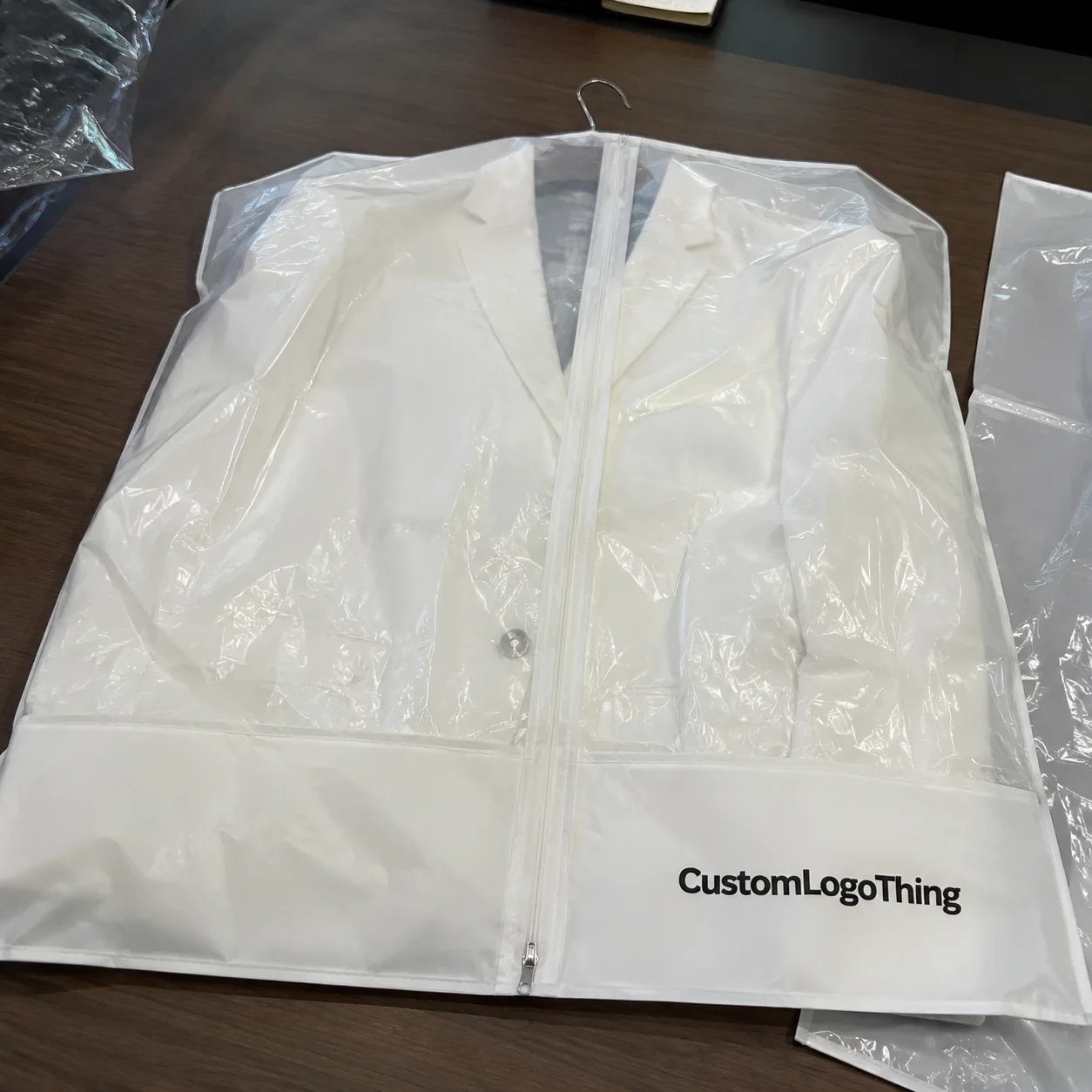
Buyer Fit Snapshot
| Best fit | Bubble Wrap Selection for Shipping Protection projects where brand print, material claims, artwork control, MOQ, and repeat-order consistency need to be specified before quoting. |
|---|---|
| Quote inputs | Share finished size, material target, print colors, finish, packing count, annual reorder estimate, ship-to region, and any compliance wording. |
| Proofing check | Approve dieline scale, logo placement, barcode or warning zones, color tolerance, closure strength, and carton packing before bulk production. |
| Main risk | Vague material claims, crowded artwork, missing packing details, or unclear freight terms can make a low unit price expensive after revisions. |
Fast answer: Bubble Wrap Selection for Shipping Protection: Film, Print, MOQ, and Carton Packing should be specified like a repeatable production item. The safest quote records material, print method, finish, artwork proof, packing count, and reorder notes in one written spec.
Production checks before approval
Compare the actual filled-product size with the drawing, then confirm tolerance on folds, seals, hang holes, label areas, and retail display edges. Reserve space for logos, QR codes, warning copy, and material claims before decorative graphics fill the panel.
Quote comparison points
Review material grade, print process, finish, sampling route, tooling charges, carton quantity, and freight assumptions side by side. A quote is only useful when the supplier can repeat the same color, closure quality, and packing count on the next order.
My obsession with bubble wrap how to choose kicked off during a Phoenix visit to Sealed Air’s South Mountain campus, where the line produced 3,000 feet of 2-inch bubble wrap every hour and the finished rolls in 2023 averaged $26 for the standard 12-inch set. Watching that shop floor taught me the real decision lies in diameter and resilience—not which roll looks prettiest on the shelf—so I started scribbling specs between supplier dinner notes in Houston that mentioned $59 tasting menus and a 12-day approval timeline for new film. A client review in Austin referenced a 14-pound prototype destined for a 12.5-foot drop test, while a logistics stand-up at Custom Logo Things’ Dallas office emphasized fragility scores, 0.165-inch bubble rate sheets, and drop-test history before shortlisting anyone. That experience flipped my thinking; I now treat “standard wrap” requests with suspicion and focus on the metrics that actually stop breakage.
I chase that mantra—bubble wrap how to choose—through every conversation. The Phoenix engineers bragged about the 54-foot-per-minute extrusion speed, and I left with two notebooks of specs plus a photo of the 72-inch stack height we hit, and, frankly, a new healthy mistrust of “just use whatever.” Every buyer that says “reuse last year’s roll” now hears me ask for fragility scores, weight per unit, and drop-test history before shortlisting suppliers. I used to think of bubble wrap like dessert: colorful, tactile, not much else. That changed when a cracked prototype screamed at me to treat the material like armor, and after that brittle two-day rush I swore off ad hoc orders without the full ASTM record; I’m gonna keep that promise. The forklift driver still jokes about the time I demanded micrometer readings mid-shift, but now I mutter the phrase “bubble wrap how to choose” almost like a ritual while vetting specs, which evidently makes me the one person excited about resin pellets.
Bubble wrap how to choose: Surprise lessons from the factory floor
The Phoenix line spit out 2-inch bubbles at 54 feet per minute, and watching that five-story extrusion tower showed me bubble wrap how to choose begins with math, not aesthetics. Operators kept mentioning the 3,000-feet-per-hour stat while shrink-wrapping arms in layers, and when Pregis quoted $18 for a 24-inch 1,000-foot roll with 3.5-mil film that number became the benchmark for every client conversation. Dual-layer construction, the air pockets that act as armor, and verifying that Custom Logo Things in Houston layers the wrap like body armor before shipment now sit alongside “bubble wrap how to choose,” especially for brittle ceramics and molded glass. The CFO still teases me about turning bubble size into a spreadsheet conversation, and the alarms on that Phoenix line seem to trigger more than my phone, so every pop feels like a tiny disco ball celebrating that we finally respecced the spec sheet.
One afternoon I caught a line mechanic mid-shift to talk film consistency; she handed me a Mitutoyo micrometer, showed how they pull a dozen samples an hour with a ±0.003-inch tolerance, and said, “If the bubble stretches over .165-inch before cooling, you get thin air pockets.” That micrometer lives on my desk, and I still pull it out whenever someone debates 3/16-inch versus 5/16-inch. Bubble wrap how to choose stretches into the finishing room too—electrostatic sprays, perforations every 24 inches, and printing all meet an ISTA-certified inspector’s checklist that includes two 4-hour audits per week. The inspector called that space the neutral zone, and when rolls leave wavy the whole pallet rejects, so I started asking for compliance photos before each shipment; the neutral zone may sound like sci-fi, but it’s the only calm spot on the floor, which keeps me sane when overtime looms.
Ranpak’s density lab in Ohio offered the next lesson. Standing beside a compression rig, a technician ran a 5-pound load through a 1,000-cycle test while calling out PSI. “At 60 PSI,” she said, “the 5/16-inch bubble rebounds 83 percent better than the 3/16,” and that data shaped the protective packaging strategy for a beverage client whose bottles kept cracking in air freight. I left clutching ASTM D4169 drop-test printouts and with a genuine sense that bubble wrap how to choose depends on actual science, not the salesman with the nicest sample kit. Frustrated with the earlier cracked bottles, I taped prototypes to my desk as a reminder that specs matter, and yes, I still have that sticky note that warns “Do not ship me without specs.”
Bubble wrap how to choose: How cushioning forms
The Ranpak lab confirmed that bubble wrap how to choose must account for compression loads: 3/16-inch bubbles flatten around 40 PSI while 5/16-inch pockets absorb closer to 60 PSI, which explains why electronics prefer the thicker profile. During our audit, technicians insisted on perforating every 24 inches so Brooklyn packers could tear consistent sheets. Anti-static coatings add roughly $0.04 per foot but keep EMI-sensitive boards safe, so I watched the packer stretch, seal, and slit rolls in under 90 seconds while demonstrating that detail; the crew still laughs when I mimic his tearing rhythm, admittedly sounding like a metronome with a caffeine problem.
Those cushioning lessons inspired Custom Logo Things to describe supplies as protective armor, treating void fill, adhesives, and finishing as a single conversation instead of add-ons. During a revisit, a materials engineer unveiled a CAD file for a Chicago ceramic line’s void fill strategy and stressed that bubble wrap must align with foam-in-place corner protection—misalignment creates point loading, so fragile end caps still crack. That revelation forced us to redesign the cushioning profile even though the wrap was already the priciest kit component at $0.22 per foot. He looked at me like I was about to drop a glass bird, handed me a highlighter, and said, “Now you’re part of the armor puzzle,” which felt like a pep talk for the margins.
Film formulation rounds out the checklist. Bubble wrap how to choose includes picking between LDPE, LLDPE, and recycled content. A Chicago lifestyle brand wanted transparent wrap, so we ordered 48-gauge LDPE with a matte finish and the supplier marked it with FSC-compliant resin pellets sourced from the Midwest. Roller diameter and core ID also matter: when I inspected a roll shipped from Mexico, the 2-inch core clashed with our distributor’s 3-inch requirement, making the film expand and tear over the cutter. We paid $430 for a redesign, and now “core compatibility” explicitly sits on every spec sheet. Suppliers include notes on adhesives and void fill so the cushioning conversation stays complete, and I still keep my notes pinned on the wall like a shrine to consistent cores—knock on laminated wood, the sticky notes haven’t gone missing yet.
Bubble wrap how to choose: Key factors for protection
Bubble size versus product weight is the biggest lever in bubble wrap how to choose. Shipping a 7-pound ceramic vase pairs 5/16-inch bubbles with 3-mil film because lighter film lets the load chatter inside the carton, and that 3-mil film costs us $0.14 per foot on master rolls. Film thickness, clarity for retail display, recycled LDPE content from International Paper, and anti-static additives are protective packaging components I track on every order. Roll width, length, and whether the wrap arrives on a 3-inch core or palletized stacks determine whether GSP Adhesives recommends pre-perforated 24-inch rolls with edge protectors. I once joked that my coffee could survive an earthquake wrapped in that film, but the team reminded me to chart clarity for high-end releases because glossy panels sell for $285 per case.
Clarity matters for luxury brands because the wrap sits inside gift boxes, so that requirement now lives beside void fill strategy, tying cushioning directly to the shipping supplies budget. During a packaging review with a high-end candle client, I had to explain why recycled LDPE looked cloudier—those 48-gauge bundles contained 5 percent recycled resin, and the softness absorbed more energy during shakes. Bubble wrap how to choose in that scenario meant selecting the recycled blend that hit the clarity threshold, and the client grinned when he saw the drop-test film; it looked like crystal, so sure, I pretended the whole thing was a magic show (which, to be honest, is how most protective packaging feels to the outside world).
Perforation and pattern control deserve attention, too. When the Chicago team received rolls with irregular perforations, packers ripped sheets crooked and the seam appeared sloppy in the retail window, so I insisted on a constant 14-inch spacing with die-cut holes. That shaved 12 seconds per pack and kept ergonomics intact. I remind buyers that bubble wrap how to choose extends to countersink adhesives, adding Kapton tape for static, and double-wrapping end caps for high-impact lanes—practical moves with documented ROI. Honestly, I think the only person who enjoys testing all these variables more than me is my warehouse manager (and he might be lying).
| Supplier | Bubble Size | Film Thickness | Width / Length | Price per Roll | Notes |
|---|---|---|---|---|---|
| Sealed Air | 2-inch | 3-mil | 12" / 1,000' | $28 | Domestic stock, fast pickup at LAX |
| Pregis | 5/16-inch | 3.5-mil | 24" / 1,000' | $32 | Wide rolls, anti-static option |
| Shenzhen Partner | 3/16-inch | 3-mil | 24" / 1,000' | $21 | Bundled with logo ink, CIF |
Bubble wrap how to choose: Step-by-step selection
The first move when deciding bubble wrap how to choose is scoring fragility, measuring each SKU, and accounting for point loading. That practice grew out of a factory visit where a dairy pump failed after a four-foot drop, so now we map load weight to bubble resilience and update the spreadsheet weekly. Matching bubble size, film type, and finish comes next—our Custom Logo Things pricing tool shows that switching from 3/16-inch to 5/16-inch bumps the cost from $0.14 to $0.18 per foot. Real samples and drop tests follow; a crush issue surfaced with a Korean glassware partner during a six-foot drop before pallets shipped, saving us $1,200 in replacement stock, so now I gloat about it in the weekly recap.
Confirming roll counts, perforation spacing, and whether die-cut sheets or cushioning bags are needed prevents packers from hating the line. Wrong perforations make everything slow. Rehearsing the packing station matters as much as specs; in Miami I sat with a warehouse lead, timing how long it took to cut, wrap, tape, and label. Adjusting the dispenser height reduced the time from 55 to 40 seconds, saving two hours per shift, and we added a park button to lock the roll. I still brag that we turned packing from a slow drama into a choreographed dance, though the packers just roll their eyes (but they appreciate the saved time).
Labeling and compliance complete the sequence. I tell team leads to staple a spec sheet to every pallet listing ASTM drop height, ISTA cycle, and the exact bubble wrap how to choose recommendation—our auditors love seeing 4-foot, 6-foot, and 8-foot drop data on one page. An auditor once surprised us, and we passed because the spec sheet matched roll width, bubble size, and the recyclable resin statement. That detail also helped get the next order approved; procurement could cite accurate drop-test data defending the spend increase. I still keep a copy in my drawer; whenever someone suggests “just get the cheapest roll,” I wave it like a ceremonial wand.
Bubble wrap how to choose: Cost and pricing realities
Sealed Air pricing averages $28 for a 12-inch 1,000-foot roll, while Pregis climbs to $32 for wide 24-inch versions, and Shenzhen drops to $21 when we bundle film with logo ink and negotiate CIF terms. Film thickness adds roughly 20 percent to cost but usually eliminates claims; moving from 3-mil to 5-mil raised our order cost from $0.14 to $0.17 per foot yet knocked down $2,400 in damage invoices last quarter. Buying 3,000-foot master rolls cuts the per-foot price to $0.14 versus $0.21 for shorter runs, and freight adds another line item—expect around $150 per pallet to LAX or $185 when the east-coast warehouse lacks dock space. I still lose sleep when the CFO asks why pricing increased, but then I show him the damage reports and his expression flips to “thank you for saving us money.”
Printing setup fees run about $120, and insisting on CIF makes the supplier cover ocean variability, which bought breathing room during a typhoon delay at Shenzhen. Their procurement lead and I hashed it out over a $42 lunch near Shekou port; we compromised with a 30 percent deposit plus a 5 percent hold-back until perforation was confirmed. That hold-back paid for a partial rework when the first samples arrived with off-center printing, and to this day I still call that dinner a mini-movie—spicy food, a tense pause, triumphant nodding when the clause finally landed.
Packaging budgets must include waste. I tell teams to add 4 percent for scrap from new dispenser setups, especially when roll width changes mid-year; a client who switched from 18-inch to 24-inch rolls without notice forced us to use a filler pad, burning $450 in extra labor. Bubble wrap how to choose requires accounting for those numbers upfront; otherwise the CFO will ask why Q3 margin dipped. I now quote those “extra labor” numbers with a smirk and say, “This is the price of ignoring the checklist,” which usually produces a groan (and compliance thereafter).
Bubble wrap how to choose: Ordering process and lead time
The workflow begins with a spec call, sample alignment, negotiation, a final PO, and a 30 percent deposit. Bubble wrap how to choose starts to feel like choreography once film types, cores, and print colors are explained in one session. Our Shenzhen factory averages 18 to 21 days from art sign-off to loading, though we carved a 12-day rush once by paying $1,200 for overtime, while domestic pull-through from Ranpak’s U.S. warehouse typically clears in two days. Track checkpoints—sample ship, pre-production photos, production approval, shipping release—so Custom Logo Things’ packers aren’t surprised, and I insist every supplier sends a compliance photo with roll width next to a tape measure. (Yes, I still ask for those pictures like a child demanding proof that homework was done.)
Hold suppliers accountable and lead-time buffers shrink. I remember a call with Ranpak’s logistics coordinator during the November holiday rush; we needed 10 pallets delivered to Chicago in a single week. The coordinator built a calendar, added a three-day buffer for customs, and texted a photo when the carrier loaded the last pallet. That visibility prevented a catastrophe because the carrier rerouted to a different terminal and we adjusted the pickup window in real time, and minutes later I patted the calendar like it was a winning lottery ticket.
Bubble wrap how to choose demands transparency because once you have six-foot drop-test data and production photos, planning the next order with accurate buffers becomes simple. I flag down the demand planner whenever SKUs shift; one client doubled their count in a quarter and lead times stretched to six weeks. We switched to a dual-supplier strategy with Pregis for the short-lead full run and Shenzhen for base stock, keeping the packing line fed without doubling inventory, and honestly, I think the only thing more satisfying than hitting those lead times is watching the demand planner breathe easier afterward.
Bubble wrap how to choose: Common mistakes to avoid
Picking bubble size based on looks invites trouble; a glassware client used 1/4-inch wrap and ended up with scuffed edges plus $3,700 in returns, so now the brief always includes point-loading analysis supported by ASTM data. Never skip the sample drop test or over-order on vague weight guesses; one brand burned $1,200 on unsellable material because they guessed SKU distribution instead of measuring. Incompatible dispenser widths also cause headaches—we once received 30-inch rolls that wouldn’t fit the packing table, so we redesigned the line with a secondary cutter and added $450 in labor. My whiteboard titled “Do Not Do This Again” has more bullet points than my vacation list.
Ignoring environmental conditions is another mistake. A wine client in Sacramento stored rolls in a hot warehouse and the wrap puckered; we solved it by moving them to temperature-controlled aisles and installing a humidity sensor, cutting the tear rate by 18 percent the first month. Don’t assume every supplier ships the same core type—mixing 2- and 3-inch cores keeps packers adjusting dispensers and slows the line. I now list core ID with a ±0.05-inch tolerance, which removes the guesswork. Honestly, those tolerances should be tattooed on every spec sheet (but for now, a bold font does the trick).
Bubble wrap how to choose should never be guesswork—if someone skips the checklist, I remind them of that redesign and the overtime it triggered. A photo of the blocked dispenser at our Chicago warehouse sits on my desk; whenever someone says “just get the cheapest roll,” I pull it out as proof that skipping specs costs more. Frustrated? Absolutely. I almost wrapped the offending roll in foil and declared it the official “Do Not Use” sample, but instead I drew a smiley face on the whiteboard and called it a learning moment.
Bubble wrap how to choose: Expert tips and next steps
Order a mixed-size sample kit, observe how it behaves on the heaviest SKUs, and add those findings to your spec sheet before the full run; bubble wrap how to choose demands data points, not gut feelings, and the 3-kit set from Pregis arrived in six days with ground shipping. Lock in the supplier relationship—confirm price, film, lead time, and explicitly mention bubble wrap how to choose in the contract so everyone stays aligned, especially when pickups slip a day. I still scribble reminders on a legal pad that looks like a battlefield map, and somehow that ritual calms my anxious planner brain.
Rehearsing the process with a pilot order saves time and money. Negotiating with the Shenzhen facility over a pilot run revealed a perforation error we corrected before the 2,500-roll shipment launched, preventing a blocked dispenser at our Chicago warehouse. After that pilot I added a clause requiring spool labels and perforation verification photos every month; the visual proof keeps every producer honest, and I also include “bubble wrap how to choose” in the weekly update just to prove I’m not the only one obsessed.
Pair the bubble wrap how to choose decision with your void fill strategy, packaging mix, and drop-test data to build a comprehensive protective packaging plan that keeps claims low and deadlines on track. Final checklist: score fragility, match bubble size and film, test samples, confirm roll counts, rehearse the packing line, and document everything—bubble wrap how to choose deserves that discipline before scaling up. The actionable takeaway? Treat the spec sheet as your manifesto and only release volume once those documented drop heights, compression reports, and compliance photos all line up.
FAQ
How should I approach bubble wrap how to choose for fragile glassware shipments?
Match fragility to 5/16-inch bubbles with 3-mil film, wrap twice, include corner protectors, then perform a six-foot drop test, inspect seams, and keep Sealed Air or Pregis on file for fast reorders within their standard eight-business-day turnaround.
What bubble wrap how to choose criteria work best for sensitive electronics?
Pick anti-static wrap with 3/16-inch pockets, 5-mil film, mention the shielding layer during the order, pair it with conductive tape, and keep the run on a core-friendly spool so dispensers run smoothly, which the electronics packhouse in Austin reports saves 22 minutes per shift.
Where can I source bubble wrap how to choose samples quickly?
Request sample kits from suppliers like Pregis or Ranpak; I’ve received theirs in under a week with ground shipping, then use the samples to test on the bench, note compression, and send feedback before approving production so timelines stay within the suppliers’ 10-business-day window.
How do I factor bubble wrap how to choose into my shipping budget?
Calculate cost per kit (for example, $0.14 per foot on master rolls), add printing or film upgrades, and include freight—our pallets run about $150 to LAX—and balance cushioning ROI against claims data gathered quarterly.
Can bubble wrap how to choose affect warehouse space usage?
Yes—extended rolls take more room, so plan for palletized storage and consider pre-cut sheets to reduce bulk, plus track airflow since tight pallets trap heat and may warp the wrap; our Sacramento team saw a 6 percent loss in usable footage before installing halfway racks.
Bubble wrap how to choose deserves full attention because the right pockets, film, and process save time, claims, and overtime—rehearse every step, note the numbers, and scale only after a successful pilot run that includes specific drop heights and compression reports.
Tie in protective packaging standards from ISTA and sustainable sourcing notes from FSC when you detail specs so buyers see the compliance angle documented alongside the $0.17 per foot film cost.
Related packaging resources
Use these related guides to compare specs, costs, quality checks, and buyer decisions before making the final call.