Buyer Fit Snapshot
| Best fit | Zipper Pouches with Logo projects where brand print, material claims, artwork control, MOQ, and repeat-order consistency need to be specified before quoting. |
|---|---|
| Quote inputs | Share finished size, material target, print colors, finish, packing count, annual reorder estimate, ship-to region, and any compliance wording. |
| Proofing check | Approve dieline scale, logo placement, barcode or warning zones, color tolerance, closure strength, and carton packing before bulk production. |
| Main risk | Vague material claims, crowded artwork, missing packing details, or unclear freight terms can make a low unit price expensive after revisions. |
Fast answer: Zipper Pouches with Logo: Film, Print, MOQ, and Carton Packing should be specified like a repeatable production item. The safest quote records material, print method, finish, artwork proof, packing count, and reorder notes in one written spec.
Production checks before approval
Compare the actual filled-product size with the drawing, then confirm tolerance on folds, seals, hang holes, label areas, and retail display edges. Reserve space for logos, QR codes, warning copy, and material claims before decorative graphics fill the panel.
Quote comparison points
Review material grade, print process, finish, sampling route, tooling charges, carton quantity, and freight assumptions side by side. A quote is only useful when the supplier can repeat the same color, closure quality, and packing count on the next order.
Zipper Pouches with Logo: Shipping Packaging Guide
zipper pouches with logo do more than hold parts in place. They keep small products grouped, protect them through transit, and give the customer a branded piece that gets touched, opened, and often reused. That last part matters. A carton gets discarded. A pouch tends to stay around.
Why Zipper Pouches with Logo Stand Out in Shipping
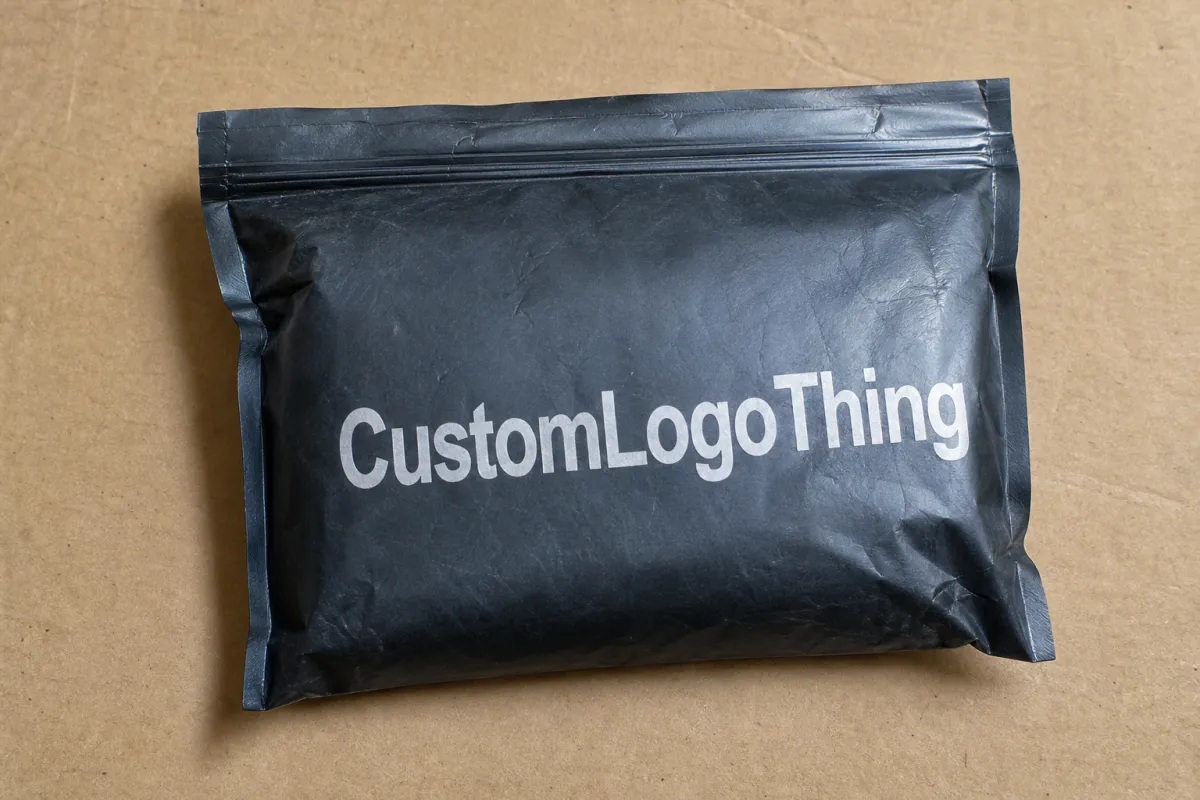
A branded pouch can carry more value than a bigger package with more print area. That sounds counterintuitive until you watch a real order get packed and unpacked. The pouch is often the first item handled at the line, the first thing a customer opens, and the first piece they keep using after delivery. zipper pouches with logo sit at the overlap of protection and presentation, which is why they show up in sample kits, accessory bundles, return kits, and small-part shipments.
For packaging buyers, the payoff is not just visual. It is control. Loose items create counting mistakes, packing delays, and ugly unboxing moments. A resealable pouch groups those pieces into one clean unit. That makes fulfillment easier, keeps parts organized, and lowers the chance that a cable, screw, swatch, or sample goes missing somewhere between pack-out and delivery.
The pouch still has a job after the shipment is opened. Printed cartons usually disappear fast. A pouch with a clear logo or product label often gets reused in drawers, travel bags, tool kits, or desk storage. That reuse keeps the brand visible after the label is gone and gives the package a second life that a box rarely gets.
A pouch that fits the product is usually better than a pouch that just looks good in a render. Shipping rewards packages that close cleanly, pack fast, and survive handling without making the operator fight them.
The better question is not whether the pouch prints well. It is whether the size, film, zipper, and finish actually support the shipment without slowing the line or weakening the pack.
How Zipper Pouches with Logo Work in the Shipping Flow
A Custom Zipper Pouch is a flexible package made from one or more film layers with a resealable closure. Common builds include polyethylene, laminated film, foil-barrier stock, and specialty materials chosen for moisture resistance, puncture resistance, odor control, or product visibility. In shipping, the structure has one job: protect the contents enough to arrive in good shape, while still loading quickly at the pack station.
Logo placement can happen a few different ways. Some pouches are printed directly on the film. Others use laminated graphics under a protective layer, which can improve durability and color clarity. Finishes such as matte, gloss, or soft-touch change the feel and appearance, but they also affect Cost, Lead Time, and print behavior. They are production choices, not just style choices.
The pouch moves through four stages: pick, pack, transit, and opening. During pick-and-pack, it keeps the SKU or kit parts together. During transit, the zipper prevents the contents from spilling if the carton shifts or is opened for inspection. After delivery, the customer can reclose it for storage, returns, or partial use. That last stage is where the pouch proves whether it was worth ordering in the first place.
Not every program needs the same structure. A sample kit that needs a polished first impression may prioritize print quality and finish. A pouch for spare parts may prioritize zipper strength, film durability, and moisture protection. Fit should drive the spec. Style comes after that.
Where the zipper adds operational value
The zipper matters because it changes what happens after the first opening. If a customer removes one item from a kit and wants to store the rest, the closure keeps everything organized. That helps with returns, seasonal bundles, spare parts, subscription kits, and multi-item orders. It also helps warehouse teams stage partial kits without dumping pieces into a tote or across a table.
- Partial use: items can be removed and the pouch can still close again.
- Inspection: contents can be checked and repacked without a fresh bag.
- Organization: small parts stay grouped instead of spreading through the carton.
- Reuse: the pouch becomes storage instead of trash with a logo on it.
That can mean fewer re-bags, fewer lost components, and fewer awkward repacks for the shipping team. For the brand, it means the package keeps working after the sale.
Cost, Pricing, and MOQ: What Changes the Number
Pricing for zipper pouches with logo can look simple on a quote and messy once the product reaches the warehouse. The biggest cost drivers are pouch size, film thickness, zipper style, print coverage, finish, and whether the pouch uses a stock size or a fully custom dimension. Add a high-barrier laminate, foil layer, or premium surface treatment, and the price rises. Keep the design simple and the quantity larger, and the unit cost usually drops.
MOQ, or minimum order quantity, matters just as much. A lower MOQ works well for a pilot run, launch test, or seasonal program with uncertain demand. The tradeoff is basic: smaller runs usually cost more per unit because setup, proofing, and machine changeover are spread across fewer pieces. The unit price can look decent while the total order still does not make sense for the business.
A lot of buyers compare only the piece price. That is an easy way to miss the real cost. Setup charges, sample revisions, freight, tooling, and rush fees can show up later and wreck the budget. The shape of the pouch matters too. A pouch that slows packing by even a few seconds can cost more in labor than a slightly pricier pouch would have cost upfront.
| Construction | Best For | Typical MOQ | Indicative Unit Cost | Main Tradeoff |
|---|---|---|---|---|
| Stock polyethylene pouch with printed logo | Simple kits, accessories, spare parts | 1,000-3,000 pieces | $0.12-$0.28 per unit at 5,000 pieces | Lower cost, fewer structure options |
| Custom-sized laminated pouch | Brand-driven shipping packs, mixed components | 3,000-10,000 pieces | $0.22-$0.45 per unit at 5,000 pieces | Better fit and stronger print presence, more setup |
| Foil-barrier zipper pouch | Odor-sensitive, light-sensitive, freshness-focused goods | 5,000+ pieces | $0.30-$0.65 per unit at 5,000 pieces | Higher protection, higher material cost |
Those numbers are examples, not a quote. A 2-color print on a stock size will price differently from a full-coverage design on a custom size with a matte finish and a hang hole. Freight can also move the landed cost more than people expect, especially on lightweight cartons that still bill like a small disaster.
What to check inside a quote
A useful quote should show more than the unit price. Ask whether it includes artwork cleanup, plates or tooling, proof rounds, sample approval, and shipping. If the supplier is quoting multiple materials, compare them carefully. A lower price can hide a thinner film, a weaker zipper, or a shorter usable life.
For buyers who want a benchmark on packaging quality and transit testing, the ISTA test standards are a solid place to start. They help frame what happens under vibration, drops, and rough handling. For sustainability context, the EPA recycling guidance is useful when you are thinking about reuse, disposal, and what happens after the package leaves the customer.
The cheapest quote is not always the cheapest purchase. If the pouch creates waste, slows packing, or damages the contents, the savings disappear fast.
Production Process and Timeline: From Artwork to Delivery
The production path for zipper pouches with logo usually follows the same basic sequence. First comes the spec request: size, material, closure type, print coverage, and quantity. Then comes the artwork file, followed by proof review. Once the proof is approved, many suppliers make a sample or preproduction version for physical review. After that, the full run moves into production, inspection, packing, and shipment.
- Request specs and quantity.
- Submit final artwork files.
- Review the digital proof for layout and color expectations.
- Approve a sample if the program needs one.
- Run production and inspection.
- Ship to the distribution center, co-packer, or fulfillment site.
Where do delays usually happen? Artwork cleanup is a big one. A file can look fine on screen and still need work for bleeds, fonts, dieline placement, or ink limits. Color approval can slow things down if the brand team wants a very specific shade. Material sourcing can add time too, especially if the pouch needs a film thickness, barrier level, or zipper style that is not already in stock.
A stock-based order usually moves faster than a fully custom build. If the supplier already has the pouch size, closure, and material ready, the timeline can shrink after proof approval. A custom run with a new size or specialty finish needs more setup and validation. A practical range for straightforward orders is often around 12-15 business days from proof approval, with longer windows for more complex jobs. That depends on the supplier, factory load, and shipping route.
Where lead time stretches
Lead time gets longer when the order includes complex print coverage, a new pouch size, or a barrier film that must be sourced instead of pulled from stock. The same thing happens when artwork changes multiple times or the buyer asks for color tweaks after proof approval. Seasonal spikes can also crush the schedule. Back-to-school, holiday kits, and trade show runs tend to fill production slots quickly.
Buyers should build buffer into launch plans and reorder schedules. A pouch order that looks simple in a meeting can become urgent once cartons are printed, inventory is committed, and the launch date is fixed. The safer move is to work backward from the ship date, then subtract time for proofing, sampling, and the likely revision cycle.
If a pouch touches the customer, the warehouse, and the carrier, it should be treated like a packaging project, not a stationery reorder.
That one habit usually keeps a team from making the most expensive mistake of all: rushing the spec because the launch date is already staring at them.
Key Factors That Affect Performance, Protection, and Use
Fit comes first. A pouch that is too tight stresses the zipper and bends the film out of shape. A pouch that is too loose wastes material and looks careless. The right size should match the product's length, width, and thickness when it is fully packed, not when it is lying flat on a table. That matters for bundled accessories, odd shapes, and small parts that shift around inside the pack.
Protection requirements
Protection needs depend on the product. A pouch for cables may only need dust protection and a tidy presentation. A pouch for cosmetics, supplements, hardware, or sample goods may need stronger moisture resistance, better puncture tolerance, or odor control. If the contents are sensitive, the film choice matters more than the logo.
For some products, a high-barrier build is worth the extra spend. Foil layers and laminated barriers can reduce exposure to light, moisture, and outside odors. For low-risk accessories, that same build can add cost without enough payoff. The decision should follow the product and shipping conditions, not habit.
Warehouse conditions
Warehouse conditions affect performance more than a lot of buyers want to admit. Heat, humidity, stacking pressure, and repeated handling expose weak points that a proof will never show. If the pouch sits in a warm distribution center or moves through several touchpoints before final packing, the zipper and film should be chosen with that abuse in mind. A pouch that survives a tidy tabletop demo is not automatically a pouch that survives peak season.
Branding and visibility
Branding has to be legible in the real world. Color contrast matters. So does logo placement. If the logo sits too low, gets buried under a fold, or prints in a shade that disappears against the base film, the package loses most of its value. Matte finishes can look sharper. Gloss can create stronger shelf impact. Clear windows show the product, but they also reduce print space, so the tradeoff should be intentional.
Packaging standards help frame the decision. ASTM D3951 is often used as a general shipping and handling baseline, while ISTA testing focuses on transit performance. That does not mean every pouch needs formal certification. It does mean buyers can think about the pouch as part of a larger distribution system, not as a floating graphics exercise.
Sustainability and reuse
Sustainability questions are getting sharper, and buyers should keep asking them. A lighter pouch can use less material than a rigid package. Reusable pouches can extend usefulness after delivery by turning into storage. Still, not every flexible pack is recyclable in every local program, and claims should be checked before anyone puts them on a spec sheet. If the design uses paper inserts or fiber-based secondary pieces, FSC-certified sourcing may matter for the broader packaging system. If the pouch itself is film, disposal guidance should be stated plainly.
Plain language builds trust. If the pouch is designed mainly for reuse, say that. If it is designed mainly for protection, say that too. Buyers do not need slogans. They need the truth about what the package does.
Common Mistakes to Avoid When Ordering Custom Pouches
The most common mistake is picking the wrong size. Too small creates zipper strain and may crush the contents. Too large wastes material, increases freight inefficiency, and makes the pack look sloppy. A real fit test should use the actual product or a filled sample, not a flat mockup on a desk.
Another common error is approving a proof without testing the pouch in the actual pack station. A pouch can look perfect on screen and still slow the line because it is awkward to load, annoying to seal, or too slippery for a fast station. That is an operations problem, not just a design problem.
Price comparison can also mislead. A quote with a lower unit cost may come with a larger MOQ, more freight, or multiple revision rounds. Once those are added, the savings may disappear. The full landed cost should include sample approvals, setup, shipping, and labor impact from packing speed.
Brand consistency is another weak spot. Fine line art, small type, and exact color matching are hard on flexible film. If the logo depends on tiny details or a very specific shade, the print method needs to match that reality. Otherwise, the finished pouch may read as "close enough," which is not a compliment.
Waiting too long is the last easy mistake to avoid. Rush orders shrink the options. They can force a less suitable material, a pricier ship method, or a simplified print spec. That is rarely the smartest way to protect margin.
- Test the filled pouch: not the flat sample.
- Check handling speed: a nice-looking pack can still slow down the line.
- Compare total cost: include freight, setup, and revisions.
- Confirm artwork limits: small type and thin lines may soften on film.
- Order early: leave room for sampling and shipping delays.
Expert Tips and Next Steps for a Smooth Order
Start with a sample or prototype whenever the program allows it. The point is not just to inspect the artwork. The point is to test closure feel, fit, packing speed, and visual impact in an actual pack-out setup. If the pouch is part of a kit, load the full kit. If it is meant for a return-ready pack, open and close it twice. A tabletop approval does not show those details.
Build a spec sheet before asking for a quote. Keep it short: dimensions, target quantity, material preference, zipper style, print coverage, artwork files, and shipping deadline. Suppliers quote faster and more accurately when they are not trying to decode a chain of emails and half-finished notes.
Standardize where possible
Standardizing pouch sizes across related SKUs makes purchasing and warehousing easier. Fewer pouch formats mean fewer SKUs to manage, fewer setup changes, and less chance of loading the wrong size during a busy shift. If several products fit into one or two common pouch dimensions, that usually beats creating a new size for every item.
Set a reorder point from real usage
Reorder points should come from actual consumption, not optimism. If a monthly program uses 8,000 pouches and the lead time is three weeks plus transit, the reorder point has to reflect that. Add a cushion for forecast error and seasonal spikes. A small safety stock is cheaper than emergency freight because inventory ran out.
A sensible purchasing process looks like this: define the packaging function, test the fit, confirm the print method, approve a sample, and lock the reorder plan. That keeps the project tied to operations instead of drifting into a design contest.
For most packaging teams, the next move is practical: collect the product dimensions, confirm how the pouch will be packed, and document the handling steps before placing the order. That is how zipper pouches with logo stop being a nice idea and start doing real work in the shipping flow.
Frequently Asked Questions
What are branded zipper pouches with logo best used for in shipping?
They work well for small parts, samples, kitted items, accessories, and return-ready packaging. They keep contents grouped, reduce the chance of loss during fulfillment, and give the customer a cleaner opening experience. They are especially useful when one shipment contains several loose pieces that need to stay organized.
Which material should I choose for zipper pouches with logo?
Poly-based film is a common choice when you want a balance of cost, flexibility, and moisture resistance. Foil or higher-barrier builds make more sense when odor, light, or freshness protection matters more. The right material depends on the product, storage conditions, and how much protection you need during transport.
What affects the price of zipper pouches with logo the most?
Size, film thickness, print coverage, zipper style, and order quantity usually have the biggest effect. Setup costs, sample approvals, freight, and rush fees can shift the total a lot. A larger MOQ often lowers the unit cost, but only if the quantity fits real demand.
How long does production usually take for custom zipper pouches?
Artwork review and proof approval can add several days before production starts. Standard runs are usually faster than fully custom structures or specialty finishes. Build extra time for sampling, revisions, and shipping if the order supports a launch, event, or seasonal drop.
How do I know if my zipper pouches with logo are the right size?
Test the pouch with the product fully packed, not just with a flat sample. Leave enough room for the zipper to close without forcing the film or crushing the contents. Make sure the finished pouch also fits your cartons, bins, and packing process so the packaging works in practice, not just on paper.
For most shipping programs, the best choice is the one that fits the product, holds up under handling, and supports repeat use without adding extra labor. That is where zipper pouches with logo earn their place: protection, presentation, and efficiency in one package, provided the spec is built for the real shipment and not a pretty mockup.


