A custom Embroidered Baseball Caps bulk order usually makes more sense than print when the cap has to survive repeated wear, close inspection, and a fair amount of handling. Stitching sits into the fabric instead of sitting on top of it, so the logo tends to hold its shape better on structured crowns and read as a finished product rather than a temporary promotion.
That matters for teams, events, retail, and employee uniforms. Buyers are rarely just buying a cap; they are buying a consistent front panel, a predictable color match, and a decoration method that will not look tired after a few months in the field.
Why bulk embroidered baseball caps work well for everyday brand wear
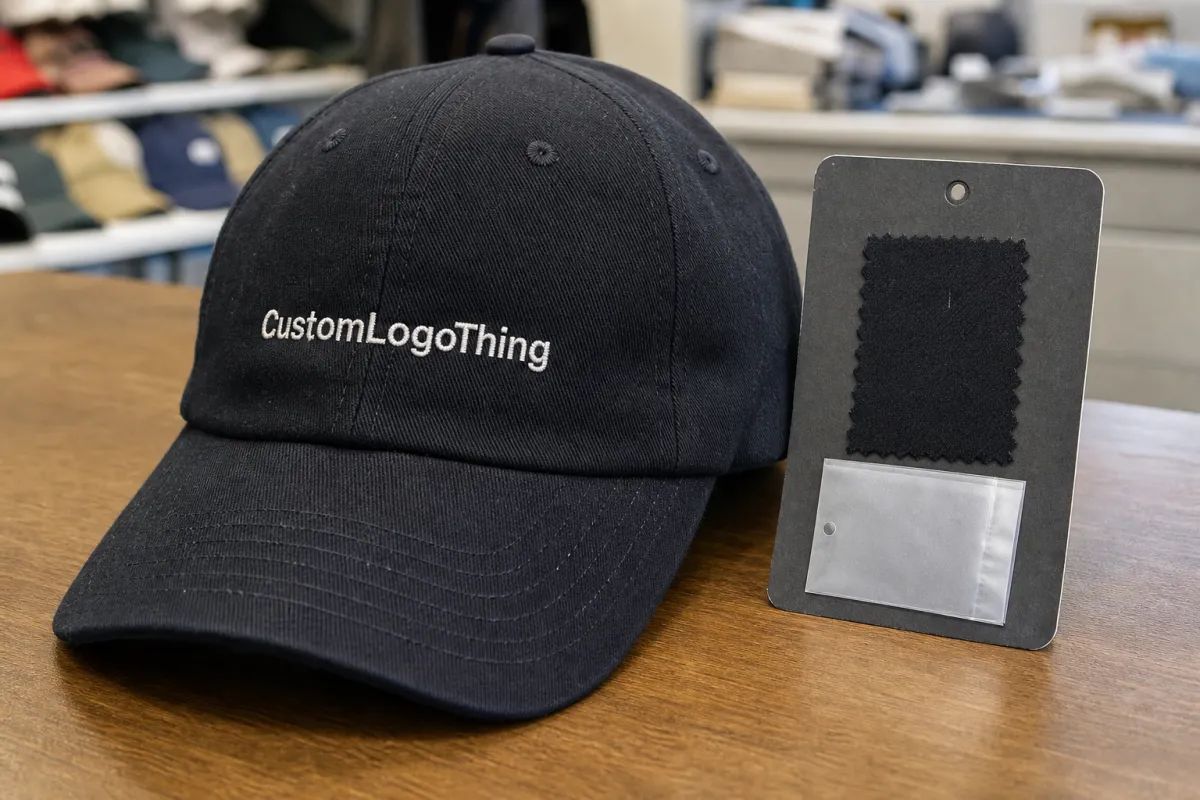
Embroidery has one advantage that still outweighs the rest in many programs: it feels built in. A stitched logo has texture, depth, and a little physical presence, which is why it often looks better on camera and in person than a flat print on a cap that gets folded, tossed into a bag, or worn every day.
A custom Embroidered Baseball Caps bulk order also helps on the planning side. One approved artwork file, one decoration method, and one production run usually mean fewer color surprises and fewer placement issues than piecing together separate small orders. That kind of consistency is especially useful when the cap is part of a broader branded kit alongside shirts, bags, or packaging.
The best use cases are the ones that put the cap into real service:
- Staff uniforms for retail, hospitality, field crews, and service teams.
- Sports programs that need a durable cap for players, coaches, and parents.
- Golf outings and sponsor events where the logo must be readable from a distance.
- Retail merch that needs enough polish to sit beside other branded goods.
- Giveaways where the item should stay wearable long after the event.
For buyers coordinating apparel, packaging, and other branded items, caps often fit into the same sourcing plan as Wholesale Programs. That can reduce duplicated approvals and keep the look aligned across multiple products.
A simple rule of thumb helps here: if the cap is supposed to look intentional up close, embroidery usually wins.
Cap styles, fabrics, and fit choices that affect the final result
Most ordering mistakes start with the blank, not the logo. The crown shape, panel count, closure, and fabric all affect comfort and how the embroidery lands on the front panel. A structured six-panel cap gives the decoration more support and usually delivers the cleanest, most stable result. An unstructured cap feels softer and more casual, but the front panel can shift more, which changes how the logo sits.
Profile matters too. Low-profile caps feel relaxed and modern. Mid-profile and higher crowns give the decorator more room to work, which helps with wider logos, longer names, or badge-style marks that need breathing space. Trucker caps add mesh back panels for airflow, which makes them useful for outdoor work and warm-weather events, but the front still needs enough structure to hold the embroidery cleanly.
Fabric choice changes both appearance and performance. Cotton twill is a common baseline because it accepts embroidery well and has a familiar hand feel. Brushed cotton tends to read a little more premium. Polyester and performance blends usually hold color well and work better for active use or outdoor wear. Mesh-backed constructions improve ventilation, but they should still have a stable front panel if the logo has any detail.
Closure style affects fit planning. Snapbacks and strapbacks are flexible for mixed head sizes and broad distribution. Hook-and-loop closures are practical for fast adjustment in field or event use. Fitted caps can look sharp, but they are less forgiving in a bulk order because the size range has to be planned carefully from the start.
Color deserves more attention than it usually gets. Dark caps make high-contrast embroidery pop. Light caps can feel cleaner or more retail-focused. The same logo can look completely different depending on crown depth, panel shape, and thread contrast, so a paper mockup is never enough by itself.
Logo size, stitch count, and placement specs that control quality
Embroidery quality starts with the artwork. Clean vector files, simplified shapes, and bold letterforms reproduce far better than gradients, thin outlines, or tiny text. If the original logo is too detailed, an embroidery-specific version is usually the smarter path. The goal is not perfect translation of print; the goal is a mark that still reads cleanly once thread and fabric get involved.
Size has a direct effect on appearance and cost. Larger embroidery can look richer and more substantial, but dense fills increase stitch count, production time, and price. Extremely compact artwork can also blur or collapse when the thread tries to carry too much detail. Good decorators explain that tradeoff before production starts instead of after the proof comes back wrong.
Placement matters just as much. Front-center embroidery is the default because it gives the logo the most visibility and the cleanest canvas. Side placement works for secondary marks, names, or event messaging. Back placement can be useful, but seams, closures, and crown shape can limit what fits neatly there. A low crown or a strong center seam may force a simpler design.
Thread color should be chosen for readability, not just brand accuracy. PMS matching can help, but exact thread-to-ink matching is rarely perfect. Contrast usually matters more than precision if the cap needs to be read from across a room, booth, or sales floor. Dark-on-dark embroidery can disappear fast.
"If the logo cannot be read from ten feet away, it is probably too busy for embroidery."
The same design discipline shows up in packaging work: the mark has to read quickly, hold up at scale, and survive production reality. Clean art is easier to digitize, easier to approve, and usually cheaper to run.
Pricing, MOQ, and unit cost drivers for larger cap runs
Bulk cap pricing is driven by a few predictable pieces. The blank cap cost comes first, then embroidery complexity, stitch count, thread count, digitizing, and any extras such as woven labels, hangtags, or polybagging. Rush handling can add more. If a quote leaves out one of those items, the buyer usually finds out later.
MOQ varies by style and supplier. Stock caps with straightforward decoration often start lower, while special colors, custom-built fits, or more complex artwork can push the minimum up. A practical MOQ for many stock programs often lands around 24 to 48 pieces, though detailed art or multiple variations can raise that number. The exact floor should always be style-specific.
Here is a practical way to compare common options for a Custom Embroidered Baseball Caps bulk order:
| Cap option | Typical blank cost | Embroidery impact | Best fit |
|---|---|---|---|
| Structured cotton twill six-panel | $3.75-$6.50 | Usually $2.00-$4.00 for standard front embroidery | Teams, uniforms, golf outings |
| Mesh-backed trucker | $3.25-$5.75 | Usually $1.75-$3.75 depending on stitch count | Events, giveaways, outdoor use |
| Brushed cotton or premium retail cap | $5.50-$9.50 | Usually $2.25-$4.50 for fuller, cleaner logos | Retail merch, premium kits |
Unit cost usually drops as quantity rises, but not in a perfectly straight line. A 144-piece run can price better than a 36-piece order, yet upgrades such as custom labels, special packaging, or a heavier stitch file can push the final number back up. The best quote comparison includes the whole picture:
- Base cap price
- Digitizing or setup fee
- Embroidery cost by stitch count
- Sample or pre-production approval charges
- Freight and delivery terms
- Packaging or labeling add-ons
That same line-by-line habit helps with Custom Packaging Products and other branded components. A quote that looks cheap at first glance can become expensive once the extras are added back in.
Proofing, production steps, and lead time for a smooth order
A clean order usually follows a simple path: artwork, cap selection, digitizing, proof review, approval, production, and shipment. None of those steps is exotic, but skipping one tends to create the kind of problem that shows up late and costs more to fix.
Digitizing is the step that matters most to the final result. It converts the artwork into a stitch file and determines how the machine handles density, direction, pull, and sequence. A rushed digitizing job can distort even a good logo. Once the proof is ready, it should be checked for placement, thread colors, scale, spelling, and any crowding near seams or curves.
Lead time depends on what is already available. If the blank cap is in stock, the artwork is final, and the proof is approved quickly, the order can move in a fairly tight window. If the cap needs to be sourced, the artwork needs cleanup, or the proof goes through revisions, the schedule stretches. For many programs, a straightforward decorated cap order often lands somewhere in the 10 to 20 business day range after approval, while custom blanks or peak-season schedules can take longer. Rush orders are possible, but they usually cost more and leave less room for correction.
For larger shipments that include boxed kits, inserts, or other branded materials, transit planning matters too. The ISTA testing framework is a useful reference for thinking about how goods move through distribution, especially when presentation has to survive handling. For paperboard inserts or wrap components, FSC-certified sourcing can also matter; the FSC outlines certification basics for responsible fiber sourcing.
In practice, the cleanest schedules come from early artwork submission, limited revision cycles, and written approval before the run enters the machine queue. That approach keeps the ship date far more predictable.
Choosing cap specs for teams, events, and retail programs
The right cap spec depends on the job. A giveaway does not need the same finish as a retail cap on a display wall. A staff uniform cap does not need the same styling as a sponsored event cap that will be photographed all day. Matching the construction to the use case keeps the budget under control and the final result more believable.
For teams and staff programs, durability and comfort usually matter more than novelty. Structured twill caps, adjustable closures, and darker colors tend to work well because they hide wear and handle repeated use better. For events, especially outdoor events, breathable mesh backs and lighter-weight fabrics improve comfort while still keeping the branding visible. For retail, the cap often needs a more refined hand feel, tighter stitch control, and packaging that supports the perceived value of the piece.
Presentation changes how the cap is received. A cap shipped in a plain carton feels different from one packed in a branded polybag with a hangtag and a clean insert card. That is where retail packaging and branded packaging decisions start to shape the product itself. If the cap is part of a larger kit, the presentation should be planned at the same time as the cap spec, not after the order is already approved.
These combinations are usually the most practical:
- Giveaways: trucker or basic structured cap, moderate stitch count, cost-efficient closure.
- Staff wear: structured cotton twill or performance blend, strong contrast thread, easy adjustment.
- Retail merch: premium fabric, polished embroidery, cleaner packaging, tighter color control.
- Outdoor events: mesh-backed or lighter-weight cap, breathable fit, readable logo placement.
A logo can be technically correct and still feel off if the cap style does not match the audience. A youth sports team, a hotel front desk, and a boutique retail line do not want the same cap for the same reasons.
If the caps are being bundled with other goods, the order may sit inside a broader sourcing plan supported by Wholesale Programs. That helps keep the look consistent across apparel, packaging, and the final handoff.
What a dependable bulk cap supplier should show you
A dependable supplier makes the order understandable before anything is produced. Clear specs, direct pricing, and realistic timelines matter more than polished mockups. The stronger vendors show the blank style, the embroidery method, the proof stage, and the likely delivery window without hiding the details that actually affect the final cost.
Stitch consistency and color control deserve close attention. A good run should look like one program, not a set of almost-matching pieces. Thread tension, logo placement, and crown alignment should stay stable across the order, especially if the caps will be seen together in a store, on a team, or at an event.
Support matters too. If the artwork needs cleanup, a good supplier will say what should be simplified and why. If a cap style is not a good match for the logo, the right answer is often to change the blank or reduce the detail rather than force the art into a shape it does not want. That saves time and usually improves the finished cap.
Buyers usually want a short list of proof points:
- Written spec sheet with cap style, fabric, and closure
- Transparent quote with setup, decoration, and freight separated
- Proof approval before production starts
- Clear communication on stock levels and lead time
- Final inspection standards and shipment tracking
The same discipline applies to product packaging, custom printed boxes, and other branded work. If one part of the process is vague, confusion usually shows up elsewhere too.
If basic ordering questions are still open, the FAQ page should settle the usual points before the quote is finalized.
Next steps to request a quote and lock the schedule
For a Custom Embroidered Baseball Caps bulk order, the brief matters as much as the price. The cleanest quote requests include the logo file, preferred cap style, quantity, color target, budget range, and in-hand date. If the artwork is still rough, say so early so the decoration team can check whether it needs cleanup before digitizing.
It also helps to ask for two quote levels rather than one. A standard version and a better-finish version give a clearer comparison than a single low number. The second option can show what happens if the cap uses a heavier fabric, denser embroidery, or more polished packaging.
Before production starts, confirm the proof in writing. Placement, thread colors, cap color, packaging, and any label or insert details should be fixed before the run enters the schedule. Once the order is approved, changes usually cost more and can affect the ship date.
The orders that go smoothly are usually the ones with complete artwork, realistic timing, and a spec sheet that leaves less room for guesswork. That is usually enough to get a result that looks right on heads, on camera, and on a retail shelf.
What is the usual minimum for custom embroidered baseball caps in bulk?
Minimums vary by cap style, blank availability, and stitch complexity. Stock caps often allow lower quantities than custom-built versions, and detailed logos or multiple colorways can raise the minimum. Ask for MOQ with the quote so you can compare options before committing.
How much does a bulk embroidered baseball cap order usually cost?
Price depends on the cap blank, embroidery size, stitch count, digitizing, and any packaging or labeling upgrades. Larger quantities usually lower the unit price, but rush timelines and detailed artwork can push it up. A useful quote separates the base cap, decoration, and extra fees.
What artwork works best for embroidered baseball caps bulk orders?
Clean vector artwork is best because it digitizes more accurately and keeps edges sharp. Simple logos, bold text, and limited fine detail usually embroider better than gradients, shadows, or very thin lines. If needed, ask for an embroidery-specific version of the logo.
How long does a custom embroidered cap bulk order take?
Timing depends on proof approval, digitizing, blank availability, and order size. Straightforward jobs move faster when the art is final and the cap style is in stock, while revisions, shortages, or custom blanks extend lead time. Share the deadline early so the schedule can be checked before approval.
Can I mix cap colors or styles in one embroidered bulk order?
Often yes, but mixing styles or colors can affect MOQ, pricing, and production planning. Mixed orders work best when the embroidery stays the same and only the blank changes. Confirm availability within the same production window before you commit.

