The corporate gifting Cuffed Knit Beanies material sample guide starts with a simple rule: a mockup can suggest quality, but only a sample confirms it. Knit beanies are sensitive to small changes in yarn, gauge, cuff structure, and finishing. A hat that looks clean on screen can feel scratchy, sag at the cuff, or make a logo look cramped once it is stretched on a head.
That matters in corporate gifting because recipients judge the item quickly and remember it as part of the brand experience. If the beanie feels thin or awkward in hand, the gift loses value before the packaging even comes off.
A sample should answer one question: does this beanie feel worth keeping?
Sampling is not ceremonial. It reduces rework, exposes limits early, and keeps the final order aligned with what was actually approved.
What the Corporate Gifting Cuffed Knit Beanies Material Sample Reveals
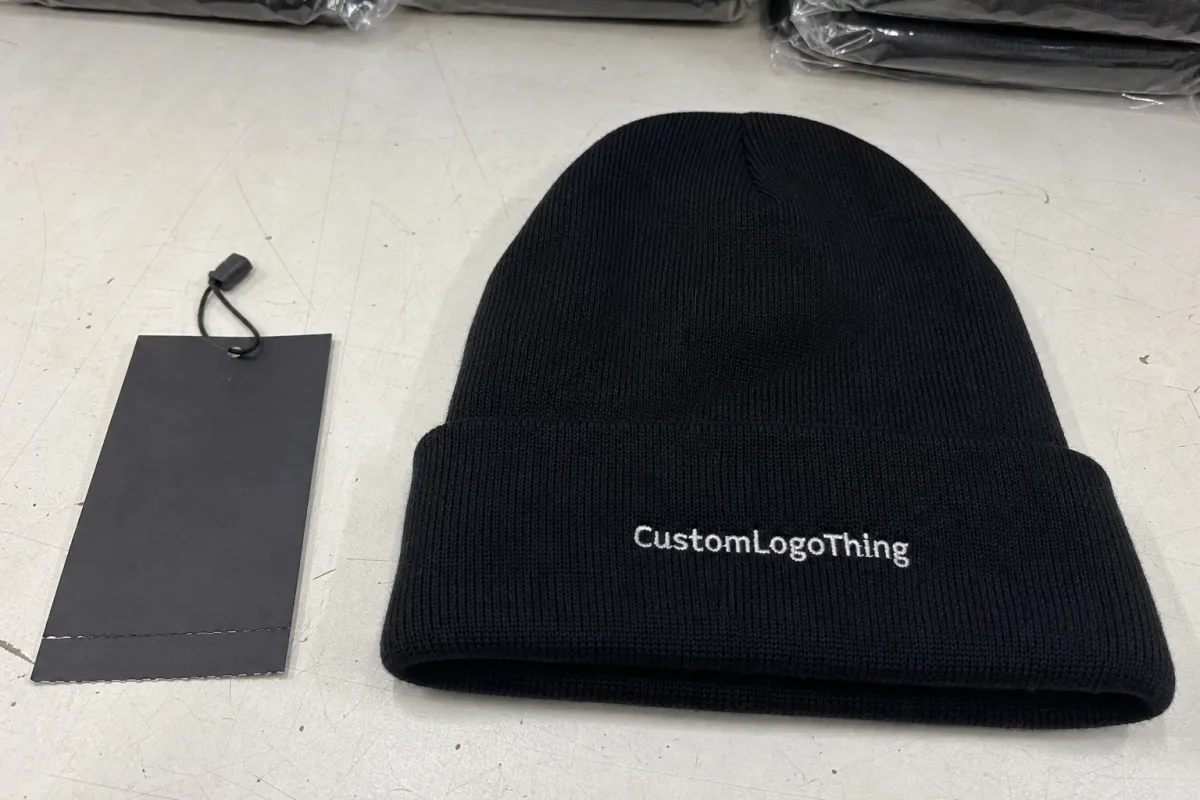
The most useful sample shows how the beanie behaves off the hanger and on a head. A cuffed knit style can look substantial in a flat lay, then relax into something soft and droopy after a few minutes of wear. In gifting, that difference affects perceived value.
Photos do not show everything that matters. A sample reveals whether the cuff holds shape, whether the ribbing feels tight or loose, whether the crown has thin spots, and whether the logo area still looks balanced once the knit stretches. It also shows how the beanie reads from normal viewing distance, which is usually the way recipients experience it.
In practical terms, the sample answers four questions. Does it keep its shape? Does it recover after stretching? Does the hand feel match the budget? And does the decoration method work with the knit instead of against it? If the answer is no to any of those, bulk production will magnify the problem.
- Hand feel: soft, dry, itchy, dense, or airy
- Stretch recovery: does it snap back or stay baggy?
- Cuff shape: stable, folded cleanly, or weak at the seam
- Logo area: clear, balanced, and readable from normal distance
- Finish quality: loose yarn ends, uneven stitching, or smooth trim
The softest sample is not always the best one. A slightly firmer knit often holds the cuff better and looks more premium once branded. That is one of the most common surprises in approval work: the most comfortable touch test does not always produce the strongest gift item.
How Material Sampling Works for Knit Beanies
Sampling usually happens in stages, and each stage answers a different question. A yarn swatch shows color and fiber feel. A knit panel shows gauge and stitch definition. A blank beanie shows fit and cuff behavior. A decorated sample shows how the logo method behaves on the actual knit. If a supplier sends only one version and calls it the sample, that may be convenient, but it leaves too many variables open.
| Sample type | Typical cost range | What it tells you | Best use |
|---|---|---|---|
| Yarn swatch | $10-$25 | Color, softness, fiber character | Early material screening |
| Knit panel | $15-$35 | Gauge, stretch, stitch clarity | Checking fabric structure |
| Blank beanie | $20-$45 | Fit, cuff depth, crown shape | Shape and wear testing |
| Decorated pre-production sample | $35-$90+ | Logo placement, embroidery density, finish | Final approval before bulk |
Sampling works best when it is treated like a test. Review the sample in daylight. Stretch the cuff and let it recover. Wear it for a few minutes. Fold it. View it at arm’s length. Then compare the result with the written spec, not with whoever is most enthusiastic in the room.
Ask for the details that determine whether the sample is representative: fiber content, knit gauge, shrink expectation, wash behavior, and decoration method. If the sample was made in a different yarn or gauge than the production run, you are reviewing a cousin, not the final product.
Packaging should be reviewed too if the beanies are part of a gift kit. A sample may arrive in kraft paper with a FSC certified insert, or inside a corrugated cardboard mailer built to survive transit better than a thin polybag. If sustainability is part of the brief, ask about recycled materials, post-consumer waste content, and whether any outer wrap can be made from biodegradable packaging. For shipping durability, the thinking behind ISTA testing is useful even for soft goods. For paper inserts and cartons, FSC certification is a sensible checkpoint.
Material, Fit, and Decoration Factors That Change the Sample
Material choice changes the sample more than many buyers expect. Acrylic is common because it is cost-effective, consistent, and easy to knit at scale. Recycled acrylic usually gives a better sustainability story without pushing the budget too far. Wool blends feel warmer and more premium, but they cost more and can be less forgiving if the hand feel is too dry. Cotton blends are softer in a different way, though they generally insulate less.
The better question is which material fits the budget, climate, and gift experience. For a broad employee giveaway, recycled acrylic often wins because it balances cost and consistency. For a smaller executive kit, a wool blend may justify the higher price because warmth and perceived value matter more.
Fit is where buyers often focus on logo placement and miss the silhouette. Rib depth affects how secure the cuff feels. Cuff width affects how much branding room exists. Crown length changes whether the beanie reads as short, slouchy, or cleanly fitted. Even a few millimeters can change the profile once worn.
- Rib depth: deeper ribbing usually improves structure
- Cuff width: affects logo space and fold stability
- Crown length: changes silhouette and perceived value
- Knit gauge: tighter gauge usually looks cleaner, looser gauge can feel softer but distort more easily
Decoration changes the sample too. Dense embroidery can stiffen the front panel. A patch adds weight and can shift the cuff. Heat transfer may look crisp, but on knit it can feel separate from the texture. Placement matters as much as method, especially near the cuff seam, where tension is already higher.
Color is another point where expectations drift. Heathered yarns, melange blends, and marled effects can look richer than flat solids, but they also make consistency harder to judge. Dye lot shift is real. A first sample may look correct while the bulk run lands one shade warmer or cooler. That is why the corporate gifting Cuffed Knit Beanies material sample guide works best when the sample is compared against brand references and not just a screen.
Process and Timeline: From Sample Request to Sign-Off
Good sample approval runs on documentation. Start with one clear spec sheet that includes color target, logo method, quantity, budget range, delivery date, and packaging expectations. If the beanie needs to fit inside a larger gift kit, say so at the start.
Step 1: send the spec once, clearly. Do not scatter instructions across emails, screenshots, and meeting notes.
Step 2: review the sample against the brief and return one consolidated round of edits. Fragmented feedback slows the process and increases the chance of contradictory instructions.
Step 3: approve a final pre-production sample, often called a golden sample, before bulk production starts. That piece becomes the reference for the run.
Timeline depends on complexity. A simple yarn swatch can move quickly. A decorated sample takes longer because knitting, finishing, embroidery setup, review, and shipping all stack together. If the sample crosses regions, transit adds more time. A realistic approval cycle is usually long enough to catch mistakes and short enough to keep the project moving.
If the order is tied to a launch date or holiday campaign, leave room for one revision round. A few extra days during sampling are far cheaper than rushing a production run that misses the event window.
Cost, Pricing, MOQ, and Quote Expectations for Sample Orders
Sample pricing depends on yarn choice, knit complexity, decoration setup, rush handling, and shipping speed. A plain blank sample is cheaper than a fully decorated pre-production piece because the latter includes more labor and setup. If a quote seems unusually low, check whether it excludes embroidery, digitizing, revisions, or freight. In this category, missing lines usually reappear later.
MOQ is tied to what drives setup cost. A supplier may be willing to make one or two samples, but the unit price becomes efficient only once the production order reaches a threshold that makes the knitting setup worthwhile. For Cuffed Knit Beanies, that threshold is often linked to machine setup and decoration run size. Small volume is possible; it just rarely looks cheap.
| Option | Typical sample fee | What affects price | Good for |
|---|---|---|---|
| Blank material sample | Low | Yarn and knitting only | Color and hand feel checks |
| Decorated sample | Medium | Embroidery, patch, or label setup | Logo review and placement approval |
| Pre-production gold sample | Medium to high | Full build, finish, and shipping | Final sign-off before bulk order |
| Rush sample | Highest | Priority handling and expedited freight | Tight launch deadlines |
Request a Quote that shows unit cost at several quantities, sample fee, decoration fee, setup or digitizing fee, shipping, and any credit policy toward bulk production. Get it in writing.
Do not approve the cheapest sample if it hides risk. A slightly higher sample fee can save far more in avoided rework or rejected inventory. That is especially true for beanies, where a small problem in yarn, size, or decoration becomes obvious once the item is worn.
If the program includes packaging, ask whether the supplier can supply FSC certified paper, kraft paper wrap, or recycled materials for inserts. For shipments that may be handled roughly, a simple corrugated cardboard shipper is often more useful than a decorative carton. The right packing choice protects the goods and supports the brand without adding fragile complexity.
Common Mistakes That Waste Time and Money
The first mistake is treating a photo as proof. A render cannot tell you whether the yarn scratches, the cuff stays up, or the logo feels too stiff. A photo sells an idea. A sample confirms reality.
The second mistake is skipping stretch and recovery checks. Pull the cuff, hold it, then let go. Watch what happens. If the beanie relaxes into a limp shape, that tells you more than any sales pitch. The same applies to crown recovery.
The third mistake is approving logo placement on a blank sample and assuming the decorated piece will behave the same way. Embroidery density changes hand feel. Patch backing changes stiffness. A design that sits perfectly on a smooth panel can feel crowded once it meets the seam or ribbed cuff.
- Do not ignore yarn source changes between sample and bulk run
- Do not assume knit gauge will stay identical without written confirmation
- Do not skip a final mark-up after consolidated review
- Do not approve without measuring cuff height, logo width, and crown depth
Sample drift causes more confusion than most teams admit. One version gets approved verbally, another gets marked up in email, and a third gets discussed on a call. Avoid that by keeping notes, photos, and measurements in one place.
Expert Tips and Next Steps for a Clean Approval
Compare at least two material options side by side if budget and timeline allow it. A recycled acrylic beanie beside a wool blend makes the trade-offs visible immediately: softness, shape retention, warmth, and perceived value. The point is not to collect samples. It is to make the decision easier to defend.
Test the sample like a recipient would. Wear it. Fold it. Put it in a coat pocket. If possible, wash it once and see whether it pills, stretches, or shifts shape. That is closer to the real lifecycle of a gift item than a desk inspection is.
A simple scorecard helps buyers compare samples without getting stuck in subjective debate. Rate softness, warmth, logo clarity, fit, and perceived value on a 1-to-5 scale. Add packaging if the beanie will ship as part of a kit. A written scorecard turns a vague conversation into a usable record.
- Keep a backup color or finish ready in case the preferred option becomes expensive or delayed.
- Attach notes, photos, and measurements to the purchase order before bulk production starts.
- Ask the supplier to confirm whether the final run will match the sample yarn, gauge, and decoration method.
- Use the corporate gifting cuffed knit beanies material sample guide as the reference point so the team is judging the same object.
If the beanie is part of a larger gifting system, align it with the rest of the package. A premium knit hat paired with flimsy wrap feels mismatched. A carefully approved beanie inside a corrugated shipper, with FSC certified inserts and sensible recycled materials, feels deliberate. That consistency matters more than many programs acknowledge.
The safest choice is usually the sample that matches the actual job, not the one that flatters the mockup. A good approval process is not about perfection. It is about removing avoidable risk before production turns small mistakes into inventory.
What should I check in a cuffed knit beanie sample for corporate gifting?
Check softness, stretch recovery, cuff structure, and how the fabric sits after a few minutes of wear. Then inspect decoration placement, logo legibility, and whether the beanie still feels premium from a normal viewing distance. Compare it to your brand color references and recipient use case, not just to a flat mockup.
How long does a knit beanie material sample usually take?
Simple yarn or knit swatches can move quickly, while decorated pre-production samples usually take longer because setup and finishing are involved. Shipping can matter as much as production if the sample crosses regions or passes through several approvers. Any design change midstream extends the schedule, so send complete specs before requesting the sample.
Does the sample fee get credited toward the bulk order?
Sometimes, but not always; it depends on the supplier's policy and how custom the sample is. Decorated or fully built samples are more likely to carry a fee because labor, setup, and materials are already committed. Ask for the credit policy in writing inside the quote so there is no disagreement later.
Which material is best for a corporate gift beanie sample?
Acrylic and recycled acrylic are common because they balance warmth, cost, and consistency. Wool blends feel more premium but cost more and may not suit every comfort preference. The best choice is the one that fits your budget, climate, and brand positioning.
How many beanie samples should I request before ordering?
Most buyers should request at least two options if the budget and timeline allow it, especially when choosing between materials or decoration styles. If the order is large or highly visible, compare a backup color or finish so you are not locked into one path. More than three samples can slow decision-making, so keep the test set focused.