Beer Unstructured Dad Hats Bulk Order Planning Checklist
Beer unstructured dad hats Bulk Order Planning goes smoother when the spec is fixed before the quote request lands. That sounds basic, but it is usually the point where projects either move quickly or stall in circles over crown height, embroidery size, or what “natural” actually means for a washed cotton finish. Breweries like the style because it sits between retail merch and practical staff wear: relaxed, easy to pack, and broad enough to work across taprooms, release events, distributor gifts, and seasonal drops without changing the core silhouette.
The cap itself is uncomplicated. The buying decision is not.
Why Breweries Pick Unstructured Dad Hats First
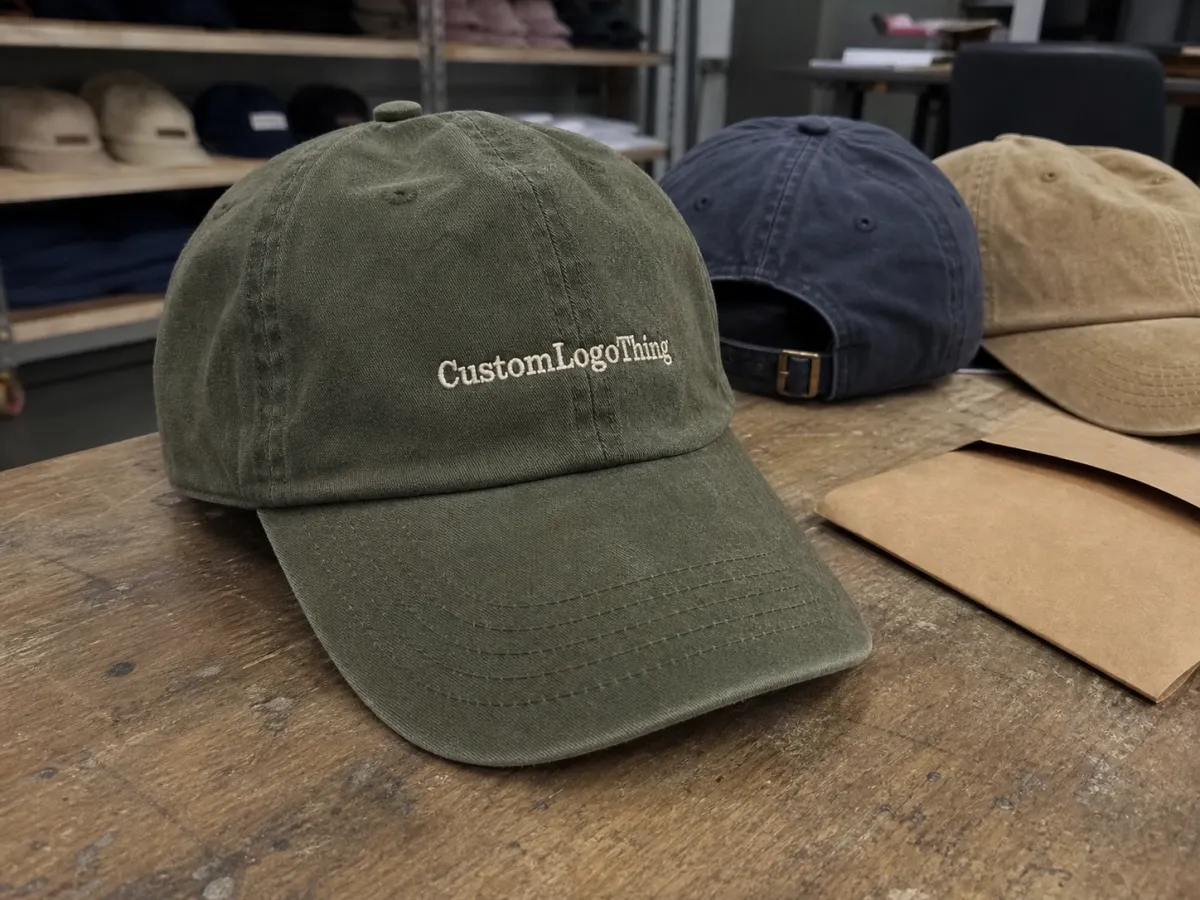
An unstructured dad hat has a low-profile crown, a soft front panel, and a casual curve through the visor. That combination gives it a worn-in look without turning it into a throwaway promo item. For beer brands, that matters more than it would in a category driven by fashion trends. The cap has to feel approachable on a merchandising wall, but it also has to photograph well beside cans, glassware, and tap handles. Soft structure does that better than a stiff five-panel or a trend-led silhouette that dates quickly.
There is also a practical reason the style keeps showing up in brewery orders: it fits a wide range of heads. Adjustable closures help, but the lower crown and soft front panel make the hat easier to wear straight out of the box. That lowers the number of returns, complaints, and dead inventory sitting in a back room because the fit was too narrow or the style skewed too youth-culture-heavy. A cap that works on staff, regular customers, and visiting reps is easier to justify in bulk.
From a merchandising standpoint, the style supports restraint. A small embroidered logo or woven patch can look premium on a relaxed cap. The same mark on a rigid cap can feel forced. That difference is subtle, but it changes how the hat lands with buyers. A brewery that wants a clean retail item generally gets better results with less surface coverage, not more. Large graphics are possible, but they can crowd the crown and make the cap look busy.
The economics are usually steadier too. Trend-dependent styles can spike and fade fast, which makes forecasting messy. Unstructured Dad Hats are slower and less glamorous, but they are safer to inventory. If a brewery sells a cap for $24 to $32 and lands the wholesale cost in roughly the $8 to $12 range before freight and packaging, there is room to work. Add more setup, more decoration, or more elaborate labeling and the margin tightens quickly. That is where planning matters.
- Taproom staff: comfortable enough for long shifts and frequent reorders.
- Seasonal merch: useful for releases tied to a beer, can art, or local event.
- Festival stock: packs flat and sells well next to shirts and glassware.
- Distributor gifts: polished without looking overly corporate.
That mix of utility and retail appeal is why beer unstructured dad hats Bulk Order Planning usually starts with the logo and the finish, not with the cap silhouette. The silhouette is already doing part of the work.
Fit, Fabric, and Closure Details That Change the Order
Once the style is chosen, the next decisions are less obvious and more expensive to change later. Crown height, fabric hand, and closure type all affect how the hat wears and how it reads on a shelf. A low-profile crown feels relaxed and familiar. A mid-profile crown can add more visual presence, but it often loses some of the easy, everyday look that makes dad hats sell.
Fabric is one of the first choices that should be settled. Cotton twill is the most common because it takes embroidery cleanly and has a predictable surface. Washed cotton softens the look and works well for breweries that lean rustic, heritage, or outdoorsy. Brushed chino sits in the middle: smoother than washed cotton, a bit more refined than standard twill. If the brand identity is earthy and casual, a washed finish usually fits. If the brand leans minimal, darker and tighter-weave fabrics often look more deliberate.
Closure style changes both cost and perceived value. Self-fabric straps with brass or antique-gold hardware usually feel more retail-ready. Fabric-and-buckle closures are durable and adjustable, though they can raise the price slightly. Plastic slide closures are practical and quick, which makes them useful for staff programs or fast-turn event stock. Hook-and-loop works, but it often reads more promotional than retail. That is not a flaw if the hats are meant for giveaways; it is a drawback if the hats need to sit next to premium merch.
Color strategy deserves more attention than it usually gets. Earth tones, washed navy, charcoal, black, olive, tan, and muted green tend to pair well with beer branding because they echo the category without turning the hat into a costume piece. Bright colors have a place, especially for releases tied to a can design or a festival, but they narrow the buyer base. For bulk planning, the safest colors are usually the ones that could survive three seasons and still look intentional.
There is a small production detail worth checking early: crown and brim proportions vary by supplier. Two hats that look similar in a mockup can wear very differently in hand. One may sit softer in the front; another may stand a little taller through the side panels. Ask for actual spec measurements if the hat is being reordered later. A half-inch in crown height is enough to make a repeat run feel off even when the decoration is identical.
Pricing, MOQ, and How Bulk Order Math Actually Works
Unit price in this category usually comes from four things: the blank cap, the decoration method, any packaging requirement, and freight. That sounds tidy on paper. In practice, each of those items has a few hidden variables. The base hat may be inexpensive, but if the decoration is complex or the shipment has to be split, the landed cost can move far enough to change the approval decision.
Minimum order quantity, or MOQ, varies by supplier and by decoration type. A simple embroidery run may start around 48 to 100 units. Woven patches, custom labels, or specialty closures often push the minimum higher. Some suppliers count MOQ by total order; others count by colorway or by decoration design. That distinction matters. A buyer who asks for 100 hats in three colors may be dealing with three separate production runs, not one shared batch. Beer unstructured dad hats bulk order planning goes faster when that is clarified up front.
Bulk pricing usually improves in tiers. A 100-piece order might sit in one bracket, while 250 or 500 units can reduce the per-hat cost enough to justify a larger buy. That does not mean bigger is always better. It means the buyer should compare breakpoints, not just one quote. If a brewery expects to sell through the hats over a season, the math often favors a larger run. If the hats are tied to a one-week event, a smaller order may be smarter even if the unit price is slightly higher.
| Decoration Option | Typical MOQ | Typical Added Cost per Unit | Best Fit |
|---|---|---|---|
| Flat embroidery | 48-100+ | $0.80-$2.50 | Simple logos, staff wear, cleaner retail look |
| 3D embroidery | 100+ | $1.50-$3.50 | Bold marks with enough open space around them |
| Woven patch | 100-144+ | $1.25-$3.75 | Detailed artwork, heritage branding, vintage feel |
| Woven label | 144+ | $0.35-$0.90 | Quiet branding, premium minimal finish |
| Blank stock | Low to moderate | Lowest | Fast promos or later decoration |
Freight can alter the total more than buyers expect. A clean unit price loses its appeal if the order requires rush shipping, pallet delivery, or a split between warehouse and taproom. Packaging also matters. Individual polybags, hangtags, and carton labeling all add labor and material cost. That cost is real, even when the per-unit increase looks small in isolation.
For teams buying across multiple product categories, the same rule applies: a better quote comes from a tighter spec. A single line item may look cheaper than a fully described program, but it often hides revisions, setup, or shipping assumptions that surface later.
Artwork, Embroidery, and Labeling That Survive Production
Good artwork files save days. Vector logos with clean outlines are the easiest starting point because they scale predictably for embroidery and patch production. Raster files can still work if they are large and simple, but the more detail the logo has, the more likely the production team will need to simplify it. Small text, thin lines, and stacked graphic elements are the first things to fail when stitched onto a soft front panel.
The decoration method should follow the artwork, not the other way around. Flat embroidery works best for straightforward logos, short brewery names, or minimal marks. Three-dimensional embroidery can create strong shelf presence, but it is not forgiving. If the design is tight or the letters are thin, 3D stitching can compress the shape. Woven patches are the better choice when the logo has fine detail, gradients, or multiple elements that would blur in thread. Woven labels are quieter and often feel more premium than they sound, especially on neutral caps with restrained branding.
Placement deserves as much attention as the logo itself. Front-center is the default, but it is not the only option. Offset marks, side-panel hits, and back-strap details all change how the hat reads. A front logo can make the cap feel retail-forward. A small side mark can make it feel insider and understated. Moving the decoration later in the process usually means new setup, new proofing, and more time. That is a bad trade if the event date is fixed.
Brand colors need confirmation early. If exact matching matters, include Pantone references or a clear color note with the artwork. “Dark green” is not a specification. Neither is “cream” or “navy.” Different suppliers interpret those words differently, and small shifts show up fast on a hat where the decoration area is only a few inches wide.
There is also a labeling layer that affects perceived quality. Inside labels, seam tags, custom hangtags, or a retail barcode can turn the cap from generic merchandise into an item that feels planned. If the project includes printed inserts or hangtags, ask what paper stock is used and whether the supplier can source recycled or FSC-certified options. The point is not to decorate for its own sake. It is to make the order look intentional when it reaches the end customer.
The cleanest proofs answer three questions immediately: where the logo sits, how large it is, and what detail level the chosen decoration can actually hold.
Production Timeline and Quality-Control Checks
The normal production path is straightforward: quote review, artwork proof, sample or pre-production approval if needed, decoration, inspection, packing, and shipment booking. The trouble starts when one of those steps is assumed instead of confirmed. A buyer may think the artwork is final while the supplier is still waiting on a color choice. Or the supplier may think the delivery address is finalized when the brewery has not yet decided whether the caps are going to a warehouse or a taproom.
Lead time depends on the order, but a practical window for many custom hat programs is about 12 to 20 business days after proof approval. Simple embroidery can run faster. Orders with custom labeling, multiple decoration locations, or color matching usually take longer. Peak release periods compress those timelines further. Festival season, holiday merch, and large brand campaigns all eat into factory capacity. If the hats have to be in hand for a launch, the schedule should be built backward from the actual use date, not from the quote date.
Quality control on hats is easier to miss than it should be. The major checks are predictable: color consistency, stitch clarity, decoration placement, crown symmetry, and the condition of the visor. A soft cap can look great in a mockup and still arrive with one side sitting higher than the other if the sewing is uneven. Thread tension matters too. Too loose and the embroidery looks fuzzy. Too tight and the front panel puckers.
Buyers should also ask how the supplier handles sample approval or photo proofing. A photo of one decorated unit is not the same as a full pre-production sample, but it still catches a surprising number of errors before the run starts. For smaller brewery programs, that review step can prevent a very expensive mistake. It is slower by a day or two, but it can save an entire batch from being written off as “close enough.”
Packaging needs the same discipline. If the hats are going to retail, the cartons should be counted and labeled in a way that makes receiving simple. If they are headed to multiple locations, the box plan should spell out which cartons go where. Small details like that reduce the chance that staff opens the wrong case before a launch and mixes event stock with replenishment stock.
Supplier Evaluation for Clean Reorders
The best test of a supplier is not the first order. It is the second one.
Repeat business exposes whether the supplier kept the spec clean. Did the crown shape stay the same? Did the hat color match the previous run closely enough to sit on the same shelf? Was the logo placed in the same position, or did it drift by a few millimeters and make the whole stack look inconsistent? A supplier that treats those details casually can turn a good merchandise program into a patchwork of “almost the same” hats.
Communication style matters as much as price. A useful supplier answers direct questions in plain language: what is the MOQ, how many revisions are included, how long proofing takes, what the reorder process looks like, and whether the minimum changes for multiple colors. If the answers are vague, the project will probably be vague later. That is not ideal for breweries working around release calendars and production deadlines of their own.
Reorder handling should be boring in the best way. The spec sheet should already include the cap color, decoration method, embroidery size, label placement, carton count, and ship-to details. Good suppliers keep enough information on file so the next run does not require a fresh round of guesswork. That is especially useful when the same hat has to be reordered in small increments as sales move through the season.
It also helps to know whether the supplier can separate stock by purpose. Taproom inventory, event stock, and distributor gifts do not always travel to the same place or in the same quantities. A shop that can label cartons clearly and pack by destination saves staff time and reduces receiving errors. That is not an extra feature. It is part of a clean merchandising operation.
What to Send for a Fast Quote
If speed matters, treat the quote request like a production brief. The cleaner the request, the fewer assumptions the supplier has to make. For beer unstructured dad hats bulk order planning, the minimum useful details are quantity, cap color, decoration method, artwork file, and delivery timing.
Quantity should include any color split. If 150 hats are needed across three colorways, say so directly. If the run is for staff wear, retail resale, or a giveaway, include that too. Those use cases change the expectations around finish and budget. A staff cap can be simpler. A retail cap needs to hold up better visually. A giveaway can tolerate a less expensive closure or a simpler label.
Shipping details should not be left as an afterthought. Give the full delivery address, target in-hand date, carton labeling needs, and whether pallet delivery is required. If the hats are headed to a warehouse, a taproom, or a temporary event site, that changes freight planning. A quote without ship-to detail is only half a quote.
- Quantity: total units and any color split.
- Decoration: flat embroidery, 3D embroidery, patch, label, or blank.
- Artwork: vector file, brand colors, and placement preference.
- Logistics: ship-to address, target date, pallet needs, carton format.
The most common delay is not the art file. It is the missing shipping timeline. Once that detail is visible, the order can be scheduled honestly. Without it, everyone is guessing.
Common Mistakes That Cost Time and Margin
Most mistakes in this category are avoidable. The first is ordering before the artwork is settled. A “rough logo” can sometimes be cleaned up in production, but it usually adds proof rounds and slows the whole schedule. The second is assuming one hat spec fits every use case. A cap that works for staff may not be ideal for retail if the closure, finish, or decoration style feels too functional.
The third mistake is underestimating freight. A cap quote can look healthy until split shipping, rush charges, or carton rework are added. The fourth is ignoring color drift between runs. Even a small shift in washed fabric tone can make a reorder look inconsistent if the first batch sold well and the next one was sourced from a different fabric lot. That is why repeat orders should always reference the previous approved sample, not just the description.
Another issue is over-decorating a soft cap. A dad hat can take embroidery well, but the front panel still has limits. Large marks, dense stitch counts, and crowded layouts increase the chance of puckering. Clean, compact art almost always looks better here. More coverage does not automatically mean more value.
Finally, don’t let the cap details outrun the actual merch strategy. If the hats are being bought because they fill a launch bundle, then the unit economics should support that. If they are meant as an ongoing retail item, the build needs enough consistency to reorder without surprises. Those are different programs, and they should be treated that way.
FAQ
What is a typical MOQ for beer unstructured dad hats?
MOQ depends more on decoration method than on the hat style itself. Flat embroidery often starts lower than patch work or custom labeling. Some suppliers set the minimum by design, others by colorway, and a few by total units across the whole run. Ask which rule applies before approving the order.
How long does production usually take?
Many straightforward runs move in about 12 to 20 business days after proof approval. Complex decoration, custom packaging, and busy seasonal schedules can extend that window. If the caps need to arrive for a release or event, build in a buffer.
Can multiple colors be mixed in one order?
Yes, but the pricing structure may change if each color is treated as its own production line. The most efficient mixed-color order keeps the base spec the same and changes only the shell color. Confirm whether the MOQ applies to each color or to the full order.
What affects unit cost the most?
Quantity, decoration method, thread count, number of thread colors, packaging, and freight are the main drivers. A simple embroidered cap will usually land lower than a patch program with custom labels and individual packing. Shipping distance and carton handling can move the final number more than expected.
Which artwork files work best?
Vector artwork is the safest option because it scales cleanly for embroidery and patch production. If the logo uses exact brand colors, include Pantone references or clear color notes. Small details should be checked before production starts so the logo does not lose legibility on the soft front panel.
What should be confirmed before approving a proof?
Logo placement, decoration size, color references, closure type, label details, and carton or ship-to instructions should all be locked before the proof is signed off. Those are the items that create the most expensive changes if they are adjusted later.
Beer unstructured dad hats bulk order planning gets much easier once the order is treated as a production file instead of a casual merch request. The cap style is forgiving, but the process is not. Clear quantity, clean artwork, realistic lead time, and a full shipping plan are what keep the final order on budget and on schedule.

