Buyer Fit Snapshot
| Best fit | Buy Branded Poly Mailers for Ecommerce projects where brand print, material claims, artwork control, MOQ, and repeat-order consistency need to be specified before quoting. |
|---|---|
| Quote inputs | Share finished size, material target, print colors, finish, packing count, annual reorder estimate, ship-to region, and any compliance wording. |
| Proofing check | Approve dieline scale, logo placement, barcode or warning zones, color tolerance, closure strength, and carton packing before bulk production. |
| Main risk | Vague material claims, crowded artwork, missing packing details, or unclear freight terms can make a low unit price expensive after revisions. |
Fast answer: Buy Branded Poly Mailers for Ecommerce: Specs and Pricing should be specified like a repeatable production item. The safest quote records material, print method, finish, artwork proof, packing count, and reorder notes in one written spec.
Production checks before approval
Compare the actual filled-product size with the drawing, then confirm tolerance on folds, seals, hang holes, label areas, and retail display edges. Reserve space for logos, QR codes, warning copy, and material claims before decorative graphics fill the panel.
Quote comparison points
Review material grade, print process, finish, sampling route, tooling charges, carton quantity, and freight assumptions side by side. A quote is only useful when the supplier can repeat the same color, closure quality, and packing count on the next order.
Buy branded Poly Mailers for Ecommerce before you treat packaging like an afterthought. The outer bag is often the first physical brand touchpoint a customer sees, and that matters more than people like to admit. A plain shipping sleeve gets the order out the door. A printed mailer makes the shipment feel intentional, easier to spot, and closer to the price the customer already paid.
Anyone trying to buy branded Poly Mailers for Ecommerce needs to keep three things in the same frame: appearance, performance, and cost control. A mailer that looks sharp but splits in transit is a bad deal. A mailer that survives the trip but drives postage up because it is oversized is not much better. The smart choice usually lives in the middle, where the size fits the product, the print supports the brand, and the landed cost still leaves margin on the table.
For ecommerce teams, the outer package does more than hold product. It moves through fulfillment, carrier networks, doorsteps, and returns. That makes it one of the few packaging surfaces that touches almost every order. If you want to buy Branded Poly Mailers for ecommerce without creating extra work later, start with the item being shipped, not the artwork.
One thing buyers miss all the time: packaging is not only a marketing piece. It is an operations tool. The right mailer size can speed pack-out, cut waste, and reduce crushed corners, scuffed goods, or avoidable re-ships. Those savings are less flashy than a glossy print, but they usually matter more. Honestly, the spreadsheet tends to win this argument.
A branded mailer is not decoration. It is a low-cost surface that carries your brand through the last mile, and that last mile is where a lot of opinions get formed.
How do you buy branded poly mailers for ecommerce without wasting money?
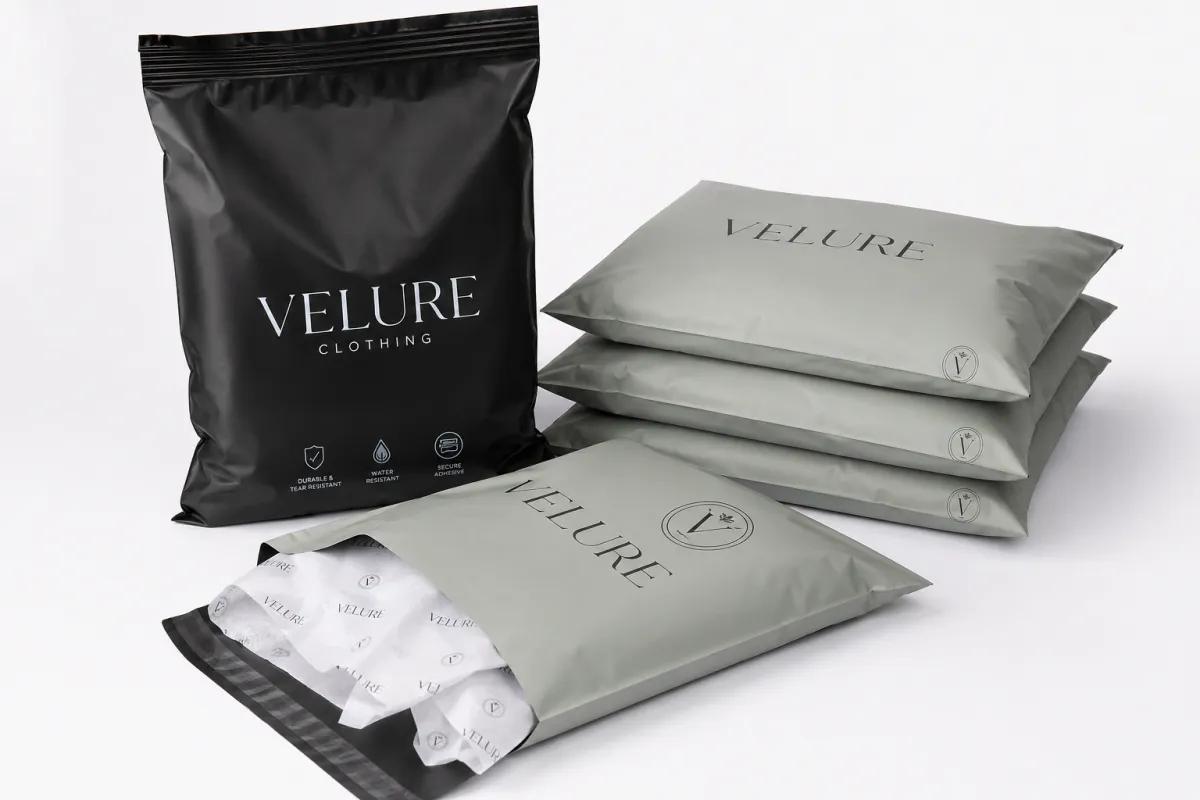
Start with packed dimensions, not wishful thinking. Measure the folded product, account for inserts or tissue, and choose a peel-and-seal mailer that closes cleanly without extra air. Then compare the landed cost, not just the print quote, because dimensional weight, freight, and setup fees can erase a cheap unit price fast. If you buy branded poly mailers for ecommerce this way, you get a package that looks right, ships right, and does not quietly eat margin.
The safest order is the one that matches the actual workflow. Pick one or two core sizes, lock the artwork, request a proof, and test a sample before the full run. That small bit of discipline keeps Custom Shipping Bags from becoming a recurring headache later. I’ve seen brands chase “just one more size” and then wonder why pack stations slow down.
Why branded mailers matter for ecommerce shipping
There is a simple reason brands buy branded poly Mailers for Ecommerce: the shipping bag is part of the product experience. A customer may see the mailer on the porch before they touch the item itself. That first look sets a tone. A printed logo, a disciplined color system, or even a clean pattern can make the parcel feel like it came from a real brand instead of a generic fulfillment line.
That difference matters because ecommerce buyers read signals fast. A plain white or gray mailer can feel anonymous, especially when the brand already spends on ads, photography, and copy. A branded mailer closes that gap. It says someone cared about the shipment, not just the sale. Quiet signal. Strong effect.
From a packaging buyer's point of view, the business case is pretty clean. Better recognition can support repeat purchases. Better presentation can lower perceived risk. A smaller brand may not be able to outspend bigger competitors on media, but it can buy branded poly mailers for ecommerce and claim one visible part of the customer journey without blowing up per-unit costs.
There is also the logistics side, which gets less attention than it should. The shipping label handles routing. The mailer handles presentation, visibility, and basic protection. Those jobs are not the same. The label is temporary and transactional. The mailer travels with the brand from warehouse to doorstep and, in some cases, into the return flow. That makes it a cheap branding surface with real reach.
I think a lot of brands underrate the return experience. A customer who sends something back sees the packaging again. If the bag is clean, clearly labeled, and still holding together, the brand looks organized. If it comes back torn or overstuffed, the impression drops fast. That is not a cosmetic issue. It is a trust issue.
Plain mailers may save a few cents. Branded ones can act like a silent sales rep every time they move through the network. That is why teams that buy branded poly mailers for ecommerce usually care about more than color choice. They want recognition, speed, and damage control in the same package.
Buy branded poly mailers for ecommerce: product basics
Before You Buy branded poly mailers for ecommerce, it helps to sort the product into the right type. The standard option is the poly mailer: a lightweight polyethylene bag with a peel-and-seal closure. It works well for apparel, soft goods, and flat products. If the item needs extra cushioning, bubble-lined mailers add padding inside the bag. Brands with sustainability targets may look at recycled-content or compostable formats, but the material spec should be checked closely instead of taking the claim at face value.
Customization usually starts with size and color. A 6 x 9 mailer works for compact accessories. A 10 x 13 or 12 x 15 size often fits folded apparel. Larger items may need gusseted formats or a wider bag so the product does not sit too close to the seal. Brand color, logo placement, and print coverage come next. Some buyers want a single logo on one side. Others want full-coverage graphics across the front or a two-sided print to make the package feel more finished.
If you plan to buy branded poly mailers for ecommerce at scale, print method matters too. Flexographic printing is common for repeat runs and simple artwork. More complex coverage or special effects can raise cost and add production time. Some buyers want matte film, soft-touch texture, or gloss finish; each choice changes how the mailer feels in hand and how the print reads under light. None of those choices is just aesthetic. They shape how the package looks at the doorstep and during unpacking.
Operationally, the normal order flow is predictable. A buyer requests a quote, confirms size and material, sends artwork, reviews a proof, approves production, and receives the shipment. If the team wants to buy branded poly mailers for ecommerce without delays, the cleanest move is to lock the SKU count early. Too many sizes create waste. Too few force product into the wrong bag and slow packing.
Typical ecommerce use cases include apparel, accessories, beauty items, subscription inserts, small hard goods, and catalog fulfillment. The format should match the item, not the other way around. A good-fit mailer can reduce dimensional overage and cut the amount of movement inside the bag. That means less scuffing, less wasted space, and often cleaner pack-out on the line.
When buyers ask how to buy branded poly mailers for ecommerce without making the order complicated, the answer is usually the same: start with product size, shipping method, and the number of SKUs you actually ship. Build the packaging around that. It is easier to scale a simple system than to untangle a messy one later.
Buy branded poly mailers for ecommerce: specs that matter
Specs are where a mailer order stays controlled or starts drifting. If you want to buy branded poly mailers for ecommerce with predictable results, start with the material. Film thickness, usually measured in mils, affects puncture resistance and tear performance. A thinner bag may work for soft apparel. A heavier or sharper item needs more protection. The wrong gauge creates failures that no logo can fix.
Size is the next pressure point. Buyers often size from the product alone and forget inserts, tissue, folding space, or a small accessory sitting beside the main item. A snug packed dimension is better than an oversized one, but the mailer still needs enough room to seal cleanly. If the closure is stretched or the product sits too close to the seal, transit failure gets more likely. Smart teams measure the packed item, not just the product.
Print details matter more than many first-time buyers expect. A simple one-color logo is easier to reproduce than a full-bleed graphic with multiple spot colors. If color accuracy matters, ask for PMS matching where possible. If the artwork includes text, request a proof at actual scale so the smallest elements stay readable. Most printers want vector files such as AI, EPS, or print-ready PDF. High-resolution raster art can work in some cases, but it is not the safest default.
Functional features can change the buying decision too. Tamper-evident seals are useful for items that should arrive unopened. Gusseting can help when the packed product has some depth. Recycled resin content may support sustainability goals, but the buyer still needs to confirm the exact percentage and whether the film meets the performance target. Recyclability claims should be handled carefully; local access varies, and the EPA recycling guidance is a better reference point than a broad marketing claim.
If your pack includes paper inserts, headers, or cartons along with poly mailers, then paper sourcing standards matter too. In mixed programs, FSC can be relevant for the paper component even when the mailer itself is plastic film. That is one reason a spec sheet should separate each packaging item instead of bundling every claim into one neat little pile.
For procurement teams, a clean checklist makes quote comparisons much easier. Before You Buy branded poly mailers for ecommerce, define the following:
- Material: virgin, recycled-content, or specialty film.
- Thickness: the film gauge or mil target.
- Size: flat size and any gusset or expansion detail.
- Print: number of colors, coverage area, and placement.
- Closure: peel-and-seal, tamper-evident, or another format.
- Artwork: file type, bleed, and safe-area requirements.
- Quality target: color tolerance, seal strength, and pack-out consistency.
If those items are not set up front, two quotes can look identical while hiding different film weights, different print coverage, or different setup assumptions. That is where price comparisons get misleading. To buy branded poly mailers for ecommerce intelligently, compare the full spec set, not just the number at the bottom of the page.
One more detail buyers miss: shipping performance is not only about thickness. Seal integrity, film orientation, and print coverage can all affect handling. If the package will see rough carrier treatment, ask whether the sample was tested under shipping stress conditions similar to ISTA methods or an equivalent internal test program. That does not guarantee every parcel arrives perfectly, but it gives you an actual benchmark instead of a guess.
Pricing, MOQ, and what drives total cost
Price is usually the first number buyers ask for, but it should not be the only one. If you plan to buy branded poly mailers for ecommerce, unit cost is only part of the picture. Material choice, size, print coverage, order volume, and finishing all nudge the number up or down. A simple one-color mailer in a standard size usually costs far less than a full-coverage printed bag with a premium finish.
Minimum order quantity, or MOQ, matters because it changes both risk and flexibility. A lower MOQ helps a new brand test artwork, a seasonal campaign, or a product launch without tying up too much cash. A higher MOQ usually improves unit pricing, but it also increases inventory exposure if the design changes quickly or a SKU underperforms. For many ecommerce teams, the sweet spot is the lowest run size that still covers several weeks of usage.
When you compare quotes, ask whether the price is factory direct, includes setup, and covers freight. A unit price alone can hide artwork charges, plates, sampling, freight, duty, or repack fees. That is why landed cost is the better measure. Landed cost includes the bag itself, the printing, the sample or proofing step, and the delivered freight to your location.
To make the tradeoffs easier to see, here is a practical Comparison for Brands that want to buy branded poly mailers for ecommerce without overbuying:
| Mailer option | Common spec | Best use | Typical print setup | Indicative unit price at volume |
|---|---|---|---|---|
| Plain poly mailer | 2.5-3 mil, standard closure | Cost-sensitive shipments, internal testing | No print | $0.08-$0.14 |
| One-color branded mailer | 2.5-3 mil, logo on one side | Apparel, accessories, subscriptions | Single PMS or standard ink color | $0.14-$0.22 |
| Two-color branded mailer | 3 mil, stronger visual coverage | Retail-focused presentation | Two-color print or larger imprint area | $0.18-$0.28 |
| Full-coverage premium mailer | 3-4 mil, matte or gloss finish | Brand-led launches, higher perceived value | High ink coverage, wider artwork area | $0.24-$0.40 |
| Bubble-lined branded mailer | Protective interior layer | Small hard goods, beauty, gift items | Front print or limited coverage | $0.20-$0.36 |
Those numbers are directional, not fixed. A small change in size, ink coverage, or film thickness can move pricing enough to matter across a full run. Still, the pattern is pretty clear: higher coverage and better presentation usually cost more, but they can also raise the customer-facing value of the shipment.
There is a second cost comparison worth making. A larger run may reduce the unit price, yet it increases the chance of holding too much inventory if a campaign changes. If you buy branded poly mailers for ecommerce in one large batch, you may lock in savings. If the brand refreshes next quarter, those savings can disappear into obsolete stock. That is why reorder planning matters as much as the quote itself.
For a buyer who wants to buy branded poly mailers for ecommerce with discipline, the right question is not only, “What is the lowest price?” The better question is, “What is the lowest total cost for the right spec, delivered on time, with enough flexibility to reorder?” That framing tends to save real money.
Process and timeline for custom mailer orders
The order process is usually simple, but the schedule can slip if buyers wait too long to approve artwork. To buy branded poly mailers for ecommerce with fewer delays, map the sequence before you begin: request quote, confirm size and material, send artwork, review proof, approve production, and then ship. It sounds basic because it is basic. The trouble comes from the handoffs.
Proofing is often the first real bottleneck. If the artwork needs cleanup, the bleed is missing, the color specs are off, or the logo needs a redraw, the timeline stretches. Clean files move faster. Vector artwork with clear placement instructions usually shortens the back-and-forth. For many custom runs, a proof can come back within 1 to 2 business days, but that only helps if the buyer responds quickly.
Production time varies with order size and print complexity. A simple one-color mailer may be ready in about 10 to 12 business days after proof approval. A heavier print load, special finish, or larger quantity can push that to 15 to 20 business days or more. Transit time is separate. A domestic move may take a few days, while longer shipping lanes add more. If the order is imported, lead time should include production plus freight, not just one or the other.
- Week 1: confirm packed product dimensions, target quantity, and artwork files.
- Week 2: review the digital proof and approve any final color or placement changes.
- Weeks 3-4: production runs, quality checks, and packing for shipment.
- Final step: transit, receiving, and storage before launch or restock.
That schedule is useful for launches, seasonal bundles, and subscription programs. If a new SKU is about to hit the market, buyers should work backward from the ship date and leave room for at least one revision cycle. You do not want to buy branded poly mailers for ecommerce on an emergency timeline only to find out the logo is off by a few millimeters or the shade is wrong for the brand team.
Sampling is worth doing if the run is significant or the item is sensitive to damage. A sample can show seal feel, film quality, opacity, and the real look of the print. It can also reveal whether the mailer is too big or too tight once the item is packed. Small step. Big savings later.
From a planning point of view, the safest workflow is simple: lock the spec, approve the proof, and place the order early enough that you are not shipping into a deadline. For most teams, the real lead-time risk is not production; it is hesitation on the buyer side. Fast internal approval saves days.
If your team wants to buy branded poly mailers for ecommerce for a holiday push, subscription launch, or SKU refresh, give the supplier a launch date and a fallback date. That extra clarity makes it easier to Choose the Right ship method and avoid stockouts during the busiest part of the cycle.
Why choose us for branded poly mailers
Brands do not usually choose a packaging partner only because of price. They choose the partner that keeps repeat orders consistent. That is especially true for teams that buy branded poly mailers for ecommerce every month. If the size shifts, the logo drifts, or the bag color changes from run to run, the brand starts to look less controlled. Consistency is not a luxury. It is the baseline.
At Custom Logo Things, the value is in making the order process easier to manage. That includes helping with artwork setup, confirming print placement, and matching the mailer spec to the packed product. If a buyer is comparing Custom Packaging Products, the packaging conversation should center on fit, durability, and repeatability, not just on a sample that looks good on a desk.
Quality control matters too. A useful mailer program checks seal integrity, print clarity, and dimensional accuracy before the bags move into stock. Small deviations can cause real problems in fulfillment, especially when a team is running multiple SKUs at speed. A steady supply partner reduces those failures because the specs are documented and the reorder path is already set.
There is a difference between a reseller that forwards an order and a partner that understands packaging logistics. A buyer who wants to buy branded poly mailers for ecommerce needs more than a quote. They need help choosing the right gauge, the right size, and the right print format for the actual workflow. That is where experienced support saves money. It reduces overbuying, prevents undersizing, and keeps fulfillment moving.
We also see the inventory side up close. A brand that buys branded poly mailers for ecommerce in the wrong quantity can end up with stockouts, rush freight, or a pile of slow-moving packaging. A good partner helps plan reorders before that happens. If the artwork and specs stay fixed, the second and third orders are usually much easier than the first.
For buyers who want to look at finished examples, Case Studies can help show how different packaging choices perform in real programs, and our Custom Poly Mailers page is the best place to review format options before you request a quote. That kind of pre-work shortens the path from idea to order.
The strongest reason to buy branded poly mailers for ecommerce from a capable supplier is control. Control over print, over fit, over timeline, and over reorder consistency. When those four pieces line up, packaging becomes one less thing to worry about.
Next steps before you buy branded poly mailers for ecommerce
Start with the product, not the packaging. List your top-selling SKUs, their packed dimensions, and the shipping method they usually take. Once that is clear, it becomes much easier to buy branded poly mailers for ecommerce that fit the real job. A mailer for folded apparel is not the same as a mailer for boxed accessories or a bundled subscription kit.
Next, gather the creative files. You will usually want vector artwork, brand colors, and any placement notes ready before asking for a proof. If the file is messy, the artwork stage slows down. If the file is clean, the supplier can focus on exact positioning and print quality instead of fixing avoidable problems. That is one of the fastest ways to keep a custom order on schedule.
Then compare at least two size options. Many buyers assume the larger bag is safer. That is not always true. A mailer that is too large can create movement in transit and waste postage. A mailer that is too small can force the product into the seal area and create handling problems. The best choice is usually the one that gives a clean pack-out with enough room for a safe closure.
It helps to test one physical sample before you place the full run. That sample can answer questions a spec sheet cannot: how the mailer feels, how it seals, how the logo reads, and whether the packed item sits correctly inside the bag. If the order is large, the sample is cheap insurance. If the order is small, it can still stop the wrong size from becoming a recurring problem.
Finally, work backward from the date you need the packaging in hand. Build in time for proof review, a possible revision, production, and transit. That is the easiest way to buy branded poly mailers for ecommerce without turning the purchase into a fire drill. The launch calendar should control the packaging order, not the other way around.
Here is a clean action plan:
- Confirm the item size, pack-out method, and target mailer style.
- Prepare artwork files and brand color references.
- Request a quote with identical specs across every supplier.
- Review the proof carefully before approval.
- Place the order with enough lead time for production and shipping.
- Set a reorder note so you can buy branded poly mailers for ecommerce again without rebuilding the file from scratch.
The buyers who get the best results usually treat packaging like a repeatable supply item, not a one-time design project. That mindset leads to fewer errors, cleaner forecasts, and better inventory discipline. If you want to buy branded poly mailers for ecommerce with confidence, finalizing the spec is the first real win.
Frequently Asked Questions
How many branded poly mailers should I order for ecommerce testing?
Start with one or two core sizes instead of too many SKUs so you can measure real usage. Order enough to cover several weeks of shipments, plus a buffer for damaged units and rush orders. If you plan to buy branded poly mailers for ecommerce for a pilot run, use your average order volume to estimate a quantity that keeps you above MOQ without creating dead stock.
What artwork files do I need to buy branded poly mailers for ecommerce?
Vector files such as AI, EPS, or print-ready PDF are best for crisp logos and clean color reproduction. Send brand color references, placement notes, and any bleed or safe-area instructions with the file. If the printer requests it, convert fonts to outlines so the production team does not need to source typefaces separately. That preparation makes it easier to buy branded poly mailers for ecommerce without file delays.
How do I choose the right size branded poly mailer?
Measure the packed product, not just the item itself, and include folding, inserts, and small accessories. Leave enough internal room for a clean seal without forcing the product into the edges of the mailer. If you are between sizes, request samples and test the one that minimizes wasted space while still protecting the item. That is the safest way to buy branded poly mailers for ecommerce with the right fit.
What affects turnaround time when I order branded poly mailers for ecommerce?
The biggest timing variables are proof approval, artwork revisions, print complexity, and order quantity. Shipping distance adds time after production, so plan for transit separately from manufacturing. Clean artwork and quick approvals usually shorten the timeline more than almost any other factor, which is why teams that buy branded poly mailers for ecommerce should clear the design review step before the production clock starts.
Can I reorder the same branded poly mailers later?
Yes, reorders are usually simpler when the artwork, size, and print specs are already locked in. Keep a record of the exact mailer dimensions, material, and color references so the next run stays consistent. Ask the supplier to archive your print file and previous specs so future orders can move faster. That is one of the main advantages of choosing to buy branded poly mailers for ecommerce from a partner that keeps the job details organized.
If the goal is fewer surprises and a cleaner fulfillment flow, the safest move is to buy branded poly mailers for ecommerce with the packed dimensions, print spec, quantity, and reorder plan already decided before the quote goes out. That way, the packaging order supports the operation instead of becoming another last-minute mess.


