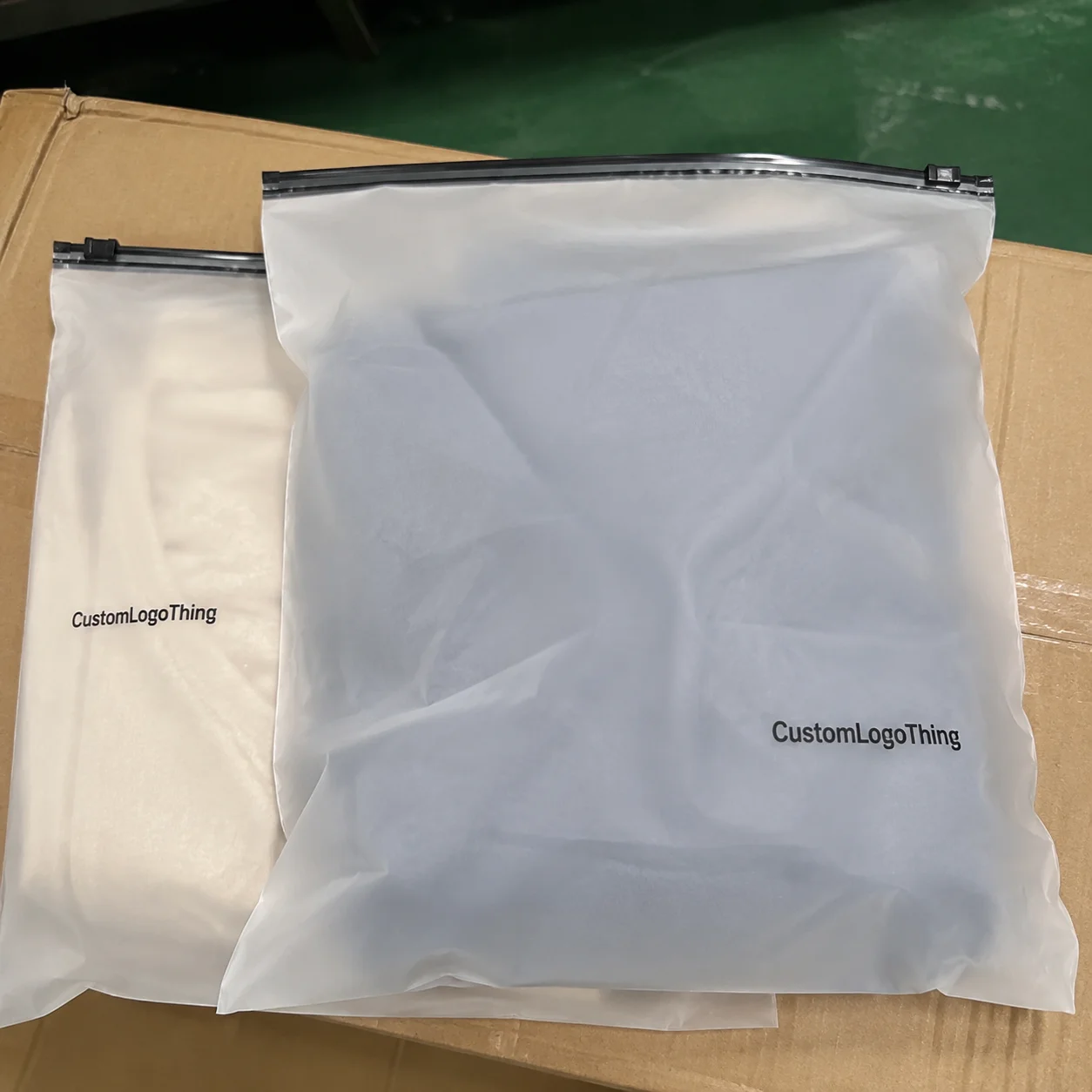
Jewelry brands spend a lot of time selecting the item itself and far less time thinking about the clear sleeve, printed pouch, or branded cover that surrounds it. That gap shows up quickly. A necklace may be beautifully made, but if it arrives in a plain, wrinkled bag with no fit, no structure, and no brand signal, the packaging quietly lowers the perceived value of the order. custom Custom Plastic Garment Bags for jewelry brands exist to close that gap with packaging that protects the item, keeps it sorted, and presents it like part of the brand rather than an afterthought.
These bags are not meant to replace rigid boxes or high-end presentation cartons. They fill the practical middle layer: a lightweight plastic sleeve sized for soft goods, small accessories, care cloths, travel rolls, bridal sets, display textiles, and bundled jewelry-adjacent items. For some brands, the bag is part of the retail presentation. For others, it is a warehouse tool that still needs to look clean at the customer-facing end. The best versions do both without pretending to be more than they are.
The category sounds simple, and mechanically it is. The real value comes from the details: film type, thickness, seal quality, closure style, print placement, and how closely the bag fits the packed item. If those choices are treated casually, the packaging looks cheap even if the product is not.
What custom custom plastic garment bags for jewelry brands actually do
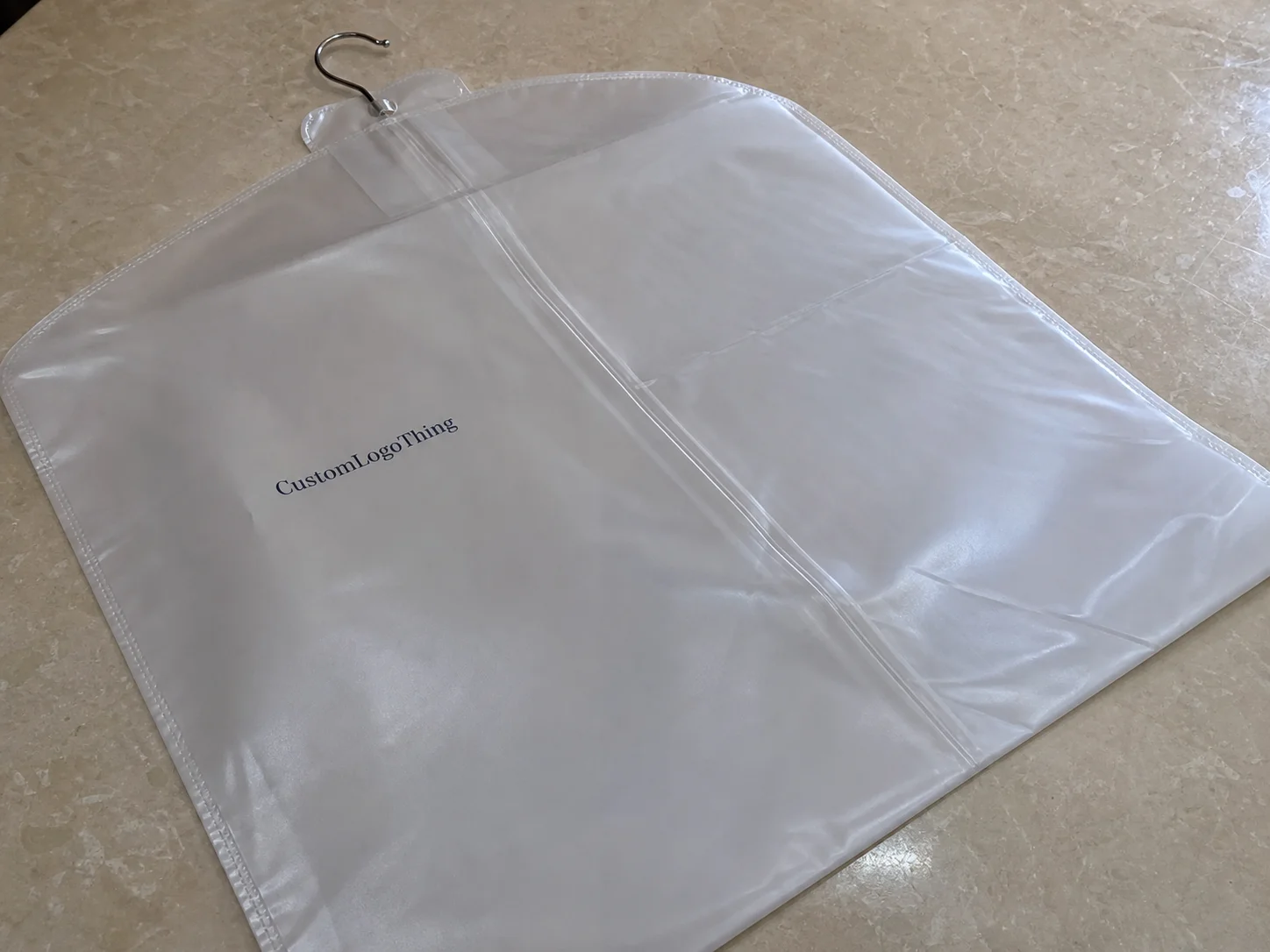
These bags sit between the product and the final shipment. They keep dust off soft items, prevent scuffs from loose handling, and give smaller pieces a defined home during packing and storage. That may sound modest, but jewelry programs are full of small components that get damaged by friction, bending, or muddled sorting. A branded polishing cloth, a silk pouch, or a gift set insert benefits from structure even if the item itself is lightweight.
For ecommerce orders, the packaging often becomes the first physical touchpoint the customer sees. A clear unmarked bag can make a well-priced product feel generic. A custom-printed one with the right proportions and a calm, readable layout feels more deliberate. That difference matters more for jewelry than it does for many categories because the buyer expects refinement. The package does not need to be expensive; it needs to look considered.
There is also an operational side. Fulfillment teams use these bags to separate SKUs, keep returns organized, group bridal party sets, and protect accessory add-ons from being mixed with unrelated stock. A garment-style sleeve with a hang hole, adhesive flap, or zip closure can speed up packing and reduce repacking. If the packaging slows staff down, the beautiful print on the front will not make up for it.
What changes from a generic poly bag
- Size: custom dimensions reduce excess slack and make the packed item sit correctly.
- Film weight: thicker film resists tearing, seam splitting, and the crushed look that makes a bag feel disposable.
- Closure: an open end, adhesive strip, or zipper changes packing speed and reuse behavior.
- Print layout: logo position, copy length, and barcode area affect both presentation and operations.
- Compliance: suffocation warnings, recycling marks, or regional labeling may be required depending on destination and use.
The strongest packaging programs treat the bag as part of the system, not as a low-value accessory. That usually means the bag supports the brand and the warehouse at the same time. If it only serves one side, the other side pays for it later.
How plastic garment bags work for jewelry packaging
Most garment-style plastic bags are built from a flat sleeve with side seals and a bottom seal. The top may remain open, or it may include an adhesive flap, zipper closure, or reclosable strip. Some versions add a euro slot or hang hole for storage and display. Others use a clear front with a printed back, or a frosted finish that softens the appearance while still showing the contents. None of these options is complicated, but each one changes how the package behaves in real use.
Material selection has a noticeable effect on the final feel. LDPE is soft, clear, and forgiving. It usually works well for inner protection and visible soft goods. HDPE is crisper and often less expensive, which can help with warehouse use or high-volume packing, although it feels less refined in the hand. CPE has a smoother, more matte surface and often reads as a better fit for premium retail presentation. Recycled-content films can support packaging goals tied to sustainability, but they sometimes reduce clarity or consistency, so the tradeoff should be understood before the order is placed.
Printing method matters too. Flexographic printing is common for larger runs because the cost per unit improves once the setup is absorbed. Digital printing can be useful for smaller quantities or short test programs, depending on the supplier’s equipment. For jewelry packaging, a restrained one-color logo often looks sharper than a crowded layout with multiple effects. Metallic inks, tiny gradients, and delicate reversed text can look stronger on a screen than on plastic film, where detail loss is more common than buyers expect.
The bag also has to fit the realities of transit and storage. If a sleeve will move through distribution, be stacked in cartons, or be handled repeatedly before the customer sees it, the material needs to survive friction and compression. For broader transit planning, the International Safe Transit Association provides useful context on package performance, and the U.S. EPA’s recycling guidance is worth reviewing before making end-of-life claims. A packaging spec should match how the product actually moves, not how the concept board makes it look.
| Material | Feel | Best use | Main tradeoff |
|---|---|---|---|
| LDPE | Softer, clearer | Inner protection, visible soft goods | Less crisp than other films |
| HDPE | Crisper, lighter | Economical packing, warehouse sorting | More noise, less premium touch |
| CPE | Matte, smooth | Luxury positioning, retail presentation | Usually costs more than basic poly |
| Recycled-content poly | Varies | Sustainability-led packaging programs | Can reduce clarity or consistency |
The key question is not which material sounds best on paper. It is which one matches the item, the packing line, and the brand position without causing avoidable problems. A bag that looks good but slows fulfillment is a bad spec. A bag that is efficient but looks flimsy can be just as costly in a different way.
Key specs jewelry brands should decide before ordering
Size comes first. Measure the packed item, not just the product by itself. Jewelry brands often underestimate the extra room needed for folds, tags, care cards, small inserts, tissue, or a protective pouch. A scarf add-on that seems small on a tabletop can need a much larger sleeve once folded properly. A polishing cloth may look flat, but once it is paired with a branded insert or care card, the dimensions change quickly. A mockup that barely fits is not a production-ready spec.
As a starting point, small accessory sleeves often sit around 4 x 6 inches, cloth or pouch bags around 5 x 7 inches, scarf or travel-roll bags around 8 x 10 inches, and larger boutique sleeves can go beyond that for robes, bridal accessories, or display textiles. Those ranges are only reference points. They are useful because they keep buyers from guessing, not because they should be copied without checking the actual packed form.
Thickness comes next. For light inner protection, 1.0 to 1.5 mil is common. For more frequent retail handling or wholesale packing, 2.0 to 2.5 mil usually feels safer. If the bag will be reused, shipped with limited secondary protection, or handled repeatedly in store, 3.0 mil or higher provides better structure. Thicker film increases cost, but the savings from thin, weak plastic are often false savings. Packaging that wrinkles heavily or tears at the seal tends to create more labor and more complaints than it saves.
Finish and closure choices
- Clear: best for showing color, texture, or contents at a glance.
- Frosted: softer in appearance and better when glare needs to be reduced.
- Opaque: useful for privacy, set components, or surprise bundles.
- Matte texture: usually reads more refined than glossy stock plastic.
- Open-end: fastest option for packing lines.
- Adhesive flap: useful for retail presentation and returns.
- Zip closure: better if reuse or repeated opening is part of the use case.
Artwork deserves the same care as the physical spec. Vector files are the safer starting point. Line thickness should stay readable at the final size, and safe margins matter more on plastic than many first-time buyers expect. Keep copy short. Leave room around the logo. Avoid tiny type unless the goal is to test the limits of the press. If the design depends on a delicate metallic effect or a very fine reversed line, request a proof and expect some adjustment. Plastic film is less forgiving than a screen mockup.
For jewelry brands that also use apparel add-ons, gift sets, or retail accessories, the bag should be chosen according to its primary job. Is it mainly for display, storage, shipping, or returns? That answer changes the material, closure, opacity, and print layout. A single generic bag rarely satisfies every use case equally well.
Cost, MOQ, and unit cost tradeoffs
Pricing depends on size, thickness, material, finish, print colors, closure style, quantity, and whether tooling such as plates or screens is required. There is no universal price sheet that works across every supplier, but there are realistic planning ranges. Simple small custom poly garment bags can land around $0.08 to $0.30 per unit at higher quantities. Thicker, frosted, opaque, multi-color, or specialty-closure bags often run $0.25 to $0.80+ per unit depending on the Spec and Order size.
Minimum order quantities usually move in the same direction. Stock-size printed bags may begin around 500 to 1,000 pieces. Fully custom dimensions, colors, closures, or printed runs often start around 2,000 to 5,000 pieces, with better pricing at 10,000+. That is not a tactic to make buyers uncomfortable. It is setup math. Printing plates, proofing, sample work, and machine setup cost money whether the order is small or large.
Premium packaging usually fails in three places: size, closure, and print discipline. The bag itself is rarely the only problem. The spec is.
It helps to compare the spend in tiers rather than accept one flat number. Ask for pricing at 1,000, 3,000, and 5,000 units if the supplier can quote all three. The break point often tells a more useful story than a single unit price. A slightly higher MOQ may produce a better bag at a lower landed cost, especially if the packaging is part of a repeated reorder cycle.
| Option | Typical unit cost | Common MOQ | Best for |
|---|---|---|---|
| Standard size, one-color print | $0.08 to $0.20 | 500 to 2,000 | Lean retail packing and basic branding |
| Custom size, one-color print | $0.12 to $0.30 | 2,000 to 5,000 | Better fit and better presentation |
| Frosted or thicker film | $0.20 to $0.50 | 2,000+ | Luxury positioning, stronger handling |
| Special closure or multi-color print | $0.35 to $0.80+ | 3,000+ | Premium retail, reuse, or high-touch sets |
If the same brand is also sourcing custom printed boxes or a larger packaging program, the bag should be quoted alongside the rest of the system. That usually reveals whether one component is over-specified while another is underbuilt. Packaging budgets work better when the pieces are evaluated together, not in isolation.
Process and timeline from artwork to delivery
The path from idea to finished bags is usually predictable: define the use case, confirm dimensions and material, send artwork, review the proof or dieline, approve a sample if needed, begin production, complete quality control, and ship. Problems tend to appear when one of those steps is rushed or skipped. The weakest projects usually do not fail because the factory is mysterious; they fail because the buyer gave unclear instructions.
Typical timing depends on how custom the order is. Quote review often takes 1 to 3 business days. Artwork proofing may take 1 to 5 business days depending on revisions. Physical samples, when required, can take 5 to 15 business days. Production often lands in the 10 to 25 business day range for many custom orders. Shipping adds another variable, especially if the bags are coming from overseas or are tied to a seasonal launch.
The timeline becomes tighter when the order involves custom resin color, recycled-content sourcing, special sizing, or multiple print colors. Build in a buffer of at least 2 to 4 weeks before the bags are needed onsite. For holiday launches, wholesale deadlines, or bridal season drops, more lead time is the safer choice. Rush orders are possible in some cases, but the price of speed is usually less flexibility and fewer options.
One practical mistake deserves its own warning: do not approve a proof casually. The artwork on the proof is what gets printed, including a logo that sits too low, a line that is too thin, or a barcode that lands in the wrong area. Proof approval is not a preview. It is the production instruction.
For buyers comparing multiple packaging vendors, the Case Studies page can help frame how different specs affect cost and timing. If the bag is part of a broader packaging refresh, the Custom Packaging Products page is a useful reference point for comparing sleeves, boxes, and related components within one system.
Common mistakes that make custom bags look cheap
The most common mistake is sizing the bag to the product instead of the packed product. That creates bulging corners, awkward folds, and closures that barely catch. The second mistake is overprinting. A small plastic bag is not a brochure. Too much copy makes the package busy and weakens the visual hierarchy. For most jewelry-adjacent items, a logo, short line, care note, or barcode area is enough.
Film thickness is another place where buyers cut too hard. The thinnest possible option looks efficient on a quote sheet, then wrinkles badly, splits at the seam, or feels flimsy in hand. The result is a packaging program that looks cheap and creates more labor for the packing team. The unit price looks attractive. The real cost does not.
Finish mismatch is easy to miss until the first sample arrives. A glossy bag can clash with a quiet luxury brand. A frosted finish can look more restrained, but it may slow identification if the team needs to see colorways or contents quickly. The bag should fit both the brand language and the operating flow. If it supports only one, the other side will notice.
Artwork and compliance mistakes
- Using raster logos instead of vector files.
- Submitting low-resolution artwork with tiny type.
- Ignoring bleed, safe margins, or seal clearance.
- Choosing print colors without checking how they appear on clear or frosted film.
- Blocking barcode scanning with poor layout decisions.
- Skipping required suffocation warnings where applicable.
Most packaging failures are not dramatic. They are repeated irritations: a bag that tears during packing, a logo that prints too faintly, a closure that does not line up cleanly, or a size that forces staff to fight the material on every unit. Small issues become large when they happen hundreds or thousands of times. That is usually the point where a packaging choice stops being cosmetic and starts being operational.
Next steps before you request a quote
Before asking for pricing, gather the basics: product type, packed dimensions, target quantity, preferred material, thickness, finish, closure style, print colors, logo file, delivery deadline, and shipping destination. If you can send photos of the item packed the way it will actually ship, the quote will be more accurate. Packaging suppliers can work quickly, but not if they have to guess what is going inside the bag.
It also helps to test with a plain sample bag or a simple paper mockup. If the product barely fits the mockup, the production bag will not behave better. A small test often exposes whether the design needs more room, a different fold, a stronger closure, or a different material altogether. That step is cheap compared with replacing a full run that was spec'd too tightly.
Choose one primary use case before you finalize the brief. Retail pouch protection, wholesale sorting, bridal gift sets, and repair returns are not identical needs. A single bag can sometimes cover more than one, but forcing it to solve every job tends to produce a mediocre spec and a higher total cost. Better to design around the most important use, then let the rest of the packaging system support it.
When you request a quote, ask for alternatives rather than one fixed number. Standard size versus custom size. One-color versus two-color print. Clear versus frosted. Two or three quantity breaks. That comparison usually reveals the real tradeoffs and keeps the final spec grounded in both presentation and budget.
For jewelry brands that care about presentation, packing speed, and cost control, custom Custom Plastic Garment Bags for jewelry brands work best when the buyer gives clear measurements, a simple print plan, and a realistic timeline from the start.
What are custom plastic garment bags for jewelry brands used for?
They are used to protect and organize jewelry-adjacent items such as pouches, polishing cloths, scarf add-ons, repair returns, gift sets, travel rolls, and retail display components. They also help with branding, barcode organization, dust protection, and cleaner packing for wholesale or ecommerce orders.
What thickness should jewelry brands choose for custom poly garment bags?
Use 1.0 to 1.5 mil for light inner protection, 2.0 to 2.5 mil for stronger retail or wholesale handling, and 3.0 mil or higher for reusable bags or heavier accessories. If the bag will be handled by customers, choose a slightly heavier film. Thin film can save money up front and cost more in labor and damaged presentation.
How much do custom plastic garment bags cost for jewelry packaging?
Simple small printed bags can often range from about $0.08 to $0.30 per unit at higher quantities. Thicker, frosted, opaque, multi-color, resealable, or specialty bags may range from about $0.25 to $0.80+ per unit depending on specs and order size. Setup fees, plate charges, sampling, and freight can affect the real landed cost.
What MOQ should I expect for custom garment bags with a logo?
Some stock-size printed options may start around 500 to 1,000 pieces. Fully custom sizes, colors, closures, or printed production commonly start around 2,000 to 5,000 pieces. Unit pricing usually improves at higher quantities, so it is worth asking for multiple quantity tiers before deciding.
How long does it take to make custom plastic bags for a jewelry brand?
A typical project can take 2 to 6 weeks depending on proofing, sampling, production, and shipping. Rush timelines are easier with standard sizes, one-color printing, existing materials, and fast artwork approval. Build in extra time before launches, holiday drops, wholesale shipments, and bridal season promotions.