Why a Garment Bag Quote Can Change Your Margin
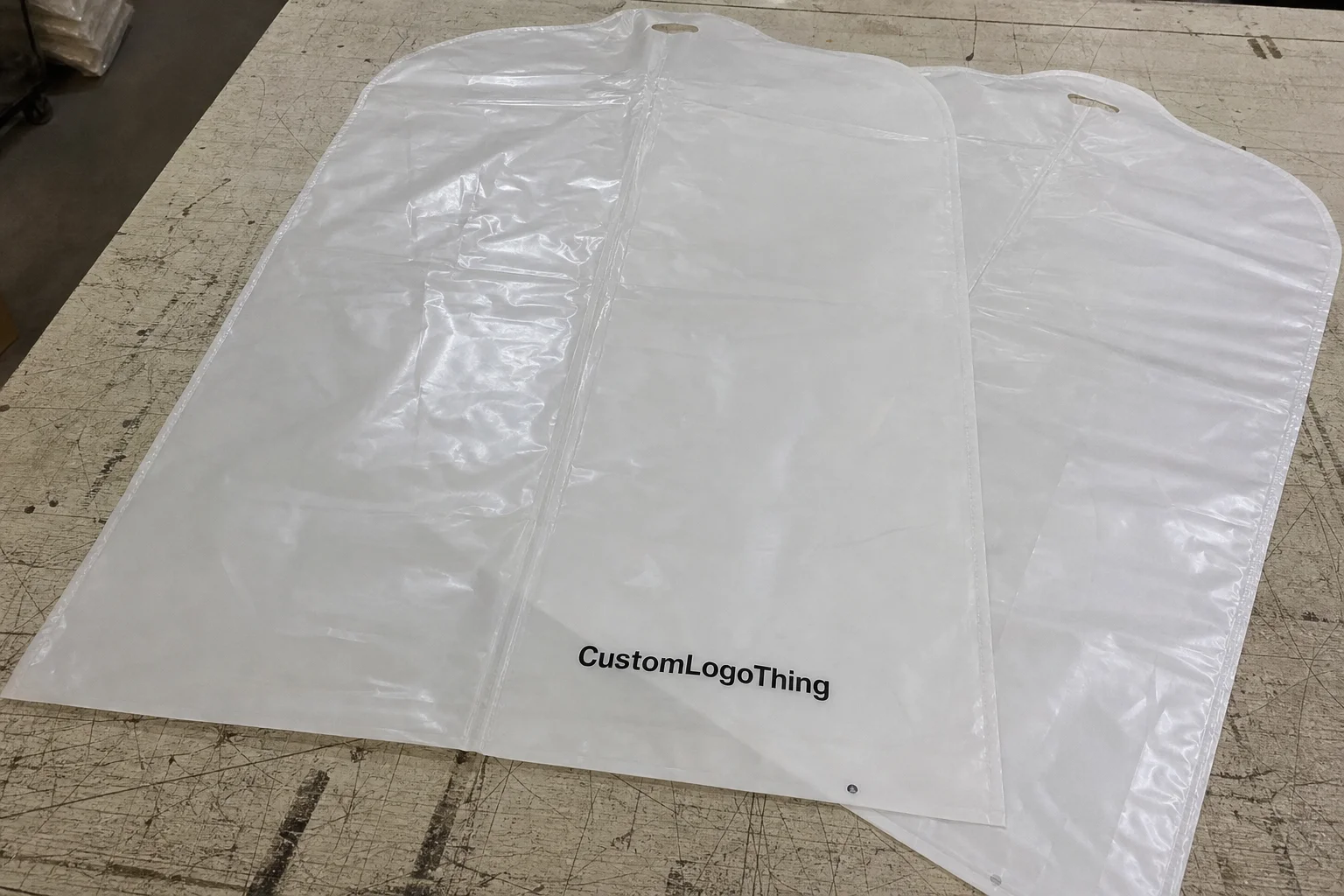
A printed Custom Plastic Garment Bags quote for apparel should do more than name a unit price. It should show whether the bag will fit the garment, move through packing without slowing the line, hold up during handling, and present the brand cleanly without wasting film, cartons, or freight. The invoice matters, of course, but the real cost often appears later: rework at the packing bench, extra cartons, bags that tear at the hanger opening, or a print layout that looked fine on screen and awkward on finished film.
Two apparel brands can order the same quantity of garment bags and receive very different landed costs. One sends a rough request for “clear Bags with Logo,” then pays for clarification rounds, revised proofs, or a resized production run. Another provides exact width, length, gusset, thickness, print coverage, closure style, delivery location, and artwork files from the start. The second quote is usually tighter because the supplier is pricing a real package instead of guessing at one.
Garment bags sit between product packaging, retail packaging, and warehouse operations. They protect finished goods from dust, abrasion, and handling marks. They also help packers separate sizes, identify styles, scan information, and keep presentation consistent. The same practical logic behind branded packaging for custom printed boxes applies here: clear package branding reduces confusion and makes the operation look more controlled.
The priorities change by buyer. A boutique may care most about clarity, hand feel, and logo placement. A fulfillment team may focus on carton count, stackability, dispensing, and tear resistance. A dry cleaner may need hanger access, perforation, roll format, and warning copy. A uniform supplier may need repeatable sizing across multiple programs and a bag that survives frequent movement between stockroom, alteration area, and customer pickup.
Plain stock bags solve basic protection. Printed custom bags can add brand identification, sorting codes, seasonal messaging, care instructions, size labels, QR codes, reorder details, and compliance text. That extra function has a cost, but it is often modest compared with the value of fewer errors and a more polished handoff. The strongest quote is not always the lowest price; it is the one that matches the bag to the garment, the packing method, and the customer touchpoint.
What You Are Buying
Custom Plastic Garment Bags are flexible poly sleeves used to protect, transport, display, or deliver hanging and folded apparel. They are not a single product. A suit cover, dry-cleaner bag, boutique garment sleeve, production dust cover, and apparel overwrap may all use polyethylene, yet each one has a different job.
LDPE is common when the bag needs a softer feel, better drape, and clearer appearance. HDPE is crisper and can be economical in lighter-gauge applications, especially where the bag is mainly protective and not heavily handled by the end customer. Recycled-content blends may be available, although buyers should evaluate them against clarity, seal strength, print appearance, and consistency from run to run. Sustainability claims should follow the actual structure and usage, not only the marketing language around the material.
Material choice affects more than the look. A very clear film may show the garment beautifully but reveal wrinkles and dust more readily. A cloudy or frosted film can hide minor handling marks while giving the package a softer retail presentation. A thicker film can feel more substantial, but if the bag is oversized or packed inefficiently, it may add cost without solving the real problem.
Common applications include suit bags, dress bags, shirt bags, boutique garment covers, dry-cleaning bags, production protection sleeves, and poly mailer-style apparel overwraps. Some are used only inside a warehouse or sewing room. Others are part of the first customer impression. A retail-facing bag usually needs cleaner print registration, more controlled edges, and better surface finish than a warehouse-only dust sleeve.
Print options range from a one-color logo to two-color branding, warning text, QR codes, size markers, reorder information, and seasonal artwork. A small one-color mark on clear film is enough for many apparel programs. Full-panel graphics or heavier coverage can work in the right construction, but they add cost and require more attention to ink coverage, registration, drying, and distortion near folds or seals.
Typical functional features include:
- Hanger holes for hanging garments during transit, storage, or customer pickup
- Side gussets for coats, gowns, uniforms, and layered apparel
- Lip-and-tape or flap closures for folded garments and retail presentation
- Perforation for dispensing from rolls or packed stacks at workstations
- Vent holes where breathability or air release is needed
- Bottom seals, die-cut handles, or punched openings for specific workflows
- Suffocation warnings or recycling marks where the market, size, or customer requires them
A protective garment bag is not automatically a retail package. If the bag only protects inventory during production, there is little reason to pay for decorative coverage, premium finishes, or complex print. If the bag is seen by the customer, especially in boutique retail, uniforms, events, bridal, or premium apparel, a bare stock sleeve may undercut the product. Good packaging design makes that choice deliberately.
Specifications That Drive Fit, Strength, and Print Quality
A reliable quote depends on measurable details. Words like small, heavy, premium, or standard are too vague for production. If the bag has to perform in a warehouse, store, dry-cleaning counter, or parcel shipment, the supplier needs dimensions and construction details that can be checked.
Start with size. Provide width, length, and gusset depth if the garment has bulk. If the bag includes a flap, lip, or adhesive closure, state that separately. If hanger opening placement matters, include the location and opening size. A 24 x 60 inch bag can behave very differently once seals, folds, hang holes, and closure allowances are built in, so clarify whether the dimensions are inside usable dimensions or finished outside dimensions.
The easiest way to size a bag is to measure the actual garment in the state it will be packed: folded, hung, on a hanger, bundled with accessories, or layered with paperwork. Coats and structured uniforms need extra room through the shoulder and body. Dresses may need length but little depth. Folded shirts may need a tidy width and closure more than a long sleeve. Guessing from the flat garment measurement often creates a bag that looks correct on paper and fights the product in use.
Thickness is one of the main cost and performance drivers. Film is usually discussed in mils or microns. Lighter gauges can work for short-term dust protection, retail handoff, or controlled storage. Heavier gauges are better for repeated handling, warehouse transfer, garment sets, bulky fabrics, or shipping environments with abrasion and compression. If the apparel is expensive or handled by several teams before it reaches the customer, under-specifying thickness is a false economy.
Print quality depends on more than a clean logo file. The supplier needs to know print area, number of colors, ink coverage, and whether artwork runs near folds, gussets, seals, or hanger holes. Flood coats, edge-to-edge graphics, tight registration, and small reverse text are more demanding than a centered logo. Barcodes and QR codes need quiet zones, adequate contrast, and a flat enough print area to scan consistently.
Artwork should be supplied as vector files whenever possible. Pantone references help with spot-color matching, while CMYK values are useful when the artwork has been built that way. If mandatory copy is needed, such as a suffocation warning, recycling mark, or customer-specific labeling, include it before the proofing stage. A low quote can change once required text is added and the layout has to be rebuilt.
Experienced packaging teams also think about how the bag will be tested. A desk sample confirms rough fit and appearance, but it does not prove that the package will survive parcel movement, stacked cartons, repeated picking, or route handling. The ISTA framework is useful because it keeps attention on distribution hazards rather than appearance alone.
A garment bag can look correct and still fail operationally. The spec sheet is where that risk gets reduced.
A complete specification protects both sides. The supplier can quote the construction that will actually be produced, and the buyer can compare options on fit, strength, print, and landed cost instead of reacting to surprises after approval.
Cost, Pricing, MOQ, and What Changes Unit Cost
Unit cost is shaped by quantity, size, material, thickness, print colors, print coverage, closure features, packing method, and freight. These variables interact. A slightly larger bag uses more resin, may require a different carton, and can change the shipping profile. A quote comparison should look beyond the per-bag number.
MOQ exists because setup is real. Film sourcing or extrusion, plate or screen preparation, press setup, proofing, conversion, and packing labor all create a minimum efficient run. Small orders carry more overhead per bag. Larger programs spread those costs across more pieces, which is why the unit price typically drops at higher quantity breaks.
The ranges below are practical budgeting references, not fixed offers. Actual pricing changes with resin markets, freight, print coverage, bag geometry, quantity, and current production capacity.
| Option | Typical Use | Indicative Unit Range | Main Cost Drivers |
|---|---|---|---|
| Plain stock poly bag | Basic garment protection | $0.05-$0.12 | Size, thickness, carton pack-out |
| Custom one-color printed bag | Brand identification and sorting | $0.10-$0.20 | Setup, print area, quantity |
| Custom two-color printed bag | Retail packaging and stronger package branding | $0.14-$0.26 | Additional print pass, registration, artwork complexity |
| Heavier-gauge or feature-rich bag | Premium presentation or higher handling stress | $0.18-$0.40 | Material weight, gussets, closures, special packing |
Quantity breaks deserve close attention. At 5,000 pieces, setup cost is still visible. At 25,000 pieces, the same setup is diluted, and the unit price can look much more efficient. That does not mean every buyer should over-order. Storage space, forecast accuracy, artwork changes, seasonal packaging, and cash flow all matter. Ask for two or three quantity levels so procurement can compare savings against inventory risk.
Common quote line items include bag unit price, plate or setup fees, digital proofing, sample charges if requested, carton packing, freight, taxes or duties where applicable, and rush charges when the schedule is compressed. A bag with the lowest unit price can cost more after freight if it packs poorly or ships in too many cartons. It can also cost more in labor if packers have to separate bags, fight static, or correct presentation issues at the table.
There are sensible ways to reduce cost without weakening the package. Reduce the number of print colors. Keep the printed area focused. Adjust dimensions so the film width is more efficient. Use a stock size if it fits the garment properly. Change thickness only after looking at handling conditions. For some programs, a smaller logo on a better-fitting bag is the better spend.
Be cautious with quotes that omit freight, setup, or proofing assumptions. They may look attractive at first pass and become harder to compare later. A useful quote spells out what is included, what is estimated, and what could change before production.
Process, Proofing, and Production Timeline
The ordering process is simple when the inputs are ready: submit specifications, confirm material and size, provide artwork, receive pricing, review the proof, approve a sample if needed, release production, complete quality checks, pack, and ship. Each step removes a different kind of risk.
Proofing is where delays often start, and where many of them can be prevented. A digital proof checks artwork placement, print size, color references, warnings, and required marks. It does not confirm hand feel, clarity, stiffness, dispensing, or actual garment fit. A physical sample is the better tool for those decisions, especially when the closure is important, the film gauge is unfamiliar, or the bag will be part of a retail presentation.
Lead time depends on quantity, artwork readiness, material availability, print complexity, sampling, freight mode, and current production capacity. A simple one-color repeat run may move quickly. A custom-size, multi-color project with special packing and sample approval will take longer. If the bags are needed for a launch, a uniform rollout, a seasonal line, or an event, plan so packaging arrives before final apparel packing begins. Waiting until finished goods are ready can turn a manageable order into an expensive rush.
Quality control should cover more than print appearance. Practical checks include finished size tolerance, film thickness, seal strength, hanger hole placement, closure alignment, print position, color consistency, legibility of warning text, barcode or QR scannability, carton count, and packing orientation. For retail-facing apparel, it is also worth checking whether bags cling, wrinkle heavily, or pick up marks in a way that changes the presentation.
Ways to shorten lead time are practical:
- Send finished dimensions and bag style with the first request
- Provide vector artwork instead of a low-resolution logo image
- Confirm print colors, warning copy, and barcode needs early
- Assign one approver for proofs and changes
- Lock the delivery address before production starts
- Avoid late changes to size, thickness, finish, or closure
Rush production may be available, but it usually shifts cost or risk. Faster schedules can increase freight expense, limit sampling time, or reduce the window for correcting artwork. Sometimes that tradeoff is acceptable. Sometimes the better answer is to simplify the spec so the order can move cleanly.
If you buy other branded packaging items, such as mailers, inserts, hang tags, or custom printed boxes, coordinate the timing. Apparel packaging works best as a system. A garment bag arriving on time has less value if the outer mailer, label, or insert is still waiting for approval.
Quote Mistakes That Create Delays or Bad Bags
The most common quoting error is asking for pricing before the garment dimensions are settled. A shirt, coat, dress, suit, robe, or uniform set occupies different space once folded or hung. Copying another brand’s bag size can also fail because fabric bulk, hanger style, internal paperwork, and packing method all change the fit.
Thickness is another weak spot. A sample on a clean table can look acceptable even if the film is too light for warehouse handling. The issue appears later, when bags tear at the fold, stretch near the seal, or split around the hanger opening. If the garment will be handled repeatedly, moved across sites, or shipped through parcel networks, the quote should reflect that stress.
Print problems are just as common. Low-resolution files soften logos. Missing color references shift brand colors. Tiny reverse text disappears against clear film. Artwork too close to a seal can distort or vanish. Barcodes printed on a wrinkled, curved, or low-contrast area may not scan reliably. These are ordinary production issues, and most are preventable during proofing.
Operational details can be easy to overlook because they do not show up in the artwork. Case count, carton weight, pallet pattern, inner packing, static, roll format, and dispenser setup all affect how the bag behaves on the floor. If a packer has to separate clingy bags one at a time or pull from a carton that collapses halfway through the shift, the labor cost becomes part of the package cost.
Compliance copy should not be left for the final proof. Suffocation warnings, recycling marks, country-specific labeling, and customer-required language need space in the layout. Rules vary by market, customer, and bag size, so buyers should confirm requirements before artwork approval. For broader packaging and material reduction context, the EPA is a useful reference, although final package requirements still depend on the application and sales channel.
Quote work is strongest when uncomfortable questions are asked early: What garment is going inside? How many handling points will it pass through? Will the customer see the bag? Does the closure need to be resealable? Is the barcode decorative, operational, or mandatory? Changing a spec before plates and production is inexpensive compared with correcting a finished run.
Next Steps to Get a Quote That Matches the Bag You Need
Before requesting pricing, assemble a clean spec sheet. Include bag style, width, length, gusset, thickness, material preference, film color or clarity, print colors, logo file, closure type, hanger hole requirements, quantity, delivery location, and target in-hands date. That one step improves quote accuracy more than any negotiation tactic.
If possible, send photos or a sample of the current bag. Visual references show details a paragraph often misses: seal style, actual clarity, flap shape, hanger opening, how the garment sits, whether the bag is too tight, and how cartons are packed. A physical sample can cut several rounds of clarification from the process.
It also helps to define the main objective before quoting:
- Lowest practical unit cost
- Premium retail presentation
- Faster turnaround
- Recycled-content preference
- Warehouse durability
- Consistent branding across locations or programs
Once the goal is clear, the tradeoffs become easier to judge. A buyer focused on warehouse durability may accept a simple one-color print and spend more on film strength. A boutique program may keep the gauge moderate but pay closer attention to clarity, logo placement, and closure. A budget-sensitive order may use a stock dimension, smaller print area, and one ink color while still protecting the garment properly.
After the request is submitted, the team can review the specs, flag missing details, prepare pricing, and recommend a production route based on quantity and artwork. If you need help turning a rough idea into a quote-ready specification, use Contact Us. If you are comparing garment bags with other packaging needs, the Custom Packaging Products page is a useful starting point.
The fastest path to an accurate printed Custom Plastic Garment Bags quote for apparel is a complete request: exact specs, usable artwork, order quantity, delivery details, and any compliance or operational requirements. With those pieces in place, the supplier can price the bag as it will actually be made, packed, and shipped.
What details do I need for a custom printed garment bag quote?
Provide bag width, length, thickness, material, quantity, print colors, artwork file, closure style, hanger hole requirements, delivery address, and required arrival date. If you are unsure about sizing or gauge, send garment dimensions, photos, or a sample bag so the quote can be built around the actual application.
What affects the price of printed plastic garment bags the most?
The biggest cost drivers are order quantity, bag size, material thickness, number of print colors, print coverage, closure features, packing method, and freight. Setup or plate fees may apply, especially for custom logo printing, but higher quantities usually spread those costs across more bags.
Is there an MOQ for printed custom plastic garment bags?
Yes. Most custom printed Plastic Garment Bags have an MOQ because film, printing plates, press setup, conversion, and packing labor require a minimum production run. MOQ can vary by size, material, print method, and customization level, so include quantity goals and reorder expectations with the quote request.
How long does production take after proof approval?
Production timing depends on quantity, material availability, artwork readiness, print complexity, sampling needs, and shipping method. Approving artwork quickly, confirming specifications upfront, and providing complete delivery details are the best ways to reduce avoidable delays.
Can I get eco-conscious options for printed apparel garment bags?
Depending on the specification, options may include recycled-content plastic, lighter-gauge material to reduce resin use, recyclable poly structures, or right-sized bags that reduce excess film. Eco-focused options should be quoted alongside performance requirements so the bag still protects garments during packing, storage, and delivery.


