Custom Snapback Caps for Sports Team Stores That Sell Cleanly
Custom Snapback Caps for sports team stores work because they solve a retail problem that larger apparel never fully escapes: they are easy to size, easy to display, and easy to understand in one glance. A shopper can look at the front panel, recognize the team, check the price, and decide without studying a size chart or trying anything on. That kind of quick decision-making matters in school stores, club shops, alumni programs, and rec centers where most purchases happen in motion.
The strongest caps usually feel simple rather than crowded. A crisp logo, a reliable crown shape, and a color story that matches the program are enough for many buyers. If the decoration is clean and the retail price sits in a comfortable range, the product starts doing the work on its own. It becomes a piece of fan identity instead of just another accessory on a rack.
There is also a practical side that buyers appreciate after a few seasons. Snapbacks do not depend on exact sizing, they travel well, and they hold their shape better than softer headwear when they are built on a properly structured blank. That reduces returns, simplifies inventory planning, and makes replenishment easier. For team stores trying to keep a lean assortment, those details matter more than glossy product photos suggest.
Why custom snapback caps for sports team stores move fast
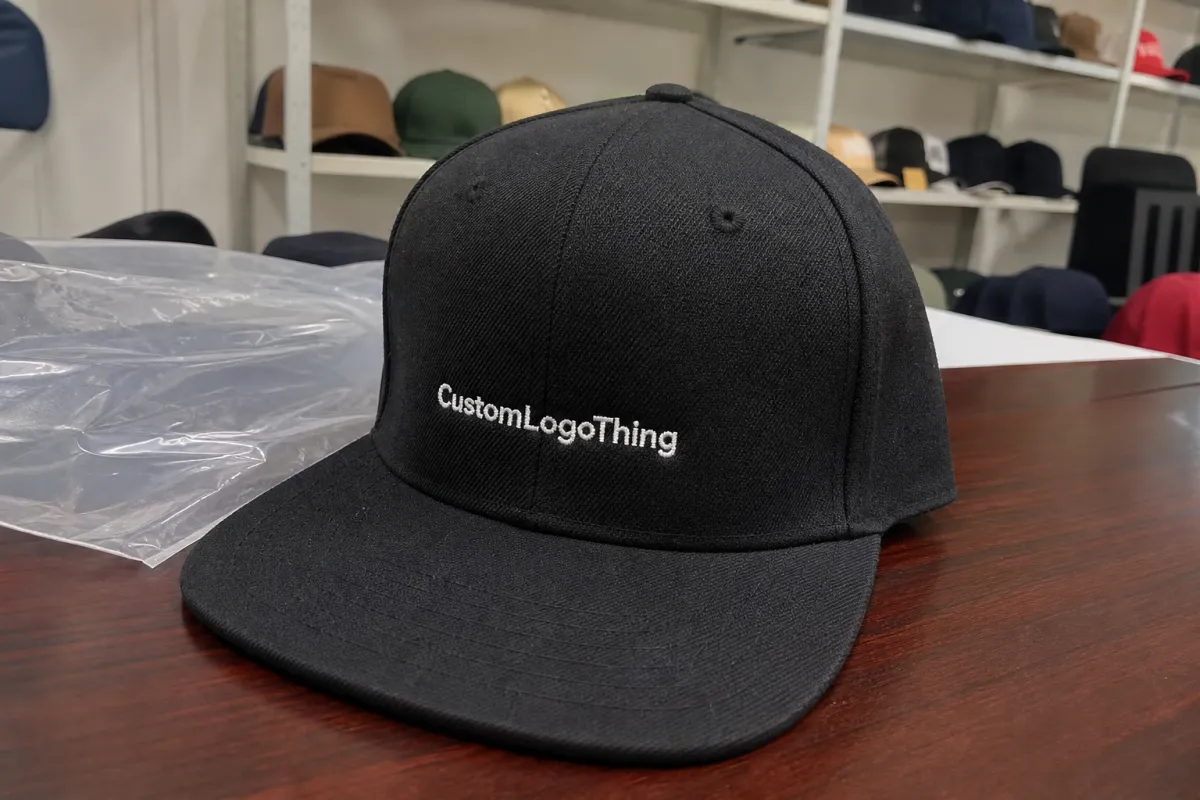
Headwear moves quickly in a team environment because the emotional hurdle is low. A hoodie asks for a bigger spend, a chosen size, and a stronger commitment. A cap asks for less. It is a familiar price point, it feels useful, and it can be bought as a single item or alongside other game-day gear. That makes it a strong add-on, especially when the store has steady foot traffic around events.
Custom Snapback Caps for sports team stores also cross audience lines better than many other products. Players wear them to practice, parents wear them in the stands, alumni wear them when they want to show support without dressing head-to-toe in team colors, and younger fans like the streetwear edge that a flat or lightly curved bill can give. One product can serve several buyer groups, which is a useful thing when shelf space is tight.
The structure helps the logo read properly. A snapback normally uses a stiffer front panel and an adjustable rear closure, so the front decoration stays visible instead of folding in on itself. That gives the artwork a stable surface, whether the logo is stitched directly, applied as a woven patch, or finished with a molded material. The cap itself becomes the display frame.
There is a merchandising advantage too. Caps can go on peg hooks, counter racks, wall systems, or shelf displays without consuming much space. A store can show several colorways in the area a single sweatshirt might occupy. That flexibility matters in team stores where the best-selling item is often the one with the easiest visibility, not the one with the largest footprint.
A cap that reads clearly from several feet away usually outsells one that needs explanation.
For programs that are starting from scratch, a smaller, disciplined launch usually performs better than a wide assortment. One core style, one upgraded version, and one test colorway often tell the buyer more than six nearly identical options. It keeps the shelf cleaner, gives the store better reorder data, and avoids inventory that looks interesting on paper but never earns its space.
If the same program also needs hang tags, inserts, or shelf cards, the packaging should match the product’s tone. Clean hierarchy, clear branding, and simple finishing help the cap feel like part of a planned retail system rather than a loose one-off. For stores that want that level of consistency across touchpoints, Custom Packaging Products can support the broader presentation without changing the product story.
How the design works: fit, structure, and decoration
The first decision is crown structure. A five-panel snapback gives a broader front face, which can be useful for oversized wordmarks or a single bold graphic. A six-panel cap feels closer to the classic baseball shape and often fits the traditional sports buyer well. Neither is universally better. The right choice depends on how much artwork needs to sit on the front and how fashion-forward the target audience is.
Bill shape changes the personality of the cap. Flat bills lean more modern and streetwear-oriented. A slight curve feels more familiar to mainstream sports shoppers. Some stores split the difference by asking for a bill that arrives flat and is easy to shape at the retail level. That keeps the cap accessible to different wear preferences without locking the store into one look.
The closure is not a small detail. Standard plastic snaps are still the most common because they are durable, familiar, and easy to adjust. Fabric straps, leather-look closures, and metal hardware can raise the perceived value, but they also add cost and sometimes slow production. In family-focused programs, the basic adjustable snap usually wins because it works across ages and does not create hesitation at the register.
Decoration is where the cap starts to feel either premium or forgettable. Flat embroidery is still the safest choice for bold logos, mascots, and simple lettering. It wears well, it has a familiar sports look, and it is generally easy to repeat across future runs. Woven patches are a better fit when the artwork has sharper detail than thread can handle, or when the store wants a cleaner, more polished surface. Silicone patches create a slightly more modern feel and can work well for tonal branding or higher-margin retail. Screen print can be used on some caps, but it usually makes the most sense for simpler marks and lower entry pricing.
| Decoration method | Best use case | Look and feel | Typical add-on cost per cap |
|---|---|---|---|
| Flat embroidery | Bold wordmarks, mascots, clean logos | Classic, durable, familiar to sports fans | $0.80-$2.25 |
| Woven patch | Detailed artwork, sharper edges, premium presentation | Clean and refined with a more polished finish | $1.10-$2.75 |
| Silicone patch | Modern branding, tonal logos, higher-margin retail | Raised, flexible, more contemporary | $1.40-$3.25 |
| Screen print | Simple graphics, lower-cost fan runs | Flat, lightweight, less dimensional | $0.35-$1.20 |
Fabric choice matters just as much. Cotton twill gives a familiar hand feel, but polyester blends often hold color better and dry faster, which is useful for active buyers. Brushed canvas can look rich, while mesh-backed builds give a more casual or trucker-inspired appearance. If the team store expects the cap to be worn hard, the blank should be chosen for shape retention, not just softness out of the carton.
There are also details inside the cap that experienced buyers check before approving a run: seam tape, sweatband quality, stitch tension, and panel symmetry. If the crown twists, the front panel buckles, or the closure sits off-center, the cap looks cheaper than the quote suggested. Those flaws are easy to miss in a digital mockup and much harder to ignore once the product is on display.
Color strategy deserves a measured approach. Exact team-color matching can be powerful, but it is not always the best retail decision if the cap needs to serve several programs or if the store wants a style that survives across seasons. Black, navy, charcoal, stone, and deep green often give a design more shelf life. The logo then carries the identity, while the cap color broadens the audience. In multi-team accounts, that approach reduces the risk of producing something too narrow to reorder.
Packaging can affect the perceived value more than many buyers expect. A cap that arrives clean, tagged, and ready to hang feels different from a cap tossed into a generic polybag with no finishing. If the store is running a branded display, that finishing layer should support the same tone. Custom Packaging Products can be useful where hang tags, inserts, or shelf-ready labeling are part of the presentation plan.
Cost, pricing, and MOQ decisions that shape margin
Cap pricing comes down to a few controllable factors: the quality of the blank, the decoration method, the number of color changes, the type of closure, packaging, and freight. A simple structured blank with one embroidery location is a very different product from a cap with a patch, custom taping, special labels, and premium hardware. Buyers often start with the decoration line item, but the landed cost is the number that decides whether the program works.
MOQ is where the math gets real. Smaller runs almost always cost more per piece because setup is spread across fewer units. That does not make a test order a bad idea. It often makes it smarter. A 48-piece or 72-piece pilot can protect margin and cash flow if the store is still learning what the audience wants. Once the cap proves itself, a larger reorder tends to produce better unit economics.
For most team-store programs, a useful planning range looks like this:
- Blank cap: often $2.75-$6.00 depending on fabric, structure, and closure
- Decoration: often $0.35-$3.25 depending on print, embroidery, or patch style
- Packaging and finishing: often $0.15-$0.80 for tags, stickers, and bagging
- Freight and receiving: varies by carton count, destination, and timing
That means a straightforward landed cost might sit around $5.50-$10.50, with premium builds climbing higher. A realistic retail price often falls between $18 and $32 for standard fan caps, while more detailed or collectible versions may live in the $34-$38 range if the decoration and materials justify it. The pricing should fit the market, but it should also protect the store from an assortment that looks active and sells poorly because the margin was guessed instead of planned.
A simple comparison shows why landed cost matters. A cap that lands at $6.40 and retails at $22.00 has room for promotions and occasional markdowns. If the landed cost rises to $9.20, the store may need to push closer to $28 or $30 to keep the same profitability. That changes demand. The quote that looks cheapest on paper is not always the best buy once shipping, packaging, and margin are included.
Most smart assortments start with three buckets:
- Core colorway: the safest seller, usually black, navy, or the main team color
- Premium version: upgraded patch, richer fabric, or better closure
- Test quantity: a small run meant to prove demand before a larger buy
This structure keeps the program honest. It gives the store a lower-risk entry point, a clearer premium option, and a path to reorder without overcommitting to one design. It also makes sell-through easier to read. If the premium version beats the core style, that tells the buyer something useful about the audience. If the cheaper version wins, that tells a different story about price sensitivity. Either way, the first run is doing more than filling a peg.
Process and turnaround from artwork to shelf
The production path is straightforward, but the schedule slips when artwork is incomplete or approvals drag. It usually starts with a quote request, then artwork cleanup, proofing, sample approval if needed, production, finishing, packing, and shipment. Manufacturing is only one piece of the timeline. Approvals and freight can take as much time as the cap itself.
Good artwork saves days. Low-resolution files, vague placement notes, and color descriptions like “team red” create avoidable back-and-forth. A better brief includes a clean logo file, color references, cap color, closure type, quantity, retail target, and any packaging requirements. If a supplier has to guess at the details, the proof will be slower, and the odds of correction increase.
Typical turnaround for custom decorated snapbacks is often 12-20 business days after proof approval for standard programs. Specialty patches, unusual closures, or limited materials can push that longer. Rush orders are possible in some cases, but they depend on what is already in stock, what decoration method is being used, and whether the schedule has room. If the cap is tied to a season opener, tournament, or launch event, the safe move is to lock art early and build in freight time.
A practical launch checklist helps prevent last-minute trouble:
- Confirm logo files and Pantone targets before requesting quotes
- Approve placement and decoration type before production begins
- Decide whether a physical sample is needed or if a digital proof is enough
- Set the retail launch date before finalizing the production window
- Plan receiving, tagging, and shelf setup before the cartons land
Quality control should happen at several points, not just at the end. Buyers should expect checks for stitch count, patch alignment, color consistency, panel symmetry, bill shape, and closure placement. On larger runs, carton count verification and random pull inspection help catch problems before product reaches the store. A cap that looks fine in a mockup but arrives with crooked front placement or uneven tension will slow down sell-through, even if the artwork itself is strong.
If shipping is part of the program, the cartons should be built to arrive in saleable shape. That is not a cosmetic concern. Crushed boxes, bent bills, and dusty packaging make the display look tired before the first sale. Standards aligned with ISTA handling practices are worth discussing for anything that has to travel, especially when the product will go straight from receiving to retail.
Packaging and product should be planned together. A cap, a tag, a polybag, and a display hook all communicate something about the program. When the details line up, the store feels organized and trustworthy. When they do not, the product reads as rushed even if the blank quality is good.
Common mistakes that make team-store caps sit unsold
The easiest mistake is putting too much artwork on the front panel. Oversized logos can crowd the crown, distort the cap’s silhouette, and make the product look heavy. A front panel needs enough negative space to frame the mark. If every inch is filled, the design loses the clarity that makes a cap work in the first place.
Poor contrast causes a different kind of problem. Dark thread on a dark fabric may feel subtle in a mockup, but it can disappear under retail lighting. Bright colors can also collapse into each other if the tones are too close. The safest test is simple: look at the cap in the lighting where it will be sold, not only on a screen. That catches more issues than a polished render.
Over-assorting is another common miss. It is tempting to offer several bill shapes, several closures, and multiple decoration styles at once. That can look thorough, but it often creates inventory that is hard to explain and slow to move. A smaller assortment usually performs better because shoppers understand it faster and the store can face it more cleanly.
Presentation matters more than many buyers want to admit. A good cap can underperform if the display is cluttered, the pricing is unclear, or the surrounding products are competing for attention. Clean hooks, simple signage, and enough space between styles help the buyer see the offer. If the cap wall is crowded with unrelated items, the eye has to work too hard and people move on.
Another problem is choosing a decoration style that looks good in a sample but does not hold up in repeated wear. Thin threads, weak patch adhesion, and sloppy backing can turn a premium-looking cap into a short-lived item. That is why sample review should include close inspection of stitching, patch edges, underside finish, and the way the cap sits after being flexed a few times. Buyers who check those points usually avoid the most annoying surprises.
One useful rule: if the cap needs a paragraph to explain it, it probably needs simplification.
Retail packaging can support sell-through, but only if it is disciplined. A tidy hang tag, consistent sizing sticker, and clean outer carton make the product feel considered. If those pieces are mismatched, the cap loses part of its value before it even reaches the shelf. For programs that need that extra layer of organization, Custom Packaging Products can keep the presentation aligned without making the order more complicated than it needs to be.
Expert next steps for ordering and merchandising the run
Start with the buyer profile, not the cap style. A program selling mostly to parents will often need a more familiar shape and a price that feels accessible. A student-heavy audience can handle a sharper flat-bill look and a more fashion-driven decoration. Alumni groups and booster clubs may care more about a clean logo and a premium finish than about trendier details. The audience should shape the product, not the other way around.
Then write the spec sheet before asking for quotes. Include the logo file, team colors, cap color, closure type, target quantity, intended retail price, packaging requirements, and launch timing. That document keeps the conversation grounded and makes quotes comparable. Without it, every supplier is answering a slightly different brief, and the numbers will not mean the same thing.
A pilot order is usually the smartest first move. Depending on the size of the program, that might be 48 to 100 units. The goal is not just to place an order. It is to learn which colorway sells first, whether the front artwork is visible enough, and whether the price lands in the right zone. Once the product proves itself, a reorder can scale with much less risk.
A small, disciplined first run teaches more than a large guess ever will.
Merchandising should be planned before the shipment lands. If the cap will need a shelf strip, a hanger card, a bag label, or a simple sign, those pieces should be built into the launch. Good presentation turns a cap into a retail program. Bad presentation turns a decent product into slow stock. The difference is often not the cap itself, but whether the store knew how it wanted to show it.
Timing matters too. Match the launch to a home game, registration window, tournament, alumni weekend, or season kickoff whenever possible. That gives buyers a reason to act now rather than later. Once the product is live, keep the facing full, watch which style moves first, and use that data to guide the next reorder. That is how a cap line becomes repeatable instead of speculative.
Handled well, custom snapback caps for sports team stores do more than add another item to the rack. They support the store’s margin, they fit a wide audience, and they can be reordered with confidence once the first run proves the formula. The strongest programs are usually the ones that stay focused: a well-built blank, careful decoration, a realistic price, and presentation that respects the product.
FAQs
How do custom snapback caps for sports team stores differ from dad hats or beanies?
Snapbacks use a structured crown and adjustable closure, so they fit a wider range of buyers and keep logos visible on the front panel. Dad hats feel softer and more casual, while beanies are seasonal and do not give the same billboard effect for team branding. For stores that want broad appeal, snapbacks are usually the easier item to manage.
What is a realistic turnaround for custom snapback caps for sports team stores?
For standard decorated runs, 12-20 business days after proof approval is a common planning range. More complex patches, special closures, or material shortages can stretch that timeline. If the caps need to arrive for a game, tournament, or launch date, confirm proof timing and freight time early so the schedule is realistic.
What MOQ should I expect for team-store snapback caps?
MOQ varies by supplier and decoration style, but lower quantities usually carry a higher unit cost. A pilot order of 48 to 100 pieces is often enough to test demand before scaling into a larger seasonal buy. The right MOQ is the one that lets the store learn without tying up too much cash.
Which decoration method lasts longest on sports snapback caps?
High-quality embroidery and well-made patches usually hold up best because they stay dimensional through regular wear. The best choice depends on logo detail, the look the store wants, and how much margin the item needs to carry. Durability should be judged with the finished cap in hand, not only from a mockup.
How should I price snapbacks for a team store program?
Start with landed cost, then apply the store’s target markup and compare it to other fan items already selling in the program. For many stores, standard caps land in the $18-$32 range, with premium versions going higher when the finish justifies it. A good price is one that fits the audience and still leaves room for promotions.

