Choosing a custom snapback Caps Bulk Order is usually less about buying hats and more about managing variables. A snapback gives buyers one of the few branded apparel formats that can fit a broad audience without size charts, exchange headaches, or a pile of unusable leftovers. For events, retail launches, uniforms, and giveaways, that flexibility matters more than most first-time buyers expect.
It also keeps the buying process cleaner. One core cap spec can serve staff, customers, and media kits without splitting the order into separate size runs. That is why experienced buyers often treat snapbacks the way they treat branded packaging: as a repeatable format that protects consistency while still leaving room for color, logo, and finish changes. For brand owners, that consistency shows up on shelf, in photos, and in repeat orders.
There is a practical reason the format stays popular. Caps travel well, stack well, and hold their shape better than many soft goods. They also tolerate a wider range of decoration choices than buyers usually realize. Flat embroidery, 3D puff, woven patches, leather patches, and even printed panel treatments can all work, provided the front panel, seam placement, and crown structure are chosen with the decoration in mind.
Buyer rule: the best bulk cap order is the one you can describe in one sentence, quote on one sheet, and approve without guessing what the factory meant.
Custom Snapback Caps Bulk Order: why the format wins
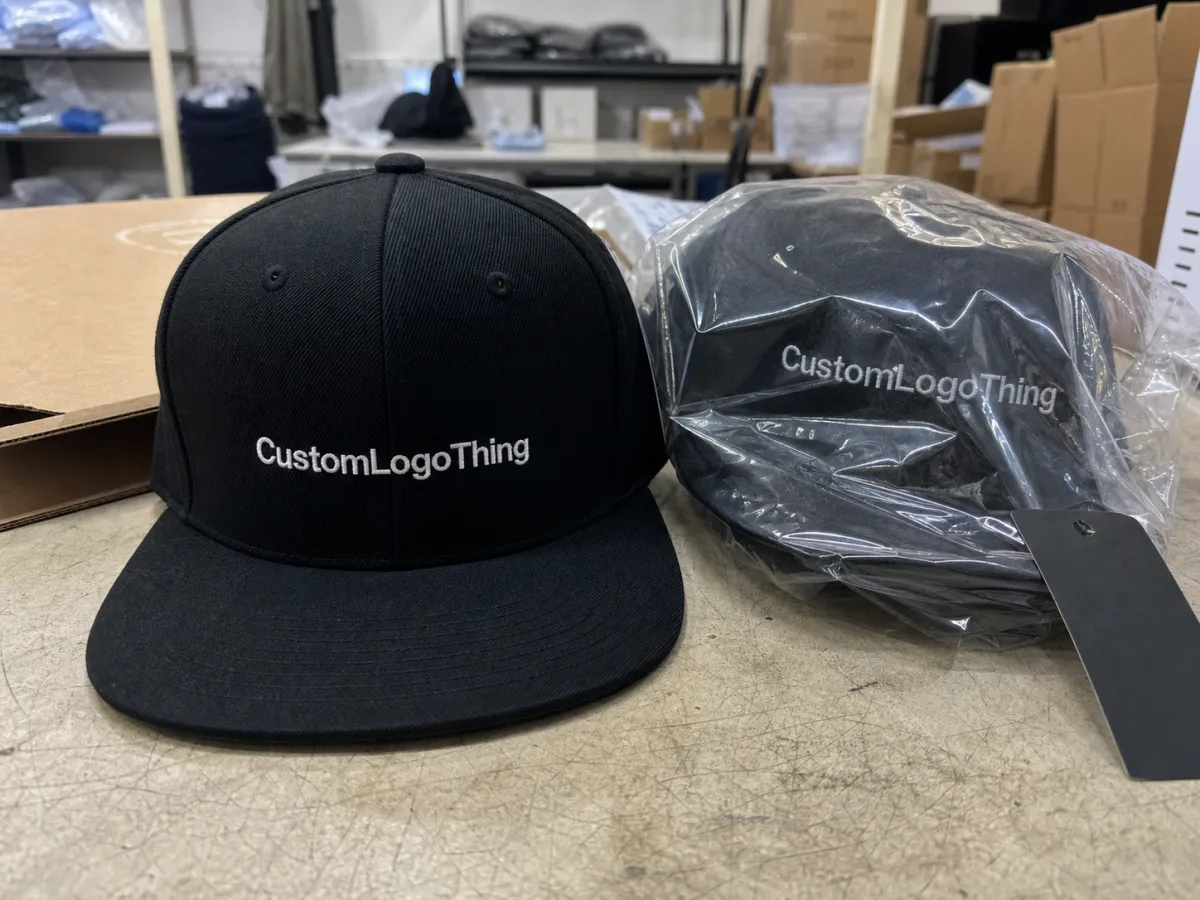
A snapback solves a real planning problem. Fitted caps can look sharp, but they introduce size risk the moment you buy for a mixed audience. Adjustable caps reduce that risk because the closure covers a wider fit range. For a launch team, a conference crew, or a retail buyer stocking a display, that is not a trend story. It is a practical advantage.
In bulk, the cap becomes a planning tool. A single style can cover staff wear, VIP gifts, and online sales without separate size tables or inventory splits. That means fewer SKUs, fewer mistakes, and a simpler replenishment path. From a merchandising perspective, the order behaves more like a master specification than a one-off souvenir run.
The resale angle is just as strong. A structured crown gives you a reliable front panel for embroidery or patches, while a flat brim keeps the silhouette bold in photos and on display. Buyers who already understand retail packaging know the value of visual consistency. Caps work the same way: the shape has to hold up under repetition. If the first sample looks aligned and the second does too, the shelf picture usually holds across hundreds of units.
Snapbacks also cross categories without much friction. Sports promotions like the clean profile. Streetwear brands like the posture of the crown and the flat brim. Corporate buyers like the controlled look. Even when the decoration changes, the underlying format stays familiar, which lowers hesitation for first-time runs where stakeholders want proof that the final product will match the mockup.
Picture a launch team ordering 500 units. They want three colors, one logo, and no surprise sizing issues. That is exactly where a custom snapback Caps Bulk Order performs best: the variation stays limited to color while the crown, closure, and decoration remain stable. The order is flexible, but not chaotic.
One more reason the format wins: it survives brand evolution. A company can keep the same cap silhouette across seasonal artwork, staff programs, and retail drops, then change the logo treatment as needed. That lowers the chance of product mismatch later. The cap becomes a platform rather than a one-off promotion, which is useful when inventory has to be planned months ahead.
If your project also touches other merchandise, a related resource such as Wholesale Programs can help you think through quantity breaks, and Custom Packaging Products is useful if the cap program needs coordinated branded packaging or retail packaging support.
Construction details buyers should confirm before quoting
The fastest way to get an accurate quote is to define the cap in parts. Start with the crown: structured or unstructured. A structured front panel keeps the shape upright and supports embroidery well. Unstructured styles feel softer, but they are less common for brand-heavy bulk orders because the logo surface can look relaxed instead of sharp.
Then choose profile. High-profile snapbacks sit taller and feel more classic in streetwear and sports promotions. Mid-profile caps read a little quieter and often suit corporate or retail applications better. Neither is universally better. The right choice depends on where the cap will be worn and how much visual space the logo needs.
The brim matters too. A flat brim gives the boldest look and usually photographs well. A gently curved brim can feel more familiar to some wearers, but it changes the presentation of the crown. If your merch team wants a consistent photo line for e-commerce or campaign assets, that detail should be fixed before proofing starts.
Closure selection affects both fit and perceived value. Plastic snaps are common and cost-efficient. Metal snaps look a little more premium and can change the tactile feel in-hand. Strap alternatives, while less typical for standard snapbacks, may suit special builds where the buyer wants a softer or more refined closure. These choices influence pricing, but they also affect how the cap feels the moment someone picks it up.
Decoration method is where many buyers lose time. Flat embroidery is the workhorse. 3D puff raises the logo and creates depth, but it needs clean shapes and enough space. Woven patches handle fine detail better than oversized stitch counts. Leather patches give a more premium finish for lifestyle brands. Sublimation or printed panels are useful when the artwork needs full-panel coverage, though they can alter the cap’s look more dramatically than embroidery.
Quality checks matter just as much as style choices. Ask for confirmation on interior taping, sweatband stitching, panel alignment, front panel support, and the way the brim is inserted. A cap can look fine in a mockup and still disappoint if the crown collapses, the seam pitch wanders, or the logo sits crooked. The buyer who checks construction first usually gets a cleaner run.
There are also smaller details that show up only after the order arrives. The sweatband material changes comfort in warm weather. The color of the underbrim affects the way the cap photographs. Thread sheen can make the logo appear brighter or flatter than expected. None of those details are dramatic, but all of them affect whether the finished cap feels intentional or merely assembled.
If you want a packaging benchmark for spec discipline, the ISTA testing framework is a useful reference point for thinking about handling and transit stress, even if you are not shipping fragile goods. For fiber sourcing and responsible materials, the FSC standard is often part of the broader conversation around approved materials and supply-chain claims.
Fabric, panels, closure, and decoration specifications
Before you request samples, lock the spec sheet. That usually means fabric, panel count, brim core, closure, decoration method, and thread or patch color. Cotton twill is common because it stitches cleanly and has a familiar hand. Polyester is often chosen for durability and color stability. Acrylic blends may be used when the buyer wants a lighter feel or a more classic cap texture.
Mesh-back styles add airflow and are often chosen for sports promotions or outdoor campaigns. If the cap is meant for retail packaging, the material choice should support the brand story. A soft cotton front with mesh back reads differently from a full twill build. Neither is wrong. The use case decides.
Panel count changes the visual outcome
Five-panel caps tend to give you a cleaner front area, which is useful for larger logos, text-heavy marks, or patch-based decoration. Six-panel caps create the familiar segmented dome and usually feel more traditional. That distinction sounds small, but it changes how the logo sits, where seams interrupt the artwork, and how the cap photographs from the front angle.
Decoration space should be planned like any other product packaging surface. If the mark is too close to a seam, the result can look cramped. If the patch is oversized, the front panel may buckle. For a custom snapback Caps Bulk Order, that is why a vector logo is not enough by itself. Placement notes and preferred size ranges should accompany it. A clean AI, EPS, or PDF file is only the starting point; the factory still needs practical boundaries on width, height, and safe distance from the seam lines.
Panel shape also influences stitch count and cost. A large logo on a five-panel cap may need less split stitching because the front is cleaner. The same artwork on a six-panel cap may need more placement adjustment to keep the seams from cutting through important details. Buyers comparing quotes should ask whether the artwork was priced as a standard placement or as a custom layout. That answer often explains why two quotes that look similar are not really comparable.
| Spec choice | Best for | Typical effect | Buyer note |
|---|---|---|---|
| Flat embroidery | Corporate wear, sports promos | Clean, cost-efficient, durable | Best when the logo is simple and bold |
| 3D puff embroidery | Streetwear, retail drops | Raised, premium-looking front panel | Needs stronger shapes and enough logo area |
| Woven patch | Detailed artwork, small text | Sharp detail with a flatter surface | Good option when stitch density would be too heavy |
| Leather patch | Lifestyle brands, premium merchandising | Material contrast and higher perceived value | Check deboss depth and color contrast early |
That table is not a theory exercise; it is a quoting shortcut. The more clearly you define the front-panel treatment, the less likely you are to get a sample that looks “close enough” but fails on texture, color, or proportion. For buyers comparing promotions to FAQ support or internal merch standards, that clarity saves rounds of revision.
One practical detail buyers often skip: underlay. Embroidery on thin fabric may need backing support to keep the front panel from puckering. On thicker materials, too much backing can make the crown feel stiff. A good factory will explain where that balance sits, because the right stabilizer choice affects both appearance and wearability.
Pricing, MOQ, and unit cost thresholds
Pricing is driven by more than the cap itself. Decoration method usually has the biggest impact, followed by stitch count, patch material, number of panels, color changes, packaging format, and whether the order needs special labeling. If the order includes hang tags, custom polybags, or retail boxing, the cost structure changes again. That is why one number is never enough.
A useful starting benchmark: simple embroidered snapbacks often price lower than patch-based or 3D puff styles, while premium finishes and special labeling raise the unit cost. For a run around 500 pieces, many buyers will see a broad range rather than a fixed figure. Depending on complexity, a realistic wholesale band may fall somewhere around $3.50-$8.50 per unit before freight, packaging upgrades, or destination charges. If the spec is simpler and the quantity climbs, the unit cost usually drops. If the order is small or highly customized, the opposite happens.
MOQ exists because setup work is real. Digitizing, sampling, machine setup, patch cutting, thread loading, and inspection all take time. A lower order quantity spreads those costs across fewer caps, which raises the per-unit figure. That is why some suppliers can quote 50 pieces for patch work but want 100 or 300 pieces for more complex embroidery. The floor changes with the method.
Comparing quotes requires discipline. Do not compare only the cap price. Compare the whole landed figure: cap, decoration, setup or digitizing, sampling, freight, and any import or destination charges. The vendor with the lowest line item is not always the best value if the rest of the bill is hidden in small print.
Ask for tiered pricing at multiple quantities: 100, 300, 500, and 1,000. That gives you a real picture of the cost curve. It also helps you decide whether the order should be sized for a test run, a launch push, or a full replenishment cycle. For a custom snapback caps bulk order, that tiered view matters more than a single “best price” number.
Buyer tip: if a quote does not separate the cap spec from the decoration and packing, ask for a revised sheet. Clear pricing is part of package branding discipline, even for apparel.
Freight can distort the picture more than buyers expect. A quote that looks strong on paper can lose its advantage once cartons are shipped by air instead of sea, or once repacking and labeling are added late in the process. The most useful comparison is not “what does one cap cost?” but “what will the finished, packed cap cost in the destination warehouse?” That is the number that affects margin.
Production steps and lead time from artwork to delivery
The process should be predictable. A standard order usually begins with the quote request, followed by artwork review, digitizing or patch prep, digital proof approval, sample sign-off if needed, bulk production, inspection, and shipping. That sequence sounds basic, but a surprising number of delays come from skipping one of those steps or changing the spec halfway through.
Lead time should always be split into two parts: approval time and factory time. Approval time depends on how quickly the buyer responds to mockups, color references, and sample comments. Factory time depends on the complexity of the build, current capacity, and whether the order includes multiple colors or special labeling. In practice, bulk production for a straightforward snapback order often falls around 12-18 business days after proof approval, with shipping added on top. More complex builds can take longer.
The biggest schedule risks are usually boring ones. Missing vector art. Slow sign-off. A last-minute change from flat embroidery to 3D puff. A request to split shipment across two locations. None of these are dramatic, but each one can extend the timeline. If the caps are tied to a launch or event, build in a buffer. It is far cheaper to hold extra time than to rush freight after production has already started.
Some orders also expand because of production complexity. Custom colors can require extra matching. Layered decoration may need additional proof cycles. Specialty patches can slow sampling. Mixed sizes of hang tags or custom inserts add another approval step. These are manageable issues, but only if the buyer knows they exist before the order is placed.
A simple planning rule works well: approval by one date, factory completion by another, shipping by a third. If any of those dates are fuzzy, the order is not really scheduled. That is true for caps just as much as it is for custom printed boxes or other product packaging projects. The buyer who separates artwork delay from production delay usually gets a much more honest timeline.
Quality control should happen at more than one point. The proof stage catches layout issues. The pre-production sample catches color and proportion issues. Final inspection catches sewing defects, size variation, and packing mistakes. If a supplier only talks about the final shipment and not the checkpoints along the way, the order is carrying more risk than the quote admits.
What separates a reliable cap supplier from a cheap quote
Cheap quotes are easy to find. Reliable ones are rarer. The difference usually shows up in proofing, communication, and defect control. A serious supplier confirms the spec in writing, shows the artwork clearly, and explains what will happen if the logo needs revision or the patch size does not fit the panel. That is not extra service. It is the job.
Look for sample consistency. If the sample and bulk run do not match, the quoted price means little. Ask whether the vendor documents color references, stitch count, and placement dimensions. Ask for photos during production if the order is large enough to justify it. A supplier that refuses to show process details is asking you to buy on trust alone, which is risky for any custom snapback caps bulk order.
Defect control matters more than headline price. A low quote can become expensive fast if the batch arrives with crooked patches, weak stitching, uneven color, or mismatched closures. That cost shows up in rework, customer complaints, and damaged brand perception. Buyers who manage retail packaging programs already know this logic: one defective run can cost more than a higher-priced but cleaner supply chain.
Honesty is a useful signal. Good vendors will say what can and cannot be done inside your budget, MOQ, or turnaround window. They will not promise a complicated build at a budget price and then backtrack after proof approval. They will also tell you whether size consistency, replacement terms, or revision handling is documented. Those details sound minor until the order is already in motion.
The best suppliers behave like a production partner, not a quote engine. They reduce guesswork. They keep revisions organized. They explain trade-offs. And they know that a buyer comparing merchandising against Custom Packaging Products will notice whether the cap order has the same level of control.
Another sign of reliability is how the factory handles substitutions. If a fabric shade, snap color, or thread shade is unavailable, a good supplier does not bury the change. They ask for approval before producing the alternate part. That matters because cap buyers often expect exact visual continuity across reorders. A small deviation may be acceptable on paper and still be enough to break the set in a retail display.
For a broad sustainability lens, the EPA remains a useful reference for responsible materials and waste thinking. That may not decide your snapback spec, but it does shape how many buyers now evaluate suppliers across the full branded packaging stack.
Next steps to lock specs, approve proof, and place order
Start with three things: logo files, target quantity, and the exact use case. Those details determine the fastest quote and the cleanest proof. If you already know the cap color, closure type, and decoration method, include them up front. A clean brief saves time and usually improves pricing accuracy.
Then make the decision checklist short. Choose crown style first. Pick closure type next. Decide on logo method. Confirm packaging. If the cap will sit beside other branded packaging, be intentional about the finish so the set feels coordinated. That same logic applies when the order needs to support retail packaging or a launch kit rather than just sit in a box.
Approval should follow a simple sequence. Review the mockup. Confirm thread or patch colors. Sign off on the pre-production proof. Verify shipping address and deadline. If anything is ambiguous, ask before production starts, not after. Most mistakes in a custom snapback caps bulk order are not manufacturing surprises; they are approval mistakes.
If the supplier offers a sample, check it against your spec sheet, not your memory. Measure logo placement. Compare colors under normal light. Feel the closure. Inspect the front panel structure. If it passes those checks, you can move with much more confidence.
Custom snapback programs work best when the buyer treats them like a controlled product launch, not a casual merchandise buy. Once the specs, price tiers, and timeline are confirmed in writing, the order becomes straightforward. That is the point. A well-planned custom snapback caps bulk order should be repeatable, measurable, and easy to reorder when the first run performs.
One final caution: the cheapest spec is not always the smartest spec. If the cap is going to be worn daily, sold at retail, or photographed heavily, spend where it changes the outcome most. Often that means a better front-panel structure, clearer decoration, and a closure that does not feel flimsy after a week of use. Buyers rarely regret paying for the parts people touch first.
What is the usual MOQ for a custom snapback caps bulk order?
MOQ varies by decoration method, but patch and embroidery orders often start lower than fully custom fabric builds. Ask for tiered pricing at your target quantity so you can see the cost break between test runs and true bulk pricing. If you need mixed colors, confirm whether the MOQ applies per colorway or per total order. Some suppliers also treat each artwork variation as its own minimum, which can change the math fast.
How do I compare unit cost on custom snapback caps bulk orders?
Compare the full landed quote, not just the cap price, because setup, sampling, freight, and packaging can change the real unit cost. Use the same spec across vendors so the price comparison is apples to apples. Request pricing at multiple quantities to see where the best cost-per-cap threshold begins. If one vendor includes digitizing or basic labeling and another does not, adjust for that before you judge the quote.
How long does production usually take for custom snapback caps bulk order projects?
Lead time usually starts after proof approval, not after the first inquiry. Artwork fixes, digitizing, and sample sign-off can add several days before bulk production begins. Shipping time should be counted separately from factory time if the order has a firm event date. For complex patch work, layered embroidery, or multiple colorways, plan for extra review cycles even if the base production window looks short.
Can I mix embroidery, patches, or colors in one custom snapback bulk order?
Yes, but mixed decoration or color sets can raise setup costs and sometimes increase the MOQ. Ask whether each variation is treated as a separate SKU or as one combined run. Keep one core spec if you want the best unit price and the least production complexity. A two-color program with one logo often prices far better than a multi-logo order with different patch materials.
What files do you need to start a quote for custom snapback caps bulk order?
Send a vector logo file if possible, plus any brand color references and placement notes. Include the quantity, cap color, closure preference, and decoration method so the quote reflects the actual build. If you do not have final artwork, provide the cleanest available file and ask for digitizing support. The more specific the placement instructions are, the fewer revisions you usually need later.
What should I inspect on the sample before approving production?
Check the front-panel shape, the size and alignment of the logo, the feel of the closure, the color match under normal light, and the firmness of the crown. If the cap uses embroidery, inspect the stitch edges for clean fill and no loose threads. If it uses a patch, look closely at edges, adhesion, and whether the patch sits flat across the panel seam. Small problems in the sample often become bigger problems in the bulk run.

