Custom Dad Hats for university club stores work because they solve a very specific campus problem: they are easy to wear, easy to restock, and easy to price without turning the table into a clearance rack. Students tend to buy what feels useful first and expressive second, so the best hats are usually the ones that fit into real life after the event ends. A clean cap with a modest logo can move with a hoodie, a polo, or a backpack, which means it keeps earning its place long after welcome week is over.
The trick is not making a hat that tries too hard. Clubs usually do better with a retail-minded item than a novelty piece, especially when the store needs margin, consistency, and a product that does not require a long explanation. That is why Custom Dad Hats for university club stores continue to perform well: the shape is relaxed, the sizing is forgiving, and the decoration area is small enough to keep the artwork honest.
When a campus buyer is comparing options, the decision usually comes down to design clarity, reorderability, turnaround, and shelf appeal. If the hat misses on any of those points, the order can still be approved on paper and fail in the store. If it hits all four, the product tends to sell quietly and reliably, which is exactly what most club programs need.
Why Custom Dad Hats for University Club Stores Sell So Well
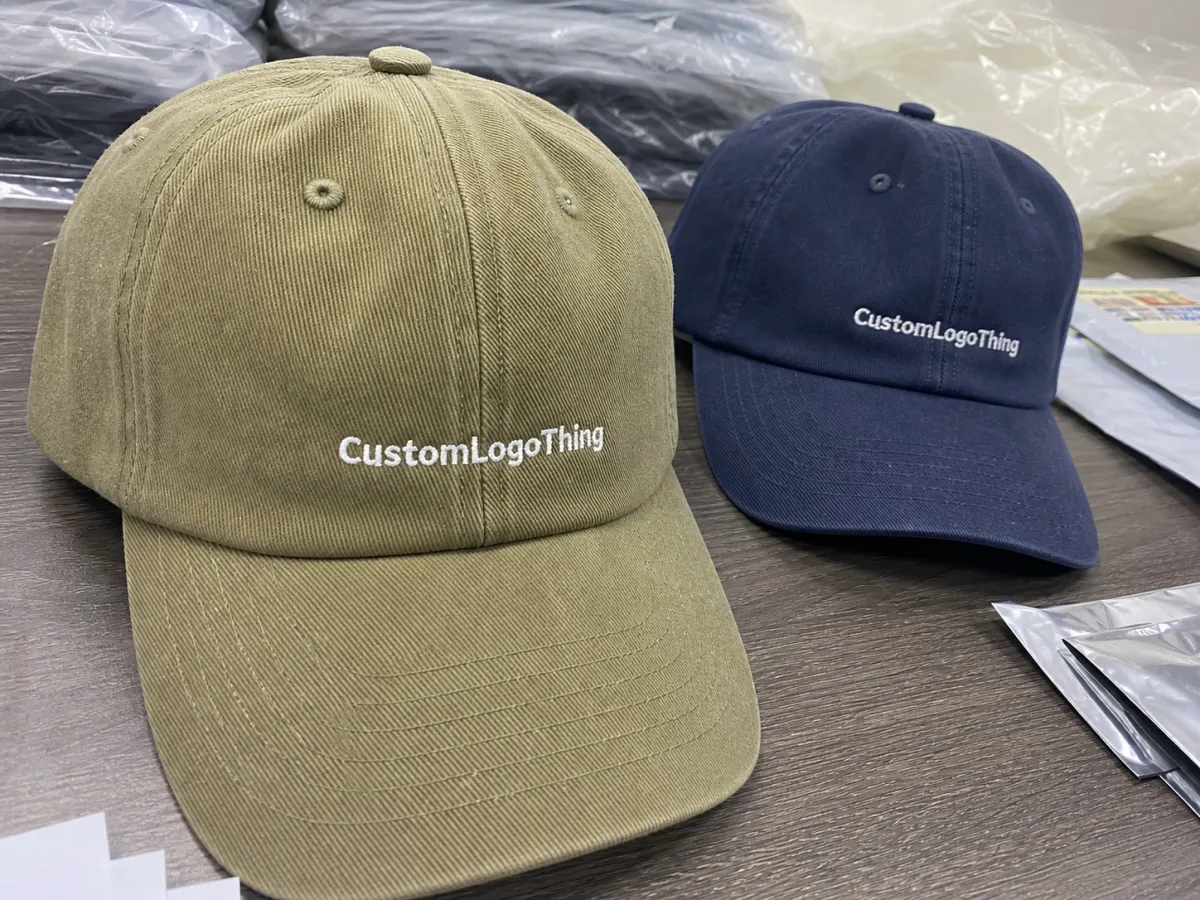
Dad hats do well on campus because they do not ask much from the buyer. They are soft, approachable, and familiar, which makes them easier to grab than a stiff fashion cap or a loud novelty style. A foam trucker may get attention for a weekend, but a relaxed cotton cap is the kind of thing a student will wear again, and that repeat wear is what gives club merch its value.
The silhouette helps. An unstructured crown sits lower and softer on the head, so it flatters more faces and does not depend on a precise fit. The adjustable closure takes care of most sizing issues. That matters for university stores, where a good product has to work for students, alumni, faculty, and visitors without creating a complicated inventory problem.
There is also a straightforward business reason these hats keep selling: they can be priced in a range that feels normal for campus merch while still leaving room for a fundraiser or store margin. A club buying 75 or 100 units can often land on a unit cost that is low enough to resell comfortably, but not so low that the hat feels disposable. That balance is hard to beat.
“If the logo reads cleanly from six feet away, the hat usually sells from the rack.”
That is the test worth using. Not whether the mockup looks clever. Not whether the design is packed with detail. The real question is whether the hat looks like something a student would wear to class, to a game, or to the library without thinking twice. If the answer is yes, it is much closer to a retail item than a giveaway.
For club buyers, the product also has to survive the realities of a semester. Inventory may sit for a few weeks, then move quickly during a rush period. Reorders need to match the first run closely enough that the store does not feel inconsistent. A hat with a clean front mark, stable color, and dependable build is easier to manage than something trendy but fragile.
Specs That Make a Hat Feel Campus-Ready
The strongest campus hats usually start with an unstructured or lightly structured crown, a curved brim, and a fabric that feels broken-in rather than stiff. Cotton twill is a common choice because it gives the hat a soft retail look and takes decoration well. Brushed cotton and washed cotton finishes can work too, especially when the club wants a more relaxed, lived-in feel. Polyester blends have a place, but they lean more athletic unless the whole design is built around that look.
For construction, six-panel, low-profile caps are the safest bet. They offer enough front space for a logo without turning the panel into a rigid billboard. A pre-curved brim usually looks more natural on campus merch than a flat bill, and it removes one more step for the buyer. Small decisions like that matter because they affect how often the hat actually gets worn.
Closures deserve more attention than they usually get. A fabric strap with a brass buckle feels classic and slightly more premium. A metal buckle with a tuck-in strap gives a tidy finish. A snapback closure can still work, but once the crown gets too structured and the bill too stiff, the cap starts drifting away from the easygoing look that makes this category reliable. If the club wants a sporty product, that is fine. If not, keep the build relaxed.
| Decoration Method | Best Use | Look and Feel | Typical Cost Impact |
|---|---|---|---|
| Flat embroidery | Simple logos, initials, campus marks | Clean, durable, easy to read | Lowest to moderate |
| 3D puff embroidery | Bold letters or blocky icons | Raised, sporty, high-contrast | Moderate |
| Woven patch | Detailed crests or multi-line logos | Crisp detail without heavy stitching | Moderate to higher |
| Leather patch | Minimal marks, heritage feel | Premium, simple, fashion-forward | Moderate to higher |
Flat embroidery is the safest option when the logo is simple and legible. It holds up well, stays clean at retail distance, and usually keeps the quote under control. 3D puff works best on bold letters or geometric marks that can handle extra height. Woven patches help when the art needs more detail than stitches can reasonably carry. Leather patches are less about complexity and more about tone; they give the hat a sharper, more premium feel, but they are not ideal for every campus identity.
One common mistake is trying to force fine-line artwork into a soft cap without simplifying it first. A tiny script font does not become readable because it is stitched. A detailed seal can look crisp in a digital proof and turn muddy when it is reduced to hat size. The front panel bends, the crown softens, and the logo has to survive all of that.
That is why sample approval matters. Thread matching, patch edge finish, center-front placement, and crown behavior all need to be checked on a physical hat. A proof can show scale, but it cannot show how the logo sits when the fabric relaxes. If the design feels crowded on a sample, it will feel crowded on the shelf too.
Cost, MOQ, and Unit Pricing for Club Budgets
Cost is where a club either gets disciplined or gets surprised. The main drivers are decoration method, stitch count, patch complexity, color changes, artwork cleanup, and quantity tier. A simple one-color embroidery order is usually easier to hold in budget than a multi-element patch with several thread colors and a lot of line detail. That is not a vendor trick; it is just labor.
For small campus runs, a realistic finished-price range often looks like this: $9 to $15 per hat at around 100 units for simple embroidery, $12 to $20 per hat for smaller 50-unit orders, and $7 to $12 per hat if the club is ordering in a larger tier with a straightforward build. Patch hats usually land a little higher than plain embroidery. Leather patches and more complicated woven patches can push the quote upward, especially if the logo requires cleanup before production.
Setup fees are easy to forget until the quote arrives. Digitizing, patch tooling, and sample prep can add fixed costs that range from modest to a few hundred dollars depending on the method and vendor. Freight matters too. A hat that looks affordable before shipping can become less affordable once cartons, transit, and rush handling are included. That is normal, but it should be visible early.
The minimum order quantity should follow risk tolerance, not optimism.
- Lower minimums help test demand, but the unit price usually rises.
- Mid-sized runs often give the best balance of margin and flexibility.
- Large runs reduce unit cost, but only if the design is stable and the sell-through is proven.
For a first order, 50 to 100 units is a sensible range for many university clubs. That is enough to see how the hat performs without overcommitting to a style that has not been tested. If the club already has consistent traffic or a strong alumni base, 150 to 250 units can make sense, especially for a recurring event, a program anniversary, or a homecoming release. The important part is to stay narrow: one logo, one main colorway, one decoration method. Every extra variable adds handling cost and increases the chance of leftovers.
If the club also needs shipping cartons, hang tags, or display pieces, keep the merchandising system consistent with Custom Packaging Products so the retail setup feels deliberate rather than improvised.
Process, Timeline, and Turnaround From Proof to Delivery
The ordering sequence should be calm and predictable: inquiry, artwork review, mockup, proof approval, production, packing, shipping. That is the workflow that keeps the job moving. If the process becomes unclear, delays follow quickly. University club orders rarely need drama; they need prompt decisions and clean artwork.
Timing depends on decoration method and the condition of the files. A simple embroidered order often moves in about 12 to 18 business days after proof approval. Patch-heavy orders can take longer, particularly if tooling or multiple approvals are involved. Shipping adds more time depending on the destination and whether the order is moving to a campus warehouse, a retail receiving dock, or a student-run store. When there is a hard event date, the safer move is to build in an extra week of buffer.
The usual delay points are not mysterious:
- Artwork arrives as a JPEG instead of vector art.
- Thread colors need to be matched or simplified.
- The club changes quantity after the proof has already been approved.
- Multiple people need to sign off, and the approval chain slows down.
If the order is shipping to campus, ask how cartons are packed and handled. Good vendors should be able to speak clearly about carton strength, internal packing, and what happens during transit. Shipping standards matter more than most people realize once boxes start getting stacked, transferred, and moved across regions. For a broader view of packaging durability, the ISTA test protocols overview at ISTA is useful background.
Do not rush the proof just because the event calendar is getting crowded. A hurried approval is one of the easiest ways to turn a good hat into one that feels off by a quarter inch. Slow down for the artwork and placement check, then move quickly everywhere else. That is usually the cleanest way to keep the order on schedule without sacrificing the finished product.
Mistakes That Make Club Store Hats Look Cheap
The fastest way to make a hat feel cheap is to ignore the shape. Oversized logos crowd the front panel and make the crown look rigid. Dad hats need breathing room. If the art fills every inch, the product starts reading more like an event giveaway than retail merch.
Weak contrast causes a different kind of problem. Dark thread on dark fabric, pale thread on faded fabric, or a logo made from thin lines all reduce visibility from normal viewing distance. The mockup might still look fine on a screen, but the student walking past a display does not see the same thing. In a retail setting, the logo has to register fast.
Too many colors can hurt both appearance and pricing. Metallic thread, gradients, and tiny multicolor details are easy to admire in a digital proof and awkward to execute on a soft cap. They add complexity without necessarily adding value. In most campus settings, one or two colors are enough. If the mark needs six, the better move is usually simplifying the logo before production.
Skipping a physical sample is another expensive habit. Under store lighting, a patch can appear glossier than expected, thread can read darker, and placement can feel slightly off-center even if the proof looked perfect. A sample lets the club check the real scale, the feel of the finish, and the balance of the front panel before the full run ships. That is much cheaper than dealing with a disappointed committee later.
Another miss is treating the hat as a standalone item instead of part of the store’s broader brand system. If the club also uses branded boxes, mailers, inserts, or display cards, the hat should fit that language. Consistent logo treatment, a tight color palette, and similar finishes across the store make the table look intentional. That consistency matters because university merch is judged quickly, often before anyone has time to think about it.
Expert Tips for Artwork, Color, and Placement
Keep the artwork simple. One dominant mark, one supporting color, and enough open space for the hat shape to do some of the visual work. That is usually the strongest formula for Custom Dad Hats for university club stores. The best versions often look almost restrained at first glance, then better the longer you look at them. That kind of control is not accidental.
Placement should match the visual weight of the logo. Center-front embroidery is the safest option for most clubs because it is balanced, familiar, and easy to reorder. A small side hit can work if the club wants a more retail-forward or lifestyle feel, but it should be used sparingly. Scatter too many marks across the cap and the relaxed mood disappears.
Color choice should start with campus identity, then be adjusted for contrast and wearability. School colors are the obvious reference point, but they often need restraint. If the palette is bright, a washed neutral cap body can calm the design down. If the palette is dark, a bone, stone, khaki, or faded olive cap usually gives the logo more room to breathe.
A sensible assortment usually starts with one core colorway and adds a second only after the first run has shown real demand. Black and navy are the safest starting points. Tan and washed olive can work well when the club wants something softer and more lifestyle-driven. I would not rush into five colors unless the store already has proof that students want that much variety. Too much choice often creates inventory that takes too long to move.
For clubs that care about material cues beyond the hat itself, the packaging side can support the story. If the order includes hang tags, inserts, or shipper materials, FSC-certified paper from FSC is a clean option. It will not sell the hat by itself, but it does help when the store wants the whole presentation to feel more intentional.
Next Steps for a Clean, Reorder-Friendly Launch
Before asking for quotes, lock down four things: quantity, decoration method, artwork format, and budget ceiling. If those are vague, every supplier conversation becomes a loop of clarifying questions. That slows the process and makes comparisons harder than they need to be. A clean brief saves time on both sides.
For a flagship campus store or a higher-visibility drop, ask for a digital proof and a physical sample before the full run. That extra step is usually worth it. It lets the club confirm logo size, stitch density, thread color, and how the cap sits on a real head instead of a rendering. Once the order is approved, keep a simple spec record: panel placement, thread codes, patch material, closure type, and any notes that affected fit or finish.
If the club wants the hat to be reorder-friendly, create a small calendar around it. Track semester breaks, event seasons, and the inventory level that should trigger the next order. Most clubs wait too long and then try to re-source under pressure. A reorder plan keeps the second run easier than the first, which is the whole advantage of choosing a repeatable product in the first place.
Done well, custom dad hats for university club stores are low-risk, easy to wear, and simple to bring back season after season. They do not need hype. They need clean specs, a realistic budget, and enough visual restraint to look good outside the mockup.
FAQ
What decoration method works best for custom dad hats for university club stores?
Flat embroidery is usually the safest starting point because it is clean, durable, and easy to read at retail distance. Patch decoration works well when the logo needs more detail or a more premium feel. The better choice is the one that fits the artwork and the hat shape, not the one that looks flashiest in a proof.
How many hats should a university club store order to get a better unit price?
Pricing usually improves as the order moves out of test-run territory and into a more efficient production tier. For many clubs, 50 to 100 units is a practical starting range because it balances risk, inventory, and margin. If demand is uncertain, start smaller only if the higher unit cost still leaves room to profit.
How long do custom dad hats for university club stores usually take?
A simple embroidered order often takes about 12 to 18 business days after proof approval, plus shipping time. Patch-heavy or highly customized versions can take longer. Delays usually come from artwork cleanup, late approvals, or last-minute quantity changes.
What logo size looks best on dad hats for campus merch?
Keep the front logo small enough to match the relaxed shape of the hat. A bold, readable mark almost always performs better than tiny detail work or long text lines. If the logo needs more room to stay legible, simplify the artwork before making the hat bigger.
Can club stores mix colors in one custom dad hat order?
Usually yes, but every extra color can affect pricing and inventory planning. A tight assortment of two or three colors is easier to sell and reorder than a broad mix nobody asked for. The most reliable approach is to start with one strong campus colorway, then test a second after the first run shows what students actually buy.

