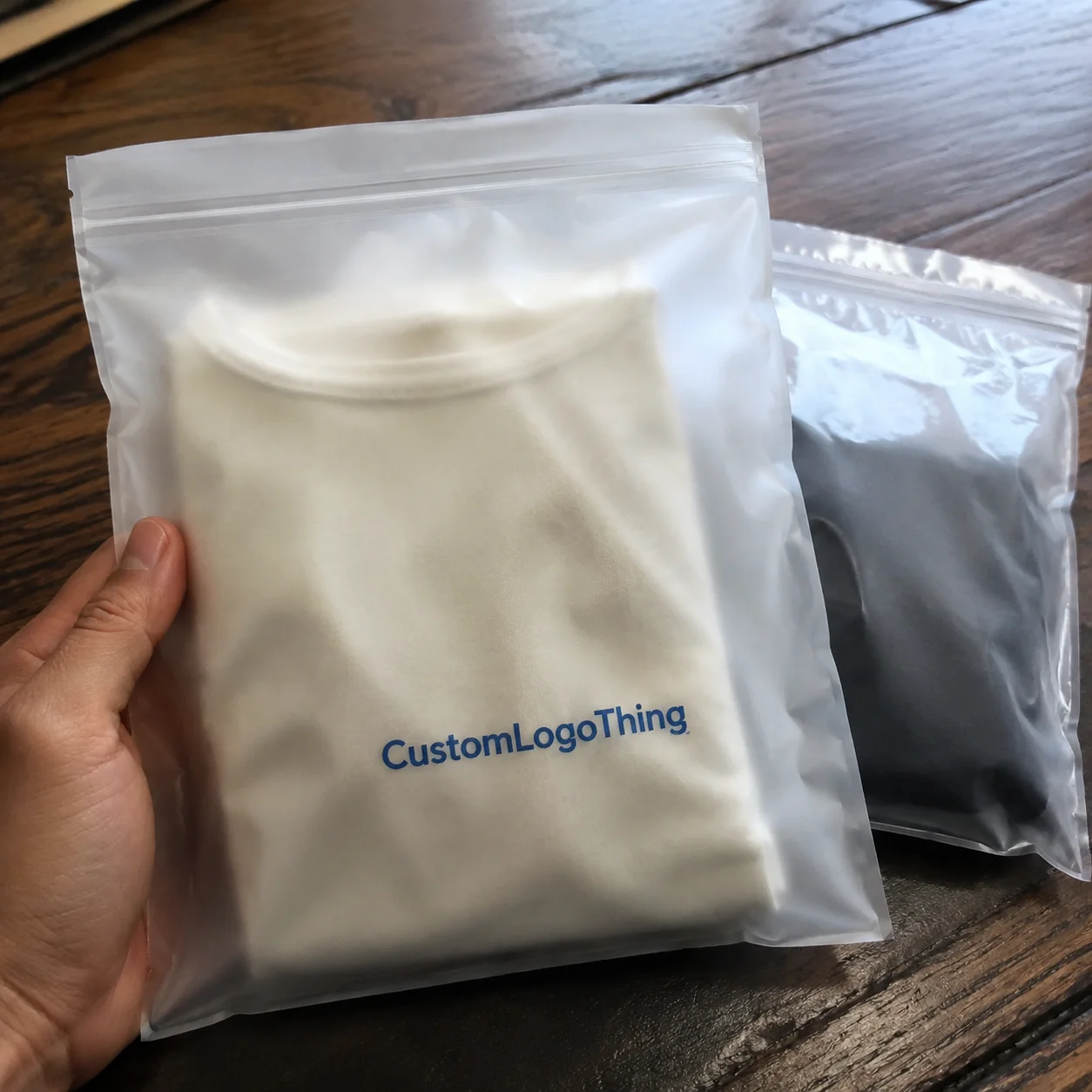
Most packaging decisions start with a mockup and a unit price. That is understandable, but it is also how brands end up ordering a bag that looks fine on screen and fails once it meets real handling. If you are evaluating die cut handle Bags for Ecommerce brands material comparison, the practical question is not which film looks prettiest in a rendering. It is which one can survive packing, transit, stack pressure, and repeated carrying without splitting at the handle or wrinkling into something that feels disposable.
The difference between a bag that performs and one that creates complaints is usually small on paper and obvious in use. A slightly better gauge, a better seal width, or a more suitable film structure can be the gap between a bag that holds its shape and one that comes back with crushed corners, pinholes, or a handle cut that starts to stretch after the first lift. Buyers who only compare artwork miss most of the real risk.
Good packaging testing does not happen on a desk. It happens when a filled bag gets rubbed against corrugated cardboard, dropped into a mailer, stacked on a cart, and lifted by the handle more than once. That is the condition set that matters for ecommerce brands. The material should be chosen for those conditions, not for a sales sheet.
Why material choice changes everything after checkout
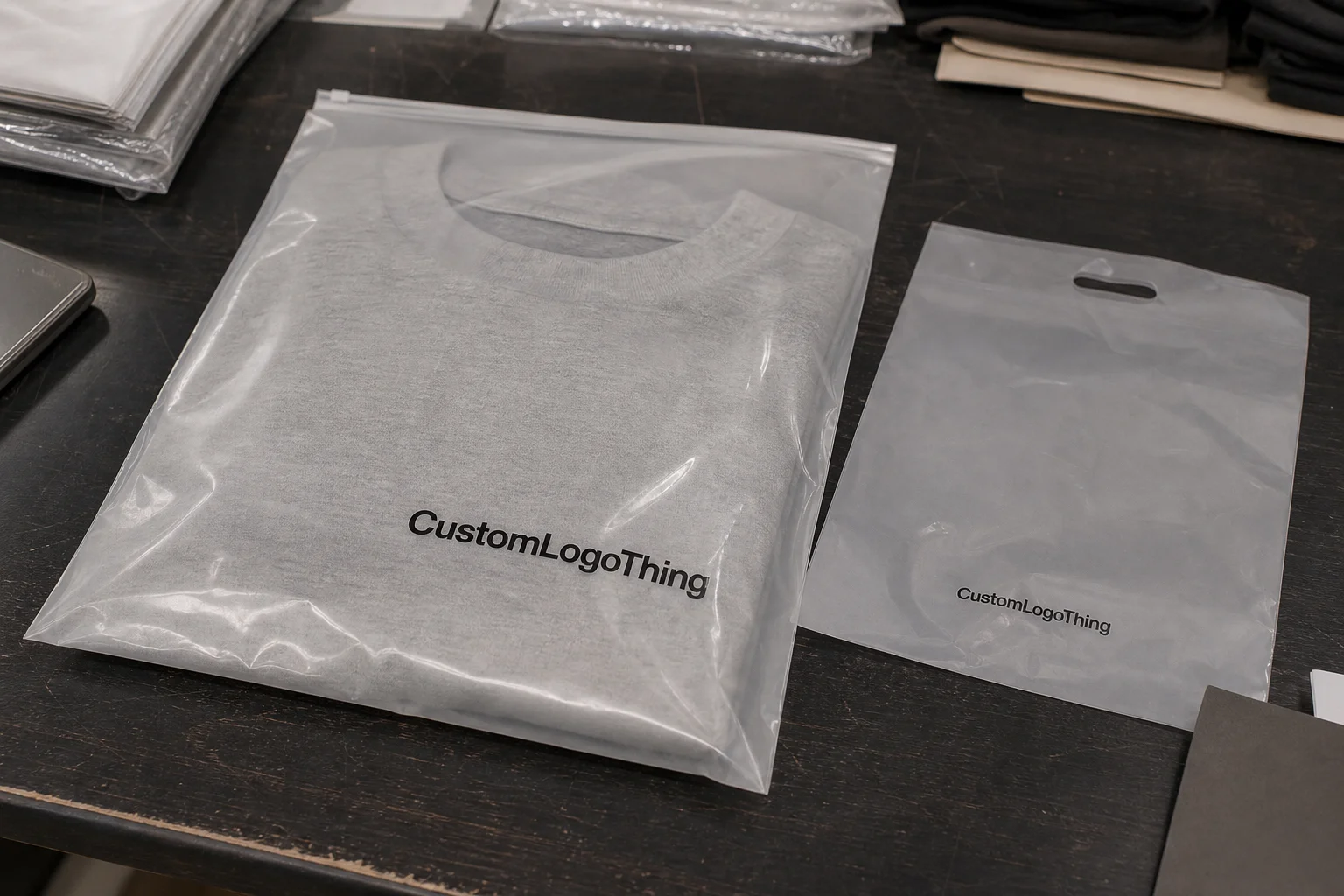
The weakest point on a die cut handle bag is usually not the printed panel. It is the top edge around the handle or the seal area where stress concentrates. The bag can look thick and still fail if the film is too stiff, the cut is too aggressive, or the load sits too close to the top. That matters more for ecommerce than for in-store handoff because the bag may travel through a fulfillment line, sit in a carrier bin, then get carried again by the customer.
Material choice also affects how the bag feels in use. A soft LDPE film bends and returns better, so it tends to feel more forgiving in the hand. HDPE is lighter and often cheaper, but it can sound crisper, feel thinner, and read as less premium even when it technically meets the load requirement. Co-extruded or blended structures sit between those extremes and are often chosen when brands want a more controlled look or stronger performance without moving into a specialty stock.
Before a quote makes sense, compare the spec set below:
- Film thickness, usually expressed in microns or mils.
- Film type, such as HDPE, LDPE, co-ex, or recycled-content blend.
- Handle geometry, including the size and placement of the die cut opening.
- Seal width, which affects tear resistance and load stability.
- Print coverage, especially if the artwork uses dark backgrounds or full-bleed color.
- Finish and clarity, which affect how clean the bag looks on arrival.
A bag rarely fails because the artwork was weak. It fails because the structure was asked to do more than the material could comfortably handle.
Brands also underestimate how much the rest of the packaging system affects the bag. If the die cut carrier sits inside a shipper, a mailer, or another protective layer, the bag does not need to behave like a standalone shopping bag. If it is the only outer package the customer sees, the material has to carry more of the visual and physical load. That is why a spec that works well for one program can look underbuilt in another.
Die cut handle bags for ecommerce brands material comparison
For die cut handle Bags for Ecommerce brands material comparison, the core decision usually comes down to HDPE, LDPE, co-extruded film, and recycled-content options. There is no universal winner. Each one changes the feel, print behavior, and failure risk in a slightly different way, and those differences become obvious once the bag is filled.
| Material | Feel | Strength profile | Print behavior | Price direction |
|---|---|---|---|---|
| HDPE | Crisp, light, slightly noisy | Good for lighter products; less forgiving on sharp corners | Acceptable for simple graphics and limited color coverage | Lowest |
| LDPE | Softer, smoother, more premium in hand | Better flex and puncture resistance; better for mixed or heavier folded goods | Usually cleaner for solid branding and cleaner tonal areas | Mid |
| Co-ex / blended film | More engineered, often with a controlled finish | Tougher or clearer depending on the layer structure | Better control for dense artwork, gradients, and small type | Mid to higher |
| Recycled-content film | Varies by source and blend | Can perform well, but consistency matters more than with virgin stock | Can be good, though availability and surface uniformity may vary | Often higher |
HDPE is usually the most economical choice for light-duty ecommerce packaging. It works well for folded tees, slim accessories, lightweight beauty sets, and other items that do not create much point pressure. The downside is perception. Even when the bag is functional, the crisp feel can read as thin or basic if the brand is trying to signal something more polished.
LDPE is the more forgiving all-rounder. It flexes better, which helps with puncture resistance and handle comfort, and it tends to tolerate the small abuses that happen in fulfillment and transport. For apparel, lifestyle, and heavier folded goods, this is often the most balanced option. The bag usually feels quieter in the hand, the surface can take print a little more cleanly, and the customer is less likely to read the packaging as inexpensive.
Co-extruded film makes sense when one property matters more than the others. A brand may want better clarity, a tighter feel, or a tougher outer layer without increasing thickness everywhere. That is useful when the artwork has dense blocks of color or fine type that would otherwise blur on a less controlled surface. It is not automatically the right answer, but it is a sensible one when the visual standard is high and the bag must still hold up in use.
Recycled-content film brings its own tradeoffs. Buyers usually want it for a reason: internal sustainability targets, retailer requirements, or customer expectation. The caution is consistency. Recycled-content material can vary more in appearance and performance, and it may not run in every thickness or finish. If the material is uneven, the handle area and seal line will show it first. That is why sample approval matters more here than in a standard virgin film order.
For thickness, a practical starting point is often enough to narrow the field. Light-duty HDPE bags may sit around 15 to 25 microns. LDPE frequently lands around 25 to 40 microns for general ecommerce use, and heavier applications may need more. Co-ex and recycled blends can land above or below those ranges depending on the layer structure, but the real test is not the number on the spec sheet. It is whether the bag holds a packed item without excessive stretch, seal stress, or a handle that feels sharp in the hand.
Sustainability language should stay accurate. Recyclable, recycled-content, reusable, and compostable are not interchangeable claims, and they do not all apply to the same film structure. Local collection systems also matter. A bag that can technically be recycled is not useful if the market you ship into does not collect that film type. The relevant standard is the one your customer can actually use, not the one that sounds best in marketing copy.
How the bag construction actually works
The die cut handle seems simple until you watch where the stress goes. The handle opening concentrates force in a small area, the top edge carries the lift, and the seal has to keep the bag stable while it is moving. If any one of those parts is weak, the bag can fail even when the film thickness looks generous on paper. A thicker bag with a weak seal is still a weak bag.
Geometry matters as much as material. If the handle cut sits too close to the top edge, the load transfers into a smaller strip of film and starts to stretch it. If the seal width is too narrow, the bag can shift when carried and feel unstable. If the bag body is too small for the product, packers force the item into the shape, which adds creasing and stress before the customer even sees it.
Width and gusset depth also change how the bag behaves. A wider bag can distribute weight better, but oversizing creates waste and a loose, unfinished look. Under-sizing is worse. It can force the product into a compressed shape, make the print layout look awkward, and slow down packing because the team has to fight the bag just to get the item inside cleanly.
Print performance depends on the film surface. Some materials hold crisp detail and bright solids; others need more careful color management so the final result does not look dull or muddy. Dark backgrounds with light type are especially sensitive to material choice. A beautiful render is not a substitute for a production proof on the exact substrate.
For QC, the checks that matter most are straightforward: a handle pull test, a seal inspection, an ink rub test, and a simple carry test with the real product inside. If the bag fails under light rubbing against carton edges, the spec is not strong enough for a fulfillment environment. If the print scuffs easily, the finish needs to change. If the handle feels sharp, the cut or top reinforcement is wrong.
The best comparison method is to test against the actual packed item rather than a weight rating alone. Weight helps, but it does not tell the full story. A small box with hard corners can punish a bag more than a softer item of the same mass. That is why product shape, not just product weight, should drive the final decision.
Cost, pricing, and MOQ tradeoffs that change the quote
Most quote differences can be traced back to the same few inputs: resin type, thickness, bag size, print count, coverage level, handle reinforcement, and packing format. If two quotes look similar but are nowhere near the same price, one of those inputs almost always differs. Buyers get into trouble when they compare only the unit price and ignore what was actually specified.
MOQ affects the economics quickly. Setup, print prep, and production time get spread across the order, so smaller runs usually carry a higher unit cost. Larger runs lower the per-bag price, but only if the brand can store the inventory and use it before the design changes. A lower unit price is not a win if it creates dead stock.
For common ecommerce orders, the pricing pattern usually looks like this: plain HDPE is the lowest entry point, LDPE sits in the middle because it feels better and often performs better, and co-ex or recycled-content film costs more once sourcing, consistency, or additional print control enters the job. Full-bleed graphics, white ink, and reinforced handles can push the quote up faster than many buyers expect.
| Cost driver | Why it changes the quote | Buyer takeaway |
|---|---|---|
| Thickness / gauge | More resin usually means more cost and more structure | Specify only the thickness you actually need |
| Print colors | Each color adds setup, registration work, and press time | Keep artwork clean and efficient |
| Ink coverage | Heavy coverage uses more material and requires tighter control | Expect a higher cost for full-bleed graphics |
| Handle reinforcement | Extra structure improves durability but adds material and labor | Worth paying for on heavier or premium packs |
| Freight and carton pack | Packing density and shipping weight change landed cost | Compare landed unit cost, not just ex-factory price |
Hidden costs are where buyers get surprised. Freight, proofs, setup charges, overage tolerance, and storage can change the final number enough to erase the apparent savings from a cheaper quote. A landed-cost comparison is the only one that really matters. It tells you what the bag costs where it will actually be used, not just what it costs on paper.
For a typical custom run around 5,000 pieces, the spread between a plain light-duty HDPE bag and a heavier LDPE or co-ex build can be noticeable even before print complexity is added. In practical terms, a small change in gauge or a shift to better print coverage can move the order from low single-digit cents into the mid single-digit range or beyond, depending on size and finish. That is normal. The more important question is whether the added cost reduces failures, customer complaints, or emergency replenishment.
Production steps, lead time, and turnaround expectations
A clean production path usually follows the same sequence: spec confirmation, artwork prep, proof approval, sample review if needed, production, quality control, packing, and shipment. If one of those steps is skipped, the issue almost always returns later as a delay or a defect. The skipped step did not disappear. It just moved downstream.
Lead time depends on the spec more than people like to admit. Simple artwork and readily available film move faster. Full-coverage print, recycled-content sourcing, or a new structural dimension can add a proof round and push the schedule out. That is not a supplier problem by itself; it is a normal consequence of custom packaging.
The delays that cause the most damage are usually mundane:
- Artwork approvals that sit untouched for days.
- Dimensions that were never confirmed against the actual product.
- Color changes after the proof has already been signed off.
- Sample requests made after the production slot is reserved.
- Late changes to the handle or seal that force a new setup.
For straightforward jobs, a common turnaround window is about 12 to 20 business days after proof approval. Complex print or special materials can take longer. Rush work is possible in some cases, but it usually costs more and gives you less room to correct problems. It compresses the schedule; it does not improve the physics.
If launch timing is fixed, the safest move is to build in decision time before production starts. That gives space for sample checking and avoids the expensive habit of trying to solve structural or artwork problems after the order is already in motion. Once the run begins, changes tend to cost both money and time.
Common mistakes that make bags look cheap fast
The first mistake is choosing thickness by instinct. Buyers see a bigger number and assume the bag will be better. Sometimes that is true. Often it is not. If the handle cut is wrong or the seal is too narrow, extra thickness only makes the wrong spec more expensive. Test the bag with the actual packed item, then look at the handle, the corners, and the seal line after it has been lifted and set down a few times.
Oversizing is another easy way to waste money. A bag that is too large uses more film, takes up more storage space, and makes the brand look less disciplined than it is. Undersizing is worse. It creates wrinkles, visible strain, and a poor loading experience for the packing team. The right size is the one that fits the product with just enough clearance for clean loading and comfortable carrying.
Printing can also drag the perceived quality down fast. Low-contrast artwork on the wrong film looks muddy. White type on an inconsistent surface can lose edge definition. A premium logo printed on a film that cannot hold it cleanly does not rescue the design. It makes the flaw more obvious. The bag, the artwork, and the substrate have to be planned together.
Another mistake is treating the sample like a prop. An empty bag sitting on a table tells you almost nothing. Fill it, close it the way your team will actually use it, carry it, set it down, and inspect the handle pressure and seal behavior. If the bag looks fine until it has weight in it, that is the only condition that matters.
For ecommerce brands using die cut handle Bags for Ecommerce brands material comparison to finalize a spec, the worst decision is optimizing for unit price alone. A few cents saved per bag disappears quickly if the result is higher breakage, slower packing, or packaging that undermines the brand on arrival. Cheap only stays cheap if it works after checkout.
Next steps: sample, compare, and lock the right spec
Start with three inputs: product weight and shape, target bag size, and the finish you want the customer to notice. Once those are defined, the material choice gets much easier to narrow. A clear use case does more for decision quality than a dozen vague options.
Ask for at least two or three material quotes so you can compare the landed unit cost, not just the headline price. Request samples or a pre-production proof and test them against the real packed item. Check handle comfort, seal strength, print clarity, ink rub resistance, and how the bag behaves after it has been lifted, stacked, and carried. If a supplier cannot explain why one film choice performs differently from another, that is useful information too.
The cleanest buying rule is simple: choose the bag that protects the product, keeps the print legible, and can be replenished on time without forcing you into an emergency reorder. For die cut handle Bags for Ecommerce brands material comparison, that usually means comparing durability, print control, and supply reliability before thinking about appearance alone. The bag is part of the product experience, but it still has to do a job first.
What material is best for die cut handle bags for ecommerce brands?
LDPE is usually the best all-around option because it balances flexibility, comfort, and print quality. HDPE can work very well for lighter items and tighter budgets, but it tends to feel crisper and less premium in hand.
How do I choose the right thickness for ecommerce handle bags?
Start with the product shape, not just the weight. Sharp corners, hard edges, and repeated handling require more structure than soft folded goods, even when the load is similar on paper. A sample test with the real product is the most reliable way to confirm the gauge.
How does MOQ affect die cut handle bag pricing?
Smaller MOQs usually push the unit price up because setup, print prep, and production time are spread across fewer pieces. Higher quantities often lower the per-bag cost, but only if the inventory can be used without sitting too long.
Are die cut handle bags recyclable or reusable?
That depends on the film structure, recycled content, and the recycling rules in the market where the bag is used. Reusability depends on thickness, handle reinforcement, and whether the bag survives real customer use without stretching or splitting.
How long does production usually take after artwork approval?
Simple jobs often land in the 12 to 20 business day range after proof approval, while complex print or special material requests can take longer. Clean specs and fast approvals usually improve turnaround more than rush fees do.