Buyer Fit Snapshot
| Best fit | Custom Sustainable Mailer Bags for Ecommerce projects where brand print, material claims, artwork control, MOQ, and repeat-order consistency need to be specified before quoting. |
|---|---|
| Quote inputs | Share finished size, material target, print colors, finish, packing count, annual reorder estimate, ship-to region, and any compliance wording. |
| Proofing check | Approve dieline scale, logo placement, barcode or warning zones, color tolerance, closure strength, and carton packing before bulk production. |
| Main risk | Vague material claims, crowded artwork, missing packing details, or unclear freight terms can make a low unit price expensive after revisions. |
Fast answer: Custom Sustainable Mailer Bags for Ecommerce: Film, Print, MOQ, and Carton Packing should be specified like a repeatable production item. The safest quote records material, print method, finish, artwork proof, packing count, and reorder notes in one written spec.
Production checks before approval
Compare the actual filled-product size with the drawing, then confirm tolerance on folds, seals, hang holes, label areas, and retail display edges. Reserve space for logos, QR codes, warning copy, and material claims before decorative graphics fill the panel.
Quote comparison points
Review material grade, print process, finish, sampling route, tooling charges, carton quantity, and freight assumptions side by side. A quote is only useful when the supplier can repeat the same color, closure quality, and packing count on the next order.
I’ve watched custom sustainable mailer Bags for Ecommerce go from “nice packaging idea” to “why didn’t we do this sooner?” faster than most brands can finish a packaging review. One client of mine cut damage rates by 18% after replacing oversized corrugate with right-sized mailers. Packing speed improved by about 14 seconds per order, too. Small number. Big impact. Especially when you’re shipping 8,000 units a month and every extra second starts acting like a tax. We were sourcing through a supplier in Dongguan, Guangdong, and the difference showed up on the warehouse floor in less than two weeks.
If you sell apparel, accessories, supplements, or lightweight beauty products, custom sustainable Mailer Bags for Ecommerce can lower shipping costs, sharpen your branding, and make the unboxing feel deliberate instead of accidental. I’m Sarah Chen, and after 12 years in custom printing, I can say this with confidence: the biggest mistake usually isn’t price. It’s picking the wrong material because somebody fell in love with a recycled-looking sample and forgot the product has corners. I’ve seen that movie. It ends with a damaged return and a very sad spreadsheet. For reference, a basic Recycled Poly Mailer might land around $0.15 per unit for 5,000 pieces, while a more complex compostable build can climb to $0.42 or more once you add print, freight, and testing.
Why custom sustainable mailer bags are showing up everywhere
On a factory visit in Shenzhen, a fulfillment manager showed me a pile of oversized cartons from a brand shipping lightweight joggers. Each box had roughly 30% empty space, which made the freight bill ugly and the product protection shaky. The void fill shifted around like it had somewhere better to be. After they switched to custom sustainable Mailer Bags for Ecommerce sized to the folded garment, damage dropped and the whole pack-out looked cleaner. Less air. Less waste. Less nonsense. The switch also reduced carton usage by about 4,200 units per quarter, which meant fewer pallets in transit from Shenzhen to Los Angeles.
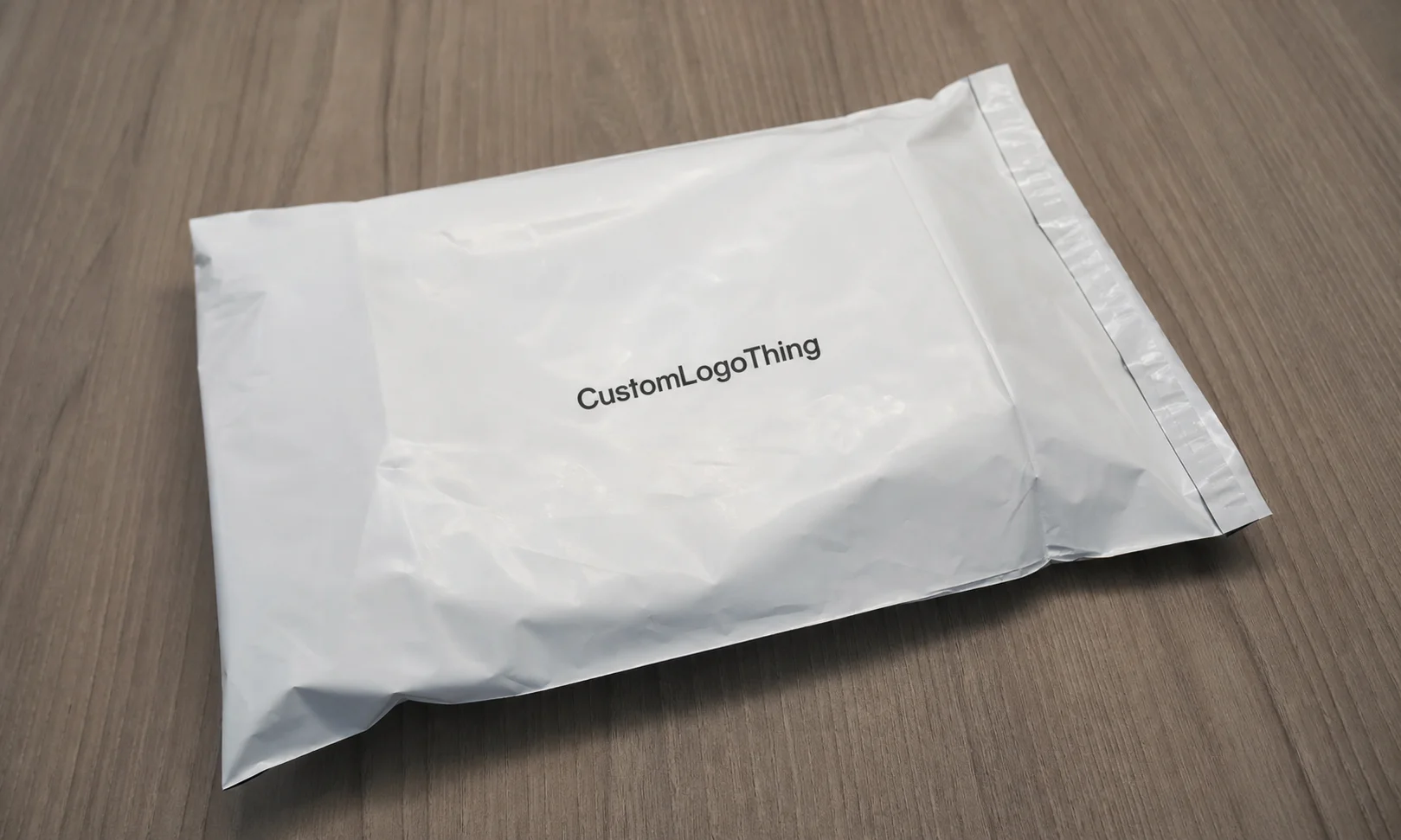
Put simply, custom sustainable Mailer Bags for Ecommerce are branded shipping bags made with lower-impact materials and custom print. That can mean paper mailers, compostable mailers, Recycled Poly Mailers, or bags with post-consumer content. The point is simple: move the product safely while supporting your branded packaging and package branding goals. They’re not magic. They’re just better matched to the job than a random giant bag with a logo slapped on top. In most programs I’ve reviewed, the spec starts with a 60-micron recycled poly film, a 30 mm adhesive strip, and a print area sized for one to three spot colors.
Brands keep using them for three practical reasons. Lighter shipping can reduce freight cost, especially when dimensional weight pricing starts biting. A tighter format usually makes the unboxing feel more polished, even if customers swear they “don’t care about packaging.” A clean mailer also supports your product packaging story without needing foam inserts, ribbons, and a small miracle. I’ve seen apparel brands save $0.28 to $0.61 per shipment simply by moving from rigid cartons to right-sized mailers in the 10 x 13 inch range.
Here’s the trap: something that looks sustainable is not automatically sustainable. I’ve seen brands spend an extra $0.40 per unit on earthy brown film, then print a giant green leaf across the front and call it a strategy. That’s not strategy. That’s a color choice. Real sustainability comes down to the full spec: recycled content percentage, end-of-life path, material source, and whether the bag survives shipping. If you want solid baseline guidance, the EPA has useful material on waste reduction at EPA recycling and materials management, and the packaging standards discussions at The Packaging School/Packaging Consortium resources are worth a look. I’ve also had suppliers in Jiaxing and Ningbo hand me “eco” samples that were basically just green-colored plastic. Cute. Not credible.
Common formats include Kraft Paper Mailers, compostable mailers, Recycled Poly Mailers, and hybrid mailer bags with post-consumer content. I’ve also seen brands use laminated paper structures for better moisture resistance, though that only works when the seal and tear behavior are tested properly. Sustainable does not have to mean flimsy. Good custom sustainable mailer Bags for Ecommerce should feel engineered, not apologetic. A 350gsm C1S artboard insert, for example, can stabilize a sleeve-style mailer without making the pack feel bulky or overbuilt.
Honestly, the smartest brands stop asking, “What looks green?” and start asking, “What protects the product at the lowest total cost?” That shift matters. A mailer that fails three percent of the time costs more than a stronger one that’s two cents pricier. I’d take boring and reliable over pretty and pointless any day. If the landed cost is $0.17 per unit and the cheaper option is $0.14 but creates 2% more returns, the math is not subtle. The returns team will absolutely notice.
How custom sustainable mailer bags work in real fulfillment
The process is usually simpler than buyers expect. Artwork gets approved, the supplier prepares print files, materials are sourced, production runs, and then bags are packed, palletized, and shipped to your warehouse or 3PL. That’s the tidy version. The real version includes one extra round of “Can you move the logo 4 mm?” and at least one debate about whether the tear notch should be left- or right-handed. Packaging meetings, for reasons I still do not fully understand, always contain at least one opinion that sounds like it came from a tape dispenser. In my last factory review in Wenzhou, the “small adjustment” discussion took 37 minutes.

Custom sustainable mailer Bags for Ecommerce can be built to fit a fulfillment line in a few different ways. In some operations, the bag sits folded beside the pick area. The worker inserts the item, peels the adhesive strip, and seals it in under 6 seconds. In others, the bag is pre-kitted with inserts or return labels. I’ve seen a beauty brand shave 11 minutes off each packing batch by switching to one standard bag size that matched its top three SKUs instead of trying to custom-size for every product variation. They were trying to be “precise.” What they were actually doing was creating chaos with a ruler. Their final format was 9 x 12 inches, with a 35 mm side seal and a 20 mm return strip.
Closures Matter More Than most people think. Most mailers use a peel-and-seal strip for first shipment. Some include a second adhesive Strip for Returns, which saves the customer from hunting for tape like they’re packing for a bad camping trip. Tamper-evident seals help with higher-value goods because they show whether the bag has been opened. If your business handles returns, ask for reseal options. That tiny detail can improve customer satisfaction and reduce repacking damage. A proper return strip usually adds about $0.01 to $0.03 per unit, which is far cheaper than replacing damaged goods.
Print methods vary by volume and design. Flexographic printing is usually the workhorse for larger runs and simpler graphics. Digital printing can work well for shorter runs or variable designs, though unit cost is usually higher. Gravure shows up more often in very high-volume programs where long-term economics justify the cylinder expense. If your artwork uses multiple spot colors or a full-bleed pattern, expect different setup economics than a one-color logo. For a 5,000-piece run, a one-color flexo print on recycled poly might hold near $0.15 per unit, while a four-color full-bleed version can jump to $0.24 or more. This is where Custom Packaging Products can help you compare structures instead of guessing from a sample that looked pretty under showroom lights.
Construction affects performance in a very real way. Seal strength determines whether the bag survives conveyor stress. Puncture resistance matters if your product has hardware, corners, or a zipper pulling against the film. Moisture protection matters whenever parcels sit on a loading dock in Mumbai, Houston, or anywhere else rain seems to show up uninvited. For shipping performance testing, I like seeing references to ASTM methods or ISTA transport simulations. If a supplier can’t talk about testing, keep your wallet closed. The ISTA testing standards site is a solid place to understand what serious parcel testing looks like. One test batch I reviewed in Ho Chi Minh City failed after 48 hours in 85% humidity because the seal width was only 8 mm. That’s the kind of mistake that gets expensive fast.
Where do custom sustainable mailer Bags for Ecommerce fit best? Soft goods. Lightweight apparel. Socks. Swimwear. Beauty kits under 2 lb. Supplements in secondary packaging. Subscription orders. They’re not the answer for every product, and that’s fine. I’ve turned down mailer bag projects for heavy ceramic products because the risk profile was dumb. You don’t put a bowling ball in a sandwich bag and then act surprised when the sandwich loses. I mean, come on. For items over 3 lb or anything with sharp ceramic edges, I usually push the client back toward reinforced corrugate or a hybrid shipper.
The best fulfillment gains usually come from standardizing size. A warehouse with 20 odd-sized bags usually packs slower than one with 2 or 3 optimized sizes. Less searching. Less decision fatigue. Fewer mistakes. When a team can grab the same bag 80% of the time, custom sustainable mailer Bags for Ecommerce start paying back in labor as much as in freight. I’ve watched a 14-person packing line in Shenzhen improve throughput by 9% after reducing bag SKUs from six to three. That’s not flashy. It’s just operationally sane.
What makes custom sustainable mailer bags for ecommerce worth it?
Short answer: the right bag saves money, tightens fulfillment, and supports your brand without pretending packaging is a personality trait. Long answer: custom sustainable Mailer Bags for Ecommerce are worth it when the material, size, print, and closure match the product and the shipping lane. If you’re mailing lightweight items, they can lower freight, reduce damage, and keep the unboxing cleaner than a generic poly bag. If you’re shipping a heavy or sharp product, they may be the wrong fit. That’s not a failure. That’s basic packaging logic.
I’ve seen brands use them to cut dimensional weight, reduce void fill, and make returns easier with a second adhesive strip. I’ve also seen them become expensive vanity projects because the buyer chased a pretty sample and ignored spec sheets. One saved $0.03 per unit on paper weight, then lost $0.11 per order to increased damage and rework. That is not a savings program. That is a spreadsheet prank.
For ecommerce teams, the best answer usually comes from three questions: Is the product light enough? Does the material fit the sustainability claim? Can the warehouse pack it fast without creating defects? If all three are yes, custom sustainable mailer bags for ecommerce are often the smarter move.
The key factors that decide quality, sustainability, and cost
Material choice is the first big fork in the road. Recycled poly is usually the most durable and moisture-resistant option, and it often gives the best balance of Cost and Performance. Kraft paper mailers appeal to brands that want a paper-forward story, but they can be more sensitive to moisture and scuffing. Compostable blends sound attractive, but the real question is whether your customer has access to the right disposal stream. If not, the bag may not achieve the environmental outcome you think it will. That’s the part nobody puts on the mood board. In practical terms, I usually see kraft perform best for dry apparel and recycled poly win for humid climates like Singapore, Miami, or Guangzhou.
I’ve seen custom sustainable mailer bags for ecommerce priced at $0.18 per unit for 5,000 pieces in a simple recycled poly structure with one-color print. I’ve also seen compostable, full-bleed, specialty-size mailers land above $0.42 per unit at similar volume once freight, setup, and testing were added in. Material choice drives that gap. So does supply chain complexity. So does the fact that compostable suppliers often need stricter handling and more careful storage. Fancy doesn’t mean cheap. Shocking, I know. One quote from a supplier in Zhejiang looked great at $0.11 on paper, then hit $0.06 in freight, $0.02 in plates, and $0.01 in inland trucking. Landing cost matters. Always.
Printing changes the economics fast. A single-color logo on one side is the cheapest clean brand look. Add white ink under a dark bag, full-bleed artwork, multiple colors, or print on both sides, and costs rise. The same happens if you want a matte finish, soft-touch effect, or detailed registration that needs tighter press control. In custom sustainable mailer bags for ecommerce, simple design is not boring. It’s usually smart. A one-color logo on a 10 x 14 inch bag often prints cleaner and faster than a four-panel design that needs precise alignment across a 380 mm web width.
Sizing is where budgets quietly bleed. A right-sized bag reduces filler, cuts empty air, and often lowers dimensional weight. If a bag is too large, you pay to ship air. If it’s too small, the closure stresses the material and the customer gets a damaged order. I’ve watched buyers choose a trendy large format because it “felt premium,” then spend the next quarter paying to move dead space around the country. Very elegant loss. Very avoidable. One client in California switched from a 14 x 18 inch mailer to a 12 x 15 inch mailer and trimmed freight by $0.19 per shipment across 22,000 units a month.
Durability is not just thickness. People love asking for “thicker” bags as if that solves everything. It doesn’t. Tear resistance, puncture resistance, seal integrity, and weather exposure all matter. A 60-micron recycled poly bag can outperform a heavier but poorly made alternative if the seal design and resin blend are better. Always test against your own product weight and shape. If you want a standard for broader package validation, ASTM and ISTA references are worth reviewing, and FSC matters if you’re using paper-based structures and want credible fiber sourcing claims. I’ve had good results asking suppliers for burst testing data, drop-test outcomes, and a written spec sheet that lists thickness in microns, not “heavy duty-ish.”
Compliance and claims are where brands step on rakes. Do not say “eco-friendly” if you can’t back it up. Do not say “fully sustainable” unless you can define exactly what that means. Better language is specific: “made with 70% post-consumer recycled content,” “FSC-certified paper,” or “designed for store-dropoff recycling where available.” That’s honest. Honest sells better than fluffy green marketing, especially when your customers read the fine print and your procurement team reads it twice. If your mailers are produced in Dongguan, Putian, or Taipei, list the actual manufacturing region on internal spec sheets so your team can trace sourcing without playing detective.
Cost depends heavily on MOQ, size, print count, material, and delivery location. A run of 3,000 mailers to a California warehouse will not price the same as 25,000 units air-freighted to the East Coast. One supplier I negotiated with in Dongguan tried to sell me on a low unit price, then padded freight and plate costs so aggressively the landed cost jumped by $0.07 per unit. I pushed back, standardized the size, and got the landed total down by $1,800 on the order. That’s the number that matters. Not the quote headline. If you’re ordering to Atlanta, Dallas, or Newark, ask for separate inland trucking and port handling costs before you sign anything.
Step-by-step: how to source the right mailer bags without wasting money
Step 1: audit your product mix. Pull your top 10 SKUs and note packed dimensions, weight, fragility, and return rate. Don’t build a packaging program around the one item someone in marketing likes best. Build it around what actually ships. For custom sustainable mailer bags for ecommerce, the data should come first. Taste comes second. I usually want packed dimensions measured to the nearest 5 mm and weights recorded in grams, not “about a pound.”
Step 2: choose the sustainability goal first. Sounds obvious, yet buyers still start with a sample they liked and work backward. That’s backwards. Decide whether your priority is recycled content, fiber-based appearance, recyclability, compostability, or lower shipping weight. Then choose the material that fits. If your goal is lower freight and strong moisture resistance, recycled poly may beat paper. If your goal is a paper-forward retail packaging feel, kraft may be the better fit. Same product category. Different answer. A supplier in Shenzhen can quote both, but the better one depends on your actual shipping lane and customer disposal behavior.
Step 3: request dielines, specs, and samples. I never approve a full run without seeing the actual bag spec. Ask for outer and inner dimensions, material thickness, closure type, print area, seal width, and recycled-content documentation if applicable. If the supplier can only send you a glossy photo, keep walking. You want facts. You want a sample bag that’s been physically tested in your pack-out environment. Better yet, ask for 3 samples and try all of them on a normal day, not a staged demo. For paper-based structures, request the board spec too, such as 350gsm C1S artboard or whatever the factory is actually using.
Step 4: compare total landed cost. Unit price is one line in a larger spreadsheet. Add tooling, plates, freight, import duty if applicable, pallet charges, and storage. A cheap quote can turn into an expensive order once shipping lands. I’ve seen brands save $0.03 per unit by switching suppliers, only to lose $0.05 per unit on freight because they chose an awkward packaging size that packed terribly on pallets. That is not savings. That is theater. I always want the supplier to quote ex-works, FOB, and DDP if possible so there are no surprises hiding in the back of the invoice.
Step 5: test in the actual fulfillment flow. Put the bags through your real process. Can workers seal them at pace? Does the label stick to the surface? Does the adhesive strip hold in a cold room? Can the customer reseal the return strip without frustration? A bag that looks excellent on a sales deck can still create bottlenecks on the line. Custom sustainable mailer bags for ecommerce should improve the workflow, not just the mood board. I like seeing a 100-order pilot run in a warehouse in Phoenix or New Jersey before anyone signs off on scaling.
Step 6: approve artwork with print-safe files. Send vector logos, confirmed PMS targets, and clear guidance on bleed and safe zones. If you want a dark background with white elements, confirm how the white underbase will print. If you’re building branded packaging around Custom Printed Boxes and mailers together, align the colors across both so the package branding doesn’t look like it came from two unrelated companies. I’ve had clients spend $6,000 on design revisions because nobody measured the color shift between their box and mailer samples. That is a very expensive shade of “close enough.”
Step 7: plan lead time with real padding. Sampling, approvals, production, and freight all need time. If you have a campaign launch date, back into your order date from the warehouse receiving window, not the marketing announcement. A delay of 10 business days can wreck a promotion if you only ordered a week of safety stock. For custom sustainable mailer bags for ecommerce, I usually recommend buyers keep at least one extra production cycle of inventory on hand if the product moves steadily. In practice, that often means 2,000 to 5,000 spare units sitting in a warehouse in Los Angeles, Chicago, or Manchester, depending on volume.
One more practical note: if you’re building a broader packaging program, coordinate with Custom Poly Mailers options too. Sometimes a mixed program makes more sense than forcing every SKU into one structure. A supplement brand I worked with used paper Mailers for Subscription kits and recycled poly for moisture-sensitive refills. That split saved them money and reduced spoilage complaints. Smart buyers don’t marry one material. They Choose the Right one for the job. For the refill line, a 50-micron recycled poly bag with a 25 mm seal was enough. For the subscription kit, a paper mailer with a 350gsm C1S insert handled the branding beautifully.
Pricing, timelines, and what vendors rarely tell you upfront
Typical pricing drivers are not mysterious, just inconvenient. MOQ affects price because setup costs need to be spread over the order. Bag size matters because larger film widths use more material. Print coverage matters because more colors, more ink, and more setup time all push cost upward. Shipping method changes everything, especially if you need air freight to avoid stockouts. Custom sustainable mailer bags for ecommerce can be cheap or pricey depending on how disciplined you are with the spec. A 5,000-piece recycled poly order with a single-color logo from Jiangsu may land at $0.15 per unit, while a compostable version with two-sided print and a return strip can reach $0.33 before freight.
Timelines usually include sampling, artwork approval, production, quality review, and freight. A straightforward recycled poly run might move faster than a compostable structure that needs more material checks. If a vendor promises impossibly fast delivery without asking detailed questions, that’s not confidence. That’s either ignorance or salesmanship. I’ve sat in a supplier meeting where the rep confidently said “two weeks is fine” while the production manager stared at him like he had lost his mind. The look on that manager’s face said everything. For most custom runs, production typically takes 12-15 business days from proof approval, then 5-10 business days for ocean or domestic transit depending on where the bags are made.
One thing vendors don’t always say upfront: custom sustainable options can take longer than stock bags because material sourcing and testing may require extra steps. The resin, paper stock, or compostable blend may not be sitting on the shelf in your exact width and finish. Sometimes you wait 3 extra days for the Right Roll Stock. Sometimes it’s 12. Build that into your plan. Brands that treat lead time like a suggestion usually end up paying rush fees, and rush fees are what happen when panic meets a purchase order. I’ve seen a rush air shipment from Shenzhen to Chicago add $2,300 to a single order. Nobody enjoyed that email.
Ask for a price break at volume thresholds before you lock artwork. If your quote is based on 5,000 units, ask what happens at 10,000 and 20,000. I’ve saved clients 8% to 11% simply by moving them into the next price tier and standardizing one print layout. That’s especially useful for custom sustainable mailer bags for ecommerce because the savings can offset the incremental cost of better materials. A move from 5,000 to 10,000 pieces can sometimes lower the unit price by $0.02 to $0.04 without changing the spec.
Watch for hidden costs. Tooling. Plate charges. Color matching. Split shipments. Warehouse receiving fees. Special pallets. Rework. The list is annoyingly long. A supplier once quoted me a very pretty price, then added $320 for plates, $180 for artwork setup, and $290 for a split shipment because the client wanted two delivery dates. The real number was not the headline. It never is. If the bags are coming from a factory in Foshan or Suzhou, ask whether the quote includes export documentation and carton labeling too. Those little line items are where budgets go to die.
I also remember one factory visit where I negotiated a better rate by standardizing two sizes instead of five. The brand was shipping tees, hoodies, and accessories in custom sustainable mailer bags for ecommerce, but their team had tried to size every bag to the millimeter. It looked tidy in a spreadsheet and awful in purchasing. We simplified to two core formats, moved the hoodie bag by 18 mm in width, and cut their annual packaging spend by roughly $9,600. No drama. Just less chaos. The final spec was 11 x 14 inches for tees and 14 x 17 inches for hoodies, which was enough to cover the product without paying for extra air.
Common mistakes brands make with sustainable mailer bags
The first mistake is choosing the wrong material for the product. If your product has sharp edges, heavy hardware, or a rigid insert, a thin compostable mailer may fail faster than you expect. I’ve seen returns jump because the bag tore at the corner seam during transit. That’s a bad trade. A sustainable claim does not erase a damaged product. One jewelry brand I advised had breakage tied to a 40-micron mailer, and the fix was moving to a 55-micron recycled poly with reinforced edges.
The second mistake is overprinting every inch. Full coverage can be beautiful, but it costs more and can muddy the sustainability story if it encourages higher ink load and more complex production. Simple, thoughtful graphics usually work better. One strong logo, a short message, and a clean structure can outperform a busy design that tries too hard. Good custom sustainable mailer bags for ecommerce should support the product, not shout over it. A one-color print on a natural kraft mailer from Vietnam usually reads cleaner than a four-color mural that costs $0.08 more per unit.
Third, brands use vague claims that can’t be backed up. “Eco-conscious.” “Earth-friendly.” “Planet-safe.” Those phrases make lawyers nervous and customers skeptical. Better to specify recycled content, FSC-certified paper, or verified recyclability where available. Be precise. It builds trust. If you can’t document a claim, don’t print it. That’s how people avoid getting roasted on social media and in procurement meetings. If the bag is made in Suzhou and contains 70% post-consumer recycled content, say exactly that. Concrete beats cute every time.
Fourth, seal strength gets ignored. A nice-looking adhesive strip means nothing if it fails on cold mornings or dusty warehouse floors. Test peel force. Test repeat closure if you have a returns strip. Test how the adhesive behaves after sitting in a truck for 6 hours. That’s real life. That’s what customers experience. In one warehouse test in Minneapolis, an adhesive that looked fine at 22°C failed after overnight storage at 4°C. That one detail would have created a pile of complaints.
Fifth, people pick a trendy size instead of the actual product dimensions. A bag that looks right in a spec sheet may leave too much empty space or crush the product. Measure packed dimensions, not product dimensions. I cannot say that loudly enough. If the item is a folded sweatshirt, measure the folded sweatshirt plus tissue, sticker, insert card, and any protective wrap. Product packaging is about the full packed state, not the hero image. If your final packed product is 280 mm by 360 mm, don’t order a 300 mm by 300 mm mailer because it “feels balanced.”
Sixth, they skip samples and only discover issues after thousands of bags are in the warehouse. I get it. Samples feel slow. But a $60 sample round can save a $6,000 mistake. When I was running my own packaging line, I had a supplier send an elegant-looking sample that warped after exposure to humid air. Great aesthetics. Terrible reality. We caught it because we actually tested it. Funny how that works. Even a two-sample comparison from Guangzhou and Wenzhou can reveal a huge difference in adhesive quality and film consistency.
Expert tips and next steps for a smarter packaging rollout
Start with a small pilot run. Ship 300 to 500 orders through real operations and measure damage rate, packing speed, and customer feedback. Don’t rely on opinions from the office. Your warehouse team will tell you more in one day than a month of slide decks. If the bag saves 9 seconds per order and reduces returns by even 1%, that’s worth far more than a prettier sample on a desk. I like pilots that run in a live lane for at least 7 business days so you catch weekday and weekend variability.
Use one core mailer size wherever possible. This is the easiest way to reduce inventory clutter and improve replenishment. If your business insists on six sizes, your warehouse will eventually punish you for it. One or two core formats usually perform better for custom sustainable mailer bags for ecommerce. I’ve seen brands lower storage costs by 12% just by trimming their bag SKU count. A two-size system is usually enough for 70% to 85% of order volume, which is a much better trade than chasing perfection.
Ask suppliers for recycled-content documentation, print proofs, and closure specs before ordering. A serious vendor can provide all three without drama. If they hesitate, ask why. Verify the recycled percentage. Confirm whether the paper is FSC-certified if that matters to your claim. Check the adhesive type and whether it supports a return strip. This is not being difficult. This is buying packaging like an adult. If the supplier is in Ningbo, Shanghai, or Penang, they should still be able to produce spec sheets in one day, not one week.
Build a simple scorecard. Mine usually has four columns: cost per ship, defect rate, brand impact, and sustainability claims verified. Sometimes I add fulfillment speed if the warehouse is struggling. Numbers keep everyone honest. Feelings do not. You can absolutely love a beautiful bag and still reject it if the numbers are weak. I’ve rejected a gorgeous matte white mailer because the seal failed at 4% in testing. Nice bag. Bad business.
Coordinate marketing and operations so launch timing matches inventory arrival. I’ve watched teams announce a packaging refresh on Instagram before the bags even cleared customs. That is a great way to create an awkward email chain and a lot of apologetic shipping notes. For custom sustainable mailer bags for ecommerce, the launch plan should be built around actual receiving dates, not wishful thinking. If the bags are ETA 14 March in Long Beach, don’t schedule a launch video for 7 March and hope the universe sorts it out.
If you want the cleanest next step, shortlist three suppliers, request samples, compare landed cost, and test in one real fulfillment lane before scaling. That means one product, one warehouse flow, one set of measurements. Keep it tight. Keep it honest. Then expand only when the bag proves itself in the real world. In my experience, the best rollouts start with a 500-unit test in a warehouse in California or Texas, not with a 20,000-unit leap of faith.
And yes, I still think custom sustainable mailer bags for ecommerce are one of the smartest packaging upgrades a brand can make when the product profile fits. They’re lighter than corrugate in many cases, easier to brand than plain shipping bags, and often more efficient in the warehouse. But they only work when the material, print, and size match the job. Packaging never rewards guesswork. It rewards good specs, clear claims, and a buyer who asks uncomfortable questions. The best runs I’ve seen came from factories in Guangdong and Zhejiang that could quote a 12-15 business day production window and stick to it.
“The cheapest bag is rarely the cheapest program. The best program is the one that arrives on time, ships cleanly, and doesn’t turn into a customer complaint three weeks later.”
So here’s the move: measure your packed SKUs, decide what sustainability claim you can actually stand behind, and test two material options in a real packing lane before you place a full order. That one sequence saves more money than any fancy packaging deck ever will. And if the sample looks great but fails under humidity, toss it. Pretty doesn’t ship packages.
Custom Sustainable Mailer Bags for Ecommerce: decision table
| Decision area | Best fit | What to verify | Risk if skipped |
|---|---|---|---|
| Board or flute choice | Product protection, stacking strength, and shipping distance | Caliper/flute, crush resistance, and sample fit | Weak structure or oversized cartons increase damage and freight cost |
| Print and finish | Retail presentation, unboxing, and shelf recognition | Color proof, coating, scuff resistance, and logo placement | A good dieline can still look cheap if finish and color drift |
| Packing method | Hand packing, ecommerce fulfillment, or retail-ready cartons | Inner count, master carton, label position, and warehouse handling | Good packaging slows operations if pack-out is ignored |
FAQs
What are custom sustainable mailer bags for ecommerce made from?
They can be made from recycled poly, kraft paper, compostable blends, or materials with post-consumer content. The right choice depends on product weight, moisture exposure, shipping method, and your sustainability goal. For custom sustainable mailer bags for ecommerce, material selection should always match the item being shipped. A 60-micron recycled poly bag works well for moisture-sensitive apparel, while a kraft mailer with a 350gsm C1S artboard insert is better for presentation-led kits.
How much do custom sustainable mailer bags for ecommerce usually cost?
Pricing depends on size, material, print colors, MOQ, and freight. A simple recycled mailer often costs less than a heavily printed compostable option, especially at lower quantities. In practice, custom sustainable mailer bags for ecommerce can range widely, so ask for landed cost, not just unit price. For example, a 5,000-piece recycled poly run might be $0.15 per unit, while a full-bleed compostable version can land around $0.42 per unit once freight and setup are included.
How long does it take to produce custom sustainable mailer bags?
Timeline usually includes sampling, artwork approval, production, and shipping. Custom sustainable orders can take longer than stock bags because materials and print setup may need extra checks. If you’re buying custom sustainable mailer bags for ecommerce, build in buffer time before any product launch or campaign. A typical timeline is 12-15 business days from proof approval for production, plus shipping time depending on whether the bags come from Shenzhen, Dongguan, or a domestic warehouse.
Are sustainable mailer bags strong enough for ecommerce shipping?
Yes, if you match the material and thickness to the product. Always test seal strength, tear resistance, and puncture risk before launching. Good custom sustainable mailer bags for ecommerce should protect the product through normal parcel handling, not just look good in a sample photo. For heavier soft goods, a 55- to 60-micron recycled poly structure usually performs better than a thin compostable film.
How do I Choose the Right size for custom sustainable mailer bags?
Measure your actual packed product, not the item by itself. Choose the smallest size that fits safely to reduce waste, shipping cost, and excess material use. The best custom sustainable mailer bags for ecommerce fit the product with just enough room for closure and protection. If your packed sweatshirt is 280 mm by 360 mm with tissue and a card insert, don’t guess — spec the bag at 300 mm by 380 mm and test it in a real packing lane.