Garment Poly Bags for Campus bookstores moq planning sounds like a procurement phrase somebody typed after too much coffee. Fine. But the buying problem is real: campus stores need apparel packaging that is cheap enough to survive term volume, durable enough for pickup traffic, and simple enough that staff can pack orders without slowing down the line.
The right bag protects folded tees, hoodies, and bundled uniforms from dust, handling marks, and last-minute chaos at the counter. It also keeps orders looking organized in pickup bins and back-room shelving. That is the whole job. If the bag is doing more than that, you are probably paying for features you do not need.
"A campus apparel bag should be judged on three things: fit, handling, and landed cost. Fancy is optional. Functional is not."
This is where the buying conversation gets practical. A clear 2 to 3 mil poly bag with the right closure is often enough for most bookstore apparel. It keeps the fold clean, costs less than heavier packaging formats, and stores flat without eating shelf space. For stores that need broader packaging options, see our Custom Packaging Products. If your team ships apparel outside the store as well, the same planning logic applies to Custom Poly Mailers.
Unit price matters. So do labor, storage, and the number of sizes you force staff to manage. The cheapest bag on paper can become the most annoying bag in the building if it tears, fits poorly, or adds a second round of reordering two months later.
Why garment poly bags matter for campus bookstores
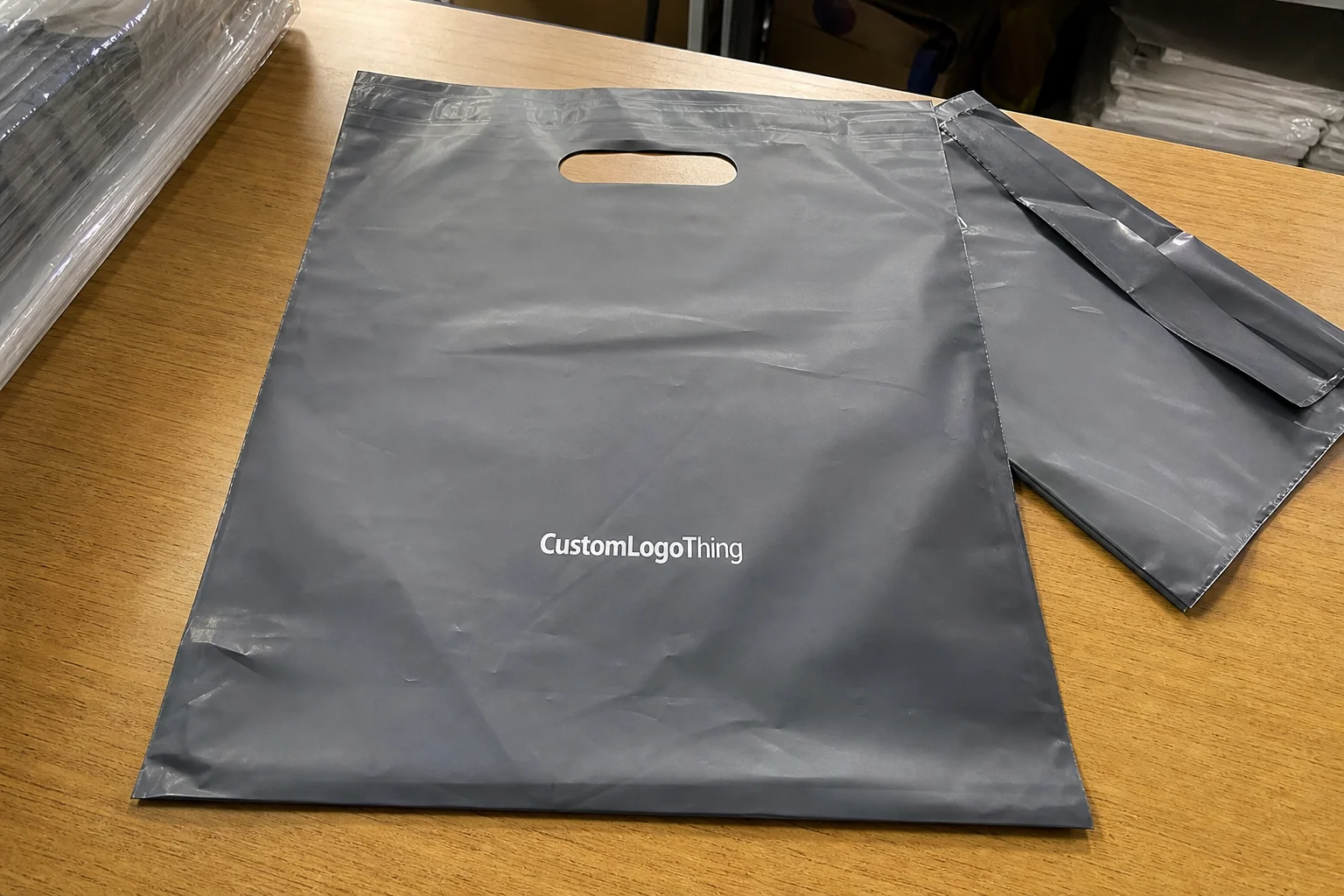
Campus bookstores run on short cycles. Orders are packed in the morning, shelved at lunch, and handed off before the next class rush. Add spirit wear, club merch, alumni gifts, and move-in kits, and the packaging has to work hard without becoming another decision point. A garment poly bag gives the store one consistent format for most apparel handoffs.
There are a few reasons buyers keep coming back to poly. It is lighter than cartons, cheaper to ship, and easier to stack in a back room or pickup bin. It also gives staff a predictable packing routine. If everyone folds to the same bag size, the process gets faster and the shelf looks cleaner. Not glamorous. Effective.
For campus buyers, packaging is not just packaging. It is part of workflow. A bag that is too large lets the garment slide around and wrinkle. One that is too thin splits at the seam when a hoodie shifts against the edge. One that is too opaque slows down label checks and item verification. Each mistake seems small until it repeats a few hundred times in a term.
That is why standardization pays off. Most campus stores can cover the bulk of their apparel with one bag for tees and polos, plus one larger size for fleece or bundled items. That is usually enough. Creating five sizes because the catalog has five categories is how you end up with inventory clutter and dead stock in a closet nobody wants to clean.
Stores also need to think in volume patterns, not one-off orders. A bookstore may need a larger buy for the start of term, then smaller replenishment runs for holidays or club sales. That is where bulk pricing and reorder flexibility matter together. A low unit price only helps if the size, closure, and lead time actually fit the calendar.
What the bag must handle at pickup and reshelving
Campus bookstore packaging gets handled fast and often. Staff are moving between the stockroom, the counter, and pickup shelves. Students are checking names, digging for sizes, and leaving with bundles under one arm. The bag has to survive all of that without turning into a crumpled mess or a torn seam.
Closure style is the first call. Open-top bags are the fastest option for in-store merchandising and quick shelf packing. A flap seal adds more protection for handoff orders. Adhesive closures improve tamper resistance and make the finished package look cleaner. Zipper-style bags are more expensive, but they can make sense for premium kits or reusable uniform bundles. There is no universal winner. There is only the version that best fits the store’s workflow and budget.
Seam construction matters more than buyers sometimes expect. A hoodie with a sharp fold can push real stress into weak welds. If the bag fails during stocking or pickup, the savings disappear fast. Ask for film details, seam type, and sample checks if the order is new. If a supplier cannot explain the material beyond vague words like "heavy-duty," that is not a good sign. That is a red flag with better typography.
Visibility is another operational issue. Clear or lightly frosted film makes it easier to read a size sticker, scan a barcode, or verify the contents without opening the bag. Printed bags help with branding, but heavy ink coverage can reduce visibility. In a busy store, readable usually beats decorative.
Seasonality makes all of this more sensitive. Move-in week, homecoming, rivalry games, and student organization orders create spikes that expose weak packaging quickly. A bag that holds up in a quiet week but fails during a rush is not a bargain. It is a future problem with a lower sticker price.
If your store is asking about sustainability programs, do the homework carefully. Poly film is not automatically good or bad. Recycling access depends on local collection systems and material type. The EPA has practical guidance on source reduction and materials management, and packaging.org is a useful reference for packaging terms and industry basics. That gives buyers a better framework than guesswork and marketing copy.
Film, seal, and sizing specs that fit apparel
Better buying starts with spec discipline. Start with width, length, thickness, and closure. Then match the bag to the folded garment. Guessing from the flat shirt size is how people end up with a bag that is too tight for fleece or too loose for tees.
For standard tees and polos, a slimmer format often works well. Common dimensions are around 12 x 15 inches or 12 x 18 inches in 1.5 to 2 mil film. For hoodies, crewnecks, and bundled apparel, 14 x 18 inches or 14 x 20 inches in 2 to 3 mil film is usually safer. If the product is thick or the fold is not perfectly compact, a little extra room is worth more than shaving a few cents from material cost. Overstuffed bags split. They also look messy.
A gusset can help if the apparel has volume. Even a modest side gusset gives the package more space and reduces stress on seams. That can be the difference between a clean retail presentation and a bag that looks like somebody forced a sweatshirt into a sandwich wrapper.
Film clarity also matters. Crystal-clear film gives the cleanest product visibility and makes inspection easier. Frosted film softens the appearance and can hide scuffs, but it also makes it harder to see what is inside. Thicker film usually resists puncture better and feels sturdier in hand, but it raises cost. There is no perfect choice. The right spec depends on whether the store prioritizes shelf presentation, pickup durability, or packing speed.
Print space should be treated carefully. A logo that looks sharp on a proof can become too small after the bag is folded or filled. Keep the design simple and legible. Short copy works better than crowded copy. If the bag needs a barcode zone, size note, or warning text, make sure that space is built into the layout before production starts.
For any order that may ship beyond the campus network, ask about testing and handling standards. Transit checks based on ISTA methods are more useful than a hand-wavy promise that the sample "looked fine." That kind of detail matters once the bags are used in the real world instead of on a sample table.
| Bag option | Typical MOQ | Cost per piece | Best use | Tradeoffs |
|---|---|---|---|---|
| Stock clear open-top bag | 250 to 500 | $0.04 to $0.09 | Fast shelf packing, simple apparel handoff | No logo, limited protection, minimal branding |
| Semi-custom printed bag, one color | 1,000 to 3,000 | $0.12 to $0.24 | School apparel, campus identity, balanced budget | Setup charges apply, proofing needed, moderate lead time |
| Custom flap-seal bag, 2 to 3 mil | 3,000 to 10,000 | $0.18 to $0.38 | Pickup orders, better protection, more polished presentation | Tooling fees may apply, more planning, more storage space |
| Zipper-style garment bag | 1,000 to 5,000 | $0.22 to $0.45 | Premium kits, uniform bundles, reusable handoff | Higher cost per piece, slower packing, less common for everyday use |
Cost, pricing, and garment poly bags for campus bookstores moq planning
Here is the cleanest way to think about Garment Poly Bags for Campus bookstores moq planning: the size, print method, and closure style drive cost first, then the order quantity decides how painful the setup is. The same bag can look cheap or expensive depending on whether you order 500 units or 5,000, and whether the art is one color or a full custom layout. There is no shortcut. Just math.
The main cost drivers are easy to name. Film thickness affects material usage. Width and length affect yield. Print colors affect setup, plates, or screens. Closures affect conversion cost. Freight and storage can move the landed price more than some buyers expect. That is why a quote with only unit price is not enough.
For campus stores, the realistic buying patterns usually fall into three buckets. First is stock packaging for plain handoff and rapid packing. Second is semi-custom branding with a one-color school mark. Third is a fully custom bag for flagship apparel, special events, or premium retail kits. The more complex the print, the faster the price moves upward.
Standardizing bag sizes before customizing artwork usually saves more than people think. One size that covers most tees and one larger size for fleece removes a lot of SKU clutter. The savings show up in storage, in reordering, and in fewer last-minute substitutions when inventory is low. It also makes staff training easier because the packing process stops depending on memory.
Ask suppliers for quotes that break out material, print, tooling, and freight. Otherwise the first number can look attractive and the final landed cost can drift upward once extras are added back in. That is not a trick. It is incomplete quoting. To compare offers properly, you need unit price, MOQ, shipping, and any repeat-order benefit in one view.
Campus timing matters here. If the bookstore knows its term demand for spirit wear and move-in kits, buying for the term often improves per-unit economics. Tiny reorders are convenient, but they rarely give the best value. It is usually smarter to buy enough for the season and hold a modest buffer than to pay rush freight later.
There is one caution. A very low MOQ can look attractive, but high setup charges can erase the benefit quickly. Buyers should ask for pricing at multiple quantity tiers. That shows where the real break point sits. Without that, you are just staring at a number and hoping it behaves.
Typical pricing ranges for campus apparel bags are not mysterious. Stock clear bags sit at the lowest end. One-color custom runs usually land in the middle. Higher-gauge film, flap seals, and more complex printing push the unit cost up fast. This is why the cheapest option is often the plain bag that does the job, not the one that tries to be impressive.
Process, lead time, and production steps from quote to delivery
A quote request should include the bag dimensions, quantity, film thickness, print colors, artwork files, delivery address, and the date the bags need to be on hand. If those details are missing, the quote is only a rough estimate. That is where delays start.
Proofing comes next. Buyers should review bag size, logo placement, color match, closure details, and any warning copy before production starts. A bad proof is expensive because it wastes time before the run even begins. If the logo is too small, the layout is wrong. If the film looks too thin, the material is wrong. If the barcode area gets blocked, the spec is wrong.
After approval, the production flow is usually predictable. The supplier confirms material, prepares tooling if needed, prints or extrudes the film, converts the bags, inspects the run, then packs and ships. Lead time depends on customization and factory schedule. Buyers should leave room for proof revisions, freight time, and peak-season congestion. Campus schedules do not care that the order is "almost ready."
Many custom orders need a few weeks after final art approval. Stock-style runs can move faster. Printed or resealable bags usually take longer. Rush work is sometimes possible, but it narrows options and raises cost. That can be worth it if the event date matters more than the budget. It is a bad move if someone simply waited too long to order.
If the bookstore is coordinating apparel packaging with hangtags, insert cards, labels, or shipping supplies, keep those specs aligned from the start. A supplier can usually quote the system better than one isolated item at a time. That is especially useful for stores that want one clean packaging standard across pickup, shelf display, and shipment.
Branding choices that stay on budget and on-message
Good branding on a garment poly bag should be clean and readable. That is enough. A school mark, a bookstore name, and one short line of copy usually do more than a crowded layout that looks busy in the mockup and noisy in production. Campus bookstores are retail spaces, not parade floats.
Branding works best at the handoff point. A student sees the school name or bookstore identity on the bag, and the package feels intentional instead of thrown together. That matters for pickup bins, dorm deliveries, and event distribution. It is one of the few packaging choices that can also do a little marketing without adding labor at the register.
Use school colors carefully. One strong imprint color is often enough. More colors increase print cost and make registration harder, especially on clear film where the artwork has to stay sharp. If the goal is a premium look, focus on contrast and spacing before adding more ink. A tidy layout usually beats a busy one.
Practical copy can help. A size label zone, a QR code for store hours, or a simple care note can make the package more useful. Warning text and reuse notes can help too. But every extra element needs a purpose. Do not cram the design just because there is open space on the proof. Empty space is not wasted space. It is readability.
Clear bags are often the better operational choice when visibility matters more than branding. That is especially true for staff who are pulling prepacked orders from bins or for stores where students want to confirm the item before walking away. A printed bag looks more finished. A clear bag often works better.
If the bookstore is also updating labels, inserts, or shipping supplies, keep the bag spec aligned with the rest of the packaging line. The FAQ page covers common quoting and proofing questions, and the broader lineup at Custom Packaging Products can help keep the system consistent instead of buying each item in isolation.
Next steps for a clean campus rollout
Start with the garments packed most often. Usually that means tees, polos, hoodies, and the occasional bundled order. Then decide which bag sizes actually fit those items without excess slack. If one size can cover most of the volume, use it. Simple specs are easier to stock, easier to train, and easier to reorder.
Gather the files and details that make quoting fast: vector artwork, any Pantone references, the exact ship-to address, the in-hand date, closure preference, and any warning copy or barcode needs. If those details arrive early, the estimate is much more accurate. If they arrive late, everyone spends time fixing preventable gaps.
Ask for a sample or preproduction proof if the bag carries important branding. That costs less than reprinting a full run because the logo sits too low or the bag closes in the wrong place. For campus packaging, a proof is basic risk control, not a luxury line item.
Compare quotes on more than unit price. Put freight, setup charges, tooling fees, lead time, and reorder terms side by side. A low quote can still become the expensive choice if it arrives late or forces a second small order. Smart buying is dull. That is usually a good sign.
Build the reorder plan before inventory gets tight. A term-level forecast prevents rush freight and avoids the bad habit of accepting a substitute because the shelf is empty. If you are requesting pricing for Garment Poly Bags for campus bookstores moq planning, send the exact size, quantity, print count, and delivery window. That makes the quote honest faster, which is usually the point.
What size garment poly bags work best for campus bookstore apparel?
Match the bag to the folded garment, not the unfolded one. Tees and polos usually fit in slimmer bags, while hoodies and multi-item packs need more depth or a larger flat format so the seam does not split and the fold stays clean.
What MOQ should a campus bookstore expect for custom poly bags?
Custom printed runs usually need a higher MOQ than stock bags because setup costs must be spread across the order. A single size and a single print color usually lowers the MOQ and improves the unit cost.
Can garment poly bags be printed with a bookstore logo?
Yes. Simple logos and short copy are usually the most cost-effective and easiest to keep readable on clear or frosted film. Check the print area, color count, and artwork quality before quoting so the design stays legible in production.
How long does a custom order usually take?
Timing depends on proof approval, tooling needs, print complexity, and freight distance. A standard custom order often needs a few weeks after final art approval, and rush timing gets harder once peak campus seasons begin.
What should I send for an accurate quote?
Send size, quantity, film thickness, print colors, artwork file, ship-to address, and the date you need the bags in hand. Include any warning text, barcode requirements, or closure preferences so the quote reflects the actual production spec.


