Nonprofit teams often learn too late that garment packaging can turn into a budget problem. A vague Garment Poly Bags for nonprofit campaigns supplier quote checklist leads to wrong sizes, missing print details, and freight charges that were never planned for. If you are packing donation shirts, volunteer kits, gala merch, or awareness campaign apparel, the quote needs to be specific from the start.
The cheapest bag can become the most expensive line item if it tears, clouds the garment, or slows down packing. A bag affects presentation, count accuracy, stackability, storage, and labor. That matters when the event date is fixed and the budget is tight.
Most quote problems come from missing details, not bad intent. Buyers send a size, a logo, and a request for recommendations. Suppliers fill in the blanks. Then the order does not match the packing method. Packaging does not reward optimism. It rewards measurements.
Why nonprofit apparel bags fail when the quote is too vague
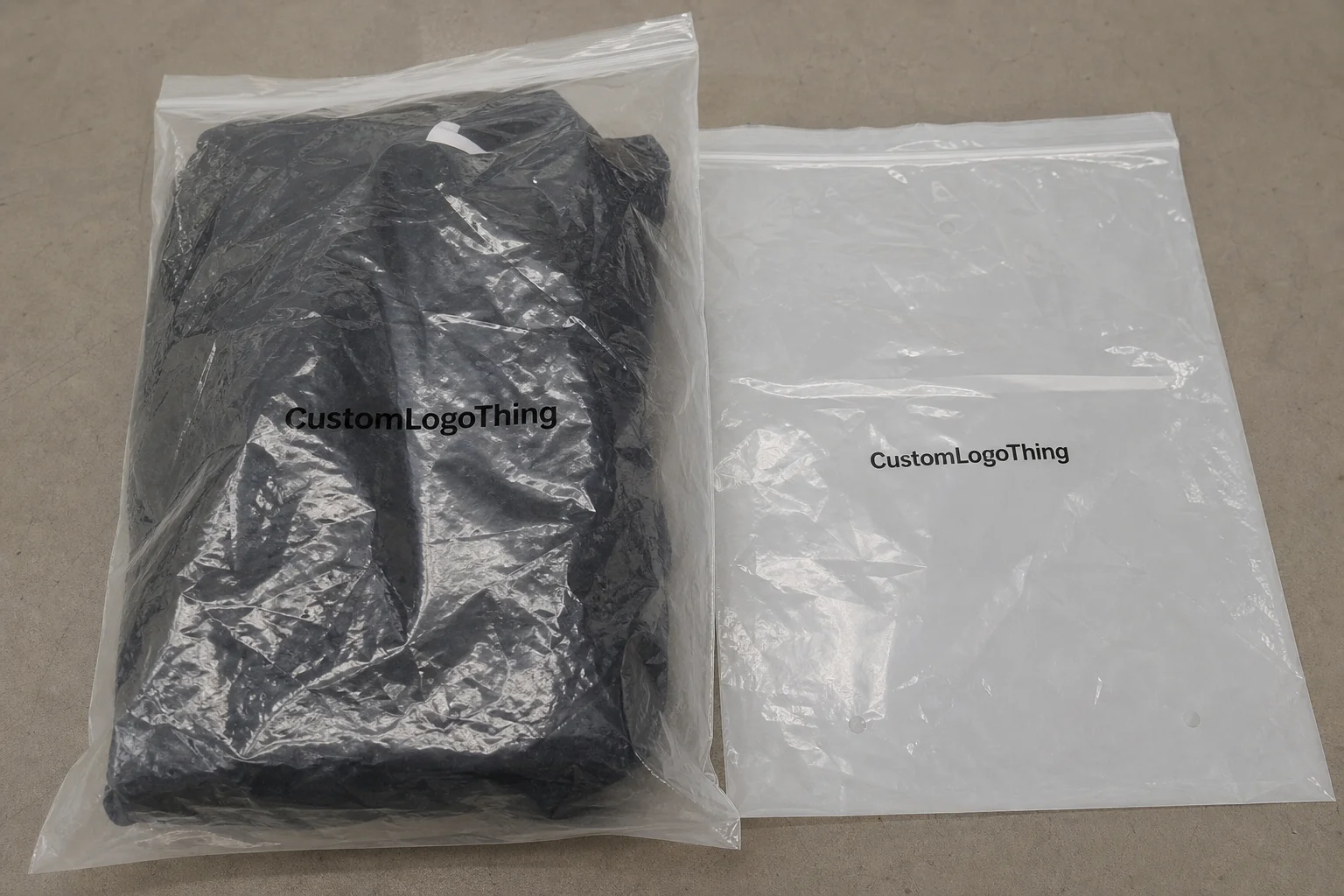
Vague quotes create predictable failures. The supplier quotes a 2 mil bag, the buyer expected 3 mil. The team wanted a 12 x 16 bag, but the shirt fits too tightly. Someone forgets to mention suffocation warnings, and now there is a reprint or compliance issue. None of this is unusual. It is just what happens when the brief is incomplete.
For nonprofit campaigns, the hidden costs show up in small ways: extra freight for split shipments, rework because the garment does not fit, and labor lost to repacking. On orders of 1,000 to 10,000 units, those mistakes can cost more than the difference between a plain bag and a printed one.
Timing is another problem. Nonprofit buying cycles are often compressed, and event dates do not move because the spec is unclear. Volunteers still need inventory. Donors still expect the right item at the right time. If the supplier has to pause and ask for missing information several days into quoting, the entire schedule slows down.
Before requesting pricing, have these facts ready:
- Garment size and whether it is folded flat or packed with inserts
- Bag dimensions you need, not just the shirt size
- Quantity and any tiered volume target
- Print requirements, including logo, warning text, or both
- Shipping destination and whether you need one drop or multiple locations
That is the core of a useful Garment Poly Bags for nonprofit campaigns supplier quote checklist. If a supplier cannot quote from that list, the quote is not ready.
“The bag looked cheap until we had to rebag half the order.” That is the kind of sentence nobody wants to hear three days before a fundraiser.
Choose the right garment poly bag format for your campaign
The right format depends on how the apparel will be packed and handed out. Not every nonprofit order needs the same bag, and using the wrong style creates extra labor.
Flat poly bags are the standard option for folded shirts, hoodies, and basic apparel distribution. They are simple, low cost, and easy to stack. Resealable bags make sense when items may be opened and repacked, or when reusable storage matters. Header bags work for retail-style presentation or when you want a hangable display. Perforated rolls are useful at high-volume packing stations because staff can tear off bags quickly without sorting loose stacks.
The bag format should match the packing method, not just the garment size. A volunteer folding 500 T-shirts by hand needs a different setup than a team boxing pre-packed kits. A high-volume awareness event might benefit from perforated rolls. A donor thank-you package might look better in a printed flat bag.
Unprinted clear bags are usually the cheapest route. Printed bags improve brand recognition and make distribution look organized. For a nonprofit, that can matter without adding retail-level cost.
| Bag format | Best for | Typical tradeoff | Relative cost |
|---|---|---|---|
| Flat poly bag | T-shirts, hoodies, basic kit packing | Lowest complexity, minimal branding | Lowest |
| Resealable bag | Reusable storage, multi-item kits | Higher unit cost, slower packing | Mid |
| Header bag | Merch display, event giveaways | Better presentation, more material use | Mid to higher |
| Perforated roll | Fast packing stations, assembly lines | Requires setup discipline | Varies |
Key specifications buyers should confirm before requesting a quote
Most pricing changes come from a few specs. If you give these clearly, the quote comes back cleaner and more useful.
Width and length are the first things to lock down. Then comes film thickness, usually listed in mils. A 2 mil film is common for light apparel. A 3 mil or 4 mil option gives more body and better tear resistance for heavier garments like hoodies or uniform sets. Material choice matters too. LDPE is flexible and forgiving. CPP offers more clarity and a crisper look. If sustainability matters, ask about recycled-content or recyclable film options, but do not assume every eco claim has the same performance.
For common apparel, the fit should be practical. A folded T-shirt usually fits in smaller bag sizes, while hoodies and sweatshirts need more depth and width. Youth apparel and multi-item sets are where mistakes happen most often. Buyers order one size for everything and then wonder why bulkier items do not pack cleanly.
Closure style matters too. Some campaigns only need open-ended bags that are sealed later with tape or heat. Others need zip or resealable closures because kits will be reopened, sorted, or stored. If the bags will be machine-packed, ask whether the opening width and film slip work with the equipment.
Compliance details also matter. If the bags are going into public use, ask about suffocation warnings, recycling marks, and any retailer or state requirements. Confirm the artwork area dimensions, print color count, and proof format. A buyer who approves a proof without checking trim margins is likely to pay for corrections later.
Artwork files deserve their own check. A low-resolution logo can slow approval even if the rest of the order is perfect. Ask what file type the supplier wants, whether vector artwork is required, and how small text will reproduce on the bag. Thin type, tiny legal copy, and light ink colors are where legibility usually fails.
Finally, ask how the bags will be packed for delivery. Carton quantity, bundle count, and stacking method affect warehouse handling and freight. If your team is distributing in stages, smaller carton counts may be worth a slightly higher packing cost because they are easier to move and count.
For general packaging guidance, suppliers often align quality checks with standard methods from groups like ASTM, and transport testing may relate to ISTA procedures for carton performance. If your order is tied to downstream shipment or kitting, you can review general industry guidance from the ISTA site or packaging resources at Packaging Professionals Association.
Cost, pricing, MOQ, and what changes your final quote
Quote totals are driven by bag size, thickness, material grade, print colors, quantity, and freight. The more material and print coverage you add, the more the price climbs. The smaller the quantity, the more setup gets spread across each unit.
For typical nonprofit runs, unprinted stock-style poly bags are usually cheaper than custom printed versions because setup, proofing, and production handling are lower. A rough range for custom Garment Poly Bags can sit around $0.08 to $0.20 per unit on higher quantities for simple specs, then move upward with heavier film, more colors, or special packaging. Lower quantities often land noticeably higher per bag.
MOQ is where nonprofit buyers need to be realistic. Smaller orders are possible, but the unit cost will be higher. Larger runs lower the price per bag, but you need storage space and upfront budget. For campaigns that run every season, it can make sense to combine multiple apparel needs into one production run instead of ordering separate batches.
Compare supplier quotes fairly by matching these items:
- Dimensions
- Thickness
- Print colors and coverage
- Packaging count per carton or master case
- Freight terms and delivery destination
Watch for add-ons. Setup or plate charges, proof revisions, rush fees, and split shipments can make a quote look better than it is. A supplier that lists freight as “extra” without estimates is not giving you a complete quote.
Budget planning also needs honesty. If your campaign depends on rush production, say so early. Rush work is possible in some cases, but it narrows material options and increases the chance that one spec will need to be simplified. Sometimes that means choosing a standard size instead of a custom one. Sometimes it means dropping a second print color.
Process and timeline: from artwork approval to delivery
The standard process is straightforward: request quote, confirm specs, submit artwork, receive proof, approve proof, production, inspection, shipment. Delays usually happen when buyers send missing information at each step.
For custom-printed bags, lead times are usually longer than stock clear bags. A clean order might take 12 to 18 business days after proof approval, with freight added on top depending on destination. Larger quantities, multiple print colors, or more complex packaging can push that out. Rush orders are possible in some cases, but they cost more.
Build buffer time into campaign planning. Volunteer kit assembly, event registration, donor mailers, and distribution all consume time. If your bags need to arrive before a specific launch date, do not calculate to the edge. Leave room for proof corrections and transit delays.
If you want faster turnaround, send the full package in the first email: final artwork, exact quantity, bag size, delivery ZIP code, and any compliance text. That reduces back-and-forth and helps when you are using Contact Us to request pricing from a supplier who can quote quickly.
Inspection should not be an afterthought. Ask whether the supplier checks print registration, seal integrity, dimensions, and carton counts before shipment. A good supplier will have a basic QC process. A better one will tell you what tolerances they use and what happens if a run falls outside them.
How a supplier should support nonprofit buyers beyond the quote
A good supplier does more than send a number. They help translate the project into production language. That means asking the right follow-up questions, flagging spec conflicts, and suggesting a lower-cost option if the chosen format is overkill for the campaign.
Nonprofit buyers benefit most from practical substitutions that do not hurt presentation. For example, a standard flat bag in a common size may achieve the same packed look as a custom-dimension bag at a better unit cost. Or a single-color print may cover the branding need without adding extra setup.
Quality control matters too. Look for consistency in film thickness tolerance, seal quality, print alignment, and carton packing. If cartons are packed in a predictable count, your team can count inventory faster and avoid distribution errors.
Trust signals are easy to spot: clear response times, sample availability, transparent freight estimates, and proofs that show actual placement and dimensions. If a vendor cannot explain what drives the price, they probably do not want you comparing it.
There is also a plain-language test. If the supplier can explain the difference between a bag that looks fine and a bag that performs well in packing, that is a good sign. If they only talk about “premium quality” and never mention thickness, seal strength, or carton counts, keep moving.
If you are also planning other campaign packaging, it can help to review Custom Packaging Products or compare formats with Custom Poly Mailers if your campaign includes mailed apparel or donor kits.
Next steps to request an accurate campaign quote
Measure the folded garment. Confirm the bag style. Estimate quantity. Decide whether printing is required. Then gather artwork files, target delivery date, shipping ZIP code, and any compliance copy before you ask for pricing. That is the difference between a useful quote and a vague one.
Ask for two side-by-side options if you can: standard clear bags and printed bags. Then compare the cost against presentation, branding, and ease of distribution. Sometimes the printed version is worth the added cost. Sometimes it is not.
Request a sample or digital proof before production. It is cheaper to catch a sizing issue on a proof than after 5,000 bags land on a loading dock. The best Garment Poly Bags for Nonprofit campaigns supplier quote checklist is the one that stops mistakes before they become invoices.
If you want a cleaner quote, send everything in one message: specs, quantity, artwork, delivery details, and timing. That gives the supplier enough information to return a real number instead of a placeholder.
What should be included in a garment poly bag quote checklist for nonprofit campaigns?
Include bag dimensions, material, thickness, closure style, print requirements, quantity, and delivery location. Add artwork format and any compliance text needed. Also provide a target timeline so the supplier can confirm whether standard or rush production is required.
How do I compare supplier quotes for nonprofit apparel bags fairly?
Make sure every quote uses the same size, thickness, print count, and packaging count. Check whether setup fees, freight, proofs, and rush charges are included. Compare unit cost only after confirming all specs match.
What MOQ should I expect for custom garment poly bags?
MOQ depends on size, print complexity, and material, but custom runs usually price better at higher quantities. Smaller orders are possible, but unit cost is higher. Ask for price breaks at different volume tiers before you decide.
How long does production usually take for printed garment bags?
Simple stock or unprinted bags can move faster than custom printed runs. Artwork approval and quantity affect the schedule as much as production itself. Build extra time into nonprofit campaign planning to avoid paying rush fees.
Are recycled or eco-friendly garment poly bags available for nonprofit use?
Yes, many suppliers offer recycled-content or recyclable film options. Availability depends on size, thickness, and print needs. Ask for material details and performance tradeoffs before you commit.


