Logo Patches Unit Cost for Corporate Gifting Teams: What You Are Really Buying
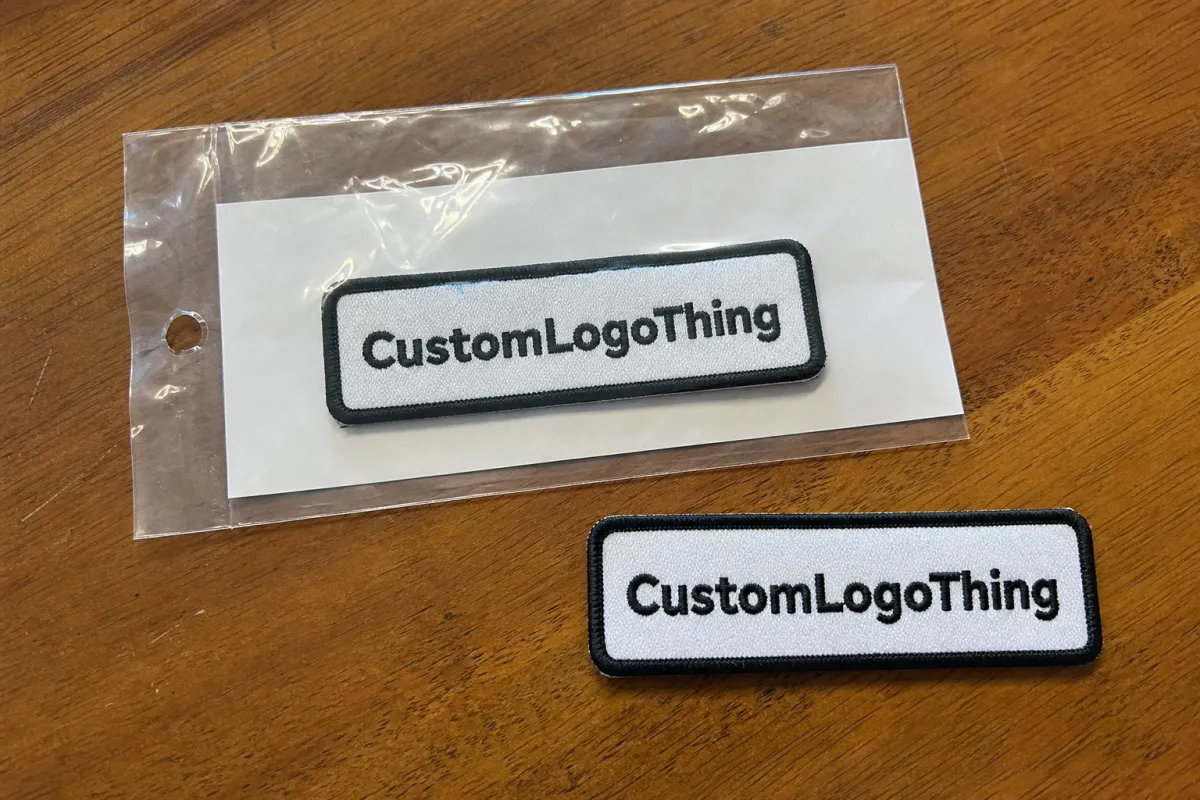
A $48 hoodie can look like a $19 giveaway if the patch feels generic. That is why logo patches Unit Cost for Corporate Gifting teams should not be treated as a minor decoration line item. It is a pricing signal tied to brand control, durability, and what the recipient believes the gift is worth.
The economics are uneven. Freight, fulfillment, kitting labor, apparel blanks, embroidery setup, storage fees, and corrugated packaging often cost more than the patch itself. A branded insert card may run $0.35 to $1.20. A rigid gift box can land between $2.50 and $7.00 before freight. Yet the patch is often the part people touch, photograph, and remember.
Small components carry visual weight. A woven patch on a beanie, a faux leather patch on a fleece quarter-zip, or a PVC patch on a tech pouch can become the most visible brand mark in the kit. The patch may be only 2 inches wide, but it sits on the product rather than beside it.
For procurement and gifting teams, unit cost includes more than the factory price per patch. It includes whether the color matches the brand guide, whether the edges stay flat, whether the backing works on the final material, and whether the patch survives shipping, handling, washing, abrasion, or repeated use.
This is the practical calculation: a cheap patch that slows sewing, fails adhesion, curls at the edge, or arrives with color drift is not cheap anymore. Rework can eat the savings fast. So can rush freight after a delayed approval.
Buyer rule: compare the landed cost of a usable patch, not the lowest number in a quote column.
Patch Types That Change the Quote Before Quantity Does
Quantity matters, but material choice often changes the quote first. A 2.5-inch woven patch, molded PVC patch, and faux leather debossed patch can carry the same logo. They will not price, feel, or perform the same way.
Woven patches are strong for fine logo detail, small text, thin lines, and clean corporate marks. They use tight thread construction rather than raised embroidery stitches, so details can stay sharper at smaller sizes. For a 2-inch to 3-inch mark on a hat, beanie, lightweight jacket, or travel pouch, woven is often the safest technical choice.
Embroidered patches add texture and depth. They suit employee recognition gifts, campus-style merchandise, team apparel, jackets, and hoodies. Cost drivers include stitch coverage, thread count, border style, and the amount of raised detail. A 75% embroidered patch typically costs less than a 100% stitch-coverage patch of the same size because fewer stitches are required.
PVC patches are built for durability and dimensional branding. They make sense for outdoor teams, field staff, tactical-style bags, tech kits, performance apparel, and gear that may see more abrasion. The trade-off is tooling. Molded PVC can require a mold fee, and that fixed cost hits smaller orders harder.
Chenille patches create a varsity texture with a large visual footprint. They work well for sales awards, team recognition, student programs, and retro merchandise. They can look bulky on small items, though, and fine logo detail is not their strength.
Faux leather patches sit at the opposite end of the mood board: restrained, clean, and more executive. They are common on fleece, caps, denim, canvas totes, lifestyle goods, and premium apparel gifts. Debossing usually feels more refined than printing, although printing may be needed for certain marks.
Printed patches solve artwork that thread cannot reproduce cleanly. Gradients, shadows, photographic images, dense illustrations, and complex color transitions are usually better handled through print. The buyer trade-off is durability and finish; coatings, edge treatment, and final surface matter.
| Patch type | Best use | Main cost drivers | Buyer note |
|---|---|---|---|
| Woven | Detailed corporate logos, small text, beanies, caps | Thread density, size, border, backing | Reliable for clean logo reproduction at smaller sizes |
| Embroidered | Classic merch, hoodies, jackets, recognition gifts | Stitch coverage, thread count, edge finish | Texture adds value, but tiny detail can soften |
| PVC | Outdoor, tech, field, and performance-themed gifts | Mold, color count, thickness, backing | Tooling fees matter on lower quantities |
| Faux leather | Executive gifts, fleece, caps, lifestyle goods | Material grade, debossing, shape, attachment | Premium look with understated branding |
| Printed | Gradients, photos, complex artwork | Print method, coating, cut shape, backing | Useful when artwork cannot be simplified |
Many buyers over-focus on the material name and under-focus on the final surface. A patch that looks excellent on a digital mockup may fail on high-pile fleece, stretch fabric, coated nylon, or a curved cap panel. The better question is not “Which patch is cheapest?” It is “Which patch performs on the gift we are actually sending?”
Specifications Procurement Teams Should Lock Before Asking for Pricing
An accurate quote needs more than a logo and a quantity. Lock the basics early: size, shape, material, backing, border, color count, attachment method, order quantity, packing requirements, delivery location, and target arrival date.
Patch size deserves scrutiny because cost does not rise gently. Increasing a circular patch from 2 inches to 3 inches increases the surface area by more than double. That can mean more thread, more PVC, longer machine time, larger molds, slower trimming, and more inspection. A buyer may see “only one inch larger.” Production sees material, minutes, and yield.
Backing is another budget lever. Sew-on backing is durable and predictable for hoodies, caps, fleece, canvas totes, and jackets. Iron-on backing can be efficient, but only when the substrate tolerates heat and pressure. Adhesive backing works for temporary placement or light-duty uses, not long-term apparel wear. Hook-and-loop backing fits modular kits, tactical-style bags, and removable patches. Pressure-sensitive temporary backing can help position patches before stitching.
Brand control has technical limits. Pantone matching helps, but thread, PVC, printed ink, and faux leather all interpret color differently. A navy thread and a navy ink may share a Pantone reference and still appear different under office lighting. Small text may need to be enlarged or removed. Thin lines may need minimum thickness adjustments. Gradients often need conversion into woven steps, embroidery color blocks, or printed artwork.
- Vector artwork: AI, EPS, SVG, or production-ready PDF files reduce redraw time.
- Clear size target: common corporate patches fall between 1.5 inches and 4 inches wide.
- Known surface: fleece, ripstop nylon, canvas, leatherette, and performance knits behave differently.
- Attachment decision: sewing, heat press, adhesive, or hook-and-loop changes labor and durability.
- Packing requirements: bulk packed, counted bundles, or individual bags affect handling cost.
Specification conflicts are easier to fix before quoting. A heat-applied patch may not be the right fit for a coated travel pouch. A deeply textured fleece may need sewing rather than adhesive. A detailed mark may need woven construction instead of embroidery. These are not cosmetic details. They affect the final unit cost and the gift experience.
Unit Cost, MOQ, and Quote Levers That Move the Final Number
Patch pricing usually has two layers: fixed costs and variable costs. Fixed costs can include setup charges, digitizing or artwork preparation, proofing, sampling, mold or tooling fees, and production line setup. Variable costs include material, thread, PVC, backing, finishing, inspection, packing, and freight.
MOQ, or minimum order quantity, is not random. It protects against inefficient setup time, low material yield, and high per-piece handling. If artwork review, machine setup, proofing, and packing preparation take nearly the same effort for 100 pieces as for 1,000 pieces, the smaller order absorbs those fixed tasks across fewer units.
Bulk pricing changes the math. A patch that looks expensive at 250 units can become more practical at 1,000 or 2,500 units because setup costs are spread across more pieces. Variable costs still remain. Thread, PVC, backing film, faux leather, trimming, and packing do not vanish. But the fixed portion of the unit cost drops.
Typical cost ranges vary widely by patch type, size, backing, and order volume. Simple woven or embroidered patches may fall near the lower end at higher quantities, while PVC, chenille, specialty backings, or individually packed patches can move higher. Small runs often feel disproportionately expensive because setup and proofing are still required. For planning, buyers should request quantity breaks rather than relying on a single number.
| Quote lever | How it can reduce cost per piece | Watch-out |
|---|---|---|
| Reduce patch size | Less material, shorter production time, lower finishing burden | Logo detail may become harder to read |
| Simplify shape | Cleaner cutting, simpler border, faster inspection | Unique silhouettes may add brand value |
| Limit colors | Fewer thread or PVC changes, easier color control | Brand marks may require exact colors |
| Use standard backing | Reduces specialty material and handling cost | Standard backing must still fit the gift surface |
| Combine orders | Spreads setup charges across a larger run | Departments must agree on one specification |
| Approve proofs quickly | Protects schedule and can avoid rush freight | Fast approval should not skip technical review |
Do not compare patch quotes unless the specifications match. One quote may include backing, Pantone review, sample approval, sew channel allowance, and individual packing. Another may list only a factory patch price. Those are not equal numbers.
The cleaner decision rule: compare landed unit cost. That means patch price plus setup charges, tooling fees, freight, duties if applicable, packing, and application labor. For logo patches unit cost for Corporate Gifting Teams, the landed number is the budget number.
Production Steps and Timeline From Artwork to Delivered Patches
A clean patch order follows a clear sequence: inquiry, artwork review, recommendation, quote, proof, sample if required, approval, bulk production, quality control, packing, and shipping. Skip a step and the schedule usually pays for it later.
Time is most often lost before production starts. Incomplete logo files. Unconfirmed patch size. Delayed Pantone approvals. A garment choice that changes after quoting. A delivery deadline described as “soon” instead of a firm in-hand date. Each one can add days; several together can push a project from standard freight into air freight.
Vector files speed the process. AI, EPS, SVG, and editable PDF files give production teams clean lines, scalable shapes, and accurate separations. Low-resolution PNG and JPG files may require redraw, especially if the logo has small text, gradients, or fine borders. Sometimes the redraw is minor. Sometimes it changes the proofing schedule.
Proofs are not paperwork. A digital proof confirms size, shape, colors, backing, border, and placement assumptions. A physical sample confirms texture, real scale, stitch clarity, edge finish, and whether the patch looks right beside the actual gift item.
Sampling adds time, but it can be cheaper than discovering a mismatch after bulk production. For executive gifting programs, high-volume onboarding kits, public event merchandise, and programs with multiple approval layers, sampling is often a risk-control tool rather than a luxury.
Typical timing depends on patch type, order volume, sampling, factory capacity, holiday demand, and shipping method. A straightforward woven or embroidered patch with production-ready artwork may move faster than a molded PVC patch requiring tooling. A 500-piece reorder can be simpler than a 10,000-piece multi-color project with special packing.
Build an approval buffer before the event, onboarding date, sales kickoff, employee recognition deadline, or campaign launch. If the patch must be sewn to apparel or packed into kits after arrival, include that labor window too. Late approvals have a way of turning a small patch decision into a freight problem.
Quality Checks That Protect Corporate Gift Perception
Most patch failures are not dramatic. Fuzzy text. Slight color drift. Weak adhesion. Edges that curl after heat application. A border that looks uneven once sewn to a cap. These details are easy to miss in a spreadsheet and hard to ignore in a gift box.
Inspection should start with artwork compatibility, then move through color matching, stitch clarity, edge finishing, backing bond, size tolerance, surface cleanliness, packing accuracy, and count verification. Even a 2% defect rate can matter. On a 2,000-piece program, that is 40 questionable gifts.
Use case changes the risk profile. A hat patch needs shape stability because curved panels expose distortion. A hoodie patch needs wash durability and edge security. A tote patch needs abrasion resistance because it rubs against desks, car seats, and floors. A tech pouch patch may need low-profile bonding so it does not snag inside a backpack.
Quality checks should include a few simple physical reviews. Confirm the patch lies flat. Check that the border is even. Rub the surface lightly to detect loose threads or weak print coating. Bend the patch to see whether the backing cracks or separates. If heat application is planned, test the patch on the actual substrate or the closest available material before approving bulk application.
Recipient perception has commercial weight. Corporate gifts are photographed, posted in internal channels, shared by new hires, and sometimes shown on social media. One defective patch can travel farther than the campaign team expects. That is not fear-based selling; it is how branded merchandise behaves after it leaves the warehouse.
Custom Logo Things reduces risk through specification review, proofing, production oversight, and recommendations based on the final gifting application. If a logo is too detailed for embroidery at 1.75 inches, that needs to be addressed before production. If a PVC patch needs a different backing for a textured pouch, solve it before the quote is approved. If a faux leather patch will look more premium with a debossed mark than a printed mark, compare both.
Broader gift programs may need additional standards. For shipping performance, many packaging buyers reference the International Safe Transit Association at ista.org. For paper-based packaging components in a kit, FSC sourcing may be relevant; the Forest Stewardship Council explains certification at fsc.org. The patch is one component, but the recipient judges the whole kit.
Approve the patch against the actual gift item whenever possible. A 3-inch patch may look balanced on a hoodie and oversized on a beanie. A black patch may disappear on charcoal fleece. A tan faux leather patch may look premium on navy canvas and weak on beige packaging. Scale and contrast change in context.
Why Corporate Gifting Teams Use Custom Logo Things for Patch Orders
Corporate gifting is rarely one object. It may include a hoodie, box, insert, sticker, tissue wrap, pouch, tag, label, shipping carton, and handwritten-style card. Patch decisions affect that whole presentation, especially when the decoration sits on the item with the highest perceived value.
Custom Logo Things evaluates patches in that broader decoration and packaging context. The useful work happens before production: comparing material choices, backing methods, MOQ implications, timeline risks, and artwork constraints before the order is placed. That gives buyers a more honest view of unit cost, not a low opening number that changes after technical review.
For multi-item programs, consistency matters. A patch may need to coordinate with custom boxes, branded tissue, apparel labels, insert cards, stickers, or outer mailers. If the patch uses one shade of blue and the printed insert uses another, recipients may not name the issue, but they will sense the mismatch.
The measurable benefits are practical: clearer quoting, fewer specification gaps, production-ready artwork guidance, lower rework risk, and better alignment between patch quality and gift value. That matters for HR teams, procurement departments, marketing teams, event agencies, executive gifting programs, and employee onboarding teams that need repeatable results.
Here is what many teams get wrong: they treat patches like a commodity search. The same logo can become a woven patch, embroidered patch, PVC patch, printed patch, chenille patch, or faux leather patch, and each version tells a different brand story at a different landed cost.
Next Steps Before You Request a Patch Quote
Before requesting pricing, gather the details that actually change the quote. A complete request saves time and usually produces better alternatives.
- Logo file: vector AI, EPS, SVG, or editable PDF preferred.
- Patch type: woven, embroidered, PVC, chenille, faux leather, printed, or open to recommendation.
- Approximate size: width and height in inches, or target placement area.
- Quantity: expected order quantity and possible reorder needs.
- Backing preference: sew-on, iron-on, adhesive, hook-and-loop, or undecided.
- Final surface: hoodie, cap, fleece, tote, pouch, jacket, box, or other item.
- Deadline: in-hand date, event date, or kitting date.
- Destination: shipping city, region, or fulfillment center location.
Send photos or specifications of the gift item if you have them. Hats, hoodies, fleece, bags, pouches, and textured packaging can all affect attachment performance. A patch that bonds well to cotton canvas may not behave the same way on coated nylon or stretch performance fabric.
State the decision priority upfront. Lowest unit cost? Premium look? Fastest turnaround? Outdoor durability? Wash resistance? Exact logo detail? A buyer who names the priority helps the quoting team avoid irrelevant options.
Ask for alternative quote scenarios while internal approval is still open. Two sizes. Two materials. Three quantity tiers. A standard backing versus a premium backing. These comparisons show how cost per piece changes before the purchase order is locked.
For accurate Logo patches unit cost for Corporate Gifting Teams, Custom Logo Things needs the real use case, not just a logo file and a quantity. Artwork, target date, estimated quantity, shipping destination, and gift item details are the inputs that lead to a practical quote.
FAQs
What affects logo patch unit cost for corporate gift orders the most?
The biggest drivers are patch type, size, quantity, color count, backing method, border style, setup requirements, and delivery deadline. Quantity matters because setup and proofing costs are spread across more units as the order increases. Rush freight or late specification changes can raise the landed cost more than a small material upgrade.
What is the typical MOQ for custom logo patches for corporate gifting teams?
MOQ depends on patch type, size, and production method. Molded PVC and specialty finishes often require higher minimums than simpler woven or embroidered patches. Corporate gifting teams should ask for tiered pricing at several quantities because ordering extra units can reduce unit cost. Combining department, event, or regional needs into one run can also improve bulk pricing.
Which patch type is best for premium corporate apparel gifts?
Faux leather patches work well for executive apparel, lifestyle goods, fleece, caps, and understated premium branding. Woven patches are better for fine logo detail or small text. Embroidered patches create a classic merchandise look, while PVC patches suit outdoor, tech, and performance-themed gifts.
How long does custom patch production take for corporate gifting programs?
Timeline depends on artwork readiness, proof approval, sampling needs, patch type, order quantity, production capacity, and shipping method. The fastest projects usually start with vector artwork, locked specifications, and a clear delivery deadline. Teams should add approval buffer before events, onboarding launches, sales meetings, or employee recognition dates.
Can Custom Logo Things help reduce logo patches unit cost without lowering quality?
Yes. Cost can often be reduced by adjusting size, simplifying shape, choosing a more efficient backing, limiting colors, or quoting multiple quantity tiers. The goal is not the cheapest patch; it is the best landed unit cost for the gift's purpose. Custom Logo Things can review artwork and use case details before recommending the most practical specification.


